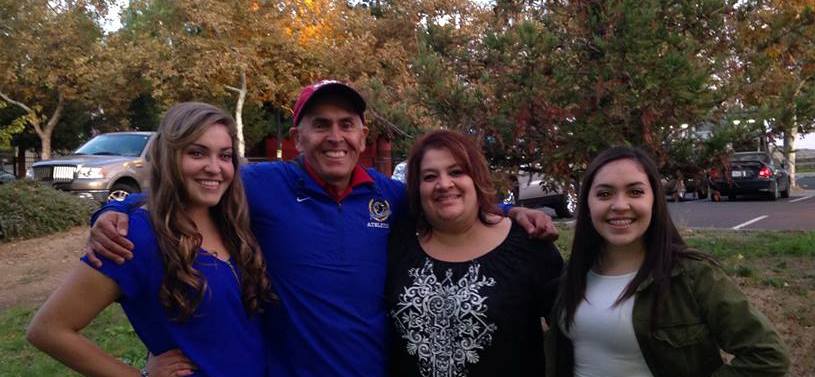
Summer in the Waiting Room: Chapter 4 (excerpt #30)

Summer Cover Photo

My campaign to persuade the school board to approve the A-G Initiative was reaching its critical phase.  I was able to engage the influential Silicon Valley Education Foundation to lead the community outreach effort as resistance to the initiative intensified when the teachers union began a campaign to discredit me.

As the board of supervisors deliberated over the County’s budget, George was maneuvering for parks funds to be used in poor urban areas of his district to the vigorous opposition of suburban parks advocates.  The pilot Latino Leadership Alliance Leadership Academy that I helped create was preparing for the weekend at Stanford.  A successful retreat could make the academy or an unsuccessful weekend could break it.

The ongoing squabbles with my siblings over our parent’s estate had been escalated to a full-fledged dispute.  And promises of a long and negative school board campaign in the fall continued to be heard from my presumptive opponent.

Despite these challenges, I kept pushing myself to the limit bolstered by competitive drive, double lattes, and daily workouts. Sandra and I had been working out together regularly for about eight months with one of my former high school football players named Jerry Brito who was a professional personal trainer.

I met Jerry in the late 1980s when I coached the James Lick High School frosh/sophomore football team.  As a high-school player, he was a hard-working and inspirational player who used those attributes to be an excellent trainer.  Jerry, 38 years old with the chiseled physique of a much younger man, had encouraged, cajoled, and inspired Sandra and me through intense workouts that challenged us physically and mentally.

Both of us felt great losing weight, toning our muscles, and exercising away the stress of our jobs.  Jerry later commented that, while many of his Type A clients came into the gym stressed, he had “never seen someone under so much pressure as you were that week.” On Friday, June 4th, I remembered feeling extreme stress and anxiety during my morning exercise routine.  I finished my workout, but the stress and anxiety weren’t relieved.

The symptoms that dogged me were similar to those I had six years earlier when my doctor diagnosed me with anxiety disorder after my mom and sister Patty died in 2003.  My skin was warm and clammy, I felt pressure in my throat and upper chest area, my shoulders were heavy and ached with discomfort, and I was having a hard time catching my breath. An anxiety attack and its more intense cousin panic attack are caused, not by physical reactions in the body, rather by psychological issues that trigger the nervous system to prepare for a “fight or flight” situation.

In the case of anxiety, the body releases the same hormones that cause the sensation one feels when scared.  As a result, the heart starts beating faster causing the clammy skin, and chest pain, and the chemical imbalance from the hormone release causes the shortness of breath, which leads to heavy shoulders. Anxiety is usually triggered by extreme stress for a prolonged period, a life-changing event, as in the case of my mom and Patty dying during the same year, or both.

During a panic or anxiety attack, none of the symptoms physically harm the body. They cause discomfort and psychological distractions that could hamper a person’s ability to function on even the simplest of tasks. After the diagnosis in 2004, I participated in several one-on-one therapy, group sessions, and classes that provided anxiety sufferers with the tools to manage symptoms.

What I learned was that anxiety symptoms were the same as those of a heart attack, but less severe. The series of group sessions and classes that I took in 2004 taught breathing exercises to restore the body’s chemical imbalance. The program also included mental exercises to clear thoughts that triggered an attack.  I had learned the lessons well and hadn’t had an anxiety or panic attack since the dark days following the life changing events of 2003.  On Friday, June 4th, I felt as though an anxiety relapse was lurking around the corner.

After the morning workout on June 4th, I spent a little time doing relaxation and breathing exercises before dressing for work.  The exercises seemed to work, and I had an uneventful start to the weekend spending time with Sandra, the girls, and larger Peralta family.  On Saturday, Sandra, the girls and I lounged around the house, my mind cleared of the of the county and school district budgets, the A-G Initiative, and my parents’ living trust.
Summer in the Waiting Room: Chapter 4 – 360 Days (excerpt #29)

IMG-20130729-00144
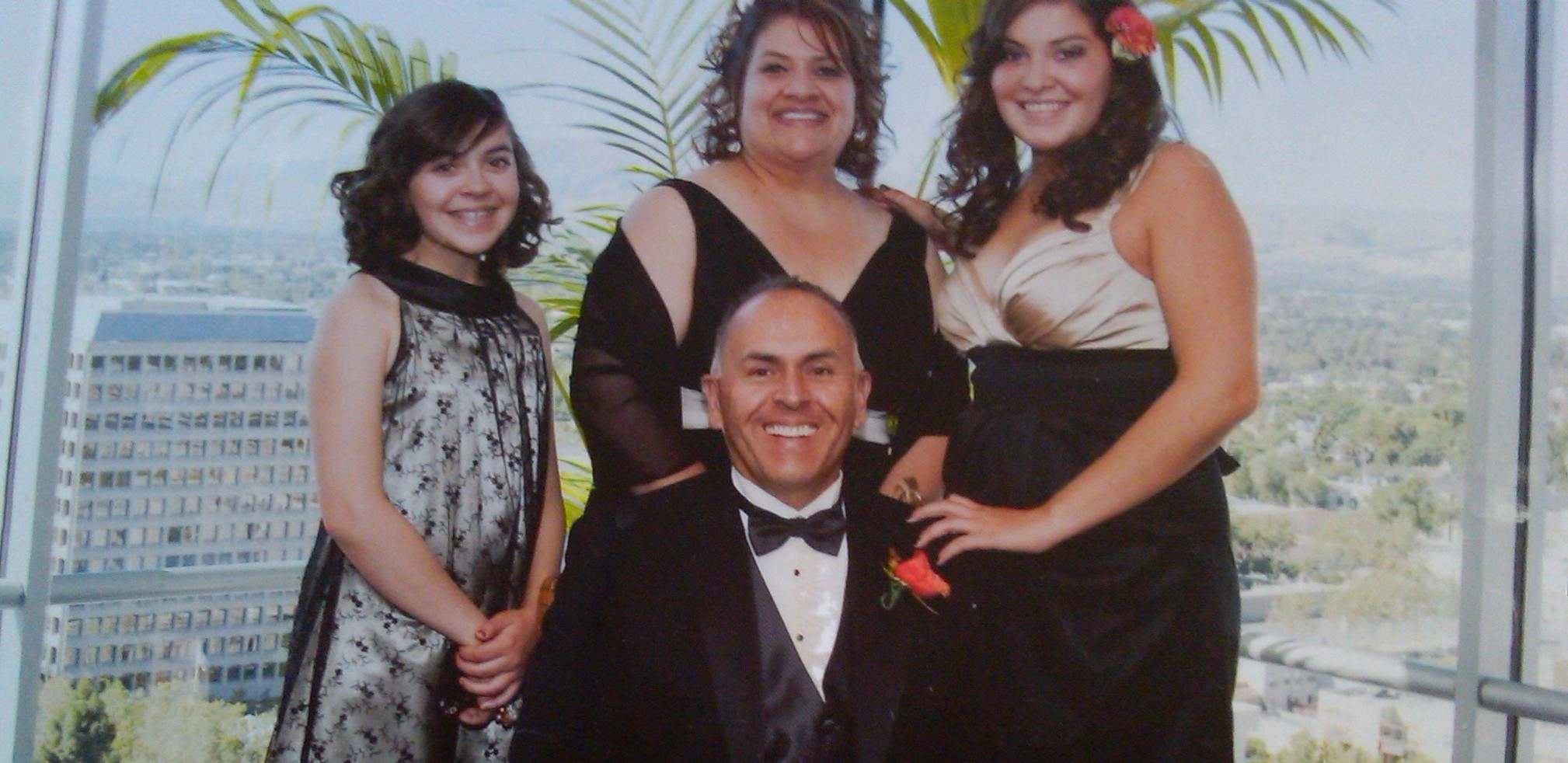
With Sandra, Marisa, and Erica at the Peralta 50th Wedding Anniversary – May 29, 2010 (Sandra & Eddie García family photo)

In addition to managing my own school board agenda and the ongoing tension with my siblings, at work I was the chief policy strategist for the office during the county’s $4 billion budget process. This required horse trading and intense negotiations as the county was in its tenth straight year of budget cuts. The strain on me was reaching the point of being intolerable. I slept just a few hours each night.

The pressure on my neck, stomach, and chest felt like the familiar panic disorder symptoms that led to my first health scare six years before. I was wearing myself down, but I kept pushing ahead trying to manage the responsibilities I had created for myself.  With the personal, professional, and political madness swirling around me, the last Saturday in May provided much needed relief.  Sandra’s parents celebrated their 50th wedding anniversary with a beautiful mass and an elegant reception on May 29, 2010.

The reception was held at Silicon Valley’s exclusive Capital Club atop the Knight-Ridder building, a structure named for the Ridder family who was the longtime publisher of the San Jose Mercury News.  The Peraltas, their four daughters and sons-in-law, and their eleven grandchildren hosted the party. The men and boys wore black tie, and the women and girls donned formal evening gowns.

The guests were served a four-course meal accompanied by live mariachi music, George presented an official county proclamation congratulating my in-laws, and some guests danced the night away while others enjoyed cocktails and cigars on the terrace that overlooked the valley.

Later in the evening, the celebrants convened for a nightcap at the prestigious Fairmont Hotel next door. In an effort to show my health and vigor, I challenged younger relatives to push-up contests on the lounge floor to the enjoyment of those in the lobby and the laughter of Sandra and my brothers-in-law.

Sandra, the girls, and I took a family photo that day with a large picture window serving as the background. The camera lens captured east San Jose sprawling out in the distance. Wearing a black tuxedo with black tie and a red rose pinned to the lapel of the jacket, I confidently sat in a chair with my back straight, chin up, and hands overlapping each other. With poise and warm welcoming smiles, Sandra, Marisa, and Erica stood behind me elegantly dressed. Looking at that photo, one might guess that I was a successful man surrounded by his beautiful family at the pinnacle of his life.

Underneath the façade of the formal attire, dramatic backdrop, and appearance of confidence that bordered on brashness, I had been feeling fatigued and anxious for most of the week. Sandra commented that I looked especially tired and lethargic that night. The day after the party would give me a moment to relax as the extended Peralta family gathered at Kim and Miguel’s house for the family’s traditional “day-after” barbecue.

I gorged on ribs and washed them down with a few beers. My nephew Andres, who turned eleven years old that day, challenged me to a one-on-one basketball game on his backyard court.  Andres was a good athlete, but slender and much shorter than me. I figured I would dispose of him quickly and get back to the ribs and beer.

I took and made a few jump shots on my way to a sure rout when I suddenly had difficulty breathing. Bending over with my hands on my knees trying to catch my breath, I was sure that the long night of partying and my rigorous work schedule caused the breathless sensation. We stopped playing and I decided to spend the rest of the day relaxing and enjoying time with the family knowing that I had a hectic week ahead.

Summer in the Waiting Room: Chapter 4 – 360 Days (excerpt #28)

Standing on the porch at 48 Viewmont Avenue with my mom circa 2002 (García family photo)
Standing on the porch at 48 Viewmont Avenue with my mom circa 2002
(García family photo)

Blogger’s note: This is the 28th installment from my manuscript of Summer in the Waiting Room: How Faith, Family, and Friends Saved My Life. I post weekly excerpts every Wednesday morning. Check out the “About Summer in the Waiting Room” link at the top of this page to learn more about the story. To read previous installments, go to the “Tags” link and click on “Summer in the Waiting Room.”

********************************

Feeling nostalgic, I drove the familiar route that I used to walk as a teenager: right on White Road out of the school parking lot, left on Alum Rock Avenue through the Alum Rock Village, three blocks up Alum Rock Avenue, then a right on Viewmont Avenue.  Viewmont Avenue was different than it was when I was a kid, but in many ways it was just the same.

The families I grew up with were all gone with exception of the Ornelas family who lived across the street at 49 Viewmont.  Tony Ornelas was my godfather for Confirmation, his wife Marty served as godmother to my little sister Sisi for her First Communion, and I went to school with their kids.  Behind the wheel of a late model BMW sedan and wearing a business suit, I felt an enormous sense of pride and accomplishment as I slowly drove past the small tract homes of my childhood.

I continued through the east side on my way home passing more familiar places: right turn on Rose Avenue and left onto Dale Drive where the Alvarez, Moreno, Furlow, and Garcia families used to live and the Rodriguez family still lived.  Then I made a left on East Hills Drive driving past the elementary school I attended before turning right on Meadow Lane where my boyhood friend Rudy lived.

When I passed his house on Meadow Lane, I was reminded of how long it had been since I had seen him, or even talked to him.  We had spent many a day and night at that house drinking and partying without any concern for the future.  I drove on toward my house in the Evergreen Valley where the homes were bigger, the streets wider, and the roadways lined by trees, where many east side kids moved when they became more financially secure.

During the fifteen minute drive home, still feeling the warm glow of a busy day filled with accomplishment, I reflected on my life.  It had been a rollercoaster for sure, and now it was clearly on the upswing.

Several months after my triumphant return to James Lick High School’s graduation, the school board appointed me president of the board for 2010.  Once again, drive and ambition would dominate my life, and the New Year started at full throttle.  In my role as school board president, I could set the district’s agenda for the year.

A student group, Californians for Justice, had been lobbying the board for over five years to institute a policy to make graduation requirements parallel to college entrance requirements called the “A-G Initiative.”  Now, as president of the board, I had the ability to do that, and if successful, I could further solidify my chances to win the election in November.

The A-G Initiative became the centerpiece of my State of the District Address in January 2010, which I delivered to an overflow crowd at James lick High School.  In spite of the teachers union’s aggressive and underhanded behind-the-scenes fight against the initiative, I enlisted the support of the Silicon Valley Education Foundation to educate the community on the merits of the initiative and put together a coalition of students, parents, and public officials to campaign for its passage.

The upcoming summer would surely be challenging. The teacher’s union had recruited a disgruntled former district administrator to challenge me in the general election scheduled for November, so I needed to prepare for a full-blown campaign.  The final decision about what was left of my parent’s estate, a rental house they owned, created friction in our family.  The pressure and stress were almost unbearable, but this is exactly what I sought since returning to college, and I was having fun.

Sandra continued to express concern about how the pace was taking a toll on me. But I didn’t listen. I had failures to overcome, ambition, and energy.  Sandra was right though, I was exhausted and the only thing that carried me through each day was the adrenalin fueled by my drive to succeed and three Starbucks double lattes per day.

Later that spring, my political prospects got a boost. Steve Poizner, a millionaire Republican candidate for governor of California wrote a book denigrating Mt. Pleasant High, a school located in the district I represented in east San Jose.  In a detailed letter citing California law against using public school facilities for political purposes, I publicly chastised the gubernatorial candidate and prohibited him from appearing for a scheduled campaign stop on the Mt. Pleasant campus.

Poizner canceled his appearance at the school, but kept a scheduled book-signing at a local Barnes and Noble bookstore. With over 100 community members, Mt. Pleasant students, faculty, and alumni, I awaited the candidate’s arrival at the bookstore.  Surrounded by his entourage, Poizner entered the store through a side entrance to avoid the crowd.

Waiting for him at the door of the side entrance, I demanded that he respond to the negative stereotypes about Latino kids, the east side, and Mt. Pleasant high school described in his book as news reporters and their cameras covered our brief exchange. The episode made statewide news, and the east side community recognized me as a defender of the community. That evening left me with a greater sense of ambition and inspired me to worker harder.

Thanks for Reading!!!

Image from www.seoclerk.com
Image from http://www.seoclerk.com

Dear Readers,

Over 20,000 readers have viewed East Side Eddie Report.com since the blog’s first post on September 30, 2013!

With deep gratitude, I thank all of you who take a minute from your day to read my articles and my story, Summer in the Waiting Room: How Faith, Family, and Friends Saved My Life. I also appreciate all of your comments.  Keep ’em coming! I always want to hear what you think.

Please take a moment to look back at the five most viewed posts on East Side Eddie Report.com:

1. Summer in the Waiting Room: Excerpt #16 (originally posted on April 2, 2014) – https://esereport.com/2014/04/02/summer-in-the-waiting-room-chapter-2-excerpt-16/

2. “This is Fifty” (originally posted on November 11, 2013) – https://esereport.com/2013/11/11/this-is-fifty/

3. “Leadership Lessons at Kinney Shoes” (originally posted on October 14, 2013) – https://esereport.com/2013/10/14/leadership-lessons-at-kinney-shoes/

4. “You Can’t Score If You Don’t Shoot” (originally posted on October 21, 2013) – https://esereport.com/2013/10/21/you-cant-score-if-you-dont-shoot/

5. Immigration Reform Will Strengthen American Values: The Fausto Peralta Story” (originally posted on November 4, 2013) – https://esereport.com/2013/11/04/immigration-reform-will-strengthen-american-values-the-fausto-peralta-story/

Until Wednesday…for the next installment of Summer in the Waiting Room. Thanks again for reading!!

Eddie García

August 11, 2014

Latino Thursday: Luis Valdez Leadership Academy

LVLA-Logo

I was in the office at Luis Valdez Leadership Academy (LVLA) waiting to interview Founding Director Jeff Camarillo for today’s post. As I sat down, a student walked out of Mr. Camarillo’s office and his assistant poked her head into the door carrying several messages for him. Before she walked out of his office, he was on the phone taking a call.

I could hear Mr. Camarillo energetically brainstorming solutions with a colleague. He hung up, and before I could even see him, he enthusiastically welcomed me to the academy. Walking out of his office he greeted me with a big smile and hug, Latino style. It was about 2:30 in the afternoon, right around the time that most people start feeling the after-lunch blahs. Not Mr. Camarillo, he was a bundle of energy.

The LVLA is a new charter school located in east San Jose. It’s the second high school chartered by the National Hispanic University Foundation. As the education community grapples with the Latino academic achievement gap and debates over the most effective way to close it, institutions like the NHUF are seeking out-of-the-box solutions like their flagship school Latino College Preparatory Academy and LVLA.

Charter schools are proliferating in Silicon Valley, especially in east side Latino communities. For the past three years, I’ve studied charter schools and their impact on Latino students and neighborhoods. Charters are publicly-funded schools that operate without being handcuffed by the constraints of traditional public school rules. This offers advantages to be sure. But the jury is still out.

There’s no real data yet on their long-term effect on Latino student success. In Silicon Valley, the chain charter schools, derisively called “McCharters” by opponents, have been criticized for questionable recruiting tactics in Latino neighborhoods. Their source of financial support also raises eyebrows. High-tech contributors stand to profit from the chain charter reliance on computer-based “blended learning.”

LVLA isn’t a chain charter school. It’s an innovative concept. Education leaders serious about closing the Latino academic achievement and college attainment gaps should pay attention to the formula developed at LVLA.

Let’s start with staffing. Director Camarillo is an Ivy League and Stanford educated son of a distinguished Stanford professor. The Dean of Instruction also studied at a prominent Ivy League university. The team of teachers includes many who are first in their families to go to college, so they will have an intimate and culturally conscious understanding of their students’ experiences.

The savvy staff will work in an environment of a college-going culture. Nearly all of the 95 incoming freshmen that represent the Founding Class just completed a two-week summer bridge program where they were introduced to the school’s vision. The program included events and activities at Stanford and U.C. Santa Cruz. A trip to visit East Coast universities is in the works.

When students walk through the doors on the first day of school on Monday, they will have a rigorous schedule of classes. The “A-G Checklist” that’s required to gain acceptance into the University of California and California State University systems is the default curriculum at LVLA. So the college-going culture isn’t just a feel-good tactic, it represents the core of daily academics.

Rather than focusing on computer-based learning, LVLA will implement the tried and true strategy of individualized teaching and guidance. Teachers are committed to getting to know each student and students will have an advisor that follows them through the four years they prepare for college. Add a visual performing arts program created for LVLA by the famed El Teatro Campesino and you have a robust curriculum.

The legendary playwright Luis Valdez was on hand for the ribbon-cutting ceremony last week. The self-proclaimed “east San Jose homeboy” delivered keynote remarks that took the audience on an inspiring journey from the Latino struggle for civil rights nearly a half century ago to the innovative Silicon Valley school that now bears his name.

During my 20-minute interview with Director Camarillo, I could hear the passion in his voice and see the determination in his eyes as he described his vision for the future. As we were talking, from the corner of his eye he caught a mom and her son looking for the campus office. He jumped out of his chair, opened the window, and guided them to the office in Spanish. The mom smiled warmly knowing that her son was in the right place.

The vision, staff commitment, academic rigor, and extracurricular enrichment are all in place to make LVLA a great school. Now Mr. Camarillo and his team have to execute. After attending the school’s opening and spending a few minutes with the person who’s charged with leading the effort, there is no doubt in my mind that they’ll succeed. I walked off campus feeling confident that something special is happening on the east side.

Summer in the Waiting Room: Chapter 4 – 360 Days (excerpt #27)

Photo courtesy of www.publicschoolreview.com
Photo courtesy of http://www.publicschoolreview.com

Blogger’s note: This is the 27th installment from my manuscript of Summer in the Waiting Room: How Faith, Family, and Friends Saved My Life. I post weekly excerpts every Wednesday morning. Check out the “About Summer in the Waiting Room” link at the top of this page to learn more about the story. To read previous installments, go to the “Tags” link and click on “Summer in the Waiting Room.”

********************************

Chapter 4

360 days

June 10, 2009, was graduation day for my high school alma mater, and it would mark the beginning of a feverish 360 days that sent my political prospects on a promising path.  It started out like any other day. I got out of bed at 6:30 in the morning, reviewed my daily calendar of appointments, and washed up to take Erica to swim practice.

After dropping off Erica, I went to the YMCA for a morning workout, then took Marisa to swim practice, picked up Erica, took a shower, dressed for work, stopped to buy a cup of coffee at the neighborhood Starbucks, and headed to my first appointment for the day.

Later that evening, while driving home after a typical full day, my thoughts wandered to the idyllic time growing up on Viewmont Avenue, my struggles as a young man, the years of redemption, the crushing school board campaign of 2008, and the rise out of the devastation of that defeat to serve on the school board again.  It dawned on me that I was experiencing a life I never could have imagined as a kid.

June 10th was a Wednesday. I had a standing appointment on my calendar for every Wednesday morning to meet with the chief of staff to the congresswoman who represented San Jose in the United States House of Representatives.  The major topic of discussion for the meeting would be a delicate conversation about building a park on federal property in the congresswoman’s district.

I wanted to know if the she would support the concept and help guide George through the process of the acquiring the property for the County.  Once the chief was satisfied that I had addressed all of her questions, she said that the congresswoman could support the concept and made some suggestions on how we could work together to make it a reality.  The day was off to a great start as I headed to the office.

Once at the office, I had just enough time to return several phone calls and e-mails, brainstorm with the staff about brewing issues, and check in with George.  As usual, the check-in covered a variety of issues in short amount time.  After the briefing, I returned a few more phone calls and e-mails before George and I were off to a trendy Oaxacan-style restaurant in the heart of downtown San Jose.

We went to the restaurant, located in the shadow of the city’s historic 18th-century St. Joseph Cathedral, for a lunch meeting with the Consul General of Mexico. We discussed a proposed County partnership with the consulate. After lunch, I was back in the office huddling with the staff to prepare for afternoon meetings.  I loved working in a fast-paced and dynamic environment where every day brought new challenges and required complex decision-making. And this work did just that.

With my day job coming to an end, I rushed to the elevator to go the ten floors down to the lobby of the County Administration Building. Once on the ground floor, I hustled across a breezeway to my car. As a member of the board of education, I was scheduled to preside over the graduation ceremonies at James Lick High School.

The ceremony had all of the excitement and anticipation fitting a high school graduation. The graduates were anxious and impatient as they waited to enter the small football stadium. They wore dark green gowns and mortarboards to honor the school colors.  The principal gave me the chance to speak to the students before the ceremony, and I told them something about being proud to have grown up in the neighborhood.

I doubt that any of them heard what I had said.  As soon as I finished my comments, the sound of a recorded version of “Pomp and Circumstance,” the traditional graduation processional march, started blaring over the stadium speakers.  Wearing a black suit with a white shirt and dark green tie, I walked proudly onto the field next to the principal and found my seat on the stage as the faculty followed behind to their seats on the field.

The graduates then filed into the stadium with their green gowns and tassels flowing in the wind to the cheers of family and friends. Standing on the stage watching the spectacle, I couldn’t help but think about the  rocky road I taken to this point in my life. Feelings of pride and humility washed over me when I realized I was playing such an important role in the very ceremony that my brothers, sisters, and I participated in so many years before.

After the speeches and conferring of diplomas, I formally accepted the Class of 2009 on behalf of the school board.  That’s when the real celebration began as the graduates threw their caps in the air, families and friends cheered, the recessional march played over the loudspeakers, and those in the bleachers stormed the field to congratulate their favorite graduate. I walked out of the stadium unnoticed to the jubilant celebrants.

When I got into my car, I decided to drive by my old neighborhood just to see how it was doing.  For nearly a half century, my family lived just a few short blocks from the high school. I always felt safe and at peace when driving through Viewmont Avenue. On June 10th, I also felt a sense of accomplishment.

Quotes & Quips: Wise Words to Live By

"The Coaches" circa mid-1980s (García Family photo)
“The Coaches” circa mid-1980s
(García Family photo)

“Coach ‘em up, and let ‘em play.” ~ Fred O. (Lico) García

Fred O. García is my dad. Even though he passed away almost 20 years ago, I turn to him often for advice. He taught his children how to live a productive life through anecdotes, analogies, and one-liners I call “Licoisms.” His simple philosophy on raising kids is one of my favorites.

He would say that you can’t start teaching values when kids are teenagers, people can learn values from the time they are babies. Together with my mom, they prepared my siblings and me for the tough road called life. He taught us the values of respecting ourselves and others, working hard, taking responsibility for our actions, and owning up to our mistakes. From mom, we learned to trust in God, love unconditionally, and give to others less fortunate.

My dad believed that once children have a strong foundation of values, parents should let them take risks and make mistakes. According to Lico, mom and dad’s role is to be there for more coaching to “help steer them back on track when they wander off.”

Recently, an old friend shared with me that her son was going to start the 8th grade in a few weeks. She commented how it seemed like he went from a little boy to a teenager from one day to the next. I told her that the transition from teenager to young adult happens just as fast. We chuckled and continued sharing stories about our kids.

Then, reality hit me. My daughter Marisa will drive back to Los Angeles soon to start junior year at Loyola Marymount University and Erica is entering senior year in high school. Both are taking big steps in their lives. Marisa and a few friends have rented an apartment off campus. We will move Erica into a college dorm room right around this time next year.

My chuckle quickly turned into concern. I’ve been around enough to know that college isn’t just about term papers, mid-terms, and finals. Alcohol, parties, and other unknown dangers lurk around every corner during down time. Outside the relative safety of campus security gates is a world filled with beauty, wonder, and yes, even bad influences, evil, and darkness.

I thought about how Sandra and I have taught the girls to be independent and confident. We’ve shared with them the values our parents shared with us. On a daily basis, Marisa and Erica make more decisions on their own as their transition to adulthood evolves. It’s easy to worry about external forces that could shape the rest of their lives.

After some more thought, my parents steered me back on track. Concern turned back into a chuckle. My parents were pretty good coaches. God has this figured out, and Sandra and I coach the girls the best we can. As Lico would say, now it’s time to “let ‘em play.”

“Summer in the Waiting Room” Returns August 6th!

Celebrating my 50th birthday with Sandra, Marisa, and Erica (Sandra & Eddie García family photo)
Celebrating my 50th birthday with Sandra, Marisa, and Erica
(Sandra & Eddie García family photo)

God sure has a funny way of teaching life lessons. For me, faith was a merely a concept until I had a major health crisis. Spending an entire summer in the hospital changed everything.

Summer in the Waiting Room: How Faith, Family, and Friends Saved My Life is my story. It’s the tale of a boy who grew up in a working-class neighborhood, failed miserably at college and fell into despair and hopelessness, met the love of his life, married, finished college, raised a family, and found success in business and public office.

It’s also the story of a man who vowed never to fail again and worked tirelessly to redeem himself, only to find true redemption, while in a state of complete helplessness in the ICU, through faith in God, and the love and support of family, and friends.

Since January, East Side Eddie Report.com has posted 26 excerpts of the story. After a one-month hiatus,  Summer in the Waiting Room will return next Wednesday!

If you need to catch up before next week, click on the “Summer in the Waiting Room” tag to the right of this page. Here’s a summary of the first 26 excerpts:

Prologue The Prologue uses the Giant Dipper, a 1920s era roller coaster at the Santa Cruz Beach and Boardwalk in Santa Cruz, California, as a metaphor for the first 46 years of my life.

Part One The Giant Dipper: November 6, 1963 – June 17, 2010

Chapter 1: 48 Viewmont Avenue Chapter 1 chronicles my life growing up in a working-class east San Jose neighborhood at 48 Viewmont Avenue. This chapter sets the foundation for the values I learned from my parents and follows my idyllic childhood through my failure at college, and subsequent period of drinking and dead end jobs.

Chapter 2: Sandra Peralta Chapter 2 introduces my future wife Sandra and her family, a loyal and tightly-knit unit. This chapter describes our long courtship, marriage, and starting a family. It also recounts my efforts to return to college, graduate, and start my journey toward redemption of my college failure.

Chapter 3: Redemption Chapter 3 follows my obsessive quest for self-redemption following college graduation. For 16 years, I worked around the clock seeking success and recognition as an entry-level political aide, corporate manager, director, and vice president, political chief-of-staff, and high school trustee.

Chapter 4: 360 days Chapter 4 opens on June 10, 2009, with me presiding over my high school alma mater graduation ceremony as a member of the Board of Education. With each professional accomplishment, my desire to succeed intensifies until stress and a frenetic work schedule bring it all down 360 days later on June 7, 2010.

Chapter 4 begins on August 6th…Don’t miss it!

Latino Thursday: The Border Crisis, Here We Go Again

Children sleeping in a detention center at the border (photo courtesy of latino.foxnews.com)
Children sleeping in a detention center at the border
(photo courtesy of latino.foxnews.com)

In 2008, President George W. Bush signed a law requiring that unaccompanied immigrant children from Mexico and Canada be screened within 48 hours and sent back home. The law goes on to state that children from countries that don’t border the U.S. must be turned over to the U.S. Department of Health and Human Services (HHS) and go through a time-consuming immigration hearing process.

Over 50,000 children from Guatemala, Costa Rica, and Honduras have crossed several international borders to arrive in the U.S. without their parents. According to the law, U.S. Immigration Customs and Enforcement (ICE) officials have handed the kids off to the HHS. The sheer number of children has overwhelmed HHS and immigration hearing officers. In the meantime, the kids are here.

Some people want to kick them out of the country immediately. Others want our government to welcome them with open arms. Congress wants to change the law to require these kids to be treated like Mexicans, a 48-hour screening and back to where they came from. President Obama wants more money to secure the borders and care for the children while the HHS processes them.

What a mess!

However this thing turns out, as a nation that wants to continue making progress on our journey to true democracy and freedom, we need to look at the impact of this border crisis from three perspectives: (1) The Humanitarian Crisis, (2) The Public Policy Crisis, and (3) The “Here We Go Again” Crisis.

The Humanitarian Crisis

It’s been all over the news. Children stuck at the border are sleeping in warehouses and prison-like military facilities, and eating less than nutritious meals. The HHS has attempted to provide more humane accommodations and healthier food. This has proven to be challenging as some local communities have expressed their disgusting desire to not welcome the youngsters.

In Murrieta, California, protesters turned them back by blocking federal buses, spitting at them, and spewing racist diatribes. We have to stop paying attention to these heartless people and take care of the children while the mucky-mucks in Washington try to figure it all out. That sounds humane to me.

The Public Policy Crisis

This is a tough one. Take away the political fringes of militarizing the border or opening it up to all comers, and the public policy answer is somewhere in the middle. Comprehensive Immigration Reform is the only way to get that done. If it’s up to our Tea Party conservative friends in Congress, that’s not going to happen in our lifetime.

Resolving the immediate issue is a challenge too. The President and cooler heads in The Capitol want to address the humanitarian issue before doing anything else. Others, including Latino Democrat Congressman Henry Cuellar from Texas, say that we need to change the law to stem the tide from Central America first.

I don’t know the correct answers to these questions. For the sake of those scared and lonely children, I can only pray and hope that our leaders do something soon.

The “Here We Go Again” Crisis

Every time it gets dicey on the border or in poor Latino neighborhoods, the Latino community is painted with one wide degrading brush.  Read my  June 19th blog post to see how this phenomenon started: https://esereport.com/2014/06/19/new-feature-latino-thursdays/.

As images of kids gathering at the border fill the 24-hour news cycles, the anti-Latino crowd starts singing the same old song about drug smugglers, gangsters, and disease-carrying vermin that come along for the ride.

I saw Congresswoman Michelle Bachman and Congressman Rich Nugent on CNN express their “fear that gang members are invading our country” when discussing the current crisis. Here we go again! What a shame.

From Supreme Court Justice Sonia Sotomayor to newly appointed U.S. Secretary of Housing and Urban Development Julian Castro to a kid sleeping on a cot in some warehouse tonight, Latinos exemplify what it means to be American.

Can the fear mongers just cut it out already? Negative stereotyping doesn’t do anything to help the kids at the border, nor does it do anything to help America. As my dad used to say, “first things first.” Let’s take care of the children.

Quotes & Quips: The Power of Purpose

Celebrating my daughter Erica's quinceañera -  November 3, 2012 (Sandra and Eddie García family photo)
Celebrating my daughter Erica’s quinceañera – November 3, 2012
(Sandra and Eddie García family photo)

“This is the true joy in life, the being used for a purpose recognized by yourself as a mighty one.” ~ George Bernard Shaw

The great English playwright wrote this sentence in a long letter to a friend about the allure of money and power versus the meaning of purposeful life work. You would think he was commenting about today’s media fascination with the rich and famous. But he wasn’t. He wrote it in 1905.

When I was a kid listening to the grown-ups talk about work, the word purpose was never part of the discussion. Work was a means to put food on the table and pay the mortgage or rent. Any extra money went towards an occasional backyard barbecue and a few beers on the weekend before going back to the grind of the work week.

My parents wanted me and my five siblings to get a college degree so that we could have an important career and earn enough money to live comfortably. When I finally graduated from college, I set out to do just that. I soon became a run-of-the-mill workaholic trying to bring home a good paycheck and make my family and friends proud.

I had never heard about the concept of working with a purpose until I participated in a year-long Fellows Program called the American Leadership Forum. The concept is simple: figure out what gets you up in the morning, find a way to make a living doing it, and give it all you’ve got. I gave these ideas some thought, but the reality of financial commitments and my thirst for success didn’t allow me to do much more than that.

The high-pressure career, and the prestige and perks that came with it drove me to work hard every day. Striving for personal success kept me busy until I had a health crisis that changed my life. Then, in an instant, it all came to a screeching halt. God sent a clear message. An all-consuming quest for personal achievement isn’t in His plan for me.

On a daily basis, I struggle to reconcile what I thought was the definition of success with what I’m destined to do. I still miss the hustle and bustle of working in executive management, not to mention the financial security. But my journey has led me to a deep understanding of passion and purpose.

I’ve come to realize that helping others along their journey and being with people I care about are my passions. I now work with purpose through sharing stories on East Side Eddie Report.com and mentoring others, and I live with purpose when I’m around those I love.

You can find joy in your life. Discover your passion. Work and live with purpose. You’ll be glad you did it.