
“The mediocre teacher tells. The good teacher explains. The superior teacher demonstrates. The great teacher inspires.”
~William Arthur Ward
Have a great week and thank a teacher!
*Thanks to reader Sisi Garcia for the this week’s thought!
“The mediocre teacher tells. The good teacher explains. The superior teacher demonstrates. The great teacher inspires.”
~William Arthur Ward
Have a great week and thank a teacher!
*Thanks to reader Sisi Garcia for the this week’s thought!

Kudos to NBA Players and Commissioner!!
NBA players’ stand against Los Angeles Clippers owner Donald Stierling and NBA Commissioner Adam Silver’s lifetime ban on Stierling courageously puts racial bias in the United States on trial. I hope America keeps up this courageous conversation!
http://www.cnn.com/2014/04/29/us/clippers-sterling-scandal/index.html

Here’s an inspiring thought to start the week sent by reader Mariano Peralta…
“Play like a champ!”
Have a great week everyone!
***********************
Don’t miss this Wednesday’s installment of “Summer in the Waiting Room” – Chapter 3 “Redemption.”
About Summer in the Waiting Room
Summer in the Waiting Room: How Faith, Family, and Friends Saved My Life is the inspiring story of a boy who grew up in a working-class neighborhood, failed at college and lost hope, met and married the love of his life, returned and finished college, raised a family, and found some success in business and public office. It’s also the story of a man who vowed never to fail again and worked tirelessly trying to redeem himself, only to find true redemption while in a state of complete helplessness in the ICU.
To read past excerpts from Summer in the Waiting Room, click on“Summer in the Waiting Room” tag to the right.

I got the “Throwback Thursday” bug last week on Facebook and posted a photo from 1971 of my first little league team, Tire Outlet #2. Those were the days when sponsors were team names, rather than a using the name a professional major league team. Rich Archuleta, an old friend from those days, commented on Facebook that I “really brought back a flood of memories with this picture.” Boy was he right!
I played baseball at East Hills Little League in east San Jose for six years from 1971-1976. It was an era before parents saw youth sports as a ticket to a college scholarship, glory, and potential riches as a professional athlete. As a little leaguer, there was no pressure to meet with a batting coach for weekly lessons at the batting cage, compete on a travel team, and equip ourselves with the best high-tech gear available. We just played baseball.
During those six years, we were Tire Outlet #2, Imwalle Farms (there was a giant red and white pumpkin on our red-sleeved jerseys), and the East Valley Lions Club. My last season, when I was 12 years old, I was the winning pitcher in the major division championship game. There were no full uniforms (until the major division), bat bags, cleats, or customized gloves and helmets. Baseball has always been part of my life and playing at East Hills Little League started that lifelong love of our national pastime.
I still remember the day that my mom took me to register for little league at August Boeger Middle School. The registration fee was $5.00 and a book of S&H Green Stamps or Blue Chip Stamps. For that fee, we got a baseball cap with “EH” in block letters across the front, a shirt, and a 20-game schedule. I was placed in the “Red” organization. Due to an ordering error, we wore blue shirts that first year.
The Red teams were a family affair led by the Marquez Family. Phil Marquez, Jr. was our manager, Mrs. Marquez was team mom, Larry and Ernie “Nesto” Marquez were our sluggers, and Mr. Marquez, a deacon at Guadalupe Church, was head cheerleader in charge. Junior was a great coach who has stayed involved with youth baseball or softball for 40 years, winning championships at every level including varsity softball at Mt. Pleasant High School. He’s a true east side legend.
Opening Day always started with a parade that wound its way through the east side from Payless Drug Store on Capitol Avenue to the league’s fields. Dads who had pick-up trucks carried the players and honked horns as the procession slowly drove by neighborhoods. Once there, the teams would file onto the major league division field that had a dirt infield, home run fence, electronic school board, and pitching mound. The little kids couldn’t wait to play on that field.
While I’m sure we all had dreams of playing in the Big Leagues, that wasn’t the goal. The reason we went to practice every day was to play ball. Some of us went on to play in high school, a few others played in college, and one kid made it to the majors. Kenny Williams played for the Chicago White Sox and later became the franchise’s general manager. I’ll never forget watching Kenny on TV, as general manager, when the Sox won the World Series in 2005.
Although I’ll never know what it’s like to be a major leaguer, I made long-lasting friendships playing baseball. I stay in contact with many fellow little leaguers and high school teammates are still some of my closest friends. Rudy Bryand, my boyhood friend and best man in my wedding, and I met playing sandlot baseball during lunchtime in middle school. He sat by my family’s side for 100 days when I was in ICU fighting for my life.
My dad shared my passion for baseball and taught me how to pitch and play the infield. He never missed a game from little league through high school. He took me to my first major league game in 1971 to see the Dodgers play the Giants at Candlestick Park. I can still name the starting line-up from that Giants team that included Willie Mays, Willie McCovey, and Juan Marichal. I wanted to pitch with a high kick like Marichal, and I made the sign of the cross before batting like second baseman Tito Fuentes.
That passion has now passed onto my family. When my daughter Erica played little league, I managed the team, Sandra helped me stay organized, and my daughter Marisa was the Director of Equipment Management, my fancy name for the bat and ball girl. When Edgar Renteria hit a home run to give the Giants their first World Series win in San Francisco, the four of us were together hugging and high-fiving.
Posting that photo reminded me about the important things in life. For me, playing baseball wasn’t a means to a college scholarship or a profession. Baseball gave me a common bond with my dad, a bond that has extended to my daughters. Baseball has been the centerpiece of many lifelong friendships. And it all started on the fields of East Hill Little League.
Blogger’s note: The following passage is the from my manuscript of Summer in the Waiting Room: How Faith, Family, and Friends Saved My Life. This is the 3nd excerpt from Chapter 2: “Sandra Peralta.” I will post weekly excerpts every Wednesday morning. To read previous installments, go to the Categories link and click on “Summer in the Waiting Room.”
********************
Although I called Sandra a few times each month, we didn’t go out on another date for over a year. After dropping her off at home on that first date, I went right back to the carousing lifestyle I had been living for a couple of years, and later that summer I started dating someone else on a regular basis. The cycle was back in full swing: working at a dead end job, drinking and playing softball with the boys, hanging out with the girl I was dating, and feeling sorry for myself for the seemingly useless life I was leading. I was miserable.
I would call Sandra and we would talk on the phone for hours, I would ask her out, and she would politely, but assuredly, decline, telling me that she would never date someone who was dating someone else. During these calls, I learned so much about Sandra; she was smart, focused, honest, ambitious, and she came from a good family. And, she got to know that beneath the surface, I wasn’t a hard-partying, thoughtless bad boy who had no dreams and aspirations.
I told her about my passions for reading history, biography, and coaching basketball, and my dreams of becoming a teacher. Sandra was studying to be a nurse at San Jose State University, a vocation that seemed to fit her perfectly because she had both strength and compassion as the foundations of her character; then changed her mind and decided on education as a career. The more I got to know her, the more I began to fall in love with her, and the more I wanted to distance myself to keep from hurting her due to my wayward ways. But, I couldn’t stay away.
Finally, after about a year, at a party we both attended, we agreed to meet the next day for a milkshake at the Dairy Belle, another east side institution. Sipping a milkshake at a table outside of the Dairy Belle, I told her that I cared about her, I thought about her all the time, and I would get out of my relationship in an instant if she wanted me to. Her answer was encouraging, but ultimately the same: she too had strong feelings for me, but it wasn’t her place to tell me how to live my life and manage my relationships, and she would never consider dating someone who was in one. So it was back to the cycle for me.
That summer, Rudy, Will, some friends, and I assembled a softball team, aptly named the “Brew Crew,” that played one night a week at a city park. Sometimes Sandra would go to the games with Juanita to watch Will play while the woman I was seeing sat just a few feet away on the bleachers. The unspoken nervous romantic tension between Sandra and me was obvious to anyone who paid attention, but I couldn’t get myself to walk away from a safe relationship for the uncertainty of a new relationship with a smart, talented, beautiful, and centered woman, even though that’s what my heart was telling me to do.
Then later that fall, on my 23rd birthday, Sandra called me and asked if I could pay her a visit because she had bought a birthday card and wanted to give it to me in person. When I got to her house across the street from home plate at Welch Park and walked up the front door for the first time in almost a year and a half, I was excited, anxious, and hesitant all at the same time. She invited me into the living room where her mom walked by, smiled, said hello, and walked off into the kitchen as Sandra followed behind.
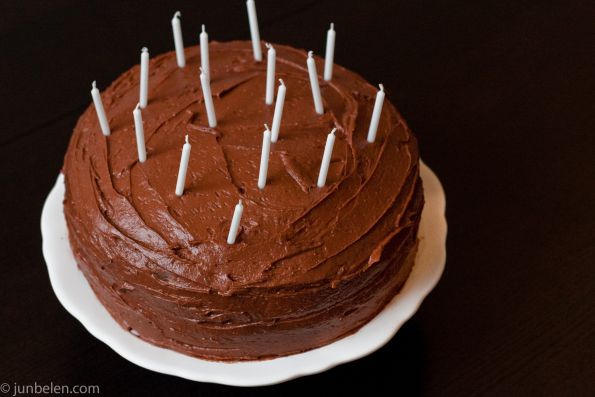
Sandra returned alone holding a greeting card sized envelope in one hand and carrying a cake in the other. She had baked a birthday cake for me. It was a small round cake with white bread and chocolate frosting, my favorite. During our many phone conversations, I told Sandra how I used to get so excited when my mom would bring home a chocolate cake from Peter’s Bakery on my birthday.
I was stunned, my heart jumped, and I stood in the living room speechless for what seemed like hours when finally Sandra broke the silence by asking, “what’s wrong, don’t you like the cake?” Her big brown eyes and confident smile brought me back to earth. We sat on the sofa and talked for about an hour without mentioning our feelings for each other, my current relationship, or my standard appeal to have dinner with me. That weekend, I took a leap of faith and told my girlfriend that I didn’t want to see her anymore. Two weeks later, after a year and a half, Sandra and I went out on our second date.
********************
Next Wednesday: The Peralta family

Looking back, growing up Mexican American on the east side was pretty cool. My family was more American than Mexican. My parents were born in the United States as were my dad’s parents and grandparents. We spoke English at home with a sprinkling of Spanglish to add flavor, just like the tablespoons of my mom’s homemade salsa we would sprinkle on every meal whether it was tacos or fried chicken.
Like language and food, music in our house crossed borders. My dad’s collection included the standards (Sinatra, Martin, Nat King Cole), rock and roll 45’s, and a wide variety of Mexican music. His component stereo system which sat on the “black dresser” in our little dining room was sacred. He meticulously catalogued his collection: Mexican albums stood side by side in the cupboards of the dresser, 45’s sat on the speakers, and cassettes he recorded filled the top dresser drawer.
I loved it all, especially Mexican music. I can still smell the cardboard of album covers that wafted out of the cupboards as soon as the door was opened. Mariachi, tejano, cumbia, banda, a sampling of every type of Mexican music could be found in that cupboard. My favorite genre was, and is, the norteño style from northern Mexico that features a twelve string guitar, bass, drums, and accordion. Ramon Ayala y Sus Bravos del Norte, the “King of the Accordion,” is the soundtrack for this east side boy’s life.
Ramon Ayala, a Grammy Award winning artist, was 18 years old when he formed Los Relampagos del Norte in 1963. He formed the legendary Bravos de Norte eight years later. His songs are about romantic love, heartbreak, and the struggles of everyday life. The lyrics strike a chord across generational lines and international borders. He’s hugely popular with third and fourth generation Mexican Americans, and it’s fascinating to see the adoration he attracts from non-Spanish speakers.
I think this popularity comes from a half-century of being ever-present in many Mexican American households. In my family, Ramon’s music was standard fare at backyard barbecues, weddings, and family celebrations. Hanging out with my friends as a teenager, a few Ramon Ayala tunes would always find their way onto a song list of mostly popular disco and funk music.
When Sandra and I were married, we selected Ramon’s iconic Rinconcito en el Cielo (A Little Corner of Heaven) as our first dance rather than a standard American ballad. The upbeat ranchera style song, played by a classic four-piece band, had us whirling around the dance floor. On my 47th birthday, just months out of the hospital after my health crisis of 2010, Sandra and my family surprised me with a norteño band playing in our backyard. We capped the night gingerly dancing to Rinconcito.
This weekend, I crossed off an item from my bucket-list by going on a pilgrimage to Reno with about 25 friends and family to see “The King of the Accordion” in concert. As people were filing into the grand ballroom of the Silver Legacy Hotel, it seemed like I knew everyone that walked by. Even though I didn’t know them, the faces in the crowd brought back childhood memories as generations of families came together for the show.
When Ramon Ayala casually walked onto the stage, the sold-out crowd erupted in a roaring cheer that didn’t stop until the concert was over. From the first note of the first song, the audience danced in the aisles and swayed arm-in-arm as they sang every word of every song releasing passionate gritos during the musical interludes. Before long, I was no longer in a Reno ballroom; I was transported into a backyard, a wedding, and a family party. The highlight of the night was jumping into the aisles to dance with Sandra as Ramon Ayala himself played Rinconcito en el Cielo.
On the 5-hour drive home, I thought about growing up as a Mexican American on the east side and my career as a high school basketball coach, corporate executive, political chief of staff, and school board member. I’ve had some amazing experiences in my professional life that I never dreamed could be possible. But when it comes right down to it, the Wizard of Oz’s Dorothy had it right, “there’s no place like home.”
The Mexican American community, and the Latino community in general, is highly misunderstood in mainstream American life. Our zest for life and our passion for culture are often mistaken for a lack of desire to achieve academically or professionally. That’s not true. We work hard to make a better life for our children. By the same token, from the vibe of near nirvana at the concert, it seems to me that Latinos can teach a lesson or two about living a balanced life.
Mexican Americans place a high priority on family, relationships, love, heartbreak, and surviving life’s day-to-day challenges. We also place a high priority on working hard to earn our keep. It’s these seemingly contradictory notions that make us a special, yet misunderstood, people. For a half century, Ramon Ayala, a Mexican-born musical artist, has brought the shared experiences of Mexican Americans to life. On Saturday night, he took me on a wonderful two-hour journey back home.

Dear Readers,
After more than 10,000 clicks on this blog, look what readers are saying about East Side Eddie Report.com and Summer in the Waiting Room: How Faith, Family, and Friends Saved My Life!!
“I invited a ton of friends [to follow East Side Eddie Report.com] and I think it’s wonderful what you’re doing. What I really like best is your candor. Thank you, thank you my friend.” – Debra Stephens
“I highly recommend reading the East Side Eddie Report. I encourage you to “like” the East Side Eddie Report Facebook page and to enjoy his posts and his incredible story.” – David Neighbors
“I just caught up on reading all your excerpts…WOW…what a great story…now I can’t wait for the next segment”. – David Duarte
“Wow! I am in suspense and now I can’t wait to read the rest of your story.” – Michele Melnyk
“A darn good read.” – Jim Cunneen
“Eddie, I keep enjoying your weekly reports!!” – Alice Rodriguez
I hope you enjoy reading the posts as much as I enjoy writing them. Encourage your friends to try East Side Eddie Report.com, and “Follow” the blog by clicking on the button on the upper right and “Like” East Side Eddie Report.com Facebook page by clicking on the icon on the lower left of this page.
Thanks!
Eddie
East Side Eddie.com is off today in honor of Presidents’ Day. On Wednesday, look out for the 10th installment of Summer in the Waiting Room: How Faith, Family, and Friends Saved My Life. Thanks for reading!!
Blogger’s note: The following passage is the from my manuscript of Summer in the Waiting Room: How Faith, Family, and Friends Saved my Life. It’s the 7th excerpt from Chapter 1: “48 Viewmont Avenue.” I will post weekly excerpts every Wednesday morning. To read previous installments, go to the Categories link and click on “Summer in the Waiting Room.”
********************
When I started at Joseph George Middle School in the 6th grade, I realized, for the first time in my life, that the world outside of Viewmont Avenue wasn’t very safe. I became the target of an eighth-grade bully who would hide behind a post or a wall at school and jump in front of me to keep me from getting to class on time. After being marked tardy a few times, I figured that I had better do something about it or I would be in trouble with the school and with my parents.
Although my parents taught us that conflicts should be resolved by talking, and using our fists was the last resort, the older kid wasn’t interested in negotiations, so there wasn’t much chance of avoiding a fight. When I explained that to my dad, he as usual counseled against fighting as that would just cause another set of problems for me in school, but he understood if I needed to fight to protect myself.
Preparing for my confrontation, I rallied the neighborhood kids to be at my side so my chances of surviving would be better if I ended up on the losing end of the battle. The next day at school, as expected, the bully jumped out from behind a wall and started toward me. I was scared and nervous, but preparing myself for the first scuffle of my life outside of the rough housing I took from my brother Stevie from time to time.
When the bully had seen that my defenses had suddenly multiplied, he backed off quickly and ran the other way. Learning from that venture outside of the cocoon, I got into the habit of walking to school and class with a few friends every day. I had dodged a bullet, but my days in the protective cocoon of Viewmont Avenue would be coming to an end sooner or later.
When I started high school, my strong academic performance in junior high filled my high school schedule with college prep courses and my classrooms with students I hadn’t been in class with before. These students lived in the foothills up Alum Rock Avenue with their professional fathers and stay at home moms, and went to private Catholic school at St. John Vianney or the elementary school in the hills that the “rich” kids attended.
At first, I felt academically intimidated, but quickly settled down and discovered that I could intellectually compete with these kids in the tough college prep classes. Outside the classroom, I still hung out with my friends from the neighborhood where I felt safe and comfortable. I met the closest of these friends, Rudy Bryand, in junior high school where we spent free periods playing baseball.
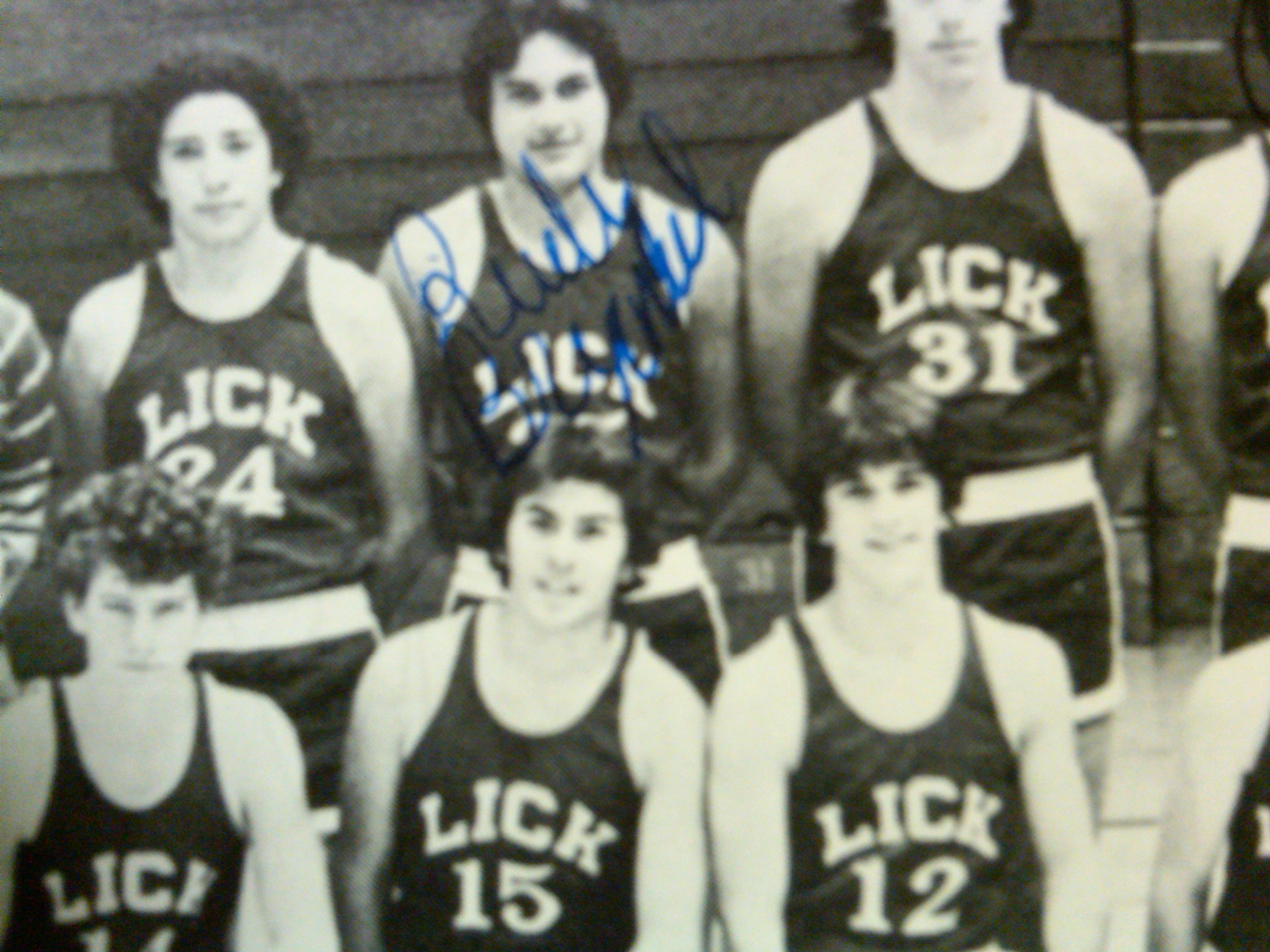
Rudy lived right around the corner on Alum Rock Avenue about nine houses away from me. We got to know each other better in high school. I talked him into trying out for the frosh/sophomore basketball squad, and of course, we both played on the James Lick baseball team for four years. Rudy and I quickly became best friends. He was tall and handsome, a born comedian with a charismatic personality that attracted friends and girls with ease.
Together, we had our first beer, went to football and baseball games, talked about girls, and caroused around town as rambunctious young men. He was the best man at my wedding and I was the best man in his. As we got older, we started having our own families, had chosen different career paths and social circles, and drifted apart.
His street smarts complemented my book smarts, so we made a likable team that would cause mischief everywhere we went. He would say that our friendship was analogous to walking a tightrope; he would walk out as far as he could urging me to follow, while I stayed closer to safety beckoning him to come back in. A high school friend and baseball teammate who I still stay in contact with, once said that, “Rudy was crazy and Eddie could talk his way in and out of anything.”
A few years after high school, an incident perfectly captured that observation when Rudy, a couple of friends, and I were confronted by police after a fight broke out in a fast-food joint parking lot on the west side of town where one of our friends worked. While the three of us were waiting in the car for our food at the end of a night of bar-hopping, Rudy got into a verbal altercation with a couple of guys in the car parked next to us because he was flirting with one of their girlfriends.
One thing led to another and soon Rudy was in a fist fight with the offended boyfriend. A car full of guys, presumably friends of Rudy’s opponent, showed up and entered into the fracas. In the chaos and confusion that ensued, I took out a baseball bat from the trunk of the car to protect myself, and within minutes, police sirens were wailing as the other combatants scattered into the night.
When the police arrived, the bat was safely stored in the fast-food place. The police said that they were called to the location because a group of young men were fighting with baseball bats. As the spokesman of the group, I assured the officers that we didn’t see an altercation and had no knowledge of bats that were said to have been used in a brawl. After a few more questions, and despite a deep gash over Rudy’s left eye, the cops let us go without explanation. With Rudy, there was never a dull moment during a night (or day) on the town.
********************
Next Wednesday: Life at James Lick High School
Eddie is available to speak at your next event or conference. To learn more about speaking services click on the “Speaking Engagement” tab under the banner on this page.
To schedule Eddie for your next breakfast, luncheon, or dinner event, e-mail eddie.m.garcia@comcast.net, or call 408-426-7698.

I Have a Dream
by Rev. Martin Luther King, Jr.
March on Washington, 1963
I am happy to join with you today in what will go down in history as the greatest demonstration for freedom in the history of our nation.
Five score years ago, a great American, in whose symbolic shadow we stand today, signed the Emancipation Proclamation. This momentous decree came as a great beacon light of hope to millions of Negro slaves who had been seared in the flames of withering injustice. It came as a joyous daybreak to end the long night of their captivity.
But one hundred years later, the Negro still is not free. One hundred years later, the life of the Negro is still sadly crippled by the manacles of segregation and the chains of discrimination. One hundred years later, the Negro lives on a lonely island of poverty in the midst of a vast ocean of material prosperity. One hundred years later, the Negro is still languished in the corners of American society and finds himself an exile in his own land. And so we’ve come here today to dramatize a shameful condition.
In a sense we’ve come to our nation’s capital to cash a check. When the architects of our republic wrote the magnificent words of the Constitution and the Declaration of Independence, they were signing a promissory note to which every American was to fall heir. This note was a promise that all men, yes, black men as well as white men, would be guaranteed the “unalienable Rights” of “Life, Liberty and the pursuit of Happiness.” It is obvious today that America has defaulted on this promissory note, insofar as her citizens of color are concerned. Instead of honoring this sacred obligation, America has given the Negro people a bad check, a check which has come back marked “insufficient funds.”
But we refuse to believe that the bank of justice is bankrupt. We refuse to believe that there are insufficient funds in the great vaults of opportunity of this nation. And so, we’ve come to cash this check, a check that will give us upon demand the riches of freedom and the security of justice.
We have also come to this hallowed spot to remind America of the fierce urgency of Now. This is no time to engage in the luxury of cooling off or to take the tranquilizing drug of gradualism. Now is the time to make real the promises of democracy. Now is the time to rise from the dark and desolate valley of segregation to the sunlit path of racial justice. Now is the time to lift our nation from the quicksands of racial injustice to the solid rock of brotherhood. Now is the time to make justice a reality for all of God’s children.
It would be fatal for the nation to overlook the urgency of the moment. This sweltering summer of the Negro’s legitimate discontent will not pass until there is an invigorating autumn of freedom and equality. Nineteen sixty-three is not an end, but a beginning. And those who hope that the Negro needed to blow off steam and will now be content will have a rude awakening if the nation returns to business as usual. And there will be neither rest nor tranquility in America until the Negro is granted his citizenship rights. The whirlwinds of revolt will continue to shake the foundations of our nation until the bright day of justice emerges.
But there is something that I must say to my people, who stand on the warm threshold which leads into the palace of justice: In the process of gaining our rightful place, we must not be guilty of wrongful deeds. Let us not seek to satisfy our thirst for freedom by drinking from the cup of bitterness and hatred. We must forever conduct our struggle on the high plane of dignity and discipline. We must not allow our creative protest to degenerate into physical violence. Again and again, we must rise to the majestic heights of meeting physical force with soul force.
The marvelous new militancy which has engulfed the Negro community must not lead us to a distrust of all white people, for many of our white brothers, as evidenced by their presence here today, have come to realize that their destiny is tied up with our destiny. And they have come to realize that their freedom is inextricably bound to our freedom.
We cannot walk alone.
And as we walk, we must make the pledge that we shall always march ahead.
We cannot turn back.
There are those who are asking the devotees of civil rights, “When will you be satisfied?” We can never be satisfied as long as the Negro is the victim of the unspeakable horrors of police brutality. We can never be satisfied as long as our bodies, heavy with the fatigue of travel, cannot gain lodging in the motels of the highways and the hotels of the cities. We cannot be satisfied as long as the negro’s basic mobility is from a smaller ghetto to a larger one. We can never be satisfied as long as our children are stripped of their self-hood and robbed of their dignity by signs stating: “For Whites Only.” We cannot be satisfied as long as a Negro in Mississippi cannot vote and a Negro in New York believes he has nothing for which to vote. No, no, we are not satisfied, and we will not be satisfied until “justice rolls down like waters, and righteousness like a mighty stream.”¹
I am not unmindful that some of you have come here out of great trials and tribulations. Some of you have come fresh from narrow jail cells. And some of you have come from areas where your quest — quest for freedom left you battered by the storms of persecution and staggered by the winds of police brutality. You have been the veterans of creative suffering.Continue to work with the faith that unearned suffering is redemptive. Go back to Mississippi, go back to Alabama, go back to South Carolina, go back to Georgia, go back to Louisiana, go back to the slums and ghettos of our northern cities, knowing that somehow this situation can and will be changed.
Let us not wallow in the valley of despair, I say to you today, my friends.
And so even though we face the difficulties of today and tomorrow, I still have a dream. It is a dream deeply rooted in the American dream.
I have a dream that one day this nation will rise up and live out the true meaning of its creed: “We hold these truths to be self-evident, that all men are created equal.”
I have a dream that one day on the red hills of Georgia, the sons of former slaves and the sons of former slave owners will be able to sit down together at the table of brotherhood.
I have a dream that one day even the state of Mississippi, a state sweltering with the heat of injustice, sweltering with the heat of oppression, will be transformed into an oasis of freedom and justice.
I have a dream that my four little children will one day live in a nation where they will not be judged by the color of their skin but by the content of their character.
I have a dream today!
I have a dream that one day, down in Alabama, with its vicious racists, with its governor having his lips dripping with the words of “interposition” and “nullification” — one day right there in Alabama little black boys and black girls will be able to join hands with little white boys and white girls as sisters and brothers.
I have a dream today!
I have a dream that one day every valley shall be exalted, and every hill and mountain shall be made low, the rough places will be made plain, and the crooked places will be made straight; “and the glory of the Lord shall be revealed and all flesh shall see it together.”2
This is our hope, and this is the faith that I go back to the South with.
With this faith, we will be able to hew out of the mountain of despair a stone of hope. With this faith, we will be able to transform the jangling discords of our nation into a beautiful symphony of brotherhood. With this faith, we will be able to work together, to pray together, to struggle together, to go to jail together, to stand up for freedom together, knowing that we will be free one day.
And this will be the day — this will be the day when all of God’s children will be able to sing with new meaning:
My country ’tis of thee, sweet land of liberty, of thee I sing.
Land where my fathers died, land of the Pilgrim’s pride,
From every mountainside, let freedom ring!
And if America is to be a great nation, this must become true.
And so let freedom ring from the prodigious hilltops of New Hampshire.
Let freedom ring from the mighty mountains of New York.
Let freedom ring from the heightening Alleghenies of Pennsylvania.
Let freedom ring from the snow-capped Rockies of Colorado.
Let freedom ring from the curvaceous slopes of California.
But not only that:
Let freedom ring from Stone Mountain of Georgia.
Let freedom ring from Lookout Mountain of Tennessee.
Let freedom ring from every hill and molehill of Mississippi.
From every mountainside, let freedom ring.
And when this happens, and when we allow freedom ring, when we let it ring from every village and every hamlet, from every state and every city, we will be able to speed up that day when all of God’s children, black men and white men, Jews and Gentiles, Protestants and Catholics, will be able to join hands and sing in the words of the old Negro spiritual:
Free at last! Free at last!
Thank God Almighty, we are free at last!3

