Category Archives: Miscellaneous Posts

My All-American Hero: One Story from the Other Side of the Tracks

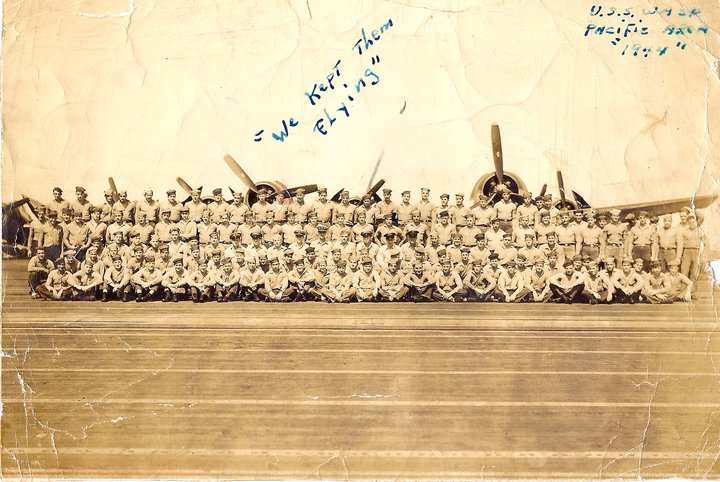
My dad is somewhere in the first row of this photo taken aboard the USS Wasp in 1944.  The handwritten notes are my dad's (Garcia family photo)
My dad is somewhere in the first row of this photo taken aboard the USS Wasp in 1944. The handwritten notes are my dad’s (Garcia family photo)

I’ve been a history junkie ever since I was a kid.  I would ride my bike to the county library and go straight to the stacks that told heroic tales of Americans revolting against King George III, struggling on the battlefields of Gettysburg and Vicksburg, and defending the world against tyranny.  I loved  the American History course taught by the legendary Mr. Duus and Mr. Hefelfinger at James Lick High School, and I went on to earn a bachelor’s degree in History from San Jose State University.

As a kid, I was most interested in World War II probably because my dad served on the aircraft carrier U.S.S. Wasp in the Pacific Ocean.  Like most in his generation, he didn’t talk about the war unless he had a few whiskey and waters under his belt, and even then he wouldn’t say much.  With the tidbits of information he shared, I would scour the books from the library trying to piece together my dad’s experience on the Wasp.

To this day, I could spend hours watching the History Channel and Military Channel gathering more data about our collective past.  Many episodes include stories about the courageous Black Buffalo Soldiers fighting for freedom during the Civil War and the valiant Japanese-American 442nd Regiment defending our flag in WWII.  American-born Latinos have also fought with courage and valor to defend our country, yet they’re nowhere to be found in mainstream accounts.  Why is this?

Several years ago, the award-winning PBS documentarian Ken Burns completed a 14 ½ hour series about WWII.  I had watched with admiration his comprehensive masterpieces on topics like the Civil War, baseball, the Statue of Liberty and more.  I looked forward to the series with anxious anticipation, especially how Burns’ genius might portray the half million Latinos who fought in WWII and the 13 Latino Medal of Honor recipients.  It turns out that Burns didn’t include one story about them.

Prior to the airing of the series, national Latino leaders requested that Burns find a way to tell the important stories of these forgotten Americans.  Burns initially refused to bend to “political correctness” citing artistic freedom, but he ultimately compromised by adding a few interviews with Latino veterans.  I didn’t watch.  When Burns came to SJSU for a lecture with public radio last week, I didn’t go.

In some ways, I understand why Ken Burns couldn’t comprehend what the fuss was all about.  The land that is now California, Texas, Arizona, and New Mexico formed the northern border of Mexico until they became the spoils of war when the Unites States won the War with Mexico of 1846-1848. Mexicans living in those territories didn’t cross the border, the border crossed them.  Since then, American-born citizens of Latino descent have been treated like foreigners in their own land.

Less than a century later, nearly 1.2 million American-born Latinos were evicted from the U.S. to Mexico during the Mexican Repatriation Program of 1929 to 1939 to open up agricultural and factory jobs for Okies fleeing the Depression Era Dust Bowl.  More recently, Arizona’s notorious Senate Bill 1070 allows law enforcement to detain anyone when there’s “a reasonable suspicion of being an illegal immigrant.”  So in our country, the rule is you must’ve been born somewhere else if you have a Latino surname.

Although those of us born in the United States represent the majority of Latinos in our country, most Americans don’t even know who we are.   I didn’t have to look far to find the answer.  My dad was born in Las Cruces, New Mexico in 1926.  His parents were born near the same place during the 1880s when New Mexico was an American territory.  I’m not sure how far back the family tree goes, but I’m willing to guess that the Garcías were living near Las Cruces when the Pilgrims hit Plymouth Rock in 1620.

When he was 11 years old, my dad, his siblings, and my widowed grandmother moved to Phoenix, Arizona where my dad went to grammar school and high school.  In 1942, at the age of 16, he enlisted in the Navy by forging my grandmother’s signature so he could fight for his country.  One of my most prized possessions is a log he kept during the last days of the war and the victorious trip home on the U.S.S. Wasp.

Back at home, he was refused entrance into a Phoenix dancehall despite wearing his navy uniform because he was “Mexican.”  He took a few classes on the G.I. Bill, married my mom, moved to San Jose looking for the American Dream, and got a job at the Post Office.  Together my mom and dad had six kids (I’m number 5), bought a house in east San Jose, and struggled to give us a better life.  We have become businessmen, school administrators, bank executives, university librarians, and public servants.

That’s my dad’s story.  He’s an All-American hero to me.  I know there are millions of others just like him.  That’s why Latinos can’t wait for Kens Burns or anyone else to understand who we are so our stories can be told.  Until we tell our own stories, our fellow Americans will continue to be confused.  One just needs to look at the recent Twitter-sphere condemnation of the American Music Awards for showcasing American-born Latinos citing that Mark Antony, Jennifer Lopez, et al, weren’t American.

A few fellow Latino SJSU alums and I traded barbs about Ken Burns on Facebook when we learned he was scheduled to appear at our alma mater.  One college friend, Xavier Soriano, reminded us that we should tell our own stories.  He’s right.  We’re proud Americans who honor and cherish our ancestry.  Our generation is educated and has access to resources.  So let’s get on with it.  Let’s tell our story.

Thanksgiving Reflections

My parents sitting at their kitchen table ca. 1990
My parents sitting at their kitchen table around 1990

On a rainy Wednesday afternoon last week I attended a funeral for a man named Chuck Gibson, my friend Laurie Mesa’s dad.  Like most people, attending funerals isn’t one of my favorite things to do, especially after burying my mom and dad more than a decade ago.  Since then, I’ve been to many memorial services to support friends and family, and I’m always inspired by the stories.  In just a brief time, those in attendance learn something special about the person being honored.

Chuck’s service was no different.  Other than being Laurie’s dad, I didn’t know him.  Nevertheless, I joined his friends and family by laughing, choking up, and feeling warm inside while listening to the anecdotes.  He was a family man, a good friend, and good neighbor.  He was a tinkerer and a handyman who could fix anything no matter how complex.  In that one hour, I came to admire Chuck for being a man who was selfless and always available to give a helping hand.

After the service, I went to visit my parents’ grave site at the same cemetery.  Standing for just a few minutes in the rain, I said a prayer and reflected at their grave markers, and thought about them on my drive home.  Although tales about my parents and people like Chuck won’t be told in history books, their small acts of kindness impacted people in ways they’ll never know.  One Thanksgiving, my parents did something that left an indelible mark on my life.

My dad was old-school and taught us, through counsel and by way of example, to work hard, play by the rules, and have respect for ourselves and others.  There was no variation from this formula.  My mom was the epitome of the warm and loving maternal parent.  She taught us unconditional love, faith, compassion, and perseverance.  Even during the last days before in her death in 2003, she remained strong in her faith and convictions.

While any indiscretion on our part would be met with my dad’s scowls and rebukes, my mom would react with gentle counsel and loving support urging us to do better the next time.  She was our biggest cheerleader encouraging us to be the best we could be.  Each morning she would remind us that every day was good because God gave us another day, after each meal she insisted that we say “thank you God,” and she encouraged us to pray the “Our Father” before bedtime.

Although my mom never had much herself, she would share what she had with others to make their lives just a bit better.  One evening, right after Thanksgiving, when I was about eight or nine years old, I remember a family calling at our front door.  A young couple, with a little girl sitting in a rickety stroller and a baby boy sleeping in his father’s arms, stood at the porch.  The man, in a whispered southern accent, explained to my mom that they were hungry and looking for something to eat.

It looked like they had been walking around for some time as the man was unshaven wearing dirty pants and shirt, and the woman looked tired with hollow eyes wearing a dress she may have made herself.  My parents invited them into the kitchen and shared the few leftovers from our Thanksgiving meal from the night before, which I’m sure my mom was going to use to make some fried concoction for dinner.  The couple gratefully ate at the small kitchen table like they were having a meal in a fancy restaurant.

After they finished eating, my mom packed a few more leftovers in a paper bag and wished them luck.  I don’t remember what we had for dinner that night, but I’m sure it was something like chopped up weenies scrambled with eggs and potatoes, our usual type of dinner on the days leading up to payday.  How that young family came to our door and why they chose our house I’ll never know.  I just know that my parents’ generosity that night was an incredible lesson in compassion and giving to others.

We always seem to wait until funeral time to celebrate the neighbor who helps fix the furnace on a cold winter night or a couple who opens their humble home to those less fortunate.  In an age of 24-hour news and instant communication, heroes rise and fall in the blink of an eye rarely making a lasting impression on people.  For me, it was good for the soul last week to spend an hour at a memorial service and a few minutes standing over my parents’ graves.

As families come together for Thanksgiving this week, I’m sure the dinner table conversations will include the latest about the NFL’s winners and losers, family gossip, and debates about politics.  In those exchanges, we’ll be looking for heroes and villains to explain why things are the way they are.  I’m sure that I’ll be a full participant in the banter, but I’ll also be sure to take a moment to be thankful for people like my parents and Chuck Gibson, the enduring heroes in our lives.

This is Fifty!

1st Annual East Side Eddie Golf Classic

We gathered at Los Lagos Golf Course in east San Jose on a sunny and crisp Saturday November morning last week for what my cousin Tavo dubbed the 1st Annual East Side Eddie Golf Classic.  Despite the fancy name, it was really just 15 guys, family and old friends, getting together to play a round of golf for my 50th birthday.  After drawing names to make up the teams, our competitive juices kicked in as we headed to the first tee.

Just as I expected, the rowdy “golfers” heckled the first group that teed off.  So much for golf etiquette, it was the beginning of a typical day for this group of mostly hackers.   The next four hours flew by as we re-told the same old stories, all seemingly with new and exciting details to make them sound more adventurous to the nephews in the group.  We reminisced, laughed, and reflected on the tough times each of us had faced.

The day gave me a chance to look back and think about what I’ve discovered about living.  I came up with five “rules,” one for each decade.  They represent the roller coaster that is my life.  It’s been quite a wild ride, so take these rules as recommendations only at your own risk.

Rule #1: When You’re a Kid, Play and Dream BIG 

There were lots of kids in the neighborhood where I grew up.  We played basketball on my driveway, touch football on the street, and walked to the end of the block to play baseball at the neighborhood school.  I did fine by myself too.  When none of the neighborhood kids could play, my backyard and driveway would become a jungle, baseball diamond, and college basketball arena.  By the time I was 10, I had done it all: I had been a great explorer, all-American basketball player, and a hall of fame baseball star.

Rule #2: No one is THAT Special

When I was 12 years old, I was captain of my little league team and the winning pitcher in the championship game.  I always did well in school and was captain of the varsity basketball and baseball team senior year in high school.  Up to this point, everything was easy for me.  I entered San Jose State University full of life and full of myself.  Unfortunately, college wasn’t that easy.  By the time I was 20, I had flunked out of SJSU and began a downward spiral fueled by the self-doubt and self-loathing that comes with failure.

Rule #3: It’s Never Too Late

Through the dark times, my parents continued to believe in me, my dad in his “tough love” kind of way and my mom with unconditional love.  Sandra came into my life and became the third leg in the stool that would stand me up.  I went back to school in my late-20s as a reluctant student, feeling awkward in classes with teenage freshmen and thinking it was too late for me.  A wise professor, Dr. Randall Jimenez, told me that I would be 30 years old one day with or without a college degree, it was up to me.  I studied hard and worked tirelessly.  By the time I was 30, I was a college graduate.

Rule #4: Play Like a Champion

Playing like a champion doesn’t mean winning every game.  Champions work hard, capitalize on the talents God gave them, take risks, and get right back up after being knocked down.  During my 30s, I had two beautiful daughters with Sandra, bought a home, lost a job, started a new career, and lost three campaigns for public office.  I celebrated the successes and dusted myself off after each defeat.  By the time I was 40, I had a great family and a career on the rise.

Rule #5: “Here for a Good Time Not a Long Time” (title of hit song by county star George Strait)

Sandra and I had many plans for our life together and they were all falling into place.  Sandra was an elementary school principal, I was in executive management and president of the school board, the girls were doing well in school, and our retirement plans were right on course.  Woody Allen once said, “If you want to make God laugh, tell Him your plans.”  He got that right.  My heart attack brought our plans to a jolting stop.  George Strait has it right too.  My plans and ambitions have taken a backseat, and cherishing every moment of life is now in the driver’s seat.

Back at the 1st Annual East Side Eddie Golf Classic, two teams tied for first place at the end of 18 holes.  There was confusion about the scorecards, and the outcome was fraught with controversy.  What’s a tournament director to do in this situation?  I went to the obvious answer: a beer chug-off for the championship trophy.  With the mugs filled to the brim and the crowd gathering around the chuggers, all eyes were on the tiebreaker.  This is 50 and you know what I’ve learned?  We’re here for a good time not a long time.

Welcome to ESEReport.com!

West wall of the Mexican Heritage Plaza in East San Jose

Dear Readers,

Welcome to the ESE Report, a weekly blog that touches on leadership, education, and public affairs from a unique perspective.  It’s a view from the “other side of the tracks.”

I was born and raised in East San Jose, the predominately Latino section of the Santa Clara Valley that has been historically mislabeled “the bad side of town” by those whom have spent little or no time there.  Despite this negative stereotype, the East Side I’m from is a no-nonsense working-class neighborhood with no frills, a place where my late parents taught me and my siblings to work hard, get an education, play by the rules, and respect ourselves and others.

As a boy, I had a happy and carefree childhood.  As a young man, I flunked out of college, wandered aimlessly through life for several years, and ultimately returned to college to graduate on the dean’s list.  As a man, I have lived the American Dream: I married a wonderful woman, we have two daughters, and I built a career on work that inspires me.

Professionally, I’ve had the rare opportunity to roam the sidelines as a high school basketball coach, walk the halls of Congress as a corporate executive, strike the gavel as a school board president, and experience the machinations of local government as a political chief of staff.

In over 25 years of working in politics, business, education, and community service, I’ve seen self-interest and self-preservation bring out the worst in people, and I’ve seen the enduring human spirit of serving others bring out the best in people.

When I was 46 years old, I had a massive heart attack and suffered from Acute Respiratory Distress Syndrome (ARDS), a rare lung disorder that few people survive.  With strong faith, a loving family, supportive friends, and a great medical team, I live to tell the story today.

It’s these experiences slow-cooked together that have molded the way I see the world: practical and hard-nosed, yet hopeful and idealistic.  Like Frank Capra’s fictional hero George Bailey from the 1947 Christmas Classic “It’s a Wonderful Life,” I’m a sucker for happy endings.   Through it all, my heart and soul, and my core values are still from the East Side.

The inspiration for the name of this blog came from Navarra Williams, a former corporate executive who became a mentor and friend.  Early in my corporate career, Navarra, who himself grew up in the tough neighborhoods of Washington, D.C., gave me the nickname “East Side Eddie,” a moniker I proudly carry with me to this day.

Every city, town, and hamlet in America has an “east side,” and every east side has a voice.  It’s the voice of hard-working people who toil so their children can have a better life.  It’s the voice that’s rarely heard.  It’s the voice that deserves to be understood.  The ESE Report hopes to do just that by being insightful, provocative, amusing, and, at times, inspiring.

Please feel free to browse the Leadership, Education, and Public Affairs buttons on the blog.  I hope you find the topics interesting.  You can follow the ESE Report by clicking the “Follow” link on the bottom, right-hand corner of this page.

I look forward to hearing from you!

Eddie García
San José, California
September 23, 2013