All posts by eddiemgarcia

East Side Eddie Report.com Special: Redskins, Cholos, & George Zimmerman

MSNBC host Martin Bashir

Although East Side Eddie Report.com is a weekly blog, every once in a while I feel compelled to post more than once a week.  This is one of those times.

Glossary

redskin – n. Offensive Slang. Used as a disparaging term for a Native American (American Heritage Dictionary, 3rd edition)

cholo – n. East Side Slang. A Mexican or Mexican American gang member; someone who dresses in the style of a gang member (East Side Dictionary)

George Zimmerman – n. A racist who got away with murder (Common Knowledge Dictionary)

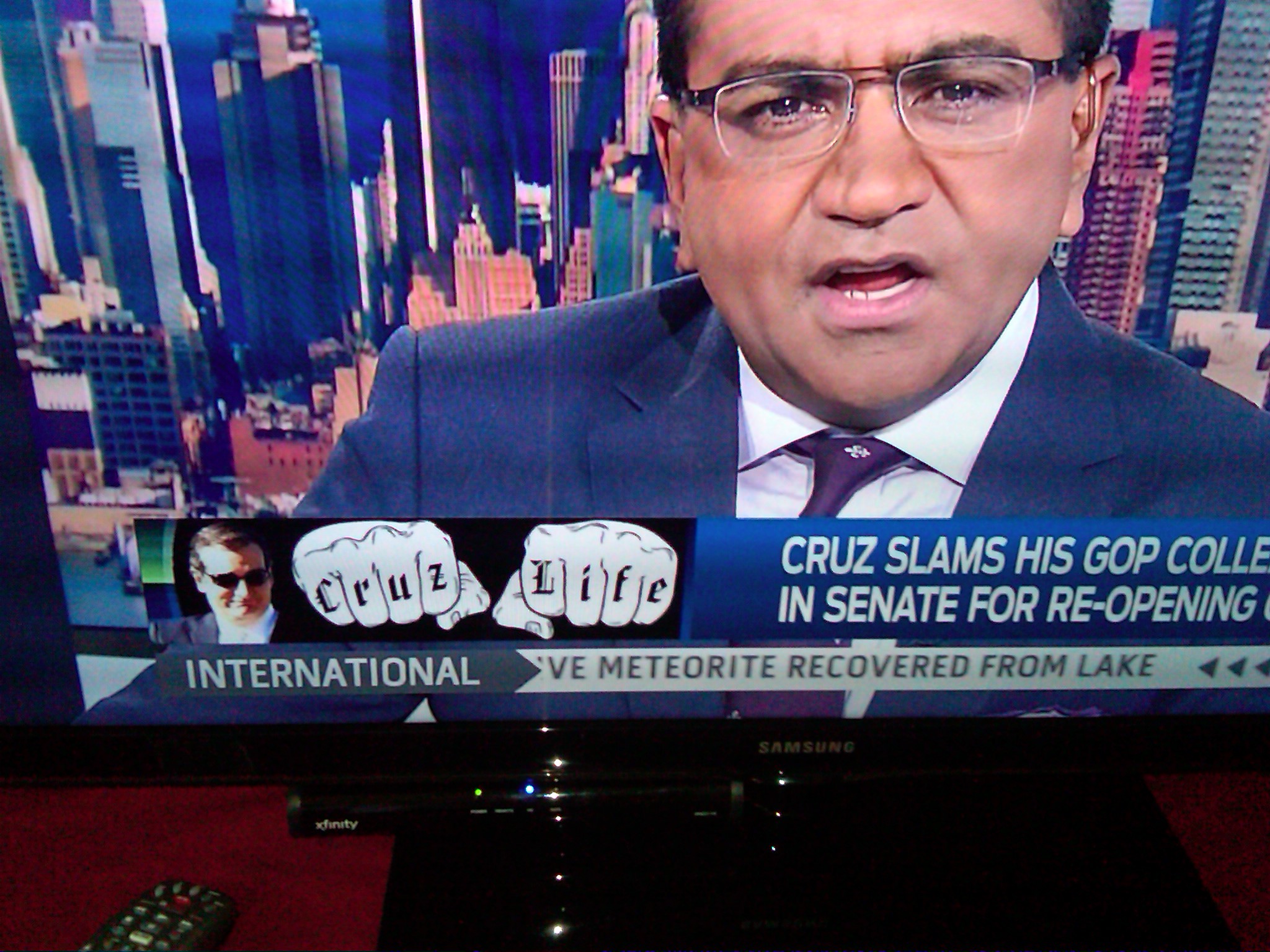
Last week, I was watching the Martin Bashir show on MSNBC and the host was talking about how Texas Senator Ted Cruz is a thug who held Congress hostage for 16 days over a futile crusade to rid the country of Obamacare.  I love watching Bashir because he’s a brash critic of the conservative cause.  As I was relishing in his tirade against Cruz, a graphic on the lower left of the screen suddenly caught my attention.  It was a photo of Cruz in dark sunglasses next to a drawing of two clenched fists with the words “Cruz Life” tattooed in Old English font on the fingers.

A tattoo with an Old English font is the stamp of primarily Mexican and Mexican American cholos and “Cruz Life” is clearly a reference to the “thug life” gang culture coined by the late rapper Tupac Shakur.  Bashir obviously meant to portray Cruz as a Latino gangster bullying the United States Congress.  Of course I agree that the senator is a bully, but my first reaction to the interplay between Bashir’s commentary and his drawing was, “here we go again.”  It never fails that non-Latino America, even bleeding heart liberals like Bashir, use negative images to make a point about Latinos.

The old Chicano Studies student in me wanted to complain to MSNBC, call Bashir a racist, and start a protest.  Fortunately, I caught my breath, came to my senses, and gave this issue thoughtful reflection.   Why did Bashir use those tattooed fists?  Why was I disappointed in MSNBC, the bastion of liberal journalism?  Why didn’t America find it offensive?   I explored a variety of answers, and kept coming back to the notion that Bashir’s actions were another manifestation of “inherent bias,” a term I’ve used in other blog posts.

Technically, “inherent bias” is used by statisticians to measure something or other that is way beyond my intellectual abilities to comprehend.  The first time I saw the phrase in a sociological context was in a newspaper article about Santa Clara University students dressed as janitors, maids, and pregnant teens at a Mexican theme party.  Rather than racism, the university president believed the students’ actions were the result of an “inherent bias of Mexicans” due to negative stereotypes in the media.  He concluded that the whole affair was a “teachable moment.”

This brings us to redskins, George Zimmerman, and a teachable moment for Martin Bashir.

There’s a debate brewing about the Washington Redskins NFL team’s mascot.  The word “redskin,” like the “N word,” was used to oppress and humiliate; so Native American groups are calling on the team’s owner to change the name.  Outside of the Native American community, the liberal media has been the biggest advocate for the repeal of the Redskins’ nickname.  Martin Bashir is one of the loudest voices on this issue.  He understands the evil history and devastating effect the word has wrought on Native people.  Like Bashir, I would like to see the word “redskin” buried in the same cemetery as the “N word.”

Bashir was also at the forefront of exposing George Zimmerman for what he really is: a racist who used a badly conceived Florida law to murder Trayvon Martin for being a young black man wearing a hoodie in the wrong neighborhood.  While the right-wing and mainstream media camouflaged the race issues by focusing on the Florida law and who started the fight, Bashir and his liberal cohorts kept the spotlight on the racial biases that led to the “stand your ground” laws and their murderous by-products.  As with the Redskins debate; Bashir recognizes the wickedness of racism against Black Americans.

How could a progressive champion of people of color make such a faux pas with the tattooed “Cruz Life” fists?  If the president of Santa Clara University is correct, Martin Bashir’s experience with Latinos is limited to media portrayals.  Images of tattooed Mexican American gangsters creating mayhem are regular features on cable TV real crime story shows.  So when Bashir wants to make the point that Cruz is a bully, he caricatures the conservative southern senator born to a Cuban father and Irish American mother as a Mexican American gangbanger in dark sunglasses with tattooed fingers.

This is problematic on many levels as it perpetuates the stereotype that Latinos are dangerous Mexican American gang members.  Combined with the conservative obsession to block immigration reform, Latinos are either cholos or “illegals” in the American consciousness.  I’m absolutely sure that this wasn’t Bashir’s intent with the graphic, but it surely was the result.  The only way to overcome these negative images is for leaders in the Latino community to use their influence to educate mainstream America on the dangers of unintentional actions due to inherent bias.

I don’t advocate protesting or publicly flogging Bashir or other progressives who fall into the same trap. He’s one of the good guys.  Rather, affluent Latinos should invest in more projects like “Latinos in America,” the brilliant three-part documentary aired on PBS, so Americans can learn about the Latino experience as we have come to understand the Native American and Black experience.  Influential Latinos in the media and Latino political leaders should take Bashir aside on the cocktail circuit and let him know why using the “Cruz Life” image wasn’t accurate or appropriate.

As a nation, it’s doubtful that we’ll ever be rid of the scourge of individual racism, but I believe that having honest and courageous conversations about race will minimize the negative effects of inherent bias.  This would be a giant step toward erasing negative and demeaning images of people of color.

You Can’t Score If You Don’t Shoot

Taking my dad's advice in 1980
Taking my dad’s advice in 1980

The best advice I ever got came from my dad when I was about 12 years old.  We were shooting baskets on our driveway at 48 Viewmont Avenue in east San Jose.  He was teaching me how to make bank shots off the homemade plywood backboard he had hung over the one-car garage door.  My dad grew up during the Depression and was a WWII veteran, so he was practical, no-nonsense, and to the point.  After barking a few pointers about shooting a basketball, he said, “don’t forget that you can’t score if you don’t shoot.”

I’m pretty sure that my high school basketball teammates weren’t too happy with me when I took that advice literally because I know that I missed way more shots than I made.  But my dad’s lesson was clear; success would come by taking calculated risks every now and then, hard work, and perseverance.   I’ve had lots of failures and picked up a few successes along the way in my journey through life, and my dad’s advice on the driveway that day has guided me through the toughest of times.

First of all, I know how to lose a political campaign.  I ran for school board in 1996, 1998, and 2008, and I was a candidate for city council in 2000.  Even though I demonstrated a true passion for public office, I lost all four races.  Undeterred, I got an opportunity to serve when the East Side high school board appointed me in 2006 and 2009.  During my time on the school board, we saved after school sports from the budget ax and passed a historic policy that ensures every student has a chance to go to college.

In 2005, Comcast invited me to its exclusive Comcast Executive Leadership Forum, a year-long executive training program.  I arrived at the company’s Philadelphia headquarters on a cold and snowy January morning wearing my best dark suit and a new overcoat.  Passing a mirror, I suddenly froze, and the fears and doubts of an east side boy in way over his head consumed me.  I debated on whether I should just go back home, but decided to stay.  A little less than two years later, I was promoted to vice president of government affairs for northern and central California.

During the summer of 2010, I faced the biggest challenge of my life.  I had a massive heart attack, and subsequent complications in my lungs left me in a coma for a month and in the hospital for over 100 days.  When I awoke from the coma, I couldn’t talk, walk, or move any of my limbs.  After intensive therapy and a few of years of a disciplined exercise program to strengthen my heart and lungs, I thought about my dad as I crossed the finish line of the annual East Side Save Our Sports 5K walk with my wife Sandra and daughters Marisa and Erica.

You can’t score if you don’t shoot!

Through many defeats and a few victories, I’ve learned that my dad had it right.  Taking a chance, working your behind off, and keeping at it is the path to achievement.  The past several years, I’ve had the great privilege to work with emerging community leaders through the Latino Leadership Alliance Leadership Academy.   We discuss a variety of concepts and strategies needed for leadership.  The conversations usually come to the conclusion that effective leadership results from some version of my dad’s advice.

We live in an age of non-stop media and talking heads with no leadership experience preaching quick fixes to complex problems.  President Theodore Roosevelt famously said that these self-proclaimed leaders “neither know victory nor defeat” because they stay on the sidelines.  To be sure, leadership concepts can be learned in seminars and conferences, but the practice of true leadership can only be achieved by getting into the fray.  When advising aspiring leaders, I tell them that there is no substitute for taking a leadership role when the opportunity presents itself, especially if it’s risky, challenging, and seemingly without success in sight.

So, if you want to serve on the PTA, be a scout leader, run for Congress, or apply for that promotion at work, go ahead and go for it.  Just know that you’ll have to step out of your comfort zone, work extra hard, and hang on for a long and bumpy ride.  It’ll be worth it.  And, never, ever forget that you can’t score if you don’t shoot.

Leadership Lessons at Kinney Shoes

422479_186663308108340_807576089_n

The other day, I was driving on Story Road in east San Jose reflecting on what influenced me to seek out leadership roles at work and in the community.  For starters, I’ve always been fascinated with great leaders.  When I was a kid, I would ride my bike to the county library and check out books about U.S. presidents and WWII generals.  After college, I began gobbling up biographies on Washington, Lincoln, Churchill, LBJ, and others.

Throughout my career, I’ve had the opportunity to participate in leadership programs that opened my eyes to a complex world.  I’ve sat transfixed in corporate seminars listening to words of wisdom from modern-day leaders like President Bill Clinton, General Colin Powell, and Oprah Winfrey.  From Washington to Winfrey, they all had the same qualities: they knew how to build great teams, create trust and loyalty with those around them, and inspire others to greatness.

As I drove by the old Kinney Shoes store on Story Road, it suddenly it hit me that it was there, where I had a part-time job during my high school days, that I learned my first lessons in leadership.  Kinney’s was an institution in east San Jose throughout the 1970s and 80s.  Everybody bought shoes there.  During the last days of summer just before school started, the store was like Grand Central Station at rush hour.  Suede wallabies, Mary Janes, and NBA “tennies” (Chuck Taylor knock-offs) flew off the shelves.

The part-time sales team was a diverse group of east side kids from Latino, Black, White, and Filipino families.  The leader of the crew was the store manager, an African American son of a soldier in his early 30s named Bob Williams.  Looking back on that experience, I realized that Bob was a true leader in the classic sense.  He carefully assembled an effective team, created a work environment that felt more like family than a part-time job, and transformed a bunch of east side teenagers into a shoe-selling machine.

Bob knew what he wanted when he hired people for part-time sales positions.  He put together a team of teenagers who came from hard-working families, participated in high school sports, and demonstrated leadership skills.  Billy Ham, my classmate and baseball teammate at James Lick High School, introduced me to Bob.  At the brief job interview I’ll never forget, Bob asked about my family, what sports I played, and if I was in the starting lineup.  Seemingly satisfied with my answers, he hired me on the spot.

While it was clear that we were there to sell shoes, Bob showed a genuine interest in our family and school life.  From time to time, Bob would invite us to his house for a barbecue where we got to know his wife Tina and son Bobby, played basketball in the driveway and two-hand touch football on the street.  These types of activities solidified us as a team.  It wouldn’t be unusual to see one of us spend a few hours just hanging out at the store on our day off.  Many of my co-workers became life-long friends.

We were a lively bunch that appeared, at first glance, to be undisciplined.  Bob had the rare ability to read people to determine what inspires them to achieve, a quality that distinguishes a leader from a mere manager.  Knowing that athletes loved to compete, he made a competition out of everything.  I still laugh thinking about us, in shirts and ties, playing Wiffle ball, running races, and duck walking in the parking lot.  All it would take was a challenge from Bob to see us run across the street to get a phone number from a girl sitting at the bus stop.  So when Bob declared a sales contest on back-to-school weekend, the race was on to see who could sell the most shoes, socks, purses, nylons, purses, and shoe cleaners.

Today when I think of Kinney’s, I always remember the friends, the contests, and good times.  I laugh reliving the mischief caused by a group of rambunctious teenagers from working-class families with a few dollars in their pockets from selling shoes.  Now I’ve also come to see Kinney’s as the starting point of my amazing journey through the world of leadership.  Those of us who had the privilege of working there during the late 70s and early 80s unwittingly got an education in leadership from a true master.  Right here in east San Jose.  Thanks Bob!

Can Latino Students Achieve?: Part II

a7df0b5123

Last week’s post about the Latino student expectation gap struck a few chords with readers.  Most commentators voiced support for raising student expectations through equity policy and culturally relevant training for educators.  They ihttps://esereport.wordpress.com/wp-admin/index.phpncluded college professors, education administrators, and parents of school-aged children.  Others shared their own stories of how they overcame the barriers created by the inherent bias of the Mr. Jones Effect.

One reader especially caught my attention by challenging the notion that inherent bias in individuals and school systems result in low expectations of Latino students. The reader concludes that the Mr. Jones Effect isn’t caused by bias, so “cultural relevancy is not as important as the ability to spot individual attributes.”  If this is a debate about the ideology of rugged individualism vs. institutional intervention, the reader’s argument would be cogent and sound.

However, this isn’t an issue that can afford to be caught up in the quagmire of ideological debate.  One just needs to look at the current paralysis of the federal government to see that ideological sparring isn’t productive.  This issue is about raising expectations and accountability, allocating resources, and providing access so Latino students have an opportunity to achieve academically in our increasingly competitive world.

Let me explain.

The reader stated that individual student success is “still about [the school system] providing equal opportunity, plain and simple.”  Makes sense, right?  With equality, every student receives the same resources and access.  The problem is that not all students are born equal.  The child of a Beverley Hills heart surgeon has a dramatic advantage in resources and access to quality education compared to the child of an East Los Angeles landscaper.   So, providing equal opportunity in the school system actually widens the resource and access gap.

With that said, the school system should provide an equitable opportunity to all students.  Equity is the concept of allocating resources and providing access to where they’re needed, not equally, or the same, across the board.  Governor Jerry Brown’s recent schools funding mechanism is an example of assigning resources equitably.  Local school districts should allocate their newly gained resources in the same equitable manner to level the playing field for Latino students.

This brings us to culturally relevant training.  The reader raised valid issues when he asked the following questions about Mr. Jones: “Did he not care?” “Was he being racist?”  “Was he culturally biased? “  “Was he even trained to assess human potential?”  Of course, only Mr. Jones himself can accurately answer those questions, but I’ll take a stab at answers: I believe he cared, I don’t think he was being intentionally racist or culturally biased, and he probably wasn’t trained to assess human potential. There’s a good chance, however, that his unintentional inherent bias was trained to pre-judge a student’s potential based on race and socio-economic background.

That’s why culturally relevant training for school board members, administrators, counselors, teachers, and staff is so important.  Conservative critics will dismiss this as another minority as victim feel-good program.  They’re wrong.  Culturally relevant training is about individuals and school systems coming to terms with their own inherent biases to view Latino students as distinct human beings that should be expected to achieve in a rigorous academic environment like everyone else.  In short, educators will be “trained to assess human potential,” and not assess students on their own perception of Latino potential.

In the final analysis, the reader and I are on the same page with respect to Latino student academic achievement.  We both want high standards, accountability, and personal responsibility.  He stated it perfectly by saying that public education is “also about making sure that educators know that they are in the human potential business.”  As the Latino population continues to grow at an exponential rate, the future of California and, in the long view, the future of our nation depends on Latinos to be successful.

Latinos, like all human beings, have the capacity to learn and achieve.  Individuals need to capitalize on that fact and institutions need to allocate the resources and provide the access to provide a level playing field so that individuals can achieve their potential.  Engaging in ideological debate over whether the individual or institution is responsible for one’s success is fruitless.  As another reader eloquently commented, “I’m for action…No talking; let’s do.” I agree.  So, let’s get on with it.

Can Latino Students Achieve?

(Stock Photo)
(Stock Photo)

The school year is in full swing and once again the education community will engage in the age-old question, “Why can’t Latino students close the academic achievement gap?”  A parade of education experts and sociologists will tell us that poverty, language barriers, gangs, drug and alcohol use, and indifference are the root causes.  Of course, these challenges do exist.  Most Latino students, however, come from hard-working families that want a better life for their children.

The simple analysis that all Latinos are mired in poverty, substance abuse, and a culture that does not value education is part of the problem itself.  Former California State Superintendent of Schools Jack O’Connell calls this phenomenon the “expectation gap.”  In his 2007 report, “Closing the Achievement Gap,” Superintendent O’Connell was one of the first high-profile statewide education leaders to acknowledge that school systems “do not always reflect and are [not] responsive to the diverse racial, cultural backgrounds, and needs of its student populations.”

San Jose State University adjunct professor of education Glenn Singleton puts it more bluntly in his book, Courageous Conversations About Race, where he says that students of color are “viewed by the school system and the larger society as a problem,” which results in the common belief in “their inability to thrive in ‘mainstream’ society.”  I’ll share a few of stories that illustrate Professor Singleton’s point.

The first story is about my high school guidance counselor.  I don’t want to use his real name, so let’s call him Mr. Jones.  I wasn’t a stellar student, but I passed college prep courses and did well on the SAT, so I was eligible to apply to San Jose State University.  During senior year, Mr. Jones advised that I consider learning a trade as he did not believe that I could meet the rigor of college.  He provided no further explanation.  Lucky for me, my parents had higher expectations.  Those not so lucky were certainly negatively impacted by the counselor’s guidance.  I call this the Mr. Jones Effect.

Almost 30 years later when I was a school board member at the East Side Union High School District, Latino students shared their versions of the Mr. Jones Effect with me.  Some counselors and teachers were discouraging them from even taking college prep classes, essentially institutionalizing their inability to be eligible for college.  When I was elected president of the school board I proposed the “A-G Initiative,” at the urging of a group of students called Californians for Justice, to make college entrance requirements the basic curriculum, thereby eliminating the school system’s ability to discourage students from pursuing a college education.

This brings us to the third story.  Shortly after proposing the “A-G Initiative,” I began meeting with teachers to garner their support.  I was met with skepticism and doubt.  Teachers explained that the initiative was setting up students to fail because many of them came from poor households with language barriers and an indifference to school.  One math teacher, who happened to be Latina and an East Side grad, summed it up by telling me with sincere conviction, that “these kids just can’t do Algebra II.”  I was stunned!

Despite this opposition, the school board unanimously approved the “A-G Initiative” in 2010 with the leadership of the Silicon Valley Education Foundation and strong support from students, parents, and the community.   The Class of 2015 will be the first class in East Side’s history that every graduate is eligible for college.  Unfortunately, that alone won’t close the achievement gap so long as the institutional expectation gap persists.

My Mr. Jones story, similar stories three decades later, and some teachers’ low expectations of Latino students proved Singleton’s contention that school systems do not believe that certain kids can thrive.  Critics call the Mr. Jones Effect racial profiling at best and institutional racism at worst.  I don’t believe it’s either.  The problem is systematic and individual unintentional bias.  Regrettably, it doesn’t matter what the intent is, the result for Latino kids is the same.

There’s hope.  Superintendent O’Connell’s bold statements about race and education in 2007 have opened the door, however slightly, to the notion that education leaders and front-line educators need to have the courageous conversation about how inherent bias plays a vital role in how school systems educate Latino students.  Educational institutions must find a way to look past the poverty, language barriers, etc, etc. to develop strategies and solutions to help “these” students achieve.

There has been a simmering discussion about how to do this in academic circles from education thinkers.  Understanding that teachers need the resources to overcome the challenges they face on a daily basis, thought leaders like Dr. Linda Darling-Hammond, Dr. Edwin Lou Javius, and Singleton have long advocated for educational equity and culturally relevant teacher training.  Equity policy will move the resources to where they’re needed to support teachers and culturally relevant teacher development could help in the elimination of the expectation gap.

So, can Latino students achieve?  The short answer is “yes.”  First, education policy makers and administrators must have the courage to acknowledge that race plays a role in educating our kids.  Second, our leaders need to allocate resources equitably to ensure that teachers and administrators have the tools to help students succeed.  Third, school systems (school board members, administrators, teachers, staff, students, parents, community members) need to look deeply into how their own inherent biases affect our kids and how they could change their thinking so Latino students can thrive.

There is no silver bullet here.  It will take commitment and hard work.  We just need education leaders to take that first step by acknowledging the existence of the expectation gap and making equity policy/culturally relevant teacher development an integral part of their plans to close the academic achievement gap for Latino students.  Okay…let’s get started.  Who wants to be first?

Welcome to ESEReport.com!

West wall of the Mexican Heritage Plaza in East San Jose

Dear Readers,

Welcome to the ESE Report, a weekly blog that touches on leadership, education, and public affairs from a unique perspective.  It’s a view from the “other side of the tracks.”

I was born and raised in East San Jose, the predominately Latino section of the Santa Clara Valley that has been historically mislabeled “the bad side of town” by those whom have spent little or no time there.  Despite this negative stereotype, the East Side I’m from is a no-nonsense working-class neighborhood with no frills, a place where my late parents taught me and my siblings to work hard, get an education, play by the rules, and respect ourselves and others.

As a boy, I had a happy and carefree childhood.  As a young man, I flunked out of college, wandered aimlessly through life for several years, and ultimately returned to college to graduate on the dean’s list.  As a man, I have lived the American Dream: I married a wonderful woman, we have two daughters, and I built a career on work that inspires me.

Professionally, I’ve had the rare opportunity to roam the sidelines as a high school basketball coach, walk the halls of Congress as a corporate executive, strike the gavel as a school board president, and experience the machinations of local government as a political chief of staff.

In over 25 years of working in politics, business, education, and community service, I’ve seen self-interest and self-preservation bring out the worst in people, and I’ve seen the enduring human spirit of serving others bring out the best in people.

When I was 46 years old, I had a massive heart attack and suffered from Acute Respiratory Distress Syndrome (ARDS), a rare lung disorder that few people survive.  With strong faith, a loving family, supportive friends, and a great medical team, I live to tell the story today.

It’s these experiences slow-cooked together that have molded the way I see the world: practical and hard-nosed, yet hopeful and idealistic.  Like Frank Capra’s fictional hero George Bailey from the 1947 Christmas Classic “It’s a Wonderful Life,” I’m a sucker for happy endings.   Through it all, my heart and soul, and my core values are still from the East Side.

The inspiration for the name of this blog came from Navarra Williams, a former corporate executive who became a mentor and friend.  Early in my corporate career, Navarra, who himself grew up in the tough neighborhoods of Washington, D.C., gave me the nickname “East Side Eddie,” a moniker I proudly carry with me to this day.

Every city, town, and hamlet in America has an “east side,” and every east side has a voice.  It’s the voice of hard-working people who toil so their children can have a better life.  It’s the voice that’s rarely heard.  It’s the voice that deserves to be understood.  The ESE Report hopes to do just that by being insightful, provocative, amusing, and, at times, inspiring.

Please feel free to browse the Leadership, Education, and Public Affairs buttons on the blog.  I hope you find the topics interesting.  You can follow the ESE Report by clicking the “Follow” link on the bottom, right-hand corner of this page.

I look forward to hearing from you!

Eddie García
San José, California
September 23, 2013