Tag Archives: teaching

Fight for College Access: Part 3 – The Advocacy Plan

Photo credit: TabletClass Math

The idea of raising academic standards for East Side Union High School District students was nothing new when I decided to pursue an A-G graduation policy in 2010. Fifteen years earlier, Superintendent Joe Coto instituted a policy that required all incoming freshmen to take Algebra 1 as part of the College Board’s Equity 2000 initiative to improve college readiness for underrepresented students. The College Board is a national organization focused on expanding access to higher education.

Despite teachers’ criticism of that policy, Coto asked the East Side Board of Trustees to consider adding Algebra 2 as a graduation requirement six years later in 2001. That appeared to be a bridge too far for skeptical teachers. One math teacher told the Mercury News in a February 26, 2001, article, “We could hold our graduation ceremonies in a phone booth,” if the Board approved such a policy. “You’re just setting them up to fail,” said another math teacher in the same article. Interestingly, the second teacher is currently President of the East Side Teachers Association (ESTA).

The suggestion was clear, and the sentiment was exactly what the ESTA president told me at breakfast nine years later: “Our kids can’t pass Algebra 2. You’re setting them up to fail.” Ultimately, the East Side Board did not add Algebra 2 to the list of graduation requirements in 2001. By the time I was prepared to unveil an A-G policy proposal in 2010, ESTA had been on the record for nearly a decade raising doubts about East Side students’ ability to pass Algebra 2.

I was perplexed at East Side teachers’ insistence that East Side kids could not achieve. While researching issues related to student achievement, I came across a January 9, 1999, Mercury News article quoting a California Association of Mexican-American Educators (AMEA) board member, who stated, “Too often, teachers judge students based on their families’ backgrounds and lower their goals.”  The AMEA is a statewide organization that advocates for equal academic access.

That was the smoking gun. Some East Side teachers just did not believe in our kids. Their viewpoint that certain students could not pass Algebra 2 had not changed in the eleven years between the 1999 Mercury News story and a potential East Side A-G vote. In fact, little had changed since I sat in my counselor’s office at James Lick High School three decades earlier. It was clear to me that an advocacy plan had to address teachers’ concerns.

As I prepared a plan, the realization set in that ESTA’s neutrality pledge would not overcome some teachers’ inherent biases and could potentially threaten the passage of an A-G policy. Relying on my experience as a corporate government relations executive, I developed a multi-pronged approach to securing the majority of votes necessary to approve an A-G policy.

Since California law prohibits school board members from discussing policy proposals in private with a majority of trustees, I could not directly lobby fellow trustees to secure the majority of votes. I had to earn the support of one trustee and hopefully collaborate on a path forward.

With that in mind, my advocacy plan centered on generating broad community support to encourage, or if necessary, coerce board members to support A-G by incorporating solutions to ESTA’s concerns. Three major groups of people could exert that kind of support, or if necessary, pressure on the Board of Trustees: (1) parents and students, (2) nonprofit educational support groups, (3) influential community members, and (4) the general public.

I would begin the campaign by introducing the A-G concept during my 2010 State of the District Address to the East Side education community, parents, and students. I planned to reach out to the Silicon Valley Education Foundation (SVEF) for advice and support. SVEF was a well-respected nonprofit organization that had been advocating for A-G requirements for years. Seeking endorsements from local community and political leaders and engaging with local media rounded out the advocacy plan.

On paper, the plan looked feasible. Executing it was another proposition entirely. By mid-January 2010, I was ready to go.

***

Next time: ESUHSD State of the District Address

Fight for College Access: Part 2 – Tension at Breakfast

Photo Credit: Evergreen Inn and Pub

Our kids can’t pass Algebra 2. You’re setting them up to fail

~President, East Side Teachers Association

***

After sharing the idea of an A-G graduation requirement with the superintendent and several principals, the next, and perhaps most important, step was to meet with the president of the East Side Teachers Association (ESTA) to share my plans for student achievement and seek ESTA’s support for A-G. We met at a beloved breakfast spot in the Evergreen neighborhood within the ESUHSD boundaries. It was an old-fashioned cafe with booths lining the perimeter and tables occupying the center. The smell of bacon, eggs, and pancakes filled the air.

Photo Credit: Evergreen In and Pub

Over breakfast, we chatted amiably and caught up on issues important to teachers. When I summarized my plans for an A-G graduation policy, the president sat silently, looking skeptical. The president asked pointed questions. Why? Does the district have the resources? Are other board members in support? The president was concerned that the ESTA board and membership would not likely support my proposal.

“In theory it’s a great idea, and we all want kids to be successful,” ESTA’s leader told the Mercury News. “But we don’t have room to add more chem labs. There’s no funding for new textbooks. How do we get junior highs to raise the bar to prepare students for ninth grade?” ESTA supported the last assertion with data. Forty percent of ninth-graders fail Algebra I, the first class in the college-prep math sequence.

By 2010, just a handful of school districts had policies that required students to take an A-G curriculum. San Jose Unified and Los Angeles Unified were leaders in that space. A-G was not on the radar for most school districts in California. The California Teachers Association (CTA) had not taken a position on the issue. The CTA focused its advocacy on higher teacher pay, smaller class size, more training support, and additional classroom resources. Calmly sipping coffee, I speculated CTA principles were driving the ESTA president’s reluctance about A-G.

With that in mind, I offered to partner with ESTA to advocate for and secure resources to provide teachers with the tools to help students succeed. The president persisted against the idea. The proposal would be hugely unpopular with teachers. The challenge for the president would be to prevent some ESTA leaders from publicly opposing the initiative. Understanding that subtle threat should have been a signal for me to stop pursuing an A-G policy proposal. 

Undeterred, I made a second attempt at persuasion by appealing to our commonalities. We were both ESUHSD students of color who went on to succeed in college and in our respective careers. “If we were able to do it, my rationale began …” ESTA’s president was unmoved. The third attempt was a combination of scornful sarcasm and facts. “The alternative is to do nothing,” I said. “We’ve got plenty of data to show that’s not working.” The tension in the restaurant booth was palpable. 

We stared each other down like a couple of prizefighters. I was unconvinced that ESTA’s “talking points” were the real reason why teachers would be so vehemently opposed to high standards. So I prodded with pointed questions. The president responded assuredly and bluntly, “Our kids can’t pass Algebra 2. You’re setting them up to fail.” I was shocked by the honesty, however misplaced in my opinion. Sincere sadness began to creep into my consciousness. How could we possibly expect kids to succeed if our teachers don’t expect them to be successful?

Ultimately, we agreed to disagree on the merits of the policy. I confidently stated that I would move forward with the proposal at the State of the District Address later that month “with or without ESTA’s support.” “If ESTA wanted to go on record opposing high standards,” I continued, “the court of public opinion will certainly weigh in.” Teachers in opposition to higher standards wouldn’t be a good look. ESTA’s president paused and assured me that the organization and membership would remain publicly neutral.  

Satisfied for the moment, I ended the meeting with a forced smile and a cordial handshake. Before meeting with the ESTA president, I anticipated an A-G slam dunk. After my unwise display of stubborn determination at breakfast, I knew that preparing for a full-court press was the only course of action. It was going to be a long road to secure passage of an A-G graduation policy. Phase 2 – developing a comprehensive advocacy strategy – would have to begin right away.

***

Next Week: The Advocacy Plan

Fight for College Access: Part 1

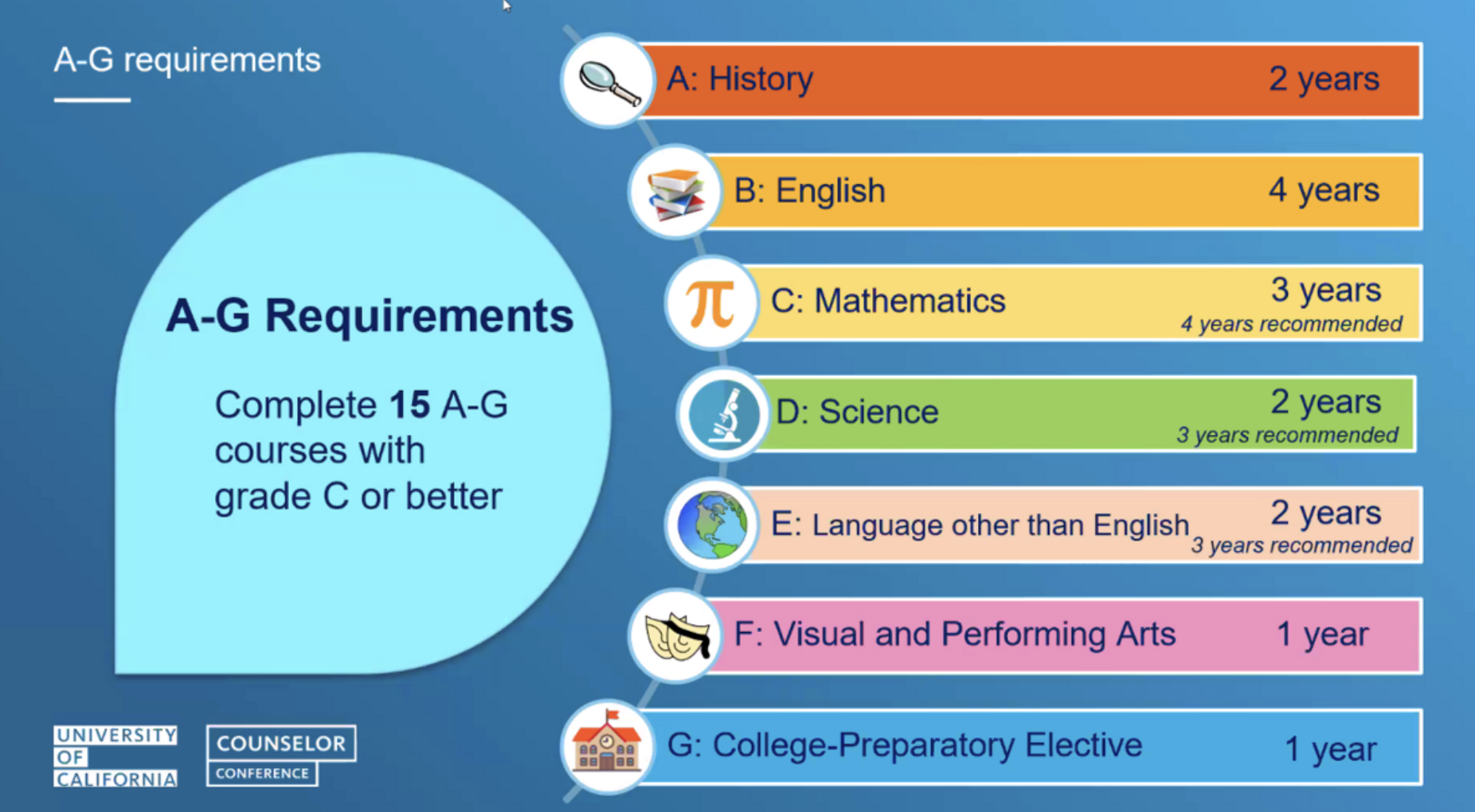
EdTrust-West is a California-based research and advocacy group that seeks to improve racial equity in education. According to EdTrust, “Historically, educational tracking in California systematically diverted Latino students into vocational or non-college-prep courses.” Its analysis goes on to state, “this legacy persists today, leaving a disproportionate share of Latino students unprepared for University of California (UC) and California State University (CSU) admission.”

In 2010, the East Side Union High School District Board of Trustees sought to address the structurally racist practice of tracking Latino students into vocational curricula. The solution was creating a landmark policy that provided all students with access to the A-G curriculum, the series of courses required for UC and CSU admission. I served on that 2010 Board of Trustees.

ESEReport will share the East Side’s A-G story in a multi-part series, beginning with Part 1 today.

UC and CSU requirements for college eligibility

The idea of simply aligning the state’s minimum high school requirements with A-G requirements hasn’t gained steam because of the concern that it would result in fewer students graduating. ~Mayra Lara, Director, Ed Trust-West

***

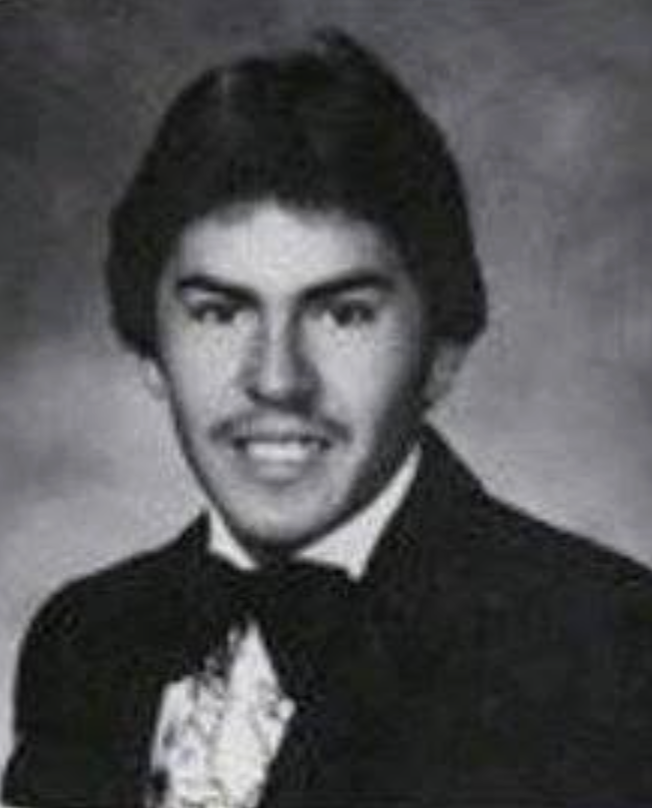
Senior Portrait – James Lick High School – 1981

It was Spring 1981, my senior year in high school. I sat nervously in the counselor’s office at James Lick High School. The counselor was a portly Irish man in his late fifties with piercing blue-green eyes, thinning black hair slicked back so it looked as if it were stuck to his scalp, and a large head with thick jowls hanging from his face. Sitting behind his desk and talking in a booming voice, he looked and sounded intimidating as he opened my file and began to lay out my options. 

He told me that my poor study skills, a mediocre 2.72 grade point average, and an average SAT score left me with few options other than trade school, work, or maybe community college. I sat in front of his desk stunned, scared, and confused. I told him that my parents, friends, siblings, everyone, expected me to go to college. I quietly listened as he bluntly told me that community college was the only option.

The next day, my counselor called me into his office for another meeting. That time, my dad was there too. Dad never took a day off work. I stood motionless, trying to figure out what was going on. The counselor explained to me that my grade point average and SAT scores met the minimum requirements for acceptance at San Jose State University (SJSU). He was prepared to help me with the application process. Dad saved the day. 

Dad also proved the counselor wrong. I graduated from SJSU, had a productive career, served on the East Side Union High School District (ESUHSD) Board of Trustees, and was inducted into the ESUHSD Hall of Fame. 

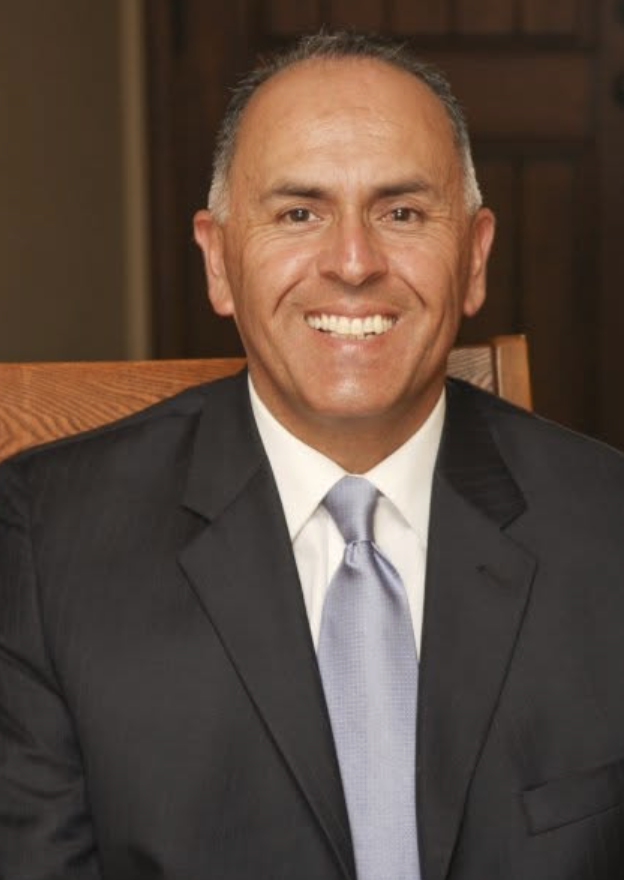
President – ESUHSD – 2010

Twenty-nine years after the two meetings in the counselor’s office, I was President of the ESUHSD Board of Trustees. A group of students representing Californians for Justice (CFJ), “a statewide youth-powered organization fighting for racial justice,” requested to meet with me to advocate for a district A-G policy. I knew nothing about A-G. 

The group explained that it was the list of courses students needed to complete to be eligible for admission to the University of California (UC) and California State University (CSU. They went on to point out that not all students had access to the A-G curriculum, especially students of color. Graduating from an ESUHSD school didn’t guarantee college eligibility, the group informed me. The students advocated for an A-G graduation policy at ESUHSD. I was intrigued.

Memories of those two days in the counselor’s office in 1981 entered my consciousness for the first time in nearly three decades. Had it not been for Dad’s intervention with the counselor, my education and career path may have been different. Would I have been another Latino East Side kid who was denied a chance to pursue my dreams of going to college and a fulfilling career? That question inspired me to fight for an A-G graduation policy. I met the CFJ students again and shared my story. I was all in. A-G or bust! 

It was also the right and politically smart thing to do. Who would be against high standards for students, I reasoned. My tenure on the Board was going well. I led the effort to save after-school sports from the budget axe the year before. I made statewide news by taking a stand against a leading Republican gubernatorial candidate who disparaged an East Side school as part of his campaign against public education. Passing an A-G policy would all but secure my reelection bid later that fall.

Securing the education community’s support would be a slam dunk, I thought. When I met with the superintendent, he expressed unconditional support and offered to draft a policy proposal. Principals and administrators were positive and shared ideas on how to make a policy actually work. I planned to announce my A-G intentions during the annual State of the District Address as President of the Board of Trustees. 

An endorsement by the East Side Teachers Association (ESTA) was perhaps the most politically important stamp of approval to ensure passage of A-G. Trustees hold ESTA in high regard. Teachers are the most important and respected adults in an educational institution. For sitting Board members and potential candidates, an ESTA endorsement can make or break a campaign. To give the policy proposal its best chance at success, the teachers needed to be on board.

***

Next week: Meeting with ESTA’s president