Tag Archives: Education

Thank You, LLA!

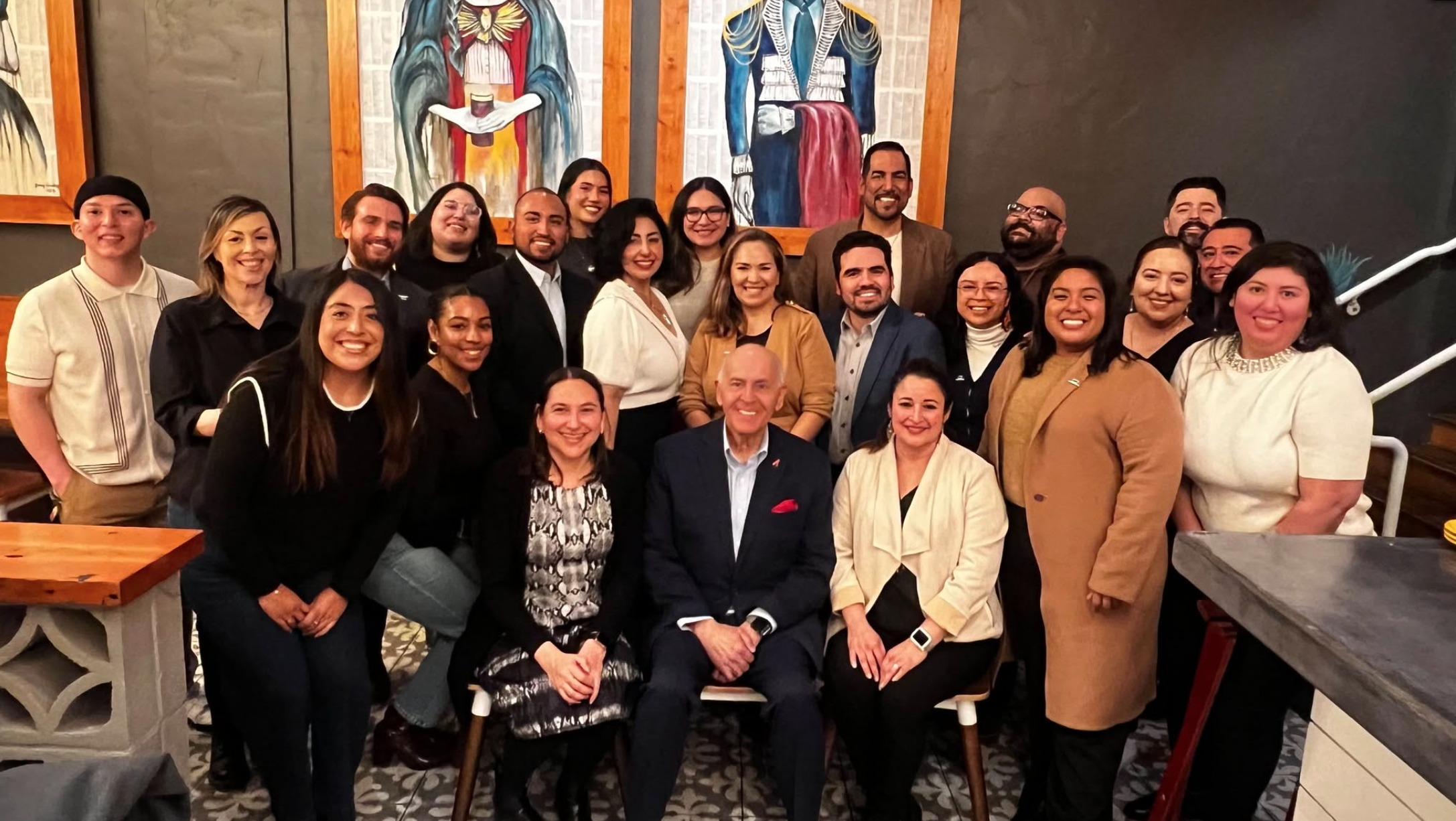
LLA Leadership Academy and Stanford Summer Leadership Institute, Cohort 15

The mission of the Latino Leadership Alliance (LLA) is to empower Silicon Valley Latino leaders to promote a common voice that addresses the interests of our community, and to identify, develop, and support future leadership. ~ Adopted by LLA Cofounders, 2005

***

During the summer of 2004, while hiking in the Sierras as a Class XVIII fellow with the American Leadership Forum of Silicon Valley (ALF-SV), I thought about creating a similar organization that could train emerging Latino and Latina community leaders to manage the complex world of civic leadership. I shared the idea with a couple of Latino and Latina elected officials. They convened a group of eight community leaders to brainstorm ideas to create such an organization. 

The group included San Jose City Councilwoman Nora Campos, San Jose Planning Commissioner Xavier Campos, San Jose City Councilwoman Cindy Chavez, Santa Clara/San Benito Counties Building Trades Council Executive Josue Garcia, East Side Union High School District Trustee George Shirakawa, MACSA Executive Director Olivia Soza Mendiola, and Mt. Pleasant Elementary School District Trustee Fred Tovar. As the eighth member of the group, I was a junior executive at Comcast and board chair for the Mexican Heritage Corporation.

Over the course of several months meeting in living rooms, we established a name for the  organization, adopted a mission statement and core values, and discussed the concept for a leadership academy. By early 2005, we established the Latino Leadership Alliance (LLA) “to empower Silicon Valley Latino leaders to promote a common voice that addresses the interests of our community, and to identify, develop, and support future leadership.” Guiding our work were seven core values:

  1. Cultural pride is the foundation of our success.
  2. Honor and integrity guide our every action.
  3. When united we are an effective force.
  4. Our community deserves to be respected and portrayed honestly and fairly.
  5. We are committed to leading and nurturing the community that nurtures us.
  6. Our united presence and influence are vital to the success of the community.
  7. We will never take money or support those who harm the Latino community.

I eagerly accepted the task of developing the leadership academy. The eight Cofounders agreed that the academy should focus on three overarching objectives: (1) servant leadership, (2) practical (as opposed to theoretical) application of leadership, and (3) challenges of serving the community as a Latino leader. As senior fellows with the ALF-SV, we were inspired to base the academy on that proven model. I also included elements of the Comcast Executive Leadership Forum, a program I benefitted from as a young and ambitious junior executive.

Both programs included three major components: (1) monthly seminars, (2) leadership retreat, and (3) alumni network. To ensure that the Cofounders’ shared commitment to preparing participants for civic leadership was covered, I developed the Four Pillars of Community Leadership model (Business, Nonprofit, Education, and Politics/Government) based on my career experience working in each pillar.

An early challenge was creating a leadership retreat from scratch. The ALF-SV retreat is a week-long camping trip in the high Sierras. Cofounders were in agreement that operating the academy should be affordable to participants. A wilderness retreat was financially out of the question. The Comcast ELF retreat was a week at the company headquarters in Philadelphia. Comcast senior executives and college professors served as presenters. That concept led to the idea of the LLA collaborating with a university. 

What happened next could be a scene from a feel-good movie or maybe a sitcom. Three of us, including fellow Cofounder George Shirakawa, drove north on U.S. 101 to meet with Professor Al Camarillo, the legendary Father of Chicano Studies . . . at the Stanford Faculty Club! We were excited about the opportunity just to be there, making jokes about three traviesos from east San Jose in the distinguished Stanford Faculty Club without supervision to meet the university’s most decorated professor. What could go wrong?

Professor Camarillo was down to earth and “one of us.” He praised our presentation and supported our proposal. Under his leadership, the LLA would collaborate with Stanford’s Center for the Comparative Studies of Race and Ethnicity. We had the final piece needed to build a solid leadership academy that would be culturally relevant to our experiences as civic leaders in a political environment that isn’t always accommodating or friendly to Latinos.

The Academy consists of twelve to fourteen participants from the business, education, nonprofit, and political/government sectors. The cohorts engage in eight monthly full-day seminars that include workshops, reading assignments, leadership exercises, and guest speakers. The monthly seminars are held at a variety of places in the community. During the summer, the cohort spends three days and two nights with university faculty at Stanford.

Participants learn about five major leadership concepts: (1) Servant Leadership, (2) Relationship Development & Management, (3) Living and Leading Holistically, (4) Civic Engagement, and (5) Leadership Communications. The LLA Stanford Summer Leadership Institute is developed and coordinated by Stanford faculty. The capstone to the program is the Cohort Community Project developed and executed entirely by the cohort participants. In early 2010, the inaugural cohort of the LLA Leadership Academy and Stanford Summer Leadership Institute served as the beta test. Fifteen cohorts have completed the program through September 2025.

The LLA Alumni Network includes 184 members who have made significant contributions to community life in Silicon Valley. Eight alumni served or currently serve on city councils in three different cities. Nine alumni served or currently serve as trustees on five different schools boards. There are scores of LLA alumni serving as local government commissioners and nonprofit board members.

LLA-trained business and nonprofit executives, and public school administrators and superintendents serve the community with cultural relevance and skill. In 2022, Governor Gavin Newsom appointed a LLA alumnus to serve as a judge in the Santa Clara County Superior Court. By all measures, the LLA Leadership Academy and Stanford Summer Leadership Institute has been an overwhelming success.

My professional career included four distinct periods. While each of those experiences holds a special place in my journey, the creation and development of LLA combined all four into one passion – sharing my experiences to support talented civic-minded and career-focused Latinos and Latinas on their leadership journeys. For 21 years, LLA has been my life’s work.

On June 7, 2025, I sent a letter to the LLA Board of Directors to announce that Cohort 15 would be my last. It was a difficult decision with a practical purpose. It’s important for leaders to have the wisdom to hand over the keys to the next generation so the organization can grow and thrive. The time was right for LLA to forge a path into the future without my support. Although my door is always open to LLA alumni, my work here is done.

As I say goodbye to LLA, my heart is filled with gratitude and accomplishment. There are too many individuals to thank, so I’ll do it in groups. First and foremost, I have deep respect and appreciation for my fellow Cofounders for having the vision, courage, and determination to bring an overdue idea to life. Thank you for your confidence in me to develop the Academy in collaboration with your guidance. We had our share of challenges and trials in building the LLA. Our commitment to be united, stay true to the mission and core values, and leave our titles and personal political agendas at the door ensured that we weathered any and all storms.

Second, thank you to the twelve cohorts and 145 participants I had the privilege to work with while facilitating the Academy. You all are valued leaders in the community. Third, thank you to the many guest speakers and panelists who took precious time from their busy schedules to share their wisdom with our cohorts. I’m also grateful for the private companies, school districts, nonprofit organizations, city council members, and county supervisors for generously providing space or monthly seminars over the years.

Last, but certainly not least, two individuals warrant special acknowledgement. Thank you, Dr. Al Camarillo for taking a chance on a LLA. The Stanford collaboration has been the hallmark of the Academy. Thank you, Dr. Tomas Jimenez for carrying the torch and for your continued commitment to LLA. I appreciate and value the partnerships and our friendship.

It’s been an honor of a lifetime to work with all the people it takes to make the LLA Leadership Academy and Stanford Summer Leadership Institute the premier Latino civic leadership development organization in the Bay Area. All I can do is humbly offer my deepest appreciation and respect for you all.

As time goes on, LLA is sure to expand and explore different leadership development models. My hope is that the current board leadership and future LLA leaders find wisdom in the core values envisioned by the Founders. If they conduct the organization’s business with those values in mind, LLA’s future is without limits!

Once again, thank you LLA! It’s been an amazing journey.
Second Chances

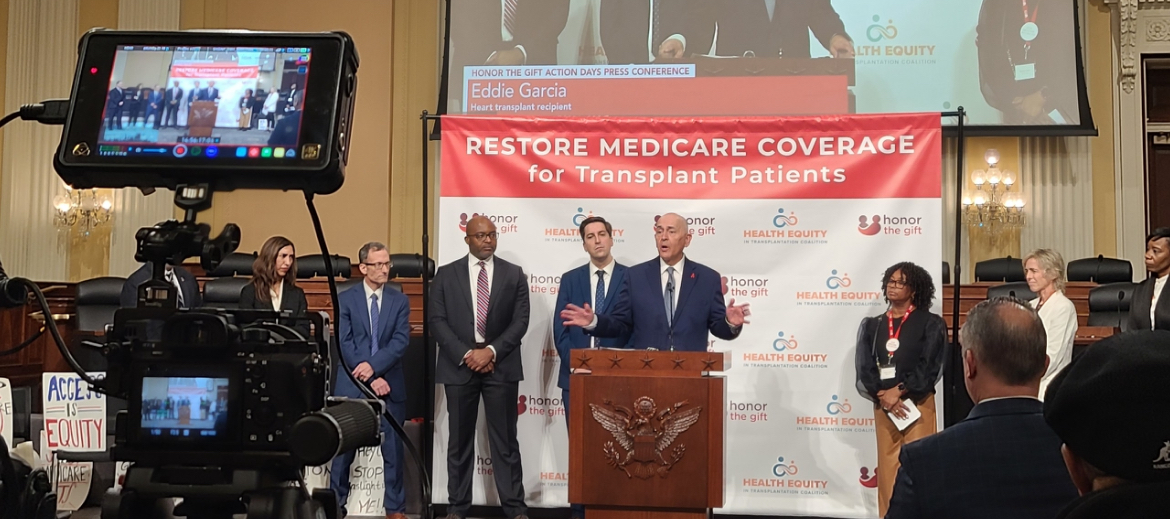
Honor the Gift Press Conference – Washington, D.C. – December 5, 2023

This is the first post of ESEReport.com’s Second Chances blog series.

***

The Lord is not being slow in carrying out his promises, as some people think he is; rather he is being patient with you. ~ 2 Peter 3:9

***

It was sometime in late May 1977. I sat in a classroom at Joseph George Middle School in east San Jose fidgeting in my seat nervously waiting for my turn. I was in the eighth grade, a few weeks away from middle school graduation day. In addition to the traditional valedictorian and salutatorian addresses, a student would be selected to give a speech about campus life. I was one of about six students who tried out for that role.

With Dad’s help, I worked hard on drafting my comments. I wasn’t the smartest kid in school, which explains why I wouldn’t make either of the customary academic achievement graduation remarks. Neither was I one of the most popular students. The other five or so at the tryouts fit into that category. But even as an immature 13 year old boy, I was ambitious and took on challenges that stretched my natural abilities.

Since I loved to read, I worked meticulously on every word looking for an advantage over the popular kids. Dad, who was also a prolific reader, suggested some pretty fancy words that would surely make me sound more sophisticated. Once the final draft was finished, I still felt unsure about being able to stand out. Dad had a brilliant idea. Rather than reading the speech, he suggested that I should memorize it! I practiced and practiced.

When one of the teachers serving as a judge called my name, the nervous tension made me nauseated. As I walked up to the front of the room, a wave of anxious warmth wrapped around my head. My trembling hands placed the written speech on the lectern, just in case I needed a reminder of the words I memorized. When I looked up, there were three teachers and about six students staring at me. My head and flushed face were now in full-fledged nervous fever.

I forgot everything I had practiced. Not one word was coming to me. I looked down at the piece of paper to jog my memory. Nothing! My heart was beating so fast that I thought it would jump out of my chest. I decided on the spot to read my remarks. That didn’t turn out much better. My mouth was so dry that I’m sure no one could understand the stuttering sounds that came out of it. The performance was a complete disaster. I was so embarrassed that I cried when Dad came home from work excitedly asking me how it went.

I was convinced that speaking in front of people would never be in my future. Nevertheless, life went on. In high school, I wasn’t so bad at what we called oral reports in those days. After I flunked out of my first try at college, I coached middle school and high school baseball and basketball. I did just fine with the pre and post game speeches in front of the kids. Speaking to parents at booster club meetings and end of season banquets was part of the job. I did just fine with those too.

In 1989, James Lick High School named me Coach-of-the-Year at an end of year ceremony. The disaster that was 1977 didn’t even cross my mind when I walked up to the podium to deliver an acceptance speech in front of about 200 people. When I returned to college in 1991, I enrolled in a public speaking course primarily because it was a required class, not that I was interested. The professor noted that I was a natural public speaker. His confidence in me was inspiring. In class, I developed the skills that would make speaking in public the foundation of my career.

So what happened between 1977 and 1991? If the professor was right that I was a natural, why was my first attempt at public speaking so awful? How did I improve without any formal training during those 14 years? The likely answer is that life just has a way of working itself out. Life experiences gave me a bunch of opportunities after 1977 to use this natural ability. College gave me the tools to make the most of it in my career and community service. 

I believe that God is the architect of life working itself out. In correspondence with people who lost hope, St. Peter’s Second Letter emphasizes, “The Lord is not being slow in carrying out his promises, as some people think he is; rather he is being patient with you, wanting nobody to be lost and everybody to be brought to repentance.” God was surely by my side in that Joseph George Middle School classroom. Although I badly wanted to speak at graduation, God let me know that I wasn’t ready.

St. Peter’s Second Letter reminds us that God is in charge. God gives all of us natural gifts. Most times, we never recognize or accept that we have them. Sometimes we use them for good and sometimes we use them for wrongdoing. Sometimes we don’t use them at all. “Wanting nobody to be lost,” St. Peter’s letter also provides hope that God gives us second chances when we don’t get it right the first time.

I believe in second chances. It’s taken me four decades and many second chances to understand. It started with the opportunity to return to college after the initial failure. After two failed bids to serve in public office, I earned a seat on the school board with a third attempt. When a massive heart attack threatened to end my life and a heart transplant saved it, God’s grace allowed my journey to continue. I’ve been blessed with a lot of second chances. 

These experiences have taught me three things: (1) We all have natural gifts. We just need to be patient and give God a chance to reveal them to us in his time. (2) We’ve all had second chances in life. We just need to slow down a bit to recognize and reflect on them. (3) We all could use as many second chances as God provides. This world is unforgiving. The sun rises every morning no matter how the previous day treated us. Everyday is a second chance.

I shared my health crisis and the beginning of a spiritual and mental health journey in my 2022 book, Summer in the Waiting Room: Faith • Hope • Love.  On this blog, I plan to spend a good portion of 2024 digging deeper into how strengthening faith and focusing on mental health has had as much a dramatic impact on my life as the heart attack and transplant.

I’ve been doing my best (mostly unsuccessfully) to live with faith, hope, and love. I’ve also been trying to practice meditation and mindfulness (mostly unsuccessfully) on a daily basis. Although I have a long way to go to fully embrace these ancient and proven ideas, I’ve found that my life is becoming more meaningful as I continue to explore the mystery of faith and the inner sanctum of my psyche.

I’ve come a long way from that classroom at Joseph George Middle School 47 years ago. Recently, I had a chance to use for good what the professor said 33 years ago was a natural ability. At a national press conference in Washington D.C. last month, I had the honor to represent heart transplant recipients. I just hope my remarks did my fellow transplant warriors justice. You can see a short clip of that speech here

Thank God for second chances.

Leadership Series: Making the Case for Latino Leadership

Michele
Image by socalatinos.org

Within a generation, California and many parts of the nation will have to depend on well-prepared Latino leaders to ensure continued social and economic growth and stability.

Here’s what needs to happen: Smart, talented, and compassionate Latinos need to seek out leadership roles in business, education, politics, and community service, and, the business, education, political, and community service sectors need to seek out smart, talented, and compassionate Latino leaders.

It’s a simple formula.

The term Latino leader isn’t limited to those who represent just Latino interests. Latinos are capable of representing people of all backgrounds, be it racial, ethnic, social, or economic. When I use Latino leader, I’m talking about a leader who happens to be Latino, but provides leadership for an entire community.

Making the case to develop Latino leaders to be stewards of our community’s economic, political, and educational health is in the numbers.

According to the California Department of Education, 53% of students who attend public school today are Latino. That means that in the next twenty years or so, one out of every two workers in California will look like us. Economics require that those of working age carry the financial burden of keeping a community solvent.

To ensure a robust economy, it’s important that breadwinners represent the spectrum of workers from frontline employees to executives. If more than half of the population is under-educated and unprepared, thus under-employed, the economic impact on the state’s future could be catastrophic. That’s why it’s imperative that Latinos are prepared for all levels of employment, including leadership roles.

Here are some more numbers: Despite representing over half of the students in California, only 9% of college graduates, 18% of teachers, and 6% of education administrators are Latino. So what’s the deal? Our school system is preparing more than half of its students to be service sector workers, not managers and decision-makers. The better question is: Why is this happening?

I got an inside look on how school systems work while serving on the board of trustees at the largest high school district in California. With 26,000 students and a $220 million dollar budget, it’s a pretty big and complex operation. The district serves a majority of Latino neighborhoods in the city. Its demographics match the state’s numbers on Latino students, teachers, and administrators.

The most influential interest groups, employee bargaining groups and parent organizations, are mostly led by non-Latinos. Only one of the five current school trustees is Latino. This dynamic reflects the typical school district in California where the overwhelming majority of decision-makers doesn’t demographically represent the majority of its students.

The problem with this is that education leaders who aren’t Latino are more susceptible to making decisions based on preconceived notions about Latinos. Sociologists call this phenomenon inherent bias. These biases impact public policy decisions, class schedule assignments, student disciplinary action, and the allocation of resources, all of which results in disproportionate harm to half of the students.

I met the full force of the impact of how an unbalanced demographic relationship between students, teachers, administrators, and policy-makers in 2010 when I served as board president. A few years earlier, the district chapter of the student group Californians for Justice met with me to advocate for a policy that would make graduation requirements the same as eligibility standards for acceptance to University of California and California State University schools.

Makes sense, right? I thought so. When I was elected board president, I excitedly began to reach out to administrators, teachers, and my board colleagues to get buy-in for a policy proposal that connected high school graduation requirements to college prerequisites. I was met with immediate resistance. The stumbling block was a requirement to complete Algebra II.

Administrators counseled against moving too fast raising concerns about the lack of student preparation coming from middle school, especially schools with large Latino populations. Math teachers fiercely opposed the idea. The teacher’s union president, an Algebra teacher, sat across the table from me in a coffee shop lecturing with authority that “these kids” can’t do Algebra II.

Conversations with other trustees didn’t fare any better. Two of them wanted to “study” the issue further, a standard tactic to delay a policy proposal to death. One trustee expressed concerns that the policy would “force” every student to be on a college track. What about the students who wanted to learn a trade so they could begin working right after high school graduation, he asked. I knew who he was talking about.

Was this a case of inherent bias? You better believe it. Each one of these decision-makers raised concerns about Latino students’ ability to succeed in a rigorous academic environment. But I disagreed. I was one of those students. My high school counselor recommended that I consider learning a trade instead of going to college. Fortunately, that was a non-starter for my parents.

Because of my experience, I didn’t have any preconceived notions about Latino kids. There was no inherent bias driving my decision to fight for the more rigorous graduation requirements. I figured if I could complete a college track curriculum and succeed in college so could other students who grew up in neighborhoods like mine. So, I charged ahead to change the policy.

I learned that Latino leaders can deliberate about decisions without the filter of inherent bias in the way. With Latinos serving as decision-makers in business, politics, education, and community engagement, half of the population will have more opportunities to contribute to the success of the entire state.

The other half of the population will benefit as well from this kind of leadership. After a long and contentious campaign to raise graduation requirements in 2010, a board majority led the way to approving a policy that made college-prep classes the curriculum for all students enrolling in a district high school.

The Class of 2015 was the first class in the district’s history to complete a four-year program with every graduate eligible to apply to a University of California and California State University college.

That’s precisely why smart, talented, and compassionate Latinos need to seek out leadership roles and that’s why the community could use a bunch of smart, talented, and compassionate Latino leaders.

**********

Next time on the ESEReport.com Leadership Series: We’ll explore the success of an institution that isn’t hampered by inherent bias.

Latino Thursday: The Next Generation of Leaders Looks Good

"Thank You" Poster Made by Luis Valdez Leadership Academy Student Leaders
“Thank You Poster”  by Luis Valdez Leadership Academy Student Leaders

One of my pet peeves is the phrase, “kids these days.” You know what I mean. What happened to the days when kids would speak only when spoken to and say “yes, ma’am” and “no sir.” Remember those days? My favorite is, “Kids these days don’t say ‘please’ when they want something or ‘thank you’ to show gratitude.

We old timers worry about what will happen when we get older and have to rely on the next generation to take care of us. What a mess, right? These kids can’t even write full sentences when they text. They would rather send “pics” on Instagram and Snapchat than pick up a phone or write a letter.

They listen to music that isn’t even music. What happened to the good old school days when you could understand the lyrics? Earth, Wind, and Fire. Santana. Al Green. Lionel Richie. Malo. Remember “Suavecito”?

That was music.

Many people my age wonder how kids these days will run the place when we retire. The old folks are sure that the world will go straight to the dogs when the youngsters take charge.

Well my dear readers, I absolutely, overwhelmingly, vehemently, and respectfully disagree!

I know we’ll be in good hands when the next generation of Latino leaders takes the helm. Let me tell you why.

During the last two school years, I’ve had the privilege and pleasure to teach leadership classes at three east side high schools: Latino College Prep Academy, Luis Valdez Leadership Academy, and Roberto Cruz Leadership Academy. Latino students represent over 90% of the population at the schools. The program I teach is a six-week freshman course that provides students with the tools to present and conduct themselves in a professional manner.

The students learn how to set and plan goals, make professional presentations, and work in teams. They also do professional development exercises to help them with shaking hands, sitting and standing posture, making eye contact, and using body language to convey confidence. This is all done within the framework of understanding and respecting Latino cultural norms. The goal of the program is to send our kids to college and beyond with the self-assurance to succeed.

At Luis Valdez Leadership Academy (LVLA) I’ve been able to see the results of the program as the student government advisor. LVLA is in its second year of operation, so the student government is comprised of freshmen and sophomores. That means that these young leaders have an opportunity to set the cultural tone for the school well into the future.

After taking the six-week course, the elected leaders learned how to run a working decision-making government. The leadership group is large. There are four school-wide elected officers, class officers, and classroom representatives. In all, 23 students represent their peers to create and manage events and activities for the school year. In any governmental environment, a leadership team of that size is challenging to manage.

With that in mind, the student leaders are studying the fundamentals of the rules of order used by city halls, statehouses, and congress. They’re learning how to share their ideas with their fellow leaders through orderly debate and discussion. The students are using the committee system to tackle the details of putting their ideas into an actual plan.

After several weeks of intense training, the student government was ready to take on its first project. They decided to have a fall dance. As the first-ever dance in the school’s history, these young leaders felt much pressure to make the event successful. They had heated debates about the theme of the dance, the date, fundraising, the food and refreshments, decorations, and much more.

To have the event they wanted, student leaders had to raise $800 by selling tickets. They had less than three weeks to achieve this goal. That’s a tall order in a working-class neighborhood. Many on campus quietly shared concerns that the student council took on too much than they could handle.

Using the rules of order they learned, the young decision-makers developed a ticket sales and marketing strategy, and created a plan for a 100% student led and managed dance. I’ve been around many leadership teams in my career, and the students experienced all of the potential pitfalls and challenges that any team of leaders could confront. Through their raucous use of the democratic process, they worked through each barrier.

When the dust settled, here’s what happened:

LVLA had its first-ever school dance, they called it the “Falling for Fall” event. More than half of the student body attended. The student government made money on the event by raising over $1,000. The buzz on campus the next Monday was all about the dance. Everyone had a great time. The event was an overwhelming success by any and every measurement.

This gets me back to “kids these days.” Given the right tools and the confidence to succeed, Latino students will be exemplary leaders in the future. We’re in good hands. Today’s Latino civic and community leaders could learn a few things about teamwork and cooperation from the LVLA student government. In fact, so could our do-nothing United States Congress.

Oh, by the way, the student government planned and hosted an appreciation potluck for me and fellow advisor Mr. Osvaldo Ruelas, a young educator who is a future leader himself. The student leaders wanted to say “thank you” for the small role we played in supporting them.

Kids these days.

Latino Thursday: Luis Valdez Leadership Academy

LVLA-Logo

I was in the office at Luis Valdez Leadership Academy (LVLA) waiting to interview Founding Director Jeff Camarillo for today’s post. As I sat down, a student walked out of Mr. Camarillo’s office and his assistant poked her head into the door carrying several messages for him. Before she walked out of his office, he was on the phone taking a call.

I could hear Mr. Camarillo energetically brainstorming solutions with a colleague. He hung up, and before I could even see him, he enthusiastically welcomed me to the academy. Walking out of his office he greeted me with a big smile and hug, Latino style. It was about 2:30 in the afternoon, right around the time that most people start feeling the after-lunch blahs. Not Mr. Camarillo, he was a bundle of energy.

The LVLA is a new charter school located in east San Jose. It’s the second high school chartered by the National Hispanic University Foundation. As the education community grapples with the Latino academic achievement gap and debates over the most effective way to close it, institutions like the NHUF are seeking out-of-the-box solutions like their flagship school Latino College Preparatory Academy and LVLA.

Charter schools are proliferating in Silicon Valley, especially in east side Latino communities. For the past three years, I’ve studied charter schools and their impact on Latino students and neighborhoods. Charters are publicly-funded schools that operate without being handcuffed by the constraints of traditional public school rules. This offers advantages to be sure. But the jury is still out.

There’s no real data yet on their long-term effect on Latino student success. In Silicon Valley, the chain charter schools, derisively called “McCharters” by opponents, have been criticized for questionable recruiting tactics in Latino neighborhoods. Their source of financial support also raises eyebrows. High-tech contributors stand to profit from the chain charter reliance on computer-based “blended learning.”

LVLA isn’t a chain charter school. It’s an innovative concept. Education leaders serious about closing the Latino academic achievement and college attainment gaps should pay attention to the formula developed at LVLA.

Let’s start with staffing. Director Camarillo is an Ivy League and Stanford educated son of a distinguished Stanford professor. The Dean of Instruction also studied at a prominent Ivy League university. The team of teachers includes many who are first in their families to go to college, so they will have an intimate and culturally conscious understanding of their students’ experiences.

The savvy staff will work in an environment of a college-going culture. Nearly all of the 95 incoming freshmen that represent the Founding Class just completed a two-week summer bridge program where they were introduced to the school’s vision. The program included events and activities at Stanford and U.C. Santa Cruz. A trip to visit East Coast universities is in the works.

When students walk through the doors on the first day of school on Monday, they will have a rigorous schedule of classes. The “A-G Checklist” that’s required to gain acceptance into the University of California and California State University systems is the default curriculum at LVLA. So the college-going culture isn’t just a feel-good tactic, it represents the core of daily academics.

Rather than focusing on computer-based learning, LVLA will implement the tried and true strategy of individualized teaching and guidance. Teachers are committed to getting to know each student and students will have an advisor that follows them through the four years they prepare for college. Add a visual performing arts program created for LVLA by the famed El Teatro Campesino and you have a robust curriculum.

The legendary playwright Luis Valdez was on hand for the ribbon-cutting ceremony last week. The self-proclaimed “east San Jose homeboy” delivered keynote remarks that took the audience on an inspiring journey from the Latino struggle for civil rights nearly a half century ago to the innovative Silicon Valley school that now bears his name.

During my 20-minute interview with Director Camarillo, I could hear the passion in his voice and see the determination in his eyes as he described his vision for the future. As we were talking, from the corner of his eye he caught a mom and her son looking for the campus office. He jumped out of his chair, opened the window, and guided them to the office in Spanish. The mom smiled warmly knowing that her son was in the right place.

The vision, staff commitment, academic rigor, and extracurricular enrichment are all in place to make LVLA a great school. Now Mr. Camarillo and his team have to execute. After attending the school’s opening and spending a few minutes with the person who’s charged with leading the effort, there is no doubt in my mind that they’ll succeed. I walked off campus feeling confident that something special is happening on the east side.

Latino Thursdays: The Art of Being a Professional

(Stock Photo-www.htbsaccounting.com)

I was 29 years old when I attended my first fundraising event. The guest of honor was a candidate for mayor of Los Angeles.  I volunteered to help at the event that was held at an upscale art gallery in downtown San Jose. All I had to do was sign in attendees and collect donations, nevertheless I was anxious and a little intimidated. I had never been to a fundraiser or an art gallery.

As a kid, I remember that my dad used to say that every man should own at least one suit and a sports coat with a pair of slacks, so I had something handy to wear. I wore a gray two-button business suit, light blue dress shirt with dark blue tie, and cordovan penny loafers. The reason I remember what I was wearing so clearly is because it was the only dress clothes I had other than a tweed sports coat and navy wool dress pants.

The gallery was long and narrow. Modern art paintings hung on the walls and interesting sculptures sat on pedestals. White linen tablecloths topped tall cocktail tables and a small bar was staffed by a man dressed in a tuxedo.

A jazz trio softly played soothing tunes as men in business suits and professionally dressed women deposited checks into pre-printed envelopes, ate from small china plates, and chatted with other guests. It was like watching a well-choreographed dance.

After about an hour, the trio stopped playing and the event’s host introduced politicians and other VIPS to polite applause from the 40 or so guests. A few speakers enthusiastically praised the candidate, the candidate made brief comments, and the whole affair was done. Less than 15 minutes later, the gallery was empty.

Coming from a working-class Mexican American family, the only receptions that I knew about before that evening were related to weddings. The evening starts with mariachis entertaining guests, then dinner is served followed with a night of dancing. After the dance, family and close friends go to the home of the bride’s and groom’s parents for a nightcap. They all return for menudo the next morning. Total time: about 24 hours.

So here I was at the art gallery, 29 years old with a college degree, and I had just witnessed something that was completely out of this world for me. I was intrigued with the rhythmic nature of the event and fascinated that everyone knew how it worked. Since then, I’ve attended hundreds of receptions, breakfast events, luncheons, dinners, and cocktail parties. It was on-the-job training on how to conduct myself on a professional stage.

I’ve learned that choice of attire, how you stand, sit, move about the room, and shake hands all send messages on your credibility as a professional. Nobody is watching, yet everybody is watching. The impression you make on others could be the difference in getting the dream job, earning a promotion, or landing that lucrative contract.

More Latinos than ever are graduating with college degrees. That’s a good thing. Armed with an education and a valuable piece of paper, we’re making inroads into the offices of corporate America, government, and education. Taking the next step into management is another proposition. According to the 2010 U.S. Census, just 8.5% of Latinos who work are in “management occupations.”

Most of those management positions are in the service industry. The percentage of government and education administrators is less than 7% and Google recently disclosed that only 3% of its workforce is Latino. I can’t imagine Google, or any other Silicon Valley tech firm, employing more than a handful of Latino managers.

So what does this mean?

Racial stereotypes play a major role in how managers look at their Latino employees. They expect us to be service employees, blue-collar workers, domestic help, landscapers, construction workers, and so on. Latinos may not even register with executives when developing a management team. But we can’t let these facts keep us out of the executive suite.

Unfortunately, many of us lack the confidence it takes to be considered for advancement. School systems don’t teach critically important skills like confidence, poise, and how to conduct oneself in a professional setting. For many working-class Latinos, our first job out of college is our initial exposure to the white-collar world. While we’re educationally prepared for the work, we don’t understand the subtle protocols of advancing through large professional organizations.

So what do we do about this?

As a corporate executive, I’ve learned that those of us who have attained management positions need to actively seek out talented Latinos and mentor them on the nuances of “climbing the corporate ladder.” Leadership programs focused on Latinos in business and education are popping up across the country. As a professional community we need to support these efforts.

Professional Latinos also need to share their time and wisdom at school career days. Our kids shouldn’t have to wait for a college degree and a job before they learn how to dress, stand, sit, shake hands, and speak as a professional.

Latinos are smart, talented, and ambitious. More times than not, ugly racial stereotypes get in the way of advancement. That is what it is. We need to overcome those obstacles. Those of us who have been blessed to have experienced professional success are obligated to make sure that the next generation walks into that first art gallery reception with poise and confidence.

Latino Thursdays: Do We Care About School?

extra-extra

NEWS FLASH: Latinos DO Value Education

As the old saying goes, if I had a dollar for every time someone told me that Latino families don’t value education, I’d be a rich man.

During my four years serving on the high school board of trustees, the immediate response to any innovative idea on how to improve Latino educational achievement and attainment started with the “fact” that getting a higher education just wasn’t Latinos’ cup of tea.

These comments came from credible sources like school administrators, teachers and counselors, usually non-Latinos and a sprinkling of their Latino colleagues. The latter group’s worldview is puzzling to me and opens the door to an entirely different blog subject. We’ll leave that for another time.

I checked with the experts to make sure that I wasn’t imagining things. A pair of researchers from the University of New Mexico and the University of Massachusetts has studied these issues extensively. In their 2004 book on the topic, Professors Nancy Lopez and Raul Ybarra wrote, “non-Latino academics often refer to traditional family values as serious barriers that prevent access into higher education.”

According to Lopez and Ybarra, non-Latino academics claim that the rate of college attainment is “unlikely to change as Latino families value 2-year career-only degrees over a higher (four-year university) education.” The Latino professors rightly question the validity of this perception. I’d also like to know where the data is to support these broad statements. I couldn’t find anything.

To answer the question, the nationally-renowned Pew Hispanic Center went out and surveyed Latino families in 2009. Here’s what the survey said: 89% of Latinos agree that a college degree is important for getting ahead in life, 77% of Latino students ages 16-25 say their parents think going to college is the most important thing to do after high school, and just 11% say their parents think getting a full-time job after high school is important.

So there it is, straight from the caballo’s mouth. We do value education. So, what gives? Why does the data show that Latinos care about education, yet test scores and college attainment and completion rates continue to lag behind non-Latino counterparts?

The answers are no doubt complex. Academia and education policymakers will surely debate the merits of competing strategies on how to solve this problem for decades to come. In the meantime, education leaders need to find the courage to confront the misguided stereotypes and assumptions that create barriers for 89% of Latino students and 77% of their parents who want to take the college route. That way, we can get past assumptions and get to solutions.

Latino parents also have to get off the sidelines and participate in their children’s education. I know that could be intimidating. As long as the stereotypes and the obstacles they create persist, parents will continue to feel unwelcome. But we have to do it for our kids. Get to know teachers, go to back-to-school nights, attend after-school activities, volunteer, join the PTA. If we show the school system that educating our children is important to us, it will become important to them.

The good news is that that there’s solid evidence that the myth of Latinos not valuing education is just that, a myth. Once educators acknowledge and erase the negative images and parents get into the game, Latino students will be able to fully participate and benefit from the education system. The bad news is that I won’t become rich anytime soon. But that’s okay with me.

Quotes & Quips: Speaking from the Heart

Delivering the keynote address at the annual Mathematics, Engineering, Science, Achievement Awards Dinner at San Jose State University (photo courtesy of SJSU)
Delivering the keynote address at the annual Mathematics, Engineering, Science, Achievement Awards Dinner at San Jose State University
(photo courtesy of SJSU)

“Eloquent speech is not from lip to ear, but rather from heart to heart.”  ~ William Jennings Bryan

From the late 19th century through the early 20th century, William Jennings Bryan was the driving force behind the populist wing of the Democratic Party.  He was the Democrats’ candidate for President of the United States in 1896, 1900, and 1908. Although he lost all three times (that’s something I can relate to), Bryan spoke from the heart and captured the soul of the modern Democratic Party.

Over the last several months, I’ve had the privilege to speak at community gatherings, corporate partnership meetings, San Jose State University, Gavilan Community College, and local high schools.  Each one of these opportunities has been a humbling experience as audiences have inspired me to speak from the heart about my passions: leadership, education, and second chances.

If your organization or event planners are looking for a speaker who inspires audiences with heartfelt, amusing, and compelling stories, check out my speaking services.

I tailor each talk to engage your audience by drawing on stories about life growing up in a working-class neighborhood and sharing insights from over 25-years as a corporate executive, school board president, community leader, and high school and junior college basketball coach.

To learn more about speaking services, click on the following link: https://esereport.com/speaking-engagements/

To schedule me for your next event or conference, send an e-mail to eddie.m.garcia@comcast.net or call 408-426-7698.

Winning the Fight for Higher Standards on the East Side

(Stock Photo)
(Stock Photo)

Sitting in the back of the multi-purpose room at Mt. Pleasant High School in east San Jose on Friday, I reflected on the untapped potential of this dynamic community. The occasion was the annual MESA (Mathematics Engineering Science & Achievement) College Poster Contest.  MESA is a non-profit organization that helps prepare educationally underrepresented students to graduate from college with an engineering, science, business or mathematics degree.

The college poster contest, one of many MESA programs, challenges students to research a college of their choice, make a poster, and present their findings to a panel of judges. For the past two years, I’ve had the honor to serve as a judge in the high school division. To my delight, the entire afternoon was an east side affair. MESA’s executive director at San Jose State University is a James Lick High School alum like me, the contest coordinator is an Evergreen High School grad, and the students represented east side schools.

I was impressed by the meticulous research, creativity and oral presentation skills demonstrated by the students. Two junior girls from Silver Creek High School, who chose to highlight UCLA, made my day. When I asked if they took the A-G class schedule needed to apply to UCLA, one of the girls said, “everyone takes A-G classes,” while the other smiled and nodded in agreement. A rush of emotion washed over me as I remembered the 2010 “A-G” fight at the East Side Union High School District.

In California, the A-G curriculum is the checklist of classes students need to take to be eligible to apply for college in the University of California (UC) and California State University (CSU) systems. Most school districts don’t require an A-G curriculum for all students. According to a 2009 California Post Secondary Education Commission report, “the college-going rate for students in California to UC schools was 7.2% and the rate to CSU schools was 10.5%.”

In 2008, just six of the state’s over 400 school districts that issued high school diplomas required an A-G curriculum. The East Side was like the vast majority of school districts where 90% of the graduates weren’t even eligible to apply to a UC or CSU. During my term serving on the school board at the East Side from 2006-2010, a group of students from the district’s chapter of Californians for Justice (CFJ) were campaigning the school board to make A-G the required curriculum for all students.

When I was elected board president in 2009, I joined the CFJ students, their families, and community supporters to fight for A-G at East Side schools by announcing at the annual State of the District Address that I would ask the board to approve an A-G curriculum for all students by the end of the year. The standing room-only crowd in James Lick’s multi-purpose room that night expressed full support for what would be called the A-G Initiative.

I thought the proposal was a no-brainer that would easily pass the board by mid-summer. The day after the State of the District Address, I quickly learned that it would be anything but easy. I met with opponents who were concerned and angry that I made such a bold statement without consulting the broader education community. They warned that the rigorous curriculum would “set up students to fail” as “these students weren’t prepared to pass Algebra II.”

Together with students, parents, and community supporters, we moved forward nonetheless. The Silicon Valley Education Foundation joined the fight by providing critical resources to educate the public and my board colleagues on the values of A-G. Later that spring, I had a massive heart attack with complications that kept me in the hospital for over 100 days. As I fought for my life in the ICU, the community fought for A-G and higher standards on the east side.

The A-G vote was scheduled for the October board meeting and the initiative’s opponents had asked the board to delay the vote and convene a study session to better understand the impacts. Although I was home from the hospital, I was in no condition to participate in the board meeting, so my four board colleagues would determine the fate of A-G. The board ended up deadlocked so both proposals failed to get the required three votes for move forward. A-G was dead.

The next day, I confirmed with district officials that I was still board president and could vote by teleconference, so I asked the administration to once again place the issue on November’s board agenda. Student, parents, and community supporters rallied their troops to attend the November board meeting to show solidarity for the initiative. I planned to by on telephone standby until the issue came to a vote.

By the night of meeting, I was strong enough to attend and persuaded Sandra to let me participate in the A-G vote. An overflow crowd came to the board chambers on November 18, 2010, to enthusiastically urge the board to vote for the A-G Initiative. After brief comments by each board member, we unanimously voted to require the A-G checklist to be the default curriculum for all students beginning with the Class of 2015.

After casting my last vote as a school board member, I turned toward the door behind the dais and walked out of the board chambers for the last time as students and families celebrated their hard-fought victory. That was, and always will be, my proudest moment as an eastsider . We showed everyone that our community valued high standards that night. Last Friday, when the young woman from the Silver Creek High Class of 2015 matter-of-factly told me that, “everyone takes A-G classes,” I smiled, assured that 2010 was worth the fight.

Summer in the Waiting Room: Chapter 2 (excerpt #17)

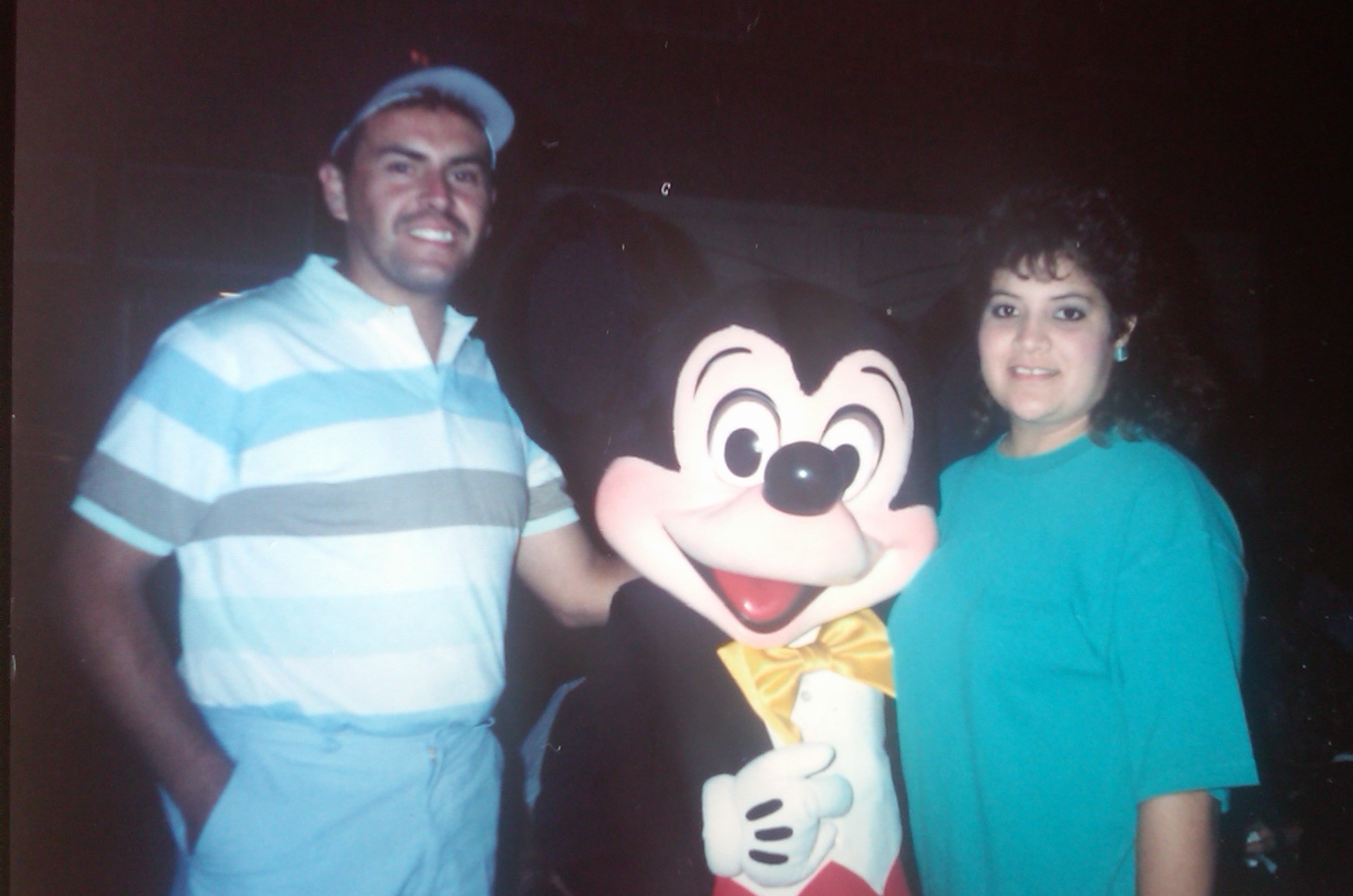
The newlyweds hanging out with Mickey during the summer of 1991 (Eddie & Sandra García Family photo)
The newlyweds hanging out with Mickey during the summer of 1991
(Eddie & Sandra García Family photo)

Sandra and I rented a small one bedroom apartment in the east foothills, not far from Alum Rock Park and the expensive houses up the hill.  She was in her first year as an elementary school teacher and I taught Spanish to pre-school kids at a private elementary school/day care center.  It was a job that didn’t require a college degree and paid next to nothing.  I also coached basketball at City College and made extra money tutoring the basketball players.  We were able to scrape by financially and married life was treating me well.

For the first time since I was a teenager I felt a sense of accomplishment and stability, this time without the brashness and bravado of one of the big men on campus.  Soon after the basketball season ended, Sandra and I made the decision that I should return to San Jose State on a full-time basis and put my career as a basketball coach on hold until I earned my bachelor’s degree and teaching credential.

I had been taking courses at State here and there for a couple of years to meet reinstatement eligibility to the university and to remove the academic disqualification from my record, so I was ready to submit an application for acceptance.  When a letter from San Jose State arrived in the mail, I anxiously opened the envelope, read the letter, and let out a huge sigh of relief.  My failed academic record had been cleared, and I was officially a college student once again.

The next day, a Saturday, Eddie Velez and I were working on a side job with Mr. Peralta replacing sidewalks at an apartment complex, but I wasn’t participating in the usual banter about sports, politics, the weather, and the aches and pains that come with construction work.  My mind was spinning with thoughts about my past failures, my new opportunity, and my second, and perhaps, last chance to redeem myself by earning a college degree and pursuing my dream of being a teacher and a coach.  Right then and there, I decided that I would work harder than ever in college to stay focused on the prize.

Because the acceptance letter arrived just days before classes were to begin, I had to sit in on the classes I wanted to secure a space before I could actually register.  It would be a tedious process that required patience and perseverance.  With a determination I never had before, I sat in class after class, cajoled professors to allow me to stay, and registered for a full load of classes to qualify as a full-time student.  I threw myself into my schoolwork, finishing projects, writing papers, and completing reading assignments ahead of schedule.

Early that first semester, I ran into a mental roadblock that could have compromised the entire effort; I realized that I was almost ten years older than my classmates in first year general education courses.  I started to doubt myself, I questioned my decision to drop everything to return to school, and I felt out of place as a weathered twenty-seven year old man among bright, young, and eager college students.

I shared these sentiments with a professor, Dr. Randall Jimenez, with whom I had developed a good relationship in his freshman communications course.  He told me that I had a natural talent for public speaking and using words to persuade and lead others.  Then he asked me how old I was and when did I anticipate on finishing my degree, and I responded that I hoped to graduate by my thirtieth birthday.  He said with good health and God’s will I would be thirty years old, so I had to decide whether I wanted to be thirty years old with a college degree or thirty years old without one; the choice was mine and mine alone.

From that day on I had a laser focus toward achieving success at the highest level possible, as a student and in my future career as an educator and basketball coach.  To help Sandra with living expenses, I spent the next three years tutoring freshman for the professor’s public speaking courses.  I ran into Dr. Jimenez two decades later, and with a bear hug and heartfelt smile, he mentioned how happy he was to see me, and that he had followed my career and medical problems in the newspaper.

I reminded him of and thanked him for the wise words he imparted on me that day early in my return to college.  He thanked me for listening because he knew that I would use my gift for public speaking to make an impact in people’s lives.  His wise advice twenty-one years before sent my college career and the professional life that was to follow into high gear.

For the next three years, I was a full-time student and part-time homemaker.  After that first semester, I met with an advisor on campus, selected history as my major, and mapped out the schedule of classes I would need to graduate by the time I was thirty years old.  At home, in between reading and writing assignments, I washed clothes, kept our little apartment clean, and experimented making different meals so dinner would be ready when Sandra got home from a long day with her students.

More often than not, my experiments would go badly and we would end up at one of the mom and pop restaurants or fast food joints that dotted our new neighborhood.  In addition to my studies and tutoring for the professor’s public speaking courses, I worked as a referee for intramural sports at San Jose State and tutored a neighborhood kid to further supplement Sandra’s teaching salary.  I was absolutely dedicated to my studies, devouring books faster than professors could assign them; reading in the laundry room at our apartment complex or at the kitchen counter while preparing another disastrous meal.