“I don’t live in either my past or my future. I’m interested only in the present. If you can concentrate always on the present, you’ll be a happy man. Life will be a party for you, a grand festival, because life is the moment we’re living now.” ― Paolo Coelho, The Alchemist
If you haven’t read The Alchemist, read it as soon as you get a chance. It’s the story about a boy who has a dream about buried treasure. A wise man tells him to follow his dream, so the boy sets out on the long journey from his home in Spain to the find his fortune. Along the way, he meets good and bad people and experiences success and great loss. Once he arrives at his destination, the boy realizes that the treasure was the journey itself.
What fascinated me about the story was how the boy immersed himself in what was happening to him at any given moment. While his ultimate goal was realizing his dream, he didn’t let that get in the way of experiencing the journey one moment at a time. For most of my life, this concept has been totally foreign to me. I’ve always lived, not in the present, but analyzing past events to create a better future. I was always a few steps ahead of myself.
Unlike the boy in The Alchemist, I spent most of my life preparing and planning for future success and happiness. In the process, I didn’t fully experience the joy and sadness life had to offer. A health crisis four years ago forced me to live one day at a time. Shortly after recovering, a good friend recommended that I read Paolo Coelho’s masterful fable. I found the tale to be profound, yet perplexing.
Although the meaning of the story resonates with me, I still struggle to truly understand the concept of living in the present. Like most people, I worry about the mortgage, paying for my daughters’ education, and funding retirement. Voice-mail, e-mail, texts, and social media are always there to distract me from the present moment. Despite these distractions, I now try to live one day at a time.
Every once I awhile, I’m able live in the here and now. For me, it’s different and kind of strange, but it’s fulfilling. I better understand what it means to be alive. As I write, I hear birds singing outside my window, see trees swaying in the wind, and smell the freshness of morning through an open door. They’ve always been there, I just didn’t know it. I’m reminded that when I concentrate on the present, I appreciate the sights, sounds, and smells of life. I think everyone should give it a try.
As Coelho writes, “life is the moment we’re living now.”
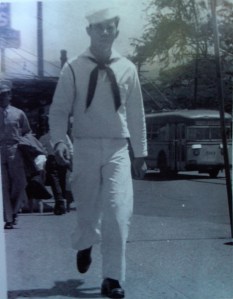
My dad taking a walk in Honolulu after the end of World War II, circa September 1945 (García family photo)
“Now we are engaged in a great civil war, testing whether that nation, or any nation so conceived and so dedicated, can long endure. We are met on a great battlefield of that war. We have come to dedicate a portion of that field, as a final resting place for those who here gave their lives that that nation might live. It is altogether fitting and proper that we should do this.”
~President Abraham Lincoln, “Gettysburg Address”
Memorial Day gives all Americans a chance to reflect on those who gave their lives to ensure our freedom. Many of my relatives and family friends served in combat during World War II, Korea, Vietnam, and Iraq. Although they didn’t make the ultimate sacrifice on the battlefield, I’ve always admired their courage and commitment to our nation. Using President Lincoln’s words, it’s “proper and fitting” today that I honor them and the heroes who gave their lives for our country.
My dad, Fred O. García (1926-1995), served on the U.S.S. Wasp in the Pacific Ocean during World War II. On this Memorial Day, I honor him and his fellow American heroes.
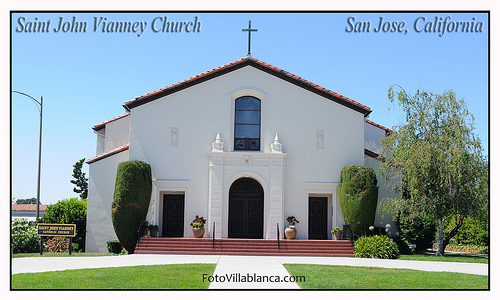
For over five decades, St. John Vianney Catholic Church has been the anchor to my boyhood neighborhood in east San Jose. During three days in May, the annual SJV Fiesta is the gathering place for those who live in the neighborhood and those who grew up there. As my friend Jason Rodriguez puts it, “Fiesta is an east side reunion.” Yesterday, I made my annual pilgrimage.
I’ve always known that people have notions about the east side, and I’m guessing they’re not so positive. I recently heard from a few people who lived in a “better part of town” clearly miffed that East Side Eddie Report.com was posted on Facebook. I could almost hear the disdain in one writer’s voice as he typed, “Why am I getting your east side report? You might as well be from Oakland.” In one sentence, he managed to look down on two communities he probably knows nothing about.
One quick walk around Fiesta demonstrates that writer’s foolish notion. For many of us, this neighborhood is home. Passing the carnival, food booths, and local entertainment stages, Fiesta visitors see generations of families enjoying each other on a beautiful spring day or evening. Teens and pre-teens at the rides, little kids and their parents dancing to the music, and grandparents sitting at tables under the canopies sampling Portuguese linguisa, Philly cheese steaks, and strawberry shortcake.
I always run into old friends and their families. Three friends I saw this year reminded me of the talent the east side has to offer. Two of them, Larry Gonzales and David Rosas, played basketball for me when I coached at James Lick High School. Those talented boys are now men serving as an officer in the United States Navy and a teacher/basketball coach at our alma mater. The third, Jason Rodriguez, grew up one block over from me. Today, he jets around the globe as an executive representing Hewlett Packard.
Like our parents, we east side kids grow up to be resilient men and women who work hard and raise good families. It’s fun to gather once a year at Fiesta to see old friends, share stories, and introduce new family additions. Over the years, I’ve been blessed to share stories about my own growing family and travelling across the country for work. Nevertheless, Dorothy had it right. My pilgrimage to Fiesta every year reminds me that, “there’s no place like home.”
Last week, a Facebook friend posted the following quote:
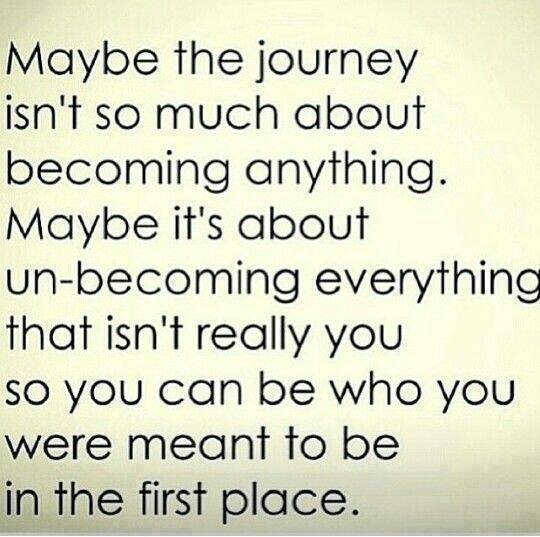
“Maybe the journey isn’t so much about becoming anything. Maybe it’s about un-becoming everything that isn’t really you so you can be who you were meant to be in the first place.”
These two sentences hit me like a ton of bricks. I scoured the Internet and quotation books to find the source. It showed up on a couple of meditation blogs and Pinterest posts without author attribution. I don’t know who said or penned it, but the more I read the passage the more I reflect on my own life journey.
For the past several years, I’ve been thinking about my journey and writing about it in Summer in the Waiting Room: How Faith, Family, and Friends Saved My Life. I’ve posted 21 excerpts on East Side Eddie Report.com, and plan to complete and publish the manuscript as a book early next year. The powerful two-sentence quote elegantly captures my personal journey and forms the cornerstone of the book.
For readers who have been logging on to the weekly excerpts, thank you!! If you haven’t been reading the story, take a few minutes and check it out by clicking on the Summer in the Waiting Room tag on the right of this page.
Summerin the Waiting Room: How Faith, Family, and Friends Saved My Life is the unique and inspiring story of a boy who grew up in a working-class neighborhood, failed at college and lost hope, met and married the love of his life, returned and finished college, raised a family, and found some success in business and public office. It’s also the story of a man who vowed never to fail again and toiled tirelessly trying to redeem himself, only to find true redemption, while in a state of complete helplessness in the ICU.
NBA Commissioner Adam Silver (photo by espn.go.com)
Kudos to NBA Players and Commissioner!!
NBA players’ stand against Los Angeles Clippers owner Donald Stierling and NBA Commissioner Adam Silver’s lifetime ban on Stierling courageously puts racial bias in the United States on trial. I hope America keeps up this courageous conversation!
Summer in the Waiting Room: How Faith, Family, and Friends Saved My Life is the inspiring story of a boy who grew up in a working-class neighborhood, failed at college and lost hope, met and married the love of his life, returned and finished college, raised a family, and found some success in business and public office. It’s also the story of a man who vowed never to fail again and worked tirelessly trying to redeem himself, only to find true redemption while in a state of complete helplessness in the ICU.
To read past excerpts from Summer in the Waiting Room, click on“Summer in the Waiting Room” tag to the right.
Tire Outlet #2 – East Hills Little League Farm Division – 1971 (García Family Photo)
I got the “Throwback Thursday” bug last week on Facebook and posted a photo from 1971 of my first little league team, Tire Outlet #2. Those were the days when sponsors were team names, rather than a using the name a professional major league team. Rich Archuleta, an old friend from those days, commented on Facebook that I “really brought back a flood of memories with this picture.” Boy was he right!
I played baseball at East Hills Little League in east San Jose for six years from 1971-1976. It was an era before parents saw youth sports as a ticket to a college scholarship, glory, and potential riches as a professional athlete. As a little leaguer, there was no pressure to meet with a batting coach for weekly lessons at the batting cage, compete on a travel team, and equip ourselves with the best high-tech gear available. We just played baseball.
During those six years, we were Tire Outlet #2, Imwalle Farms (there was a giant red and white pumpkin on our red-sleeved jerseys), and the East Valley Lions Club. My last season, when I was 12 years old, I was the winning pitcher in the major division championship game. There were no full uniforms (until the major division), bat bags, cleats, or customized gloves and helmets. Baseball has always been part of my life and playing at East Hills Little League started that lifelong love of our national pastime.
I still remember the day that my mom took me to register for little league at August Boeger Middle School. The registration fee was $5.00 and a book of S&H Green Stamps or Blue Chip Stamps. For that fee, we got a baseball cap with “EH” in block letters across the front, a shirt, and a 20-game schedule. I was placed in the “Red” organization. Due to an ordering error, we wore blue shirts that first year.
The Red teams were a family affair led by the Marquez Family. Phil Marquez, Jr. was our manager, Mrs. Marquez was team mom, Larry and Ernie “Nesto” Marquez were our sluggers, and Mr. Marquez, a deacon at Guadalupe Church, was head cheerleader in charge. Junior was a great coach who has stayed involved with youth baseball or softball for 40 years, winning championships at every level including varsity softball at Mt. Pleasant High School. He’s a true east side legend.
Opening Day always started with a parade that wound its way through the east side from Payless Drug Store on Capitol Avenue to the league’s fields. Dads who had pick-up trucks carried the players and honked horns as the procession slowly drove by neighborhoods. Once there, the teams would file onto the major league division field that had a dirt infield, home run fence, electronic school board, and pitching mound. The little kids couldn’t wait to play on that field.
While I’m sure we all had dreams of playing in the Big Leagues, that wasn’t the goal. The reason we went to practice every day was to play ball. Some of us went on to play in high school, a few others played in college, and one kid made it to the majors. Kenny Williams played for the Chicago White Sox and later became the franchise’s general manager. I’ll never forget watching Kenny on TV, as general manager, when the Sox won the World Series in 2005.
Although I’ll never know what it’s like to be a major leaguer, I made long-lasting friendships playing baseball. I stay in contact with many fellow little leaguers and high school teammates are still some of my closest friends. Rudy Bryand, my boyhood friend and best man in my wedding, and I met playing sandlot baseball during lunchtime in middle school. He sat by my family’s side for 100 days when I was in ICU fighting for my life.
My dad shared my passion for baseball and taught me how to pitch and play the infield. He never missed a game from little league through high school. He took me to my first major league game in 1971 to see the Dodgers play the Giants at Candlestick Park. I can still name the starting line-up from that Giants team that included Willie Mays, Willie McCovey, and Juan Marichal. I wanted to pitch with a high kick like Marichal, and I made the sign of the cross before batting like second baseman Tito Fuentes.
That passion has now passed onto my family. When my daughter Erica played little league, I managed the team, Sandra helped me stay organized, and my daughter Marisa was the Director of Equipment Management, my fancy name for the bat and ball girl. When Edgar Renteria hit a home run to give the Giants their first World Series win in San Francisco, the four of us were together hugging and high-fiving.
Posting that photo reminded me about the important things in life. For me, playing baseball wasn’t a means to a college scholarship or a profession. Baseball gave me a common bond with my dad, a bond that has extended to my daughters. Baseball has been the centerpiece of many lifelong friendships. And it all started on the fields of East Hill Little League.
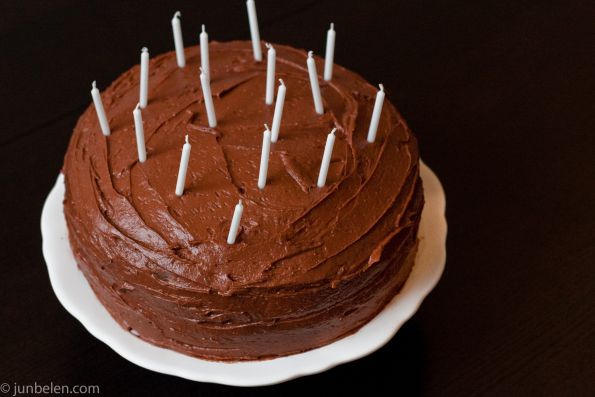
Chocolate cake just like the cakes my mom would bring home for my birthday from Peter’s Bakery in east San Jose. (Image courtesy of junbelen.com)
Blogger’s note: The following passage is the from my manuscript of Summer in the Waiting Room: How Faith, Family, and Friends Saved My Life. This is the 3nd excerpt from Chapter 2: “Sandra Peralta.” I will post weekly excerpts every Wednesday morning. To read previous installments, go to the Categories link and click on “Summer in the Waiting Room.”
********************
Although I called Sandra a few times each month, we didn’t go out on another date for over a year. After dropping her off at home on that first date, I went right back to the carousing lifestyle I had been living for a couple of years, and later that summer I started dating someone else on a regular basis. The cycle was back in full swing: working at a dead end job, drinking and playing softball with the boys, hanging out with the girl I was dating, and feeling sorry for myself for the seemingly useless life I was leading. I was miserable.
I would call Sandra and we would talk on the phone for hours, I would ask her out, and she would politely, but assuredly, decline, telling me that she would never date someone who was dating someone else. During these calls, I learned so much about Sandra; she was smart, focused, honest, ambitious, and she came from a good family. And, she got to know that beneath the surface, I wasn’t a hard-partying, thoughtless bad boy who had no dreams and aspirations.
I told her about my passions for reading history, biography, and coaching basketball, and my dreams of becoming a teacher. Sandra was studying to be a nurse at San Jose State University, a vocation that seemed to fit her perfectly because she had both strength and compassion as the foundations of her character; then changed her mind and decided on education as a career. The more I got to know her, the more I began to fall in love with her, and the more I wanted to distance myself to keep from hurting her due to my wayward ways. But, I couldn’t stay away.
Finally, after about a year, at a party we both attended, we agreed to meet the next day for a milkshake at the Dairy Belle, another east side institution. Sipping a milkshake at a table outside of the Dairy Belle, I told her that I cared about her, I thought about her all the time, and I would get out of my relationship in an instant if she wanted me to. Her answer was encouraging, but ultimately the same: she too had strong feelings for me, but it wasn’t her place to tell me how to live my life and manage my relationships, and she would never consider dating someone who was in one. So it was back to the cycle for me.
That summer, Rudy, Will, some friends, and I assembled a softball team, aptly named the “Brew Crew,” that played one night a week at a city park. Sometimes Sandra would go to the games with Juanita to watch Will play while the woman I was seeing sat just a few feet away on the bleachers. The unspoken nervous romantic tension between Sandra and me was obvious to anyone who paid attention, but I couldn’t get myself to walk away from a safe relationship for the uncertainty of a new relationship with a smart, talented, beautiful, and centered woman, even though that’s what my heart was telling me to do.
Then later that fall, on my 23rd birthday, Sandra called me and asked if I could pay her a visit because she had bought a birthday card and wanted to give it to me in person. When I got to her house across the street from home plate at Welch Park and walked up the front door for the first time in almost a year and a half, I was excited, anxious, and hesitant all at the same time. She invited me into the living room where her mom walked by, smiled, said hello, and walked off into the kitchen as Sandra followed behind.
Sandra returned alone holding a greeting card sized envelope in one hand and carrying a cake in the other. She had baked a birthday cake for me. It was a small round cake with white bread and chocolate frosting, my favorite. During our many phone conversations, I told Sandra how I used to get so excited when my mom would bring home a chocolate cake from Peter’s Bakery on my birthday.
I was stunned, my heart jumped, and I stood in the living room speechless for what seemed like hours when finally Sandra broke the silence by asking, “what’s wrong, don’t you like the cake?” Her big brown eyes and confident smile brought me back to earth. We sat on the sofa and talked for about an hour without mentioning our feelings for each other, my current relationship, or my standard appeal to have dinner with me. That weekend, I took a leap of faith and told my girlfriend that I didn’t want to see her anymore. Two weeks later, after a year and a half, Sandra and I went out on our second date.
The cover from Ramon Ayala’s first album in 1963, “Ya No Llores,” with Los Relampagos de Norte (Fred O. García Collection)
Looking back, growing up Mexican American on the east side was pretty cool. My family was more American than Mexican. My parents were born in the United States as were my dad’s parents and grandparents. We spoke English at home with a sprinkling of Spanglish to add flavor, just like the tablespoons of my mom’s homemade salsa we would sprinkle on every meal whether it was tacos or fried chicken.
Like language and food, music in our house crossed borders. My dad’s collection included the standards (Sinatra, Martin, Nat King Cole), rock and roll 45’s, and a wide variety of Mexican music. His component stereo system which sat on the “black dresser” in our little dining room was sacred. He meticulously catalogued his collection: Mexican albums stood side by side in the cupboards of the dresser, 45’s sat on the speakers, and cassettes he recorded filled the top dresser drawer.
I loved it all, especially Mexican music. I can still smell the cardboard of album covers that wafted out of the cupboards as soon as the door was opened. Mariachi, tejano, cumbia, banda, a sampling of every type of Mexican music could be found in that cupboard. My favorite genre was, and is, the norteño style from northern Mexico that features a twelve string guitar, bass, drums, and accordion. Ramon Ayala y Sus Bravos del Norte, the “King of the Accordion,” is the soundtrack for this east side boy’s life.
Ramon Ayala, a Grammy Award winning artist, was 18 years old when he formed Los Relampagos del Norte in 1963. He formed the legendary Bravos de Norte eight years later. His songs are about romantic love, heartbreak, and the struggles of everyday life. The lyrics strike a chord across generational lines and international borders. He’s hugely popular with third and fourth generation Mexican Americans, and it’s fascinating to see the adoration he attracts from non-Spanish speakers.
I think this popularity comes from a half-century of being ever-present in many Mexican American households. In my family, Ramon’s music was standard fare at backyard barbecues, weddings, and family celebrations. Hanging out with my friends as a teenager, a few Ramon Ayala tunes would always find their way onto a song list of mostly popular disco and funk music.
When Sandra and I were married, we selected Ramon’s iconic Rinconcito en el Cielo (A Little Corner of Heaven) as our first dance rather than a standard American ballad. The upbeat ranchera style song, played by a classic four-piece band, had us whirling around the dance floor. On my 47th birthday, just months out of the hospital after my health crisis of 2010, Sandra and my family surprised me with a norteño band playing in our backyard. We capped the night gingerly dancing to Rinconcito.
This weekend, I crossed off an item from my bucket-list by going on a pilgrimage to Reno with about 25 friends and family to see “The King of the Accordion” in concert. As people were filing into the grand ballroom of the Silver Legacy Hotel, it seemed like I knew everyone that walked by. Even though I didn’t know them, the faces in the crowd brought back childhood memories as generations of families came together for the show.
When Ramon Ayala casually walked onto the stage, the sold-out crowd erupted in a roaring cheer that didn’t stop until the concert was over. From the first note of the first song, the audience danced in the aisles and swayed arm-in-arm as they sang every word of every song releasing passionate gritos during the musical interludes. Before long, I was no longer in a Reno ballroom; I was transported into a backyard, a wedding, and a family party. The highlight of the night was jumping into the aisles to dance with Sandra as Ramon Ayala himself played Rinconcito en el Cielo.
On the 5-hour drive home, I thought about growing up as a Mexican American on the east side and my career as a high school basketball coach, corporate executive, political chief of staff, and school board member. I’ve had some amazing experiences in my professional life that I never dreamed could be possible. But when it comes right down to it, the Wizard of Oz’s Dorothy had it right, “there’s no place like home.”
The Mexican American community, and the Latino community in general, is highly misunderstood in mainstream American life. Our zest for life and our passion for culture are often mistaken for a lack of desire to achieve academically or professionally. That’s not true. We work hard to make a better life for our children. By the same token, from the vibe of near nirvana at the concert, it seems to me that Latinos can teach a lesson or two about living a balanced life.
Mexican Americans place a high priority on family, relationships, love, heartbreak, and surviving life’s day-to-day challenges. We also place a high priority on working hard to earn our keep. It’s these seemingly contradictory notions that make us a special, yet misunderstood, people. For a half century, Ramon Ayala, a Mexican-born musical artist, has brought the shared experiences of Mexican Americans to life. On Saturday night, he took me on a wonderful two-hour journey back home.




 ESEReport.com