Category Archives: Miscellaneous Posts

Summer in the Waiting Room: How Faith, Family, and Friends Saved my Life (Excerpt #61)

FullSizeRender
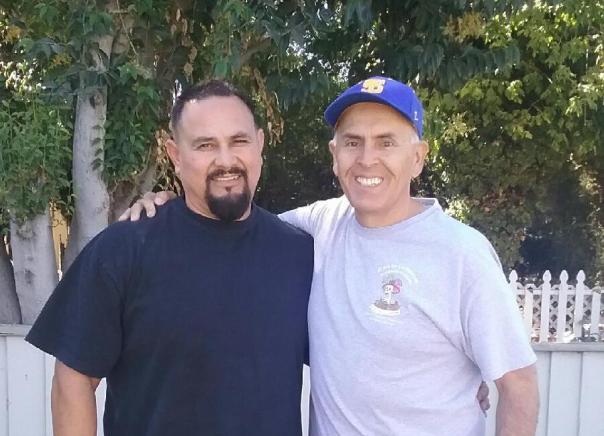
Ximena celebrating 8th grade graduation with her Tío Eddie – Spring 2016

Author’s note: The following passage is the beginning of Chapter 8, “Sharks & ‘Cudas,” of my book, Summer in the Waiting Room: How Faith, Family, and Friends Saved My Life.  This is the 61st excerpt in the blog series.

The text in italics indicates that the passage was from a vivid dream caused by a phenomenon doctors call ICU Psychosis. To learn more about what causes The Dreams, go to Excerpt #53 (https://esereport.com/2016/06/29/summer-in-the-waiting-room-how-faith-family-and-friends-saved-my-life-excerpt-53/)

*************************

Chapter 8

 Sharks & ‘Cudas


 As the morning of July 9th dawned, it was the beginning of a busy weekend of birthdays for the family. That day, my niece Ximena, Kimberley and Miguel’s daughter, turned 8 years-old. The next day, another niece, Gabby, Valerie and Eddie’s daughter, would be celebrating her quinceñera with a big party. Initially, Val and Eddie wanted to cancel the party due to my dire condition, but Sandra persuaded them that life must go on for everyone, especially the kids.

Ximena, whom I nicknamed “Chimini” (it’s a long story), planned a full day of swimming at home with her cousins, and having pizza and cake later that evening. In a journal she kept that summer, she wrote about her birthday:

Dear tío Eddie,

I hope you feel better & see you soon hopefully. Guess what tomorrows my B-day & I am super Excited.

Sincerely,

Chimini.

She drew little hearts over the “i” in her name in place of the traditional dots.

Ximena and I have always had a close and special relationship. I’ve always admired her exuberance and love of life. Like me, she’s a chatterbox. When she was four or five years-old, she would sit next to me and talk about everything that came to her mind. It was a crack-up watching this little girl speak with so much passion and conviction as her eyes and gestures told as much of the story as her words.

I learned from my dad that children, like adults, had minds of their own and thoughts that they wanted to share. I followed his example by being genuinely interested in what kids have to say. Ximena’s inquisitive mind and animated way of expressing herself always made our conversations interesting. She reminded me of Marisa at the same age. I felt so blessed when she later asked me and Sandra to be her godparents for First Communion.

After a full day of swimming and pizza for dinner, the family headed for the hospital at Ximena’s request. Earlier in the day, she told Kim that she wanted to celebrate her birthday where “Tío Eddie could be nearby,” so Kim decided to have cake and open presents at the hospital cafeteria.

The large crowd, which now included family from out of town that began arriving for Gabby’s quinceñera scheduled for the next day, moved from the waiting room to the cafeteria. There, the usual party of 20, plus some, sang “Happy Birthday” to Ximena, ate cake, chatted, and laughed making the plain hospital cafeteria feel as much like home as the waiting room. For Ximena and the kids, it was no different than being in Nana’s family room or at one of our houses.

The family was together with loyal friends celebrating life. Ximena noted in her journal that, “Today is my birthday & we’re at the hospital. It is fun but it would’ve been funner with Tío Eddie.” I’m sure I felt the energy of their celebration as I slowly showed signs of improving two floors above.

The next day, the celebration of life for family and friends would continue with a traditional Mexican-American quinceñera. Sandra opted to stay with me at the hospital as the girls helped the family prepare for the day. The activities included photos in the morning, a mass at church, and a reception in the evening followed by dinner and dancing.

Miguel recalled that getting ready that day was hard. The adults wanted to have a cheerful celebration for the kids despite heavy hearts. It had been a long summer for everyone. The respite was much needed by all.

As party preparations went as planned that morning, fever became a growing concern for doctors at the hospital. Danger of infection is a major concern for patients staying in the ICU for long periods of time. For the past few days, my body temperature hovered around 100 degrees and test after test couldn’t identify an infection.

My white blood cell count was high as the body tried to fight off the unidentified malady. As the morning wore on, the fever periodically peaked at 103 degrees, prompting the medical team to determine a course of action to address the latest crisis.

When Sandra reported the news to her mom, Mrs. Peralta offered to be with her at the hospital. Sandra asked her not to change plans and not to alarm her sisters or their families. Tía Martha Peralta and cousins Tavito and Ana Peralta, who were in town for the party, decided to join Sandra so she wouldn’t be alone.

Will, Juanita, and Marianne would also be with Sandra that night. With the bulk of the waiting room gone, the usually bustling space was quiet while Sandra and the others chatted and waited to hear news from the doctors.

***

I was sweating profusely. I was terribly uncomfortable. The room was bright as the glare of the large round lights overhead generated even more heat causing my body to feel like I was in an unbearably suffocating steam room. With the exception of the bed, the room was virtually empty. A wide open space led to the hallway where I could see nurses and doctors walking by. I yelled for help, but couldn’t make a sound. Wiggling around on the hospital bed, I tried to free myself from invisible restraints to catch the attention of someone, anyone.

I think I was in maternity ward. I could hear babies crying and see nurses carrying lifeless infants in their arms. The babies were bright red and sweating, obviously suffering from the same heat that consumed my body. All of a sudden, hospital staff started rolling cribs into my room, each filled with a wailing baby red-hot with fever. I wanted to help the babies, but couldn’t attract the attention of the people bringing them into my room.

Despite the scorching environment, the nurses and doctors in the hallway, all dressed in white medical uniforms, looked cool and refreshed. A tall male physician with blonde hair wearing classic black horned-rimmed glasses, a white doctor’s smock, and a smart white shirt and dark tie, walked into the room. After evaluating my condition, he coldly instructed a nurse to find ice to pour over my body. Without emotion, he then began to help the poor babies who were helplessly suffering from fever.

The nurse returned with a warm and assuring smile carrying a silver steel bucket of ice water. Others followed with more pails of relief. I was no longer in bed, but in a small tank that was filled up with the ice and water carried in by the stream of hospital staff. The nurse, a cheerful brunette woman with high cheekbones, big brown eyes, and a soothing bedside manner, told me to relax and get some rest. Soon the fever subsided and I fell asleep in the refreshing tank of ice water.

***

**********************

Next Wednesday: More on The Dreams caused by fever and ICU Psychosis.

Summer in the Waiting Room: How Faith, Family, and Friends Saved My Life (Excerpt #60)

stock-vector-vector-drawing-of-a-reclining-red-chair-red-chair-easy-to-edit-layers-and-groups-no-weird-effects-213394192
It had to be a dream! – Image by http://www.shutterstock.com

Author’s note: The following passage is the final excerpt from Chapter 7, “Sticking With God,” of my book, Summer in the Waiting Room: How Faith, Family, and Friends Saved My Life.  This is the 60th excerpt in the blog series.

The text in italics indicates that the passage was from a vivid dream caused by a phenomenon doctors call ICU Psychosis. To learn more about what causes The Dreams, go to Excerpt #53 (https://esereport.com/2016/06/29/summer-in-the-waiting-room-how-faith-family-and-friends-saved-my-life-excerpt-53/)

*************************

On the morning of July 8th, nine days after the oscillator began its work, doctors ordered the respiratory therapist to remove the machine that caused so much angst and fear for my family. The loud thumping sound emitted by the oscillator and the heaving of my chest as air rushed into my lungs with steady precision suddenly stopped.

The pulmonologists had anticipated that I would be connected to the machine for three days at the most to prevent serious lung damage. Miraculously, my lungs and heart survived the constant thrusting of air even though it continued three times longer than expected. Sandra was excited about the rapid progress during the past few days.

Doctors also ordered the gradual discontinuation of the medicines that kept me paralyzed and in a deep sleep. It would be another major step toward overcoming the seemingly impossible. Throughout the day on July 8th, Sandra returned to her journal to document even the smallest piece of good news with exclamation points on each page. Her excitement couldn’t be restrained as she wrote, “Trust steadily in God, hope unswervingly, and love extravagantly. And the best of the 3 is LOVE. I love you!!!”

Feeling encouraged and hopeful, she retreated from the ICU and the hospital to have dinner with the girls and her family.

***

            I slowly opened my eyes and found myself in a strange place. Looking around, it appeared as though I was in a college classroom or professor’s office. I must be close to the ocean, I thought, because I could hear the sounds of waves crashing onto the sand. I could see students with backpacks walking about outside the door.  Even more strange, I was in a cartoon! With the exception of the people I could see, everything else was animated like some kind of Disney movie: furniture, walls, floor, and ceiling.

            I was sitting on a fluffy red arm chair with big colorful pillows all around me and on top of me. They were bright pastel hues of pink, blue, green, purple, orange, and red. I could see my hands and feet, but I couldn’t move them because the cartoon pillows were heavy despite looking light and airy. A medical student walked into the classroom wearing a multicolored nurse’s uniform and scribbled something on the whiteboard I couldn’t understand. When I called out to her to ask about my whereabouts, no sound came from my voice. I couldn’t talk!

            When the student left the room, I began to get anxious. Where was I? What was happening to me? I tried to get up from the easy chair, but the heavy pastel-colored pillows prevented me from moving. I looked around to find a way to call for help as my anxiety intensified. I saw my trusty cell phone on one of the pillows near my feet. That phone had been at my side through thick and thin during my professional quest for redemption and success. It wouldn’t fail me now. All I had to do was text Sandra and she would clear everything up.

            After what felt like hundreds of futile attempts, I couldn’t reach the cell. The pillows on my arms and chest were just too heavy. I was paralyzed, sitting alone on a big cartoon chair in a college classroom near the coast of who knows where. Panic began to set in, my heart started beating harder, and my breaths became shallower. I was scared and confused. Then suddenly, to my relief, Sandra walked into the classroom. She approached me with her angelic and reassuring smile to caress my head with her soft hands telling me that everything was going to be okay. Relaxed and feeling safe, I fell into a deep sleep.

 ***

Sandra had a relaxing dinner with her family and the girls. Despite the fact that doctors continued to say that I was still the “sickest man in the hospital,” she started to get a sense that we were at the beginning of the end of this nightmare.

I was still breathing with the help of the ventilator and nitric oxide machine, but the oscillator was now a thing of the past. I even twitched a few times when Sandra or a nurse touched me indicating that the paralytic medicine was wearing off. All of these events were signs that progress, albeit in tiny increments, was being made.

During the 30-plus days of the ongoing nightmare, Sandra worked hard at keeping the girls lives outside the hospital as normal as possible. They settled into a daily summer routine that started the morning with swim practice. Marisa spent the day at her summer job at the cabana. Erica would spend time with her cousins and Nina Shelley. When evening came, the girls would go to the hospital with one of Sandra’s sisters, have dinner with Sandra and the family, and participate in the activities that unfolded in the waiting room.

The girls would always visit my room together before leaving for the night. Following the advice of doctors, Marisa talked to me with an upbeat tone in her voice encouraging me to fight on. An occasional blink of my eyes would bring a short burst of excitement for whoever else was in the room. Erica stood by quietly, but confident that I would be okay. Once they said goodnight, they would walk out together, Marisa usually fighting back tears and Erica silently walking beside her.

Back in the packed waiting room, small groups were huddled together gossiping, telling stories, eating snacks and drinking coffee. The scene looked like family and friends gathering in a large family room. In addition to the stockpile of food and drink, there were blankets and pillows strewn on the chairs and small table tops. Sometimes the room would get loud as someone told a story or made a joke that generated howls of laughter, only to be reminded that they were in an ICU waiting room.

Erica later told me that when visitors of other patients opened the door, they immediately paused, surveyed the scene, and mumbled some sort of apology with an “oops, sorry” look on their faces as if they stumbled into someone’s home. The startled visitors would quickly shut the door and search for another place to quietly and peacefully support their loved ones in the ICU. The rhythm of the waiting room would resume as soon as the door closed.

As evening turned to night, Sandra’s core of support would begin the process of returning to the real world and preparing for another day. Those who wanted to see me came into my room for a brief prayer and to say goodnight to Sandra while others, who couldn’t bear to see me in such a helpless state, patiently sat in the waiting room.

When Sandra returned to my room in the ICU on the night of July 8th, her mom was with her. They stood staring at me wondering what the future would hold. The man who had an abundance of energy, a tireless work ethic, and a love for parties was in a deep sleep and motionless. Over the hushed chatter between Sandra and her mom, the quiet room echoed with the sound of the machines that kept me alive.

Before leaving for the night, Mrs. Peralta rubbed oil, blessed at the church, on my lifeless legs, arms, and forehead and prayed to St. Jude pleading for his intervention. Sandra’s mom hugged her second daughter tightly in the quiet ICU, made the sign of the cross on her forehead, and kissed her goodnight.

In the waiting room, those who still remained gathered in a circle as Rudy led a prayer. Sandra came out to the waiting room and thanked everyone for visiting before joining the round of ritual goodbye hugs. It was another tearful “see you tomorrow,” another night sleeping on a cot beside the man she loved, another night the girls were away from home, and another night of hope.

**********************

Next Wednesday: Chapter 8, “Sharks and ‘Cudas,” begins!

Summer in the Waiting Room: How Faith, Family, and Friends Saved my Life (Excerpt#59)

enhanced-18442-1421428145-61
Image by http://www.buzzfeed.com

Author’s note: The following passage is from Chapter 7, “Sticking with God,” of my book, Summer in the Waiting Room: How Faith, Family, and Friends Saved My Life.  This is the 59th excerpt in the blog series.

*************************

During the dark days of July, Sandra vowed to stay positive and urged the waiting room to do the same so that I could feel the energy around me. Marisa and Erica made posters and decorated the room with photos so I could wake up to a place filled with love. One poster wished me a Happy Father’s Day and another celebrated the 4th of July.

Colorful drawings of me with my favorite things, like the ever present San Francisco Giants baseball cap on my head, graced yet another poster. Sandra had been by side every day and every night since the awful cardiac arrest incident and her faith grew stronger as my condition worsened. She ended that morning’s entry into her journal by writing,

“You will make steps closer today because I know that you are fighting to get back to us. We love you Babe!! More than you know…”

I spent two decades of working relentlessly to rid myself of self-perceived failure demons and trying to make Sandra proud that she chose me. Now at my most vulnerable, Sandra expressed her love in the most intimate way. She was talking to me through her journal hoping that I could hear her through the whirring din of the ventilator and the thumping boom of the oscillator.

I had always thought that important professional titles and financial security would impress her, yet the prospect of losing me made an impression on her soul more deeply than any professional or material accomplishment ever could. Although I was motionless on the hospital bed, her love and energy provided the fuel for me to fight.

Later on the afternoon of July 5th, my heart started racing again. While Sandra was spending time with family and friends in the waiting room, my heart rate shot up to 140 beats per minute and my blood pressure dipped below 80/40. When she walked into the room to check on me, medical personnel were once again scrambling to prevent another cardiac arrest episode.

Doctors had to make a complex decision in only seconds. As noted in my medical record, I hadn’t been on amiodarone to regulate my heart beat for several days. Nevertheless, the toxin was used again to bring my heart back into rhythm. Until my lung issues were resolved and a defibrillator could be installed, doctors had no other means to stabilize a racing heart.

Despite that scary moment, Sandra’s faith grew stronger. She described the incident in her journal as “just a little bump in the road.” Later that evening, after saying goodnight to the girls, she walked into the room as the song “Here and Now” by Luther Vandross played on the CD the girls recorded for me. We used the tune for our wedding march almost 20 years earlier.

To Sandra, it was a sign from God that I would be back and that we would be able to continue our life together.  In addition to her absolute commitment to God’s will, she was determined to do all she could to ensure that I would survive. She went on to write, “I know you are coming back to me. I will not accept anything less and I promise I will fight with you until I have you back with us.”

With the frightful day coming to end, Sandra’s unwavering resilience gave her hope. Before she prepared for another night on the uncomfortable cot that sat just feet away from her lifeless husband, she turned to Scripture for comfort:

“I’m sticking with God. I say it over and over again – it’s all I’ve got left. He proves to be good to me and to all who passionately wait and diligently seek Him. It’s a good thing to quietly hope from God.” – Lamentations 3:24-26

While the breathing machines and monitors rhythmically hummed, thumped, and beeped in the dark, Sandra laid back on the portable bed in the ICU and closed her eyes with hope in her heart.

Over the next few days, I began showing signs of promise. My lungs were still terribly saturated with fluid and continued to be unrecognizable to an amateur looking at my X-rays. Nonetheless, the oscillator appeared to be doing its job. The puffs of air that the machine was sending into my lungs were opening air sacs enough to stabilize my oxygen levels allowing the other vital organs to function. The numbers weren’t getting any better, but they weren’t getting any worse.

Doctors were encouraged by that and started making plans to consider options for moving forward. On July 6th, they made the decision to decrease the intensity of air being rushed into my lung sacs by the oscillator. They advised Sandra to be patient and to wait for my body to be completely ready to be weaned off of the breathing machines.

In the meantime, Sandra and the girls continued to support each other with a strength that could only come from their faith and the knowledge that my love for them was without limit. Sandra noted in her journal at the end of the day that “we were getting baby steps closer” to the end of this ordeal and to the moment I would return home.

A couple of days later, as my condition showed signs of improvement, nurses received notification to stop administering Verocounium, the medication that kept me in a paralytic state. Although doctors told Sandra that it would take months of intense physical therapy to completely recover from the muscle memory loss caused by the medicine, she was relieved that the drug wouldn’t do any more damage.

While pleased about the good news regarding minor progress with my lungs, the medical team was becoming concerned about a new problem. A bedsore was forming at the base of my back as a result of laying motionless for more than a week. To keep the sore from further irritation, hospital staff created space between the bed and my body by placing pillows under my shoulders, butt, arms, and legs.

The white pillowcases made it look like I was sleeping on a bed of fluffy clouds, a comforting, yet ominous, metaphor for heaven.

**********************

Next Wednesday: In a major step forward, doctors decide to take me off of the oscillator.

Summer in the Waiting Room: How Faith, Family, and Friends Saved My Life (Excerpt #58)

SANDYPicture (2)
Photo by Mariano Peralta – July 2010

Author’s note: The following passage is from Chapter 7, “Sticking with God,” of my book, Summer in the Waiting Room: How Faith, Family, and Friends Saved My Life.  This is the 58th excerpt in the blog series.

*************************

The numbers and the answers from the medical team weren’t promising. The most pressing issue was the cause of the lung failure. X-rays showed that my lungs were saturated with fluid. Reviewing the images on the X-ray screen was like looking at a blizzard from the safety of a window.

Only a trained eye could see through the heavy white haze and recognize any resemblance of normal lungs. Fever was constantly present surpassing 100 degrees several times per day indicating the possibility of infection. Despite these tell-tale symptoms, every culture sent to the lab returned negative for infection, pneumonia, or bronchitis.

Nevertheless, my oxygen saturation level fluctuated from 70% to 90%, numbers that were dangerously low especially as I was breathing with the help of the ventilator and oscillator.

While doctors were eliminating causes for the respiratory problems through tests, Sandra became more frustrated and confused. Marianne’s theory that ARDS could be the reason for my lung failure was echoed by one of the ICU nurses who cared for me. The nurse told Sandra that she had treated several ARDS patients before and my oxygen saturation levels and X-rays pointed to the respiratory syndrome as the culprit.

Every time Sandra addressed the issue with doctors, they were reluctant to confirm the diagnosis until all other more common causes were eliminated. Sandra and others were beginning to believe that ARDS could be the problem. The waiting room internet researchers agreed, but continued to be puzzled that I hadn’t experienced any of the conditions that led to the onset of the rare and deadly syndrome.

My medical record sheds some light on what doctors were thinking. Doctor comments about ARDS first show up on the record shortly after the 4th of July weekend. Using words like “possible” and “feasible,” they developed a course of action that addressed the syndrome. As there is no cure for ARDS or medication that directly addresses the symptoms, doctors took aggressive steps to enhance the probability of survival.

The ventilator, oscillator, induced coma, paralytic medicine, and steroid treatments combined to give me the best chance to overcome what looked like a hopeless situation. What still created the atmosphere of bewilderment was what caused me to be in this state. There was no infection, no blunt trauma, no pneumonia, or any other event that shouted out “ARDS!”

One entry into my medical record on July 1st indicates that doctors were concerned about the continued use of amiodarone, the medication I was prescribed to keep my heart stable and prevent another episode of cardiac arrest. The entry read:

“recommend stopping amiodarone, as you already have, after getting more details around the circumstances for starting it and weighing risks/benefits of using it.”

Several hours later, the same doctor wrote the following directive:

“Discussed circumstances for amiodarone therapy which was related to arrest during acute event. Would therefore stop amiodarone.”

For almost two decades, the drug has been used to stabilize the heart rate during cardiac arrest episodes. The American Heart Association (AHA) determined that amiodarone improved the survival of cardiac arrest patients and recommended its use in the 2000 AHA Advanced Cardiac Life Support Guidelines.

Since then, the drug has been a staple in hospital rooms where a life-threatening cardiac event unfolds. Ten years later, the 2010 AHA Guidelines for Cardiopulmonary Interventions declared that the first-line remedy to basic life support for cardiac arrest patients is amiodarone.

The drug has many potential side effects due to its toxicity. However, amiodarone use has rarely been associated with the development of ARDS. Some studies have shown that no more than 5% of patients who take the life-saving medicine develop lung poisoning.

The studies further found that a rapid progression to ARDS in cardiac patients could be related to the dysfunction of the left ventricle in the heart, the precise location where my heart was damaged. However, the main theory in recent studies is that that there could be a connection between amiodarone and a high concentration of oxygen delivered to the lungs during a lengthy time on a ventilator and an intubation pipe.

When doctors expressed concern about amiodarone in my medical record n July 1st, I had been intubated and on mechanical ventilation for a prolonged period of 13 days. Since researchers are still in the hypothesis stage, the diagnosis of ARDS, especially related to amiodarone, is challenging and routinely overlooked.

The damage to my lower right heart muscle allowed nothing more than a weak stream of oxygenated blood to reach my worsening lungs. On July 1st, it had been three days since the doctors aggressively addressed the situation that was causing my lungs to fail. While ARDS wasn’t the official diagnosis, it was clear to everyone – doctors, nurses, Sandra, the waiting room information gatherers, Marianne – that I was part of that 1 to 5% with full-blown acute respiratory distress syndrome.

The best-case scenario was that I had a 70% chance of survival with some organ and brain damage due to oxygen loss. Worse-case, I would succumb to this rare syndrome like the 30% who don’t live through it.

Despite all of the data that was conspiring against me, Sandra’s entries into her journal were upbeat. On July 5th she wrote, “Today is a new day and I thank God for one more day with you.” She had endured a long weekend when each hour brought a new concern, another setback, and renewed hope when the last crisis was resolved.

It was a holiday weekend when lots of visitors came to support her and the girls in the waiting room. The few who were allowed to see me tried to give Sandra hope even though their faces expressed hopelessness. Sitting alone looking at my lifeless body and hearing the numbing sounds of the life support machines doing their work, her faith gave her more hope than ever.

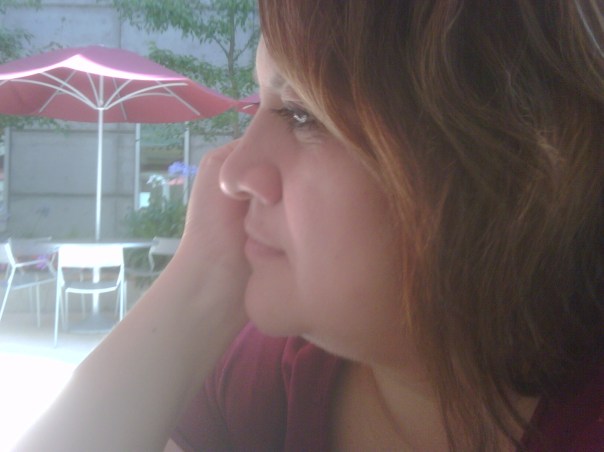
That weekend, Mariano snapped a photo of Sandra one morning after breakfast. She sat pensively contemplating an uncertain future. Her eyes reveal enduring faith, steely determination, eternal hope, and unconditional love. Reminiscing about the photo a few years later, Mariano wrote,

“Without her knowing it she reignited something inside of me at that time …and that was to NEVER QUIT! No matter how gloom the situation to never stop believing and to never step down from the fight, to have Faith! She provided an example to me that I could never have learned from reading a million books or going to hundreds of seminars. I felt that for the first time in my life I was looking straight in the eye of Unshakable True Love At Its Finest!”

**********************

Next Wednesday: My heart starts racing and doctors work to stabilize the situation while Sandra, once again, turns to her faith.

Summer in the Waiting Room: How Faith, Family, and Friends Saved My Life (Excerpt #57)

person-with-folded-hands
Image by emojipedia.org

Author’s note: The following passage is from Chapter 7, “Sticking with God,” of my book, Summer in the Waiting Room: How Faith, Family, and Friends Saved My Life.  This is the 57th excerpt in the blog series.

*************************

Mrs. Peralta, too, had a strong faith that guided her through life’s difficulties and triumphs. From her youthful days as the youngest child of a widowed farm worker to the challenges she confronted while raising four daughters, she turned to prayer to ask for guidance and to thank God for His inspiration.

She has deep faith in St. Jude, the Patron Saint of Hope and impossible causes. According to the National Shrine of Saint Jude, the saint was one of Jesus’ original twelve Apostles, preaching the Gospel with great passion in the most difficult circumstances.

During the 4th of July weekend, my critical condition made for the most difficult of circumstances for my family to that point. If there was ever a time for St. Jude’s intervention, it was the dark days and weeks that followed that long weekend. My survival seemed like an impossible cause and hope seemed like the only remedy.

With that in mind, Mrs. Peralta also began a nightly ritual that would endure throughout the summer. Just before leaving the hospital for the night, she would rub healing oil on my arms, legs, and forehead while reciting a prayer to St. Jude asking for his intercession. When I regained consciousness later that summer, the ritual brought me closer to understanding my own faith.

Two family friends took prayer from the waiting room to cyberspace. Beginning on June 18th, the long day that began with cardiac arrest, Teresa Gonzales and Vanessa Rios posted Facebook updates throughout the summer asking friends to pray for me and my family. Their pleas carried the messages of hope and faith to anyone who read the posts. God must have been overwhelmed by the prayers for a man many didn’t even know.

I first met Teresa when she was a student at Most Holy Trinity Parochial school and I coached the middle school basketball and baseball teams during the mid 1980s. Over the years, we kept crossing paths as her friendship with Kimberley, which started during the church’s youth group activities, continued to grow. Along with her husband, Tommy, and their four daughters, the Gonzalez family has been part of the larger Peralta circle of friends for over 25 years.

On June 18th, she posted on Facebook asking friends to “Please say a prayer for Eddie Garcia.” She went on to comment that, “This morning his heart stopped beating and they had to shock it to start again. He was in surgery again and he’s very sick! Right now he has a 50/50 chance. Please say a pray (sic) that he pulls through this.”

With these posts, Teresa started a conversation that described the ups and downs of the ICU while the string of prayers grew and strengthened. Two days later, she posted promising news: “The Power of Prayer…Eddie is doing very good. He continues to fight and I’m pretty sure he’s winning. Until that bell rings, please continue the prayers.” Within the week, when my prognosis took a turn for the worst, Teresa’s post described the downturn. She wrote, “Please keep prayers going for Eddie. It’s an emotional roller coaster.”

The prayers kept coming.

Vanessa began sending pleas for prayer to her network on June 18th as well. She came to the family via Kimberley when the two of them were great college friends. They grew closer as they married and had families of their own. Vanessa and her two sons have become an integral part of the Peralta clan through the years.

In her first post, she advised her friends that the “next 48 hours are critical and concluded by urging them to, “Please ask your family and friends to pray.” She followed up with posts on June 21st and June 28th updating readers on the “amazing power of prayer” and encouraging her network of friends to “keep the prayers going” as my condition continued to be “delicate.”

While Sandra made the decision to re-insert the breathing tube and considered introducing the oscillator, Vanessa posted a heartfelt message on June 30th that read:

“Today was a tough day. Someone reminded me that when we pray, we need to be specific. So please, help us pray that Eddie wins the fight of his life right now. We want Eddie to get better, his heart to be strong enough, the infection to go away and Eddie’s oxygen to be normal. We want Eddie to go home with his family…in God’s name we pray!”

Comments on Vanessa’s post showed that reaching out to God had affected others. Friends of friends and people from parts unknown followed the posts and prayed for me, Sandra, and the girls. The power of the internet and social media was making its presence felt all the way to the gates of God’s heavenly paradise.

The Facebook messages that Teresa and Vanessa shared virtually with their friends captured the spectrum of emotions that enveloped the waiting room through the last days of June and the first days of July. The posts accurately described the medical situation while exposing the raw feelings of hope, faith, and despair that impacted everyone who visited Sandra and the girls at the ICU department on the 2nd floor at Kaiser Santa Clara Medical Center.

As the growing circle of family, friends, and social media banded together in prayer, Sandra sat alone by my side in the ICU hour after hour comforting me, listening to the machines whirl, and watching the multitude of numbers flash across computer screens. Every time nurses and doctors entered the room, Sandra presented a long laundry list of questions to help her help doctors make the right decisions.

**********************

Next Wednesday: Doctors continue to look for answers to my lung failure

Summer in the Waiting Room: How Faith, Family, and Friends Saved My Life (Excerpt #56)

IMG_2261
40 years of friendship – Summer 2016

Author’s note: The following passage is from Chapter 7, “Sticking with God,” of my book, Summer in the Waiting Room: How Faith, Family, and Friends Saved My Life.  This is the 56th excerpt in the blog series.

*************************

Chapter 7

Sticking with God

The long and tumultuous days of the 4th of July weekend were like dark clouds gathering for the stormy month that lay ahead. It was during the month of July that faith, family, and friends, became equal partners with talented and caring doctors, nurses, and hospital staff in the miraculous effort to save my life. Every person who frequented the waiting room that month played a unique role in the unfolding drama that kept people coming back for more.

Rudy brought his own brand of faith to the daily gatherings. Once I graduated from college and started chasing redemption for my failure demons, our friendship began to drift apart. I embarked on a tireless quest for recognition through work and professional accomplishments while Rudy continued his cycle of binge drinking and cavorting despite being in his early thirties and with a growing family.

He left the life of a construction worker for a steady paycheck and good benefits as a driver for Berkeley Farms milk products. Not wanting to jeopardize the stability the job created for him and his family, Rudy would go months without a drink or a night on the town. Every now and then he would go on a months-long binge after a party or a Saturday with the guys. The times that he and I were able to get together always ended in a drunken disaster.

Early in my career, a professional colleague invited me and a guest to a San Francisco 49er football game. Being that Rudy and I are lifetime 49er fans, I invited him to join me at the game at Candlestick Park in San Francisco. The two others who rounded out the group of four were well-respected business and community leaders in east San Jose. When we arrived at the stadium, we each bought a beer and raised our cups in a toast as we headed to our seats.

Rudy bought another round for the foursome just before kick-off. The others hadn’t even finished the first beer by the end of the first quarter and Rudy was ready for yet another round. I had also finished my two brews, but declined having another beer because the negative impact a drunken afternoon would do to my future career opportunities. Looking confused, Rudy sat down and didn’t have another drink for the rest of the first half.

At halftime, Rudy again invited me to join him at the concession stand. Again, I declined. He said he would run up to get refreshments and be back before the start of the second half. I didn’t see him for the remainder of the game. In fact, I didn’t see him for several months. Rudy went on another alcoholic binge as I started on a destructive binge of my own working obsessively to slay my failure demons.

It was my work schedule that prevented us from having any quality time together. Our friendship became a one-way street. Rudy helped on my campaigns for public office and played important roles in my parents’ funerals. He even traveled to Bakersfield to be with me and my family when my sister Patty passed away in 2003.

I called him only when I had a free moment waiting at an airport or driving from one meeting to another, spending the few minutes regaling him with stories about my successful exploits. I couldn’t recognize my selfishness as I marched forward reaching for the next promotion or achievement. Rudy never brought this to my attention during that time, or since. Although I was oblivious to anything other than my next professional move, Rudy’s friendship was rock solid.

While I immersed myself in the intoxicating world of politics and the executive suite, Rudy embarked on a long and successful journey to rid himself of his own demons. With the unconditional support of his wife Melody and his family, he sought refuge and guidance in God. At Melody’s urging he went with her to services at a non-denominational church and allowed himself to welcome the presence of God in his life.

Over time, his binges were less frequent and lasted just a day or two instead of the long months of the past. He ultimately conquered the demons by putting his life in God’s hands. Although he must still fight the urge to return to his old ways, Rudy has a deep and real spiritual faith that has brought him closer to his family and a happy life.

That unconditional faith came with him to the waiting room every day. Wearing navy blue work pants, boots, and a white-collared shirt with a Berkeley Farms logo over one shirt pocket and his name over the other, Rudy would show up at the hospital around 3:00 in the afternoon after a long day of delivering milk. Most days he would bring something from the shop to add to the other offerings of food and drink for the waiting room dwellers: chocolate milk, orange juice, ice cream or yogurt.

Some days he would just sit and meditate and exchange in whispered banter. Other days, he would fill the waiting room with life and laughter by sharing colorful stories of our youthful shenanigans. He could also bring tears to tired eyes with anecdotes about how we stood together like brothers in difficult times.

After spending several hours eating junk food, sharing stories, and being one with my family Rudy would call it a night to rest at home and prepare for his route that began before dawn the next day. Like clockwork, between 7:30 and 8:00 PM, he would ask everyone in the waiting room to stand up and hold hands. Closing his eyes and allowing God to give him inspiration, Rudy would say a heartfelt prayer before leaving for the night.

Those that made the waiting room part of their daily lives would make sure to be in the room by 7:30 so they could take part in the evening prayer. The energy created by Rudy’s love for me and his unwavering faith transferred from hand to hand as he recited pleas to God. The surge of energy generated by the prayer circle gave a boost to those who would stay through the night.

**********************

Next Wednesday: Friends start a virtual prayer circle…

Summer in the Waiting Room: How Faith, Family, and Friends Saved My Life (Excerpt #55)

img025
Image of “cloudy lungs” by biochem2.umin.jp

Author’s note: The following passage is from Chapter 6, “The Dreams,” of my book, Summer in the Waiting Room: How Faith, Family, and Friends Saved My Life.  This is the 55th excerpt in the blog series.

*************************

As rumors circulated in the community about my condition, Sandra was very protective about who could see me.  With her strong faith in God, she knew I would survive and didn’t want anybody but our most trusted family and friends to visit the ICU room.  Working with ICU nurses and staff, she gave strict orders that no one was allowed in the room without her approval.

Barbara, my in-laws, the Peralta sisters, Miguel, Pancho, Steve, and Rudy were daily visitors. Eddie Velez had a difficult time seeing me in that condition, so his visits into the ICU were less frequent. He would later tell me that seeing me was traumatic as if his actual brother had been on that bed connected to all those machines.

When the Peraltas from Mendota arrived, they asked to see me and Sandra quickly agreed. They entered the room in pairs, each person stunned by what they saw.  They knew me as someone full of life always ready for conversation and a party. What they saw was a lifeless body oblivious to what was happening.

Mariano, who is 15 years younger than I am, thinks of me as an older brother and mentor giving advice on an array of topics like relationships, work ethic, and life in general.  He enjoys my irreverent nuggets of wisdom like “we’re here for a good time not a long time,” “don’t threaten me with a good time,” and his all-time favorite, “you gotta play like a champ.”  Mariano later said that he knew I would survive this setback, although he was devastated to see me hanging on to life.

For Tio Tavo, the prognosis didn’t look good.  Never one to sugar-coat a situation, he thought that they would be returning to San Jose soon for my funeral.  He’s a tall, imposing figure with a thick mustache and a hook for a left hand caused by a farming accident many years before.  A foreman at a working ranch outside of Fresno, he always wears jeans, work boots, a plaid western work shirt, and a baseball cap.

When he saw me, he stood over my bed weeping.  Tía Marta, a woman of faith, had her doubts as well. She prayed asking God to do what was best for my family.  When they emerged from the ICU, he shared his thoughts about an impending funeral. With an emotional tone, Tio Tavo’s older brother immediately scolded him,“¡Eddie no se va a morir!”  (Eddie isn’t going to die!). It was the first time my father-in-law vocalized what he was feeling.

As morning turned into afternoon, the doctor finally arrived and summoned Sandra to a small, windowless consultation room just down the hall from the ICU.  Apprehension filled the waiting room as Sandra, her mom, sisters, Barbara and George quietly followed.  Once in the little room, the doctor wasted no time getting down to business.  He began by saying that I was the “sickest man in the hospital.”

Sandra immediately asked if I had ARDS, and he responded that that was a probability as X-rays showed the classic image of cloudy lungs. The only way my body was receiving oxygen was through the respirator and oscillator, a full life-support situation.  My weak heart only complicated matters. The doctor went on explain that there is no known cure for ARDS, but he described a couple of treatment options.

The first, he said, was the traditional approach of keeping the patient sedated and relaxed with a small dose of vecuronium bromide, a medication classified as a paralyzing agent. This allows the patient’s body to rest while the lung congestion clears out on its own.  If the strategy works, the patient could be weaned off of the medication and breathing machines within 10 days.  If it doesn’t work, the steady use of ventilation could cause serious lung damage and lead to death.

The second option, steroid treatments, was more aggressive and could result in further complication to other organs, especially the kidneys. The research on using steroids to treat ARDS is mixed in the pulmonary medicine world. One school of thought is that it doesn’t enhance survival rates, but causes irreparable damage to vital organs for survivors. Other doctors believe that steroids significantly decrease lung inflammation, allowing the lungs to receive oxygen on their own faster than doing nothing.

Sandra rapidly peppered the doctor with questions. “How will you know it’s working?”  “How long will it take to see results?”  “What are other risks?”  “Do benefits outweigh the risks?”  He responded that regular x-rays of the lungs will tell him if the congestion is clearing out.  The major risk is losing kidney function which has its own set of problems.

Other than my delicate heart, I was otherwise healthy, he counseled. There was a good chance that this treatment would help.  The doctor said that the next 72 hours would be critical and could determine the possibility of my survival. He assured Sandra that he “wasn’t ready to give up” on me.

Sandra told the doctor that she needed a little time to think about the steroid option and asked how the family could help me while I was in a deep sleep. He explained that research showed that constant stimulation is essential for heavily sedated patients. Visitors whose voices are recognizable keeps the brain stimulated with sounds of familiarity.

Family members talking to me would put me at ease, he explained. He also recommended that we play my favorite music and place photos in my line of sight in the event my eyes briefly opened.  Keeping my brain active would make emerging from the induced coma less stressful and confusing.

Emotions were intense, the small group was scared, and it started dawning on them in that  cramped room that I might die. Everyone wanted the same thing, to do everything in their power to help me survive this unknown illness that had left me clinging to life in the ICU. Sandra vaguely remembers the sense of doom that day as her attention was completely focused on the doctor and his advice on how to best ensure my survival.

In her journal entry about the meeting she wrote, “I just want you to know that I have tried everything I know to get answers for you. I know you are fighting. I can see it in your eyes. So, you keep fighting and I will fight on this end.” The tone of this passage clearly displays Sandra’s resolve and tenacity. In true Sandra fashion, she also expected me to do my part.

Back in the waiting room, Sandra broke the news about the doctor’s assessment to the somber gathering. Electronic devices booted up and the information hunters were again scouring the internet to make sense of the diagnosis and the possible treatments.

**********************

Next Wednesday: Chapter 7: “Sticking with God”

Summer in the Waiting Room: How Faith, Family, and Friends Saved My Life (Excerpt #54)

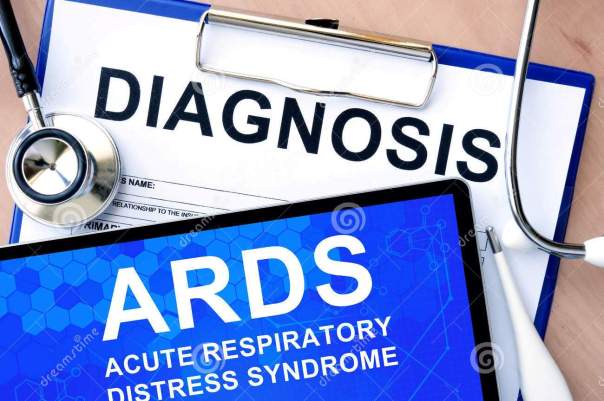
form-diagnosis-tablet-acute-respiratory-distress-syndrome-ards-word-53454414
Image by http://www.dreamstime.com

Author’s note: The following passage is from Chapter 6, “The Dreams,” of my book, Summer in the Waiting Room: How Faith, Family, and Friends Saved My Life.  This is the 54th excerpt in the blog series.

*************************

Visitors continued to stream in and out of the waiting room that evening chatting with the regulars: Marisa, Erica, the Peraltas, Velez, Rochas, Leyvas, Barbara and Jackie, my brother Steve, Rudy and Melody, and the Medinas.  Sandra stood guard in the ICU with me watching the monitors and discussing the numbers with the nurses.

That night at 11:45 PM, she wrote to me in her journal, “You have been on this new machine most of the day and the numbers are looking positive and I am keeping a good eye on you as you sleep.”  She also mentioned that “Father Rios came by to visit you today,” and she went on to write, “He told you that the kids at SJV (St. John Vianney) need you and that they all love you. He blessed you and prayed for your healing.”

That’s exactly what Fr. Rios said in the dream where I was in a straightjacket and shackled to a chair in a navy ship office!  Thinking about that dream and others like it months later, I realized that I could feel when Sandra wasn’t in the ICU room with me, which caused my anxiety, sense of loneliness and feelings of desperation.  This must have been when she left the ICU for extended periods of time to join the family for dinner or consult with doctors.

Most of the dreams that I remember included frantic searches for Sandra. In others, I was in an unknown isolated place unable to move or talk to find help.  The dreams usually ended with Sandra finding me or vice versa. I would then fall into a relaxing and peaceful sleep. I’m sure those were the real-life moments when she returned to my side.

Throughout the day, Sandra made short and periodic visits to the waiting room to be with the girls and spend a little time with family and friends who were visiting.  Juanita’s sister, Marianne, an ICU nurse at another hospital, stopped by that day to support Sandra and the girls.

Since Marianne had experience with critical care patients, Sandra described my symptoms to her and asked if she had any ideas on what could be causing my lung failure. Upon hearing the symptoms, she introduced a term to the waiting room that immediately set the iPads and i-Phones into action: Acute Respiratory Distress Syndrome, better known as ARDS to health professionals.

According to the American Lung Association, ARDS is “the sudden failure of the respiratory system.”  To understand ARDS, a quick refresher of high school biology is a good start.  When we inhale, oxygen travels to air sacs in the lungs that have small blood vessels running through its walls.  Oxygen goes into the blood vessels which deliver the oxygen through the bloodstream to the body’s organs.

With ARDS patients, the blood vessels leak fluid into the air sacs.  Once the air sacs are filled with fluid, oxygen can no longer get to the blood vessels to deliver oxygen to the body.  When the organs stop getting oxygen, they start to shut down. Experts believe that about 190,000 Americans develop ARDS each year, of which 30% die from the condition.

This is a significant improvement from just 20 years ago when almost 70% of ARDS patients didn’t survive.  Doctors and researchers have developed a long list of causes for ARDS – bacterial infection of the blood, trauma, pneumonia or other lung infection, multiple blood transfusions, breathing in salt water, breathing in harmful smoke or fumes, breathing vomit into the lungs, narcotics, overdoses of antidepressants, and shock. However, they haven’t found a cure.

Although my symptoms appeared to be related to ARDS, the electronic info gatherers in the waiting room were scratching their heads because I hadn’t experienced any of the situations that cause the syndrome.  Nonetheless, Marianne’s diagnosis was plausible.  Fear and worry enveloped the waiting room knowing that 3 out of 10 ARDS patients die of the condition.

Heightening concerns was the fact that my heart was extremely weak and subject to failure if the lungs couldn’t deliver the necessary oxygen through the bloodstream.  The waiting room prayed asking God to allow the oscillator to keep the airways open and the ventilator to deliver oxygen to the body while the doctors tried to figure out what was going wrong.

The next day was the Friday that started the 4th of July weekend.  In addition to cousins on my side of the family, Sandra’s relatives from the Central Valley farming town of Mendota came into town to be with Sandra, the girls, and our families.  The patriarch of the Mendota clan was my father-in-law’s brother Octavio, whom I respectfully and warmly call Tío Tavo.

I met him shortly after Sandra and I started to date on a regular basis.  He’s blunt with his opinions and has a great sense of humor that keeps everyone in stitches the minute he walks into a room.  Together, Tío Tavo and Tía Marta, and their children, Tavito, Mariano, and Veronica are family to me.  I saw the Peralta kids from “Mendo” grow up from preteens and teens to adults, and now watch their children doing the same.

While people continued to visit the waiting room throughout the day, Sandra kept watch over me in the ICU and anxiously awaited the meeting with doctors.  I was in the most vulnerable state of the summer, lifeless on the bed connected to machines whirring and thumping as the oscillator made a booming sound every time it sent a puff of air into my lungs.

Pancho later said it was scary to watch and hear each gust of air from the oscillator make my chest expand as the machine made a thundering sound. On both sides of the bed stood a forest of IV stands with clear plastic bags hanging from hooks. The clear plastic bags held the medicine and liquid nourishment that worked in tandem with the breathing machines to keep me alive.

**********************

Next Wednesday: Sandra’s meeting with doctors creates tension in the waiting room

Summer in the Waiting Room: How Faith, Family, and Friends Saved My Life (Excerpt #53)

image009
Patient connected to a High-Ventilation Oscillator – image by wesharepics.info

Author’s note: The following passage is from Chapter 6, “The Dreams,” of my book, Summer in the Waiting Room: How Faith, Family, and Friends Saved My Life.  This is the 53rd excerpt in the blog series.

*************************

After I woke up from my induced coma later that summer, it took several months for me to understand that the events that occurred in these dreams were part fact and mostly fiction. According to a study conducted by the Stanford School of Medicine, ICU Psychosis is a condition “characterized by disturbances of consciousness, global cognitive impairment, disorientation, and development of perceptual disturbance” caused by numerous factors related to long stays in a critical care unit.

In other words, the strange and confined surroundings of the ICU combined with the sedative medication causes the patient to hallucinate as the brain tries to make sense of the sights and sounds of the ICU.  My critical care doctor would later tell me that the medicine used to induce me into a coma was like a super high dose of LSD, and many ICU survivors have a difficult time distinguishing between the hallucinations and reality.

Medically induced into coma is different than a coma caused by a sudden shock to the body as in a car accident. The former is a deep sleep caused by medication and the latter is a neurological occurrence that significantly decreases brain activity.  For someone in a deep sleep, the brain continues to function normally so the patient can unconsciously experience what is happening in the ICU.

From time to time, patients in this state may open their eyes for a split second resulting in a camera-like snapshot.  Due to dementia caused by the restricted environment of the ICU and LSD-like drugs, doctors believe that the brain receives and records everything it sees and hears, but can’t process the episodes in an orderly manner resulting in vivid dreams that are fictionalized versions of actual events.

Regardless of the medical and psychological causes of ICU Psychosis, the resultant hallucinations are startling. A recent study published in BioMedCentral.com estimates that Post Traumatic Distress Order (PTSD) can affect as many as 63% of ICU survivors compared to 15% diagnosed in military combat veterans. No matter how you look at it, The Dreams played an integral role in my experience throughout the month of July.

The dream about me strapped in a straightjacket sitting in an office that resembled a navy ship while different characters in my life wandered in an out is typical of the more than a dozen dreams I remember clearly.  Like the dream about Sandra and Fr. Francisco, most of the delusions I had were pure fantasy with a touch of reality related to my dire condition in the ICU.

When in recovery months later, I told Sandra about the dream in the navy ship’s office and she reacted with amazement as she remembered when Fr. Francisco visited me during the early days of my coma and prayed with us.  Throughout Part II of this book, I share stories of The Dreams in the form of italics, as they relate to actual incidents in the ICU.

***

On June 30th, Sandra started talking to me in a daily journal so that she could share “all my (Sandra’s) thoughts as I sit here day after day to try to understand what is happening.”  In the diary, she relates her most personal emotions during the three-month ordeal from the day she began to write through September 14th.  The journal brings to life the myriad of sensations – fear, hope, and despair – that consumed Sandra that summer.  Sandra relates conversations with doctors, family, and friends as she struggles to comprehend how her life and the life of her family suddenly changed course toward an unknown destination.

Late the first night she started writing in her journal, Sandra was helping the nurse sponge-bathe me when my oxygen levels began to drop dramatically.  Still not quite in a deep sleep, I looked at her asking for help with my eyes as I stared at her with fear and confusion.  Doctors were called in to calm me down and adjust the oxygen flow to my lungs.

Sandra wrote, “all I could do was put you in God’s hands. God knows that you are meant to be here because it is now 11:00 (PM) and you are doing better.”  In her writings, her unfailing faith in God carried her though the challenges that came with each day.

The next day, doctors decided to increase the paralytic and sedative medication putting me into a deeper sleep to keep me from moving.  They also increased the diuretic medicine to clear my lungs so they could have a better look to determine the cause of the inflammation and saturation.

Not to be outdone by the lungs, my heart continued to show alarming weakness.  Before exploring more severe options to address my lung problems, the doctors performed an echocardiogram to measure heart function.  The test confirmed that my heart continued to weaken and pump weakly with a 20-25% ejection fraction.

The doctor informed Sandra that he and his colleagues were analyzing all of the data and scheduled a meeting to discuss options the next day.  In the meantime, he would connect me to a high-ventilation oscillator, a breathing device that enhances the effectiveness of a traditional ventilator.

The oscillator is a large machine about four feet tall with a recangular base and a block-shaped “head” that looks like a 1960s era robot. It pumps puffs of air into the lungs to open the airways so the ventilator can deliver oxygen to the body.  Usually used on premature babies until the lungs are fully developed, oscillators are rarely used on adults and only under the most extreme conditions.

The doctor’s comments were brief, straight to the point, and unemotional.  Nevertheless, his eyes looked worried and displayed an overwhelming sense of uncertainty.  He and his colleagues really had no idea what was causing oxygen levels to plummet and my lungs to deteriorate so fast.

Once again, Sandra provided an update to an anxious waiting room, and once again, the waiting room, confused and concerned, began to murmur.  Sandra asked her mom, sisters, Barbara, and George to join her in the next day’s meeting with doctors as the waiting room settled in for another long day.

Summer in the Waiting Room: How Faith, Family, and Friends Saved My Life – Excerpt #52 (NEW EXCERPT)

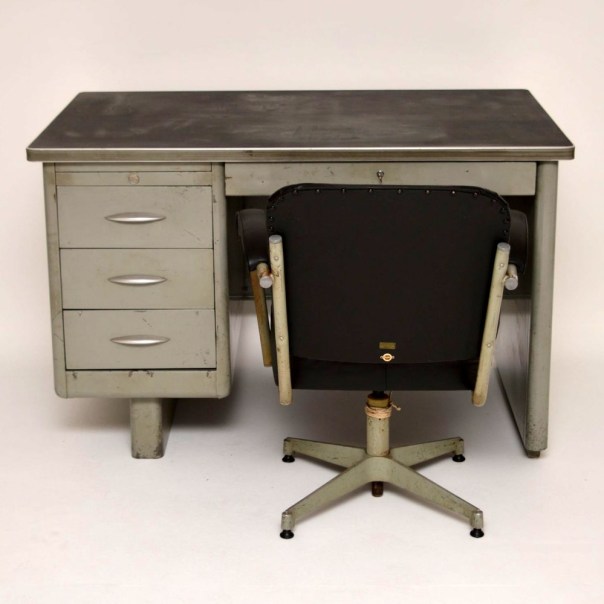
industrial-steel-desk-chair-vintage-1950s_101020
Image of WW II-era Metal Desk and Chair by http://www.retrospectiveinteriors.com

Author’s note: The following passage is the beginning of Chapter 6, “The Dreams,” of my book, Summer in the Waiting Room: How Faith, Family, and Friends Saved My Life.  This is the 52nd excerpt in the series.

*************************

Chapter 6

 The Dreams

The waiting room was abuzz with conversation and iPhone and iPad activity.  The doctor didn’t provide much detail and everyone wanted to know why I had to be fully sedated and paralyzed.  Sandra walked out into the hallway with the critical care physician who had made the decision.  He had a straight-forward bedside manner accentuated with a warm smile.

The doctor explained to Sandra that the amount of oxygen going to my lungs was dropping to dangerous levels, even with the ventilator functioning and the tube in place.  The pulmonary x-ray showed massive fluid saturation in my lungs which clouded the view, so doctors couldn’t see if an infection or something else was causing the saturation.

Administering heavy sedation medication and strong muscle relaxers would allow my body to rest so the ventilator could distribute oxygen to my lungs more efficiently. With his friendly but matter-of-fact style, the doctor made clear to Sandra that decreasing the fluid saturation would be critical for an accurate diagnosis.

Sandra returned to the waiting room to provide the additional information.  The sound of chatter immediately stopped as she described the situation.  She was strong, firm, and straight-forward as she explained that something was wrong with my lungs and doctors weren’t sure what was causing the problem.  With strong trust in God, she urged everyone to pray that the course of action recommended by the doctors would be successful.

Erica stood stoically and silently listening while Marisa, apparently desperate for answers, continued moving her thumbs rapidly across the iPod screen to find one.  Everyone else fell silent, not knowing what to say or what to do.  Sandra hugged the girls, told them to have faith in God and everything would be okay, and with determination in her face, walked out of the waiting room to be with me in the ICU.

The waiting room settled in for a long few days.  The usual flow of visitors dropped in all evening bringing food, snacks, coffee, and water.  Rudy and Melody, Will, Juanita and their kids, and many others visited the Peralta family with messages of hope and faith.  Barbara called our brothers and sisters, and the Peralta girls called family members to update them on my condition.

Everyone stayed late until the early hours of the morning. Sandra alternated between my room and the waiting room keeping those gathered there informed of the situation in the ICU.  Late into the morning all had left but Sandra, her sisters, Barbara, my niece Jackie (Barbara’s daughter), and Juanita.  They slept uncomfortably on the waiting room chairs while I slept motionless in the ICU, my lungs struggling for each breath.

***

I was disoriented and confused when I woke up.  I was sitting on a plain gray metal armchair with a padded seat and back, like the chairs I had seen in old WWII movies about the navy.  I was wearing a white straightjacket that kept me from moving my arms. My ankles were shackled to the chair legs so I couldn’t move my legs either.  The room was empty, but for a gray metal desk that sat in the corner.  I could see people walking by outside the office door, but I couldn’t get anyone’s attention because no sounds came out when I shouted for help. 

I wondered if I had tried to pull out the intubation tube again and been sent to a doctor’s office for some kind of assessment.  I waited patiently for a few minutes, but no one was looking into the office or coming in to see me.  I began to panic, trying futilely to get myself unstrapped from the straightjacket and unchained from the chair legs. 

I couldn’t move though, so I turned my head toward the office door and continued to scream for help to no avail, I had no voice. The more I tried, the more anxious I became.  My heart started to beat harder and faster and fear was washing over me.

I kept looking out the door hoping to see Sandra.  I could only see unfamiliar faces as people walked by completely oblivious to my dire situation.  I felt helpless, lonely, and scared.  What had happened?  Why was I in this plain, empty office?  Where were Sandra and the girls?  I tried again to take of the straps and shackles.  No success.  I couldn’t move.

Finally, I heard footsteps coming toward me; someone would soon walk into the office to help me.  I looked toward the open door to see who it could be.   A distinguished looking man walked into the office wearing a smart herringbone blazer with an open shirt collar, freshly pressed trousers, and polished shoes.  He looked confused and stood at the door’s threshold for about 30 seconds without uttering a word before quietly walking away back into the hallway.

I was exhausted trying to free myself as my breaths became shallow and more labored.  Another familiar face came to the doorway.  The well-dressed man in a dark suit and tie rushed into the office and furiously tried to take off the straightjacket without success.  He told me to relax and not worry for he would go get help, then quickly ran out of the office. I waited and waited.  

No help was on the way.  My anxiety skyrocketed as I was on the verge of total panic.  I could see the ongoing activity outside of the office, no one looked in, and no one came in to help.  Just when despair set in, Sandra walked into the office with the pastor of St. John Vianney catholic parish in east San Jose.

Tall, barrel-chested, with thick salt-and-pepper colored hair, mustache, and goatee, he was a charming and welcoming presence in the working-class neighborhood of my youth.  We got to know him well as Marisa and Erica were students at the parish school and I coached the girls’ basketball team.

As soon as I made eye contact with Sandra, feelings of comfort and security washed over me.  She could see the desperation and fear in my eyes, so she softly and lovingly caressed my head.  She told me that everything was going to be fine and the straightjacket and shackles would soon be removed.  I needed to rest, have faith in God, and fight to get better.  

The priest said, “God is with you Eddie. Keep fighting because the community and the kids need you.”  Sandra took the Father’s hand in one hand and placed her other hand on my head as we prayed together.  As we were praying, I peacefully fell asleep.

***

The reason the previous passage is in italics is because it didn’t really happen.  It was a vivid and incredibly realistic dream that is partly caused by a phenomenon doctors call ICU Psychosis.  Many of those dreams included fantastical settings like 18th-century warships, cartoon-like places, and tropical seaside outdoor hospitals. The high-definition colors, sound, and scenery made the dreams feel like I was in a real place in real time.

But, they were just dreams. Or so I thought. 

********************** 

Next Wednesday: More on “The Dreams” and my first days in a coma.