Category Archives: Miscellaneous Posts

Summer in the Waiting Room: How Faith, Family, and Friends Saved My Life (Excerpt #53)

image009
Patient connected to a High-Ventilation Oscillator – image by wesharepics.info

Author’s note: The following passage is from Chapter 6, “The Dreams,” of my book, Summer in the Waiting Room: How Faith, Family, and Friends Saved My Life.  This is the 53rd excerpt in the blog series.

*************************

After I woke up from my induced coma later that summer, it took several months for me to understand that the events that occurred in these dreams were part fact and mostly fiction. According to a study conducted by the Stanford School of Medicine, ICU Psychosis is a condition “characterized by disturbances of consciousness, global cognitive impairment, disorientation, and development of perceptual disturbance” caused by numerous factors related to long stays in a critical care unit.

In other words, the strange and confined surroundings of the ICU combined with the sedative medication causes the patient to hallucinate as the brain tries to make sense of the sights and sounds of the ICU.  My critical care doctor would later tell me that the medicine used to induce me into a coma was like a super high dose of LSD, and many ICU survivors have a difficult time distinguishing between the hallucinations and reality.

Medically induced into coma is different than a coma caused by a sudden shock to the body as in a car accident. The former is a deep sleep caused by medication and the latter is a neurological occurrence that significantly decreases brain activity.  For someone in a deep sleep, the brain continues to function normally so the patient can unconsciously experience what is happening in the ICU.

From time to time, patients in this state may open their eyes for a split second resulting in a camera-like snapshot.  Due to dementia caused by the restricted environment of the ICU and LSD-like drugs, doctors believe that the brain receives and records everything it sees and hears, but can’t process the episodes in an orderly manner resulting in vivid dreams that are fictionalized versions of actual events.

Regardless of the medical and psychological causes of ICU Psychosis, the resultant hallucinations are startling. A recent study published in BioMedCentral.com estimates that Post Traumatic Distress Order (PTSD) can affect as many as 63% of ICU survivors compared to 15% diagnosed in military combat veterans. No matter how you look at it, The Dreams played an integral role in my experience throughout the month of July.

The dream about me strapped in a straightjacket sitting in an office that resembled a navy ship while different characters in my life wandered in an out is typical of the more than a dozen dreams I remember clearly.  Like the dream about Sandra and Fr. Francisco, most of the delusions I had were pure fantasy with a touch of reality related to my dire condition in the ICU.

When in recovery months later, I told Sandra about the dream in the navy ship’s office and she reacted with amazement as she remembered when Fr. Francisco visited me during the early days of my coma and prayed with us.  Throughout Part II of this book, I share stories of The Dreams in the form of italics, as they relate to actual incidents in the ICU.

***

On June 30th, Sandra started talking to me in a daily journal so that she could share “all my (Sandra’s) thoughts as I sit here day after day to try to understand what is happening.”  In the diary, she relates her most personal emotions during the three-month ordeal from the day she began to write through September 14th.  The journal brings to life the myriad of sensations – fear, hope, and despair – that consumed Sandra that summer.  Sandra relates conversations with doctors, family, and friends as she struggles to comprehend how her life and the life of her family suddenly changed course toward an unknown destination.

Late the first night she started writing in her journal, Sandra was helping the nurse sponge-bathe me when my oxygen levels began to drop dramatically.  Still not quite in a deep sleep, I looked at her asking for help with my eyes as I stared at her with fear and confusion.  Doctors were called in to calm me down and adjust the oxygen flow to my lungs.

Sandra wrote, “all I could do was put you in God’s hands. God knows that you are meant to be here because it is now 11:00 (PM) and you are doing better.”  In her writings, her unfailing faith in God carried her though the challenges that came with each day.

The next day, doctors decided to increase the paralytic and sedative medication putting me into a deeper sleep to keep me from moving.  They also increased the diuretic medicine to clear my lungs so they could have a better look to determine the cause of the inflammation and saturation.

Not to be outdone by the lungs, my heart continued to show alarming weakness.  Before exploring more severe options to address my lung problems, the doctors performed an echocardiogram to measure heart function.  The test confirmed that my heart continued to weaken and pump weakly with a 20-25% ejection fraction.

The doctor informed Sandra that he and his colleagues were analyzing all of the data and scheduled a meeting to discuss options the next day.  In the meantime, he would connect me to a high-ventilation oscillator, a breathing device that enhances the effectiveness of a traditional ventilator.

The oscillator is a large machine about four feet tall with a recangular base and a block-shaped “head” that looks like a 1960s era robot. It pumps puffs of air into the lungs to open the airways so the ventilator can deliver oxygen to the body.  Usually used on premature babies until the lungs are fully developed, oscillators are rarely used on adults and only under the most extreme conditions.

The doctor’s comments were brief, straight to the point, and unemotional.  Nevertheless, his eyes looked worried and displayed an overwhelming sense of uncertainty.  He and his colleagues really had no idea what was causing oxygen levels to plummet and my lungs to deteriorate so fast.

Once again, Sandra provided an update to an anxious waiting room, and once again, the waiting room, confused and concerned, began to murmur.  Sandra asked her mom, sisters, Barbara, and George to join her in the next day’s meeting with doctors as the waiting room settled in for another long day.

Summer in the Waiting Room: How Faith, Family, and Friends Saved My Life – Excerpt #52 (NEW EXCERPT)

industrial-steel-desk-chair-vintage-1950s_101020
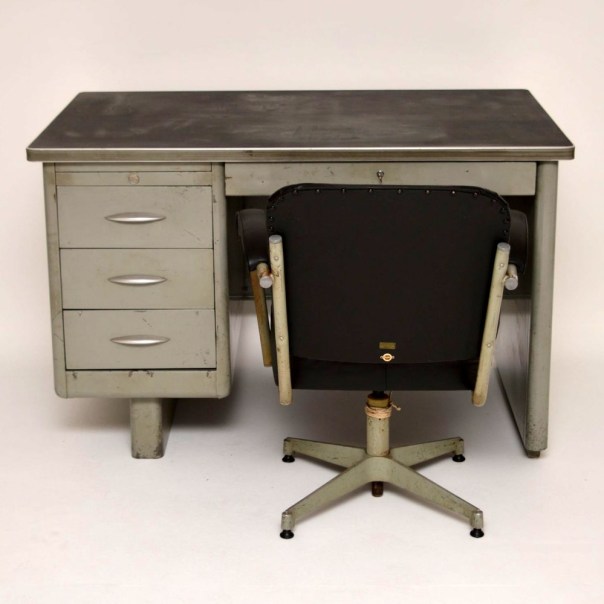
Image of WW II-era Metal Desk and Chair by http://www.retrospectiveinteriors.com

Author’s note: The following passage is the beginning of Chapter 6, “The Dreams,” of my book, Summer in the Waiting Room: How Faith, Family, and Friends Saved My Life.  This is the 52nd excerpt in the series.

*************************

Chapter 6

 The Dreams

The waiting room was abuzz with conversation and iPhone and iPad activity.  The doctor didn’t provide much detail and everyone wanted to know why I had to be fully sedated and paralyzed.  Sandra walked out into the hallway with the critical care physician who had made the decision.  He had a straight-forward bedside manner accentuated with a warm smile.

The doctor explained to Sandra that the amount of oxygen going to my lungs was dropping to dangerous levels, even with the ventilator functioning and the tube in place.  The pulmonary x-ray showed massive fluid saturation in my lungs which clouded the view, so doctors couldn’t see if an infection or something else was causing the saturation.

Administering heavy sedation medication and strong muscle relaxers would allow my body to rest so the ventilator could distribute oxygen to my lungs more efficiently. With his friendly but matter-of-fact style, the doctor made clear to Sandra that decreasing the fluid saturation would be critical for an accurate diagnosis.

Sandra returned to the waiting room to provide the additional information.  The sound of chatter immediately stopped as she described the situation.  She was strong, firm, and straight-forward as she explained that something was wrong with my lungs and doctors weren’t sure what was causing the problem.  With strong trust in God, she urged everyone to pray that the course of action recommended by the doctors would be successful.

Erica stood stoically and silently listening while Marisa, apparently desperate for answers, continued moving her thumbs rapidly across the iPod screen to find one.  Everyone else fell silent, not knowing what to say or what to do.  Sandra hugged the girls, told them to have faith in God and everything would be okay, and with determination in her face, walked out of the waiting room to be with me in the ICU.

The waiting room settled in for a long few days.  The usual flow of visitors dropped in all evening bringing food, snacks, coffee, and water.  Rudy and Melody, Will, Juanita and their kids, and many others visited the Peralta family with messages of hope and faith.  Barbara called our brothers and sisters, and the Peralta girls called family members to update them on my condition.

Everyone stayed late until the early hours of the morning. Sandra alternated between my room and the waiting room keeping those gathered there informed of the situation in the ICU.  Late into the morning all had left but Sandra, her sisters, Barbara, my niece Jackie (Barbara’s daughter), and Juanita.  They slept uncomfortably on the waiting room chairs while I slept motionless in the ICU, my lungs struggling for each breath.

***

I was disoriented and confused when I woke up.  I was sitting on a plain gray metal armchair with a padded seat and back, like the chairs I had seen in old WWII movies about the navy.  I was wearing a white straightjacket that kept me from moving my arms. My ankles were shackled to the chair legs so I couldn’t move my legs either.  The room was empty, but for a gray metal desk that sat in the corner.  I could see people walking by outside the office door, but I couldn’t get anyone’s attention because no sounds came out when I shouted for help. 

I wondered if I had tried to pull out the intubation tube again and been sent to a doctor’s office for some kind of assessment.  I waited patiently for a few minutes, but no one was looking into the office or coming in to see me.  I began to panic, trying futilely to get myself unstrapped from the straightjacket and unchained from the chair legs. 

I couldn’t move though, so I turned my head toward the office door and continued to scream for help to no avail, I had no voice. The more I tried, the more anxious I became.  My heart started to beat harder and faster and fear was washing over me.

I kept looking out the door hoping to see Sandra.  I could only see unfamiliar faces as people walked by completely oblivious to my dire situation.  I felt helpless, lonely, and scared.  What had happened?  Why was I in this plain, empty office?  Where were Sandra and the girls?  I tried again to take of the straps and shackles.  No success.  I couldn’t move.

Finally, I heard footsteps coming toward me; someone would soon walk into the office to help me.  I looked toward the open door to see who it could be.   A distinguished looking man walked into the office wearing a smart herringbone blazer with an open shirt collar, freshly pressed trousers, and polished shoes.  He looked confused and stood at the door’s threshold for about 30 seconds without uttering a word before quietly walking away back into the hallway.

I was exhausted trying to free myself as my breaths became shallow and more labored.  Another familiar face came to the doorway.  The well-dressed man in a dark suit and tie rushed into the office and furiously tried to take off the straightjacket without success.  He told me to relax and not worry for he would go get help, then quickly ran out of the office. I waited and waited.  

No help was on the way.  My anxiety skyrocketed as I was on the verge of total panic.  I could see the ongoing activity outside of the office, no one looked in, and no one came in to help.  Just when despair set in, Sandra walked into the office with the pastor of St. John Vianney catholic parish in east San Jose.

Tall, barrel-chested, with thick salt-and-pepper colored hair, mustache, and goatee, he was a charming and welcoming presence in the working-class neighborhood of my youth.  We got to know him well as Marisa and Erica were students at the parish school and I coached the girls’ basketball team.

As soon as I made eye contact with Sandra, feelings of comfort and security washed over me.  She could see the desperation and fear in my eyes, so she softly and lovingly caressed my head.  She told me that everything was going to be fine and the straightjacket and shackles would soon be removed.  I needed to rest, have faith in God, and fight to get better.  

The priest said, “God is with you Eddie. Keep fighting because the community and the kids need you.”  Sandra took the Father’s hand in one hand and placed her other hand on my head as we prayed together.  As we were praying, I peacefully fell asleep.

***

The reason the previous passage is in italics is because it didn’t really happen.  It was a vivid and incredibly realistic dream that is partly caused by a phenomenon doctors call ICU Psychosis.  Many of those dreams included fantastical settings like 18th-century warships, cartoon-like places, and tropical seaside outdoor hospitals. The high-definition colors, sound, and scenery made the dreams feel like I was in a real place in real time.

But, they were just dreams. Or so I thought. 

********************** 

Next Wednesday: More on “The Dreams” and my first days in a coma.

SWR: Reliving the Prayer Circle

It’s back! After than more than a year, the story continues…

Summer in the Waiting Room: How Faith, Family, and Friends Saved My Life is my story about love, faith, and hope. The story begins with my carefree childhood in east San Jose. After high school graduation in 1981, I went to San Jose State University and flunked out before the start of my second year. I lost hope and wandered through life working at dead end jobs and spending what little money I had on alcohol and parties.

Four years later, I met Sandra Peralta and began to focus on on my future. I returned to SJSU and vowed never to fail again. Working tirelessly to redeem myself, I graduated from college, married Sandra, and began a career in business and politics. The demons from my initial failure at college continued to haunt me, so I worked even harder.

On June 7, 2010, I had a massive heart attack. Ten days later, while in the ICU, my heart stopped beating for a few minutes when I went into cardiac arrest. Doctors told me that I was lucky to be alive. Supported by a large circle of family and friends, Sandra and our two daughters prepared for the battle of their lives.

On June 28, 2010, my lungs began to fail. Doctors scrambled to figure out the cause. Excerpt #51, originally published on February 11, 2015, retells the moment when Sandra and I, alone in my ICU room, were waiting for doctors to perform a procedure that would buy them some time to treat my lungs.

****************************

tumblr_m9a7bkQ4GE1r8lukf
Image by coriconnors.blogspot.com

EXCERPT #51 

I turned to Sandra as she sat next to me holding my hand.  Breathlessly, I told her that everything would be fine and that we would get through this crisis, even though I kept the doubts to myself.  She agreed with my assessment citing her absolute faith in God.

If for some reason I were not to survive, I asked her between breaths to please make sure that the girls never stop dreaming about their future.  They should remember that they had the ability to accomplish anything.

I also told her how I wanted to celebrate my funeral: a conjunto norteño serenading family and friends with my favorite songs (especially the upbeat happy tunes), Barbara would give a eulogy about my childhood, George would address my professional life, and Marisa and Erica would share stories about their daddy. With tears streaming down her cheeks, Sandra told me not to think like that.  I held her tighter and assured her that I was sharing my thoughts “just in case.”

Doctors soon arrived to take me to perform the intubation procedure.  The girls came into the ICU to pray with me and wish me luck.  The procedure was standard stuff.  A nurse would give me a small dose of LORazepam to keep me lightly sedated and Vecuronium to relax my muscles so the tube wouldn’t be so uncomfortable.

Once my oxygen stabilized, I would be able to undergo the CT scan. In the meantime, my lungs and body could rest. The doctor said that I would be alert enough to receive visitors, watch TV, and communicate with doctors once the procedure was complete.

In a semi-conscious state in the operating room, I resisted the doctors and struggled to prevent the insertion of the tube. With the pipe securely in place, I continued to twist and turn trying to free my hands to take the tube out. Even with the ventilator sending air to my lungs, oxygen saturation levels dipped every time I moved. Doctors made a critical decision to sedate me heavily and medically paralyze my body to prevent movement. It was clear to the doctors that the ventilator would be useless if I continued to fight the equipment that was keeping me alive.

The higher dose of sedatives put me into a deep sleep. Until the cause of my lung failure could be identified and resolved, I would have to remain in a medically induced coma. The administration of strong muscle-relaxing medication would keep my body still, ensuring that the mechanical ventilator breathing for me could effectively deliver badly needed oxygen to my vital organs.

Both actions came with potential for long-term side effects to my brain and body. Research has demonstrated that patients remaining in a medically induced coma for an extended period of time could suffer a loss of cognitive skills, permanent brain damage, or worse. Every day I remained paralyzed, muscle memory would deteriorate and my ability to physically function would be compromised.

When the lead doctor emerged from the operating room, he explained to Sandra what steps were taken to stabilize my situation. Without emotion and with strength of character that could only be sustained by unconditional faith, Sandra intently listened to the report. My medical condition took another turn toward the unknown, to a place that even the doctors admitted was new territory. Although my heart was in a critically fragile state, it was secondary to the inexplicable virtual shutdown of my lungs.

Despite everything that my body had endured during the past three weeks – heart attack, cardiac arrest, and dangerously low oxygen levels – there would still be more complications and surprises to come. The cardiac team had been relieved of its duties for the time being and the pulmonologists and critical care staff would work around the clock to address the lung issues. The next 72 hours would prove crucial to my survival.

I was back in the ICU resting while connected to the machines that kept me breathing and a myriad of IV tubes that fed, medicated, and monitored me. Numbers across a computer screen provided minute-to-minute updates of my heart rate, temperature, blood pressure, and oxygen saturation.

The beeping and whirring sounds of the machines musically accompanied the sharp green lines and flashing LED lights that danced on monitors in a mesmerizing ballet displaying even more information for the medical team. A nurse was stationed in my room with one eye on me and the other on the devices surrounding my bed. With hospital personnel moving about the room, the scene looked like a war room preparing for the battle of a lifetime.

Just yards away outside of the plain white double doors and inside the single door that led to the white and avocado green ICU waiting room in Department 2300 at Kaiser Santa Clara Medical Center, everyone gathered – the extended Peralta family, my sister Barbara and her family, Rudy and Melody, Will and Juanita, and many others – to wait for news from the operating room.

They were once again stunned when the doctor provided an update on the situation. In the eerie quiet that followed, the group instinctively formed a prayer circle, held hands, and silently urged God to intervene.

The entry in my medical record at the end of the day on June 29, 2010, simply read, “Intubated, sedated, and paralyzed.”

****************************

Tomorrow: Summer in the Waiting Room: How Faith, Family, and Friends Saved My Life returns with Excerpt #52. Don’t miss it!

Summer in the Waiting Room: The Prologue Revisited

Summer in the Waiting Room: How Faith, Family, and Friends Saved My Life is my story about love, faith, and hope.

It’s an inspiring tale of a boy who grew up in a working-class neighborhood, failed at college and lost hope, met and married the love of his life, returned and finished college, raised a family, and found some success in business and public office.

It’s also the story of a man who vowed never to fail again and worked tirelessly trying to redeem himself, only to find true redemption while in a state of complete helplessness in the ICU.

The prologue was originally published on December 4, 2013.

******************


Giant_Dipper,_Santa_Cruz
The Giant Dipper in Santa Cruz, California (photo from Wikipedia)

Prologue

There are those who say life is like a rollercoaster with its ups and downs, and twists and turns.  I’ve loved riding on a rollercoaster as far back as I can remember.  My favorite is the Giant Dipper, a whitewashed wooden 1920s era coaster with bright red tracks that dominates the Santa Cruz Beach Boardwalk on California’s central coast.  Santa Cruz is about a thirty minute drive from where I grew up in San Jose, California, and I remember the feeling of excitement as a kid to see the high point of the coaster jutting above the squat motels, restaurant buildings, tourist gift shops, and mom and pop stores that lined the streets as my dad drove into town.

The Giant Dipper was an exciting experience from the moment you bought a ticket and got into the long line that wound its way into the building that housed the coaster station.  While in the safe confines of the fast-moving line with friends and relatives, we would laugh and joke, and revel in each other’s company, with an occasional pause to watch and hear the frantic riders above squeal and scream as the chaotic train roared by.  I always began to feel anxious excitement when entering the coaster station as riders took their seats on the train.  Soon, I would be securely seated in the two-person car, and without warning, the train swooshed out of the coaster house and quickly vanished into a tunnel.

Adrenalin shot through my body, and fellow riders hooted and hollered, as the train sped through a dark curvy tunnel to a low point before emerging from the darkness and slowly climbed to the first peak with the classic clicking sound of a rollercoaster train laboring upward.  Once at the top, the train slowly scaled the peak and screamed down the other side of the tracks in a free fall as it rushed toward the earth.  After a scaling a couple smaller hills and valleys, the train rapidly rose into the sky to reach its highest point before it violently curved downward to its left on the way to its deepest drop.   A few more ups and downs and a slow straight-way led the train to its final resting place in the safety of the coaster station.

I think my love for rollercoaster rides came from my dad.  When we went to the boardwalk, usually because relatives from out of town were visiting, my dad would strut straight to the Giant Dipper.  With his mischievous grin, he would egg everyone to join him on the ride, especially those who looked nervous or scared.  My mom never got on the coaster, no matter how much my dad tried to persuade her.  My brother Stevie was also a regular holdout, which was funny because he was the badass of the family.

He had a big heart, but masked it with a perpetual scowl and a look in his eyes that shouted out, “you wanna fight?”  He was tough, uncompromising, and angry, and as his little brother, I was regularly collateral damage when he was mad at the world.  As a teenager and young man, he wore his hair long in the style of a 1970s anti-establishment rebel.  Wearing jeans, a leather vest, steel-toed biker boots, and a buck knife attached to his belt, I’m sure he scared people as he lumbered along his way.  Despite his bad-boy persona, he was scared to death of that tortuous and seemingly unpredictable rollercoaster that overlooked the Pacific Ocean.

When I was about nine years old, I persuaded Stevie to ride with me.  In line, he had the steely eyes of a gunslinger preparing for battle, but once the train disappeared into the tunnel, he began to scream, giggle, and screech like a teenage girl at a boy band concert.  I laughed harder during the next few minutes than I had ever laughed.  With each dip, twist, and turn, this tough guy with the biker boots became ever more vulnerable to the fierce journey of the rollercoaster.

As the train slowly entered the coaster station at the end of the ride, Stevie gathered himself, brushed his long, thick mane away from his face, put that bad look back on, and glowered at passersby as if he was about to kick someone’s ass.  I didn’t know what was funnier, his screeching on the ride or the mask he put on as soon as the danger went away.  Either way; I sure wasn’t going to ask him.  That was one wild ride.

The first forty-six years of my life followed the path of the Giant Dipper.  Growing up in a working-class neighborhood of east San Jose was like waiting in line for the coaster enjoying family and friends, and stopping from time to time to hear and see the chaos that sometimes unfolded around me.  After high school, I ventured away from the neighborhood to attend San Jose State University with the same excitement and apprehensiveness I felt when entering the coaster station as a kid.  I eventually flunked out of college and chose a lifestyle fueled by alcohol, dead-end jobs, and the next party.

The ensuing undisciplined meandering through life was just like the Giant Dipper’s wild ride through the dark tunnel.  Resembling the slow and deliberate ascent of the rollercoaster, I put my life back together, got married, went back to school and graduated from college, started a family, climbed the corporate ladder, and served in public office.   The sudden plunge of the Giant Dipper’s first dip and the following short waves that led to the rollercoaster’s summit mirrored my crushing election loss in 2008 and rapid rise to school board president just two years later.

Midway through my forty-sixth year, my wife Sandra and I were approaching our 20th wedding anniversary, our two daughters were healthy and happy, and I had achieved some success in business and public service.  I was on top of the world.  Like the Giant Dipper’s next move after reaching its climactic high point, my life would soon make an abrupt and furious downward turn and plummet toward its lowest depths.

********************

Tuesday: Read the last excerpt originally published on February 11, 2015.

My Spiritual Journey: Giving Up

13178915_764169400350218_792846155263642693_n
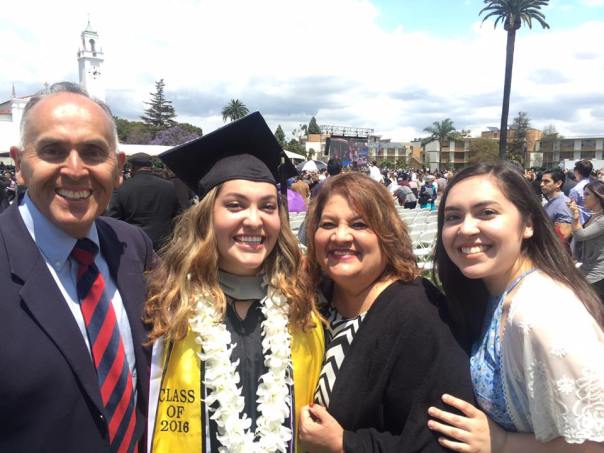
Celebrating Marisa’s college graduation – May 7, 2016

That’s it…I give up!

Ever since the day I flunked out of college when I was nineteen years old, I worked relentlessly to conquer my failure demons. My journey wasn’t organized or planned. After returning to college to graduate, I took on every new opportunity and challenge with gusto, striving to reach the highest level my ability would allow.

At the height of my quest to dispose of the failure demons once and for all, a heart attack and lung failure engaged me in a fight for my life. Through prayer and support from family and friends, and amazing work by medical professionals, I miraculously overcame seemingly impossible odds and survived. My long recovery gave me a chance to reflect on a growing relationship with God.

Despite a severely damaged heart that works at ¼ of the efficiency of a healthy heart, I’ve worked my way back to a somewhat normal lifestyle. A no salt and low fat diet, a disciplined medicine regimen, light exercise, and extremely limited energy levels are the new norm. As each year passes, I continue to defy the odds. People who suffer from similar heart damage return to the hospital regularly and more than half die within five years of diagnosis.

I just celebrated my sixth “re-birthday” with no heart related visits to the hospital. This good fortune has strengthened my relationship with God. While faith continues to be the foundation of my miraculous story, the failure demons that got me into this mess continue to nip at the edges of my consciousness. Routine isn’t one of my strengths and my self-perceived lack of productivity empowers the demons.

My need to be in the eye of the storm teases me on a daily basis. I miss being out front whether pacing the sidelines, sitting at the decision-making table, leading an initiative, or guiding a team toward a goal. In an attempt to fill the voids, I write this blog and a quarterly article for a print magazine, coordinate a leadership academy, and work with high school students.

The demons are never satisfied, so my old ways began creeping back into the picture. I added features to my blog, and began marketing myself as a leadership coach and public speaker instead of relying on faith and God to lead the fight. I started working as hard as my limited energy would allow. My regular exercise schedule began to suffer, I found myself rushing through meals, and I was spending more time in front of the computer than I was reflecting on faith and just enjoying the moment.

On Easter Sunday, while playing basketball with my nephews, I reached for the ball, and then everything went dark. When I opened my eyes, I was on my back looking up at paramedics and my nervous compadre. Fearing another heart attack, my family called 911. After spending the night in the hospital for a battery of tests, my cardiologist confirmed that there was no heart attack and no additional heart damage. I was dehydrated and exhausted, causing me to pass out.

The most haunting image of that day was my daughter Marisa blowing a kiss to me as the paramedics closed the ambulance doors. She forced a confident smile, but her eyes revealed vulnerability and worry. On the way to the hospital I thought about her upcoming graduation from college and all the milestones that she and my younger daughter Erica will experience.

For me to share those experiences with them, I know that faith has to overcome the demons. Sadly, a couple of weeks ago, the ongoing battle reached a boiling point and consumed me. I couldn’t keep up the pace needed to fight off the feelings of inadequacy created by the failure demons. I grew distant from Sandra and the girls while planning and plotting my “comeback.” They fought so hard to save my life and I lost my sense of gratitude for them.

Early last week, the solution to my doldrums came to me suddenly. I decided to do something I had never done. I decided to give up: give up on my lifelong battle with demons that don’t even exist; give up on working myself to exhaustion; give up on trying to find the answers to all that has happened. I decided to put my future in God’s hands fully and unconditionally.

This summer, I plan to spend as much time as possible with Sandra and the girls, who are home together for a short time before Erica goes back to school and Marisa embarks on her post-grad journey. I’ll continue to reflect on God’s role in my life and rely on faith to help fight the demons that are sure to come. I’ll also pursue my passion for writing and helping others, not to achieve some goal, but to enjoy the experience.

Starting next Wednesday, I’ll continue sharing my story, Summer in the Waiting Room: How Faith, Family, and Friends Saved My Life. I stopped posting new excerpts (some readers have told me that I left them hanging) more than a year ago to focus my energy on things that no longer seem important. Writing this story and sharing it with others has been one of the major influences in my faith journey.

I’m scheduled to work again with high school students in the fall. This has been a blessing and I’m excited about returning to this work. With regard to my other activities, I’ll spend a little time this summer taking stock of each of them. I’m confident that faith will guide me in the right direction.

Oh, by the way: I plan to replace my business attire for the rest of the summer with shorts, t-shirts, a baseball cap, and flip-flops. That’s it…I gave up!

Celebrating Another Year of Gratitude

IMG_2232
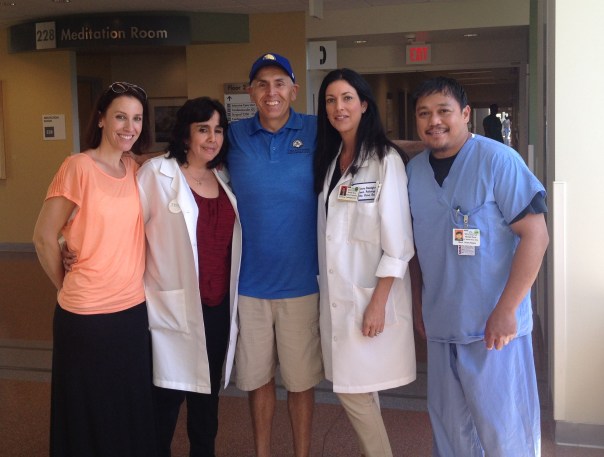
Celebrating my “re-birthday” with part of the Kaiser Dream Team – (L to R) Christine Heywood, Sonia Marchana, Suzanne Dabadghav, and Mark Reyes

Today is a special day for me. It’s my sixth birthday. Yeah, you read that correctly. On June 7, 2010, my life nearly came to abrupt end. By the grace of God and the miracle of modern medicine, I’m alive today to tell the story. So, I celebrate every June 7th. The story of that day and the months that followed may seem a little dramatic, but it’s all true.

For readers who have followed Summer in the Waiting Room: How Faith, Family, and Friends Saved My Life on this blog, you might remember the story (https://esereport.com/summer-in-the-waiting-room/).

Here’s what happened:

On that late spring evening, I had a massive heart attack while in the emergency room at Kaiser Santa Clara Medical Center. If I were anywhere else, I would have certainly met my end. My chance for survival that night was 50/50 at best. Thankfully, I lived through the night. Ten days later, while I was in the ICU, my heart stopped. Electronic paddles had to bring me back to life.

The summer didn’t get any better. Due to a rare side effect, my lungs stopped working. A ventilator and a variety of other machines kept me alive throughout the month of July. Doctors put me into a medically-induced coma and paralyzed my muscles so my body could rest while they worked on my lungs. That summer was horrific for my family.

Six weeks later, I emerged from the coma. Three weeks after that, doctors removed the breathing machines. For the first 21 days in September, I went to rehab to learn how to walk, talk, and eat all over again. I went home on September 21, 2010 – 106 days after the heart attack – to resume my life with a badly damaged heart.

My heart took a beating from the June 7th heart attack. In simple terms, my heart pumps at about 25% of how a normal heart functions. The condition, called Congestive Heart Failure, required that I drastically change my lifestyle. Statistically, my long-term prognosis didn’t look promising.

Half of all patients diagnosed with heart failure die within five years of diagnosis. The chance of succumbing to the disease increases 5-7% each year thereafter.

Today is a special day for me. It’s my sixth birthday.

I’ve done everything the doctors have told me to do. I stay away from processed food high in salt and fat. Fruits, vegetables, whole grains, and unseasoned lean meats are on my menu every day. I exercise by walking 30 minutes a day and spending a few days a week lifting light weights in the gym. I’ve eliminated most stress in my life, primarily by walking away from my high-stress career.

I’m grateful that the entire community has decided to join me in this effort. My family considers no-salt, no fat options for me when preparing for weekend events. The students I work with make sure that pizza days include fruits and vegetables. Local restaurants that we frequent already know the drill before I order a meal. Even if I tried to cheat on my diet, I have nowhere to go.

In an effort to understand why I suffered and survived such a dreadful medical crisis, I’ve turned to my Catholic faith. In addition to Jesus’ words of wisdom, I’ve sought out the spiritual philosophies of Mohammed, Buddha, and Gandhi. Their universal concepts of love, faith, compassion, service to others, and living in the moment are becoming clearer to me as the days, weeks, months, and years go by.

I’m closer than ever to no longer asking why this happened to me. The bigger question is, “What should I do with this gift from God?”

Today, I celebrated another year of life by going to morning mass and making my annual pilgrimage to the Kaiser Santa Clara Medical Center ICU, a place I called home for two and a half months that summer six years ago. As I have for the past five years, I sat in the hallway next to the double doors that lead into the unit to reflect and give thanks to the professionals who cared for me that summer.

I always leave feeling grateful and refreshed. Today was especially inspiring. Part of the Dream Team of physical, occupational, and speech therapists that brought me back to life were able to visit with me for a few minutes. This group taught me how to sit up, stand, swallow, and use my hands after nearly two months in a paralytic coma. It was amazing to thank them again in person. That never gets old.

Christine Heywood, one of the therapists, posed a question that’s giving me much to ponder. After I described the peace, serenity, and gratitude I feel when visiting this sacred place, she asked if I felt that way every day. The short answer is “no.” At times, the challenges of everyday life overshadow the miracle that was the summer of 2010.

Christine’s question reminded me that I need to be grateful every day. We all get caught up in the daily challenges of life and forget to take a moment to reflect on the miracle that life is. I can use my second chance at life to teach others about the power of gratitude by telling my story. It’s a story of love, hope, and faith. Maybe that’s what God wants me to do.

Over the past several months, reliving my story has taken a backseat to life’s everyday challenges. The stress of daily life was beginning to seep back into my consciousness. That dark and ugly chapter of my life came back into view today, thankfully.  That was the day that faith, family, friends, and an amazing medical team saved my life.

Today is a special day for me. It’s my sixth birthday.

Leadership Series: Crashing Through the Silicon Ceiling

00B1A9AE00000578-2861607-image-m-358_1417739645548
Image by dailymail.co.uk

Last summer, the Washington Post printed an article to confirm what Latinos in Silicon Valley already knew to be true – Latinos and other people of color are grossly underrepresented in the valley’s workforce, especially in management. The numbers are abysmal.

Intel leads the pack of tech giants where only 8% of its employees are Latino. That’s double the percentage of other major high-tech firms. Twitter is in the basement with only 2% of its workforce identifying as Latino. These statistics include all employees: tech, non-tech, management, etc. Latino managers, directors, and executives represent just a fraction of those employees.

The Post article goes on to describe how management points to the lack of qualified Latino candidates and an education system that isn’t providing a pipeline of talented people of color. This is a common response for organizations and institutions that claim that the problem exists with the talent pool, not hiring practices. Although still woefully inadequate, the rate of Latino college graduates is twice the percentage of employees in Silicon Valley.

So what gives?

According to the Washington Post, Valley executives are beginning to listen to the notion that there are “unconscious biases that have given preference to white men.” This is a great start. Along with those revelations, HR teams are well aware of the challenges to change the mindset of large institutions. As Latino college admission and graduation rates rise over time, there may be someday in the future when this isn’t an issue. It could be decades before the bias demons are exorcised

Unfortunately, today, it’s a major problem and current Latino professionals can’t afford to wait for society to catch up with the reality that there is a large pool of candidates already in the pipeline. The National Society of Hispanic MBAs alone has over 30,000 members in 40 chapters across the country, including Silicon Valley.

The good news is that Silicon Valley seems to be responding to the Washington Post article. Over the past year, companies like Facebook and LinkedIn have hosted events targeted at Latino professionals. The bad news is twofold. First, HR professionals have already said that tackling bias will take a long time. Second, these companies don’t know how to attract Latino talent. I’ll leave that issue for another blog post.

In the meantime, what are smart, talented, and ambitious Latino professionals to do?  Here are few tips that will get you started on your leadership journey:

  1. Work Hard

I’m not going to sugarcoat this. Getting ahead takes an enormous amount of effort, commitment, and perseverance. There’s no other way around it. All of the successful people I’ve ever encountered were passionate and dedicated to their craft. This can take a million hours a week or far less, it just depends how you manage your time. Just make sure to give it your all. A college education gets you to the front door. Hard work gets you to the corner office.

As I made my way up the corporate org chart, I was the first to raise my hand when upper management was looking for someone to take on an extra project. When the corporate office executives needed support for an initiative, I packed my bags and traveled throughout the country to lend a helping hand. Soon, I was on the radar for promotion from manager to director to vice president.

This strategy seems to fly in the face of corporate America’s newfound philosophy on work/home balance. Let me just say this: the hardest working employees get first crack at promotion. There are ways to balance family life and an ambitious career. My wife Sandra worked her way up the education administrator ranks while I moved toward the executive suite. Yet, we always made time for our family (I’ll leave that for another blog post too).

  1. Find a Mentor

Learning to master a craft from a successful person is the best education you’ll ever get. Former U.S. Secretary of State Condeleeza Rice once said that aspiring leaders should, “search for role models you can look up to and people who take an interest in your career.” In my career, the best mentors have been people who truly cared about my future. I’ve been blessed to have five men in my professional life that fulfilled that role.

Bob Williams, Percy Carr, Navarra Williams, Dave Walton, and Johnnie Giles have made an indelible imprint on my career. Bob, the manager at my first part-time job, was a master at team-building. Coach Carr is a hall-of-fame college basketball coach. I worked as his assistant in the late 80s and early 90s. He taught me the value of preparation and developing talent. Navarra, Dave, and Johnnie helped me understand the intense, yet delicate world of corporate politics.

The most valuable asset each of these men brought to me was a sincere interest in my growth and development as a leader. There are people like this in everyone’s life. You need to identify them and seek their guidance. One more piece of advice from Secretary Rice, “you don’t have to have mentors who look like you.” Just make sure that they genuinely care about your potential as a leader.

  1. Keep Learning

According to Pulitzer Prize historian Doris Kearns Goodwin, this concept is one of the ten qualities that made President Abraham Lincoln a great leader. Lincoln spent countless hours with generals in the White House and on the front lines of battle to better understand the science of warfare and the causes and effects of his decisions. He’s perhaps our nation’s greatest wartime president.

Make your personal development a priority. As a student of Goodwin’s theory, I’ve never hesitated at an opportunity to take advantage of leadership development. Among the many programs available to me, I studied community leadership as a senior fellow with the American Leadership Forum of Silicon Valley and corporate leadership with the Comcast Executive Leadership Forum. Today, I continue to learn from the talented people I encounter in my role as a leadership coach.

The most exciting thing about the Latino future is that it’s happening right now. There are many talented professionals in the pipeline today. While it appears that institutions are warming up to the facts about Latino talent, we need to take matters into our own hands until they catch up. Start your leadership journey by taking positive steps toward crashing through the Silicon ceiling!

*****************

Are you ready to make your next career move?

REGISTER TODAY for the July 16th  ESEReport.com Leadership Series “Foundations of Leadership Workshop.” Please contact Eddie directly with any questions at eddie.m.garcia@comcast.net. This will be an inspiring day of learning!

https://www.eventbrite.com/e/foundations-of-leadership-workshop-tickets-24943731372

To read the full Washington Post article, click here: https://www.washingtonpost.com/business/economy/silicon-valley-struggles-to-hack-its-diversity-problem/2015/07/16/0b0144be-2053-11e5-84d5-eb37ee8eaa61_story.html

Monday Meanderings: Why Are They So Mad?

635913290086173790-AP-GOP-2016-Trump.1
Image by usatoday.com

The Republican presidential primaries have proven that there’s a significant block of GOP voters that yearn for the old days. They want to “make America great again.” Not surprisingly, 90% of Republican voters in those states are white. Exit polls show that these people are angry and frustrated with the direction of our country.

I have to confess that I don’t even know what “make America great again” means, nor do I understand why these folks are so mad. To educate myself, I’ve spent the past month or so listening to conservative talk radio while driving. I’ve had a steady diet of Rush Limbaugh, Michael Savage, and Mark Levin.

Man, these guys are pissed off!

Their language is filled with slurs and put downs. When describing people who don’t follow their way of thinking, I’ve heard them use words like: idiot, swine, liar, stupid, moron, and on and on. And that’s just during a 5-minute drive to the grocery store! No wonder their followers cheer when candidates bellow insults from the stage.

After hours of listening to these angry men and their loyal listeners scream, growl, complain, and scold, I think I know what they’re so upset about. Here are the top five reasons (in order):

President Barack Obama

Hillary Clinton

Latinos (with special venom for Mexicans)

Non-Christians

Outsourced jobs (except a certain brand of suits and ties made in Mexican maquiladores)

I’m not making this stuff up. Tune in and listen for yourself. Their explanation for the election results goes something like this: Voters are angry because the political establishment has allowed unpatriotic forces within our country (i.e. President Obama, Clinton, Mexicans, and non-Christians) to destroy the very fabric of our nation.

So when was the last time America was “great”? Historians agree that President John F. Kennedy’s assassination on November 22, 1963, was a turning point for the United States. Before that fateful day, America thought of itself as a black and white TV show starring well dressed parents and “gee-whiz” freckled-faced kids with wispy blonde hair.

During the next five decades, those who didn’t get a fair shot at the American Dream have fought for and gained equal rights. This sea change in America has ruined our country according to the angry electorate who wants to see us go back to November 21, 1963. These mad voters scoff at every piece of anti-discrimination legislation and each court decision that has leveled the playing field for women, people of color, and the LGBTQ community.

Guess what happened on the way to a more equal nation? The economy changed, we elected a black president, women have risen to the highest levels of government, Latinos have out competed working-class whites in the new economy, and evangelical Christians now have to share the national spiritual stage with believers of other faiths.

Yeah, I said it: Latinos have out competed working-class whites in the new economy.

That may be why rebellious voters are mad. They want to go back to the way it was before JFK’s assassination triggered all of this equal rights stuff. The white working class thrived when America was the global leader in making cars, mining coal, heating steel, and manufacturing in a myriad of blue-collar industries. Over 90% of those workers were white men. Management and unions ensured that it stayed that way.

By the early 70s, American auto manufacturing moguls, getting slaughtered by foreign car makers, realized that machines operated by computers could make a car faster and cheaper. The rest of the manufacturing sector followed suit. Then, Ronald Reagan and his Republican revolution introduced the free trade movement.

The most hated and reviled trade agreement is the North American Free Trade Agreement (NAFTA). It passed during the Clinton Administration, but Reagan was NAFTA’s father. Yup…Look it up. American manufacturing as we knew it disappeared, the economy changed, and the white working class anger we see today was born.

Yeah, I said it: Latinos have out competed working-class whites in the new economy.

What have Latinos done since white working class manufacturing jobs disappeared? We adjusted to the new economy. While white Americans have turned their noses up on low-paying service jobs, Latinos have dominated that sector. High paying constructions jobs are mostly filled by Latinos, especially in states with large Latino populations.

A new group of Latinos replaced the Latinos who left the backbreaking agricultural and meat-packing industries  for the new economy. America can thank Ronald Reagan for that too. The Immigration Reform and Control Act of 1986 was President Reagan’s baby. It ushered in a new era of immigration. Is the angry crowd mad at their beloved conservative icon? Nope. They’re mad at the group of people who took advantage of his policies.

When not cheering and jeering at political rallies, the angry white working class collects welfare at high rates. According to a Bloomberg News report, 160 of the 227 counties with the highest rate of food stamp usage are in southern Republicans congressional districts. These counties, approximately 90% white, have been devastated by the new economy.

The same report points out that Owsley County Kentucky has the highest rate of food stamp recipients in the nation. Over half of the residents of the area (52%) survive on the program. Owsley County is 98% white. GOP nominee Mitt Romney won 81% of the vote against President Obama in 2012 and 63% of the angry electorate voted for the angriest Republican candidate during the 2016 presidential primary last week.

While displaced workers of the new economy in rural America collect food stamps and complain about immigration and outsourcing, Latinos have worked their way to college campuses. In 2014, the Wall Street Journal reported that the University of California system admitted more Latinos than whites for the first time in its history.

A generation ago, my American-born parents were denied entry at a Phoenix nightclub because they were “Mexican.” Today, my family and Sandra’s family (including our spouses and children) have earned 26 college degrees with more on the way. Working-class Latino families throughout the country have followed this path to compete in today’s workforce.

That’s why angry working-class white welfare recipients are so pissed off. That’s why they want to build the wall (and make Mexico pay for it). That’s why Donald Trump’s nonsense resonates with this self-defeated group of people.

Latinos have come a long way, yet we have a long way to go. The executive suite and the halls of power are still but a distant speck on the horizon for Latinos. The United States of America, our country tis of thee, has provided an opportunity for Latinos to compete. We can’t allow anger to change that.

America is not perfect, but for the past half century, it has been great for Latinos. The ballot box is more important than ever. Let’s go out and vote in record numbers to make America even greater.


Latino Thursday: The Next Generation of Leaders Looks Good

"Thank You" Poster Made by Luis Valdez Leadership Academy Student Leaders
“Thank You Poster”  by Luis Valdez Leadership Academy Student Leaders

One of my pet peeves is the phrase, “kids these days.” You know what I mean. What happened to the days when kids would speak only when spoken to and say “yes, ma’am” and “no sir.” Remember those days? My favorite is, “Kids these days don’t say ‘please’ when they want something or ‘thank you’ to show gratitude.

We old timers worry about what will happen when we get older and have to rely on the next generation to take care of us. What a mess, right? These kids can’t even write full sentences when they text. They would rather send “pics” on Instagram and Snapchat than pick up a phone or write a letter.

They listen to music that isn’t even music. What happened to the good old school days when you could understand the lyrics? Earth, Wind, and Fire. Santana. Al Green. Lionel Richie. Malo. Remember “Suavecito”?

That was music.

Many people my age wonder how kids these days will run the place when we retire. The old folks are sure that the world will go straight to the dogs when the youngsters take charge.

Well my dear readers, I absolutely, overwhelmingly, vehemently, and respectfully disagree!

I know we’ll be in good hands when the next generation of Latino leaders takes the helm. Let me tell you why.

During the last two school years, I’ve had the privilege and pleasure to teach leadership classes at three east side high schools: Latino College Prep Academy, Luis Valdez Leadership Academy, and Roberto Cruz Leadership Academy. Latino students represent over 90% of the population at the schools. The program I teach is a six-week freshman course that provides students with the tools to present and conduct themselves in a professional manner.

The students learn how to set and plan goals, make professional presentations, and work in teams. They also do professional development exercises to help them with shaking hands, sitting and standing posture, making eye contact, and using body language to convey confidence. This is all done within the framework of understanding and respecting Latino cultural norms. The goal of the program is to send our kids to college and beyond with the self-assurance to succeed.

At Luis Valdez Leadership Academy (LVLA) I’ve been able to see the results of the program as the student government advisor. LVLA is in its second year of operation, so the student government is comprised of freshmen and sophomores. That means that these young leaders have an opportunity to set the cultural tone for the school well into the future.

After taking the six-week course, the elected leaders learned how to run a working decision-making government. The leadership group is large. There are four school-wide elected officers, class officers, and classroom representatives. In all, 23 students represent their peers to create and manage events and activities for the school year. In any governmental environment, a leadership team of that size is challenging to manage.

With that in mind, the student leaders are studying the fundamentals of the rules of order used by city halls, statehouses, and congress. They’re learning how to share their ideas with their fellow leaders through orderly debate and discussion. The students are using the committee system to tackle the details of putting their ideas into an actual plan.

After several weeks of intense training, the student government was ready to take on its first project. They decided to have a fall dance. As the first-ever dance in the school’s history, these young leaders felt much pressure to make the event successful. They had heated debates about the theme of the dance, the date, fundraising, the food and refreshments, decorations, and much more.

To have the event they wanted, student leaders had to raise $800 by selling tickets. They had less than three weeks to achieve this goal. That’s a tall order in a working-class neighborhood. Many on campus quietly shared concerns that the student council took on too much than they could handle.

Using the rules of order they learned, the young decision-makers developed a ticket sales and marketing strategy, and created a plan for a 100% student led and managed dance. I’ve been around many leadership teams in my career, and the students experienced all of the potential pitfalls and challenges that any team of leaders could confront. Through their raucous use of the democratic process, they worked through each barrier.

When the dust settled, here’s what happened:

LVLA had its first-ever school dance, they called it the “Falling for Fall” event. More than half of the student body attended. The student government made money on the event by raising over $1,000. The buzz on campus the next Monday was all about the dance. Everyone had a great time. The event was an overwhelming success by any and every measurement.

This gets me back to “kids these days.” Given the right tools and the confidence to succeed, Latino students will be exemplary leaders in the future. We’re in good hands. Today’s Latino civic and community leaders could learn a few things about teamwork and cooperation from the LVLA student government. In fact, so could our do-nothing United States Congress.

Oh, by the way, the student government planned and hosted an appreciation potluck for me and fellow advisor Mr. Osvaldo Ruelas, a young educator who is a future leader himself. The student leaders wanted to say “thank you” for the small role we played in supporting them.

Kids these days.

Monday Meanderings: Staying Young at Heart

Image by clipart101.com

Later this week, I’ll celebrate my 52nd birthday. Turning 30, 40, and even 50, was no big deal for me. Even 51 didn’t seem to register as a transition point from regular adulthood to real adulthood. But for some reason, the idea of 52 is making me rethink this whole old guy thing.

I’ve always been young at heart. I’ve never wanted to really be a responsible grown-up. Yeah, I got married, bought a house, had kids, and spent most of my waking hours on the treadmill of life trying to stay one step ahead of the next batch of bills that was sure to arrive in the mail. But, I never let it stop me from channeling my inner kid.

I love to party!

With some music, a little dancing, and a few (too many) adult beverages, I’m easily transformed into the irrepressible adolescent that lives inside of a body that has seen better days.

My daughters keep me up to date with the latest music, fashion, and phrases. Like I low-key want a cheeseburger right now (unfortunately, my cardiologist-recommended no-sodium, low-fat diet doesn’t allow such a thing). Oh, well.

Anyways…

I love hip-hop and alternative music. I like low-top navy blue Chucks, Vans, skinny jeans, and slim-fitting suits. Really, I do.

I’m connected too. I’m on Facebook, Twitter, Instagram, and Snapchat. I text, Instant Message, Google, YouTube, and Facetime. My Smartphone has become an extension of my left hand.

I’ve always scoffed at old fogeys who begin sentences with, “kids these days” or “in the old days.” Times change. Each generation brings new and exciting ways of doing things. To those who yearn for the past, get with the program, I implore.

A couple of weeks ago, everything changed. I was at the Delta terminal at La Guardia Airport in New York. The place is super high-tech. Almost every chair has an outlet to charge electronic devices. There is a bank of i-Pad stations where I’m sure phone booths used to sit.

Looking for something to eat before my flight, I walked by several restaurants. I noticed that every establishment had an electronic ordering device. When I sat down to order, I ran into a problem. There was no way to communicate that I needed salt-free options, a side of fruit instead of fries.

When I asked the server, she curtly told me that everything available was on the computer as she whisked by to leave a plate of food on another table. Yeah, but…I started to say. I wasn’t able to finish my sentence as she swiftly turned the corner to deliver food to the other side of the restaurant.

Are you kidding me? What happened to the good old days when waiters and waitresses greeted you with a smile and a helping hand? I sat like a grumpy old man eating a sandwich I really didn’t want and longingly staring at fries I couldn’t eat, only to pay the same machine I ordered from.

And then, to my horror, the device asked for a tip! What had the world come to?

Bam! There it was. I said it. I sounded like a bitter senior citizen decrying new-fangled things. I started questioning if I was from a bygone era when people actually talked with each other. I like to talk. I like to give and get hugs. I like to look someone in the eye when having a conversation. Was I a man of the 20th century? Did the train of progress leave me at the depot?

I hope not. I love progress and everything it brings to our lives and culture. But, I have to say that I’m perplexed when I see a young couple sitting in a restaurant booth on their respective hand-helds instead of flirtatiously giving each other goo goo eyes. There’s nothing like a warm smile and human interaction. No device can replace that.

In the meantime, I plan to celebrate my birthday with my wife over a nice dinner. I’ll gaze into her beautiful eyes and we’ll talk about whatever crosses our minds. I might even entertain sipping good old-fashioned bourbon over ice as a nightcap.

On the other hand, pounding a few Mike’s Hard Lemonades and dancing to Drake and DJ Mustard sounds like more fun. I’ll Snapchat my daughters and nieces and nephews, and share pics on Instagram with the world. I might even invite my old fogey friends who are on the couch watching TV and complaining about “kids these days.” Of course, I’ll have to call them. They’re soooo 20th century!