

Recent studies increasingly demonstrate that working in later years is beneficial for maintaining cognitive functioning including memory, mental health, and physical functioning.
~National Institutes of Health, 2013
* * *
Making a New Year’s resolution never really appealed to me. I stubbornly refuse to participate in the annual tradition of promising to do something that may or may not happen. A New Year’s resolution is a delusion of grandeur that usually and ultimately results in disappointment and self-judgment. The most common promises include: I’ll go to the gym everyday. I’ll lose weight. No more fast food. Church every Sunday.
These commitments are hard to keep. I’d rather not make them.
Twenty-two years ago, I learned how to write a Personal Vision and Mission Statement while participating in an executive training program. The statement looks like the outline students are supposed to prepare before writing a term paper in English composition class. Here’s how it works: The vision is like a thesis statement and the mission provides the main points and body of evidence for the essay. Goals and objectives fill in the detail.
I first used the model to create a game plan for my career. I updated it on an annual basis after analyzing the previous year’s goals and objectives. It worked like magic. Within two years, I achieved a professional stature that was unimaginable as a kid or college student. After my 2010 medical crisis, I reworked the statement and began updating it annually to manage heart failure and my personal life. It worked like a charm. I’m still alive and kicking.
For the past five years, managing my transplant and work activities has been pretty stable. I just had to make made minor adjustments to my Personal Vision and Mission Statement. Last year, I decided to retire from the Latino Leadership Alliance Academy (LLA) after 21 years working on my passion project. I also completed my work for the Hispanic Foundation for Education (TFHE) in 2025 after eleven years as a consultant. Both changes left a big hole in my personal vision and mission.
Although I effectively retired after the heart transplant in 2020, facilitating the LLA Academy and supporting TFHE student leadership activities were big parts of my personal vision and mission. As a recovering workaholic, I truly believe that work is important to maintain physical and mental health.
A 2013 National Institutes of Health (NIH) report corroborates “that working in later years is beneficial.” Of course, like any compulsive behavior, learning moderation is the key. The NIH report recommends that as well. Since my number one priority is to stay healthy for my family, some work activities, in moderation of course, will be part of my vision and mission. I’ve identified a couple of projects to fill the void left after stepping away from longtime passion projects.
I hadn’t shared this most intimate working document until I posted my 2020 Personal Vision and Mission Statement on this blog six years ago. Since then, I’ve used it as a learning tool for LLA Academy participants. Today, I put myself on blast again by sharing my vision and mission to inspire others to turn New Year’s resolutions into action plans and give some hope to those facing life’s challenges. Updating my Personal Vision and Mission Statement for 2026 required some thought to address changes in work activity. With that said, here is my 2026 Personal Vision and Mission Statement:
My personal vision for 2026 is to stay healthy while working to inspire others to thrive. To accomplish this vision, my mission is to live with faith, hope, and love.
Goal #1: Living with Faith
In his Letter to the Hebrews, St. Paul the Apostle wrote, “faith is confidence in what we hope for and assurance about what we do not see.” I have no idea how long God will allow me to do work, but I have faith it will be until He determines my work is done. To that end, I’ll work on a couple of projects in 2026.
Sandra, our daughters, and I established The Corazón Collective last year. It’s a nonprofit organization that seeks to provide support to Latino cardiac patients and their families. I’ll work on planning, raising funds, and building the organization this year.
I’m also working on my second book. It’s the story about how a group of Mexican American civic leaders envisioned and built the Mexican Heritage Plaza in east San Jose during the 1990s. Last year, I started doing research for the book. My research included conducting personal interviews with people who worked on the project, rummaging through online archives, and reviewing personal papers at the Dr. Martin Luther King, Jr. Library at San Jose State University special collections. The Mexican Heritage Plaza: A Symbol of Resilience and Perseverance is scheduled for publication this spring.
Goal #2: Living with hope.
St. Paul is also my inspiration for hope. His Letter to the Romans teaches us to “rejoice in our sufferings, because we know that suffering produces perseverance; perseverance, character; and character, hope.” I didn’t expect to have a life-changing heart attack sixteen years ago. But I did. I decided early on to take St. Paul’s advice about hope. So I persevered. Hope is on the agenda again for 2026.
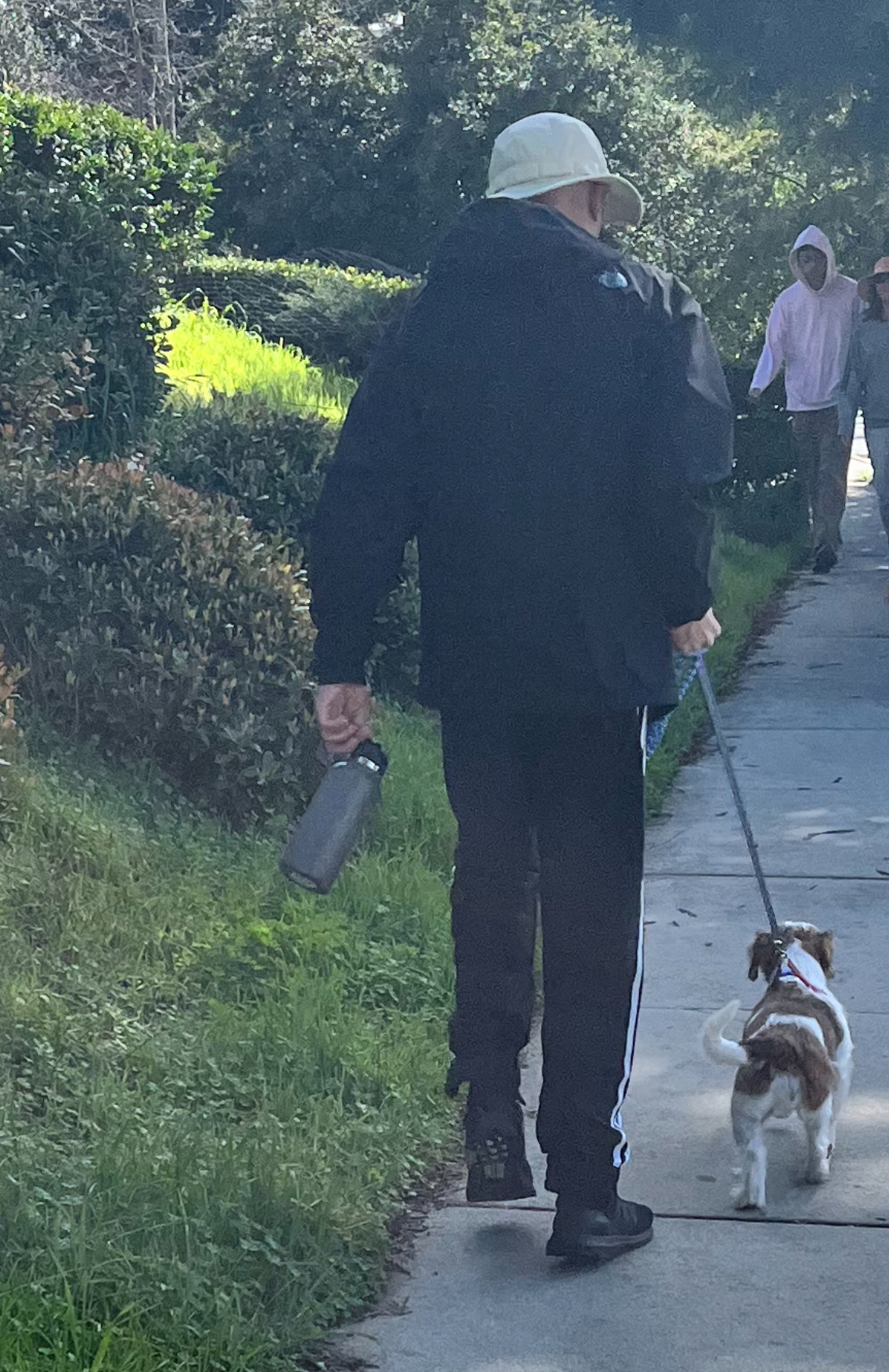
Taking care of a transplanted heart requires perseverance. Day in and day out. As best as I can, I’ll maintain a low-fat, low-salt diet and try to drink 96 ounces of water every day. My objectives are to walk 10,000 steps five days per week and do resistance training for three days. Exercising my mind and soul is also part of the plan. Books on my reading list, reading the daily gospel and other reflective works, and meditation on a daily basis are good for the spirit.
Another objective to living with hope and nourishing my soul is getting together with friends more often – old and new – and doing fun things like playing golf, shooting baskets, and catching a few sporting events in person.
Goal #3: Living with Love
Evangelist Billy Graham described God’s love as “a deliberate decision on our part to put others ahead of ourselves.” My 2026 Personal Vision and Mission Statement includes serving others.
Staying healthy will help me be present and spend quality time with Sandra and our daughters. Good health will also allow me to be the loving father and husband they deserve. I’ll be available to support the girls in every way as they chart their own lives and careers and be a partner with Sandra to maintain our household.
A couple of years ago, I had the amazing privilege to advocate on behalf of transplant patients in Washington, D.C. I will continue to serve the transplant community on the board of directors for Transplant Recipients International Organization (TRIO).
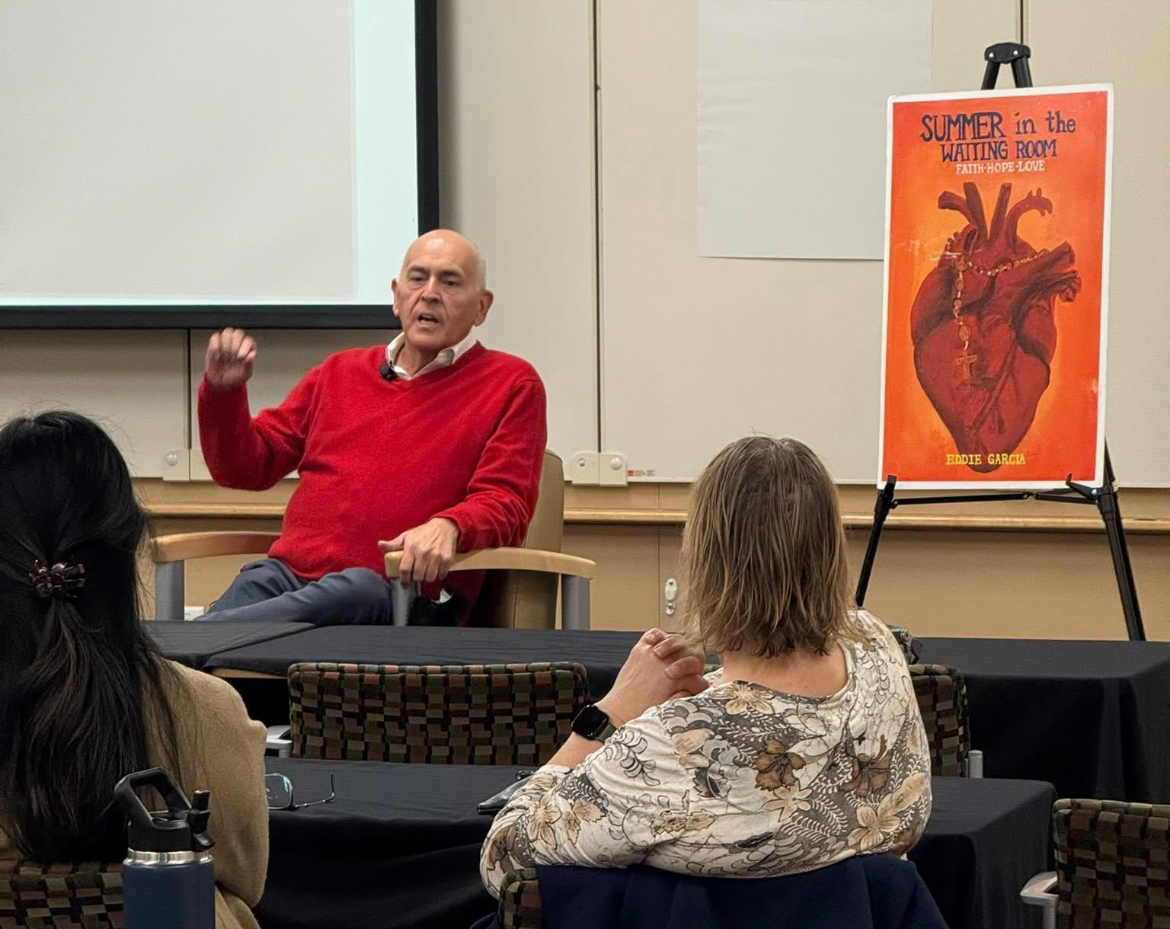
Since the publication of my book, Summer in the Waiting Room: Faith • Hope • Love, I’ve been able to share my story as an inspirational speaker. I plan to share my story of hope at speaking events throughout 2026. My first scheduled speaking engagement for this year is the 29th Annual TRIO Remember and Rejoice Ceremony at St. Patrick’s Cathedral in New York City on March 28.
In addition to nonprofit work and speaking opportunities, I’ll continue to mentor Latino and Latina professionals interested in career advancement and civic leadership.
***
Can I get it all in? I don’t know. But, there will be no New Year’s resolutions for me. My 2026 Personal Vision and Mission Statement will be my roadmap for a meaningful year full of faith, hope, and love. Of course, God will be the final word on my activities for 2026. If He takes me in a different direction, I’ll follow His lead.



 ESEReport.com