Tag Archives: travel

Roots at Harmon Park

My parents (Lico and Marie) met on a late summer day in 1949 when Mom went out to the neighborhood park with a cousin to watch some boys play baseball. Mom caught the eye of Dad as he strutted around the diamond with a smile that could be seen across the field. He was calling at my grandmother’s front door the next morning, respectfully asking permission to talk to my mom.

~ Summer in the Waiting Room: Faith • Hope • Love, page 11

* * *

I remember being a  little boy playing by myself with toy cars on the sandy dirt in the hot desert sun. Every few minutes or so, I stopped to marvel at the jumbo jets that roared just above my head and the roof of the small house on the south side of Phoenix, Arizona. After dark, I would go inside and endure the humidity caused by the old swamp cooler that was supposed to refresh those inside from the suffocating heat. Like clockwork, every few minutes or so, an airliner departing Phoenix Sky Harbor Airport shook the little home as its jet engines boomed above.

Those are the most vivid memories I have of visiting Grandma and Tía Lipa in the early 1970s. My parents grew up in South Phoenix and met there in 1949. I have many first and second cousins in Phoenix. Dad was the youngest in his family and I’m the fifth of six siblings. Due to distance and a huge age gap, I never developed relationships with my Phoenix kin, especially after my parents passed away. More recently, we have been connecting via social media. I hadn’t been there since the late 1970s, until two weeks ago. 

The occasion was my cousin Rojelia’s 80th birthday. The birthday girl’s mom was Dad’s older sister. It was an event many months in the planning. My big sister Barbara organized the Lico and Marie García delegation. As I’ve chronicled on this blog and in my book, the past 14 years have been a roller coaster of emotions for me. Faith, hope, love, and mindfulness have been the bedrocks on my post-transplant journey. Making a pilgrimage to Phoenix, Arizona wasn’t on my radar. Barbara persisted and Sandra insisted. How could I say no?

Sandra and I took an early morning flight out of Mineta San Jose International Airport for the three-day event. Landing at the Phoenix Sky Harbor Airport had no special significance. We arrived in time for a big party (Dad’s parents had 42 grandchildren!) at the Veterans of Foreign Wars, Post 41 in South Phoenix on Saturday. Relatives from all over the United States danced the night away to a DJ and a live band after dinner. 

I had a blast catching up with California cousins I hadn’t seen in more than a decade. We were sharing and laughing at the same old stories that made us laugh every time we got together. Seeing others with whom I’ve been connecting with on Facebook was nice. It was the first time I’d seen many of them since the last García family reunion in San Jose 42 years ago. The 1982 reunion weekend gave me a sense of grounding to something bigger than my immediate García family. That had slowly dissipated during the past four decades, until two weeks ago.

On Sunday morning, after breakfast at VFW, Post 41, Barbara and Rojelia led a tour of my parents’ South Phoenix neighborhood. As we slowly drove by the house Mom grew up in on West Pima Street, the first thing I noticed was a jet leaving the airport. Suddenly, the tour stirred something in my soul I couldn’t recognize. Two blocks away, kitty corner to Mom’s house, stood the projects Dad called home throughout his youth. We got off the car and entered the complex as another jumbo jet climbed into the sky.

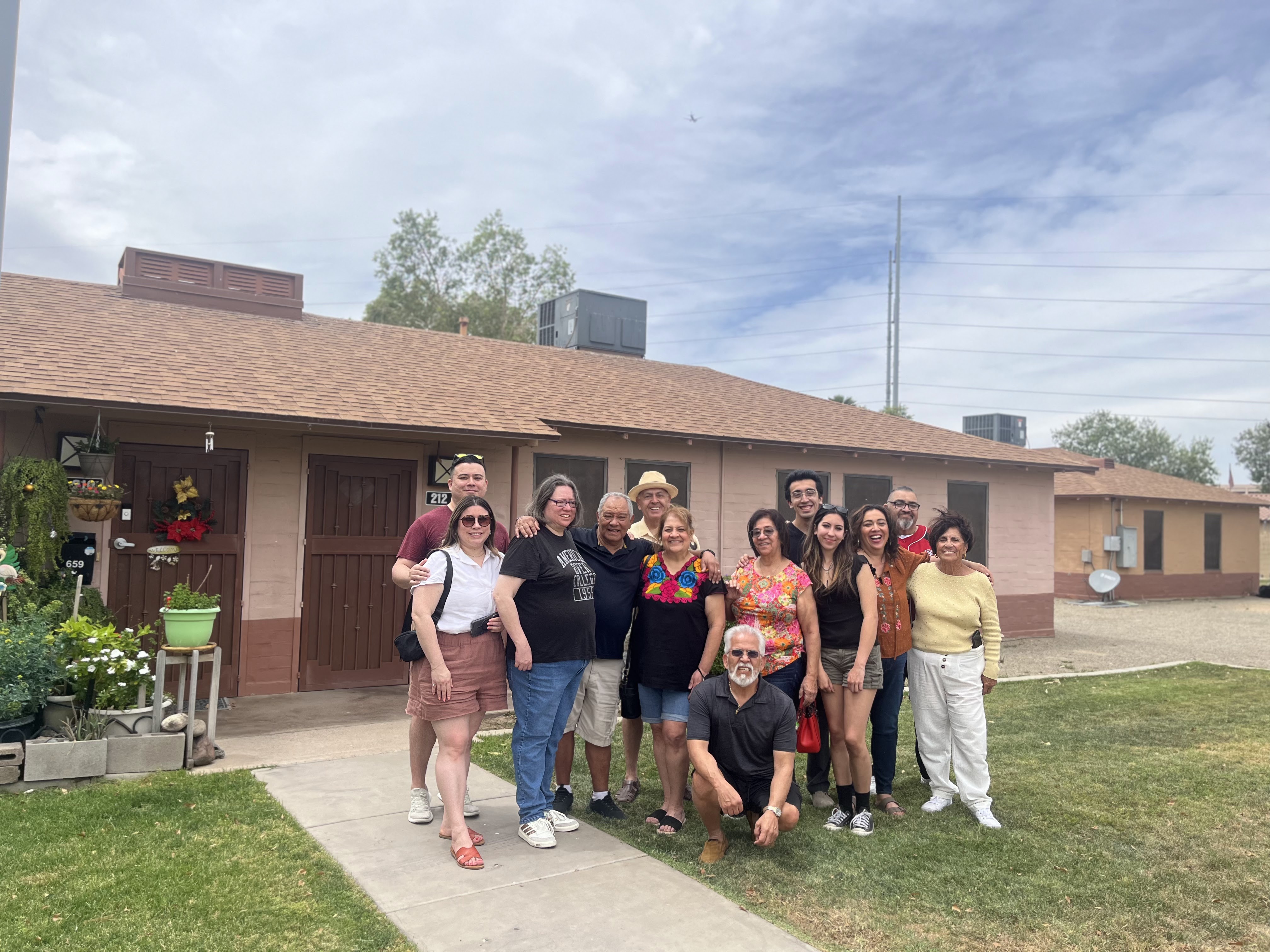
The pre-WWII buildings looked like army barracks facing an inner courtyard. After some debate about which apartment belonged to our grandmother, we settled on apartment #212. Rojelia recounted how she was born in the one-room living quarters in 1944. She remembers being a mocosa (snot nosed kid) watching Mom and Dad taking wedding photos in the courtyard. “It was all so elegant,” Rojelia reminisced. 

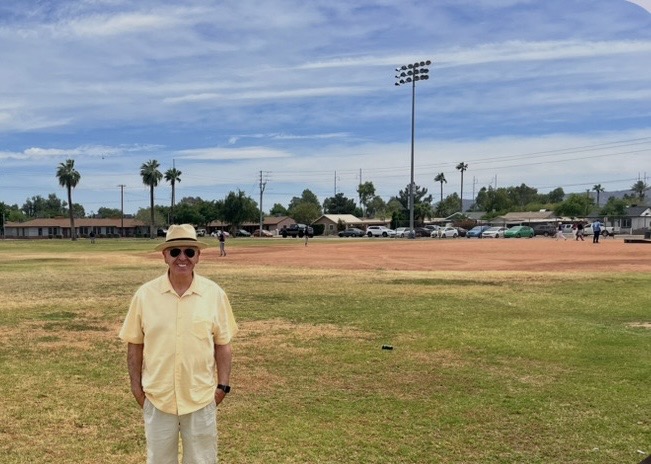
Mom had a collage of that day hanging in our small living room when I was a kid. We were standing and taking pictures of our own on the very spot where Mom and Dad celebrated their wedding day 74 years ago . . . I was transfixed! We whipped our cars around the corner and stopped at Harmon Park. My cousin told us that the baseball field at Harmon Park is where my parents met. 

I wrote the passage on page 11 of Summer in the Waiting Room about my parents meeting at a park from memories and family oral history. I may have been to Harmon Park as a young boy, as I vaguely remember walking to a baseball field during the trips we made to visit Grandma and Tía Lipa. But, two weeks ago was definitely the “first time” I’ve been there. There was a baseball game in progress. I could picture Dad “as he strutted around the diamond with a smile that could be seen across the field,” and I could see Mom demurely smiling from the bleachers. 

Barbara woke me up from my trance when she said, “I didn’t know you loved airplanes so much.” She mentioned that I looked up at every airliner that flew by. I mumbled something about how the sound reminded me of our visits from over 50 years ago. It was another way of saying, “I love those jets flying out of that airport. The boy playing with toy cars in the sandy dirt had come full circle to South Phoenix.

When mom passed away in 2003, eight years after Dad, I felt empty inside like a hot air balloon floating through life without an anchor. I focused on my home base in East San Jose and the home Sandra and I were building with our daughters. That foundation created a strong tree trunk of our little family tree. But there weren’t any Mom and Dad roots. Through the years, we visited California’s central valley where Sandra’s parents started their story. I have friends who have ventured back to their roots in Texas, Mexico, and a Native American reservation in Northern California.

I was quietly envious of the stories they brought back. As a man, I didn’t have the experience of “this is where it all started.” Until two weeks ago. Standing in the park where my parents met some 75 years ago was amazing. I looked to my left and saw Mom crossing West Pima Street on her way to a baseball game. I looked to the right and saw Dad running across 3rd Street to meet his teammates on the diamond. Between those glances, I watched each jetliner fly by above. I felt the roots of the Lico and Marie García family beneath my feet.

We finished the tour at St. Anthony’s Church, where my parents were married in 1950. It’s just two blocks north of Harmon Park. It was cool, but a little anticlimactic after the cathartic experience at the baseball field. The next afternoon, Sandra and I were securely buckled in our seats on American Airlines Flight 1667 when the jet engines roared as the plane screamed down the runway. Less than a minute after lift off, we soared above the little house on West Pima Street, the projects on 3rd Street, and Harmon Park, where my roots are firmly in place.

It was a three-day whirlwind of emotions for the ages. Connecting with family members I hadn’t met and reconnecting with others I hadn’t seen in decades was special, especially since we all descended from a matriarch who lived in a public housing one-room unit. I don’t know if or when I’ll return to South Phoenix, Arizona, but I’ll always cherish this trip. Thank you, Barbara for persisting and thank you, Sandra for insisting. I love you both. And, yes. I love those jets flying out of that airport.

Get Away From It All

I lived alone, in the woods, a mile from any neighbor . . .

~ David Henry Thoreau, Walden, 1854

* * *

I’m fascinated with the concept of mindfulness. According to mindfulness guru Jon Kabat-Zinn, mindfulness is “paying attention, on purpose, in the present moment, non-judgmentally.” It first came to my attention about 20 years ago as a fellow with the American Leadership Forum, a national leadership organization with a chapter in Silicon Valley. At the time, I was an ambitious corporate climber and aspiring civic leader. I had places to go, people to see, and things to do. My mind swirled with ideas about the future. I didn’t have time to live in the “present moment.”

Too bad for me. According to the National Institute of Health, the benefits of the practice include reducing anxiety, improving sleep, lowering blood pressure, clearing the mind for better decision-making . . . the list goes on and on. Six years after becoming a Senior Fellow with the American Leadership Forum, my mind was cluttered, I was anxious, I didn’t sleep well, and my blood pressure was soaring.

Since a massive heart attack, living a decade with heart failure, and a heart transplant rocked my world, I’ve been fascinated with the concept of mindfulness. An amazing therapist with the Kaiser Santa Clara advanced heart failure team reintroduced the idea of mindfulness to me. Good for me. I no longer had places to go, people to see, and things to do. I read a bunch of books, had great conversations with my therapist, and subscribed to the Calm App to learn more. The more I learn, the more fascinated I’ve become. 

One of the books I read is an American classic, Walden by David Henry Thoreau. It’s a beautiful book about the author’s experience getting away from it all by living in the woods for 2 ½ years by himself. He describes in graceful detail the wonders of the natural world. His observations of a blue jay or sycamore tree take paragraphs to describe. The book is really hard to read unless you’re mindful of every word. Thoreau’s point is clear. There’s more to life than hustle and bustle.

The first sentence captured my attention. He writes, “I lived alone, in the woods, a mile from any neighbor.” What he describes is in the middle of nowhere. His only connection to civilization was the “sound of a locomotive” far off in the distance arriving in the nearby town of Concord, Massachusetts. Otherwise, the surrounding woods were so quiet he could hear every faint sound nature makes. 

As I was reading the book, I had a hard time believing that he was that secluded. The center of town was 1.6 miles from Walden Pond. That’s not very far. I couldn’t imagine being in the boondocks a mile and a half from my house. While Thoreau’s prose is elegant and vividly descriptive, I couldn’t help but call “bullshit” that he was that close to town, yet completely isolated. 

I know, I know. The stuff that runs through my mind seems silly and inconsequential. BUT . . . come on Mr. Thoreau!

As I pulled into the parking lot at the entrance of Alum Rock Park the other day, I decided to test the accuracy of Thoreau’s description. Alum Rock Park sits in a rugged canyon in the foothills east of San Jose. It has many trails that lead deeper into the canyon and into the hills that surround the canyon floor. I thought it a perfect place to experiment with the idea that one could be isolated less than two miles from “civilization.” 

From the parking lot, I started at the trailhead of the Penitencia Creek Trail that winds its way into the park. My goal for the hike was to pay attention to the nature around me on purpose, in the present moment, and without judgment. Once I was 1.6 miles away from the parking lot, I would survey my surroundings to determine if Thoreau’s representation of his surroundings was convincing.  

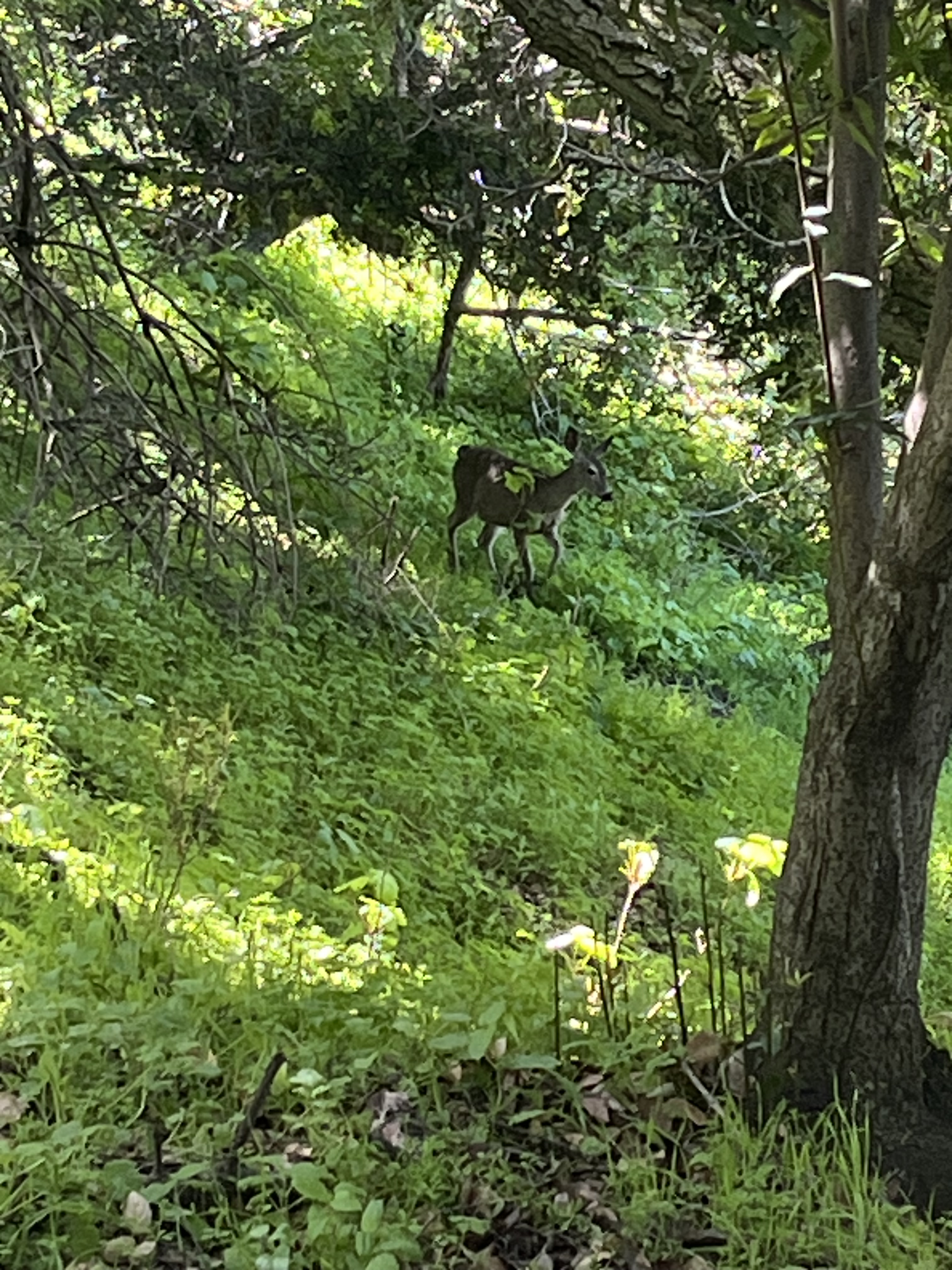
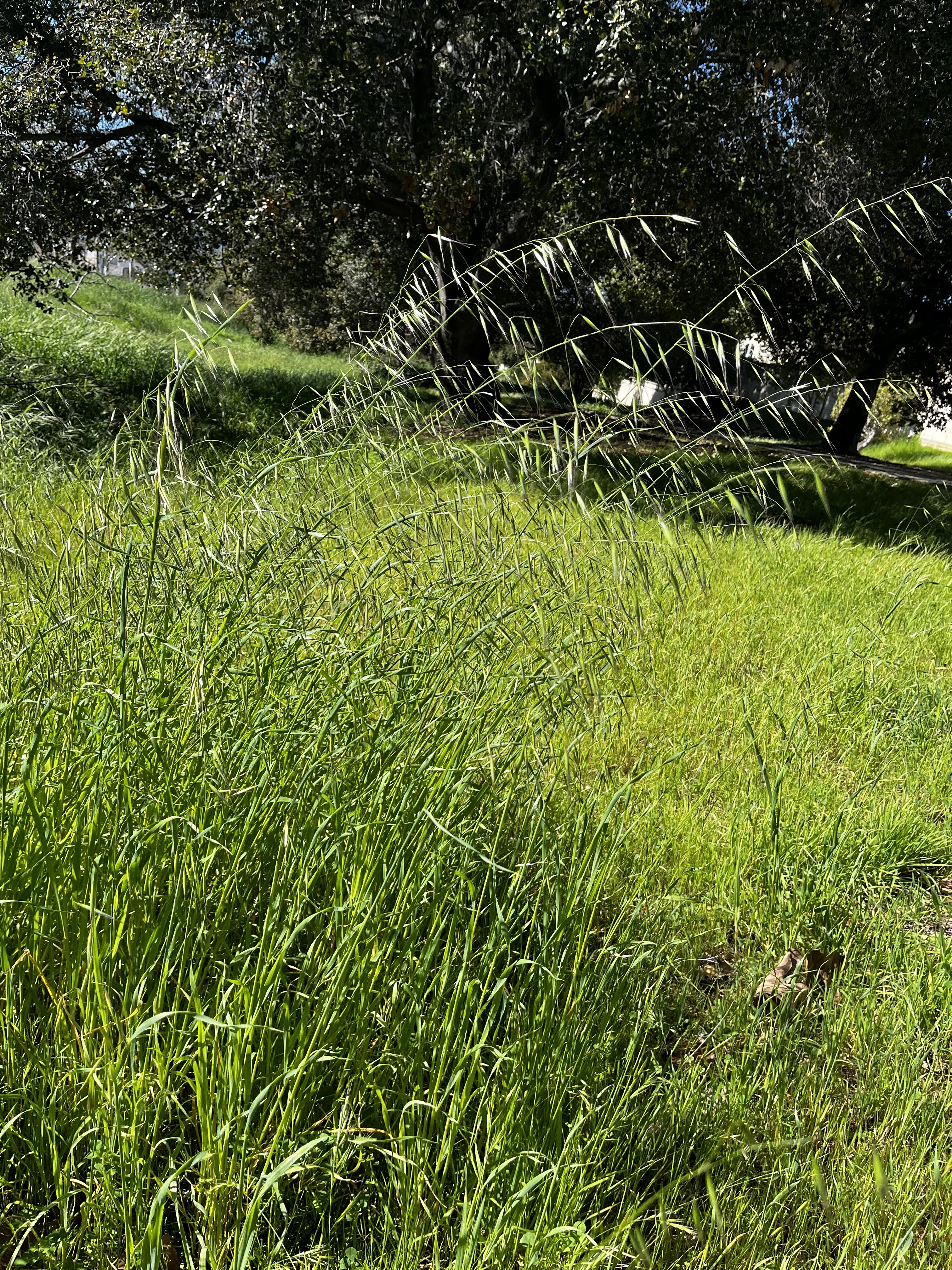
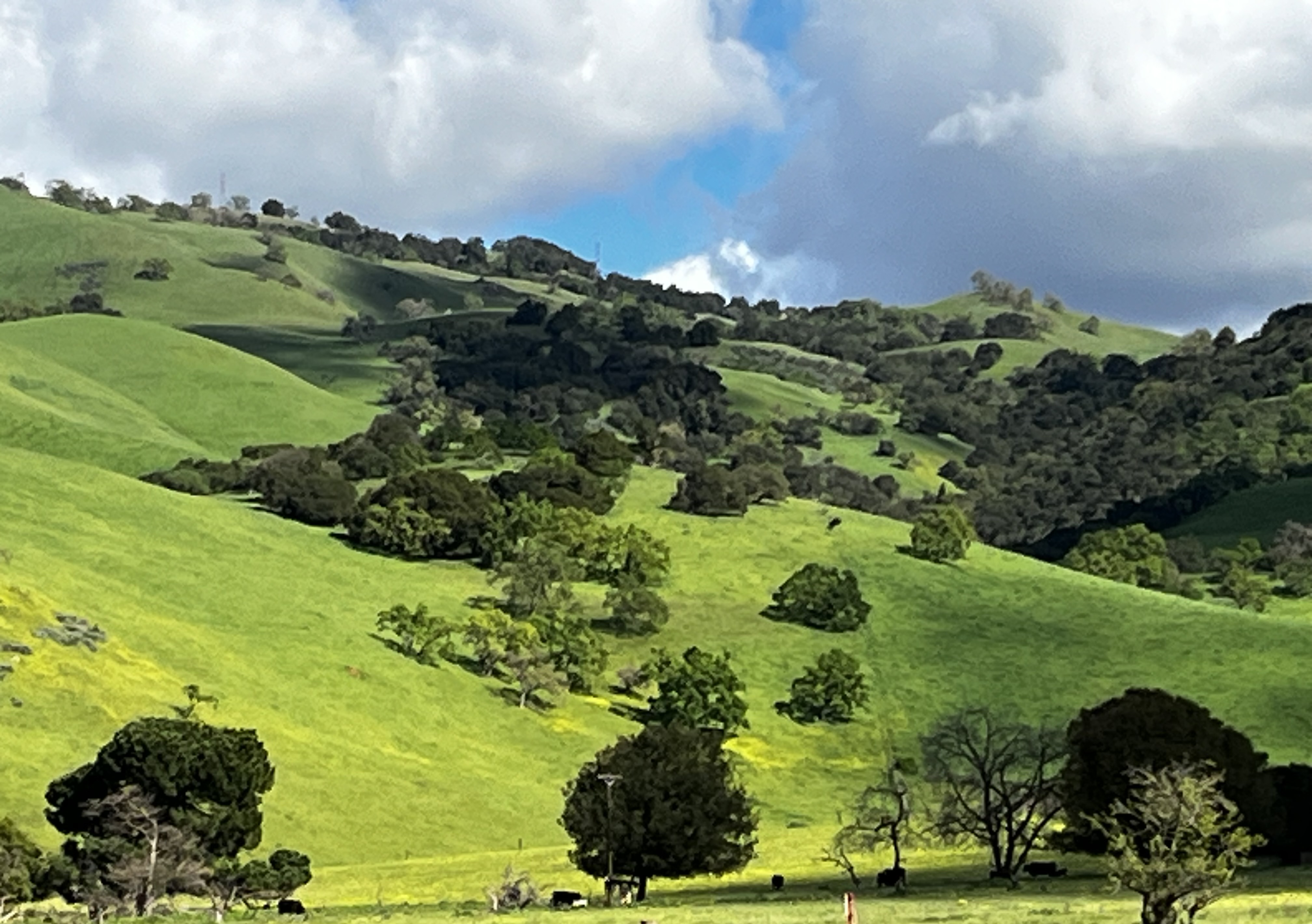
Walking along the creek, I immersed myself in the sights and sounds of the trail. The rainy season turned Alum Rock Park into a beautiful canvas of many shades of green. The hillside is cluttered with uprooted trees and stray branches thrown about most likely from storms. Carpet-like grasses and thin tree limbs swayed in the wind while a couple of deer nibbled on leaves in the distance.

I initially thought that nature sounds playing in my airpods would be a cool soundtrack. No music. No podcasts. After a few seconds, I realized that it was a dumb idea of a typical 21st century Silicon Valley man addicted to electronic devices. The more I thought about it, the sillier it sounded. I chuckled at my total disregard for mindfulness. Water running through the creek, small pebble gravel crunching under my hiking boots, and birds chirping were the only sounds I heard as I walked. 

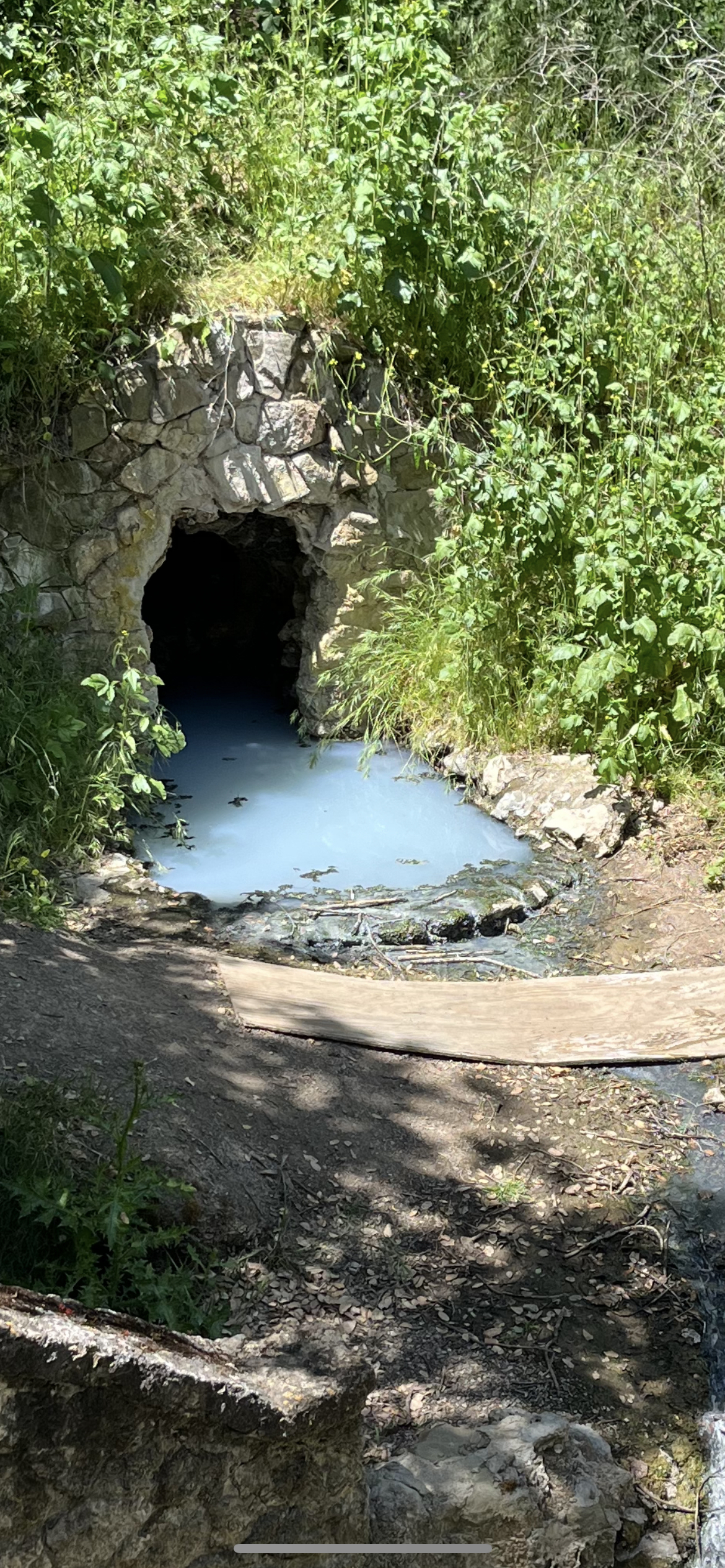
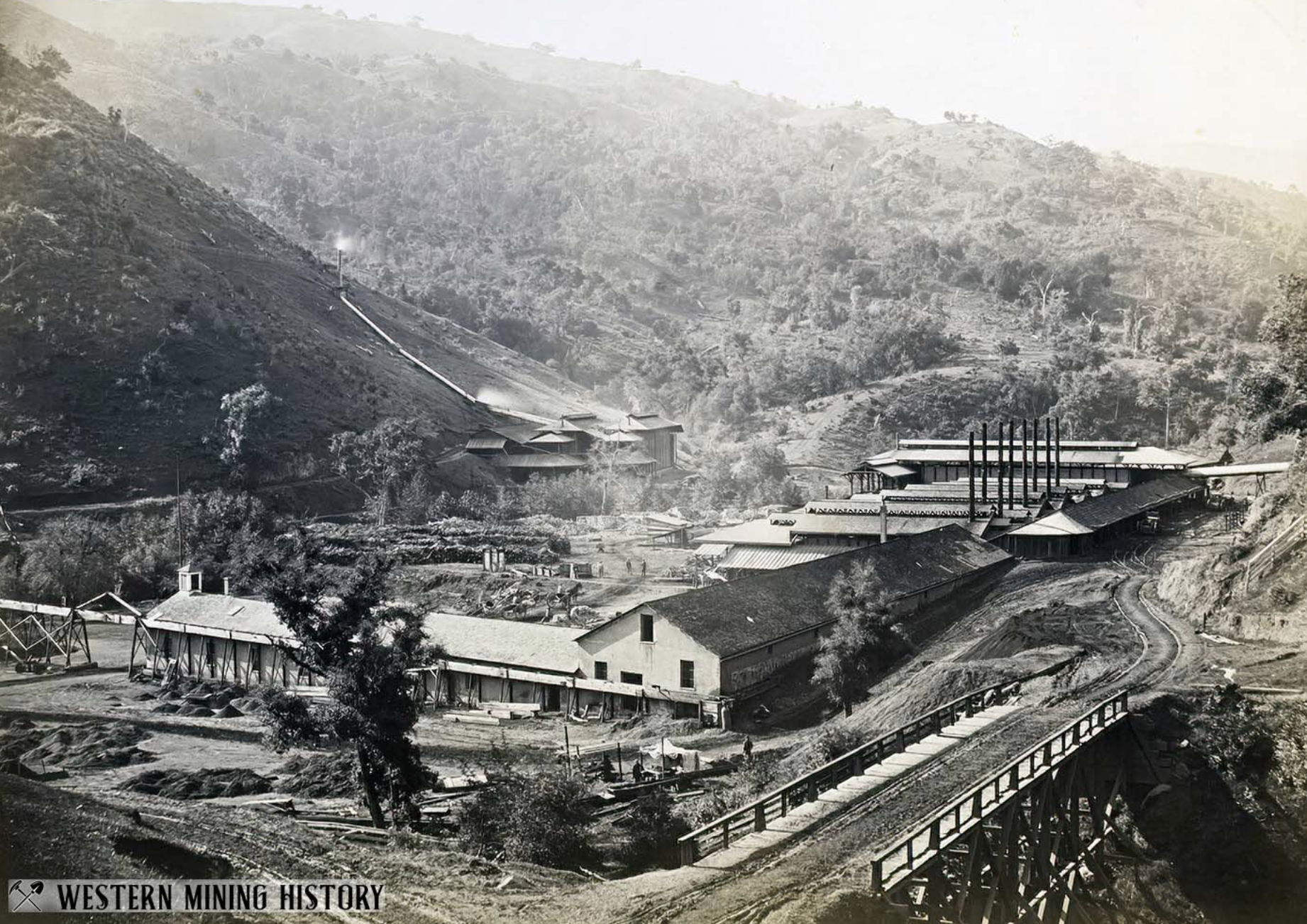
Finally, I stopped at the ruins of mineral springs from a bygone era of the park. From the late 1800s to the 1930s, people flocked to Alum Rock Park because they believed that the mineral water there had healing effects. I was standing 1.6 miles from the trailhead parking lot and the housing development nearby. Looking around, I saw squirrels scurrying about, a couple of quail trotting across the trail, and a vulture gracefully gliding high above the ridge line of the canyon looking for lunch.

I was in the middle of nowhere! 

Birds were singing and chirping, the creek was babbling, the sound of wind blowing through the trees brought an indescribable peace and calm to my being. Like Thoreau’s “sound of a locomotive” in the distance, the only sign of civilization as I stood 1.6 miles from a neighborhood was the faint roar of a jetliner departing San Jose Mineta International Airport flying high above to an unknown destination.

I hiked a little further into the canyon before turning around to head back to the parking lot. The return journey was also filled with wonder. The sounds of singing birds, animals scampering in the brush, and rushing creek water were louder and more distinctive. I was admiring a family of ducks paddling in the creek when I noticed a vulture flying right at me. I smelled myself and checked the heartbeat on my Apple Watch just in case the vulture knew something I didn’t know. To my relief, the large bird landed on a tree branch with a dead bird in its beak. 

What did my little experiment teach me? Thoreau was telling the truth. You could be less than two miles from civilization, yet be totally alive, clear-minded, and isolated from the noise of the world. Maybe, just maybe, the real truth coming from my experiment is that “paying attention, on purpose, in the present moment, nonjudgmentally” can put you in the same place even amid the chaos of life.

Hmm . . . I have some more work to do on this mindfulness stuff.