Tag Archives: Summer in the Waiting Room

Summer in the Waiting Room: Chapter 2 (excerpt #16)

The García and Peralta families came together to celebrate our wedding day on November 17, 1990. (Sandra and Eddie  García Family Photo)
The García and Peralta families came together to celebrate our wedding day on November 17, 1990.
(Sandra and Eddie García Family Photo)

With Sandra’s support and the foundation created by this tightly knit family environment, I slowly began to emerge from the abyss of failure.  The fall we began dating, I applied for and accepted a position to coach the frosh-soph boys’ basketball team at the high school across the street from Most Holy Trinity Church.  I worked well with the student-athletes and the school administration further convincing myself that college and a career in education was my path to redemption.

The next year, in a sudden twist of fate, the head basketball coach at my alma mater resigned just weeks before the season began, so my return to college would have to wait because James Lick High School hired me to run its basketball program, which included a full-time job as an instructional aide.  The values I learned at 48 Viewmont Avenue served me well as I worked hard to rebuild a program that had won only two games the year before.  By the end of my second season, we had won half our games in the regular season and recorded a 12-2 record at the San Jose City College summer league, losing in the championship game to a county powerhouse.

That same summer, James Lick High School honored me with the school’s coach-of-the-year award and legendary San Jose City College basketball coach Percy Carr asked me to join his staff.  Despite these successes, the hard facts continued to haunt me:  I had failed at college, the coaching positions were part-time with no real conduit to a stable career, and the bright lights of success as a coach merely covered up the reality of my disappointments.

Although my relationship with Sandra was growing and getting stronger, I would regress into my self-loathing through an occasional weekend drinking binge with Rudy, thus setting back whatever gains I had made with Sandra in strengthening our bond.  As much as I loved Sandra and as much as I desired to get back on track with my life, the dual demons of perceived success as a coach and actual failure in life continued to keep me from moving forward.  As time went by, and as our bond grew stronger, the binges became less frequent and I began to fight the demons by working harder.

On Valentine’s Day in 1989, while still coaching at James Lick High School, I made the first decision I had ever made toward true adult responsibility. I decided to ask Sandra to get married.  I called Kimberley that morning and asked her to meet me in front of Milen’s jewelry store as I wanted her advice on choosing a ring.  I picked out a one-quarter karat marquis solitaire diamond engagement ring, placed it in the velvet box provided by the store, and went to coach that afternoon’s practice as usual.

After practice I called Sandra from the coach’s office and asked her if she want to get something to eat without telling her where we were going.  When we rolled up to the drive-in service at Mark’s Hot Dogs, Sandra mentioned how she was surprised because we hadn’t been there since that first awkward date almost four years before.  We ordered a couple of hotdogs “with everything on it,” chips, and two diet Coke’s, and when the server left the food on the tray that hung from the driver’s side window, I slipped the velvet box next to our order.

I first gave Sandra some napkins that she carefully spread on her lap and followed with the hotdog, chips, soda, and finally the velvet box all in one swift motion.  She took a small bite of the dog, paused, and turned her head toward me with a puzzled look on her face, and asked, “What’s this?”  I opened the box and asked her to marry me.  To my relief, she smiled and her eyes welled up with tears of happiness and she said “yes.”  Soon we were on our way to Santiago Avenue so I could formally and properly ask her parents for permission to marry their daughter.

The next year and a half was filled with work (I continued to work as an instructional aide at James Lick after I accepted the position of assistant basketball coach for the nationally-ranked San Jose City College team), my coaching responsibilities, and preparations for a wedding.  In addition to organizing wedding plans, Sandra completed her studies at San Jose State and began working toward a teaching credential.

On November 17, 1990, our families and five hundred of our closest friends celebrated our traditional Mexican American wedding at Most Holy Trinity Church.  Rudy was best man and Kimberley was maid of honor. When the double doors at the end of the main aisle of the church opened and I saw Sandra for the first time in her wedding gown, I immediately knew that I had made the best decision of my life. The reception was traditional as well with barbacoa (spicy Mexican shredded beef), rice, beans, and tortillas for dinner while mariachis and Mexican folkloric dancers entertained guests.

For our first dance as a married couple, at our request, a four-man Tex-Mex band, my favorite genre of Mexican music that includes an accordion, twelve-string bajo sexto guitar, bass guitar, and drums, played the standard ranchera song “Un Rinconcito en el Cielo” (A Little Corner of Heaven) made famous by Mexican musical legend Ramon Ayala y Sus Bravos del Norte.  Like everything in which Sandra organizes, the entire day and evening were the result of meticulous planning and execution.

We left San Jose the next morning for a three-day honeymoon in the Sierra Nevada Mountains at Lake Tahoe.  The trip was brief so I could return for the rest of the City College basketball season.  A new chapter had started for both of us; for Sandra it was the next step in her carefully thought-out life plan and for me it was a positive step toward my efforts to unravel the complicated life I had created for myself.

Summer in the Waiting Room: Chapter 2 (excerpt #15)

The Peralta Family with Nana Encarnación, ca. 1980 (Peralta Family Photo)
The Peralta Family and Nana Encarnación,          circa 1980
(Peralta Family Photo)

Sandra’s oldest sister Valerie was born in Fresno, California, in 1961, just before Fausto and Connie moved to San Jose.  She was an only child for five years and thrived under the attention paid to her by her parents.  She grew to be a strong-willed girl who did well in school and participated in the cheerleading squad in high school and graduated from college with a degree in computer science.  She is a loyal sister who is always available to lend moral support.

The birth of Kimberley, the third Peralta daughter, came three years after Sandra in 1969.  Like her older sisters, Kimberley did well in the classroom and participated in after-school activities such as the marching band.  Kimberley has a nurturing and faithful character who seeks compromise and accommodation whenever possible.  She completed her college studies in business administration partly to help her father achieve the dream of having a businesswoman in the family.

The youngest of the Peralta clan from Silver Creek High School is Shelley, born exactly ten years after Valerie on December 28, 1971.  Shelley, who earned her college degree in social work, is unassumingly intelligent, yet boisterous and independent with a fiery spirit that can be witty in one instance and cynical the next.  All four sisters have one trait in common: they are intensely loyal to their own individual families, and to each other, their parents, and extended family and friends.

Once Sandra and I started dating on a regular basis, I realized that acceptance to the family required developing a relationship with each sister on a one-on-one basis in addition to building trust with Sandra’s parents.  Although this was a tall order for a young man mired in his failures and ambiguous future, my upbringing centered on respect and integrity and my accommodating personality, not to mention my absolute adoration of Sandra, set the foundation for my relationship with the Peralta family.

My relationship with Mr. Peralta seemed to begin almost instantaneously one Sunday over a beer when I told him that my grandmother Joaquina was born in Sahuaripa, a village just over the mountains from his hometown; seventy kilometers as the bird flies, but an eight-hour drive through the rugged mountains of Sonora, Mexico.  Although my Spanish is about as good as his English, we hit it off right away.  Sandra had to drive me home that day because I drank a few too many beers and participated in my fair share of storytelling.

With Mrs. Peralta, I learned quickly that I would earn trust and acceptance by respecting her home and her daughters, which, with the exception of one early verbal scrap with Shelley, I was able to accomplish soon after I started to frequently visit Santiago Avenue.  Valerie had been married for several months before Sandra made that birthday cake for me, so she wasn’t living at the house on Santiago Avenue when I started to see Sandra regularly. My relationship with Valerie has always been one based on respect, understanding, and acceptance of one another.

Kimberley and Shelley are my de facto little sisters, I served as an open ear to listen to their adolescent problems when they were younger and still provide counsel to them as adults.  Due to our similar accommodating personalities, Kimberley and I always got along just fine, and although Shelley and I had that early altercation, we grew to admire and care for each other as siblings sharing the qualities of a quick wit and a sarcastic tongue.

Over the years, I also developed deep and strong relationships with the Peralta girls’ husbands.  Valerie’s husband Eddie Velez and I became close as we were the “big brothers” who sometimes worked with Mr. Peralta on side jobs to make extra money and helped each other with household projects.  He’s the handyman of the group, so he’s always available to help with a bad electrical fuse, cable TV connection, or nagging computer problem.  Both of us are loyal San Francisco Giants and 49ers fans, so baseball and football seasons always prove to be fun.

When Kimberley and her husband Miguel Rocha were dating in college, she turned to me often for advice, and once I got to know Miguel, we soon learned that we both shared the same intense ambition of achieving success at the highest level possible, he as a businessman and I in politics.  I love picking his brain and sharing ideas on how we could come up with a successful business plan or two.  We’re both natural salesmen (some would say bullshitters) and I’m sure it’s hilarious watching us trying to sell each other on an idea.

Shelley’s husband, Pancho Leyva, and I have a passion for sports, and in our younger days, we were a mischievous team when the beer started flowing.  Perhaps our best time together was when he and I sat a few rows behind home plate at AT&T Park the night San Francisco Giants home run king Barry Bonds hit his 500th homerun against the Los Angeles Dodgers.  I’ll never forget watching Pancho, the die-hard, blue-bleeding Dodger faithful, high-fiving Giants fans and enthusiastically waving an orange towel in recognition of Bonds’ historic achievement.

I have a true affection for each of them, and together we are about as close as any four brothers could be.  Sandra’s parents, her three sisters, and my three compadres would play a major role in the events that unfolded in the summer of 2010.

*********************

Next Week: My relationship with Sandra continues to grow and I find the courage to ask her to get married.

Summer in the Waiting Room: Chapter 2 (excerpt #14)

Written on the back of the photo is, "Sandy 5th Grade" (Peralta Family Photo)
Written on the back of this photo is, “Sandy 5th Grade”
(Peralta Family Photo)

It was during those long phone calls between our first and second date that I got to know Sandra very well.  She was born Sandra Faustina Peralta on September 30, 1966, at Doctors Hospital just west of downtown San Jose, the second of four daughters born to Fausto and Connie Peralta, a construction worker and cannery worker.  She was a cute baby with big brown eyes, chubby cheeks, and puffy arms and legs that looked like they were tapered at the joints with rubber bands like a cute Michelin Man from the tire company’s commercials.

As she grew up, Sandra was obedient, studious, and cheerful.  In elementary school, she helped in the school library, cafeteria, and could always be found at recess time helping a teacher with some odd job in the classroom. Beneath the exterior of the model student and obedient daughter was a girl who had tremendous strength of character and unflinching determination.  According to her mom, even as a toddler, “Sandra knew what she wanted to do and was confident she could do it.”

The family next door had a daughter the same age that constantly competed with Sandra in the classroom and with extracurricular activities.  Only once did Sandra let the pressure of that competition get the best of her when in a fit of anger she called the other little girl a bitch, and abruptly went home to confess to her mom, express remorse, and return to apologize.  This incident accurately describes Sandra’s dual qualities of toughness and compassion.

Sandra went on to excel in school earning good grades, playing clarinet in the award winning high school marching band, participating in after school activities, and eventually getting elected student body president her senior year at Silver Creek High School in east San Jose.  After two years of community college she enrolled at San Jose State University to begin a journey that would lead to her career as an educational administrator.

Sandra’s success can be attributed to her spirit, personality, and the unconditional support from her family.  Her parents, Fausto and Connie Peralta, are the personification of the American Dream.  Born in the village of Cumpas, Sonora, Mexico in 1938, Fausto was raised by aunts and uncles because his father Mariano died as a young man; and his mother Concepción left him, and his sister and brothers in the care of relatives to go to the United States in search of work and a chance to send for her children so they could have a better life than the one they had in Mexico.

He came to the United States at the age of sixteen and settled with his mother in the small California farming town of Mendota; his brothers followed later.  In Mendota, Fausto quickly established himself as a hard working young man who provided much value to the farmers who employed him in the cotton fields of central California.  When not doing the back-breaking work required in the hot and dusty fields, he could be seen around town neatly dressed in clean and pressed clothes, polished shoes, and hair combed just right.

Sandra’s mom, Connie Rosales, was born in 1941 just a few miles up the road from Mendota on the Hotchkiss Ranch just outside of Firebaugh, California, the ninth child of Jesus and Encarnación Rosales.  Like Fausto, she was raised by a single mother as her father passed away when she was just three years old.  Connie, a strong-willed, hard-working, and compassionate woman, grew up dreaming of one day living in a nice house and raising a successful family just like the Americanas who lived in town.

Connie and Fausto met in 1958 when Connie’s presumably match-making aunt invited Fausto to a New Year’s Eve party at the home of Connie’s sister.  Two years later they were married, then moved to San Jose looking for work where Fausto made his way as a cement mason and Connie supplemented their income working in the canneries of Santa Clara Valley, and where they built a family with their four daughters: Valerie, Sandra, Kimberley, and Shelley.  They worked hard and did whatever it took to ensure that their daughters had a chance to succeed.

Raising four daughters was a challenge for Fausto and Connie as each woman has her own distinct personality.  Collectively, the Peralta girls made an impression at Silver Creek High School and proudly call San Jose State University their alma mater.  A large photo of the sisters standing together resplendent in college cap and gown under the shadow of the university’s ivy-covered Tower Hall hangs in the entryway of the Peralta house.

Summer in the Waiting Room: Chapter 2 (excerpt #12)

The original Mark's Hot Dogs stand on Alum Rock Avenue in east San Jose (photo by www.roadfood.com)
The original Mark’s Hot Dogs stand on Alum Rock Avenue in east San Jose
(photo by http://www.roadfood.com)

Blogger’s note: The following passage is the from my manuscript of Summer in the Waiting Room: How Faith, Family, and Friends Saved My Life. This is the 2nd excerpt from Chapter 2: “Sandra Peralta.” I will post weekly excerpts every Wednesday morning.  To read previous installments, go to the Categories link and click on “Summer in the Waiting Room.”

********************

A couple of months after the garage encounter, I was hitting the town with a couple of old high school friends barhopping when I suggested we stop at the wedding of my friend Will Medina’s sister.  Will and I knew each other from the Kinney Shoe store where he worked in the stock room.  Like me, he grew up in east San Jose, but in a different neighborhood.  He was, and still is, always well-dressed with neatly pressed clothes and perfectly combed hair, and he’s honest and hardworking.  If dictionaries had the phrase “a good man” in their pages, there is no doubt in my mind that Will Medina’s photo would sit right next to the definition.

Will and I got to know each other better after I left my job at Kinney Shoes, and became fast friends playing recreational league basketball and softball together, and carousing around town.  On that summer night in 1985, his girlfriend and future wife, Juanita Navarro, was with him at his sister’s wedding.  Juanita is an intelligent, caring, and faithful woman who has shared her life with Will and their two children.  She also happened to be, and still is, Sandra’s best friend.

When I walked into the reception hall wearing a dark suit and tie, looking for Will and acting like I owned the place, I instantly saw Sandra sitting with Juanita and her family.  She was radiant wearing a navy blue pencil skirt and starched white blouse, and she smiled demurely when our eyes made contact.  Up to this point, Sandra and I agree on how the events unfolded, it’s the next few minutes where we have vastly different perspectives.

I remember walking to Sandra and respectfully asking her to dance; she insists that I waved from across the room and pointed to the dance floor as to say, “Meet me there.”  We are the only witnesses to the disputed incident so I’m sure the whole episode will go with us to our respective graves.  Nevertheless, we danced.   As I escorted her back to her chair, I reminded her that I was the guy who ran from Welch Park across the street to her house mistaking her for someone else.

When told her how I wanted to ask her for her telephone number, but I couldn’t say anything because her beauty left me speechless, she looked at me skeptically, with a slight roll of her eyes, but asked me to sit down anyway.   We danced a few more times and spent the evening chatting.  When my friends began pestering me to leave the wedding for another party, Sandra gave me her telephone number and I vanished into the night.

A week later, we were out on our first date.  I was nervous and excited as I was getting ready for the evening.  I had planned to take her to the movies and then for a quick bite at Mark’s Hot Dogs, the best place on the east side to go for a food nightcap.  When I arrived at her house, I walked into the living room so Sandra could introduce me to her parents.  Sandra looked so beautiful in pink and white striped pants and a pink blouse that I couldn’t stop looking at her; consequently I don’t remember any interaction with her parents or anyone else that may have been in the living room.

As we drove to the Century Theaters on the west side of town to see the hit movie “St. Elmo’s Fire,” Sandra and I talked and laughed, and I quickly became enchanted by this smart, funny, and attractive woman.  Other than being uncomfortable with a couple of racy scenes in the movie, our first date was going well as we arrived at Mark’s Hot Dogs.  Mark’s is an art deco hot-dog stand built in 1936 in the shape of an orange that remains an east side institution and official city landmark to this day.

When I was a kid, my parents would usually stop at Mark’s for a midnight snack after a night out and bring a few dogs home for us, boiled to crunchy perfection in a steamed bun and garnished with mustard, relish, onions, and tomatoes.  My little sister Sisi and I would tear open the plain brown paper bag that held the gastronomic wonders and crunch away with delight.  Sandra had never been to Mark’s, so I was feeling pretty good about introducing her to something new.

As we talked and laughed some more, she suddenly became quiet, then confided in me that she had dated a friend of mine in the past.  She had seen us talking and joking with each other at the wedding.  I admired her honesty, but I was in no mood to start a new relationship fraught with potential challenges.  I quickly finished my dog, drove Sandra home, and told her that I would probably not call her again.  She looked me in the eye and said a matter-of-factly, “Don’t call me then,” and casually walked into her house.  I called her the next day.

********************

Next Wednesday: The chase is on!

Summer in the Waiting Room: Chapter 2 – “Sandra Peralta” (excerpt #11)

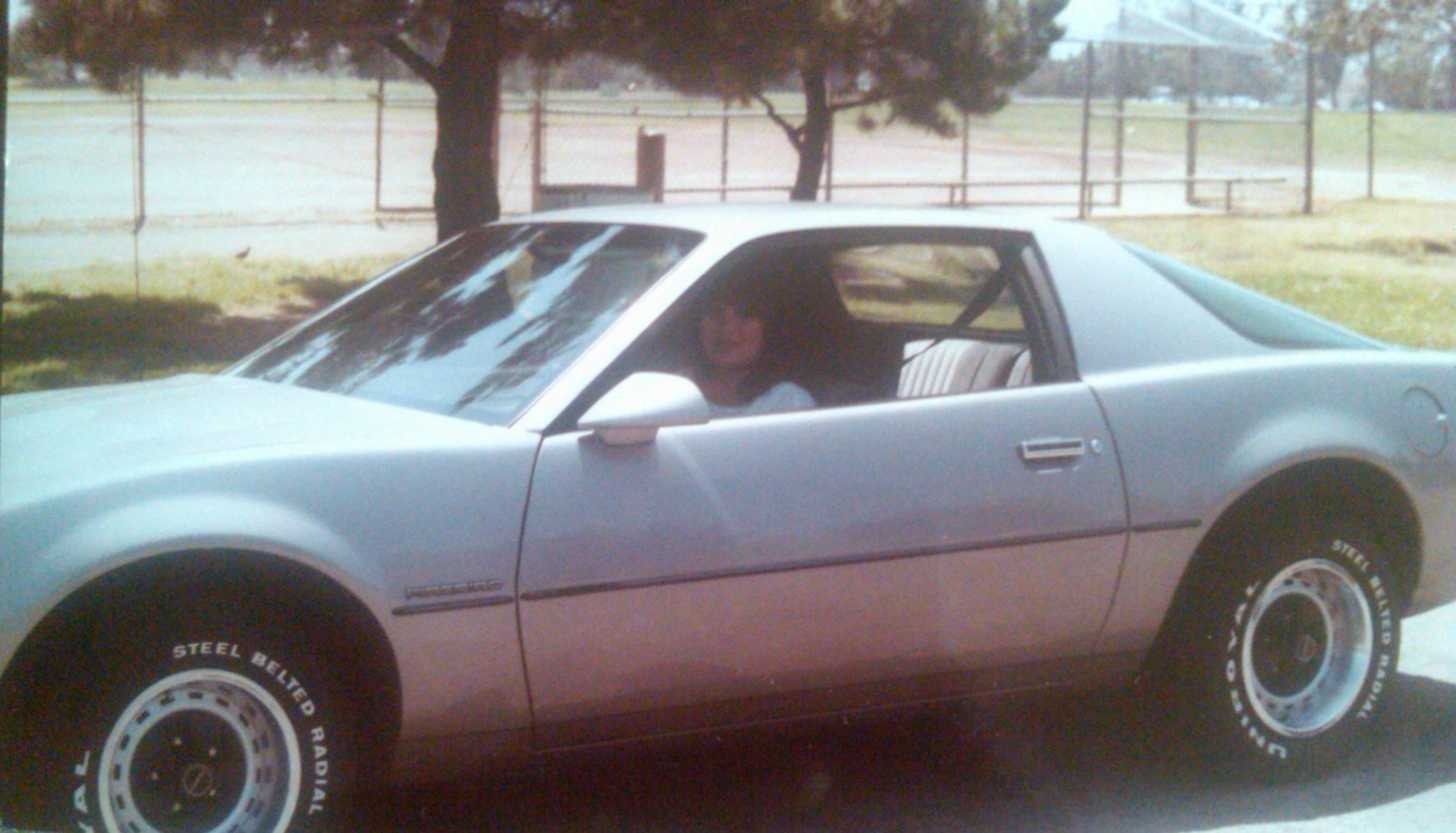
Sandra sitting in her 1984 Firebird across the street from Welch Park (Peralta Family Photo)
Sandra sitting in her 1984 Firebird across the street from Welch Park
(Peralta Family Photo)

Blogger’s note: The following passage is the from my manuscript of Summer in the Waiting Room: How Faith, Family, and Friends Saved My Life. This is the 1st excerpt from Chapter 2: “Sandra Peralta.” I will post weekly excerpts every Wednesday morning.  To read previous installments, go to the Categories link and click on “Summer in the Waiting Room.”

********************

Chapter 2

Sandra Peralta

When I started working at Kinney’s again, a friend named Sammy Ybarra, who I met through a high school friend years before, asked me be his assistant coach for the eighth grade boys basketball team at his elementary school alma mater, a Catholic school in his neighborhood.  He and I became good friends, and I later served as a chaperone at his wedding.  I excitedly accepted his invitation to help coach the team.

We had a blast, and the next year, the school asked me to be the head coach for the boys’ sixth grade basketball team.  I poured all of my energy into coaching that team, and we won all of our games except the championship game at the end of the season.  The kids, parents, and school community loved me, and working with the boys gave me a glimmer of hope that I could succeed at something.

Although the carousing, drinking, and chasing women continued, I began to think that there was a way out of the mess I had created for myself, and getting back into college was the key.  Later that spring, school officials asked me to coach the eighth grade baseball team, and I took on that job with the same gusto.  During the day and on weekends, I was peddling shoes; and in the afternoon during the week I was coaching a Catholic school baseball team at Welch Park in east San Jose.

At night, I was hitting the town causing mischief and feeling a little less inadequate, but not by much. One day, while hitting ground balls at practice, I noticed a shiny car slowly rolling down Santiago Avenue, the roadway that ran between Welch Park and the row of houses across the street.  The driver of that silver 1984 Firebird turning left onto the driveway at the house right across the street from home plate would forever change my life.

Right across the street from home plate on the baseball diamond at Welch Park lived a beautiful young woman.  Every day, I would stop practice to the merriment of the thirteen and fourteen year old boys as she drove up to her house.  I would watch her gather her belongings from the car, sling her backpack over one shoulder, and sip a soda as she walked into the garage that led to the house.  Day in and day out every afternoon, like clockwork, she would turn onto the driveway in her silver Firebird and I would stop practice to watch her routine to the chuckles and giddiness of the team.

After a week or so, the mischievous boys dared me to walk across the street and ask her out on a date, so I took on their challenge the next day as she drove up in a brown Mazda similar to one owned by another young woman I knew.  This was my chance, so I casually jogged across the street pretending that she was the other girl and shouted, “hi Clarabelle.”  As I approached her in the garage of the house, I finally had the chance to see her close up.  She took my breath away.

She had smooth fair skin, high cheekbones, long flowing brown hair combed in the 1980s style of the day, big brown doe eyes, and cute lips that curled just slightly at the top.  With confident reserve, she said, “I’m not Clarabelle, my name is Sandra.”  I apologized for mistaking her for someone else and nervously introduced myself.  I shuffled my feet without taking my eyes off of her eyes, mumbled several things I don’t remember, apologized again, and started jogging back to the park.  She left me speechless, and I didn’t have the courage to ask her out, even though that’s not what I told my players.

During the next several weeks, the kids on the team kept asking if I had gone out on a date with Sandra and I told them with authority that a gentleman doesn’t kiss and tell.  Of course, there were no kisses and nothing to tell.  Every afternoon when she slipped out of her car, I would wave my hand to say hello in an effort to catch her attention, but I don’t remember if she ever waved back.  When the baseball season ended I had no reason to go back to Welch Park, so I kicked myself for not getting Sandra’s number and  letting an opportunity to slip through my fingers.

********************

Next Wednesday: Fate gives me another chance to meet Sandra.

Summer in the Waiting Room: Chapter 1 (excerpt #10)

(stock image)
(stock image)

Blogger’s note: The following passage is the from my manuscript of Summer in the Waiting Room: How Faith, Family, and Friends Saved My Life. It’s the 10th excerpt from Chapter 1: “48 Viewmont Avenue.” I will post weekly excerpts every Wednesday morning.  To read previous installments, go to the Categories link and click on “Summer in the Waiting Room.”

********************

Before long, I was failing tests, or worse, just not showing up to class. I was losing confidence in myself as the cycle of going through the motions at school, not showing up for exams, and partying intensified. Every morning I awoke with doom and disaster lurking around every corner questioning myself for accommodating my dad’s wishes that I go to a four-year university.

Was Mr. Bailey right after all? Were college and a life of middle-class comfort not part of my future? What was I really trying to accomplish? One night while drinking at a friend’s house, a former high schoolmate, who I’m sure, was envious of me, told everyone there that I was wasting my time going to college because I was meant to be a working stiff like everyone else from the neighborhood. Drunk and depressed, I believed every word of what he had said.

When my third semester of college came to an end, my academic career at San Jose State collapsed. The bright future that my parents, teachers, and many others had predicted for me had vanished.  San Jose State University sent a certified letter to 48 Viewmont Avenue informing me that I had been academically disqualified from the university.  I had flunked out.  There was no cocoon to protect me; in fact, I had to find a way to protect myself from the cocoon.

With my self-worth completely eroded, I drove deeper into the abyss of self-destruction.  I quit working at Kinney’s for a higher-paying job selling shoes at the mall.  Drinking and carousing around town with Rudy and the guys intensified.  I looked for a job with potential opportunities for quick advancement and found work at the J.C. Penny department store at the same mall.

I worked hard and soon caught the eye of management as someone who could succeed in the retail industry.  All the while, I still hadn’t told my parents about the college failure, I was drinking and partying several nights a week, and my relationships with women were superficial and unstable.  As my self-worth further declined, I would soon be dating someone else, usually some co-worker at the department store, to cover up the emotional sting.

I quit working at J.C. Penney despite the apparent success and a promising future there.  For a short time, I worked on side jobs with Rudy at his father’s concrete construction company as a laborer during the day, and spent nights sitting at the local bar drinking with the hardened and grizzled construction workers.  I was depressed and seeking validation through alcohol and emotionless pursuit of women.  Sisi remembered that I was never home when she told me how I was “absent from [Sisi], and mom and dad’s life.”

She recalled many nights when my dad sat at his stereo listening to music through headphones and drinking as my mom watched movies on late night television while they worriedly waited for me to come home.  I never knew about this until Sisi shared the story years later, because my parents were always safely tucked into bed by the time I staggered into the house to throw myself onto my bed for the night.  My older brothers and sisters knew nothing of this as they had their own lives, their own families, and, with the exception of Steve, lived somewhere other than San Jose.

The Spanish proverb, “the night is always darkest before the dawn,” perfectly portrays that time for me as I had reached the lowest and darkest point of my life.  I had failed in college, foolishly entered into and walked out on several relationships, threw away what J.C. Penny managers thought was a promising career, and couldn’t cut it as a construction worker.  I begged the manager at Kinney Shoes to take me back so I could earn a little money to sort out my life.

With my parents, I confirmed what they probably already knew about my college failure; it was 100 times more difficult than when I told them about the Mr. Bailey meeting.  My dad stood and listened without saying a word, then shook his head in disappointment and walked away.  My mom looked at me with sad eyes and told me that I would find my way and they would be there for me when I needed them.

I had broken almost all of the values and standards that I learned at 48 Viewmont Avenue about how to conduct an honorable and successful life.  I had lost respect for myself and for others, especially the women I used to console my broken spirit, and displayed no desire to learn and improve myself, or to be compassionate, or to love unconditionally.  I was a defeated young man, barely into my 21st year, with no idea how my future would unfold.

********************

Next Wednesday: Fate steps in as I try to rebound from the darkest period of my life.

Summer in the Waiting Room: Chapter 1 (excerpt #9)

Tower Hall, San Jose State University (SJSU file photo)

Blogger’s note: The following passage is the from my manuscript of Summer in the Waiting Room: How Faith, Family, and Friends Saved My Life. It’s the 9th excerpt from Chapter 1: “48 Viewmont Avenue.” I will post weekly excerpts every Wednesday morning.  To read previous installments, go to the Categories link and click on “Summer in the Waiting Room.”

********************

My sub-standard performance in the classroom finally caught up to me when I met with the school guidance counselor during the spring of senior year to discuss options after graduation. His name was Russell Bailey. Mr. Bailey was a portly Irish man in his late 50s with piercing blue-green eyes, thinning black hair slicked back so it looked like it was stuck to his scalp, and a large head holding thick jowls that hung from his face.

Sitting behind his desk and talking with a booming voice, he looked and sounded intimidating as he opened my file and began to lay out my options. He told me that my poor study skills, a mediocre 2.72 grade point average, and an average SAT score left me with few options other than trade school, work, or maybe, community college. I sat in front of his desk stunned, scared, and confused. Everything had always worked out for me. Assuring Mr. Bailey that my parents, friends, siblings, everyone, expected me to attend college; I quietly listened as he bluntly told me that community college was the only option then.

Later that evening at dinner sitting in the restaurant booth that wrapped around the family kitchen table, I shared the results of the meeting with Mr. Bailey with my parents. My mom looked at me with a puzzled facial expression as my dad continued eating without looking up from his plate or saying a word. I went to bed that night with a huge lump in my stomach trying to figure out how I was going to avoid my parents in the morning.

The next day at school, during the mid-morning break, I was at the table with the guys when a voice over the public address system directed me to go to the office immediately. As I nervously walked to the office, the boys at the table hooted and hollered because it looked like the school boy had finally gotten into trouble. When I arrived, the secretary motioned toward Mr. Bailey’s office where he was standing by the door waiting for me with a forced smile on those heavy jowls.

Walking into his office, I found my dad sitting in the chair I was sitting in the day before with the same beaming smile that attracted my mom so many years before. More confused and nervous than ever, because my dad never took a day off of work, I stood motionless trying to figure out what was going on. Mr. Bailey explained to me that my grade point average and SAT scores met the minimum requirements to apply for acceptance to San Jose State University, and that he would help me through the application process.

Once again, the cocoon saved me, and I was on my way to college, but with major chinks in the armor that had protected me throughout my life.  Registration day at San Jose State was overwhelming with thousands of people waiting in long lines to sign up for classes at the tables spread out on the large lawn of the main quad where the university’s iconic ivy-covered tower overlooked the entire scene. That first semester I took a full load of courses that included classes in science, math, history, English, and basketball for physical education.

Although I lived at home, at school I was on my own; no teachers reminding me of reading assignments, no homework to submit on a daily basis, and just a few mid-term and final exams. Since I loved to read, this was going to be easier than I thought, so I paid more attention to developing a social life as a college student. After classes, I would read a little bit at the library then walk over to the student center looking to meet people.

Unlike high school, however, I was having a hard time making friends. I was still seventeen years old, and SJSU was a commuter college, so the students were on average older than traditional college students, and everyone seemed busy, serious, and in a hurry to leave campus.  Fortunately, football season was in full swing, so I went back to the comfort of the cocoon and used my status as a student to secure tickets to take friends, who were either working or trying to figure out what to do next life, to Spartan Stadium to tailgate, check out the girls, and watch college football.

Soon I began to leave campus right after classes like the other commuter students, bypassing the library and student center, and heading straight home to read before I went to work at the shoe store or, on my day off, hook up with the guys to drink beer and hang out. My academic performance was predictable; I earned a “B” in history and English, an “A” in PE, and dropped the math and science classes to avoiding a failing grade.

I once again registered for a full load of five classes the next semester, adding a Spanish class to my schedule of general education courses. I didn’t consult with an academic advisor, so I was taking classes haphazardly, rather than for a declared major or specific roadmap toward graduation. I just wanted to make up for the two classes I had dropped during the first semester. Second semester was more of the same; going to class, doing a little reading and no studying, working part time, and carousing with Rudy and the guys.

********************

Next Wednesday: Academically disqualified from San Jose State University

Summer in the Waiting Room: Chapter 1 (excerpt #8)

James Lick High School Administration Office (photo courtesy of JLHS)

Blogger’s note: The following passage is the from my manuscript of Summer in the Waiting Room: How Faith, Family, and Friends Saved my Life. It’s the 8th excerpt from Chapter 1: “48 Viewmont Avenue.” I will post weekly excerpts every Wednesday morning.  To read previous installments, go to the Categories link and click on “Summer in the Waiting Room.”

************

In class I was with the “smart” kids learning about algebra, geometry, biology, and Shakespeare; and after school I was either working part-time at Kinney Shoes or running around with Rudy and the guys.  At first, living in two different worlds worked out just fine as I figured out how to straddle the different social circles. I wanted to be like my friends: cool, carefree, and popular with the girls from the neighborhood, and I also wanted to be like the mostly white kids in my college prep classes and the jocks: intelligent, successful, and popular on campus.

I chose who I spent time with depending on the season. During the fall and winter, when I played on the basketball team, my circle of friends included football players, basketball teammates, cheerleaders, and the “in crowd.”  I would hang out during breaks and lunchtime in the school’s quad to see and be seen wearing my forest green wool and off-white leather-sleeved varsity letterman jacket that my dad could barely afford, but couldn’t wait to buy.

Most of the kids that came from my neighborhood and others like it played baseball, so the springtime would find me sitting at “the table” just outside of the quad shooting the bull with the guys.  I would spend the summer working at the shoe store, playing ball, and staying in the neighborhood.

The system seemed to work. My sister Sisi, who started high school two years after I graduated, would later say that, “you were cool,” and she was always aware of my high school success. “When I went to your games with mom and dad, everyone knew who you were, and when I started freshman year, teachers, coaches, and the juniors and seniors, were all surprised that I was your sister because I was shy and didn’t play sports,” she went on to say.

I seemed to fit in with the school leaders and upper middle-class families that lived in the hills, life in the cocoon at Viewmont Avenue was business as usual, my parents were protective as ever, and Rudy and my other friends protected me as well.  I’ll never forget the day after school during our freshman year when, while playing a game of pick-up football without pads, helmets, or adult supervision, I threw the ball in frustration at a big kid named Gus Rivas because he failed to block for me on the previous play.

It was another one of my risky decisions as Gus weighed about 250 pounds with a huge belly, thick wrists and arms, swollen-looking hands, and a mean streak.  His belly deflected the ball like the bullets jumped off of Superman’s chest as he charged and tackled me to the ground.  I was able to get one ineffective punch in before Gus grabbed me into a headlock and started pounding on my head.  Within seconds, although it felt like years, Rudy jumped on Gus, pulled him off of me, and with my other friends there, loudly encouraged me to run.

Slowly, however, cracks in the protective shell begin to develop. When I was living the high school version of the prestigious life in the quad with the in crowd, I would hear their demeaning and condescending comments about “Mexicans,” “low riders,” and “cholos” (the term used for Mexican Americans who dressed in baggy clothes like the gang culture of the day). They would tell me that I was different from the “other Mexicans” and that their comments weren’t targeted at me.

At the table, the guys would make fun of the “school boys,” the geeks who took college-prep classes, and deride the self-importance of the football, basketball, and cheerleader types. Of course, they would also tell me that I was different than the snobby “white boys” even though I was a school boy myself. I began to feel like I didn’t fit into either of the worlds I was trying to straddle, so to avoid looking like such a geek to my neighborhood friends, I did homework less frequently and didn’t walk everywhere with my books under my arm.

Fortunately, I was good at taking tests to keep my report card slightly better than average. To maintain my place with the popular quad dwellers, I focused on basketball and baseball so I could be one of the “big men on campus.” Despite this new strategy, I continued to feel inferior with both groups, although no one around me noticed the transformation. As Sisi described it, “you seemed everywhere in yearbook pictures and everyone, the kids in the neighborhood and the kids that lived in the hills, enjoyed being around you.”

********************

Next Wednesday:

Eddie is available to speak at your next event or conference.  To learn more about speaking services click on the “Speaking Engagement” tab under the banner on this page.

To schedule Eddie for your next breakfast, luncheon, or dinner event, e-mail eddie.m.garcia@comcast.net, or call 408-426-7698.

Summer in the Waiting Room, Chapter 1 (excerpt #6)

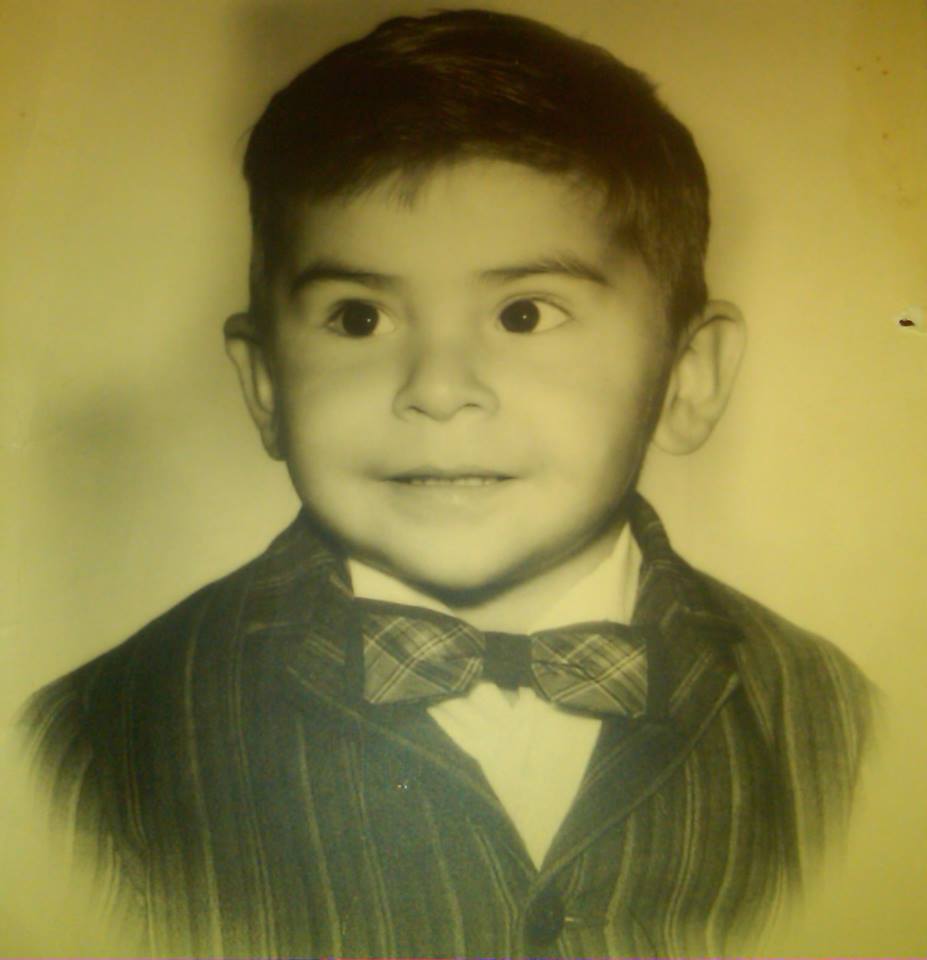
My mom's favorite picture of me when I was about four years old. (García Family photo)
My mom’s favorite picture of me. I was about four years old. (García Family photo)

Blogger’s note: The following passage is the from my manuscript of Summer in the Waiting Room: How Faith, Family, and Friends Saved my Life. It’s the sixth excerpt from Chapter 1: “48 Viewmont Avenue.” I will post weekly excerpts every Wednesday morning.  To read previous installments, go to the Categories link and click on “Summer in the Waiting Room.”

********************

My mom was the epitome of the warm and loving maternal parent.  She taught us unconditional love, faith, compassion, and perseverance.  Even during the last days before in her death in 2003, she remained strong in her convictions and her belief that everyday alive is a good day.  While any indiscretion on our part would be met with my dad’s scowls and rebukes, my mom would react with gentle counsel and loving support urging us to do better the next time.

She was our biggest cheerleader encouraging us to be the best we could be.  After all those years of watching me play sports, I’m not sure if mom really understood the complexities of the games, but I did know that she cheered every time it looked like I did something good.  Every morning she would remind us that the day would be a good one because the sun came up and God gave us another day, and after each meal, she insisted that we say “thank you God,” and of course she encouraged us to pray the “Our Father” before bedtime.

My parents, brothers and sisters, and our cocoon on 48 Viewmont Avenue were the center of my universe where I was free to explore my little world. My earliest memory is of an incident that started on the driveway of our house. I was about four years old and playing in the front yard. Those were the days when parents didn’t seem worried that their kids were running around in front of the house. The traffic in our neighborhood was nearly non-existent once everyone returned home from work, and my mom could see the entire yard and beyond from the kitchen window.

It seemed like she always was in the kitchen cooking, washing dishes, or watching over her kids playing outside. Most likely, she was always doing all three. I remember playing on the grass and eyeing the old two-toned orange and white Ford Mercury sitting on the narrow one-car driveway thinking about driving just like my dad. As the car sat majestically on the driveway, I thought about how strong and important I would look behind the wheel. When I noticed my mom had left the window, probably to go to the refrigerator to take food out for dinner, I darted to the car and struggled to open the heavy driver’s side door.

I then jumped onto the bench seat behind the steering wheel and started off on my imaginary road trip. As I spread my arms wide to maneuver the big round steering wheel, I strained my neck as high as I could so that my little head peeked over the dashboard to see the road ahead. Eyeing the gearshift on the steering column, I was ready to kick into high gear just like my dad would to send this big hunk of metal roaring down the highway. There was just one problem, our driveway sat at a slight incline, so as I grabbed the gearshift to make my move, the car started moving – backwards!

The car rolled back slowly off the driveway until it came to a complete stop in the middle of the street. I sat in the car not sure what to do next. My mom screamed from the kitchen window and dashed out the front door to save her baby boy as my dad stood on the front grass laughing. This may have been the first indication that I was willing to take a risk to get what I wanted, and like many other risks I took later in life, not a very smart one at that.

My sister Barbara described me as a little boy who was always smiling, laughing, and playing like I didn’t have a care in the world.  My older brothers and sisters were just that, older brothers and sisters who I admired and sought to be like and, along with my mom and dad, were the heroes in my life. So, I grew up not playing with them, but with the neighborhood kids. We rode our bikes up and down the street, sometimes venturing off a few blocks away to ride in the open field behind St. John Vianney Church, played two-hand touch football in the street and basketball in our driveway, or let the neighborhood girls join us for a game of hide and seek.

Barbara also described me as easy-going and accommodating. My mom wanted me to try out for the elementary school Mexican folkloric dance troupe, so I danced. My dad wanted me to play little league baseball and junior high school basketball, so I played.  I seemed to be good at everything I tried. When I was eight years old, my little league team was undefeated, and four years later I was the winning pitcher in the little league major division championship game.

When I wasn’t going to school, playing with my friends, or accommodating my parents’ wishes, I loved to read. A County branch library was only four blocks away, so I would hop on my bike, ride to the library, go straight to the sports or history stacks, check out some books, and ride back home, avoiding the back fence of the school and other dangerous hideouts like the parking lot behind Ray’s Liquors where the winos loitered.

With one arm steering the handlebars and the other arm carrying five or six books about baseball or World War II, I would rush home where I would excitedly open the books. Armed with this knowledge, I would spend hours on some weekends debating sports and history with my dad and his friends while they sat on the barstools and drank at the kitchen counter. That was my life in the cocoon on 48 Viewmont Avenue, and those around me kept it safe and secure.

********************

Next Wednesday: The protective cocoon of Viewmont Avenue begins to show some cracks.

Eddie is available to speak at your next event or conference.  To learn more about speaking services click on the “Speaking Engagement” tab under the banner on this page.

To schedule Eddie for your next breakfast, luncheon, or dinner event, e-mail eddie.m.garcia@comcast.net, or call 408-426-7698.

Summer in the Waiting Room: Chapter 1 (excerpt #5)

García Team #1 (clockwise from top: David, Patty, Steve, Barbara - Team#2: Me and Sisi
García Team #1: clockwise from top, David, Patty, Steve, Barbara – Team #2: Me and Sisi               (García Family photos)

Blogger’s note: The following passage is the from my manuscript of Summer in the Waiting Room: How Faith, Family, and Friends Saved my Life. It’s the fifth excerpt from Chapter 1: “48 Viewmont Avenue.” I will post weekly excerpts every Wednesday morning.  To read previous installments, go to the Categories link and click on “Summer in the Waiting Room.”

********************

The protective shell my parents built kept the bad influences out by keeping us away from people or situations that could be harmful. At home, when my parents hosted family parties, a long night of hard-drinking would inevitably lead to tense conditions that could end up in a fight, and my mom would quietly usher us away from the party to our bedrooms.

When I was in elementary school, on my walk home, I would see some of the cool kids hanging out under the trees at the back fence of campus, and they would sometimes wave me over. I told my parents and they warned that under no circumstance should I ever venture out to the fence. As I got older, I realized that the boys were sniffing glue and paint to get high. Many of those kids joined gangs, dropped out of high school, and either died violently or found a permanent home in prison.

Not only did 48 Viewmont provide a cocoon for us, it served as a safe haven for relatives down on their luck or just hiding away from the miseries of the world. It would not be unusual for me to sleep on the couch in the living room so my bed could be used by a cousin, uncle, or aunt who needed a place to stay for a few days while they worked out whatever brought them to our house.

In true American fashion, my dad taught us to be independent, to think for ourselves, and to control our own destinies. We should be good people, he would say, and be there for others in need, but don’t count on others to be there for you, he counseled. Most of all, we should know that they, my parents, would always be there for us. They worked tirelessly to paste together a family budget, and we always had a hot breakfast in the morning, bag lunch to take to school, and dinner on the table when my dad came home from work.

The meals weren’t very healthy, but they filled our stomachs: any combination of chorizo or bacon, potatoes, and eggs for breakfast; bologna sandwiches slathered with mayonnaise on white bread, cookies, and an occasional piece of fruit for lunch; and tortillas, beans, and something fried with the bacon drippings or chorizo grease from the morning for dinner. On payday Fridays, we could count on a piece of chuck steak, fried chicken, or something exotic like spaghetti with hamburger meat sauce.

We could also count on our parents being at school and extracurricular activities. I can’t think of one back to school night or athletic event that wouldn’t include my parents’ attendance, even when there were competing activities like the 1972 World Series between Oakland A’s and Cincinnati Reds. That night, during the school’s open house, my dad found his way to the school office to watch the game with the principal and other dads.

My brothers and sisters all recount similar stories even though we were part of two families from the same parents. My four older siblings – David, Barbara, Patty, Steve – were born in the early 1950s, and my little sister Sisi and I came a decade later; I was born in 1963 and Sisi five years after me in 1968.  Together with the true baby of the family, my little sister Sisi and I make up my parents’ “second” family.  According to our older siblings, she and I had it easy.  I guess that’s the luck of the draw.

At 48 Viewmont Avenue, we had a clear code of conduct and value system from which we were expected to manage our lives.  My dad was no nonsense and no frills, who taught us, through counsel and by way of example, to work hard, play by the rules, and have respect for ourselves and others.  There was no variation from this formula.  Any lack of respect and decorum, especially in public, would immediately lead to a non-verbal response, a stern look with a furrowed brow followed by pursed lips, closed eyes, and a slow shake of the head in disapproval.

He also gave us the lifelong love of reading, learning, and music.  The tight shelf space in my parents’ bedroom was stacked with paperbacks and periodicals, every edition of National Geographic Magazine published since the mid-1950s was displayed on a homemade shelf for all to see. My dad would get home from work every day shortly after 5:00 o’clock with the evening edition of the San Jose Mercury News tucked under his arm, and we had to be prepared at dinner to be peppered with questions about the day’s world and local events.

Even as adults when we gathered around the same kitchen table for the holidays, he would sit at the counter looking into the kitchen with his whiskey and water and make a controversial philosophical or political statement and watch his educated kids flare up in a heated debate.  In the dining room, he had the record player and later cassette player in a place of prominence surrounded by albums that included Tex-Mex, mariachi, other genres of Mexican music, and the standards – Frank Sinatra, Dean Martin, and Nat King Cole.

********************

Next Wednesday: Chapter 1 continues with life at 48 Viewmont Avenue in east San Jose.

Eddie is available to speak at your next event or conference.  To learn more about speaking services click on the “Speaking Engagement” tab under the banner on this page.

To schedule Eddie for your next breakfast, luncheon, or dinner event, e-mail eddie.m.garcia@comcast.net, or call 408-426-7698.