Part 2: The Dream
***
Some in the community insisted that it be called the Latino Heritage Center. And we were very adamant about emphasizing Mexican heritage and culture.
~Blanca Alvarado, Vice Mayor, City of San José
***
In the September 5, 1952, issue of El Excéntrico, the president of the Comisión Honorífica Mexicana announced that its general assembly voted on July 20th of the same year to approve a project to establish the La Casa del Mexicano, a community and cultural center that included a large meeting hall and offices for the Comisión. He proposed convening a committee of honest, selfless community leaders, independent of the Comisión, to plan and design the center.
Money raised during the Comisión’s annual Cinco de Mayo and September 16th celebrations would fund the project. The article also called for broad support from the ethnic Mexican community to ensure it had its own space for social events and festivals. Opposition began to develop before the July 20th general assembly vote.
José Alvarado, a popular Spanish-language radio disc jockey and former president of the Comisión Honorífica Mexicana, argued that funds for the Casa del Mexicano project would siphon money away from a college scholarship program for Mexican American students already approved by the Comisión.
According to a July 19, 1952, San José Mercury News article, “Alvarado charged that while the scholarship program promoted better American citizenship, activities centered around the proposed clubhouse would tend to increase loyalties to México, rather than the United States.”
Although Alvarado was a native of México and served on the Comisión board, he believed that the future of the ethnic Mexican community in San José depended on building capacity in the United States. In an April 5, 1953, El Excéntrico opinion piece, Alvarado wrote in Spanish, “Although we love our traditions, we refuse to live in the past. This country is our home, and without a doubt, we want to be considered part of the local community.”
The Comisión Honorífica Mexicana general assembly unanimously voted to fund the scholarship program and the Casa del Mexicano project. A year later, the Comisión purchased property in La Colonia near the Del Monte cannery. The house became the Comisión’s headquarters, used for meetings and small gatherings.
The organization could not raise the necessary funds to build a large meeting hall and community center for public events as envisioned. By the mid-1960s, the Comisión sold the property to make way for a segment of Interstate 280 that expanded the demolition of La Colonia started by San José’s Redevelopment Agency earlier in the decade.
The Comisión’s dream of building a gathering space for the ethnic Mexican community remained of interest, even as cars zipped along I-280 on the land that once housed the Casa del Mexicano. In his annual message to the community, published in the December 5, 1967, issue of El Excéntrico, Comisión Honorífica Mexicana President Daniel Saldaña presented the Centro Cultural Mexicano (Mexican Cultural Center) project, “probably the boldest plan” ever announced by the Comisión.
The proposed 49-acre development would be an “authentically Mexican village” that included a large central kiosk, a church built in the original mission style, offices, art studios, and classroom space for teaching Mexican art, dance, and music. It is unlikely that the project progressed beyond the proposal stage, as described in El Excéntrico. There is no historical record of subsequent discussions.
Six years later, a group of business leaders founded the Mexican American Chamber of Commerce (MACC), “to improve the social, cultural, economic, and political position of ethnic Mexicans in San José.” The organization grew quickly and soon earned the trust of the community, city leaders, and established downtown business groups. The MACC was determined to develop a “Mexican Village” in downtown San José that replicated the thriving Market Street business corridor of two decades earlier, but with Mexican architecture and themes.
A Mexican entrepreneur first proposed a Los Angeles-style “Olvera Street” in San José in the mid-1950s, but city officials dismissed the idea. The MACC’s proposal would include space for arts and entertainment. By the mid-1970s, some city leaders were open to the concept. The proposal could potentially revitalize a dying downtown. Despite early momentum for the MACC project, the city council pressed ahead with its plan to revitalize downtown San José by displacing the ethnic Mexican community and investing heavily in redevelopment.
Unlike San Antonio, Texas, which recognizes, celebrates, and embraces its Mexican American roots and culture, San José’s leaders refused to acknowledge the city’s rich Mexican history and traditions. San Diego and Los Angeles preserved their original Pueblo sites and now celebrate them as tourist attractions. In their quixotic quest to revive downtown by throwing Redevelopment funds toward creating a modern version of a downtown lifestyle that never existed, city leaders failed to capitalize on a cultural heritage that had survived and thrived in the valley for more than two centuries.
For the better part of four decades, institutional roadblocks, financial challenges, and community divisions hampered the dream of creating a space where the city’s Mexican cultural heritage is acknowledged and celebrated. The dawn of the 1980s would bring renewed hope and previously unattainable opportunities toward achieving that dream.
***
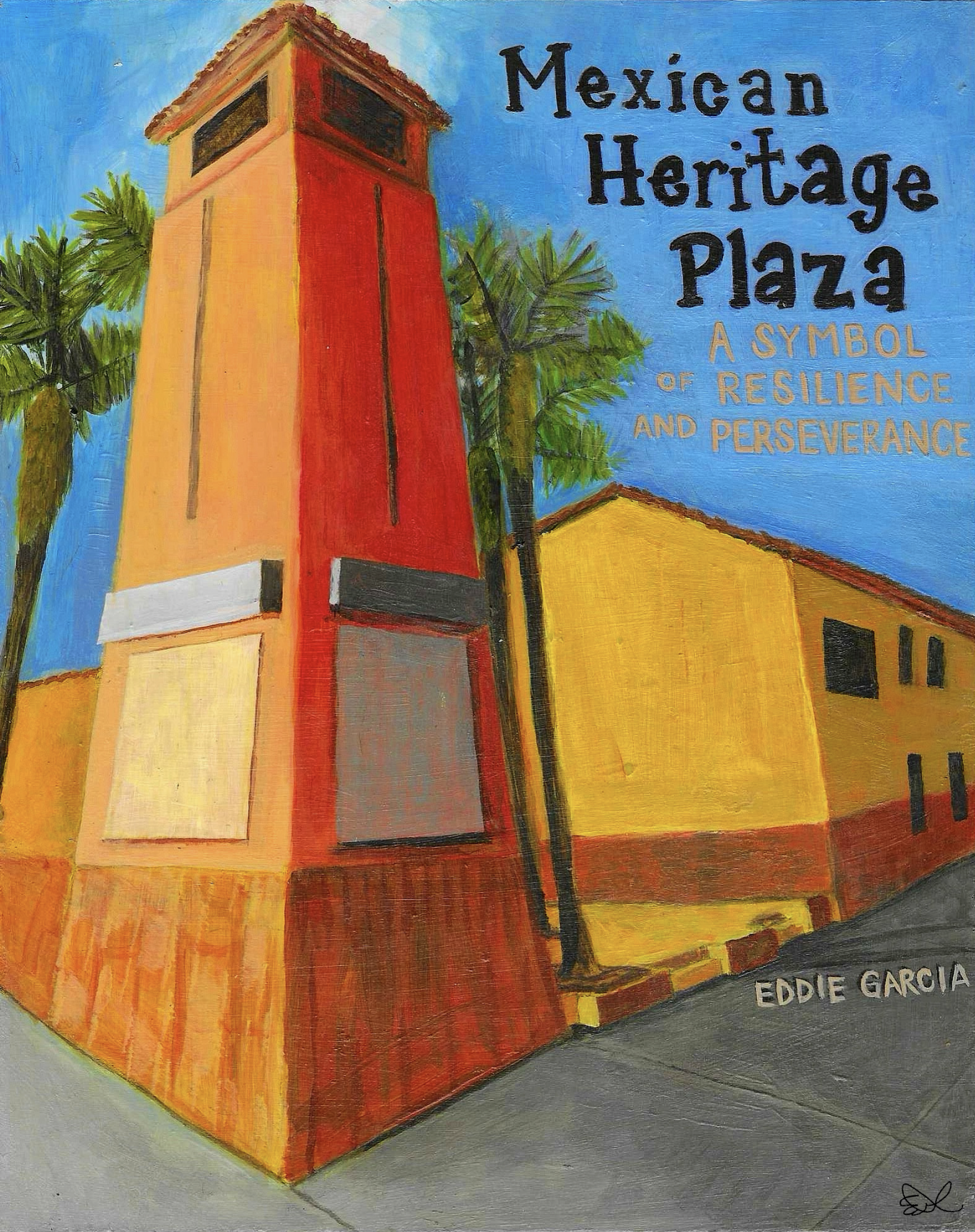
Note: Mexican Heritage Plaza: A Symbol of Resilience and Perseverance will be available in mid-March 2026. Stay tuned for more details.
 ESEReport.com