Tag Archives: life

Rejoice in Suffering

To live is to suffer, to survive is to find some meaning in the suffering. ~Friedrich Nietzsche, 19th Century German Philosopher

* * *

I was in the 6th grade the first time my dad took me to the James Lick Invitational Tournament. It was a neighborhood institution that kicked off the holiday season. The gym was packed. I was mesmerized watching players run back and forth in a choreographed ballet to the soundtrack of basketball shoes squeaking on the polished maple floor. Cheerleaders jumped, chanted, twirled, and fired up the crowd. The whole scene was intoxicating.

I’ll never forget the excitement I felt watching the winning team cut down the nets as a souvenir and seeing the all-tournament team clutching trophies at center court as the crowd cheered. From then on, one of my dreams was to play in the tournament. I looked forward to someday standing on a ladder to snip a little piece of the net as a champion and imagined holding an all-tournament player trophy of my own.

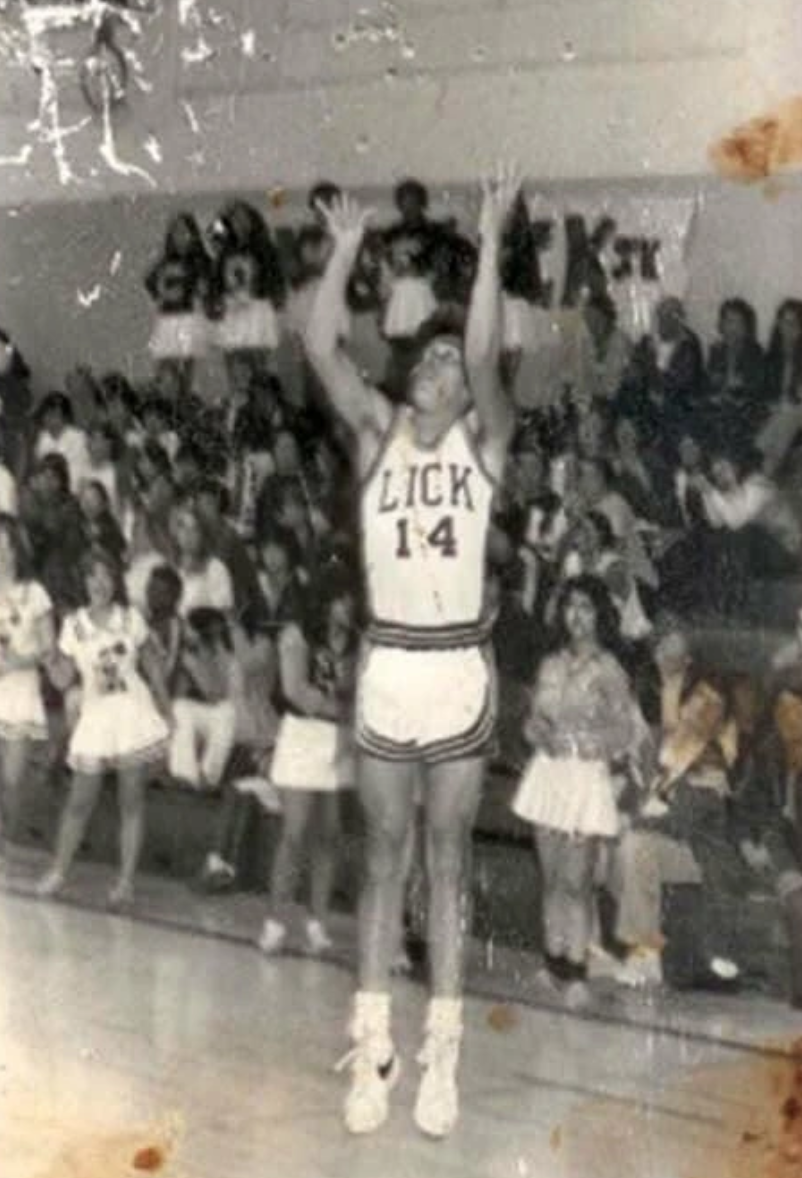
Six years later, I had my chance. As a senior at James Lick High School, I was co-captain and starting shooting guard for the varsity basketball team. We won our first game on opening night. I had a good game and earned a top 10 spot on the all-tournament vote tally. So far so good. My stomach churned with excitement and anticipation.

After the game, a bunch of students celebrated the victory at the neighborhood Round Table Pizza. My teammates and I walked into the place like conquering heroes. On the way home, my friend lost control of his car and crashed it head-on into a telephone pole. A few hours later, I was sitting in the Kaiser emergency room as a doctor stitched the deep cut on my forehead. The doctor said no to basketball for a week. 

It felt like my dog had died. I suffered sitting on the bench wearing jeans and a letterman jacket watching my team lose the next two games. Something that I had wanted since the 6th grade went up in smoke right before my eyes. There would be no nets to cut down, no all-tourney trophy to hold at mid-court, no cheering crowd. I replayed the car hitting that pole over and over in my mind. Little did I know that those two nights helplessly sitting on the bench wouldn’t be the last time my heart would ache.

Suffering is part of life. The central story of Christianity is the suffering Jesus endured at the hands of his enemies. Buddhists believe that suffering is a natural state of living. Nineteenth century German philosopher Friedrich Nietzsche once said that “to live is to suffer.” Ancient philosophers don’t have the last word on suffering. A couple of 20th-century lyricists come to mind. They put into simple words what highbrow intellectuals have been telling each other for thousands of years.

Jose Alfredo Jiménez, arguably Mexico’s greatest composer, wrote in the mid-20th century about emotional pain and suffering.

La vida no vale nada. Comienza siempre llorando. Y así llorando se acaba. (Life is worthless. It always starts out crying and, like that, it ends crying.) 

His massive body of work contains beautiful and elegant lyrics on life’s struggles. The concept of suffering consumed him so much that he ultimately drank himself to death. Cirrhosis of the liver took his life at 47 years old.

American country music icon Hank Williams also wrote haunting lyrics about pain and anguish. His music brings life to the agony of everyday living, loving and loss.

The silence of a falling star. Lights up a purple sky. And as I wonder where you are, I’m so lonesome, I could cry.

The official cause of the 29 year-old singer’s death was heart failure caused by the combination of alcohol and morphine, no doubt to soothe his pain.

Suffering is loosely defined as experiencing pain, sorrow, or hardship. It comes in all forms. According to Buddhists, there are generally three kinds of suffering: mental and emotional torment, physical pain, and death. Catholic tradition adds two more: humiliation and physical exhaustion. More than 4,000 years of philosophy, spirituality, and scholarship tell us that there’s no way to avoid one or more of these types of suffering on a daily basis.

When we think of suffering, big things come to mind: a fatal illness, death, a break-up, physical pain caused by a car accident, broken limbs, or migraine headaches. Suffering also comes in small packages. A flat tire, getting to work late, a gossipy co-worker, and an ankle sprain can all cause some level of mental torment, physical pain, and humiliation. 

Like most people, I always believed that life was all about having fun interrupted by a few hard times here and there. As a kid, I lived with both parents and five brothers and sisters in a safe environment, played baseball with neighborhood kids at the school down the street, and basketball on my driveway. We always had food to eat and had the same roof over our heads until we left the nest. It never dawned at me that life could be anything but wonderful with minor exceptions.

In high school, things got more complicated as the pendulum started to swing. It hurt when Dad furrowed his brow and shook his head in disappointment or Mom was upset at me for one thing or another. Focusing on academic performance, pursuing athletic accomplishments, and managing relationships began to eat up more of my time. Mental, emotional, and physical suffering followed. Nevertheless, suffering was still the exception, not the rule.

Life after high school was hard. I flunked out of San Jose State University after three semesters. Despite a sharp intellect and a solid work ethic, I embarked on a string of dead end jobs. I agonized over my circumstances knowing that my natural talents were not visible to my work mates or future employers. Burying myself into books had no practical purpose for the arc my life was taking. I grew frustrated and my anguish accelerated.

Suffering was the order of the day everyday. Drinking and carousing provided brief relief from the pain that racked my mind, body, and soul. Once the music stopped, the anguish resumed with more intensity. The physical and emotional hangovers lasted just long enough to jump back on the merry-go-round of suffering, shameless partying, and feeling sorry for myself. I finally overcame academic failure and forged a new direction.

Although ambition and promise were the new orders of the day, sorrow and pain still paved life’s path. The passing of Mom and sister Patty, job losses, election defeats, political failures, a massive heart attack, a horrific summer on life support, and a decade living with heart failure kept heartache chugging along. Marriage to Sandra, the birth of our girls, professional and some political success, and a heart transplant only served to soothe the ache of sustained suffering.

Since my heart transplant, I’ve developed a fascination with suffering and where it fits in our lives. The emotional and physical pain suffering inflicts on all of us make us naturally want to avoid it at all costs. The Spanish word for fun is diversión. While not a literal translation, the word has the same root as the English diversion. What are we  trying to divert ourselves from? Suffering, of course.

My heart failure and transplant journey have given me a new perspective on suffering and its assortment of so-called remedies. A brief scrolling through social media shows people “living their best lives” on vacation, at parties, and doing all kinds of fun stuff. The question is, Are those activities what life is all about or are they merely short-lived diversions from the daily drudgery of going to work, paying bills, fighting with family, raising kids, doing chores, and on and on?

That question has real life and death meaning for me. Living my best life was working long hours, drinking gallons of beer with a few shots of tequila here and there, and eating gobs  of fatty and unhealthy food. After a decade of heart failure and transplant, those diversions from suffering are no longer available to me if I want to continue living. I had to flip the script. I needed to find a way to live my best life without work, alcohol, food, or elaborate vacations every year, among a host of other temporary feel-good distractions.

I went back to the highbrow intellectual guys to find answers. Taking another page from the Nietzsche playbook, “out of life’s school of war—what doesn’t kill me, makes me stronger.” I’ve endured so much, especially during the past 14 years. Nevertheless, I’m still here. I’m mentally stronger with the character needed to face challenges head on. I have a better outlook on life and look forward to whatever each new day brings.

Nietzsche also told us that “to survive is to find some meaning in the suffering.” St. Paul the Apostle gave me a starting point. In his Letter to the Romans, he was trying to unify warring factions of the nascent church in Rome. As in any conflict, the differences in opinion among the groups caused much pain and suffering. St. Paul provided a recommendation to the Romans that has formed the foundation of my hope to flip the script on the never ending cycle of trying to avoid suffering through the pursuit of pleasure.

“Rejoice in your suffering,” St. Paul wrote in Roman 5:3-4, because it ultimately leads to hope. My heart failure journey came to an abrupt and blessed end on April 16, 2020. That’s when a new journey began. Suffering, real and imagined, old and new, continues to endure just as Nietzsche told us. “To live is to suffer.” My post-transplant story is all about rejoicing in my suffering “to find some meaning in it.”

***

Note: The story continues next Wednesday.

Roots at Harmon Park

My parents (Lico and Marie) met on a late summer day in 1949 when Mom went out to the neighborhood park with a cousin to watch some boys play baseball. Mom caught the eye of Dad as he strutted around the diamond with a smile that could be seen across the field. He was calling at my grandmother’s front door the next morning, respectfully asking permission to talk to my mom.

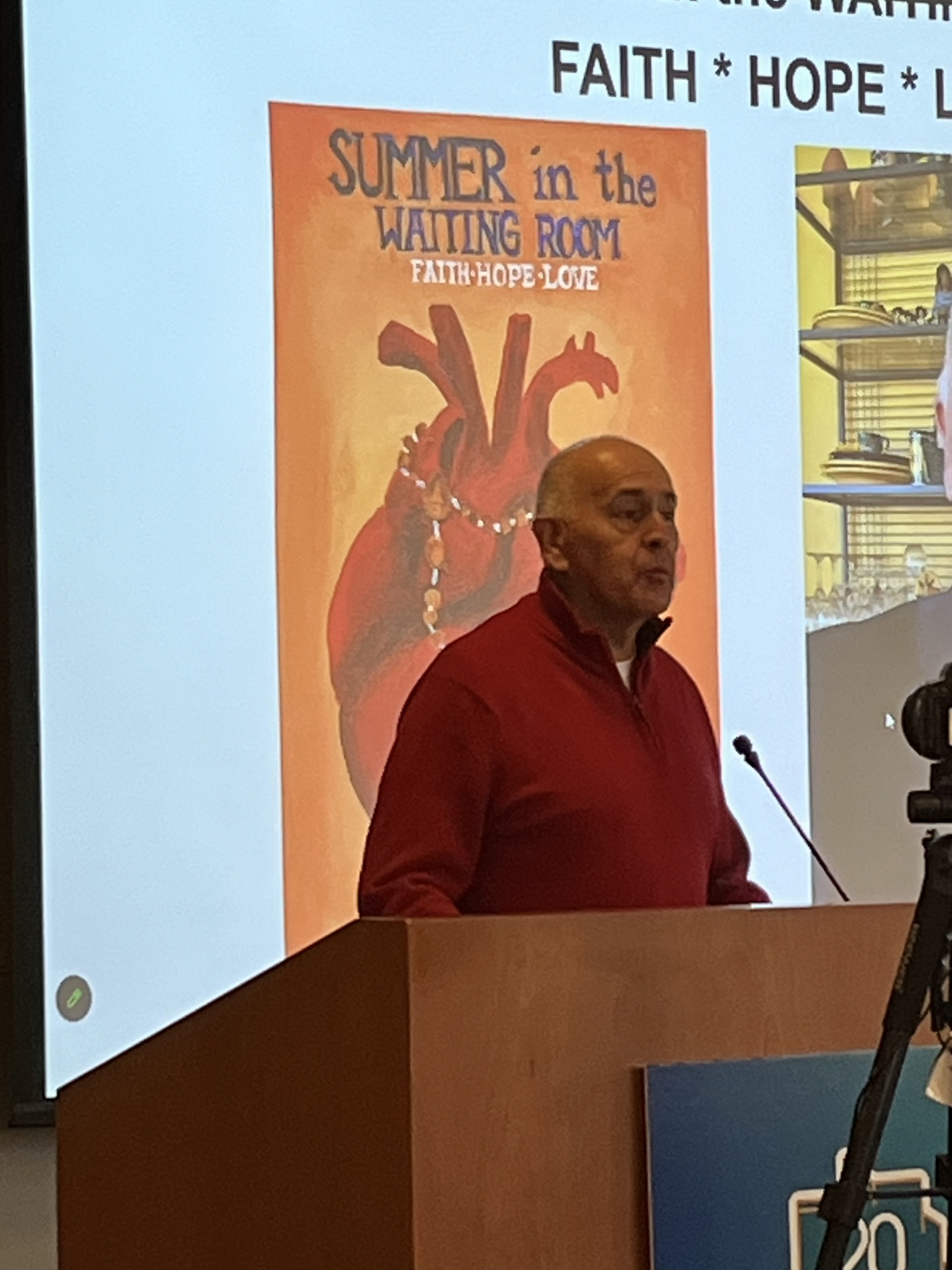
~ Summer in the Waiting Room: Faith • Hope • Love, page 11

* * *

I remember being a  little boy playing by myself with toy cars on the sandy dirt in the hot desert sun. Every few minutes or so, I stopped to marvel at the jumbo jets that roared just above my head and the roof of the small house on the south side of Phoenix, Arizona. After dark, I would go inside and endure the humidity caused by the old swamp cooler that was supposed to refresh those inside from the suffocating heat. Like clockwork, every few minutes or so, an airliner departing Phoenix Sky Harbor Airport shook the little home as its jet engines boomed above.

Those are the most vivid memories I have of visiting Grandma and Tía Lipa in the early 1970s. My parents grew up in South Phoenix and met there in 1949. I have many first and second cousins in Phoenix. Dad was the youngest in his family and I’m the fifth of six siblings. Due to distance and a huge age gap, I never developed relationships with my Phoenix kin, especially after my parents passed away. More recently, we have been connecting via social media. I hadn’t been there since the late 1970s, until two weeks ago. 

The occasion was my cousin Rojelia’s 80th birthday. The birthday girl’s mom was Dad’s older sister. It was an event many months in the planning. My big sister Barbara organized the Lico and Marie García delegation. As I’ve chronicled on this blog and in my book, the past 14 years have been a roller coaster of emotions for me. Faith, hope, love, and mindfulness have been the bedrocks on my post-transplant journey. Making a pilgrimage to Phoenix, Arizona wasn’t on my radar. Barbara persisted and Sandra insisted. How could I say no?

Sandra and I took an early morning flight out of Mineta San Jose International Airport for the three-day event. Landing at the Phoenix Sky Harbor Airport had no special significance. We arrived in time for a big party (Dad’s parents had 42 grandchildren!) at the Veterans of Foreign Wars, Post 41 in South Phoenix on Saturday. Relatives from all over the United States danced the night away to a DJ and a live band after dinner. 

I had a blast catching up with California cousins I hadn’t seen in more than a decade. We were sharing and laughing at the same old stories that made us laugh every time we got together. Seeing others with whom I’ve been connecting with on Facebook was nice. It was the first time I’d seen many of them since the last García family reunion in San Jose 42 years ago. The 1982 reunion weekend gave me a sense of grounding to something bigger than my immediate García family. That had slowly dissipated during the past four decades, until two weeks ago.

On Sunday morning, after breakfast at VFW, Post 41, Barbara and Rojelia led a tour of my parents’ South Phoenix neighborhood. As we slowly drove by the house Mom grew up in on West Pima Street, the first thing I noticed was a jet leaving the airport. Suddenly, the tour stirred something in my soul I couldn’t recognize. Two blocks away, kitty corner to Mom’s house, stood the projects Dad called home throughout his youth. We got off the car and entered the complex as another jumbo jet climbed into the sky.

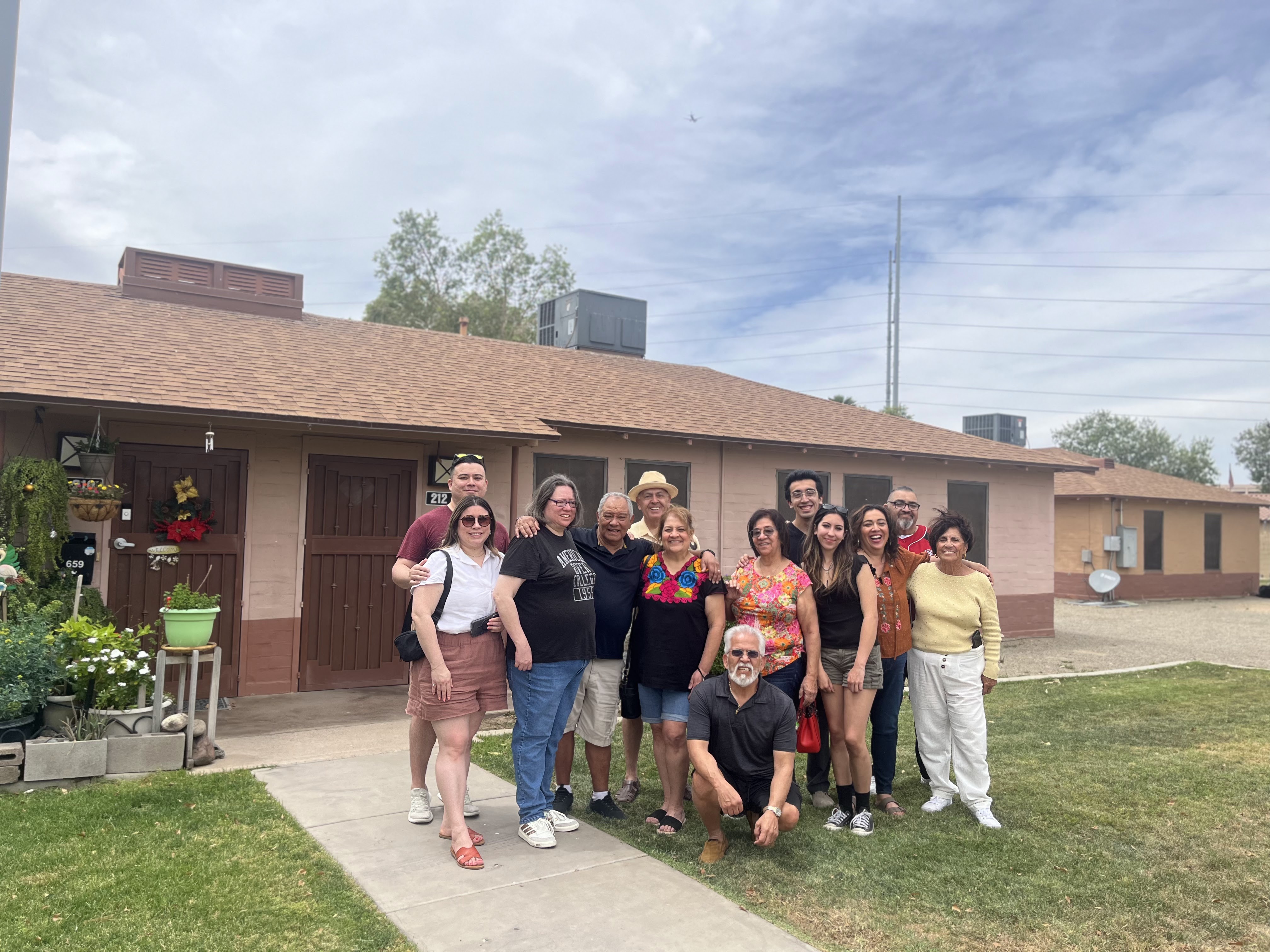
The pre-WWII buildings looked like army barracks facing an inner courtyard. After some debate about which apartment belonged to our grandmother, we settled on apartment #212. Rojelia recounted how she was born in the one-room living quarters in 1944. She remembers being a mocosa (snot nosed kid) watching Mom and Dad taking wedding photos in the courtyard. “It was all so elegant,” Rojelia reminisced. 

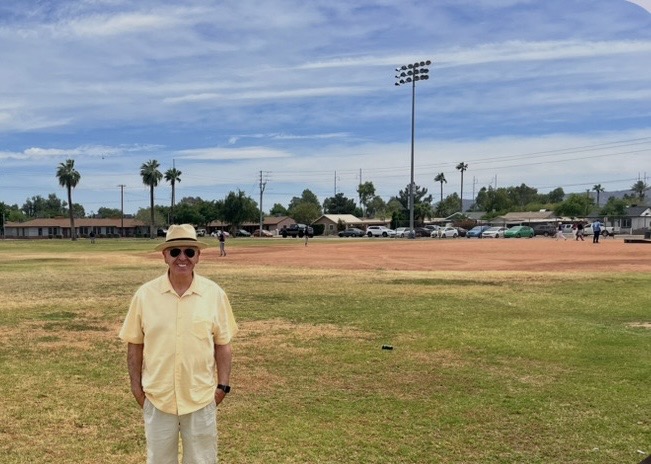
Mom had a collage of that day hanging in our small living room when I was a kid. We were standing and taking pictures of our own on the very spot where Mom and Dad celebrated their wedding day 74 years ago . . . I was transfixed! We whipped our cars around the corner and stopped at Harmon Park. My cousin told us that the baseball field at Harmon Park is where my parents met. 

I wrote the passage on page 11 of Summer in the Waiting Room about my parents meeting at a park from memories and family oral history. I may have been to Harmon Park as a young boy, as I vaguely remember walking to a baseball field during the trips we made to visit Grandma and Tía Lipa. But, two weeks ago was definitely the “first time” I’ve been there. There was a baseball game in progress. I could picture Dad “as he strutted around the diamond with a smile that could be seen across the field,” and I could see Mom demurely smiling from the bleachers. 

Barbara woke me up from my trance when she said, “I didn’t know you loved airplanes so much.” She mentioned that I looked up at every airliner that flew by. I mumbled something about how the sound reminded me of our visits from over 50 years ago. It was another way of saying, “I love those jets flying out of that airport. The boy playing with toy cars in the sandy dirt had come full circle to South Phoenix.

When mom passed away in 2003, eight years after Dad, I felt empty inside like a hot air balloon floating through life without an anchor. I focused on my home base in East San Jose and the home Sandra and I were building with our daughters. That foundation created a strong tree trunk of our little family tree. But there weren’t any Mom and Dad roots. Through the years, we visited California’s central valley where Sandra’s parents started their story. I have friends who have ventured back to their roots in Texas, Mexico, and a Native American reservation in Northern California.

I was quietly envious of the stories they brought back. As a man, I didn’t have the experience of “this is where it all started.” Until two weeks ago. Standing in the park where my parents met some 75 years ago was amazing. I looked to my left and saw Mom crossing West Pima Street on her way to a baseball game. I looked to the right and saw Dad running across 3rd Street to meet his teammates on the diamond. Between those glances, I watched each jetliner fly by above. I felt the roots of the Lico and Marie García family beneath my feet.

We finished the tour at St. Anthony’s Church, where my parents were married in 1950. It’s just two blocks north of Harmon Park. It was cool, but a little anticlimactic after the cathartic experience at the baseball field. The next afternoon, Sandra and I were securely buckled in our seats on American Airlines Flight 1667 when the jet engines roared as the plane screamed down the runway. Less than a minute after lift off, we soared above the little house on West Pima Street, the projects on 3rd Street, and Harmon Park, where my roots are firmly in place.

It was a three-day whirlwind of emotions for the ages. Connecting with family members I hadn’t met and reconnecting with others I hadn’t seen in decades was special, especially since we all descended from a matriarch who lived in a public housing one-room unit. I don’t know if or when I’ll return to South Phoenix, Arizona, but I’ll always cherish this trip. Thank you, Barbara for persisting and thank you, Sandra for insisting. I love you both. And, yes. I love those jets flying out of that airport.

Purpose & Passion

This is the fourth installment of ESEReport.com’s Second Chances blog series.

***

For the most part, I minded not how the hours went. It was morning, and lo, now it is evening, and nothing memorable is accomplished. ~ Henry David Thoreau, 19th Century American Transcendental Philosopher

The Lord is not being slow in carrying out his promises, as some people think he is; rather he is being patient with you. ~ 2 Peter 3:9

***

February 28, 2024 (San Jose, CA) ~ I started the morning like I always do. Sporting blue pajamas with white pinstripes and my trusty brown slippers, I made my way to the kitchen to brew a pot of coffee. After preparing a couple of cups, I spent the rest of the early morning watching MSNBC, sipping the cup of joe, and talking with Sandra as she got ready for work. 

The morning continued as usual. I read the daily mass, said morning prayers, did 10 minutes of mindfulness practice, and went to the kitchen for breakfast. That too was like any other day. I took morning meds with a 16 ounce glass of water, ate oatmeal with berries and walnuts, and finished off the meal with a hard-boiled egg and another glass of water.

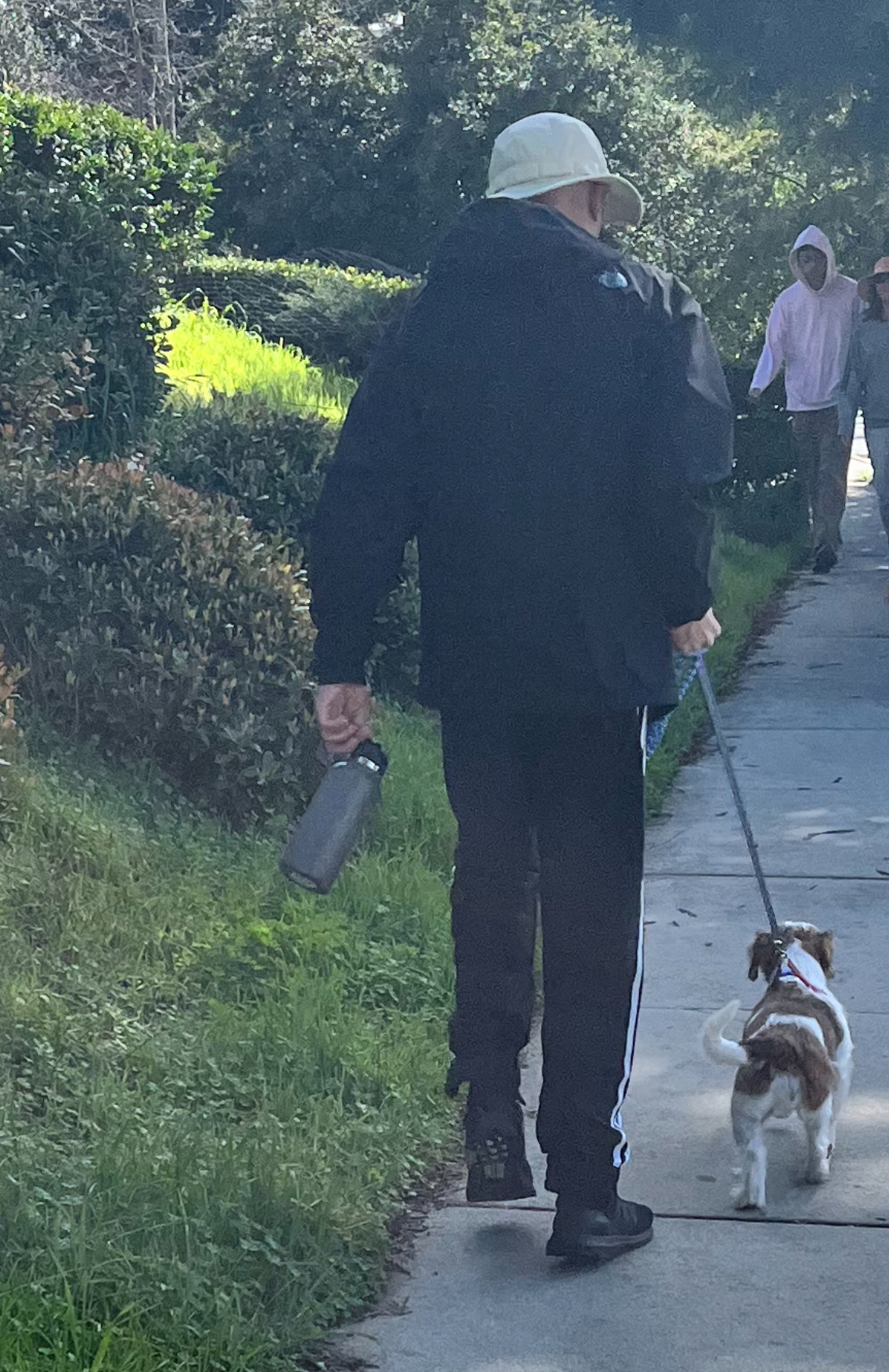
After breakfast, I got ready for a morning walk. The day was unusually springlike. Instead of wearing the usual black Adidas track pants and black NorthFace windbreaker, I put on a pair of khaki shorts and a blue long sleeve dry-fit shirt. After slathering my face with sun block, putting on a wide-brimmed hiking hat, lacing up my black Adidas crossfit shoes, and filling up a Hydro Flask water bottle, I headed out the door.

Since I had been nursing a little cold for a few days, I decided to go on a leisurely mile and a half stroll, rather than the usual fast-paced four mile walk. My podcast selection for the day was The Armchair Expert with Dax Sheppard. It’s a cool podcast with interesting guests. This time the guest was Bradley Cooper. I ended up getting bored pretty fast. For some reason, listening to the exploits of two handsome actors wasn’t moving me. I spent the rest of the walk with the Doobie Brothers.

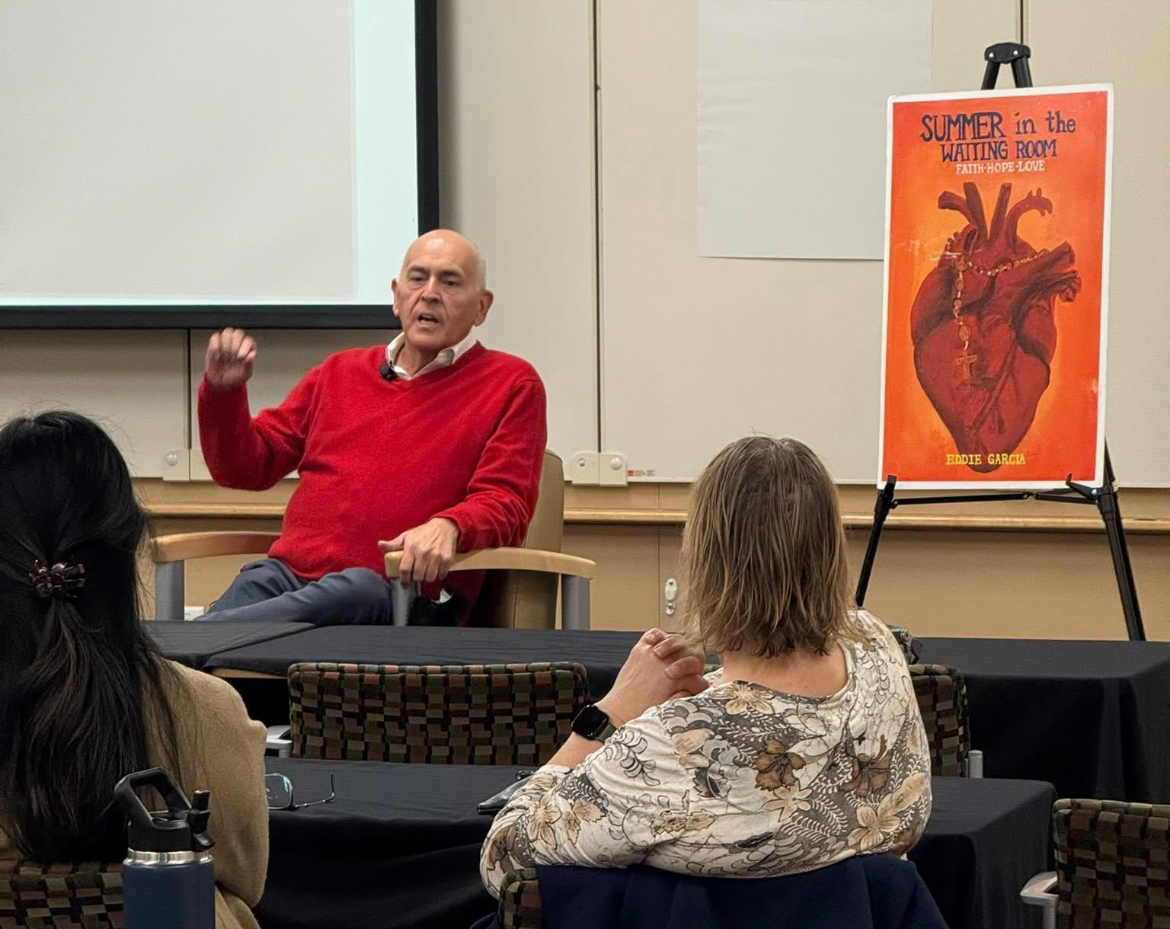
My daily routine usually comes to an end once I’m out of the shower, dressed for the day, and finished eating lunch. This is the time of day when I work on a few little projects. I teach a high school student leadership class, facilitate the Latino Leadership Alliance (LLA) Academy, and volunteer on the San Jose State University Latino Alumni Network board. I also do occasional speaking engagements for my book and volunteer with a national transplant advocacy organization. When I feel creative, I write for this blog.

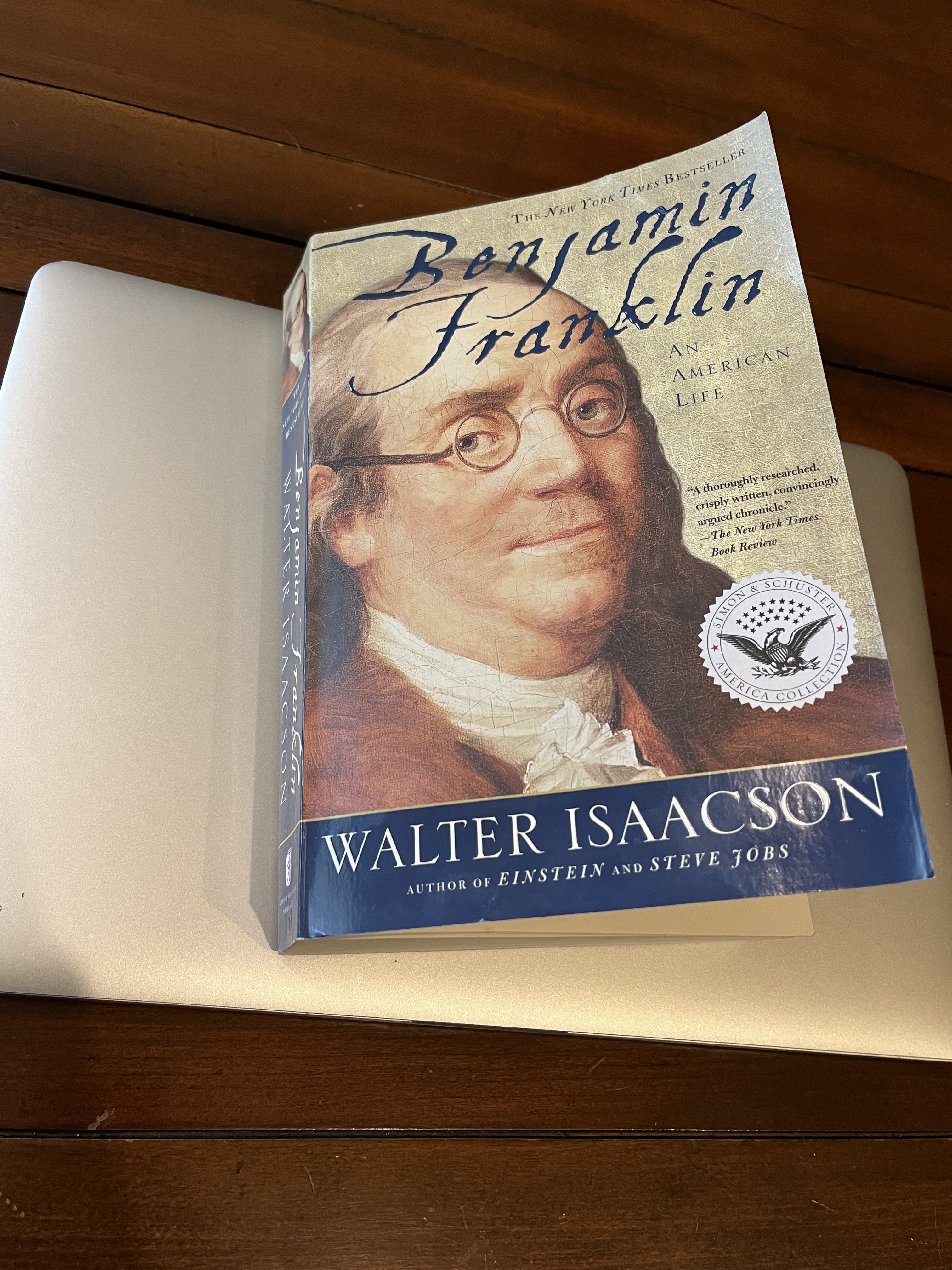
I use the word “dressed” loosely because my daily uniform is a pair of sweats, sweatshirt, and the trusty brown slippers. Most of the busy work I do is on my laptop. After the morning routine on February 28th, I settled in to read for a couple of hours. Benjamin Franklin: An American Life, by Walter Isaacson currently occupies my reading time. I spent the rest of the afternoon playing with Erica’s puppy Uchis, watching the news, and scrolling through social media. “My name is Eddie and I am a social media junky.” Step 1 is admitting the problem.

I emerged from my Tik Tok stupor just in time to make dinner, a cool little dish that Sandra taught me to prepare. I began by cutting potatoes, carrots, zucchini, onions, and a couple of chicken breasts. After placing everything into a glass baking dish, I spread Campbell’s cream of chicken soup over the top, sprinkled sweet peas into the pan, and stuck it all into the oven. An hour and a half later, “voila!”. Sandra, Erica, and I shared stories about our day over a nice meal. We rounded out the evening binge watching Griselda on Netflix.

That sounds like a pretty good day for a retired heart transplant recipient. Some might say that I deserve a day like February 28, 2024, and many more.

I started working part time after school when I was 15 years old. There were untold hours burning the midnight oil to make up for my initial college failure. What followed was a relentless climb up the corporate and political ladders. Then there was the horrific daily, sometimes hourly, fight for life during the summer of 2010. The hardest climb was my ten-year battle with heart failure that led to transplant while doing consulting work. 

Despite the thinking that I may have earned a relaxing retirement, I felt uneasy throughout the day. There was a slight churn in my stomach. It was like something was missing or just not right. I ignored the sensation and went on with the day, but the feeling never quite faded away. Even though I still felt a little anxious, I went to bed with an overall feeling that February 28th was a pretty good day and fell into a deep sleep.

The next morning, my routine started all over again. The worried sensation had disappeared. After the morning ritual and lunch, I opened up the laptop to put finishing touches on the day’s lesson plan for high school students. I meet with them once a week. On the drive to the school, I thought about how to present the concepts in an upbeat and interactive way. The students and I engaged in a great discussion about the importance of emotional intelligence for leaders.

I feel alive, useful, and productive when I’m working with students and LLA leaders, sharing my story with Summer in the Waiting Room readers, advocating for equitable healthcare, writing, and speaking with groups large and small. We live in a society where work, productivity, and industriousness are valued almost above everything else. I grew up in a home where hard work was the answer to nearly any problem. 

That’s why I feel uneasy and anxious when I have a day like February 28th. My subconscious (the Boo Voice) starts asking why I’m not working and making a substantial contribution to the household income. I have a new heart for crying out loud. Why am I wasting time playing fetch with Uchis, sitting back on the couch reading about some old guy who lived 200+ years ago, and scrolling through LinkedIn while everyone else is achieving?

Upon reflecting on that day, I remember that God has given me a great gift – a second chance at this thing we call life. I’m pretty sure He didn’t give me a second chance to toil my life away for material things, recognition, and self-aggrandizement. I say “pretty sure” because the Boo Voice and society are tugging at my ears telling me otherwise. We all struggle with that balance of working our passion for good and seeking worldly success.

It’s wonderful to see a student’s eyes light up when they get a concept or when a LLA cohort shares stories of true servant leadership. Listening to people share stories of their own families’ overcoming heart disease fills my soul with faith, hope, and love. Deep down inside, I know that the things I love to do make a positive impact on people. I need to stay focused on doing them for that reason.

I try to make the best of this second chance by trying to focus on what really matters. I’m starting to accept and understand the value of mindfulness and the Transcendentalist principle of being aware and awake for every moment. Sometimes it works like a charm. On the few days when “nothing memorable is accomplished” and feelings of something is missing haven’t crashed the party, my purpose and passion are crystal clear.

The Boo Voice and societal expectations to be “successful” make that hard to sustain. But, I’ll stay with it. St. Peter reminds me that ‘the Lord is being patient.” Good thing for me. I’ll get there . . . someday. As Mom would say, si Dios quiere (God willing).

Never Enough?

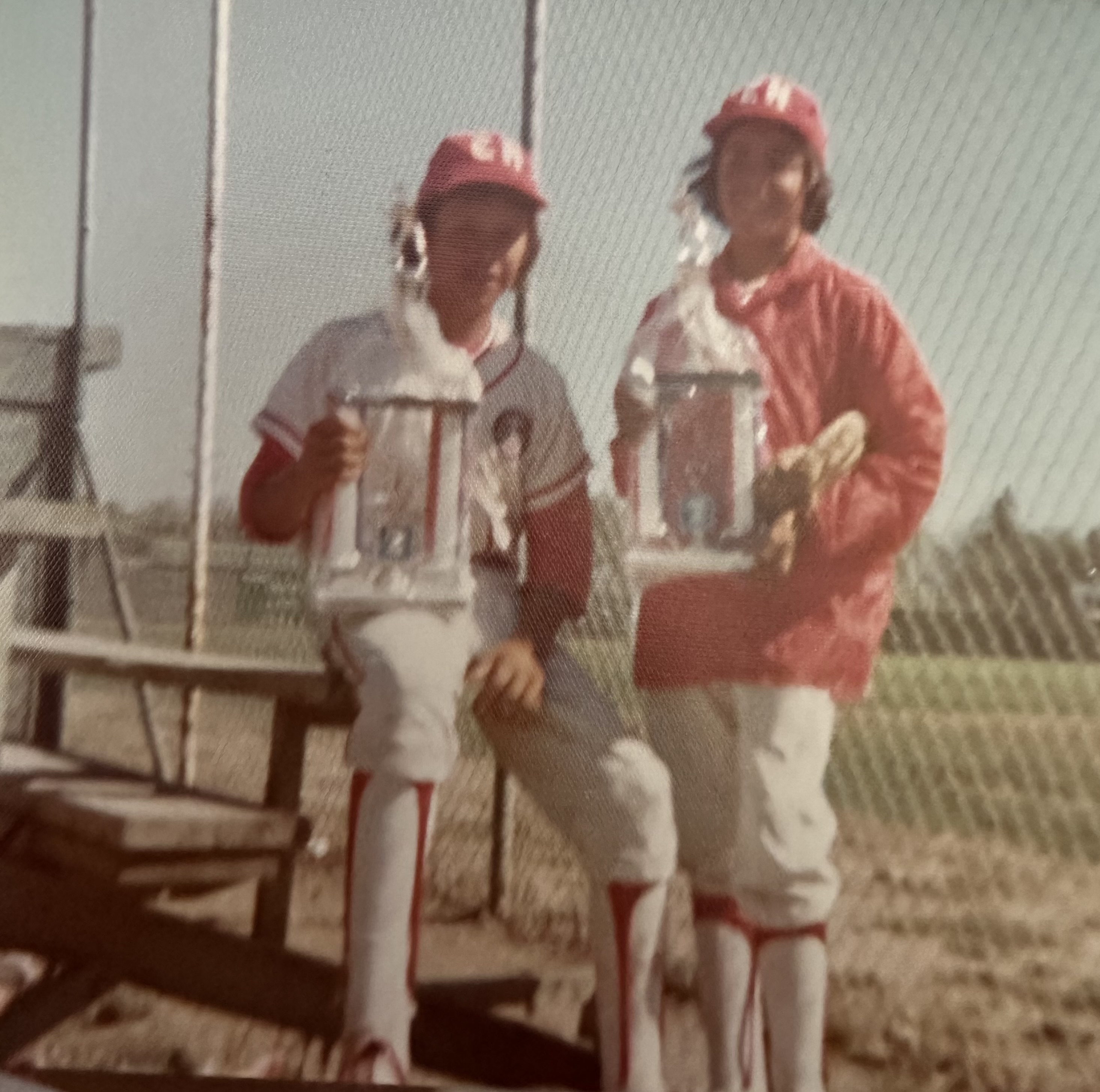
Co-Captains of the East Hills Little League Major Division Champions ~ 1976

This is the second installment of ESEReport.com’s Second Chances blog series.

***

 My grace is sufficient for you, for my power is made perfect in weakness. ~ 2 Corinthians 12:9

***

It was the summer of 1976, my last season playing on the East Hills Little League baseball fields. Those were the days when team names were those of sponsors that paid for uniforms. Instead of displaying Giants, Athletics, or Mets logos, our uniforms showcased Mervyn’s Department Store, Fontanetti’s Sporting Goods, Anello Trucking, and other local businesses and organizations. I played for the East Valley Lions Club, the major division “Red” team. We wore red caps with white “EH” ironed onto the front. 

The major division diamond was on the campus of August Boeger Middle school on the east side. The field was a miniature version of professional stadiums with a large backstop, pitcher’s mound, grass and dirt infield, press box with PA system, electronic scoreboard, and home run fence. It was like playing in the big leagues. Kids playing in the younger farm and minor divisions couldn’t wait to play on that prestigious field. 

I had a great season in 1976. I was named co-captain of the East Valley Lions and selected to be on the All-Star team. Coach called on me to be the starting pitcher for the league championship game against Anello Trucking, the “Blue” team. It was a warm June evening and the old wooden bleachers were filled with cheering family and friends. Dad sat at his regular spot at the top of the stands calling pitches from his perch. Mom sat faithfully by his side.

I don’t remember anything about the game. Not one pitch. Not one play. Not one at bat. I do vividly remember what happened after the last out that sealed our victory. Coach ran onto the field toward the pitcher’s mound and lifted me into the air with a big bear hug. My teammates were excitedly jumping up and down around us. 

I instinctively looked toward the top of the bleachers behind the dugout. Dad was standing and looking back at me with a smile of pure pride and joy. Mom had her usual expression of modest delight regardless of the game’s outcome. Dad’s smile was out of this world. He was a charismatic man. His outward display of confidence and his infectious grin could fill up any space he was in. 

Dad also had a menacing scowl when he was unhappy or disappointed. His furrowed brow, pursed lips, and nod of disapproval was like kryptonite to me. It sapped energy from my being. Dad had a hard life. His father died when he was just a boy. His bitter mother raised six kids in a wooden shanty with a dirt floor. He experienced the horrors of WWII as a teenage sailor in the U.S. Navy. He saw the world in stark practical terms. Success requires doing things “right.”

Mom was an only child raised by her single mother and grandmother in a small, but loving home. Despite living in relative poverty, her upbringing relied on faith and hope for a better tomorrow. She was yang to Dad’s yin. She always found good in everything. If something unfortunate happened, well . . . that was just God’s will.

Those deeply held views that my parents had about themselves, others, and the world are what psychologist Aaron T. Beck referred to as “core beliefs” in his groundbreaking development of cognitive therapy. Core beliefs are basic lifelong “truths” that a person develops about himself or herself, people, and the world. They usually develop from childhood or through traumatic life experiences. 

In other words, our understanding of how the world is supposed to work comes from hearing and watching what our parents and other influential people (i.e. older siblings, friends, teachers, coaches, bosses) around us say and do. Positive core beliefs can lead to a happy, productive, and balanced life. Anxiety and depression caused by negative core beliefs can lead to a downcast, deprived, and disorderly existence. 

My parents sought to create an environment for their children to thrive as adults. Dad’s core belief that the world is a harsh place that can be conquered by adhering to his formula for success made it plain that no matter how hard we worked, we could always do better. Mom’s core belief that all is well that ends well with God’s grace inspired a sense of confidence that we would thrive with the gifts provided by God. 

Together they instilled into their kids the combination of having to constantly do better and believing they have the talents to succeed at anything they try. This seemed like Mom and Dad had the ideal formula for developing strong, confident, and productive members of society. On the surface, it appears as though they accomplished their mission. But it came at a heavy emotional and mental cost to me. 

I can’t speak for my siblings, but the drumbeat of “you can do better” and “mijo you’re the best” set the expectation bar so high for me that it was unreachable. In my mind, no matter what I did in life, it would never be enough. That led to an almost insatiable drive to succeed. I would do anything to exceed my parents’ hopes and dreams for me, whatever those may have been. 

It’s no surprise that I grew up to be a pleaser. Psychologists refer to extreme cases of this condition as Sociotropy or Dependent Personality Disorder. People with pleaser tendencies put too much emphasis on social acceptance. Their behavior is a way to boost self-esteem and avoid the perception of failure. Ultimately, those who suffer from the need to be accepted and validated live with the sense of never being or doing enough to meet their own unrealistic standards based on untrue core beliefs.

This can be damaging to mental and emotional health. Although I’ve never been diagnosed with Sociotropy or Dependent Personality Disorder, my thirst for acceptance and approval has caused me much pain and suffering. Over time, I transferred the desire to please my parents to wanting  validation from Sandra, our daughters, extended family, the community I served in public office, and professional colleagues. That’s why I might have almost worked myself to death.

The self-imposed core belief that I’ll never be enough has haunted me throughout my life. I’m not suggesting that Mom and Dad are guilty of setting off a domino effect of generational trauma. They were loving parents who did an amazing job setting their children up for a successful and happy life. The core beliefs my parents passed on to me have led to, by most accounts, a pretty good life for their youngest son, with the glaring exception of feeling inadequate. 

When I was in my Little League coach’s arms on the mound at the East Hills League field in 1976, little did I know that the seemingly insignificant act of glancing toward the bleachers and wondering whether my pitching performance was good enough to earn an “atta boy” from Dad would follow me for decades. Yet here I am trying to learn how to make sense of it all 48 years later.

That’s where faith, hope, and love come in. St. Paul wrote that God tells us, “my grace is sufficient for you.” As I navigate ever further into understanding faith and making mindfulness practice a priority, what really matters is slowly becoming more clear. On the surface of my psyche, I know that what I’ve done with my life so far is sufficient. However, I’ll most likely spend the rest of my life challenging my core belief that I need to do more and be more.

As Mom used to say, un día a la vez – one day at a time.