Tag Archives: Latino

La Directora: A Genuine Latina Leader

Hon. Carlos Ponce Martínez, Consul General of Mexico, (pictured with Directora Sandra García) visits Adelante Academy to plant a ceremonial friendship tree on Mexican Independence Day

Blogger’s Note: The following post is about my wife Sandra García.  I was initially reluctant to post it because Sandra is uncomfortable with the spotlight.  I post it at my own risk.

************************

Sandra García was always a good student.  She was 6th grade class president and student body president in high school.  Her mom once told me that she has always known what she wanted.  She wanted to be a teacher, then a principal; and she accomplished both.  Throughout her life, this east side girl has quietly exemplified what it is to be a leader.  On December 5th, she will be honored by the San Jose Silicon Valley Chamber of Commerce as the Outstanding Principal of the Year in the Silicon Valley

Sandra comes from a family with strong Latina role models.  Her maternal grandmother was a young widow who raised nine children teaching them the values of hard work and perseverance.  Sandra’s mom taught her daughters the value of education by participating in their school life during an era when the place for a Latina mother was in the home.  These two resilient women forged the foundation of Sandra’s leadership journey that complements her skill, talent, and experience.

I’ve written about how Bob Williams built a team of east side kids into a shoe selling machine at Kinney Shoes during the late 70s and early 80s.  I’ve shared with you how Chris Boyd provides the tools his team at Kaiser Santa Clara Medical Center needs to save lives.  Raised in a hard-working family with strong Latina role models, Sandra is a genuine leader who brings her own brand of compassion and determination to the leadership table.

A little more than a decade ago, Sandra, several colleagues, and a group of parents dreamed of building a Spanish-English dual language school on the east side.  After putting together a design team and getting approval from the school board, Adelante Dual Language Academy opened a year later with three teachers, and 60 kindergarten and first grade students.  Sandra has served as principal for all but the first year.  Her leadership style comes from the fortitude and nurturing handed down by her grandmother and mother.

Sandra is a stickler for high standards (how she ended up with me begs that question and is fodder for another post).  From the smallest household project to gigantic dreams like creating and building a school, she expects the best from herself and those around her.  Anything less is just unacceptable.  Her passion for Adelante and its success is displayed on a daily basis whether she is coaching a teacher to reach higher, encouraging a student to achieve, or picking up an errant wad of paper littered on the ground.

For her, getting the job done is simply a function of good old-fashioned hard work.  I joke with friends that I didn’t realize how much Sandra worked until I stopped working.  If the girls and I really need her, we know where to find her.  On any given night, Adelante is teeming with students and parents on campus for a book fair, “Reading Under the Stars,” a sporting event, or a Dia de los Muertos student exhibit.  The Directora, as her students and parents affectionately call her, is on campus as well supporting her school community.

Like all leaders of a complex organization with many stakeholders, Sandra has had her share of problems and challenges at Adelante.  To overcome these challenges, business guru Patrick Lencioni says that leaders must have a “rallying cry” that keeps organizations focused on what really matters.  Adelante’s rallying cry is centered on student success, parent participation, and community cohesion.  With dignity and grace, Sandra ensures that all involved stay on course on a daily basis.

She’ll be the first to say that the honor bestowed by the chamber of commerce belongs to the students, parents, and faculty at Adelante.  And, she would be right.  Just walking around campus, you can see that students come to school every day ready to learn.  The level of parent support is unequaled for a public school and the teachers are passionate about their students.  Under her leadership, Adelante has become a bona fide east side institution.

All of this is reflected in the school’s academic performance.   Adelante is among the highest performing schools in the district as its standardized test scores have increased phenomenally during the past several years.  Its students have reached the finals in the state Mathematics, Engineering, Science and Achievement competition and the National Spanish Spelling Bee.  What started as a school of 60 students housed on another campus, now serves nearly 600 students on a campus of its own.

With the rise of charter schools and the launch of a new national curriculum for public schools called Common Core, education policymakers are once again grappling with the Latino academic achievement gap.  They could look at the Adelante formula of high standards, good teachers, and engaged parents.  At the helm is a genuine Latina leader who, like her grandmother and mother before her, expects excellence, isn’t afraid to toil tirelessly, and maintains her laser-focused eye on the prize.

Immigration Reform Will Strengthen American Values: The Fausto Peralta Story

Fausto Peralta with his daughters L to R: Shelley, Valerie, Sandra, Kimberley

For the past couple of weeks, cable television news coverage has been fixated on the latest in the Republicans’ irrational quest to dismantle the Affordable Care Act, better known as Obamacare.  Their arguments are baseless and filled with the hyperbolic language of fear that only comes from voices on the right.  These ideological zealots have tried to repeal Obamacare over 40 times, filibuster it (kind of), held the federal government hostage with a shutdown, and now are holding congressional hearings about its webpage launch.  It’s almost too silly to take seriously.

On the periphery of this circus, President Obama has announced his renewed effort to pass comprehensive immigration reform.  Second only to universal healthcare, immigration reform is perhaps the issue that will define the Obama legacy.  The GOP’s ridiculous preoccupation with destroying Obamacare may actually be a good thing for comprehensive immigration reform.  Keeping their focus away from immigration may give our nation a chance to discuss the issue without the typical exaggerated scaremongering from the Tea Party types.

The folks who vow to rid our country of affordable healthcare come from the same crowd that predicts the demise of American values and culture if immigration reform provides a path to citizenship for undocumented immigrants.  You may remember when their 2012 presidential candidate suggested that government policy should make immigrants’ lives so difficult that they will “self-deport.”  Nice try Mr. Romney.  The reason his argument fell flat is because immigrants embody the very values and culture that make this country great.

Our nation’s values were born during the American Revolution and memorialized in the Declaration of Independence.   From Jefferson’s assertion that all people have a right to pursue happiness to the civil liberties outlined in the Bill of Rights, American values are based on concepts of human dignity and freedom.  Nowhere in those seminal documents do the Founding Fathers proclaim that proficiency in English, a hearty appetite for apple pie, or being descended from western European stock are requirements for American values.

The basis for the American value system is simple – the belief in freedom, hard work, and the opportunity to succeed without regard to one’s station in society.  At best, those who believe otherwise don’t truly understand this concept of American values or may be stuck in the romantic notion that Norman Rockwell’s America defines who we are as a people.  At worst, they are racist xenophobes who won’t accept anyone who doesn’t look or sound like their definition of an American.

To illustrate how they have it wrong, the life of my father-in-law, a man I greatly admire, comes to mind.  Fausto Peralta was born and raised in a small town tucked in the mountains of Sonora, Mexico.  He came to the United States nearly 60 years ago as a teenager.  He settled in California’s central valley where he worked in the fields picking cotton and irrigating crops.  He met my mother-in-law during the late 1950s, married her a year later, and moved to San Jose for a construction job and a piece of the American Dream.

A cement mason who raised four daughters in east San Jose, he worked in construction during Silicon Valley’s biggest building boom.  He beamed with pride when my wife Sandra told him that she took most of her classes at San Jose State University in Sweeney Hall, the education department building he helped build during the 1960s.  His daughters’ lives symbolize the power of the American Dream.  All four are SJSU graduates: Sandra is an elementary school principal, one sister is an engineer, and the other two are a tireless community volunteer and SJSU human resources administrator.

My father-in-law is more comfortable speaking in Spanish than in English.  He would rather have rice and beans instead of a hamburger and fries for dinner.  When watching television, he is more likely to click the remote to Univision instead of CNN or CBS.  Those who fear immigrants and hold the false belief that our nation’s culture is rooted in language, food, and television habits would argue that my father-in-law doesn’t represent America or our national heritage.

Oh, how they’re wrong.  For over 50 years, he has worked hard, paid taxes, financed the education of four children, voted in elections from LBJ to President Obama, and gratefully struggled in his pursuit of happiness.  About eight years ago, on a family vacation in Washington, D.C., I watched this proud American walk into the White House for a tour.  Based on the concepts outlined by the Founding Fathers, my father-in-law exemplifies what it means to be American.

The face of America may be changing, but the soul remains the same.  Some newcomers may choose mariachi over jazz, tortillas over wheat bread, and the Pledge of Allegiance in Spanish over English.  Nevertheless, it’s clear that they believe in the values of liberty and justice that the pledge so eloquently brings to life.  They believe in the American Dream that my father-in-law embarked on over a half century ago.

To be sure, there needs to be a healthy debate about immigration.  I hope it happens before the peddler’s of fear divert their attention from trying to destroy Obamacare to alarming those Americans who unrealistically worry about the downfall of American values and culture caused by immigration reform.  The millions of people who, like my father-in-law, left everything behind to come to the United States already understand American values.  Passing Comprehensive Immigration Reform won’t lead to the decline of America; meaningful reform will make our values and culture even stronger.

East Side Eddie Report.com Special: Redskins, Cholos, & George Zimmerman

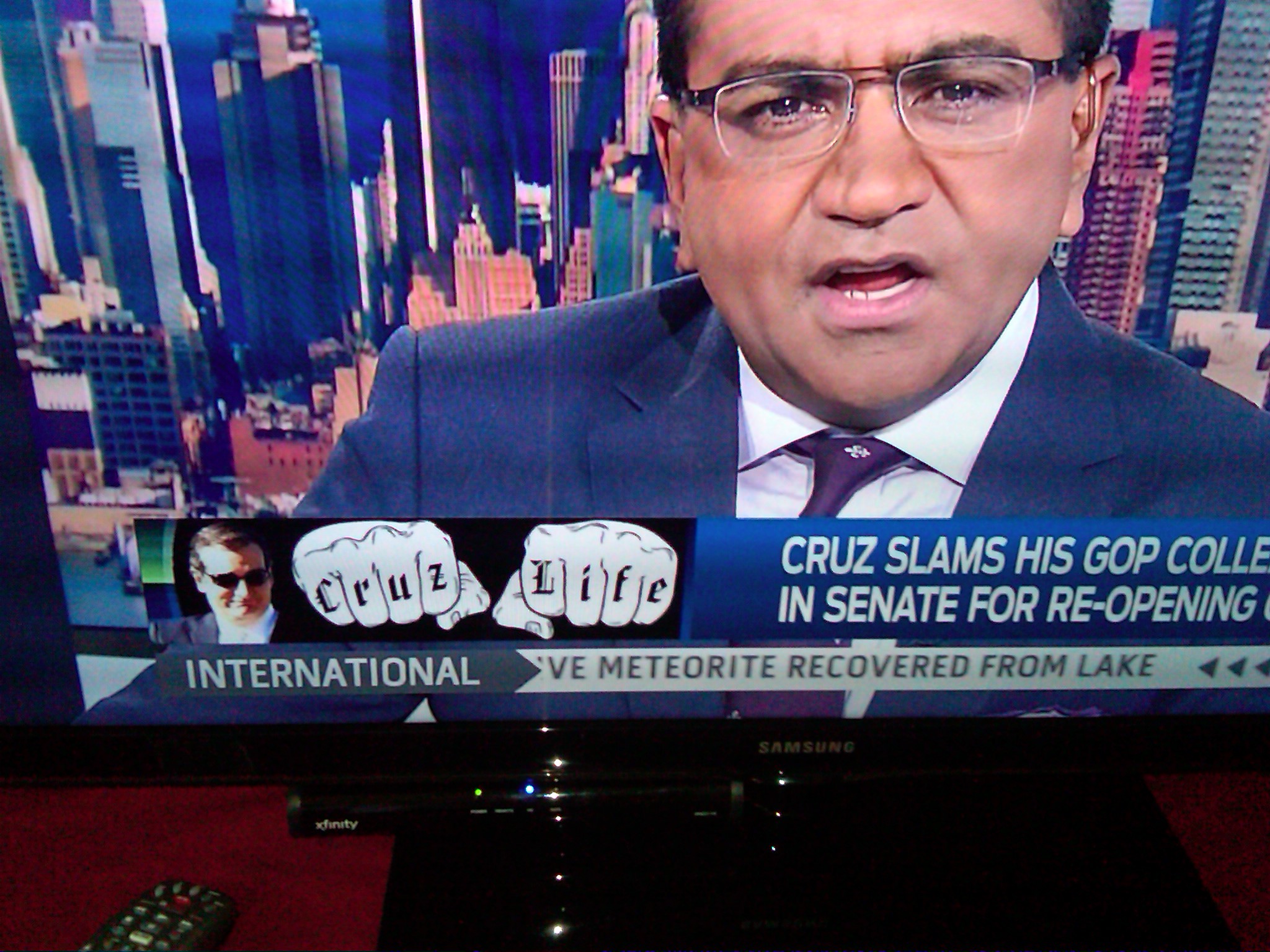
MSNBC host Martin Bashir

Although East Side Eddie Report.com is a weekly blog, every once in a while I feel compelled to post more than once a week.  This is one of those times.

Glossary

redskin – n. Offensive Slang. Used as a disparaging term for a Native American (American Heritage Dictionary, 3rd edition)

cholo – n. East Side Slang. A Mexican or Mexican American gang member; someone who dresses in the style of a gang member (East Side Dictionary)

George Zimmerman – n. A racist who got away with murder (Common Knowledge Dictionary)

Last week, I was watching the Martin Bashir show on MSNBC and the host was talking about how Texas Senator Ted Cruz is a thug who held Congress hostage for 16 days over a futile crusade to rid the country of Obamacare.  I love watching Bashir because he’s a brash critic of the conservative cause.  As I was relishing in his tirade against Cruz, a graphic on the lower left of the screen suddenly caught my attention.  It was a photo of Cruz in dark sunglasses next to a drawing of two clenched fists with the words “Cruz Life” tattooed in Old English font on the fingers.

A tattoo with an Old English font is the stamp of primarily Mexican and Mexican American cholos and “Cruz Life” is clearly a reference to the “thug life” gang culture coined by the late rapper Tupac Shakur.  Bashir obviously meant to portray Cruz as a Latino gangster bullying the United States Congress.  Of course I agree that the senator is a bully, but my first reaction to the interplay between Bashir’s commentary and his drawing was, “here we go again.”  It never fails that non-Latino America, even bleeding heart liberals like Bashir, use negative images to make a point about Latinos.

The old Chicano Studies student in me wanted to complain to MSNBC, call Bashir a racist, and start a protest.  Fortunately, I caught my breath, came to my senses, and gave this issue thoughtful reflection.   Why did Bashir use those tattooed fists?  Why was I disappointed in MSNBC, the bastion of liberal journalism?  Why didn’t America find it offensive?   I explored a variety of answers, and kept coming back to the notion that Bashir’s actions were another manifestation of “inherent bias,” a term I’ve used in other blog posts.

Technically, “inherent bias” is used by statisticians to measure something or other that is way beyond my intellectual abilities to comprehend.  The first time I saw the phrase in a sociological context was in a newspaper article about Santa Clara University students dressed as janitors, maids, and pregnant teens at a Mexican theme party.  Rather than racism, the university president believed the students’ actions were the result of an “inherent bias of Mexicans” due to negative stereotypes in the media.  He concluded that the whole affair was a “teachable moment.”

This brings us to redskins, George Zimmerman, and a teachable moment for Martin Bashir.

There’s a debate brewing about the Washington Redskins NFL team’s mascot.  The word “redskin,” like the “N word,” was used to oppress and humiliate; so Native American groups are calling on the team’s owner to change the name.  Outside of the Native American community, the liberal media has been the biggest advocate for the repeal of the Redskins’ nickname.  Martin Bashir is one of the loudest voices on this issue.  He understands the evil history and devastating effect the word has wrought on Native people.  Like Bashir, I would like to see the word “redskin” buried in the same cemetery as the “N word.”

Bashir was also at the forefront of exposing George Zimmerman for what he really is: a racist who used a badly conceived Florida law to murder Trayvon Martin for being a young black man wearing a hoodie in the wrong neighborhood.  While the right-wing and mainstream media camouflaged the race issues by focusing on the Florida law and who started the fight, Bashir and his liberal cohorts kept the spotlight on the racial biases that led to the “stand your ground” laws and their murderous by-products.  As with the Redskins debate; Bashir recognizes the wickedness of racism against Black Americans.

How could a progressive champion of people of color make such a faux pas with the tattooed “Cruz Life” fists?  If the president of Santa Clara University is correct, Martin Bashir’s experience with Latinos is limited to media portrayals.  Images of tattooed Mexican American gangsters creating mayhem are regular features on cable TV real crime story shows.  So when Bashir wants to make the point that Cruz is a bully, he caricatures the conservative southern senator born to a Cuban father and Irish American mother as a Mexican American gangbanger in dark sunglasses with tattooed fingers.

This is problematic on many levels as it perpetuates the stereotype that Latinos are dangerous Mexican American gang members.  Combined with the conservative obsession to block immigration reform, Latinos are either cholos or “illegals” in the American consciousness.  I’m absolutely sure that this wasn’t Bashir’s intent with the graphic, but it surely was the result.  The only way to overcome these negative images is for leaders in the Latino community to use their influence to educate mainstream America on the dangers of unintentional actions due to inherent bias.

I don’t advocate protesting or publicly flogging Bashir or other progressives who fall into the same trap. He’s one of the good guys.  Rather, affluent Latinos should invest in more projects like “Latinos in America,” the brilliant three-part documentary aired on PBS, so Americans can learn about the Latino experience as we have come to understand the Native American and Black experience.  Influential Latinos in the media and Latino political leaders should take Bashir aside on the cocktail circuit and let him know why using the “Cruz Life” image wasn’t accurate or appropriate.

As a nation, it’s doubtful that we’ll ever be rid of the scourge of individual racism, but I believe that having honest and courageous conversations about race will minimize the negative effects of inherent bias.  This would be a giant step toward erasing negative and demeaning images of people of color.

Can Latino Students Achieve?: Part II

a7df0b5123

Last week’s post about the Latino student expectation gap struck a few chords with readers.  Most commentators voiced support for raising student expectations through equity policy and culturally relevant training for educators.  They ihttps://esereport.wordpress.com/wp-admin/index.phpncluded college professors, education administrators, and parents of school-aged children.  Others shared their own stories of how they overcame the barriers created by the inherent bias of the Mr. Jones Effect.

One reader especially caught my attention by challenging the notion that inherent bias in individuals and school systems result in low expectations of Latino students. The reader concludes that the Mr. Jones Effect isn’t caused by bias, so “cultural relevancy is not as important as the ability to spot individual attributes.”  If this is a debate about the ideology of rugged individualism vs. institutional intervention, the reader’s argument would be cogent and sound.

However, this isn’t an issue that can afford to be caught up in the quagmire of ideological debate.  One just needs to look at the current paralysis of the federal government to see that ideological sparring isn’t productive.  This issue is about raising expectations and accountability, allocating resources, and providing access so Latino students have an opportunity to achieve academically in our increasingly competitive world.

Let me explain.

The reader stated that individual student success is “still about [the school system] providing equal opportunity, plain and simple.”  Makes sense, right?  With equality, every student receives the same resources and access.  The problem is that not all students are born equal.  The child of a Beverley Hills heart surgeon has a dramatic advantage in resources and access to quality education compared to the child of an East Los Angeles landscaper.   So, providing equal opportunity in the school system actually widens the resource and access gap.

With that said, the school system should provide an equitable opportunity to all students.  Equity is the concept of allocating resources and providing access to where they’re needed, not equally, or the same, across the board.  Governor Jerry Brown’s recent schools funding mechanism is an example of assigning resources equitably.  Local school districts should allocate their newly gained resources in the same equitable manner to level the playing field for Latino students.

This brings us to culturally relevant training.  The reader raised valid issues when he asked the following questions about Mr. Jones: “Did he not care?” “Was he being racist?”  “Was he culturally biased? “  “Was he even trained to assess human potential?”  Of course, only Mr. Jones himself can accurately answer those questions, but I’ll take a stab at answers: I believe he cared, I don’t think he was being intentionally racist or culturally biased, and he probably wasn’t trained to assess human potential. There’s a good chance, however, that his unintentional inherent bias was trained to pre-judge a student’s potential based on race and socio-economic background.

That’s why culturally relevant training for school board members, administrators, counselors, teachers, and staff is so important.  Conservative critics will dismiss this as another minority as victim feel-good program.  They’re wrong.  Culturally relevant training is about individuals and school systems coming to terms with their own inherent biases to view Latino students as distinct human beings that should be expected to achieve in a rigorous academic environment like everyone else.  In short, educators will be “trained to assess human potential,” and not assess students on their own perception of Latino potential.

In the final analysis, the reader and I are on the same page with respect to Latino student academic achievement.  We both want high standards, accountability, and personal responsibility.  He stated it perfectly by saying that public education is “also about making sure that educators know that they are in the human potential business.”  As the Latino population continues to grow at an exponential rate, the future of California and, in the long view, the future of our nation depends on Latinos to be successful.

Latinos, like all human beings, have the capacity to learn and achieve.  Individuals need to capitalize on that fact and institutions need to allocate the resources and provide the access to provide a level playing field so that individuals can achieve their potential.  Engaging in ideological debate over whether the individual or institution is responsible for one’s success is fruitless.  As another reader eloquently commented, “I’m for action…No talking; let’s do.” I agree.  So, let’s get on with it.

Can Latino Students Achieve?

(Stock Photo)
(Stock Photo)

The school year is in full swing and once again the education community will engage in the age-old question, “Why can’t Latino students close the academic achievement gap?”  A parade of education experts and sociologists will tell us that poverty, language barriers, gangs, drug and alcohol use, and indifference are the root causes.  Of course, these challenges do exist.  Most Latino students, however, come from hard-working families that want a better life for their children.

The simple analysis that all Latinos are mired in poverty, substance abuse, and a culture that does not value education is part of the problem itself.  Former California State Superintendent of Schools Jack O’Connell calls this phenomenon the “expectation gap.”  In his 2007 report, “Closing the Achievement Gap,” Superintendent O’Connell was one of the first high-profile statewide education leaders to acknowledge that school systems “do not always reflect and are [not] responsive to the diverse racial, cultural backgrounds, and needs of its student populations.”

San Jose State University adjunct professor of education Glenn Singleton puts it more bluntly in his book, Courageous Conversations About Race, where he says that students of color are “viewed by the school system and the larger society as a problem,” which results in the common belief in “their inability to thrive in ‘mainstream’ society.”  I’ll share a few of stories that illustrate Professor Singleton’s point.

The first story is about my high school guidance counselor.  I don’t want to use his real name, so let’s call him Mr. Jones.  I wasn’t a stellar student, but I passed college prep courses and did well on the SAT, so I was eligible to apply to San Jose State University.  During senior year, Mr. Jones advised that I consider learning a trade as he did not believe that I could meet the rigor of college.  He provided no further explanation.  Lucky for me, my parents had higher expectations.  Those not so lucky were certainly negatively impacted by the counselor’s guidance.  I call this the Mr. Jones Effect.

Almost 30 years later when I was a school board member at the East Side Union High School District, Latino students shared their versions of the Mr. Jones Effect with me.  Some counselors and teachers were discouraging them from even taking college prep classes, essentially institutionalizing their inability to be eligible for college.  When I was elected president of the school board I proposed the “A-G Initiative,” at the urging of a group of students called Californians for Justice, to make college entrance requirements the basic curriculum, thereby eliminating the school system’s ability to discourage students from pursuing a college education.

This brings us to the third story.  Shortly after proposing the “A-G Initiative,” I began meeting with teachers to garner their support.  I was met with skepticism and doubt.  Teachers explained that the initiative was setting up students to fail because many of them came from poor households with language barriers and an indifference to school.  One math teacher, who happened to be Latina and an East Side grad, summed it up by telling me with sincere conviction, that “these kids just can’t do Algebra II.”  I was stunned!

Despite this opposition, the school board unanimously approved the “A-G Initiative” in 2010 with the leadership of the Silicon Valley Education Foundation and strong support from students, parents, and the community.   The Class of 2015 will be the first class in East Side’s history that every graduate is eligible for college.  Unfortunately, that alone won’t close the achievement gap so long as the institutional expectation gap persists.

My Mr. Jones story, similar stories three decades later, and some teachers’ low expectations of Latino students proved Singleton’s contention that school systems do not believe that certain kids can thrive.  Critics call the Mr. Jones Effect racial profiling at best and institutional racism at worst.  I don’t believe it’s either.  The problem is systematic and individual unintentional bias.  Regrettably, it doesn’t matter what the intent is, the result for Latino kids is the same.

There’s hope.  Superintendent O’Connell’s bold statements about race and education in 2007 have opened the door, however slightly, to the notion that education leaders and front-line educators need to have the courageous conversation about how inherent bias plays a vital role in how school systems educate Latino students.  Educational institutions must find a way to look past the poverty, language barriers, etc, etc. to develop strategies and solutions to help “these” students achieve.

There has been a simmering discussion about how to do this in academic circles from education thinkers.  Understanding that teachers need the resources to overcome the challenges they face on a daily basis, thought leaders like Dr. Linda Darling-Hammond, Dr. Edwin Lou Javius, and Singleton have long advocated for educational equity and culturally relevant teacher training.  Equity policy will move the resources to where they’re needed to support teachers and culturally relevant teacher development could help in the elimination of the expectation gap.

So, can Latino students achieve?  The short answer is “yes.”  First, education policy makers and administrators must have the courage to acknowledge that race plays a role in educating our kids.  Second, our leaders need to allocate resources equitably to ensure that teachers and administrators have the tools to help students succeed.  Third, school systems (school board members, administrators, teachers, staff, students, parents, community members) need to look deeply into how their own inherent biases affect our kids and how they could change their thinking so Latino students can thrive.

There is no silver bullet here.  It will take commitment and hard work.  We just need education leaders to take that first step by acknowledging the existence of the expectation gap and making equity policy/culturally relevant teacher development an integral part of their plans to close the academic achievement gap for Latino students.  Okay…let’s get started.  Who wants to be first?