Tag Archives: hiking

Mexican Heritage Plaza: A Symbol of Resilience and Perseverance – Chapter 4

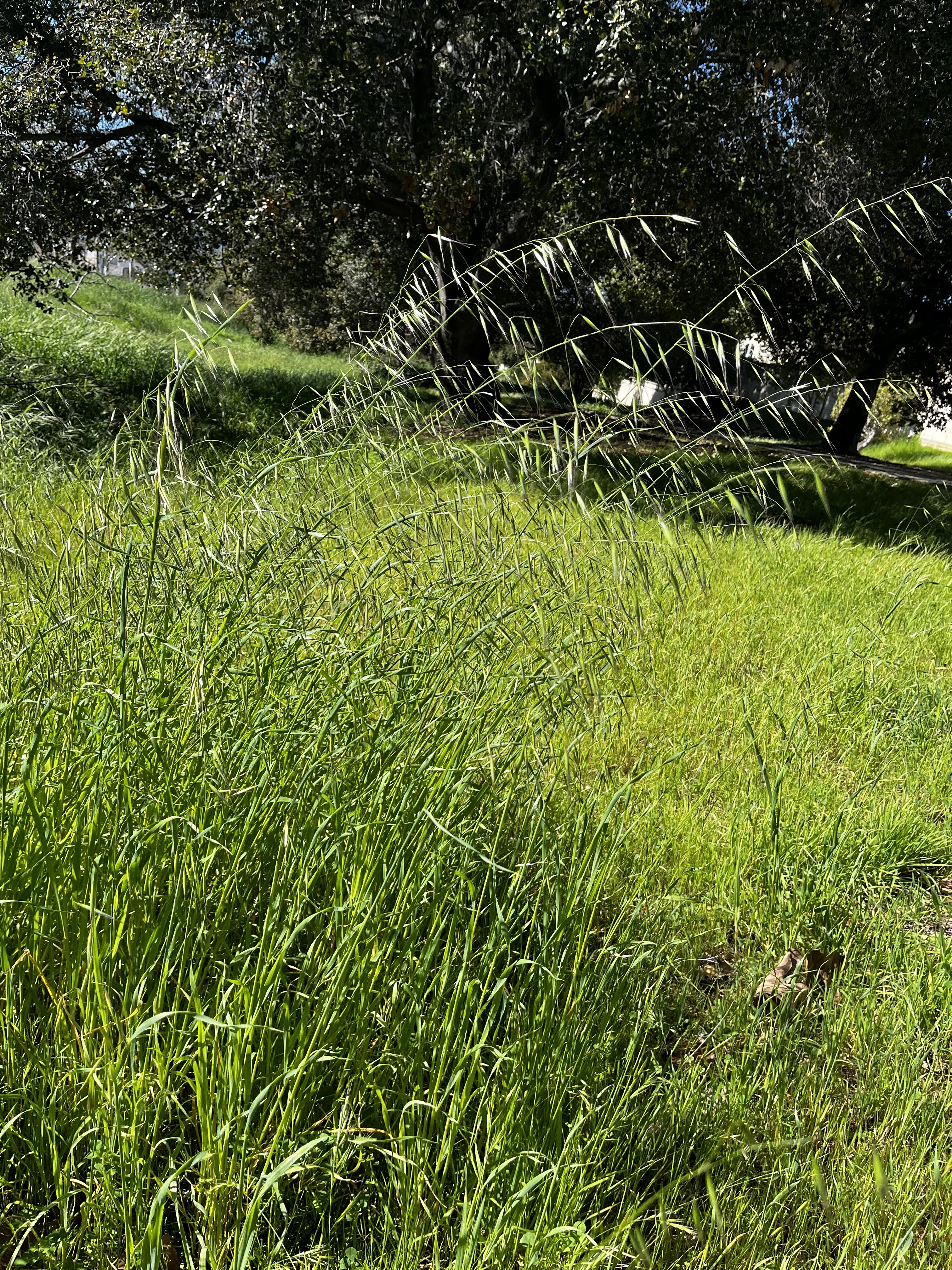
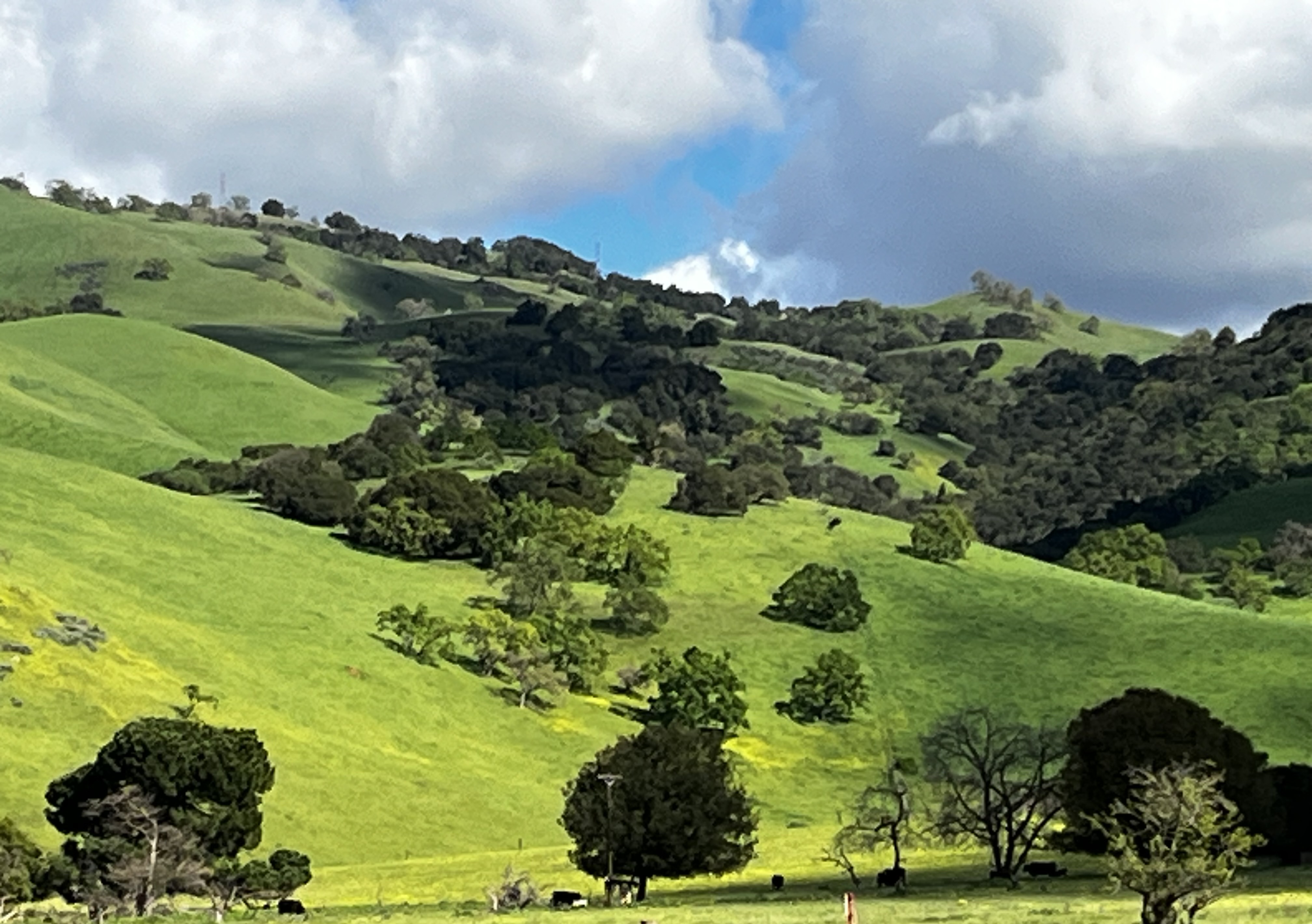
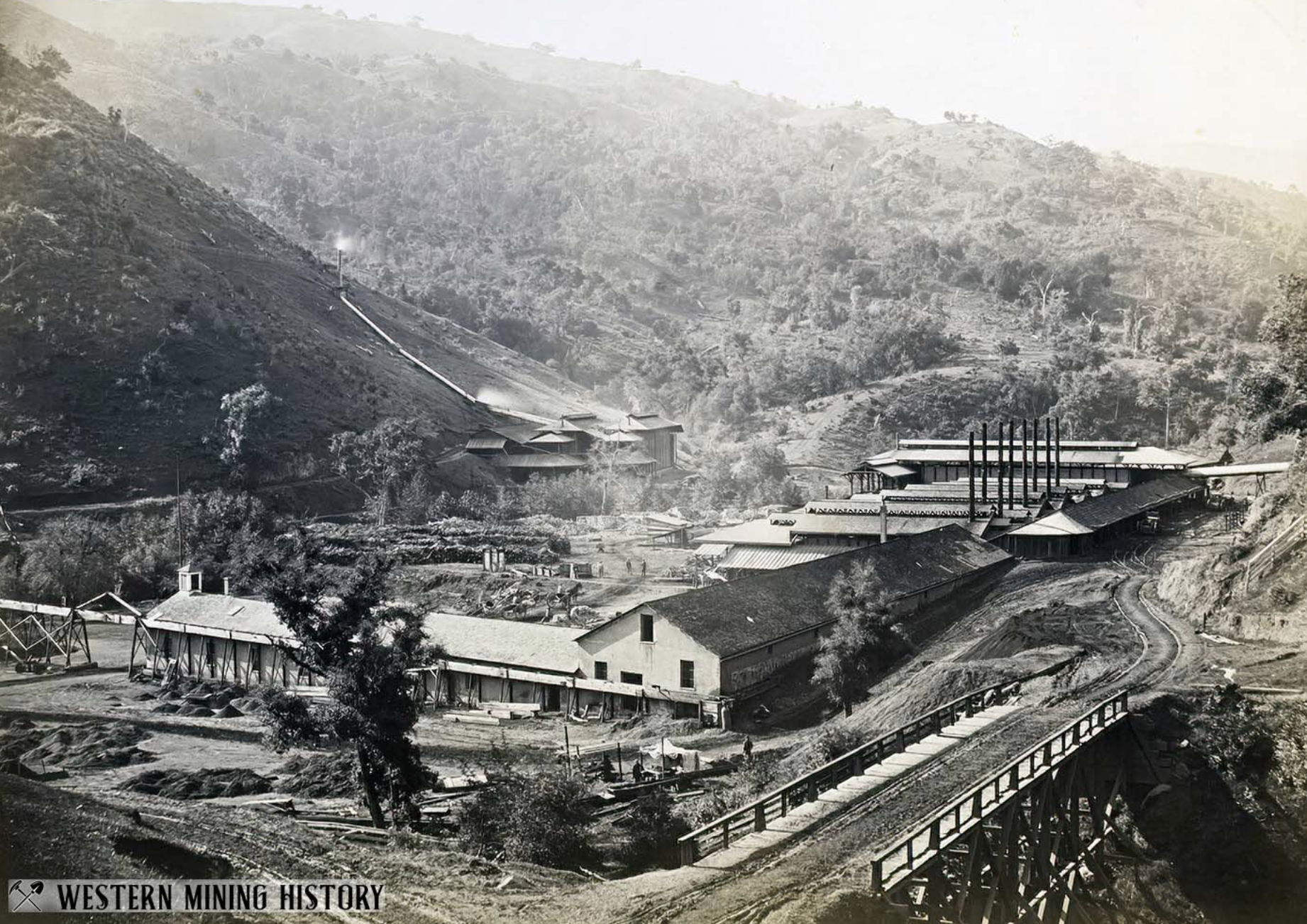
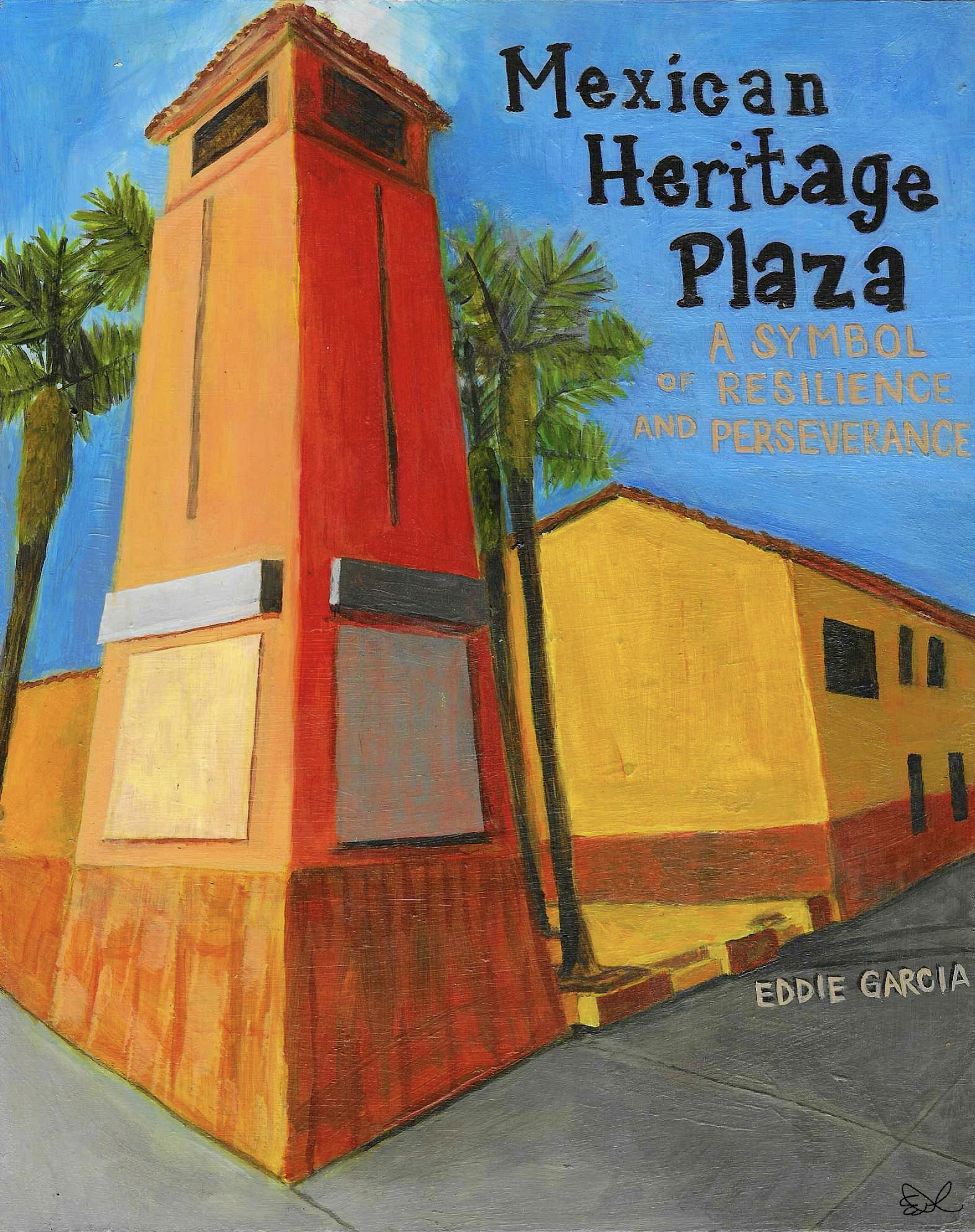
Photos L-R Clockwise: Avena Barbata, Eastern Santa Clara Valley Hills, Book Cover, New Almaden Mines ca. 1863 (image courtesy of westernmininghistory.com)

***

Chapter 4

Avena Barbata

This period of trial led to what may have been the earliest ethnic Mexican-organized labor activities in U.S. history.

~ Stephen J. Pitti, Author, The Devil in Silicon Valley

***

During the rainy season, avena barbata, also known as slender wild oat, is one of the natural grasses that blanket the green hillsides on the eastern slope of Santa Clara Valley. Before industrialization and the growth of Silicon Valley, this species of tall grasses swayed in the wind on hillsides and the valley floor as well.

During the dry season, the plant’s seeds fall to the ground, disappear into the soil, and become dormant. Some seeds can remain underground for three years before sprouting after the rains, growing to a height of up to four feet.

Slender wild oats are not native to the Santa Clara Valley or California. They originate from Asia and the Mediterranean Basin. According to botanists, the strain found in the Santa Clara Valley has the same genetic makeup as avena barbata, native to southwestern Spain.

The grass is also common in the Mexican states of Sonora and Sinaloa. Scientists speculate that Mexican settlers and ranchers introduced avena barbata to the valley in the 18th and 19th centuries to feed cattle and other livestock.

Green florets hang on the tips of a few branches that hold the seeds of the slim grass. When the wind flows through a field of avena barbata, unharvested seeds of the wild grass fly wide and far, settling into the soil below.

Botanists consider it an invasive species that outcompetes native grasses in the valley. Over the course of nearly 250 years, the slender wild oat has become more common in the Santa Clara Valley than native species.

Today, the eastern hillsides turn a lush green soon after a heavy rain. Although modern-day Silicon Valley is an endless landscape of asphalt, cement, and squat tilt-up buildings that serve the high-tech industry, avena barbata is everywhere.

During the spring, one can see tall grass on median strips, unkempt yards peeking through cyclone fences, and on open lots. Today, hiking trails in the Eastern hills cut through fields of avena barbata, gently undulating in a light springtime breeze.

The Mexicans who founded San José, along with the avena barbata they brought for the journey, laid the foundation for the settlement during its first 73 years. The resilient pobladores (Mexican settlers) and their descendants built a community, governed themselves, and survived floods, drought, and conflicts with Americans who squatted on their land.

Just as slender wild oats disappear from the valley floor every summer, ethnic Mexicans vanished from 20th-century published historical works about San Jose. Much like how slender wild oat seeds nourish the soil, generating tall strands of green grass after the rain, ethnic Mexicans sustained the valley’s development as ranch hands, agricultural workers, and miners.

During the 1820s, Secundino Robles, a Mexican American landowner born in Santa Cruz, was the first non-Ohlone to see cinnabar embedded in the hillside soil. Cinnabar is a bright reddish-orange mineral that the Ohlone used for thousands of years as paint for ceremonial adornments.

During a visit to the Santa Clara Valley in 1845, Captain Andrés Castillero, a military officer from México City and a trained geologist, chemist, and metallurgist, inspected samples of the red rocks at Mission Santa Clara.

His experiments confirmed that the stones were cinnabar, a mercury-based mineral found in quicksilver mines. Quicksilver, another name for mercury, is a chemical used by miners to extract gold from rocks. Castillero formed a mining company named Santa Clara.

Castillero did not benefit from the Gold Rush, which brought riches to mine owners. He returned to México in 1847 to seek funding to expand his operations, and the Mexican government called him to duty during the 1846-48 U.S. War with México.

Castillero ultimately sold the Santa Clara mine. The new owner, the Quicksilver Mining Company, was a Pennsylvania-based organization that dominated the global mercury market. It named the location Cinnabar Hill and renamed the company New Almaden Mines.

Not long after the Quicksilver Mining Company arrived on Cinnabar Hill, structural racism again reared its ugly head in Santa Clara Valley. Company policies ensured that the miners were financially beholden to the Quicksilver Mining Company.

Immediately, the Company began charging residents $5 per month to rent the houses miners had built and occupied. The new owners replaced the general store with a company store that sold food at a 75% markup.

Inspired by the Mexican victory over French invaders in Puebla, Mexico, on May 5, 1862, miners began organizing and sharing ideas to resist the Company’s policies. In late 1864, miners and their families began protesting management.

In his groundbreaking book, A Devil in Silicon Valley: Northern California, Race, and Mexican Americans, Yale historian Stephen Pitti wrote, “This period of trial led to what may have been the earliest ethnic Mexican–organized labor activities in U.S. history.”

Even in the face of withering structural racism, the fight on Cinnabar Hill demonstrated the resiliency and perseverance of ethnic Mexicans in San José. Against all odds, the courageous miners stood in solidarity to defend their families and honor, as hardworking contributors to the economy that sustained San José and the surrounding area.

***

Note: La Raza Historical Society Publications anticipates that Mexican Heritage Plaza: A Symbol of Resilience and Perseverance will be available on March 21, 2026.

Stay tuned!

Get Away From It All

I lived alone, in the woods, a mile from any neighbor . . .

~ David Henry Thoreau, Walden, 1854

* * *

I’m fascinated with the concept of mindfulness. According to mindfulness guru Jon Kabat-Zinn, mindfulness is “paying attention, on purpose, in the present moment, non-judgmentally.” It first came to my attention about 20 years ago as a fellow with the American Leadership Forum, a national leadership organization with a chapter in Silicon Valley. At the time, I was an ambitious corporate climber and aspiring civic leader. I had places to go, people to see, and things to do. My mind swirled with ideas about the future. I didn’t have time to live in the “present moment.”

Too bad for me. According to the National Institute of Health, the benefits of the practice include reducing anxiety, improving sleep, lowering blood pressure, clearing the mind for better decision-making . . . the list goes on and on. Six years after becoming a Senior Fellow with the American Leadership Forum, my mind was cluttered, I was anxious, I didn’t sleep well, and my blood pressure was soaring.

Since a massive heart attack, living a decade with heart failure, and a heart transplant rocked my world, I’ve been fascinated with the concept of mindfulness. An amazing therapist with the Kaiser Santa Clara advanced heart failure team reintroduced the idea of mindfulness to me. Good for me. I no longer had places to go, people to see, and things to do. I read a bunch of books, had great conversations with my therapist, and subscribed to the Calm App to learn more. The more I learn, the more fascinated I’ve become. 

One of the books I read is an American classic, Walden by David Henry Thoreau. It’s a beautiful book about the author’s experience getting away from it all by living in the woods for 2 ½ years by himself. He describes in graceful detail the wonders of the natural world. His observations of a blue jay or sycamore tree take paragraphs to describe. The book is really hard to read unless you’re mindful of every word. Thoreau’s point is clear. There’s more to life than hustle and bustle.

The first sentence captured my attention. He writes, “I lived alone, in the woods, a mile from any neighbor.” What he describes is in the middle of nowhere. His only connection to civilization was the “sound of a locomotive” far off in the distance arriving in the nearby town of Concord, Massachusetts. Otherwise, the surrounding woods were so quiet he could hear every faint sound nature makes. 

As I was reading the book, I had a hard time believing that he was that secluded. The center of town was 1.6 miles from Walden Pond. That’s not very far. I couldn’t imagine being in the boondocks a mile and a half from my house. While Thoreau’s prose is elegant and vividly descriptive, I couldn’t help but call “bullshit” that he was that close to town, yet completely isolated. 

I know, I know. The stuff that runs through my mind seems silly and inconsequential. BUT . . . come on Mr. Thoreau!

As I pulled into the parking lot at the entrance of Alum Rock Park the other day, I decided to test the accuracy of Thoreau’s description. Alum Rock Park sits in a rugged canyon in the foothills east of San Jose. It has many trails that lead deeper into the canyon and into the hills that surround the canyon floor. I thought it a perfect place to experiment with the idea that one could be isolated less than two miles from “civilization.” 

From the parking lot, I started at the trailhead of the Penitencia Creek Trail that winds its way into the park. My goal for the hike was to pay attention to the nature around me on purpose, in the present moment, and without judgment. Once I was 1.6 miles away from the parking lot, I would survey my surroundings to determine if Thoreau’s representation of his surroundings was convincing.  

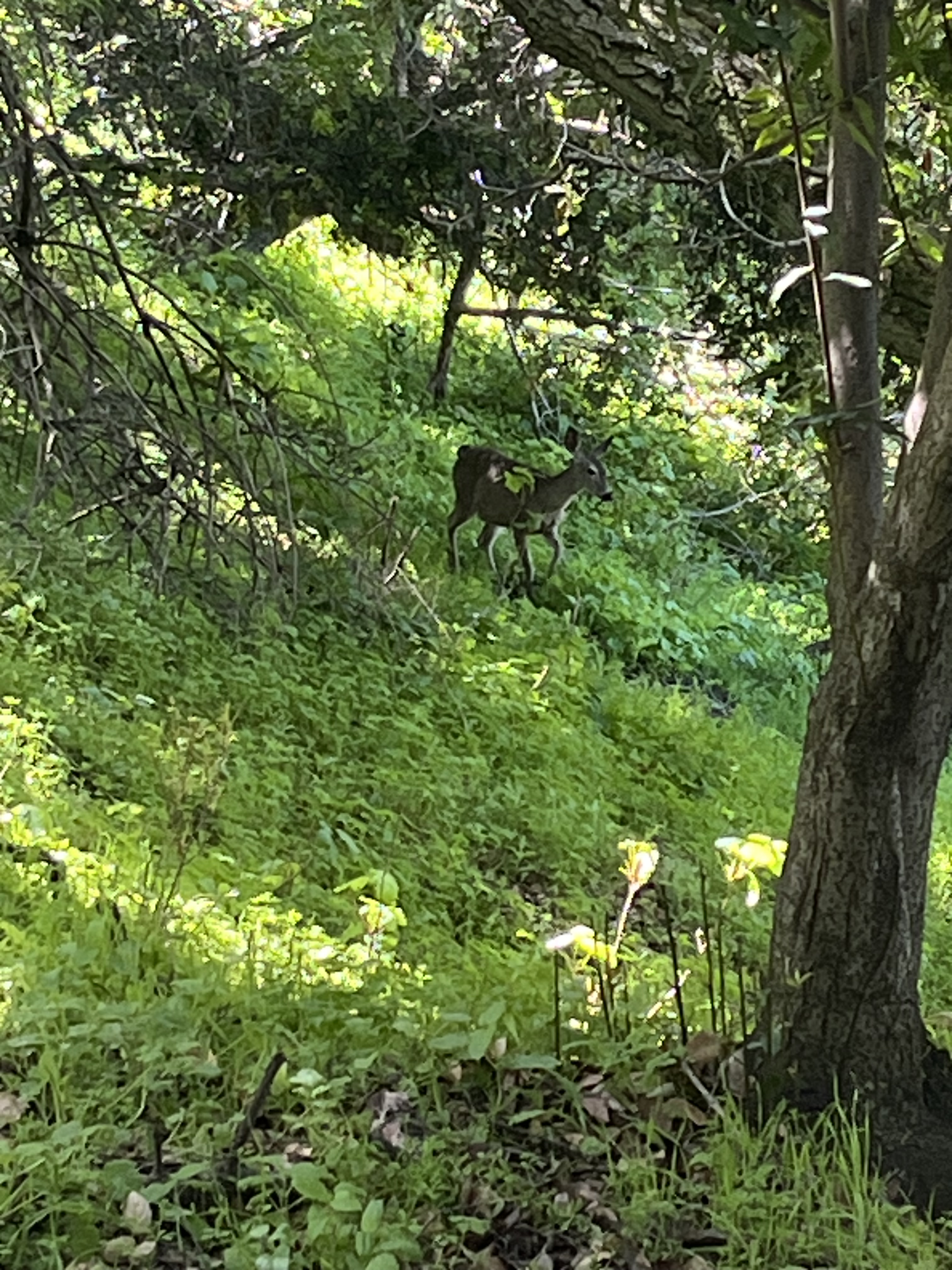
Walking along the creek, I immersed myself in the sights and sounds of the trail. The rainy season turned Alum Rock Park into a beautiful canvas of many shades of green. The hillside is cluttered with uprooted trees and stray branches thrown about most likely from storms. Carpet-like grasses and thin tree limbs swayed in the wind while a couple of deer nibbled on leaves in the distance.

I initially thought that nature sounds playing in my airpods would be a cool soundtrack. No music. No podcasts. After a few seconds, I realized that it was a dumb idea of a typical 21st century Silicon Valley man addicted to electronic devices. The more I thought about it, the sillier it sounded. I chuckled at my total disregard for mindfulness. Water running through the creek, small pebble gravel crunching under my hiking boots, and birds chirping were the only sounds I heard as I walked. 

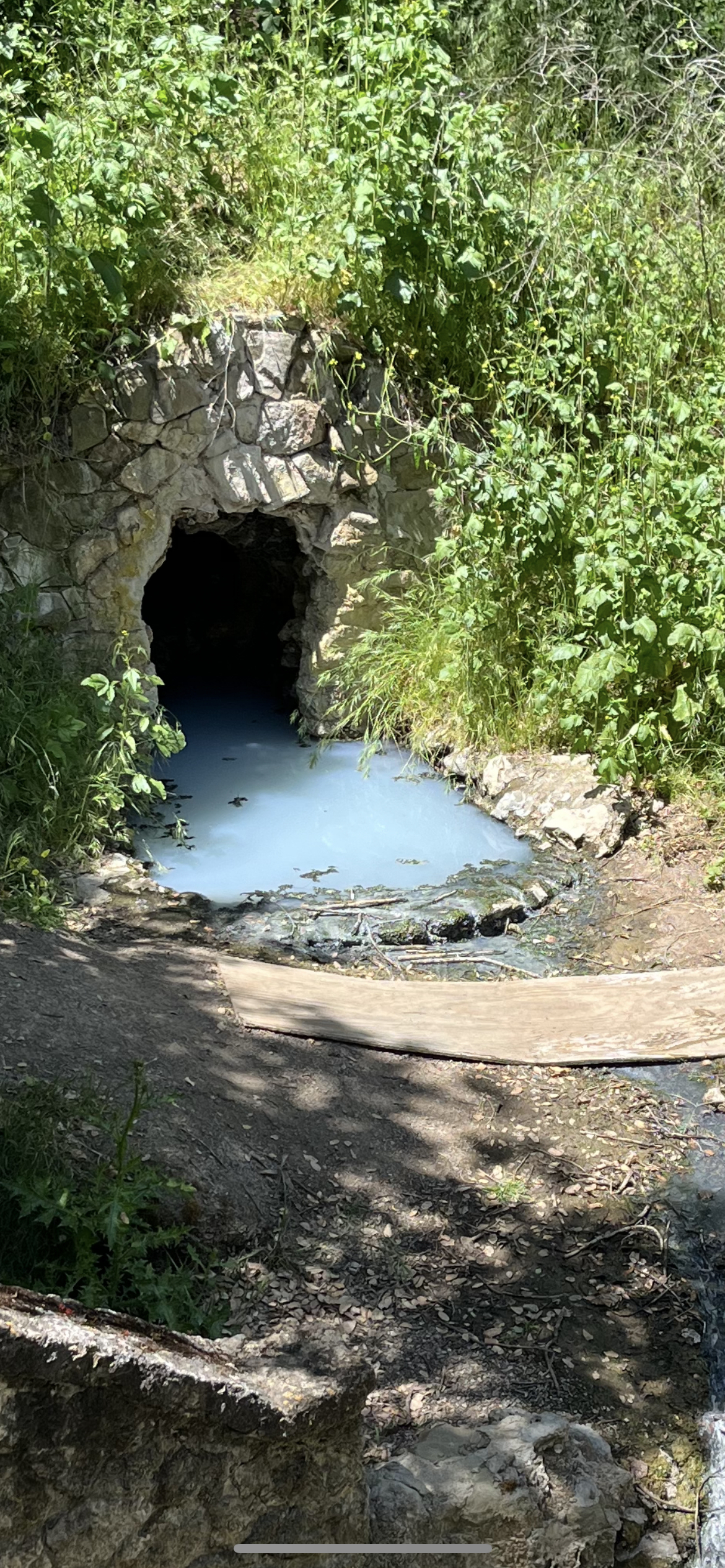
Finally, I stopped at the ruins of mineral springs from a bygone era of the park. From the late 1800s to the 1930s, people flocked to Alum Rock Park because they believed that the mineral water there had healing effects. I was standing 1.6 miles from the trailhead parking lot and the housing development nearby. Looking around, I saw squirrels scurrying about, a couple of quail trotting across the trail, and a vulture gracefully gliding high above the ridge line of the canyon looking for lunch.

I was in the middle of nowhere! 

Birds were singing and chirping, the creek was babbling, the sound of wind blowing through the trees brought an indescribable peace and calm to my being. Like Thoreau’s “sound of a locomotive” in the distance, the only sign of civilization as I stood 1.6 miles from a neighborhood was the faint roar of a jetliner departing San Jose Mineta International Airport flying high above to an unknown destination.

I hiked a little further into the canyon before turning around to head back to the parking lot. The return journey was also filled with wonder. The sounds of singing birds, animals scampering in the brush, and rushing creek water were louder and more distinctive. I was admiring a family of ducks paddling in the creek when I noticed a vulture flying right at me. I smelled myself and checked the heartbeat on my Apple Watch just in case the vulture knew something I didn’t know. To my relief, the large bird landed on a tree branch with a dead bird in its beak. 

What did my little experiment teach me? Thoreau was telling the truth. You could be less than two miles from civilization, yet be totally alive, clear-minded, and isolated from the noise of the world. Maybe, just maybe, the real truth coming from my experiment is that “paying attention, on purpose, in the present moment, nonjudgmentally” can put you in the same place even amid the chaos of life.

Hmm . . . I have some more work to do on this mindfulness stuff.