Tag Archives: food

Mexican Heritage Plaza: A Symbol of Resilience and Perseverance

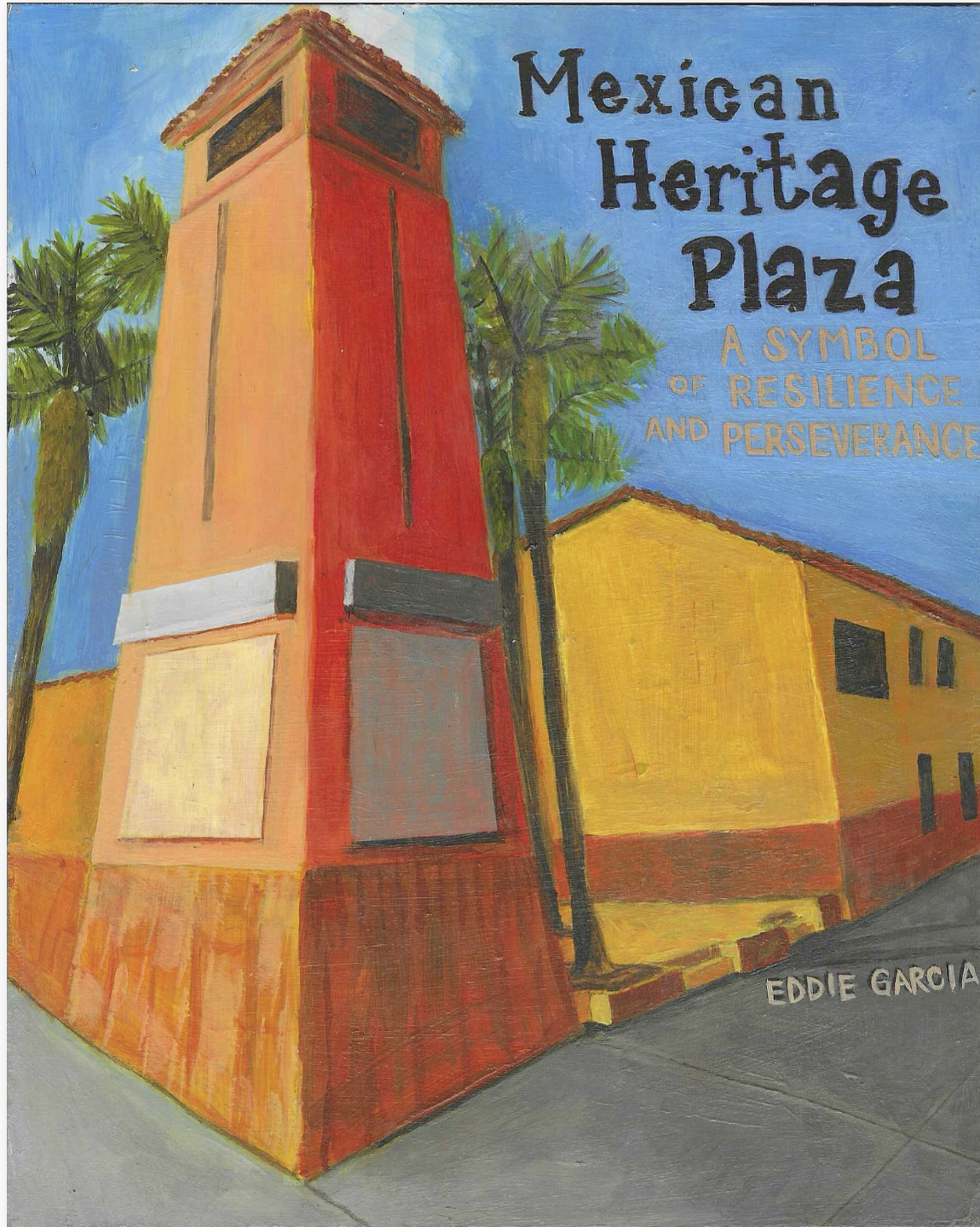
Cover design and artwork by Erica García — https://proyectoxtra.com/

My new book is titled Mexican Heritage Plaza: A Symbol of Resilience and Perseverance. La Raza Historical Society Publications is scheduled to release the book in Spring 2026. The prologue is reprinted below.

***

Prologue

September 9, 1999, was a beautiful day in San José, California. A large crowd gathered for the dedication of the Mexican Heritage Plaza, the city’s most ambitious neighborhood cultural arts project. Although the first day of autumn was less than two weeks away, clear skies, a light breeze, and a comfortably warm 74 degrees blanketed the plaza. There was a sense of excitement, accomplishment, and relief that this day had finally come. It was as if the gods conspired to make a perfect day for the much-anticipated consecration of a living and breathing monument to the city’s Mexican origins. 

When the 1,000 or so people settled into their seats, Santa Clara County Supervisor Blanca Alvarado stood and walked up the few steps onto the stage to address the gathering. The audience included San José’s political class, community activists, neighborhood leaders, and other guests. When she approached the podium, Alvarado opened her comments with equal parts passion and eloquence:

“To be here with you at this official dedication is to stand in awe and wonder at what we have accomplished in the spirit of community. To stand here is to feel free at last from the stinging rejection that so many of us have felt for being Mexican-American. To be able to speak our language and to experience our cultura in its many forms is to acclaim our right to be.”

With that opening flourish, Alvarado brought to life recognition of the city’s Mexican roots, which white Americans had dismissed since their arrival in the late 1840s.

***

The first human beings to occupy the land that is now San José, California, were the Ohlone people. They descended from nomads who migrated across a land bridge that connected modern-day Asia to North America in search of food and game about 15,000 to 30,000 years ago. Archeologists believe that descendants of those wanderers settled in what is now the Santa Clara Valley 4,000 to 10,000 years ago. 

In January 1777, Franciscan friars established the first European settlement in the valley by founding Mission Santa Clara de Asis. Eleven months later, a group of settlers representing the Spanish king founded El Pueblo de San José de Guadalupe just east of the river that dissected the two communities. Although they settled on the eastern bank of the Guadalupe River as subjects of Spain and under the orders of the Spanish government, all 66 people who established the camp were born in modern-day Mexico. Contrary to assertions by 20th-century San José historians and those who claim to be descendants of the settlers, members of the 1777 group were most likely not culturally Spanish. They were ethnically Mexican.

Since its birth as a European-style civil settlement, San José has been a community with a rich Mexican history. From its founding in 1777 to 1822, the town was a colony of the Spanish Crown. The Mexican Empire and its successive governments ruled the people of San José from 1822 until the United States acquired the pueblo as spoils of war in 1848. With the influx of Americans traveling to California in search of fame and fortune during the Gold Rush of 1849, San José began its slow ascent as an industrial city. First, with quicksilver mining in the Almaden Hills, and later, with the robust canning business tied to the agricultural boom that created the Valley of Heart’s Delight. 

During that time, Mexicans worked the mines, cultivated grain and vegetables in the fields, and harvested the fruit trees that blanketed the valley floor and hillsides. Civic leaders and 20th-century San José chroniclers have spent nearly two centuries trying to erase that history. Through the 20th century, the handful of scribes who wrote about San José’s history ignored the ethnic Mexican experience. While historians, professional and otherwise, erased ethnic Mexicans from published historical works, the Mexican community of San José continued to thrive.

Beginning in the early 1950s, ethnic Mexicans unsuccessfully attempted to establish a cultural center to celebrate the city’s Mexican birthright. Proposals from the 1950s, 1960s, and 1970s faced institutional roadblocks, financial challenges, and community divisions. Ultimately, none of these projects progressed beyond the idea phase. Despite efforts by generations of San José’s ruling class to marginalize the contributions of ethnic Mexicans to the city’s development, a group of Mexican American civic leaders overcame seemingly impossible odds in the 1990s to build a state-of-the-art Mexican cultural center that would become a symbol of Mexican American resilience and perseverance.

Eat Better!

April 16, 2023 – Celebrating the 3rd anniversary of my transplant

If you don’t like something, change it. If you can’t change it, change your attitude. ~ Maya Angelou

***

There was a time when my concuños and I played food games. First of all, concuño is a loose Spanish translation to describe my sister-in-laws’ husbands. Since Sandra has three sisters, we are four concuños. In our 20s and well into our 30s, we had friendly eating competitions. Two such contests stand out in my mind: eating donuts and consuming outsized hamburgers.

On any given Sunday, we would be hanging out at our in-laws’ house doing nothing but hanging out. Someone would say, “let’s get donuts,” and the race was on. Knocking out three or four of the tasty mouthfuls of deep fried flour and sugar wouldn’t be unusual for me. Guzzling a tall glass of whole milk was the finishing touch. I forgot to mention that it was usually after an afternoon of eating barbecue pork ribs and drinking beer.

Then there was the time we challenged each other to eat a Monster Burger at Red Robin. This 1,220 calorie behemoth includes a ½ pound of ground beef and exceeds the daily recommendation of fat and sodium. Of course, we washed down the burger with a side of bottomless steak fries and a 24 oz. beer. My stomach was on the verge of bursting as I breathlessly waddled out of the restaurant. 

Yeah, it all sounds pretty gross to me now.

Both of my parents had heart attacks in their 50s and I had been dealing with high cholesterol  since my late 20s. In addition to bad genetics, my childhood diet was high in fat, fried foods, and salt. Fresh veggies were in short supply. So the obvious question about those silly eating contests is: “What the hell was I thinking?” Sadly, the short answer is arrogance and very little understanding of heart disease. 

I thought that exercising regularly would protect me from the fate that fell upon my parents. There were a couple of problems with that thinking. First of all, my exercise regimen wasn’t consistent. I would go through short periods of regular workouts and much longer periods of no exercise at all. More importantly, I completely dismissed the importance of diet. The irony of my 2010 heart attack symptoms starting at the gym is not lost on me. 

Since 2010, I set out to learn as much as possible about heart disease to take care of my damaged organ and encourage others to do the same. On the heels of my 2020 transplant, taking care of my new heart and inspiring people to learn about the disease have become a passion. As a volunteer for the American Heart Association (AHA) last year, I became acquainted with its Life’s Essential 8 checklist. 

According to the AHA, “Life’s Essential 8 are the key measures for improving and maintaining cardiovascular health. Better cardiovascular health helps lower the risk for heart disease, stroke and other major health problems.” As the old saying goes, “if I knew then what I know now . . .” I’m sure you know where I’m going with this. Unfortunately, I didn’t know then what I know now.

Life’s Essential 8 focuses on two major areas: health behaviors and health factors. Health behaviors are things you do that impact health. They include diet, substance use, sleep, and physical activity. Health factors include genetic conditions, education and income levels, and personal medical history. Improving health behaviors can minimize life-threatening health factors.

It turns out that my strategy to exercise my way out of an inevitable heart attack fell way short of what I needed to do to protect myself. In fact, number one on the Life’s Essential 8 checklist is to eat better. The formula is pretty simple. Fresh fruit and vegetables, whole grains, lean meat, legumes and beans, and nuts are good. Alcohol, sugar, salt, trans-fat, processed food, and fried foods aren’t so good. Learning to read nutrition leaves can help manage this.

Sounds easy enough. Hmmmpf! Yeah right. As Dad used to say, “it’s easier said than done.” I’m sure most of us have heard doctors tell us what we need to do to stay healthy. Eat right, exercise, drink plenty of water, limit alcohol, blah, blah, blah. I’ve been there and done that. But, here’s the thing. YOU GOTTA DO THAT TO STAY HEALTHY. Period. End of story. 

Of course, there are rare exceptions like everything else. We all know that one thin person who eats bad food, drinks like a fish, smokes like a train, avoids exercise like the plague, and lives a long time. For some reason, the rest of us think we can do the same and stay away from the hospital and the morgue.

Well . . . think again. I ate bad food, drank a fair amount of alcohol, never smoked, and kinda exercised. The hospital knocked on my door when I was 46 years old and the morgue kept hanging around the entire summer just in case I didn’t make it.

On April 16, 2020, God gave me another shot to do the smart thing. Thanks to the American Heart Association and Life’s Essential 8, I now have a road map to protect the gift of life that came with my new heart. It hasn’t been easy. Watching what I eat and reading nutrition labels are second nature now. I try to think through the consequences of what I put into my mouth before every meal.

Do I do it perfectly every time? Nope. I still have a burger and a few ribs from time to time. I just don’t overdo it and get right back to staying the course. Family gatherings are still hardest for me. I tend to pick at chips and dip and other unhealthy snacks during those times. And I still have an almost insatiable sweet tooth. I can get like the Cookie Monster really fast if I don’t pay attention. I’ll write more about the evils of sugar in a later post.

I’ve learned that the trick to staying on track with a healthy diet is the same as any other effort needed for success and accomplishment. It requires passion, hard work, and discipline. In other words, you really have to want to be alive and healthy. For me, it’s simple. I want to be alive and healthy to spend an active retirement with Sandra once she hangs it up and to run around with grandkids if and when that happens.

Friends tell me that they’re not sure if they could give up so many things. I get it. I like to party. I like greasy Mexican food. I like jelly donuts from legendary Peter’s Bakery on the east side. As the Zach Brown Band tells it, “I like chicken fried and a cold beer on a Friday night.” But, I love Sandra and the girls more. 

It’s natural for parents to say that they would die for their kids. I’ve turned that saying on its head and decided to live for my kids. Following the diet recommendations in Life’s Essential 8 is a daily struggle for most of us. I don’t necessarily like it. As the great poet Maya Angelou said, “If you don’t like something, change it. If you can’t change it, change your attitude.” I can’t change what happened to me almost 14 years ago, so I’ve changed my views about what I choose to eat.

I encourage everyone to think about giving Life’s Essential 8 diet recommendations a try.  You can do it. Start slowly, little by little. Take care of your heart and give it the best shot at taking care of you. You deserve a long and healthy life and your family deserves that too. I’m living proof that anyone can enjoy life and eat a healthy diet. Don’t wait. Start today!