Tag Archives: Family

Summer in the Waiting Room: The day that Changed My Life – Part 7 (excerpt #38)

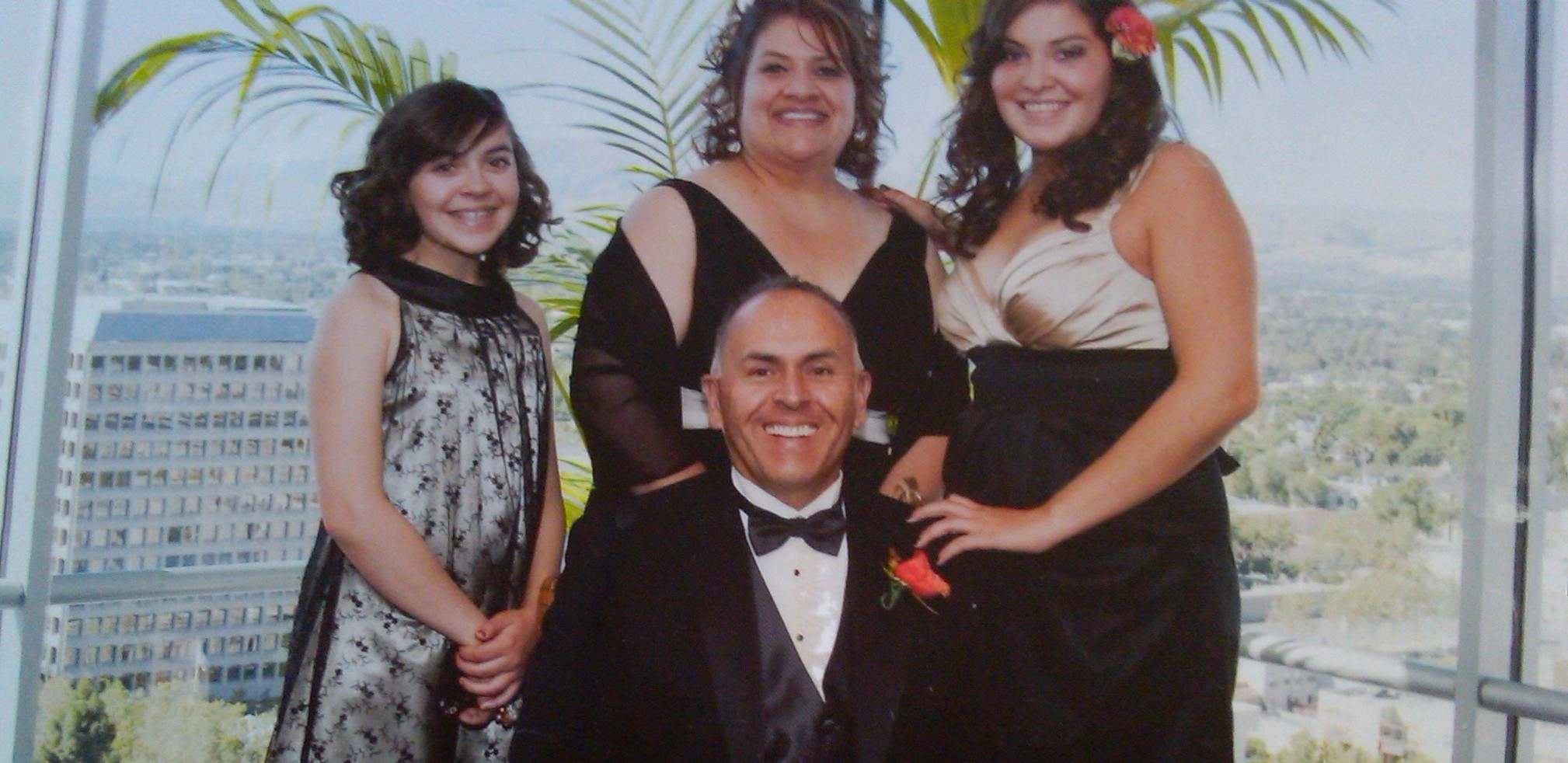
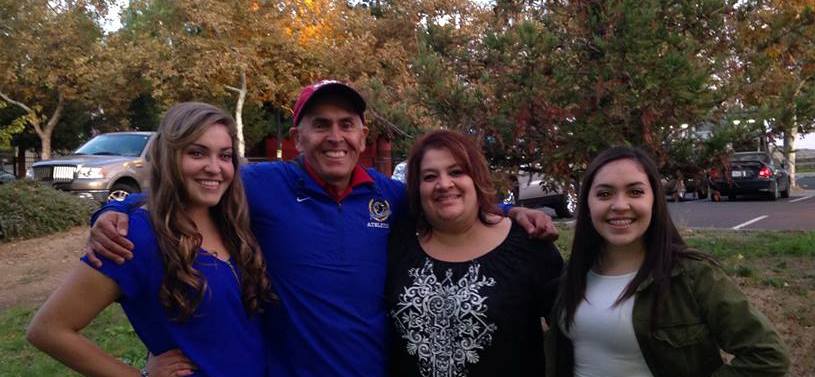
Erica, Sandra, and Marisa (Sandra and Eddie Garcia Family photo) click on image to read all excerpts
Erica, Sandra, and Marisa – 2013
(Sandra and Eddie Garcia Family photo)
click on image to read all excerpts

Author’s note: The following passage from Summer in the Waiting Room: How Faith, Family, and Friends Saved My Life is the 7th of nine parts that details June 7, 2010, the day that a massive heart attack forever changed my life.

********************

Marisa intently listened to mom as fear and panic washed over her. She ended the call and explained to Erica what was happening. Fighting back her anxiety demons, she could only think of the worst. Standing in their living room, Shelley and Pancho stood motionless shocked by the sudden news.  Marisa kept asking no one in particular, “Is my dad going to be okay?”

Erica sat silently staring off into the distance. After a brief silence, Shelley called her sisters to share the news, and Marisa and Erica quickly dressed to go to the hospital to be with their mama. Shelley and girls ran out the door to the car for the 30 minute drive to the Kaiser Santa Clara Medical Center while Pancho stayed back to get Arachuli and Opie ready to follow along.

Sitting alone in the circular waiting room, Sandra continued to pray. Her lifelong faith in God had always kept her optimistic and balanced. She now faced the most serious crisis of her life, and her faith was intact. She truly believed that all would be well. While she prayed and relied on her faith to keep her from losing hope, the Peralta clan stirred into action to be by her side.

After initially demanding that  Shelley “stop playing around,” Valerie hung up her cell phone and rushed out of the house. Sandra’s parents were getting ready for bed when she called, and immediately changed their plans as did Kim and Miguel. In the waiting room, Sandra continued calling family members: my sisters Barbara and Sisi, and my brother David.

Finding Steve would be another story. He rarely told anyone where he lived, or more accurately, where he was staying.  Steve’s battle with alcohol and anger over the years made him a moving target. Even though he hadn’t had a drink in years, his nomadic lifestyle was well entrenched.

A cousin once jokingly said that “the only way to get a hold of Steve is by smoke signals, and marijuana smoke would get the message through faster.” With the exception of Steve, Sandra had contacted all of our immediate family members. While sitting in the loneliest of places, she was thinking about our life together, the present crisis, and what the future would hold.

Within 45 minutes of that first call to Shelley’s house, Sandra was surrounded by her mom and dad, and her sisters and their families. The Peralta’s were the first to arrive and found Sandra sitting quietly with a shocked look on her face. The three of them embraced and cried. Mrs. Peralta stood back and said, “Don’t worry mi hija, everything is going to be okay.”

The scene repeated itself after each one of her sisters came into the waiting room. Sandra and the girls hugged tightly and sobbed as they held each other. Marisa, always inquisitive, asked question after question. Erica, not saying a word, didn’t outwardly reveal her feelings.

Here was a family that celebrates together, mourns together, goes camping together, argues makes up and argues again while on vacation together. We served as godparents to each other’s kids for baptism and First Communion. Each Peralta grandchild calls at least one of us “nino” or “nina,” and together we’re compadres.

We attend school talent shows, little league games, dance recitals, and swim meets to support our nieces and nephews. On any given Saturday night, we get together at the local Red Lobster, Sizzler, or neighborhood coffee shop for dinner. “Party of 21, please,” one of us will say to an incredulous look from a restaurant host or hostess.

I’m sure there are those who wonder if the closeness of this family is just a show. However, when the family faced the ultimate test as one of us fought for his life on the operating table several rooms away, they all squeezed into the surgery waiting room to support Sandra and the girls. Eddie Velez was out of town on business, so he was the only one of the “21” not able to join the others.

“Party of 19, please.”

The family sat and prayed as the minute and second hands of the plain-looking clock on the wall slowly ticked away. Soon, others started to arrive: George, Will and Juanita Medina, and their kids William and Andrea.

In the operating room, after identifying the location of the blockage, the doctor immediately worked to dissolve the blood clot by inserting a medium weight wire, called an aspiration catheter, into the tube that led to my heart to puncture the clot.

Once the lump of blood had broken up and moved along the bloodstream, Dr. Wong replaced the wire with a balloon-like device and inflated it. He did this at the point where the artery was blocked to temporarily keep the vessel open so he could insert the coronary artery stent, a metal webbed cylinder placed inside the artery to help keep it open permanently.

Pulling the aspiration catheter out of the left side of the heart, Dr. Wong proceeded to repeat the process on the right side to determine if there were any blockages there as well. Finding no additional obstruction, the doctor removed the tube and catheter from my heart down to the groin, out of the incision he cut on the right inner thigh, and sealed of the tiny opening.

The procedure was complete. All had gone well.  It was 9:36 PM, a little more than two hours after Sandra and I showed up for my appointment at the doctor’s office.

Dr. Wong emerged from surgery and walked into the waiting room to tell Sandra and her support system that the procedure was a success and that there were no complications. In his no nonsense manner, he advised her that my heart was badly damaged and it would be a rough road ahead.

********************

To read excerpt #37, click here: https://esereport.com/2014/10/15/summer-in-the-waiting-room-the-day-that-changed-my-life-part-6-excerpt-37/

To read all excerpts click here: https://esereport.com/summer-in-the-waiting-room/

Next Wednesday: June 7, 2010 continues…

Summer in the Waiting Room: The Day That Changed My Life – Part 6 (excerpt #37)

Image by share.kaiserpermanente.org (click on image to read past excerpts)
Image by share.kaiserpermanente.org
(click on image to read past excerpts)

Author’s note: The following passage from Summer in the Waiting Room: How Faith, Family, and Friends Saved My Life is the 6th of nine parts that details June 7, 2010, the day that a massive heart attack forever changed my life.

********************

All of a sudden, the slow-motion movie turned into a full-speed action flick. As I was laying on a gurney, the medical team pushed me out of the emergency room and rushed through the wide hospital hallways to surgery. Doorways and the art on the walls appeared to be flying right past me in reverse as I could hear the squeaking of rubber-soled shoes against a polished floor coming from the hurried footsteps of those maneuvering the gurney.

I remember very little after the race to the operating room. My last memory was of Dr. Wong, wearing a white cap and a mask that covered his mouth and nose, standing over me explaining without emotion what he planned to do next. This was the first time during the entire day I felt extreme, unbearable pain.

Dr. Wong, in a clear monotone voice, advised that my heart was badly damaged and the prognosis for surviving the procedure was grim, 50/50 at best. When he was done with the explanation, he gave me a clipboard and pen to sign the consent form. I remember saying, “doctor, please put me to sleep, my chest hurts.”  Everything went dark.  It was 7:59 PM.

The first step in the procedure required a small incision in the right thigh near the groin. The surgeon inserted a narrow tube through a vein that led to an artery in the heart. He then maneuvered the tube through the artery under the guidance of a tiny scope that followed the path on a computer monitor.

Once the tube was in the heart, dye material was injected into the sheath so the doctor could determine exactly where the blockage or blockages were located. The image on the computer monitor left no doubt that the Left Anterior Descending Artery (LAD) in my heart was completely blocked.

This is one of the most important arteries in the whole system, and once blocked causes irreparable damage to the heart. The way it works is that oxygenated blood leaves the lungs and enters the upper and lower left chambers of the heart. The LAD delivers blood to the muscle over the lower left chamber that pumps oxygen-rich blood into the body.

When the LAD is 100% clogged, as mine was that night, the muscle under the LAD stops pumping the blood needed to oxygenate the rest of the body. Doctors have 15 to 20 minutes to dissolve the blockage before other critical organs like the lungs and brain begin to shut down due to lack of oxygen. As a result, the LAD is more commonly known as “the widow maker,” a term that Dr. Wong shared with Sandra later that evening in a matter-of-fact manner.

In the operating room, the surgeon prepared to perform a procedure that he had successfully executed several times a day for many years. Sandra sat alone in the surgery waiting room stunned by what was happening. In the small circular space adjacent to the operating room, she felt like a lonely insignificant being in a vast tube. As the wonderful life she meticulously planned for us suddenly and ruthlessly began unraveling, she turned to her unconditional faith in God.

As she prayed and tried to make sense of the surreal nightmare, Sandra started to call the support system that had carried her through every up and down of her life. At the advice of an emergency room nurse, Sandra’s first call was to her sister Shelley’s house to let Marisa and Erica know what had happened.

The girls had just returned to Shelley’s house from swim practice. Tía Shelley was making tacos, rice, and beans for dinner. They all came to the table to eat, as Pancho, ever the sports fan, glanced at the TV from time to time to catch a glimpse of SportsCenter as their two young children (my nicknames for them are Shirley and Opie) excitedly sat in their seats because their older cousins were joining them.

Once they were all settled in and dinner was served, the racket of six voices talking at once filled the room. The girls love being with their tía and tío because Shelley and Pancho are young at heart and bring comedic relief to any situation. With her quick wit and his loud exuberance for everything, Shelley and Pancho made sure that there was never a dull moment.

Pancho’s sense of excitement ensured that even the smallest accomplishment, announcement, or mishap would bring on a dramatic response accentuated with a flourish of exclamations like “WOW,” “UNBELIEVEABLE,” and “THAT’S AWESOME!” His energetic statements sometimes led to laughter, especially if his reaction was more entertaining than the event that caused him to shout out in the first place.

He once won a Tivo device at a San Jose State basketball game because he was the most animated and loudest fan in the arena. Another time, I had invited him to a dinner where Magic Johnson, his favorite basketball player, was the speaker. Boyish anticipation consumed him as we stood in line at a VIP reception to take a photo with Magic. I thought he would explode with enthusiasm when he shook his idol’s hand and posed for the camera.

When Sandra dialed Shelley’s cell phone from the waiting room, she was greeted with Pancho’s voice. “Eddie had a heart attack,” she said somberly, “and he’s in surgery now.” Knowing his penchant for reacting excitedly to any shocking news, Sandra calmly told Pancho not to say anything until she had a chance to tell the girls herself.

After a long pause, Pancho, with eyes wide as silver dollars, shouted into the phone, “COMADRE…YOU’RE LYING!”

Today, that moment lives on in family lore as one of the funniest Pancho reactions of all time. Sitting at the dinner table that night, Shelley and the girls weren’t laughing. Shelley jumped up to grab the phone from Pancho. Sandra explained what had happened. She asked Shelley to put Marisa on the phone and to contact their sisters Valerie and Kim.

********************

To read excerpt #36, click here: https://esereport.com/2014/10/08/summer-in-the-waiting-room-the-day-that-changed-my-life-part-5-excerpt-36/

To read all excerpts click here: https://esereport.com/summer-in-the-waiting-room/

Next Wednesday: June 7, 2010 continues…

Summer in the Waiting Room: The Day That Changed My Life – Part 5 (excerpt #36)

Image by www.drvenkatesan.wordpress.com Click on image to see past excerpts
Image by http://www.drvenkatesan.wordpress.com
Click on image to see past excerpts

Author’s note: The following passage from Summer in the Waiting Room: How Faith, Family, and Friends Saved My Life is the 5th of nine parts that details June 7, 2010, the day that a massive heart attack forever changed my life.

********************

I sat in the wheelchair looking up at Sandra not knowing what to say. She looked back at me just as speechless. The EKG in the clinic showed that I had a “ST Segment Elevation Myocardial Infarction” (STEMI), the most severe kind of heart attack.

When having a STEMI, a major artery on the left side of the heart, the Left Anterior Descending Artery, is completely blocked off by a blood clot. As a result of the blockage, the heart muscle around the clogged artery starts to die. This artery is nicknamed the “widow maker” because the immense damage to the heart muscle significantly decreases the chance for survival.

After what seemed like an eternity, I asked the doctors how they planned to proceed. The lead doctor, a cardiologist named Terrence Wong, explained that he would do a medical examination and perform an angiogram – a procedure that injects iodine die into the heart to determine where the blood clot is located.

Once the doctor identified the location of the blockage, he planned to dislodge the clot and insert a stent (a net-like metal tube) in the affected artery to prevent it from collapsing. Without complications, Dr. Wong estimated that the entire process would take about two hours.

The heart surgeon was in Santa Clara on special duty that night. His regular practice was at Kaiser Hospital in Oakland. He specializes in angioplasty surgery, the stent insertion procedure. On his website, he’s a self-described, “straight-talking physician that ’tells it like it is’ so that each patient is well informed of their options and the implications of their decision.”

The course of action he described was clear and concise. Still not fully understanding the gravity of the situation, I asked Dr. Wong when he planned to do the procedure. I assumed he would medicate me, send me home, and ask me to return in a day or two for the operation. His answer was straightforward and simple, yet powerful.  “Right now,” he said.

Again, Sandra and I looked at each other in utter disbelief without a word coming out of either of our mouths. After a brief pause, she kissed me on the cheek, hugged me, and told me that everything was going to be okay. I told her that I would be just fine as the nurse whisked me away into one of the rooms that lined the emergency department.

The emergency team, working at a frantic yet organized pace, immediately disrobed me, changed me into a hospital gown, inserted an intravenous tube (IV) into one of my arms, connected me with electrodes to a bunch of machines, and injected me with several medications to stabilize my heart. It was 7:45 PM, four minutes after I rolled into the emergency room.

Between 7:41 PM and 7:45 PM on June 7, 2010, for the first time in my life, I felt the presence of God. The concept of God had always been elusive to me. Like many Mexican American kids, I was baptized in the Catholic Church, attended catechism to complete First Communion and Confirmation, and married Sandra in a traditional Catholic wedding before an ordained priest in the neighborhood church.

My dad wasn’t a spiritual man, so our family’s exposure to religion and the Church was through my mom’s deep belief and faith in God. Growing up, we would accompany her to mass, mostly for the big days on the Catholic calendar like Christmas, Ash Wednesday, Palm Sunday, and Easter.  Despite a lifetime of participating and believing in the pageantry and protocols of the Church, I never developed a relationship with God.

I learned my dad’s lessons well and truly believed that my lot in life and my destiny were in my own hands. The Golden Rule, integrity, and hard work would pave the way. I was also a student of history, and I knew that the ages were cluttered with the political machinations of men causing havoc and misery through the auspices of the Church. I questioned why God allowed so much pain and destruction to occur in His name?

During those four minutes, with my life in the balance, I had no control of the outcome. The pain in my upper chest continued to intensify. I faced the prospect of imminent death as I watched the team of medical professionals methodically work to keep me alive.

Being an anxiety-ridden mama’s boy raised in the cocoon of Viewmont Avenue, I had always thought that panic and fear of dying would overwhelm me in this situation. But, at that life or death moment, I was comfortable with someone else in full control of my destiny. According to the admitting doctor’s written comments, I was “alert, generally well appearing, and in no acute distress.”

Those four minutes were like a movie in slow motion. There were nurses, technicians, and doctors surrounding the bed, each doing a specific task to prepare a heart attack patient for surgery. I couldn’t hear a sound, but I knew that they were talking as I could see their mouths moving. Their movements looked like a beautiful and well-choreographed ballet.

Although I didn’t fear death, I was concerned for Sandra. I kept trying to sit up to see her standing just outside of the room with worry enveloping her eyes and face. An emergency room technician gently pushed me back down so she and her colleagues could continue their work. In the organized chaos I heard a soothing voice say, “Sandra will be fine. You need to relax Eddie so we could help you.”

Edward, my given name, is on all my medical records. Why did the ER tech call me by the name used only by friends? How did she know Sandra? The calming voice sounded familiar. I looked up and instantly recognized her face. Her name was Stacey Cook and her daughter played pee-wee baseball with Erica years before when I was the team’s coach.

I really didn’t know Stacey other than being the mom of the team’s star player. She would sit quietly and calmly in a lawn chair watching her daughter play. During the season, I learned that she was a great softball player in her own right, yet she never criticized the coaches or the parent volunteers. Our only interaction was her positive comments after a game, “thanks Coach,” or “nice job today Coach.”

With that same assuring voice, she helped me trust that Sandra was fine and everything would be okay. I truly believe that God sent Stacey’s familiar voice and warm smile to be with me in the emergency room at the most critical point in my life. Until that moment, I didn’t have a strong belief in God’s power to control destiny. However, in those four minutes, my faith in Him was beginning to form.

********************

To read previous excerpts click here: https://esereport.com/summer-in-the-waiting-room/

Next Wednesday: June 7, 2010 continues…
Summer in the Waiting Room: The Day That Changed My Life – Part 4 (excerpt #35)

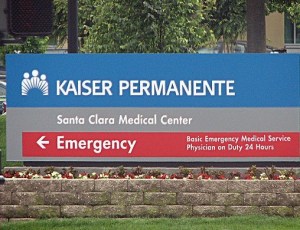
Kaiser Santa Clara Medical Center Emergency Entrance (image by www.flickr.com) Click on image to read all excerpts
Kaiser Santa Clara Medical Center Emergency Entrance
(image by http://www.flickr.com)
Click on image to read all excerpts

Author’s note: The following passage from Summer in the Waiting Room: How Faith, Family, and Friends Saved My Life is the 4th of nine parts that details June 7, 2010, the day that a massive heart attack forever changed my life.

********************

Sandra got home and urged me to call the Kaiser advice-line again to schedule an appointment. I got a different nurse on the line, and she asked the same questions. This time, I told the nurse that pain was shooting down my left arm. She suggested that I see a doctor immediately. I insisted that it was extreme anxiety, but I accepted her advice and agreed to take the earliest available appointment.

I rationalized that a doctor would quickly diagnose an anxiety or panic attack, prescribe medication, and send me on my way so I could return to all of the critical matters that stood before me. It was close to six o’clock, almost twelve hours after my day started.  The nurse scheduled the appointment for 7:30.  I called the school district office to explain that I was sick and wouldn’t be at the graduation ceremony.

While I dressed, Sandra told the girls that they would have dinner with Tía Shelley and Tío Pancho so she could drive me to the clinic for the appointment. Marisa remembers that I “walked quickly to the car, sat down, and started squirming in my seat.” At this point, the girls weren’t alarmed about anything serious.  At Pancho and Shelley’s house she remembers telling them jokingly that I had been so stressed that I was probably having a heart attack.

The ride to the Kaiser Santa Clara Medical Center clinic was uneventful. Sandra drove as fast as she could while I continued to writhe, the discomfort on my shoulders and upper chest increased as every minute went by. She dropped me off at the entrance to the clinic and quickly drove away to find a parking space.

I labored into the building, took the elevator to the second, floor, and made my way to the doctor’s office where I met Sandra and checked in at 7:26 PM. We sat in the waiting room for just a few minutes when the nurse called me in to see the doctor. A quick check of vital signs weren’t alarming: temperature – normal at 98.6 degrees, blood pressure – 128/61, weight – 208 lbs., heart rate – a little high at 116 beats per minute, but that could have been caused by the rush to the office.

Slightly relieved, I was even more convinced that I was having an intense panic attack. The doctor reviewed the vital signs, asked me a few questions about how I felt, and immediately ordered an electrocardiogram (EKG) to determine if there were any irregularities in my heart function.

The nurse attached electrodes to my chest, programmed the EKG machine, and watched it whiz and purr as the needle on the printout page rapidly moved in a zigzag motion drawing tiny peaks and valleys on the white computer paper.

As soon as the machine stopped whirring, the nurse ripped the computer print-out from the machine and quickly disappeared into the hallway. The doctor came back seconds later to tell us the EKG reading was abnormal and I should proceed to the emergency room for more tests.

By the time the doctor finished her diagnosis, the nurse was in the hallway standing behind the wheelchair that was to take me to the hospital emergency room on the other side of the large complex.  With a fast gait, she pushed the wheelchair out of the clinic hallway, into the clinic lobby, and out to the main hallway that led to the hospital about a half city block away.

The nurse moved swiftly as she fumbled with her cell phone. Sandra offered to push the wheelchair so the nurse could use her phone, when suddenly the gait turned into a trot, and ultimately a jog to the emergency room. Tall ceiling to floor windows formed a breezeway that connected the clinic to the hospital, and I could see out to the cafeteria and parking lot beyond that life was moving at its usual pace while my life appeared to be heading toward crisis.

My mind swirled with random thoughts that ranged from doom to confusion to relief. Could I be having a heart attack? Why didn’t the doctor say that? Was she just taking precautions by sending me to the emergency room? Why was Sandra pushing the wheelchair at a jog and why was the nurse excitedly talking on the phone, and to whom? I couldn’t hear what she was saying due to the noise that was filling my head with questions.

We got to the elevator in the hospital and went the one floor down to the main lobby and the emergency room. When the elevator doors opened, we raced across the lobby floor straight into the emergency room where I arrived at 7:41 PM.  Three doctors wearing white smocks waited for us, and within seconds, I got my answer.

One of the doctors said, in a calm and a matter-of-fact voice, “Mr. García, you’re having a heart attack.”

I was stunned!

It had finally all caught up to me: the genetic predisposition to heart disease, the high-fat diet as a kid, the lifetime of anxiety, the urgency to make up for my college failures, the tireless climb up the corporate ladder, the A-G Initiative, the County budget, the tension with my siblings, my fears about losing yet another election.

Combined, they had conspired to create the perfect toxic cocktail that led to a medical disaster. All the while I thought my anxiety was haunting me and intensifying, my blood was thickening and clotting and trying to avoid narrow gaps in arteries lined with plaque caused by genetics and periods of unhealthy living.

********************

To read previous excerpts click here: https://esereport.com/summer-in-the-waiting-room/

Next Wednesday: June 7, 2010 continues…

Summer in the Waiting Room: The Day That Changed My Life – Part 3 (excerpt #34)

My Quiet Spot (Sandra & Eddie García family photo) Click on image to see all excerpts
My Quiet Spot
(Sandra & Eddie García family photo)
Click on image to see all excerpts

Author’s note: The following passage from Summer in the Waiting Room: How Faith, Family, and Friends Saved My Life is the third of nine parts that details June 7, 2010, the day that a massive heart attack forever changed my life.

********************

Miraculously, I got home safely, stepped out of the car, and listlessly walked up the driveway and walkway that led to the porch. Marisa and Erica were at home because school was out for the summer, so I stopped at the front door to take a deep breath before I walked into the house. I didn’t want the girls to notice the strained look on my face and the uneasiness in my gait.

They were in the family room watching television as I walked away from their view to the bedroom.  I was sweating and the anxiety was building up inside of me like the volcano my friend metaphorically described. I took off my necktie and suit jacket, and threw myself onto the bed.

Marisa later said that she saw me walk into the house with the usual grimace I had on my face when I was stressed out.  She heard me walk down the hallway and slam the bedroom door shut, then silence, then a thud.  She rushed to the bedroom door and asked if everything was alright, I curtly answered, “yes.”

Marisa figured that a work or political matter was on my mind because she lifted the phone to call a friend and heard my voice on the other line.  She later ironically remarked that I seemed so upset that I was probably figuratively “having a heart attack.”  In the bedroom, I wasn’t talking business. I was on the phone with the Kaiser Permanente Health Plan advice nurse.

Positive that I was having a full-fledged panic attack, I explained to the nurse that I had an anxiety and panic episode nearly six years earlier. I was now experiencing the same symptoms, just a little more intense. The advice nurse asked standard questions about age, weight, medical history.

I mentioned that the cause to my anxiety was a result of my mom’s passing and my sister’s premature death at the hands of heart disease. I also confessed that my fear of having a heart attack led to minor symptoms of anxiety, but that I was able to manage though it.  This time, the symptoms didn’t want to go away despite my efforts to deal with them. She then asked pointed questions:

Nurse: “Do you feel a heavy weight, like an elephant, on your chest?”

Me: “No.”

Nurse: “Do you feel tingling radiating down your left arm to your hand?”

Me: “No.”

Nurse: “Do you feel short of breath?”

Me: “Sometimes, until the breathing exercises settle it down for a while.”

Nurse: “Do you feel light headed or dizzy?”

Me: “No.”

Based on my answers, the nurse said that the symptoms I described sounded like a panic attack and recommended I take a warm shower and rest. Heart attack was the furthest thing from my mind. I was so convinced of my self-diagnosis, I persuaded the nurse as well. If the symptoms persisted, she continued, I should call back immediately.

I called Sandra to update her on my conversation with the advice nurse and got ready to get in the shower. Erica told me a couple of years later that she caught me walking between the bedroom and shower to ask if she could go the movies with some friends, and I answered “yeah, sure” in a “grumpy way.”  Like Marisa, she too thought I was just stressing over one of the many things on my mind.

I started a steamy shower, sat down on the shower floor, and closed my eyes to clear my mind of the multitude of thoughts that raced through it.  Once out of the shower, I put on a pair of shorts and a t-shirt, and walked out the sliding door from our bedroom to the patio, my favorite place to relax.

The backyard and patio had become a sanctuary for me and Sandra.  About five years earlier, Sandra and I designed what we thought was the perfect backyard for our home, a Mexican motif with winding clay-colored sidewalks that lead from a tiled gazebo to a large arbor covered with climbing pink trumpet flowers.

A green lawn separates the two structures and a variety of plants, bushes, and flowers grow behind a four-foot retaining wall topped with bull-nose bricks.  Three tall pine trees dominate the far corner of the yard and majestically stand over the property.  My favorite part of the yard is a small patio behind the arbor covered by a natural canopy made of the pine tree branches and the intertwining of the neighbor’s willow tree and the climbing trumpets that cover the arbor.

The only sounds that can be heard from this relaxing quiet spot are birds chirping, the wind going through the pine trees, a neighborhood dog occasionally barking, or a jet departing from San Jose International Airport leaving the valley for parts unknown. Sitting in the small patio behind the arbor helps me relax and keep the troubles of the real world from my thoughts.  This time I couldn’t relax, I kept thinking about how anxiety and panic were consuming me.

The symptoms weren’t getting any better or any worse. I closed my eyes to take in the soothing sounds of the swaying trees above, but the tightening in my chest, the ever growing heaviness on my shoulders, and the frequent need to catch my breath drowned out everything but the noise of my hectic life reverberating in my head.

********************

To read previous excerpts click here: https://esereport.com/summer-in-the-waiting-room/

Next Wednesday: June 7, 2010 continues…
Summer in the Waiting Room: The Day That Changed My Life – Part 2 (excerpt #33)

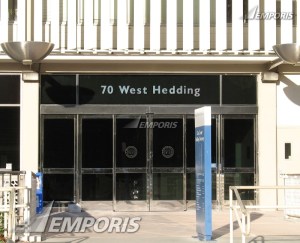
Image by www.emporis.com Click on image to see all excerpts
Image by http://www.emporis.com
Click on image to see all excerpts

Author’s note: The following passage from Summer in the Waiting Room: How Faith, Family, and Friends Saved My Life is the second of nine parts that details June 7, 2010, the day that a massive heart attack forever changed my life.

********************

After doing more relaxation exercises and deep breathing techniques in the car, I shifted the transmission into drive and rushed to the office realizing that I was already late for my scheduled 11:00 AM meeting with Sylvia Gallegos, the deputy county executive. Sylvia and I had known each other for over 17 years. She was chief of staff to the councilwoman I worked for during the beginning of my career in politics.

I called the office from the car to ask the staff to inform Sylvia that I would be in the office by 11:30 AM.  It was at this meeting where I was to lay out George’s plan to allocate $2 million from the parks fund to build a soccer complex in his district for community use.  We knew there would be opposition to his proposal as the parks fund advocates wanted all of the money to be used for trails and large regional parks, uses that are rarely, if ever, used by the constituents in George’s historically underserved neighborhoods.

Sylvia, a smart and seasoned public administrator, could be an ally in reshaping the county’s practice of allocating parks resources to open spaces in affluent areas, so I needed to provide her with a compelling analysis of George’s proposal to secure her support.  I hustled into the county administration building through the entrance at 70 West Hedding Street. Suddenly I had to slow down to catch my breath, my mind believing that an anxiety attack was imminent.

In reality, my body was feeling the effects of thickening blood pushing through arteries that had been narrowing for most of my life.  I finally reached the 10th floor board of supervisors’ offices at noon. Sylvia, wearing a perfectly tailored business suit as usual, waited at the conference table in George’s office when I walked in. I apologized to her for being an hour late.

She asked if I was okay, and I responded that I wasn’t feeling very well and immediately proceeded with the business at hand.  This was unusual because casual talk about our families and personal matters always prefaced any business we had to discuss.  I don’t remember anything that happened during the next several minutes.

According to Sylvia, I appeared “distracted and unfocused.”  Noting that it was uncharacteristic for me to be unprepared for a meeting and unable to articulate, she repeated concerns about my well-being only to hear me respond that “I didn’t feel right.”  I stopped the meeting after about 10 minutes, led her out of George’s office, muttered something to our office manager Marisa Ybarra, and stumbled into my office shutting the door behind me.

Marisa, my friend of 25 years, is married to Sam Ybarra, the friend who asked me to help him coach at the parochial school more than 25 years before. I helped Marisa get a job with the previous county supervisor and she stayed on with George after he was elected.  She recounted that I had walked out of George’s office with Sylvia, mentioned to her that I had to tie my shoes, walked into my office, and closed the door – which is something I never do.

In my office, I tried to relax as the anxiety symptoms continued to persist.  The parks budget, after-school sports funding, tension with my siblings, the upcoming school board campaign, and the teachers’ union opposition to the A-G Initiative were all spinning in my mind.  As one friend later put it, “you must have been like a volcano ready to explode.”

Sitting on my office chair, I bent over to tie my shoes even though the laces weren’t loose or untied.   I leaned back in the chair with my hands folded behind my head trying to find the right breathing and relaxation exercise to release the anxiety I thought was taking over me.  Meanwhile, the clotting blood gushing through my body told a different story.

I emerged from my office and told the team I was sick and going home. Meandering through the narrow walkway that led to the 10th floor lobby and elevators, I followed my own footsteps that took me on my triumphant return to the James Lick High School graduation ceremony 360 days before.

This time the walk was different.  I didn’t race excitedly through the ground floor breezeway to the parking lot at the west end of the building as I did on June 10, 2009.  Rather, I slowly exited the elevator on the ground floor with my hands clasped behind my head trying to compose myself.  Twenty steps later, I had to stop to catch my breath.

I sat on a wooden bench under the gaze of the large Abraham Lincoln bronze bust in the east wing lobby of the county administration building, loosened my orange and blue necktie, and wiped the sweat off my brow.  Off the bench, I ambled sluggishly through the breezeway with my heavy shoulders writhing with the discomfort weighing on my upper chest and throat.  There was no doubt in my mind that I was in the full throes of an anxiety and panic attack.

I had to stop and sit once more, this time just steps from the west wing entrance to the parking lot. It seemed like an epic journey. When I got to the car, I called Sandra to tell her I was going home because I wasn’t feeling well. The drive was surreal, I felt as though nothing was happening outside of the car. When I was focused back on the road, it seemed like I was driving in slow motion as the other cars on the freeway raced by.

********************

To read previous excerpts click here: https://esereport.com/summer-in-the-waiting-room/

Next Wednesday: June 7, 2010 continues…

Summer in the Waiting Room: Chapter 4 (excerpt #31)

Image by www.cdllife.com
Image by http://www.cdllife.com

The next day, Sunday, June 6th, was exactly one week since I lost my breath during the unfinished one-one one basketball game with Andres at the barbecue at Kim and Miguel’s house. As president of the school board, the week was an unusually busy one with graduation ceremonies, academic award nights, and after-school sports banquets. I wasn’t getting much sleep.

Stress and anxiety dominated my mind since waking up on Sunday morning.  The next week would be critical in George’s effort to secure parks funding and my effort to keep after-school sports intact for another year, not to mention the ongoing A-G debate. The tension from my parents’ estate intensified. I hung up on one of my brothers in anger and frustration.

On top of all that, a disgruntled former district administrator, the most viable opponent in my fall election, had aligned himself over the weekend with the teacher’s union that resisted the A-G Initiative.

My mind was swirling, my skin was warm and clammy, my upper chest and throat were uncomfortable, and my shoulders were heavy. The Peralta family gathered at a Dave & Buster’s restaurant to celebrate Andres’ birthday. With its large room of carnival and arcade games, Dave & Buster’s was a perfect place to have a kid’s party and to escape from my racing brain.

At the arcade, Pancho challenged me to a free throw contest to see who could make the most baskets in one minute.  For sure this would take my mind off of the multitude of thoughts racing through it.  When the timer started and the arcade machine released the basketballs, Pancho and I began a frantic pace to make as many free throws as possible in the short time span.  When time ran out, I emerged victorious, but had a hard time catching my breath.

The pressure in my throat was more intense and my shoulders were so heavy that I sat on a stool next to a pinball machine hunched over trying to regain composure.  When I caught my breath, I worked on the breathing and relaxation exercises I had learned to manage stress and anxiety.  I felt better the rest of the day even though the challenges that lied ahead at work, and in my political and personal life, continued to monopolize my thoughts.

I believed that the symptoms causing my discomfort were due to an impending anxiety attack and I was using the techniques to manage it. However, something entirely different was happening inside my body. The fatty and greasy meals my mom made when I was a boy transitioned into the typical American twenty-something fast-food diet.  Add a genetic pre-disposition to high cholesterol and heart disease, and the result is plaque build-up in the arteries that began at a young age.

By my early 30s, due to my parents’ pre-mature heart attacks, I began exercising regularly and trying to eat as healthy as possible, although I was inconsistent at managing a healthy diet.  Nonetheless, I ate better as an adult than as a kid. At 46 years old, my arteries surely were hardening due to genetics and years of a high fat diet.  The intense workouts were keeping my heart pumping and blood flowing, so thoughts of a heart attack were far from my mind.

There was another interesting phenomenon that could have been happening inside of me.  The constant state of high stress and my tendency for anxiety were causing the hormones and chemicals in my body to keep me in a perpetual state of “fight or flight.”  This was exhibited by the steady churning in my stomach, frequent jolts of acute alertness, and the subsequent need to catch my breath.

For decades, researchers have studied the correlation between stress and heart disease and the conclusions have been consistent – stress leads to a poor diet, lack of sleep and exercise, and high blood pressure.  Recent research has also made a connection with high levels of steady stress and a sudden heart attack.  According to these studies, the chemical reaction in the body that produces the “fight or flight” sensation causes the blood to start thickening and clotting in preparation for a blow to the body that could result in an injury inflicted during a physical altercation.  In other words, the body is getting ready for a fight and protects itself from potential excessive bleeding.

Since my return to college and subsequent entrance into the world of career-building and redemption, my body had been in a perpetual state of alertness. During the first six months of 2010, that high level of stress my body had experienced for more than two decades had intensified many times over. For sure the blood that flowed through my body had thickened and clotted with every crisis I confronted as it squeezed through the narrow openings of plaque-filled arteries.

******************************

To read past excerpts of “Summer in the Waiting Room” click here: https://esereport.com/summer-in-the-waiting-room/

Summer in the Waiting Room: Chapter 4 – 360 Days (excerpt #29)

IMG-20130729-00144
With Sandra, Marisa, and Erica at the Peralta 50th Wedding Anniversary – May 29, 2010 (Sandra & Eddie García family photo)

In addition to managing my own school board agenda and the ongoing tension with my siblings, at work I was the chief policy strategist for the office during the county’s $4 billion budget process. This required horse trading and intense negotiations as the county was in its tenth straight year of budget cuts. The strain on me was reaching the point of being intolerable. I slept just a few hours each night.

The pressure on my neck, stomach, and chest felt like the familiar panic disorder symptoms that led to my first health scare six years before. I was wearing myself down, but I kept pushing ahead trying to manage the responsibilities I had created for myself.  With the personal, professional, and political madness swirling around me, the last Saturday in May provided much needed relief.  Sandra’s parents celebrated their 50th wedding anniversary with a beautiful mass and an elegant reception on May 29, 2010.

The reception was held at Silicon Valley’s exclusive Capital Club atop the Knight-Ridder building, a structure named for the Ridder family who was the longtime publisher of the San Jose Mercury News.  The Peraltas, their four daughters and sons-in-law, and their eleven grandchildren hosted the party. The men and boys wore black tie, and the women and girls donned formal evening gowns.

The guests were served a four-course meal accompanied by live mariachi music, George presented an official county proclamation congratulating my in-laws, and some guests danced the night away while others enjoyed cocktails and cigars on the terrace that overlooked the valley.

Later in the evening, the celebrants convened for a nightcap at the prestigious Fairmont Hotel next door. In an effort to show my health and vigor, I challenged younger relatives to push-up contests on the lounge floor to the enjoyment of those in the lobby and the laughter of Sandra and my brothers-in-law.

Sandra, the girls, and I took a family photo that day with a large picture window serving as the background. The camera lens captured east San Jose sprawling out in the distance. Wearing a black tuxedo with black tie and a red rose pinned to the lapel of the jacket, I confidently sat in a chair with my back straight, chin up, and hands overlapping each other. With poise and warm welcoming smiles, Sandra, Marisa, and Erica stood behind me elegantly dressed. Looking at that photo, one might guess that I was a successful man surrounded by his beautiful family at the pinnacle of his life.

Underneath the façade of the formal attire, dramatic backdrop, and appearance of confidence that bordered on brashness, I had been feeling fatigued and anxious for most of the week. Sandra commented that I looked especially tired and lethargic that night. The day after the party would give me a moment to relax as the extended Peralta family gathered at Kim and Miguel’s house for the family’s traditional “day-after” barbecue.

I gorged on ribs and washed them down with a few beers. My nephew Andres, who turned eleven years old that day, challenged me to a one-on-one basketball game on his backyard court.  Andres was a good athlete, but slender and much shorter than me. I figured I would dispose of him quickly and get back to the ribs and beer.

I took and made a few jump shots on my way to a sure rout when I suddenly had difficulty breathing. Bending over with my hands on my knees trying to catch my breath, I was sure that the long night of partying and my rigorous work schedule caused the breathless sensation. We stopped playing and I decided to spend the rest of the day relaxing and enjoying time with the family knowing that I had a hectic week ahead.

Quotes & Quips: Wise Words to Live By

"The Coaches" circa mid-1980s (García Family photo)
“The Coaches” circa mid-1980s
(García Family photo)

“Coach ‘em up, and let ‘em play.” ~ Fred O. (Lico) García

Fred O. García is my dad. Even though he passed away almost 20 years ago, I turn to him often for advice. He taught his children how to live a productive life through anecdotes, analogies, and one-liners I call “Licoisms.” His simple philosophy on raising kids is one of my favorites.

He would say that you can’t start teaching values when kids are teenagers, people can learn values from the time they are babies. Together with my mom, they prepared my siblings and me for the tough road called life. He taught us the values of respecting ourselves and others, working hard, taking responsibility for our actions, and owning up to our mistakes. From mom, we learned to trust in God, love unconditionally, and give to others less fortunate.

My dad believed that once children have a strong foundation of values, parents should let them take risks and make mistakes. According to Lico, mom and dad’s role is to be there for more coaching to “help steer them back on track when they wander off.”

Recently, an old friend shared with me that her son was going to start the 8th grade in a few weeks. She commented how it seemed like he went from a little boy to a teenager from one day to the next. I told her that the transition from teenager to young adult happens just as fast. We chuckled and continued sharing stories about our kids.

Then, reality hit me. My daughter Marisa will drive back to Los Angeles soon to start junior year at Loyola Marymount University and Erica is entering senior year in high school. Both are taking big steps in their lives. Marisa and a few friends have rented an apartment off campus. We will move Erica into a college dorm room right around this time next year.

My chuckle quickly turned into concern. I’ve been around enough to know that college isn’t just about term papers, mid-terms, and finals. Alcohol, parties, and other unknown dangers lurk around every corner during down time. Outside the relative safety of campus security gates is a world filled with beauty, wonder, and yes, even bad influences, evil, and darkness.

I thought about how Sandra and I have taught the girls to be independent and confident. We’ve shared with them the values our parents shared with us. On a daily basis, Marisa and Erica make more decisions on their own as their transition to adulthood evolves. It’s easy to worry about external forces that could shape the rest of their lives.

After some more thought, my parents steered me back on track. Concern turned back into a chuckle. My parents were pretty good coaches. God has this figured out, and Sandra and I coach the girls the best we can. As Lico would say, now it’s time to “let ‘em play.”

“Summer in the Waiting Room” Returns August 6th!

Celebrating my 50th birthday with Sandra, Marisa, and Erica (Sandra & Eddie García family photo)
Celebrating my 50th birthday with Sandra, Marisa, and Erica
(Sandra & Eddie García family photo)

God sure has a funny way of teaching life lessons. For me, faith was a merely a concept until I had a major health crisis. Spending an entire summer in the hospital changed everything.

Summer in the Waiting Room: How Faith, Family, and Friends Saved My Life is my story. It’s the tale of a boy who grew up in a working-class neighborhood, failed miserably at college and fell into despair and hopelessness, met the love of his life, married, finished college, raised a family, and found success in business and public office.

It’s also the story of a man who vowed never to fail again and worked tirelessly to redeem himself, only to find true redemption, while in a state of complete helplessness in the ICU, through faith in God, and the love and support of family, and friends.

Since January, East Side Eddie Report.com has posted 26 excerpts of the story. After a one-month hiatus,  Summer in the Waiting Room will return next Wednesday!

If you need to catch up before next week, click on the “Summer in the Waiting Room” tag to the right of this page. Here’s a summary of the first 26 excerpts:

Prologue The Prologue uses the Giant Dipper, a 1920s era roller coaster at the Santa Cruz Beach and Boardwalk in Santa Cruz, California, as a metaphor for the first 46 years of my life.

Part One The Giant Dipper: November 6, 1963 – June 17, 2010

Chapter 1: 48 Viewmont Avenue Chapter 1 chronicles my life growing up in a working-class east San Jose neighborhood at 48 Viewmont Avenue. This chapter sets the foundation for the values I learned from my parents and follows my idyllic childhood through my failure at college, and subsequent period of drinking and dead end jobs.

Chapter 2: Sandra Peralta Chapter 2 introduces my future wife Sandra and her family, a loyal and tightly-knit unit. This chapter describes our long courtship, marriage, and starting a family. It also recounts my efforts to return to college, graduate, and start my journey toward redemption of my college failure.

Chapter 3: Redemption Chapter 3 follows my obsessive quest for self-redemption following college graduation. For 16 years, I worked around the clock seeking success and recognition as an entry-level political aide, corporate manager, director, and vice president, political chief-of-staff, and high school trustee.

Chapter 4: 360 days Chapter 4 opens on June 10, 2009, with me presiding over my high school alma mater graduation ceremony as a member of the Board of Education. With each professional accomplishment, my desire to succeed intensifies until stress and a frenetic work schedule bring it all down 360 days later on June 7, 2010.

Chapter 4 begins on August 6th…Don’t miss it!