Tag Archives: Faith

Today is Gonna Be a Good Day

We know that we are children of God, and that the whole world is under the control of the evil one. ~1 John 5:19

We also glory in our sufferings, because we know that suffering produces perseverance; perseverance, character; and character, hope. ~Romans 5:3

So faith, hope, love remain, these three; but the greatest of these is love. ~1 Corinthians 13:13

* * *

Heart attack. Cardiac arrest. Lung failure. Ventilator. Induced coma. Paralysis. Physical therapy. Occupational therapy. Speech therapy. Heart failure. Heart pump. Heart transplant. Organ rejection. Whew! That was a long ride . . .

January 8, 2025 was a good day. A dear friend and role model called my name. I stood behind the wide podium. Over 400 Rotarians listened and watched slides of my ordeal pass by on a big screen. Heart disease is the world’s unmatched killer, I said. Not cancer. Not accidents. We can conquer it. What are we to do? Hope is the answer. Yup, I said that. Hope is the answer. 

Not whimsical desires we all crave when the chips are down. Not that hope. Rejoicing in suffering. Persevering. Building character. That’s the hope I talked about. The audience stood. Applauded. Gratitude filled my soul. “What’s next?” A shout came from the back of the room. I’ll walk to the elevator. Then take a drive to see a sick friend. The answer came from the podium. 

An hour later, I was on the other side of the hill. My dear friend had cancer. Cancer is #2! He was a mentor. A champion. A good man. He made the pressures of the ladder bearable. Even fun. He was dying. The doctor checked his vital signs. His family stood and sat in vigil. Morphine kept him comfortable. He was serene. He didn’t recognize me. My voice raised his eyebrows. Maybe he recognized me. Maybe not. I shared a funny story from the executive suite. He let out a faint grunt. Maybe he laughed. Maybe not. I held his hand. I thanked him. I’ll see him again. Not sure when. Not my call. 

Dinner with Sandra and the girls was nice. January 8, 2025 was a good day. 

January 11, 2025 was a good day. I climbed the ladder. Christmas lights had been up for a month. Climbing ladders gives me pause. Many years ago, a dear family friend fell from his roof after climbing a ladder. He passed from this life to a better one. It was sudden. It was shocking. Accidents are #3! I climb ladders anyway. It’s God’s call. When I climb, I’m extra careful. Not too high. On solid ground. Hooks and lights come down. One at a time. Don’t lean Eddie! I’m not 30 anymore. Break time. Back up the ladder I go.

Social media tells us that life is wonderful. Exciting! Amazing! John tells us that “the whole world is under the power of the Evil One.” Which one is it? Tinseltown is an inferno. God’s home on earth is submerged in ash and rubble. Wars of conquest are in fashion again? The Orange One is soon back in the saddle. His supporters say that God is by his side. Trump #2? Ha! Step down a rung Honest Abe. Lincoln is in second place. Their god isn’t the real God. Their Jesus doesn’t like the poor. The lame. The other.

Angelenos will ultimately rejoice in their suffering. Palestinians, Israelis, and Ukrainians will persevere. Americans will build character in the circus. Faith will lead the way. God is in charge. There’s always hope. And the greatest of these is love. Not brotherly love. Not romantic love. Not friendly love. God’s love is the greatest. Serving others is the greatest. “Love one another. As I have loved you, so you also should love one another.” That’s what the real God says. No strings attached. You don’t have to be rich, white, and “Christian.”

Dinner with Sandra and the girls was nice. January 11, 2025 was a good day.

Nathan only had but one life to give for his country. I’ve had five! November 6, 1963. June 7, 2010. June 18, 2010. November 6, 2018. April 16, 2020. Four more to go. I’ll take one day at a time. Faith. Hope. Love. That’s the way. Life is exciting! Life is amazing! Not the social media kind. The hard kind. We are children of God. The kind to rejoice in suffering. The kind to persevere. The kind to build character. That kind. There’s always hope.

Today is gonna be a good day!

Fighting the Good Fight

There is a time for everything, and a season for every activity under the heavens. ~Ecclesiastes 3:1

* * *

Si Dios quiere (God willing). Con el favor de Dios (With God’s support). I think those were my mom’s two favorite phrases. She used them all the time. 

Me: “Mom, I don’t know how to say this. I was academically disqualified from San Jose State. I flunked out.”

Mom: “Don’t worry, mijo. You’ll figure things out con el favor de Dios. I know that you’ll get back in school and graduate, Si Dios quiere.” 

That’s not exactly how that conversation went, but you get the picture. Yeah, Mom was fluent in Spanglish. Regardless of what language she spoke, God was always in the conversation. She truly believed that everything happened for a reason. And, of course, God was making it all happen. The funny thing is that’s how it played out. I’m grateful that she was still alive to see me get married, start a family, graduate from college, and start a career.

Her worldview was, “Why worry about something you can’t control?” She was an easygoing woman of faith. Unfortunately, I didn’t get that quality from her. I always struggled when life’s storms shook things up. The darkest time in my life was immediately after the heart transplant in 2020. I know. It doesn’t make sense. I just got another shot at life. But, I’m not alone. According to Stanford University, “up to 63% of heart recipients develop anxiety and/or depression during the first post-transplant year.” 

My mind convinced me that I was useless and worthless. I could no longer provide for my family like I used to. My attempts to return to the community work I loved so much fell on deaf ears. It seemed like there wasn’t a place for me anymore. While Sandra and the girls steadfastly cheered me on and showered me with love and support, my distorted reasoning continued to remind me that I had nothing to offer them either.

My growing faith helped me understand that everything was in God’s hands and therapy restored my confidence that I still had value to my family and community. I had come to accept that a lucrative career was no longer viable and opportunities to share my community leadership skills were limited. While giving up isn’t in my DNA, I slowly began to realize that chasing windmills was fruitless and potentially harmful, as my health crisis so clearly demonstrated.

By mid-June 2023, things were looking up. I was working with the Latino Leadership Alliance (LLA) Academy training emerging civic leaders and working with high school students at The Foundation for Hispanic Education (TFHE) again. One day that summer, I was walking out of the dentist’s office when the caller ID on my cell phone displayed a number from a strange area code. It’s not my practice to answer calls from unknown sources. For some reason, I answered it.

“Hi Eddie, my name is Scott Leezer from the Honor the Gift Coalition.” Scott went on to describe his organization and explain how Medicare decided to no longer cover a critical blood test for transplant recipients. He heard that I benefited from the innovative test and asked if I was interested in going to Washington, D.C. to share my story with lawmakers. I was skeptical and asked a bunch of questions. A week later, I was on Capitol Hill. 

For three years, I worried about what would become of my post-transplant life. Sandra, who has the same strong faith as Mom, encouraged me to just go with it. God will reveal His plan for me in his time, she assured me. Within the span of a few months, LLA, TFHE, and a stranger named Scott Leezer came calling. God knew I was ready physically and mentally to re-engage with the world. There is a time for everything, and a season for every activity under the heavens.

I consciously approached these activities not with the same vigor, ambition, and urgency that I conducted my life before a massive heart attack changed everything. I proceeded with patience, gratitude, compassion, and humility. The day on Capitol Hill was special (see Honoring My Gift on ESEReport.com) and led to a second trip to Washington, D.C. in August 2023 with a larger group of fellow transplant warriors. We were fighting the good fight for a good cause.

The Honor the Gift Coalition is an alliance of 17 transplant support organizations. The campaign to restore Medicare coverage for the post-transplant blood test  caught the attention of influential leaders. Sen. Alex Padilla (D-CA), Rep. Anna Eshoo (D-CA), and Rep. Michael Burgess (R-TX) led a bipartisan group of lawmakers asking Medicare to justify its decision. Civil rights icon Rev. Al Sharpton, former Speaker of the House Newt Gingrich (R-GA), and legendary soul singer Al B. Sure! and his Health Equity in Transplantation Coalition joined the fight!

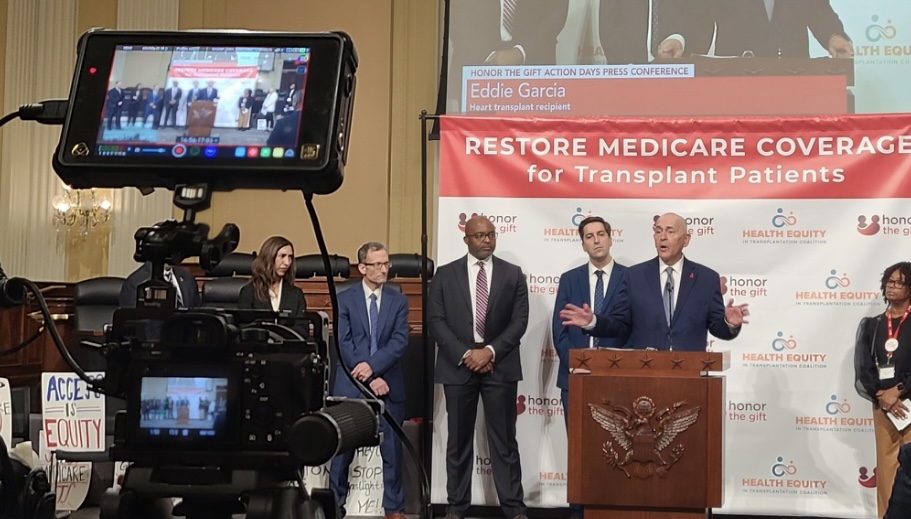
With the support of CURA Strategies, a Washinngton, D.C.-based public relations firm, the coalition led a group of over 140 transplant patients and caregivers on a march and rally in front of the Hubert H. Humphrey Building (home to the Human and Health Services Department) demanding that Medicare reverse its decision. I had the honor of representing transplant patients at a press conference held in the Canon House Building later that day.

In December 2023, Scott Leezer called again with another intriguing request. “Eddie, I bet I’m going to ask you a question that you probably never thought anyone would ever ask,” he started. Former Speaker Gingrich was looking for a patient voice to be a guest on his Newt’s World podcast. Would I be interested in sharing my story? Gingrich’s brand of right-wing Republican politics represents everything I believe is wrong with our country. After a long pause, I responded, “of course, for the cause.” Gingrich was gracious and a champion on the issue.

I went into the holidays feeling grateful for Sandra and the girls, friends and family, and for having the opportunity to do something meaningful in my life. The holidays were nice and uneventful. I didn’t give much thought to the whirlwind year of community service. I was invited back to work with LLA and TFHE in spring 2024. It seemed like my volunteer work in Washington, D.C. was done. Change in Washington is so slow. The professionals would carry the torch going forward.

Nine months later, I was back in Washington. This time it was to celebrate the Honor the Gift Coalition and the Health Equity in Transplantation Coalition’s successful campaign to overturn Medicare’s decision to stop covering the blood test. In an almost unprecedented move, Medicare changed its position on coverage. I stood alongside Rev. Al Sharpton, Al B. Sure!, and others to share my story yet once again.

The next morning, I took a walk around the White House before heading to the airport to catch a flight home. I reflected on so much. First and foremost, I made a commitment to follow Sandra and Mom’s advice to trust God’s plan and just go with it. Playing a small part in the Honor the Gift campaign was an experience of a lifetime. I met people from all over the country and opened my heart to make new friends. 

Walking by statues and  marveling at the majesty of the White House reminded me that we still live in a thriving democracy despite the political circus that threatens our existence. People do matter. We started this campaign with four people walking the marble halls of the Capitol trying to raise awareness about a wrong. The media and influential people joined the movement. The support grew exponentially until Medicare had no choice but to take notice. 

Even though a wrong was righted this time, these kinds of things are never truly over, especially during these politically uncertain times. The Washington, D.C. professionals will keep an eye on it. Thousands of new transplant recipients will benefit from the work. If ever called upon again to help, I’ll trust that God initiated the call. If my work on this issue is done, I’ll continue to live with faith, hope, and love, and stay in touch with friends new and old. 

At a Crossroads

Eddie García graciously shared his inspirational journey with our leaders. His relatable stories, wisdom, and experiences resonated with our leadership team and inspired us to continue performing at a high level. ~Rigo Topete, Regional Vice President Sales & Marketing, Comcast Pacific Northwest Region

* * *

I nervously walked into a hotel banquet room full of sales executives and managers in Olympia, Washington. The group was named the top performing sales team in the Pacific Northwest the year before. Company executives expected the team to repeat as the region’s most prolific sales team by exceeding its record-breaking performance from the previous year. The stakes were high. The company invited me to share my story and help inspire sales leaders to meet the moment.

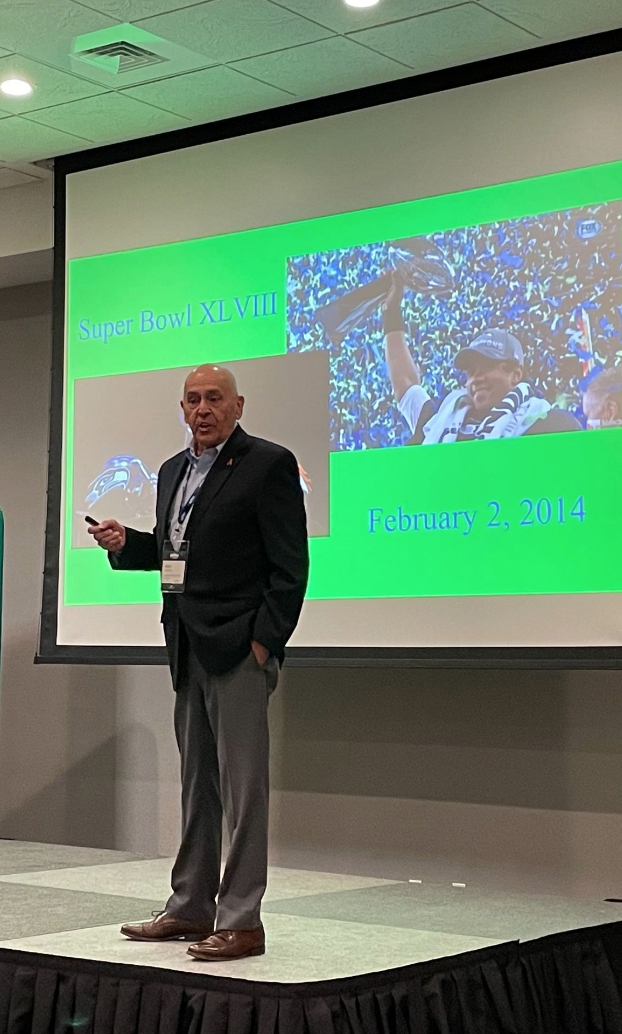
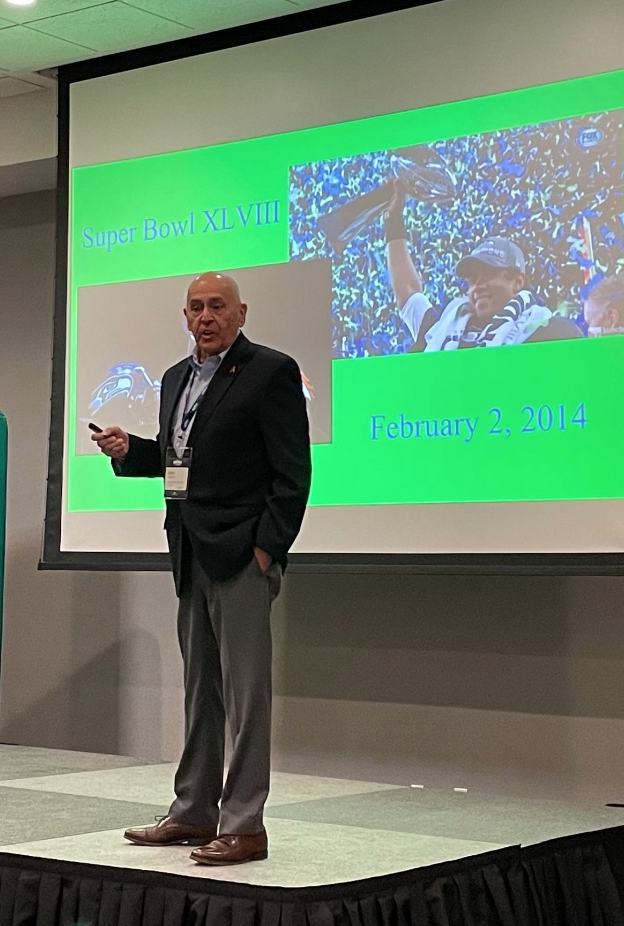
My pregame jitters came from the fact that there were 100 or so seasoned professionals in the room who had “been there and done that.” What could I say that they probably hadn’t already heard? I prepped tirelessly for weeks to make sure I would deliver a unique and meaningful speech. I decided to start my remarks by developing a relationship with those in attendance by telling a story about how their beloved Seattle Seahawks faced similar expectations and challenges the season after winning Super Bowl XLVIII in 2014.

Many in the audience shook their heads at that memory, smiled, and acknowledged my presence on stage. It was calming and gave me the confidence to share my story. I moved along and talked about the challenges of suffering a massive heart attack, living a decade with heart failure, and managing a heart transplant. 

I described how accepting God’s will is the foundation of faith and how rejoicing in my suffering led to hope by giving me the endurance and character needed to survive. Ultimately, it was unselfish love for Sandra and the girls that gave me the courage to fight day in and day out. The moral to my health crisis story, I emphasized, was how the power of faith, hope, and love carried me through that difficult time.

I urged the group to consider using that formula to lead their teams to another award winning year. They should have faith by accepting the fact that expectations were high and other teams were gunning for them. Rejoicing in that challenge would help them persevere through ups and downs, strengthen the team’s character, and turn hope into an action word, instead of an empty desire. I expressed how giving oneself for the sake of others is the very definition of love. By having each other’s backs, rather than infighting, unselfish teamwork would carry them across the finish line. 

When I concluded my remarks about 20 minutes later, the executives and managers rose to their feet in a rousing standing ovation. I was overwhelmed by the reaction and relieved that the mission was accomplished. After 30 minutes or so of taking questions, I headed to a table at the back of the room to sign books. I took time to talk with each and every person who wanted to share a story about family members with heart disease, cancer, and other chronic illnesses. With a story about conquering her own battle with cancer, one woman and I rejoiced together in our blessings.

On the flight back to San Jose, I reflected on the day and the meaningful conversations with amazing leaders. First and foremost, I felt gratitude for being able to touch the lives of others. I love being on stage and sharing my story to inspire people to persevere through life’s challenges. Another thought running through my mind was singularly selfish. Professional speakers make anywhere from $5,000 to $25,000 for doing exactly what I did in Olympia. My compensation for that appearance was nominal by comparison. 

Those thoughts and calculations came and went before landing at San Jose Mineta International Airport. Since that time, ideas about becoming a professional speaker have crossed my mind many times. My reasoning always begins with the opportunity to share my inspirational story with a wide audience and delves into potential financial gain. That’s where any further consideration of the idea slowly slips away.

I know what it takes to be a professional at anything, especially if the goal is to be the best I can be. It involves taking risks, hard work, and full commitment. At my age (60 years old) and because of the harrowing health journey I’ve endured, I’m just not sure I’m prepared to do what it takes to start a successful inspirational speaker business. I go back and forth in my mind analyzing the pros and cons of such an endeavor. So far, the cons are winning the day.

Recently, I became aware of a local organization in the market for an inspirational speaker. The proposed budget was around $7,500. The wheels in my head started turning and my stomach churned with excitement. I could do it, and for much less! I thought a second about offering my services before ultimately deciding not to speak up. I’m not sure why.

After thinking about why I didn’t make the offer, two things came to mind. First, the old imposter syndrome demons began to creep in because I wasn’t even considered. Maybe I’m not worth that amount of money and I’m just a legend in my own mind, the demons whispered into my ear. My previous speaking engagements told a different story. All audiences I’ve addressed react in the same enthusiastic way as the leadership team in Olympia. So maybe it wasn’t those old negative thoughts in action that kept me silent.

The second reason is that perhaps subconsciously I didn’t want to open a can or worms that couldn’t be closed. Could securing that speaking opportunity have been a slippery slope toward risk taking, working hard, and being completely dedicated to the work again? I’ve been down that path and it didn’t go so well for me or for my family. Nevertheless, the conversation put me in a self-imposed crossroads for a few days. 

I spent those days praying and reflecting on what really mattered. Was my ego tugging at my better senses? Yeah it was a little of that. Was it the potential financial gain? Yeah, of course. Who can’t use more money? Was it the fear that my inspirational story will never reach the masses? Yeah, that’s a biggie for sure. In the end, as always, it was faith, hope, and love that carried the day. 

If God wants me to be a professional speaker, He’ll let me know and I’ll do my part. In the meantime, I’ll rejoice in my suffering, fully accepting that I’m a great storyteller who isn’t on a big stage. I’ll persevere by seeking opportunities to speak at small gatherings and local events. Character, confidence, and commitment to the cause of inspiring others will strengthen my resolve and give me hope to keep sharing my story.

Between speaking opportunities, I’ll be home spending time with my family, washing dishes, folding clothes, and making dinner from time to time. I’ll also keep working on community passion projects by coaching emerging Latino and Latina civc leaders, teaching high schoolers about leadership, and advocating for my fellow transplant recipients. I’ll get in some reading and writing too. At the moment, this seems like God’s plan for me. I’m happy to do my part to fulfill His plan as best as I can, and I’m grateful that He guided me through the crossroads.

The Arena

Walking the Uch! – 2024

This is the fifth installment of ESEReport.com’s Second Chances blog series.

***

It is not the critic who counts; not the man who points out how the strong man stumbles, or where the doer of deeds could have done them better. The credit belongs to the man who is actually in the arena, whose face is marred by dust and sweat and blood; who strives valiantly; who errs, who comes short again and again, because there is no effort without error and shortcoming; but who does actually strive to do the deeds; who knows great enthusiasms, the great devotions; who spends himself in a worthy cause; who at the best knows in the end the triumph of high achievement, and who at the worst, if he fails, at least fails while daring greatly, so that his place shall never be with those cold and timid souls who neither know victory nor defeat. ~ Theodore Roosevelt, 26th President of the United States

***

It was a beautiful spring evening in San Jose, California on March 30, 2010. The temperature was in the low 60s on that cloudless day. A Republican multi-millionaire tech executive running for governor named Steve Poizner scheduled a campaign event at Mt. Pleasant High School to announce the publication of his book about his experience teaching one class for one semester at the school. It was a vehicle to launch his education reform campaign.

As president of the East Side Union High School District board, I sent a letter to Poizner prohibiting him from visiting Mt. Pleasant for campaign purposes, citing California law. The book was filled with negative stereotypes about Latino kids and students in general from the east side. The community was in an uproar and planned to protest the candidate’s scheduled book signing later in the evening.

There was a mix of tension and anticipation outside of Barnes & Noble bookstore in Eastridge Mall. About 100 students, staff, and community members gathered there to take a stand against the book and its author. As Poizner approached the side entrance to the store, I asked him to justify his critical portrayal of our students. Unimpressed by his meaningless campaign talking points, I listened intently anyway, unaware of  news reporters that crowded around us. 

Eye to eye with Steve Poizner – March 30, 2010

The media covered our brief exchange. Every local newspaper and television news crew covered the story. The episode made statewide and national news including stories in the Los Angeles Times and on National Public Radio. Poizner never recovered from that day. His campaign was dead on arrival. It was scary to take on a tech multi-millionaire, but it was exhilarating too! If a heart attack hadn’t stopped my career in its tracks, I would have had a powerful political enemy for life.  

I miss being in the arena.

I’ve loved being in the arena since I was a kid. There was the time I was the winning pitcher in a Little League championship game. The coach ran onto the field toward the pitcher’s mound and lifted me into the air with a big bear hug. My teammates were excitedly jumping up and down around us. A few years later, I stood on the free throw line in a packed gym at James Lick High School. If I made the shot, we would have won the game and been tied for first place. I missed it. It hurt so badly that it felt like my dog died as I walked off the floor.

Some 20-plus years later, I was standing tall in the middle of my campaign office with two-year old Erica in my arms. I had just beat two opponents and won a spot in the 2000 general election for San Jose City Council. The crowd around us cheered as I rallied supporters to get ready for a spirited campaign in the fall. Five months later, a smaller group of just family was gloomy as we sat watching the election returns on TV at a local restaurant. I lost the race in a big way. The crushing defeat took a toll on me.

Win, lose, or draw, I miss being in the arena.

Over the past two months, I’ve been writing on this blog about second chances. I’ve written about how my spiritual and mental health journeys have given me a new perspective on life. Trusting God and living right here, right now have been the guiding lights on this journey. I hope I’ve inspired readers to give faith and living in the moment a try.

Of course everything isn’t hunky dory now that my relationship with God is stronger and mindfulness meditation is part of my daily routine. Far from it. I often wonder if these concepts are really helping me or I’m just trying to convince myself that they do. Some readers are probably wondering about that as well. I know this much to be true. I believe that faith and living in the present moment are the paths to inner peace and happiness. 

Staying with it everyday is the hard part. For every time I put myself fully in God’s hands or experience a Zen moment, there are just as many moments of  uncertainty and doubt. The journey reminds me of that old country song, One Step Forward (Two Steps Back) by the Desert Rose Band. Determination and perseverance are in my DNA. I’ll keep working through it  no matter how many times I take two steps back.

The world is wonderful and life is beautiful. But let’s face it, they’re also harsh. The world that occupies our minds is even harsher. I’ve been through a lot. There’s no sensible reason for me not to be grateful at all times. I get that. But . . . there’s a little corner of my mind that still aspires to be in the thick of things. On a recent trip to the Seattle area, I spoke to a large group of business executives. The feedback and standing ovation stirred my aspirations to get back into the arena. Adrenaline sparked the small section of my brain to scream, “You belong here!”

Speaking in Olympia, Washington – 2024

But then again, there’s something special and serene about leisurely folding towels, laying back on the couch reading, and walking Erica’s puppy. If I sound confused about what to do with this amazing gift of a second chance, you got that right. My situation isn’t unique. We’re all searching for meaning. Since we can’t soften the harshness of the outside world, finding that sweet spot where we can calm the harshness of our inner world is like finding gold.

There is no right answer. Despite stumbling through my faith and mental health journeys, I’m going to keep going. Maybe, just maybe, God has chosen this part of my journey to be the new arena I’m looking for. To be sure, I’ve missed God’s signs for most of my life. Maybe I ought to give doubling down on faith and mindfulness a chance. To paraphrase President Teddy Roosevelt, if I fail, at least I’ll “fail while daring greatly.” 

There’s Always Hope

This is the third installment of ESEReport.com’s Second Chances blog series.

***

Rejoice in our sufferings, because suffering develops endurance, and endurance produces character, and character produces hope. ~ Romans 5:3-4

***

On a sunny and crisp Thursday morning earlier this month, I sat outside sipping a cup of hot coffee at the Evergreen Coffee Company, a cool mom and pop coffee place near my house in San Jose’s Village Square neighborhood. A recent heart attack survivor and I were sharing war stories about open heart surgery, hospital life, and the emotional challenges of recovering from a major life disruption.

As the conversation turned to the heavy toll a chronic illness takes on mental health, he cut to the chase. “This thing is messing with my mind,” he blurted out. I wasn’t surprised by his frustration. It turns out that managing emotions has been the hardest part of my journey. Suffering a heart attack is life-changing. The more severe the attack and damage to the heart, the more your life changes. Confusion, fear, and anxiety set in before your mind can make any sense of what happened.

After sharing his frustration, he promptly asked, “How did you get through it?” I didn’t reply immediately. The short answer is that I haven’t gotten through it. It’s an ongoing process. I just take it day by day and follow the advice Winston Churchill offered to his country during the darkest days of World War II, “If you’re going through hell, keep going.”

When I finally responded, I thought of one word . . . hope

Of course, after a life-altering medical crisis, many ingredients are needed to develop stable mental health. A supportive family and an exceptional healthcare team are essential. Plenty of faith and a hearty helping of hope tie it all together. St. Paul the Apostle’s encouraging wisdom in Romans 5:3-4 keeps me going when the burden of living with chronic heart disease for nearly 15 years inevitably tries to exploit my anxious mind.

In his Letter to the Romans, St. Paul encouraged us to “rejoice in our sufferings.” I can understand how the thought of “rejoicing in suffering” sounds like a dumb strategy when facing impossible odds. That didn’t make sense to me when I first read it. But as I reflected on my battle with heart failure and subsequent faith journey, I realized that the 10-year road to a successful heart transplant was mapped out by Romans 5:3-4.

When I emerged from a medically induced coma caused by lung failure during the summer of 2010, my body degenerated and became weak. I had to re-learn how to sit, stand, walk, and swallow. Doctors told me that my muscles had “fallen asleep,” so I could regain strength with an intensive 8-week physical rehab program. When I was stable enough, they sent me to the Kaiser Foundation Rehabilitation Center in Vallejo, California (KFRC). 

The KFRC is a state-of-the-art facility. According to the 2023 U.S. News’ Best Hospitals study, the KFRC was selected as a Top 50 rehab program in the nation for the third consecutive year. Like great coaches, the physical and occupational therapists were relentlessly determined, yet empathetic. My competitive nature kicked in. My goal was to finish the program in less than eight weeks. I was pumped! I rejoiced in my suffering. I walked out of the KFRC with the aid of a walker three weeks later.

Even though I was walking again, congestive heart failure hadn’t taken a break. My heart was badly damaged, but I wasn’t a good candidate for a transplant for two major reasons:  (1) my heart was still functioning and (2) my lungs weren’t strong enough to withstand major surgery. I learned as much as possible about my condition to understand what needed to be done to give myself the best shot to get a transplant sometime in the future.

My cardiologist recommended that I eat a heart healthy diet, take meds, and exercise to keep my body healthy. It was going to be a long process with no guarantees. To be successful, I had to weather the storm of heart failure for an unknown amount of time. It could have been months. It could have been years. As my heart grew weaker, my lungs grew stronger. My suffering developed endurance. I lived with congestive heart failure for the next 10 years.

Getting through those 10 years was hard. It required lots of discipline. I had to take five pills, three times a day. Maintaining a low-fat, low-salt diet tested my will power on a daily basis, especially during summer barbecues and the holidays. Walking for just 30 minutes per day got harder as each year passed by. I’d always been able to stay disciplined when it was on my terms. When I made the rules. This time was different. My cardiologist made the rules.

Although this regimen was forced upon me, I gave up control and focused on it like a laser day after day, month after month, and year after year.  I stayed with it even as my heart became sicker. There were many days when the allure of unhealthy food, frustration about staying on a medication schedule, and extreme fatigue dared me to quit. I withstood the temptation. My endurance produced a strong character. My body was strong and ready for heart transplant surgery when I got “the call.”

Life comes at us fast. It could be a job loss, the end of a long relationship, or a sudden life-changing medical crisis. St. Paul the Apostle taught us that there’s always hope. Rejoice in our sufferings, because suffering develops endurance, and endurance produces character, and character produces hope.

As we sipped our coffee, I recommended to my new friend that he seek counseling. It was indispensable to my recovery. He mentioned earlier that he’s a man of faith, so I also shared my story of hope based on the wise words in Romans 5:3-4. I’m not sure if it was helpful to him, but reflecting on my journey and the blessings that have come from it energized me. 

I walked home from the Evergreen Coffee Company with a spring in my step, a grateful grin upon my face, and hope in my heart. 

Never Enough?

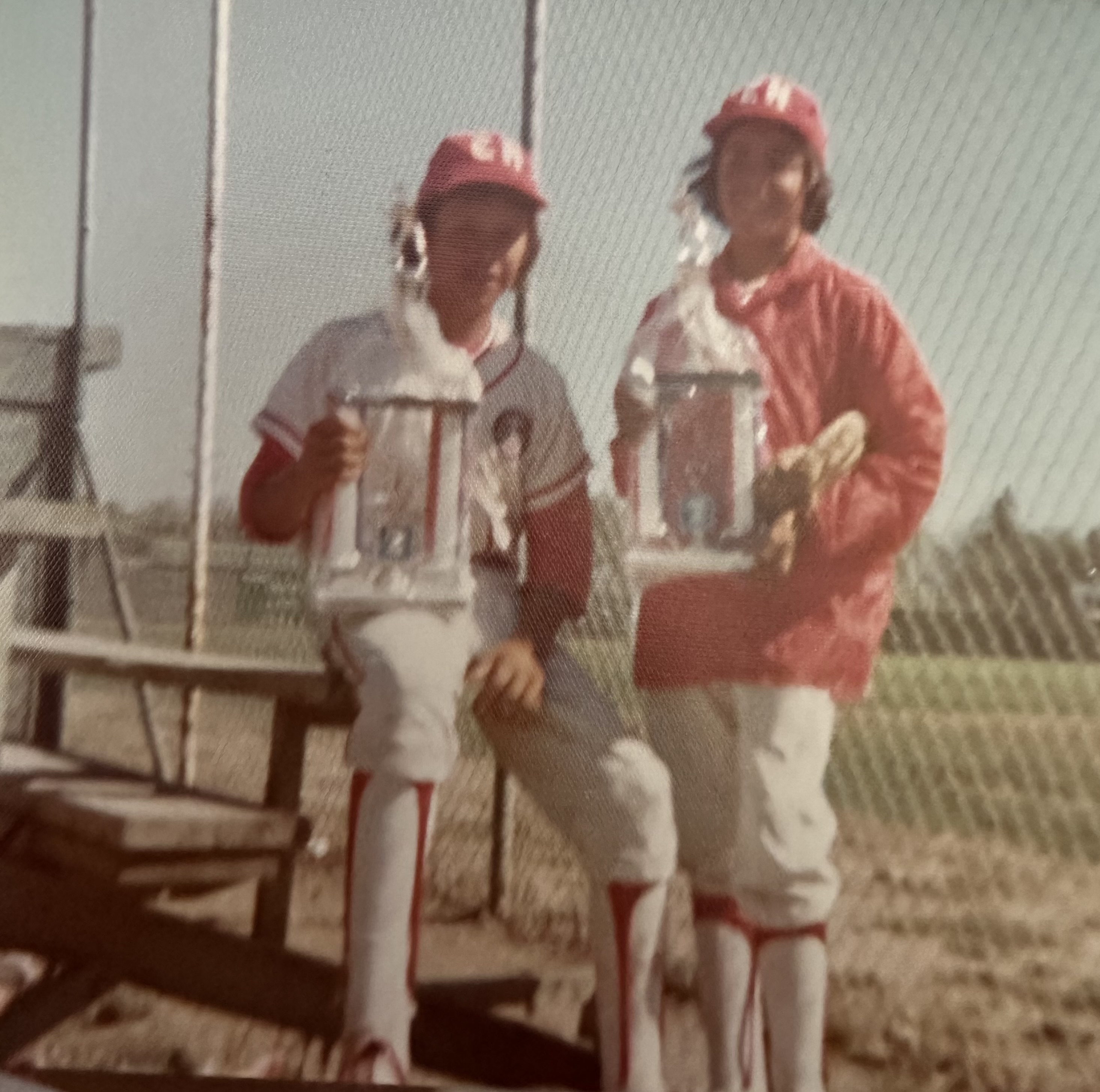
Co-Captains of the East Hills Little League Major Division Champions ~ 1976

This is the second installment of ESEReport.com’s Second Chances blog series.

***

 My grace is sufficient for you, for my power is made perfect in weakness. ~ 2 Corinthians 12:9

***

It was the summer of 1976, my last season playing on the East Hills Little League baseball fields. Those were the days when team names were those of sponsors that paid for uniforms. Instead of displaying Giants, Athletics, or Mets logos, our uniforms showcased Mervyn’s Department Store, Fontanetti’s Sporting Goods, Anello Trucking, and other local businesses and organizations. I played for the East Valley Lions Club, the major division “Red” team. We wore red caps with white “EH” ironed onto the front. 

The major division diamond was on the campus of August Boeger Middle school on the east side. The field was a miniature version of professional stadiums with a large backstop, pitcher’s mound, grass and dirt infield, press box with PA system, electronic scoreboard, and home run fence. It was like playing in the big leagues. Kids playing in the younger farm and minor divisions couldn’t wait to play on that prestigious field. 

I had a great season in 1976. I was named co-captain of the East Valley Lions and selected to be on the All-Star team. Coach called on me to be the starting pitcher for the league championship game against Anello Trucking, the “Blue” team. It was a warm June evening and the old wooden bleachers were filled with cheering family and friends. Dad sat at his regular spot at the top of the stands calling pitches from his perch. Mom sat faithfully by his side.

I don’t remember anything about the game. Not one pitch. Not one play. Not one at bat. I do vividly remember what happened after the last out that sealed our victory. Coach ran onto the field toward the pitcher’s mound and lifted me into the air with a big bear hug. My teammates were excitedly jumping up and down around us. 

I instinctively looked toward the top of the bleachers behind the dugout. Dad was standing and looking back at me with a smile of pure pride and joy. Mom had her usual expression of modest delight regardless of the game’s outcome. Dad’s smile was out of this world. He was a charismatic man. His outward display of confidence and his infectious grin could fill up any space he was in. 

Dad also had a menacing scowl when he was unhappy or disappointed. His furrowed brow, pursed lips, and nod of disapproval was like kryptonite to me. It sapped energy from my being. Dad had a hard life. His father died when he was just a boy. His bitter mother raised six kids in a wooden shanty with a dirt floor. He experienced the horrors of WWII as a teenage sailor in the U.S. Navy. He saw the world in stark practical terms. Success requires doing things “right.”

Mom was an only child raised by her single mother and grandmother in a small, but loving home. Despite living in relative poverty, her upbringing relied on faith and hope for a better tomorrow. She was yang to Dad’s yin. She always found good in everything. If something unfortunate happened, well . . . that was just God’s will.

Those deeply held views that my parents had about themselves, others, and the world are what psychologist Aaron T. Beck referred to as “core beliefs” in his groundbreaking development of cognitive therapy. Core beliefs are basic lifelong “truths” that a person develops about himself or herself, people, and the world. They usually develop from childhood or through traumatic life experiences. 

In other words, our understanding of how the world is supposed to work comes from hearing and watching what our parents and other influential people (i.e. older siblings, friends, teachers, coaches, bosses) around us say and do. Positive core beliefs can lead to a happy, productive, and balanced life. Anxiety and depression caused by negative core beliefs can lead to a downcast, deprived, and disorderly existence. 

My parents sought to create an environment for their children to thrive as adults. Dad’s core belief that the world is a harsh place that can be conquered by adhering to his formula for success made it plain that no matter how hard we worked, we could always do better. Mom’s core belief that all is well that ends well with God’s grace inspired a sense of confidence that we would thrive with the gifts provided by God. 

Together they instilled into their kids the combination of having to constantly do better and believing they have the talents to succeed at anything they try. This seemed like Mom and Dad had the ideal formula for developing strong, confident, and productive members of society. On the surface, it appears as though they accomplished their mission. But it came at a heavy emotional and mental cost to me. 

I can’t speak for my siblings, but the drumbeat of “you can do better” and “mijo you’re the best” set the expectation bar so high for me that it was unreachable. In my mind, no matter what I did in life, it would never be enough. That led to an almost insatiable drive to succeed. I would do anything to exceed my parents’ hopes and dreams for me, whatever those may have been. 

It’s no surprise that I grew up to be a pleaser. Psychologists refer to extreme cases of this condition as Sociotropy or Dependent Personality Disorder. People with pleaser tendencies put too much emphasis on social acceptance. Their behavior is a way to boost self-esteem and avoid the perception of failure. Ultimately, those who suffer from the need to be accepted and validated live with the sense of never being or doing enough to meet their own unrealistic standards based on untrue core beliefs.

This can be damaging to mental and emotional health. Although I’ve never been diagnosed with Sociotropy or Dependent Personality Disorder, my thirst for acceptance and approval has caused me much pain and suffering. Over time, I transferred the desire to please my parents to wanting  validation from Sandra, our daughters, extended family, the community I served in public office, and professional colleagues. That’s why I might have almost worked myself to death.

The self-imposed core belief that I’ll never be enough has haunted me throughout my life. I’m not suggesting that Mom and Dad are guilty of setting off a domino effect of generational trauma. They were loving parents who did an amazing job setting their children up for a successful and happy life. The core beliefs my parents passed on to me have led to, by most accounts, a pretty good life for their youngest son, with the glaring exception of feeling inadequate. 

When I was in my Little League coach’s arms on the mound at the East Hills League field in 1976, little did I know that the seemingly insignificant act of glancing toward the bleachers and wondering whether my pitching performance was good enough to earn an “atta boy” from Dad would follow me for decades. Yet here I am trying to learn how to make sense of it all 48 years later.

That’s where faith, hope, and love come in. St. Paul wrote that God tells us, “my grace is sufficient for you.” As I navigate ever further into understanding faith and making mindfulness practice a priority, what really matters is slowly becoming more clear. On the surface of my psyche, I know that what I’ve done with my life so far is sufficient. However, I’ll most likely spend the rest of my life challenging my core belief that I need to do more and be more.

As Mom used to say, un día a la vez – one day at a time.

Second Chances

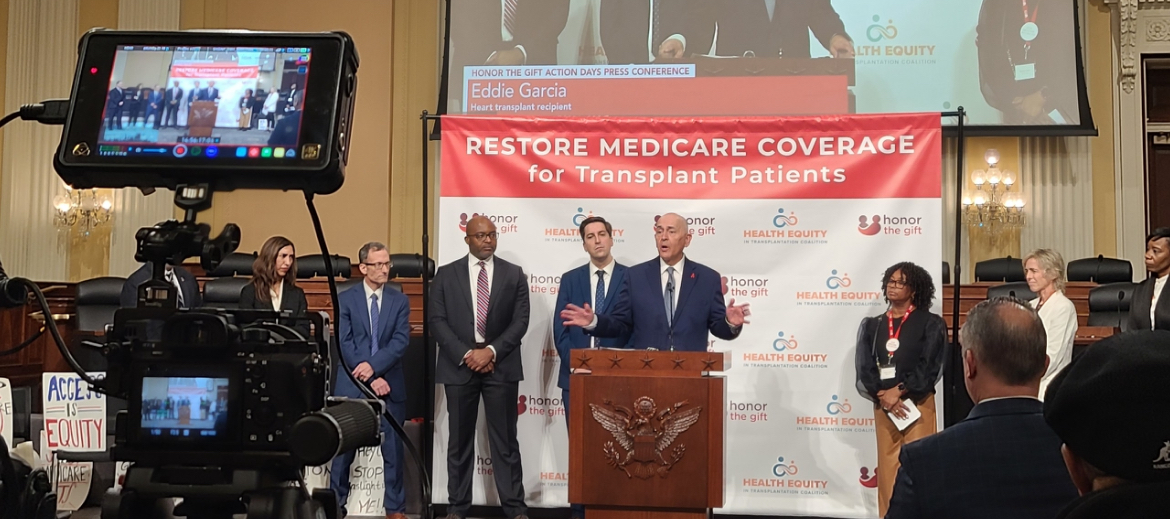
Honor the Gift Press Conference – Washington, D.C. – December 5, 2023

This is the first post of ESEReport.com’s Second Chances blog series.

***

The Lord is not being slow in carrying out his promises, as some people think he is; rather he is being patient with you. ~ 2 Peter 3:9

***

It was sometime in late May 1977. I sat in a classroom at Joseph George Middle School in east San Jose fidgeting in my seat nervously waiting for my turn. I was in the eighth grade, a few weeks away from middle school graduation day. In addition to the traditional valedictorian and salutatorian addresses, a student would be selected to give a speech about campus life. I was one of about six students who tried out for that role.

With Dad’s help, I worked hard on drafting my comments. I wasn’t the smartest kid in school, which explains why I wouldn’t make either of the customary academic achievement graduation remarks. Neither was I one of the most popular students. The other five or so at the tryouts fit into that category. But even as an immature 13 year old boy, I was ambitious and took on challenges that stretched my natural abilities.

Since I loved to read, I worked meticulously on every word looking for an advantage over the popular kids. Dad, who was also a prolific reader, suggested some pretty fancy words that would surely make me sound more sophisticated. Once the final draft was finished, I still felt unsure about being able to stand out. Dad had a brilliant idea. Rather than reading the speech, he suggested that I should memorize it! I practiced and practiced.

When one of the teachers serving as a judge called my name, the nervous tension made me nauseated. As I walked up to the front of the room, a wave of anxious warmth wrapped around my head. My trembling hands placed the written speech on the lectern, just in case I needed a reminder of the words I memorized. When I looked up, there were three teachers and about six students staring at me. My head and flushed face were now in full-fledged nervous fever.

I forgot everything I had practiced. Not one word was coming to me. I looked down at the piece of paper to jog my memory. Nothing! My heart was beating so fast that I thought it would jump out of my chest. I decided on the spot to read my remarks. That didn’t turn out much better. My mouth was so dry that I’m sure no one could understand the stuttering sounds that came out of it. The performance was a complete disaster. I was so embarrassed that I cried when Dad came home from work excitedly asking me how it went.

I was convinced that speaking in front of people would never be in my future. Nevertheless, life went on. In high school, I wasn’t so bad at what we called oral reports in those days. After I flunked out of my first try at college, I coached middle school and high school baseball and basketball. I did just fine with the pre and post game speeches in front of the kids. Speaking to parents at booster club meetings and end of season banquets was part of the job. I did just fine with those too.

In 1989, James Lick High School named me Coach-of-the-Year at an end of year ceremony. The disaster that was 1977 didn’t even cross my mind when I walked up to the podium to deliver an acceptance speech in front of about 200 people. When I returned to college in 1991, I enrolled in a public speaking course primarily because it was a required class, not that I was interested. The professor noted that I was a natural public speaker. His confidence in me was inspiring. In class, I developed the skills that would make speaking in public the foundation of my career.

So what happened between 1977 and 1991? If the professor was right that I was a natural, why was my first attempt at public speaking so awful? How did I improve without any formal training during those 14 years? The likely answer is that life just has a way of working itself out. Life experiences gave me a bunch of opportunities after 1977 to use this natural ability. College gave me the tools to make the most of it in my career and community service. 

I believe that God is the architect of life working itself out. In correspondence with people who lost hope, St. Peter’s Second Letter emphasizes, “The Lord is not being slow in carrying out his promises, as some people think he is; rather he is being patient with you, wanting nobody to be lost and everybody to be brought to repentance.” God was surely by my side in that Joseph George Middle School classroom. Although I badly wanted to speak at graduation, God let me know that I wasn’t ready.

St. Peter’s Second Letter reminds us that God is in charge. God gives all of us natural gifts. Most times, we never recognize or accept that we have them. Sometimes we use them for good and sometimes we use them for wrongdoing. Sometimes we don’t use them at all. “Wanting nobody to be lost,” St. Peter’s letter also provides hope that God gives us second chances when we don’t get it right the first time.

I believe in second chances. It’s taken me four decades and many second chances to understand. It started with the opportunity to return to college after the initial failure. After two failed bids to serve in public office, I earned a seat on the school board with a third attempt. When a massive heart attack threatened to end my life and a heart transplant saved it, God’s grace allowed my journey to continue. I’ve been blessed with a lot of second chances. 

These experiences have taught me three things: (1) We all have natural gifts. We just need to be patient and give God a chance to reveal them to us in his time. (2) We’ve all had second chances in life. We just need to slow down a bit to recognize and reflect on them. (3) We all could use as many second chances as God provides. This world is unforgiving. The sun rises every morning no matter how the previous day treated us. Everyday is a second chance.

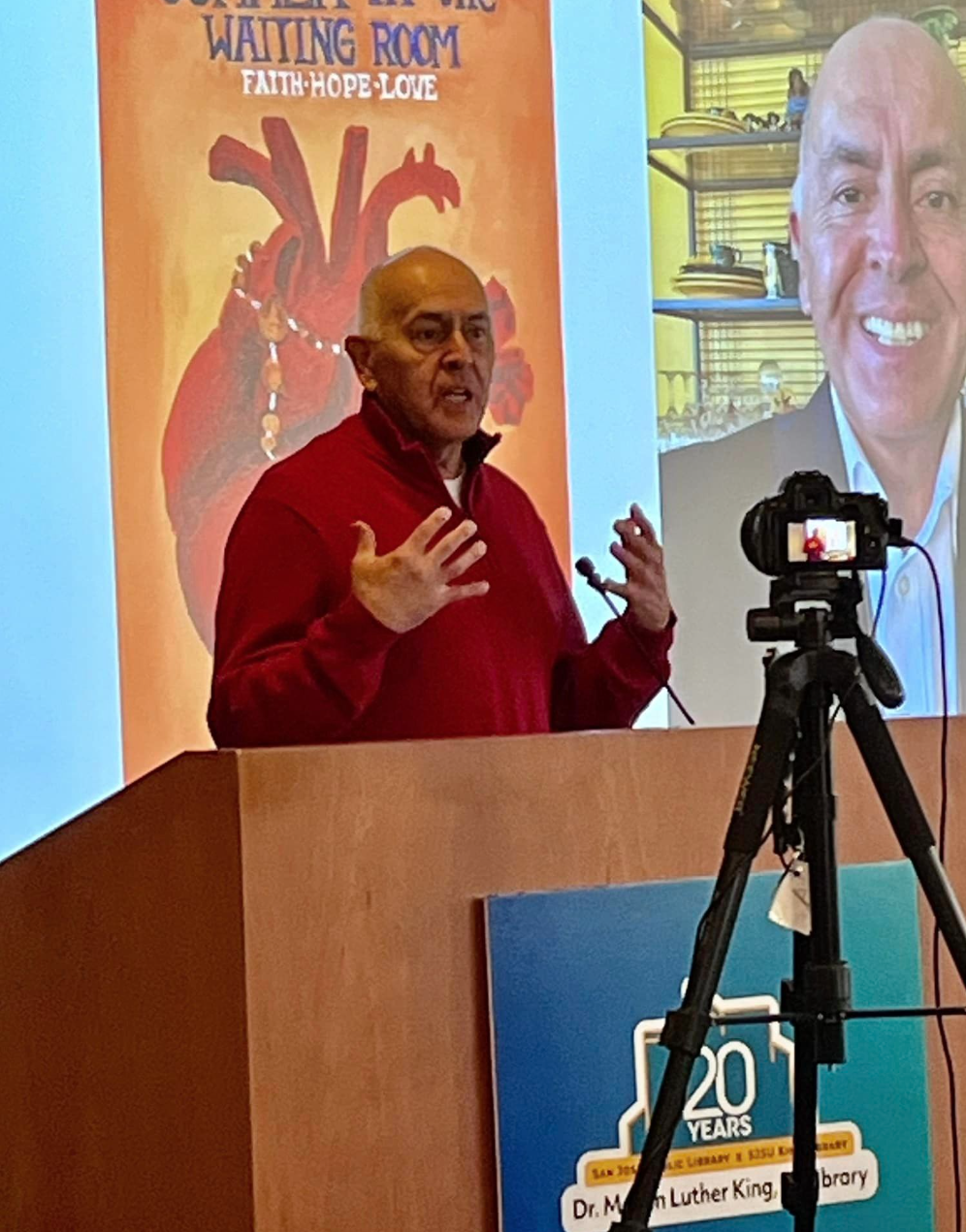
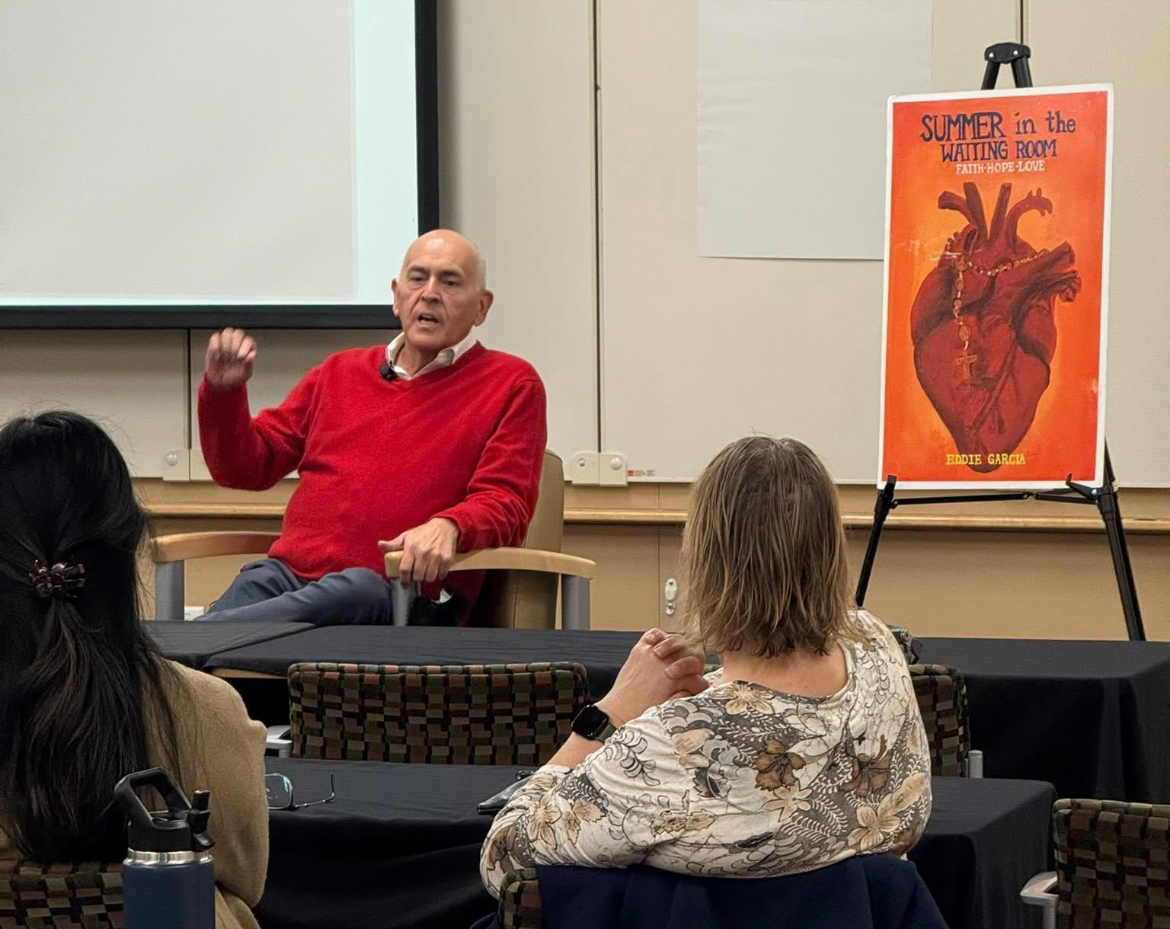
I shared my health crisis and the beginning of a spiritual and mental health journey in my 2022 book, Summer in the Waiting Room: Faith • Hope • Love.  On this blog, I plan to spend a good portion of 2024 digging deeper into how strengthening faith and focusing on mental health has had as much a dramatic impact on my life as the heart attack and transplant.

I’ve been doing my best (mostly unsuccessfully) to live with faith, hope, and love. I’ve also been trying to practice meditation and mindfulness (mostly unsuccessfully) on a daily basis. Although I have a long way to go to fully embrace these ancient and proven ideas, I’ve found that my life is becoming more meaningful as I continue to explore the mystery of faith and the inner sanctum of my psyche.

I’ve come a long way from that classroom at Joseph George Middle School 47 years ago. Recently, I had a chance to use for good what the professor said 33 years ago was a natural ability. At a national press conference in Washington D.C. last month, I had the honor to represent heart transplant recipients. I just hope my remarks did my fellow transplant warriors justice. You can see a short clip of that speech here

Thank God for second chances.

Summer in the Waiting Room: How Faith, Family, and Friends Saved My Life (Excerpt #71)

canstock31782253
Image by canstock.com

Author’s note: The following passage is the first excerpt from Chapter 9, “August 4th,” of my book, Summer in the Waiting Room: How Faith, Family, and Friends Saved My Life.  This is the 71st excerpt in the blog series.

*************************

Chapter 9

August 4th

 Just five days after the tracheotomy procedure, doctors decided I was ready to move onto the first phase of recovery. The daily X-rays showed that the haze that ominously covered my lungs was dissipating. I was able to breathe with less mechanized oxygen.

My heart, defying the strain caused by ARDS, weakly and steadily pumped blood to my hungry organs. The latest CAT scan and MRI demonstrated no loss of brain function. I was becoming more alert every day as the last remnants of the sedative medication left my body.

Without the distraction of the vivid dreams caused by ICU Psychosis and the sedatives, I was beginning to understand what was happening. The dreams gave me bits and pieces, but I still had no real understanding of the puzzle that had become my life. I had a dream that a distinguished politician and his wife visited and gave the girls tickets to the red carpet opening of a new teen movie.

While the specifics of the dream were pure fantasy, I learned that my friend, California State Assemblyman Joe Coto, did find his way into the ICU. Completely unrelated to that visit, the girls went to a popular movie that summer and told me all about it while I was in a semi-conscious state. My brain connected these separate incidents into one thought, and added the red carpet tickets.

I also dreamed of a rusty pail stuck on my head with its handle serving as a tight chin strap while a hose was lodged in my throat. Perhaps that was when the doctors put me on the BIPAP machine. Following doctor’s orders, Sandra tuned the television to channels I liked and played music that would keep me brain active.

Whether I was in a hot and dusty refugee camp unable to move or in a convalescent home with Frank Sinatra and Dean Martin tunes playing in the background, there were several consistent themes to my dreams. An object in my throat, the inability to move my limbs, an insatiable thirst, friends and family in weird places all desperately trying to help me out of unrealistic predicaments.

As my mind cleared, I began to realize that I was in a hospital, paralyzed, with tubes and wires connecting me to all sorts of things. On August 1st, doctors removed me from intensive care to the ICU Step-Down Unit. The unit was an interim stop between the ICU and a regular hospital room.

I no longer needed a dedicated nurse caring for me around the clock. Physical, occupational, and later on, speech therapy would intensify. In the ICU, therapists provided exercises that Sandra could do with me to begin waking up my muscles that had deteriorated during the month I was on the paralytic medicine.

Following the therapist’s example, Sandra would lift my legs and arms, and gently raise my head up off the pillows. Rotating my ankles, she would strengthen my lower leg and feet muscles. Doctors told her that it would be a long and difficult road to recovery, but I would be able to fully function as the paralysis was related to muscles rather than nerves. I don’t have a memory of those first therapy sessions in the ICU.

The day I moved to the Step-Down Unit was blurry to me. I remember my bed being maneuvered through long hallways and going into an elevator. The first floor room in Step-Down was large with a window on one side looking out into the street and a large space between the door and the bed. There wasn’t as much activity in the unit and a nurse came into check on me in regular intervals. I didn’t feel as safe as I did in the ICU. When Sandra left the room, I was alone in what seemed like a cavernous space.

The first few days were uneventful. A nurse would check on me in the morning and write the goals for the day on a whiteboard. The entries included the day and date, medications to be administered, therapist schedules, and any other information doctors wanted included on that day. The nurse would ask me my name and queried me about the date. Sandra would read my lips and translate for the nurse.

With the breathing tube firmly in my mouth, I would say “Eddie” without sound coming from my mouth, and then follow-up with “Not sure.” The critical care doctor would arrive not long after the nurse and update Sandra on my progress: lungs getting clearer, heart stable, and all other organs functioning. He was always upbeat and positive, assuring Sandra that I was nearly out of the woods.

Later in the day, between Sandra doing repetitions of the exercises with me, the therapists would come in. They moved my limbs and tried to sit me up for a few minutes while bracing me to keep from falling. It was hard work and painful. I was no longer on sedatives and my muscles weren’t numb, so I could feel even the slightest movement of my body.

On the fourth day in the Step-Down Unit, the first true breakthrough in my cognitive state emerged. I remember looking at the whiteboard, reading the entries, and understanding the content. I didn’t really understand what was going on, but it didn’t look good. That morning the nurse greeted me with a cheery “good morning” and asked me how I was doing.

She followed with the standard questions, “What’s your name?” and “Do you know what day it is?” I lip-synced, “Eddie,” and “August 4th.” Although her eyes welled up with tears, Sandra’s smile was filled with many emotions: gratitude, relief, happiness. This was a pivotal moment in my recovery. I demonstrated to Sandra that I was aware of my surroundings. She couldn’t wait to report this great news to the waiting room.

With that out of the way, the day went on as planned.

*************************

Next Wednesday: My head was spinning when Sandra explains to me why I’m in the hospital.

Summer in the Waiting Room: How Faith, Family, and Friends Saved My Life (Excerpt #70)

img-20120718-00038
Image by esereport.com

Author’s note: The following passage is the final excerpt from Chapter 8, “Sharks & ‘Cudas,” of my book, Summer in the Waiting Room: How Faith, Family, and Friends Saved My Life.  This is the 70th excerpt in the blog series.

I dedicate today’s excerpt to an old friend and coaching colleague who passed away last night after living a full life with heart disease. RIP Coach Bob Monges.

*************************

As the heavy sedatives wore off, my vivid dreams manufactured by ICU Psychosis focused more and more on that nasty tube. In addition to the eucalyptus branch, I dreamed of chewing on rubber hoses and McDonald’s straws, and trying to pull out steel pipes that stuck out of my mouth and lodged in my voice box. As I awoke from the surgery, I instantly felt relief.

The small tube inserted into my throat at the neck was held in place by a “trach-collar.” The collar stabilized the tube so that it could be connected to the respirator. Studies have demonstrated that the trach-collar is the most effective path to wean patients off of mechanized breathing. It also relieves pressure on the vocal chords and minimizes additional damage to the voice.

When Sandra reported to the waiting room that I sailed through the operation with no complications, there was a collective feeling of optimism and hope. For more than a month, the waiting room inhabitants had been in a constant state of alert. Every new procedure led to some obstacle that created additional fear and concern. As the hours ticked away, Sandra continued to share good news that the tracheotomy was working. That evening, the waiting room buzzed in an almost festive mood.

The doctor later told me that Sandra was an “incredible woman.” She was a savvy and well-informed advocate, he went on to say. Her questions were always on point. Once she made a decision to move forward with a recommendation, there was no turning back. In a positive way, Sandra was “intimidating,” he said. Her keen understanding of the issues related to my condition once again led to forward momentum.

During the next hours and days, I continued to show improvement. My oxygen numbers stabilized even as respiratory therapists decreased the amount of oxygen the respirator sent to my lungs. My mind continued to clear as the remnants of the strong sleeping medicine dissipated. I wasn’t yet fully aware of my paralysis predicament. It hadn’t dawned on me that I wasn’t eating, drinking, talking, or going to the bathroom. But, I was beginning to recognize a rhythm to the ICU and distinguish between day and night.

Early each morning, an X-ray technician would come into my room to provide doctors with the latest images of my lungs. I could hear the slow rolling of the heavy mobile X-ray machine lumbering closer to my door. That sound was the signal to the start of a new day. The technician, with the help of a nurse or other staff member, raised the bed to a 45 degree angle and held my listless body upright to slide the X-ray tray between my back and the bed. The tray, cold and hard against my skin, would stay in place so the technician could take the picture.

The unit would come alive later in the morning as a kaleidoscope of sounds would fill the air: the sticky sound of rubber-soled shoes quickly walking across the polished linoleum floor, the slow and steady ding-dong at the nurses’ call station, doctors, nurses, and technicians exchanging directives and coming in and out of my room to do tests or change the medication that flowed from the IV forest that surrounded me, the public address system paging doctors, the beeping and whirring of the machines that sustained my life, and the small wheels of the cleaning crew carts rubbing against the floor as they went from room to room.

When Sandra left the room, I became anxious. There were few sounds that soothed me to let me know that she was on her way. Amid the cacophony of activity, a loud buzz followed by a distinctive squeal alerted the ICU that the heavy wide doors leading into the unit were opening.

Seconds later, I could hear the zip-zip sound of the electronic hand sanitizer outside of my room dispensing its cleansing foam onto someone’s hands. In would walk Sandra, sometimes alone and sometimes with someone from the waiting room. I would feel at ease and my anxiety would go away.

I knew when evening and night arrived as the sounds of the day subsided and the movement of people in an out of my room decreased. When Sandra was visiting in the waiting room with friends or out at dinner with family, the only person I saw was the night nurse on duty right outside of my door.

Suddenly, the squealing ICU doors and the zip-zip sound of the sanitizing machine made me feel warm and safe as Sandra brought the girls in to say good night followed by the small parade of family and friends that usually included my brother Steve, Rudy, Will and Juanita, and others. The Peraltas would come in signaling the end of the night.

For the next several days, the routine stayed in place. The tracheotomy was working. Respiratory technicians, on doctor’s orders, regularly decreased the amount of oxygen flowing to my lungs, hastening the weaning process. The waiting room became livelier as my condition showed promise and improvement.

To everyone’s amusement, Pancho was the de facto concierge of the waiting room. With his boisterous personality, he answered phones, directed families to the right place, and soothed the fears of others whom also had loved ones in the ICU. The room would erupt with laughter when strangers went to him for directions for gaining access to the unit.

The stockpile of food and drink kept growing. A variety of water, juices, and soft drinks was available to whoever happened to walk in. The food was getting better. One night a parent from Sandra’s school brought in her homemade tacos that were the talk of the waiting room for weeks. Six years later, Miguel, Eddie, Pancho, and Mariano still rave about the Mexican treats. Sandra’s friend Rosa Garcia always made sure that coffee and pastries were ready for those who stayed late into the night.

Sandra steered the ship. The García girls banded together. Shelley and Rudy kept the room laughing. Mr. Peralta, Val, Eddie, Miguel, and the Medinas quietly provided moral support. Mrs. Peralta, Kim, and Rudy led prayers. My recovery was a true team effort. Hope and faith filled the waiting room as July turned to August.

*************************

Next Wednesday: Chapter 9 – “August 4th.”


The Day That Changed My Life – Five Years Later

stock-photo-10274898-june-2010-calendar-series

In just a few days, I will celebrate the 5th anniversary of the day that changed my life. I haven’t been the same since that fateful day when a massive heart attack wrought havoc on my body. Before that day, I was the archetypical workaholic spending ungodly hours at the office and chasing every new potential opportunity. I loved the hectic pace of my career and the financial benefits that came along with it.

Growing up in a working-class neighborhood, I believed I had achieved the American Dream. I was married to a beautiful and successful woman, had two wonderful daughters, and owned a home in the suburbs. My career was limitless as was my future earning potential. I felt like King Midas, everything was going my way. Who could ask for more?

Suddenly, without warning, it all came to a screeching halt. Just like that.

After the heart attack, things got worse. I spent the next 100 or so days in the hospital on a variety of life support machines. I’ve been writing about that crazy summer in the blog series, Summer in the Waiting Room: How Faith, Family, and Friends Saved My Life.

As a result of the health crisis of a half decade ago, my energy level has been critically compromised. I no longer have the physical strength and vigor to work 16-hour days in the dynamic high-paced, pressure cooker environment I came to love. My limitless earning potential is now severely limited. My voracious appetite for delicious food has been relegated to a strict no-salt, low-fat, non-processed, and bland diet with few options, especially when going out to eat with family and friends. Perhaps most dispiriting is that Mark’s Hot Dogs has seen the last of me.

What’s to celebrate then, you might ask.

The answer is simple: life. That’s what I celebrate.

It may sound like a cliché and I now wonder if people truly understand its meaning. We’re all conditioned to say that we should be grateful for life when things get tough. But, are we really ready to settle for just being alive, even if it isn’t on our own terms? That’s the eternal question of humankind. When I thought that I was the master of my own universe, I never gave the question a first thought, much less a second thought.

Like most of us, I was preoccupied with career advancement, titles, and the trappings of climbing the ladder of success. Work challenges, future college tuitions, retirement, and 401Ks dominated my mind. I didn’t have time to consider the meaning of life, so I left that to the philosophers, clergy, and people who I thought were afraid to confront the realities of the world.

Now I think about it all the time. And it’s a blessing. During the past two-plus years, I’ve been on an amazing spiritual journey. I’ve stopped asking God “why?” and now reflect on “what.” What does He want me to do with this life he saved five years ago? What can I do to better appreciate His gift? What does He have in store for me today? I know I’m in for a long voyage, but I’m ready for the ride.

Earlier this spring, I announced on this blog that my book about that summer five years ago would be finished this summer. I had planned to end the story with my triumphant return home from the hospital. However, my spiritual awakening has been an important part of the ongoing story that began the day that changed my life. So I’m re-writing the final part of the book.

For those readers that don’t subscribe to a particular religious belief, fear not. My reflections aren’t designed to change your own beliefs. The final part of the book will be about faith, destiny, and my perspective on the eternal question.

Stay tuned!

In the meantime, if you have a moment, join me in celebrating five years of life. Click on the links below for the previously posted excerpts that chronicle that life-changing day in June.

**********************

https://esereport.com/2014/09/10/summer-in-the-waiting-room-the-day-that-changed-my-life-part-1-excerpt-32/

https://esereport.com/2014/09/17/summer-in-the-waiting-room-the-day-that-changed-my-life-part-2-excerpt-33/

https://esereport.com/2014/09/24/summer-in-the-waiting-room-the-day-that-changed-my-life-part-3-excerpt-34-2/

https://esereport.com/2014/09/30/summer-in-the-waiting-room-the-day-that-changed-my-life-part-4-excerpt-35/

https://esereport.com/2014/10/08/summer-in-the-waiting-room-the-day-that-changed-my-life-part-5-excerpt-36/

https://esereport.com/2014/10/15/summer-in-the-waiting-room-the-day-that-changed-my-life-part-6-excerpt-37/

https://esereport.com/2014/10/22/summer-in-the-waiting-room-the-day-that-changed-my-life-part-7-excerpt-38/