Tag Archives: East San Jose

Summer in the Waiting Room: Chapter 1 (excerpt #8)

James Lick High School Administration Office (photo courtesy of JLHS)

Blogger’s note: The following passage is the from my manuscript of Summer in the Waiting Room: How Faith, Family, and Friends Saved my Life. It’s the 8th excerpt from Chapter 1: “48 Viewmont Avenue.” I will post weekly excerpts every Wednesday morning.  To read previous installments, go to the Categories link and click on “Summer in the Waiting Room.”

************

In class I was with the “smart” kids learning about algebra, geometry, biology, and Shakespeare; and after school I was either working part-time at Kinney Shoes or running around with Rudy and the guys.  At first, living in two different worlds worked out just fine as I figured out how to straddle the different social circles. I wanted to be like my friends: cool, carefree, and popular with the girls from the neighborhood, and I also wanted to be like the mostly white kids in my college prep classes and the jocks: intelligent, successful, and popular on campus.

I chose who I spent time with depending on the season. During the fall and winter, when I played on the basketball team, my circle of friends included football players, basketball teammates, cheerleaders, and the “in crowd.”  I would hang out during breaks and lunchtime in the school’s quad to see and be seen wearing my forest green wool and off-white leather-sleeved varsity letterman jacket that my dad could barely afford, but couldn’t wait to buy.

Most of the kids that came from my neighborhood and others like it played baseball, so the springtime would find me sitting at “the table” just outside of the quad shooting the bull with the guys.  I would spend the summer working at the shoe store, playing ball, and staying in the neighborhood.

The system seemed to work. My sister Sisi, who started high school two years after I graduated, would later say that, “you were cool,” and she was always aware of my high school success. “When I went to your games with mom and dad, everyone knew who you were, and when I started freshman year, teachers, coaches, and the juniors and seniors, were all surprised that I was your sister because I was shy and didn’t play sports,” she went on to say.

I seemed to fit in with the school leaders and upper middle-class families that lived in the hills, life in the cocoon at Viewmont Avenue was business as usual, my parents were protective as ever, and Rudy and my other friends protected me as well.  I’ll never forget the day after school during our freshman year when, while playing a game of pick-up football without pads, helmets, or adult supervision, I threw the ball in frustration at a big kid named Gus Rivas because he failed to block for me on the previous play.

It was another one of my risky decisions as Gus weighed about 250 pounds with a huge belly, thick wrists and arms, swollen-looking hands, and a mean streak.  His belly deflected the ball like the bullets jumped off of Superman’s chest as he charged and tackled me to the ground.  I was able to get one ineffective punch in before Gus grabbed me into a headlock and started pounding on my head.  Within seconds, although it felt like years, Rudy jumped on Gus, pulled him off of me, and with my other friends there, loudly encouraged me to run.

Slowly, however, cracks in the protective shell begin to develop. When I was living the high school version of the prestigious life in the quad with the in crowd, I would hear their demeaning and condescending comments about “Mexicans,” “low riders,” and “cholos” (the term used for Mexican Americans who dressed in baggy clothes like the gang culture of the day). They would tell me that I was different from the “other Mexicans” and that their comments weren’t targeted at me.

At the table, the guys would make fun of the “school boys,” the geeks who took college-prep classes, and deride the self-importance of the football, basketball, and cheerleader types. Of course, they would also tell me that I was different than the snobby “white boys” even though I was a school boy myself. I began to feel like I didn’t fit into either of the worlds I was trying to straddle, so to avoid looking like such a geek to my neighborhood friends, I did homework less frequently and didn’t walk everywhere with my books under my arm.

Fortunately, I was good at taking tests to keep my report card slightly better than average. To maintain my place with the popular quad dwellers, I focused on basketball and baseball so I could be one of the “big men on campus.” Despite this new strategy, I continued to feel inferior with both groups, although no one around me noticed the transformation. As Sisi described it, “you seemed everywhere in yearbook pictures and everyone, the kids in the neighborhood and the kids that lived in the hills, enjoyed being around you.”

********************

Next Wednesday:

Eddie is available to speak at your next event or conference.  To learn more about speaking services click on the “Speaking Engagement” tab under the banner on this page.

To schedule Eddie for your next breakfast, luncheon, or dinner event, e-mail eddie.m.garcia@comcast.net, or call 408-426-7698.
Summer in the Waiting Room, Chapter 1 (excerpt #6)

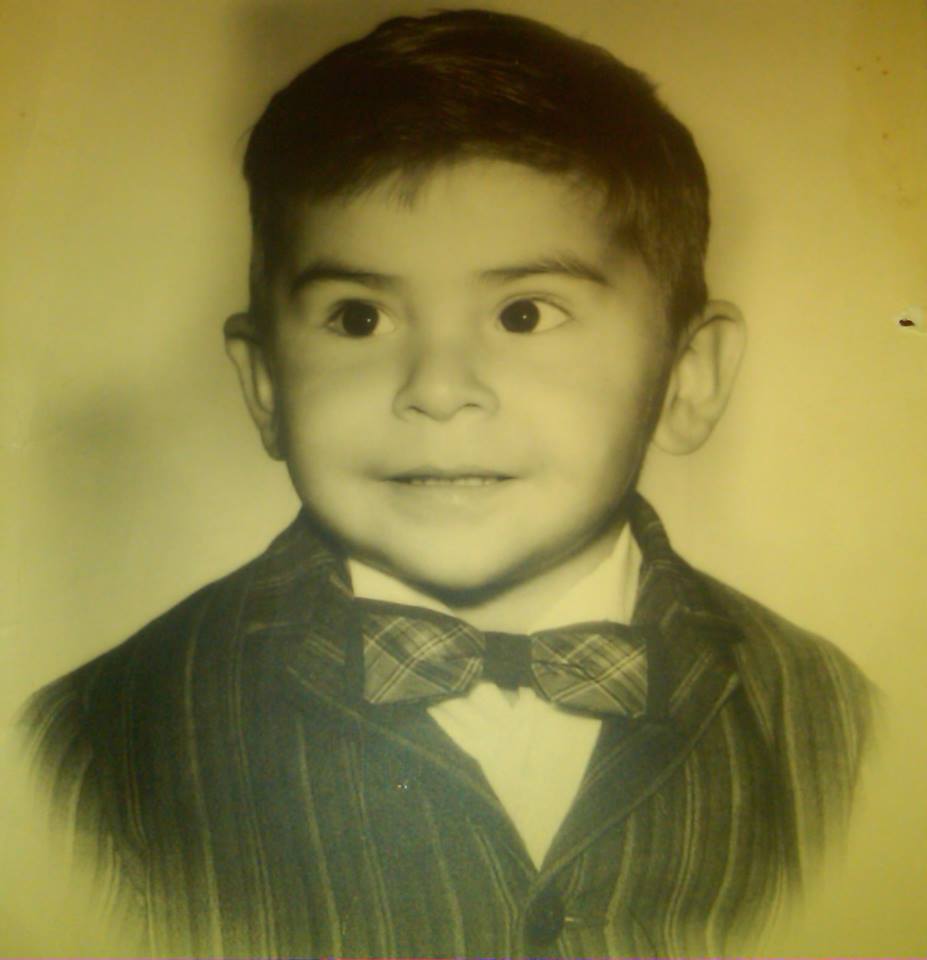
My mom's favorite picture of me when I was about four years old. (García Family photo)
My mom’s favorite picture of me. I was about four years old. (García Family photo)

Blogger’s note: The following passage is the from my manuscript of Summer in the Waiting Room: How Faith, Family, and Friends Saved my Life. It’s the sixth excerpt from Chapter 1: “48 Viewmont Avenue.” I will post weekly excerpts every Wednesday morning.  To read previous installments, go to the Categories link and click on “Summer in the Waiting Room.”

********************

My mom was the epitome of the warm and loving maternal parent.  She taught us unconditional love, faith, compassion, and perseverance.  Even during the last days before in her death in 2003, she remained strong in her convictions and her belief that everyday alive is a good day.  While any indiscretion on our part would be met with my dad’s scowls and rebukes, my mom would react with gentle counsel and loving support urging us to do better the next time.

She was our biggest cheerleader encouraging us to be the best we could be.  After all those years of watching me play sports, I’m not sure if mom really understood the complexities of the games, but I did know that she cheered every time it looked like I did something good.  Every morning she would remind us that the day would be a good one because the sun came up and God gave us another day, and after each meal, she insisted that we say “thank you God,” and of course she encouraged us to pray the “Our Father” before bedtime.

My parents, brothers and sisters, and our cocoon on 48 Viewmont Avenue were the center of my universe where I was free to explore my little world. My earliest memory is of an incident that started on the driveway of our house. I was about four years old and playing in the front yard. Those were the days when parents didn’t seem worried that their kids were running around in front of the house. The traffic in our neighborhood was nearly non-existent once everyone returned home from work, and my mom could see the entire yard and beyond from the kitchen window.

It seemed like she always was in the kitchen cooking, washing dishes, or watching over her kids playing outside. Most likely, she was always doing all three. I remember playing on the grass and eyeing the old two-toned orange and white Ford Mercury sitting on the narrow one-car driveway thinking about driving just like my dad. As the car sat majestically on the driveway, I thought about how strong and important I would look behind the wheel. When I noticed my mom had left the window, probably to go to the refrigerator to take food out for dinner, I darted to the car and struggled to open the heavy driver’s side door.

I then jumped onto the bench seat behind the steering wheel and started off on my imaginary road trip. As I spread my arms wide to maneuver the big round steering wheel, I strained my neck as high as I could so that my little head peeked over the dashboard to see the road ahead. Eyeing the gearshift on the steering column, I was ready to kick into high gear just like my dad would to send this big hunk of metal roaring down the highway. There was just one problem, our driveway sat at a slight incline, so as I grabbed the gearshift to make my move, the car started moving – backwards!

The car rolled back slowly off the driveway until it came to a complete stop in the middle of the street. I sat in the car not sure what to do next. My mom screamed from the kitchen window and dashed out the front door to save her baby boy as my dad stood on the front grass laughing. This may have been the first indication that I was willing to take a risk to get what I wanted, and like many other risks I took later in life, not a very smart one at that.

My sister Barbara described me as a little boy who was always smiling, laughing, and playing like I didn’t have a care in the world.  My older brothers and sisters were just that, older brothers and sisters who I admired and sought to be like and, along with my mom and dad, were the heroes in my life. So, I grew up not playing with them, but with the neighborhood kids. We rode our bikes up and down the street, sometimes venturing off a few blocks away to ride in the open field behind St. John Vianney Church, played two-hand touch football in the street and basketball in our driveway, or let the neighborhood girls join us for a game of hide and seek.

Barbara also described me as easy-going and accommodating. My mom wanted me to try out for the elementary school Mexican folkloric dance troupe, so I danced. My dad wanted me to play little league baseball and junior high school basketball, so I played.  I seemed to be good at everything I tried. When I was eight years old, my little league team was undefeated, and four years later I was the winning pitcher in the little league major division championship game.

When I wasn’t going to school, playing with my friends, or accommodating my parents’ wishes, I loved to read. A County branch library was only four blocks away, so I would hop on my bike, ride to the library, go straight to the sports or history stacks, check out some books, and ride back home, avoiding the back fence of the school and other dangerous hideouts like the parking lot behind Ray’s Liquors where the winos loitered.

With one arm steering the handlebars and the other arm carrying five or six books about baseball or World War II, I would rush home where I would excitedly open the books. Armed with this knowledge, I would spend hours on some weekends debating sports and history with my dad and his friends while they sat on the barstools and drank at the kitchen counter. That was my life in the cocoon on 48 Viewmont Avenue, and those around me kept it safe and secure.

********************

Next Wednesday: The protective cocoon of Viewmont Avenue begins to show some cracks.

Eddie is available to speak at your next event or conference.  To learn more about speaking services click on the “Speaking Engagement” tab under the banner on this page.

To schedule Eddie for your next breakfast, luncheon, or dinner event, e-mail eddie.m.garcia@comcast.net, or call 408-426-7698.

Summer in the Waiting Room: Chapter 1 (excerpt #5)

García Team #1 (clockwise from top: David, Patty, Steve, Barbara - Team#2: Me and Sisi
García Team #1: clockwise from top, David, Patty, Steve, Barbara – Team #2: Me and Sisi               (García Family photos)

Blogger’s note: The following passage is the from my manuscript of Summer in the Waiting Room: How Faith, Family, and Friends Saved my Life. It’s the fifth excerpt from Chapter 1: “48 Viewmont Avenue.” I will post weekly excerpts every Wednesday morning.  To read previous installments, go to the Categories link and click on “Summer in the Waiting Room.”

********************

The protective shell my parents built kept the bad influences out by keeping us away from people or situations that could be harmful. At home, when my parents hosted family parties, a long night of hard-drinking would inevitably lead to tense conditions that could end up in a fight, and my mom would quietly usher us away from the party to our bedrooms.

When I was in elementary school, on my walk home, I would see some of the cool kids hanging out under the trees at the back fence of campus, and they would sometimes wave me over. I told my parents and they warned that under no circumstance should I ever venture out to the fence. As I got older, I realized that the boys were sniffing glue and paint to get high. Many of those kids joined gangs, dropped out of high school, and either died violently or found a permanent home in prison.

Not only did 48 Viewmont provide a cocoon for us, it served as a safe haven for relatives down on their luck or just hiding away from the miseries of the world. It would not be unusual for me to sleep on the couch in the living room so my bed could be used by a cousin, uncle, or aunt who needed a place to stay for a few days while they worked out whatever brought them to our house.

In true American fashion, my dad taught us to be independent, to think for ourselves, and to control our own destinies. We should be good people, he would say, and be there for others in need, but don’t count on others to be there for you, he counseled. Most of all, we should know that they, my parents, would always be there for us. They worked tirelessly to paste together a family budget, and we always had a hot breakfast in the morning, bag lunch to take to school, and dinner on the table when my dad came home from work.

The meals weren’t very healthy, but they filled our stomachs: any combination of chorizo or bacon, potatoes, and eggs for breakfast; bologna sandwiches slathered with mayonnaise on white bread, cookies, and an occasional piece of fruit for lunch; and tortillas, beans, and something fried with the bacon drippings or chorizo grease from the morning for dinner. On payday Fridays, we could count on a piece of chuck steak, fried chicken, or something exotic like spaghetti with hamburger meat sauce.

We could also count on our parents being at school and extracurricular activities. I can’t think of one back to school night or athletic event that wouldn’t include my parents’ attendance, even when there were competing activities like the 1972 World Series between Oakland A’s and Cincinnati Reds. That night, during the school’s open house, my dad found his way to the school office to watch the game with the principal and other dads.

My brothers and sisters all recount similar stories even though we were part of two families from the same parents. My four older siblings – David, Barbara, Patty, Steve – were born in the early 1950s, and my little sister Sisi and I came a decade later; I was born in 1963 and Sisi five years after me in 1968.  Together with the true baby of the family, my little sister Sisi and I make up my parents’ “second” family.  According to our older siblings, she and I had it easy.  I guess that’s the luck of the draw.

At 48 Viewmont Avenue, we had a clear code of conduct and value system from which we were expected to manage our lives.  My dad was no nonsense and no frills, who taught us, through counsel and by way of example, to work hard, play by the rules, and have respect for ourselves and others.  There was no variation from this formula.  Any lack of respect and decorum, especially in public, would immediately lead to a non-verbal response, a stern look with a furrowed brow followed by pursed lips, closed eyes, and a slow shake of the head in disapproval.

He also gave us the lifelong love of reading, learning, and music.  The tight shelf space in my parents’ bedroom was stacked with paperbacks and periodicals, every edition of National Geographic Magazine published since the mid-1950s was displayed on a homemade shelf for all to see. My dad would get home from work every day shortly after 5:00 o’clock with the evening edition of the San Jose Mercury News tucked under his arm, and we had to be prepared at dinner to be peppered with questions about the day’s world and local events.

Even as adults when we gathered around the same kitchen table for the holidays, he would sit at the counter looking into the kitchen with his whiskey and water and make a controversial philosophical or political statement and watch his educated kids flare up in a heated debate.  In the dining room, he had the record player and later cassette player in a place of prominence surrounded by albums that included Tex-Mex, mariachi, other genres of Mexican music, and the standards – Frank Sinatra, Dean Martin, and Nat King Cole.

********************

Next Wednesday: Chapter 1 continues with life at 48 Viewmont Avenue in east San Jose.

Eddie is available to speak at your next event or conference.  To learn more about speaking services click on the “Speaking Engagement” tab under the banner on this page.

To schedule Eddie for your next breakfast, luncheon, or dinner event, e-mail eddie.m.garcia@comcast.net, or call 408-426-7698.

Summer in the Waiting Room: Chapter 1 (excerpt #4)

García siblings posing in front of the kitchen window at 48 Viewmont Avenue - L to R: Patty, Sisi, Barbara, David, me, Steve (García Family photo, mid-1980s)
García siblings posing in front of the kitchen window at 48 Viewmont Avenue – L to R: Patty, Sisi, Barbara, David, me, Steve (García Family photo, mid-1980s)

Blogger’s note: The following passage is the from my manuscript of Summer in the Waiting Room: How Faith, Family, and Friends Saved my Life. It’s the fourth excerpt from Chapter 1: “48 Viewmont Avenue.” I will post weekly excerpts every Wednesday morning.  To read previous installments, go to the Categories link and click on “Summer in the Waiting Room.”

********************

The first 27 years of my life were marked and influenced by events in and around my parents’ modest house on 48 Viewmont Avenue in east San Jose. The neighborhood was a typical working-class community of small houses on small lots with neatly mowed lawns and little flower gardens on the edge of the east side of town that once thrived with orchards. Just a short walk a few blocks away, was the Alum Rock Village, a row of mom and pop markets, a liquor store, a bakery, a hair salon, a barbershop, and assorted small businesses that included a feed and fuel that served the remnants of a bygone agricultural community.

The area included a county branch library, a couple of elementary schools, a middle school, a high school, and of course, a Catholic church. Next to the high school was a small fire station. Viewmont Avenue itself was a short block of about forty houses. On one end sat an elementary school and on the other the two-lane Alum Rock Avenue that led to downtown San Jose to the west and several miles up the east foothills to large expensive houses and Alum Rock Park which sunk grandly into a deep canyon.

Viewmont Avenue was narrow with rounded curbs, no sidewalks, and wooden telephone poles carrying heavy electrical and telephone wires placed about 50 yards apart running down one side of the street. The poles and wires played an important role during two-hand touch football games – the poles marked the end zones and the wires could be an extra defensive player if the quarterback threw a pass too high.

Our neighbors were working-class families like ours in pursuit of the American Dream. Across the street from our house lived the Ornelas family. My godfather Tony was a sheet metal worker and his wife Marty worked in the canneries. Next door on each side of our house lived widows, Mrs. Wood on one side and Mildred on the other.  Viewmont Avenue was ethnically diverse well before the term became popular in our society.  A few houses away were the Moreno, Romero, Dutra, Marino, Olague, Vasquez, and Zigenhart families.

Mr. Helgeson, a retired widower, could always be seen outside wearing neatly pressed work clothes to care for his meticulous yard and garden. On national holidays, I watched in admiration as he carefully hung the American flag over the porch to show pride for his adopted country. The breadwinners provided for their families working as electricians, landscapers, construction workers, and machine shop operators.

The women worked mostly at the canneries and supplemented the family income by cleaning houses, providing child care, or caring for seniors. The neighborhood around Viewmont Avenue was like a small town on the fringes of a growing city. For me, it had everything I needed and wanted. I felt happy, safe, and comfortable there. It was home.

The house I grew up in was a cozy three bedroom, one bathroom tract home built in the late 1940s. The indoor living space measured about 900 square feet and sat on a 1,800 square foot lot that included a front yard and backyard. In the front yard, was a patch of grass and a magnolia tree surrounded by the plants and flowers that flourished under the tender care of my mom’s green thumb. Above the wooden one-car garage door hung a basketball hoop and a backboard made from a piece of scrap plywood. From the kitchen window, one could see the entire scene.

Inside, the house was a standard mid-20th century tract home with low ceilings and distinct living spaces. It seemed as though key family events always occurred at the kitchen table or at the narrow linoleum countertop, dotted with several cigarette burns, which separated the kitchen from a snug dining room. On the kitchen side of the counter sat my dad’s signature restaurant booth tightly curved around a round table and on the dining room side of the counter stood three barstools.

My oldest sister Barbara would say later in life that we had an “idyllic” upbringing on Viewmont Avenue. My parents made sure that school was a priority and provided me and my siblings with the opportunity to participate in extracurricular activities; girl scouts, cheerleading, and color guard for the girls and little league, boy scouts, and Pop Warner football for the boys.

It was the life of the 1950s and 1960s television genre that dad yearned for after listening to the stories about growing up “American” from his friends in the Navy. At mom’s funeral in 2003, my cousin Tutie Sanchez reminisced that “Tía Mary was like the Mexican Donna Reed” from the 1950s sitcom of the same name. Barbara said years later that  “mom and dad created a cocoon that protected us from all of the bad things in the world.”

********************

Next Wednesday: Chapter 1 continues  with stories about growing up on 48 Viewmont Avenue.

Eddie is available to speak at your next event or conference.  To learn more about speaking services click on the “Speaking Engagement” tab at the top of the East Side Eddie Report.com page.

To schedule Eddie for your next breakfast, luncheon, or dinner event, e-mail eddie.m.garcia@comcast.net, or call 408-426-7698.

Summer in the Waiting Room: Chapter 1 (excerpt #3)

My Family - standing L-R: David, Stevie, Patty, Barbara (Garcia Family photo ca. 1966 )
My Family in Front of Fireplace at 48 Viewmont Avenue – Standing L-R: David, Stevie, Patty, Barbara (Garcia Family photo ca. 1966)

Blogger’s note: The following passage is the from my manuscript of Summer in the Waiting Room: How Faith, Family, and Friends Saved my Life. It’s the third excerpt from Chapter 1: “48 Viewmont Avenue.” I will post weekly excerpts every Wednesday morning.  To read previous installments, go to the Categories link and click on “Summer in the Waiting Room.”

********************

After a few years of marriage and the births of my brother David, and my sisters Barbara and Patty, my parents found that there were no opportunities for them in Phoenix. My dad was going from job to job, many times working two at a time, but none was steady. He scraped enough money together to pay rent on a studio apartment, feed the kids, and buy a broken old Ford to take him to and from his various jobs.

Later in life, my parents would laugh about the time their car had a dead battery and they couldn’t afford to replace it. My dad would get up early in the morning, open the hood of the jalopy and peer into the motor as if there were a problem. Without fail, a Good Samaritan would ask if he needed help and my dad would explain that the battery wasn’t working that morning, and he would appreciate a jump to get the car started. Once his work day was over, he would begin the same routine until a passerby would lend him jumper cables to start the car for the return trip home. This would last for months.

He quickly realized that this was no way to live. He had traveled around the world as a sailor fighting for his country, seen New York City, Boston, and Los Angeles. He knew there were opportunities for those who took risks and sought a better life. So, with a used battery in the rickety car and protests from my Grandma Joaquina, he and my mom packed up their three babies, their meager belongings, my Abuelita Chabela, and headed for San Jose, California, to join his sister Maria, her family, and relatives on his father’s side of the family to find work in the orchards and canneries of the fertile Santa Clara valley.

In San Jose, my parents moved into a relative’s garage until they were able to earn enough money to find a place for their growing family. They found a small apartment not too far away from the town’s bustling canning industry. My Abuelita Chabela took care of the kids at night while my mom worked at the canneries. It’s a cliché, but my dad worked day and nights to earn just enough money to keep a roof over their head and dinner on the table, and there was enough work for my parents to rent a small house in San Jose’s east side.

My brother Steve was born shortly after they moved into the rented house on the east side, and with another baby to clothe and feed, my parents found extra hours working for slave wages in the apricot orchards of the east valley picking the fruit and cutting it for the lucrative dried apricot market. Every bit helped, but they needed steady income to provide stability for their growing family.

During that time, San Jose was rapidly growing and the postal service was looking for reliable veterans to meet the demands of its burgeoning workforce. Soon, my dad’s status as a World War II veteran would pay off when he got a job working at the downtown post office. Although the pay wasn’t nearly enough to meet the needs of their family, the stability gave them a chance to achieve the American Dream and buy a house. They found a house just a couple of blocks away from their rented house.

My parents borrowed money from relatives to put a modest down payment on the outlandish $11,000 mortgage they took to buy the house on 48 Viewmont Avenue. For the next several years, my dad would dutifully drive downtown to the post office to earn a living and my mom would supplement their income taking jobs cleaning houses and working part-time in the cafeteria at the new IBM headquarters in the south side of town. My dad would take every opportunity to work overtime to help pay the bills.

Lucky for them, my abuelita was available to take care of the kids while my parents struggled to stay afloat. This steady way of life continued for nine years and it looked like my parents were starting to slowly build a solid foundation for their family’s future when I arrived.

********************

Next Wednesday: Chapter 1 continues with my first years growing up at 48 Viewmont Avenue in east San Jose.

Leadership Lessons: Reaching Out to Rivals

President Obama and Cuban Leader Raul Castro Shaking Hand at Nelson Mandela's Funeral (file photo)
President Obama and Cuban Leader Raul Castro shaking hands at Nelson Mandela’s funeral. (file photo)

When President Obama reached out and shook hands with Cuban dictator Raul Castro last week at Nelson Mandela’s funeral the Republican leadership in Congress rushed to the television cameras to criticize the president.  The GOP’s shameful response to the president‘s display of graciousness during a solemn ceremony in honor of someone who epitomized forgiveness is exactly why Congress lacks the leadership skills to get anything done in Washington.

Had President Ronald Reagan declined a working relationship with Soviet Premier Mikhail Gorbachev, the world could have been consumed by nuclear holocaust.  Perhaps the most famous example of leadership by reaching out to rivals is President Abraham Lincoln.  He appointed campaign opponents to cabinet posts; then extended his hand in peace to Confederate rebels promising a post-Civil War America, “with malice toward none, with charity for all.”

One of the most difficult challenges for effective leaders is to be able to bury the hatchet with opponents to benefit those they serve.  True leadership embraces conflict and bridges differences for the common good.  When I served as a trustee on the East Side Union High School District, overcoming differences with a rival led to the approval of two of the most important district initiatives during the past half dozen years.

The district’s board of trustees appointed me in 2006 on a 3-1 vote.  Trustee Frank Biehl was the lone dissenter who vigorously argued against my appointment, so our relationship started off on the wrong foot.  Adding to that dynamic, he and I are from different worlds.  Frank is white, I’m Latino.  He’s the oldest son from a successful family business.  I’m the youngest son from an east side working-class family.  He’s pragmatic, I’m passionate.  On the board, we rarely found common ground.

Two years later, Frank was again the sole “no” vote on my reappointment to the board.  That term we started off on two wrong feet.  I broke the cardinal rule of leadership; I took Frank’s opposition personally.  Instead of looking for common ground, I sought out conflict with him.  The result was a lack of productivity on my part.

When the board took a preliminary vote to eliminate after-school sports, we again were on opposite sides of the fence.  As a former student-athlete I understood the value of athletics and proposed a plan that would restore funding to the programs.  After Frank’s initial vote to eliminate sports programs, he reconsidered and unveiled his own plan to save sports.  I didn’t like his ideas and prepared myself for a long fight.

My personal issues with Frank had trumped doing what was right.  Rather than fighting for student-athletes and their families, I realized I was opposing Frank’s plan because he had opposed me.  It was a valuable on-the-job lesson.  I learned that leadership shouldn’t be about me, it should be about those I serve.  I reached out to Frank and expressed my concerns about his ideas, and he did the same.  With his pragmatic approach and my passion for student athletics, we compromised and saved sports programs.

He supported my candidacy for president of the board a year later.  When I announced an initiative to make college entrance requirements the default curriculum for all students, Frank and I shared ideas and worked together for the good of students.  I spent that summer in the hospital and he came to visit me.  A personal rivalry had turned into friendship.  That fall, Frank and I joined a unanimous board in passing a historic policy that ensured that every East Side graduate can to go to college.

I learned a valuable lesson.  Leaders must overcome personal differences in order to make decisions that benefit those they lead.  Whether you’re PTA president, on the Little League board, a supervisor at work, or President of the United States, these three simple rules can help you avoid the pitfalls caused by personal problems:

  1. It’s not about you.  Your role as a leader is to serve others, not the other way around.  Your decisions will impact, negatively or positively, those you lead.  So make decisions with them in mind.
  2. Keep Your Eye on the Prize.  Why did you seek out a leadership role in the first place?  Probably to make things better or to make a change.  Don’t let personal issues get in the way of accomplishing what you set out to do.
  3.  Find Common Ground.  Rival leaders may share your vision to make improvements or change, but have different notions on how to get there.  Listen to what they have to say.  You may find that you have more in common than you think.

Leaders are like the rest of us replete with biases, emotions, fears, and dislikes.  Yet unlike the rest of us, they must overcome those personal barriers to ensure the common good.  Just imagine what kind of world we would be living in if President Lincoln didn’t have the courage to embrace his rivals to keep our nation united or President Reagan and Premier Gorbachev let personal philosophies keep them from the Cold War peace table.

Summer in the Waiting Room – Chapter 1 (excerpt #1)

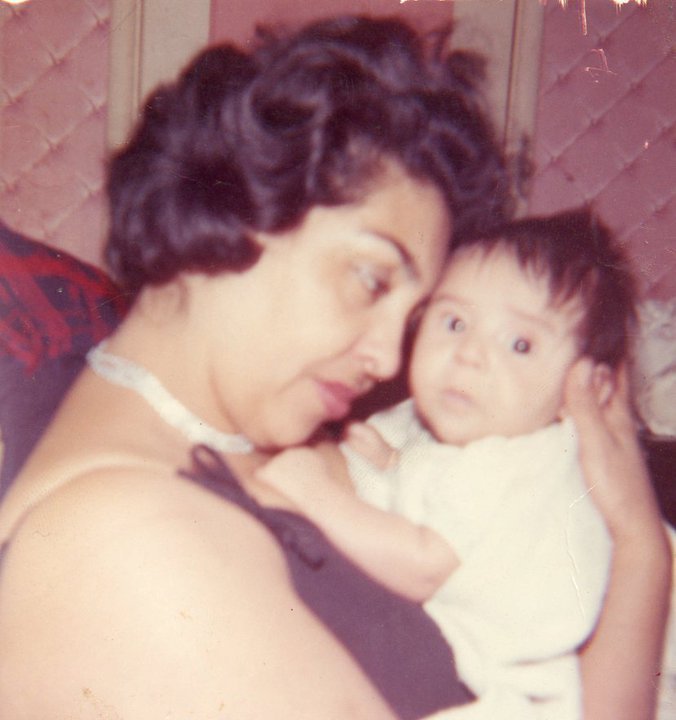
With mom on the day of my baptism ca. 1964 (Garcia Family photo)

Blogger’s note: The following passage is the from my manuscript of Summer in the Waiting Room: How Faith, Family, and Friends Saved my Life. It’s the first excerpt from Chapter 1: “48 Viewmont Avenue.” I will post weekly excerpts every Wednesday morning.

**********************

Chapter 1

48 Viewmont Avenue

The sky was clear and the weather was in the low 50s, a typical crisp November night in San Jose, California. But for my mom and dad, that night and early the next morning wouldn’t be typical at all. As they raced north on U.S. Highway 101 in the their two-toned orange and white 1955 Mercury, they wondered how they were going to make ends meet now that another mouth to feed would soon be added to the family.

 They both grew up in poor single-mother households. Now that they had their own family, they were just getting by living check to check on my dad’s postal worker salary and mom’s odd jobs cleaning houses and working in the canneries. The little creature in her belly causing her so much pain and discomfort would be their fifth child. Nevertheless, both of my parents were excited and happy as the Mercury pulled into the hospital parking lot.

 My dad jumped out of the car to walk her into the emergency room. Wearing a camel colored coat and carrying a small overnight bag, she waddled up the steps to the hospital and breathlessly slumped herself onto the waiting wheelchair. As was the custom in the 1960s, nurses rushed my mom into the maternity room to await the doctor who would deliver the baby and told my dad to wait outside. Hospital volunteers showed him the way to the waiting room to join other nervous, expectant fathers who were smoking up a storm as they paced the floor.

Impatient and restless, my dad didn’t stay for very long. He left the hospital to find a place where he could belly up to the bar and knock down a few whiskey and waters before going back to meet his newest baby. My mom was an old pro, he rationalized to himself, she had been to the delivery room four other times and each time the baby came out without any problems.

Back at the hospital, my mom was going through labor pains as one day ended and another began. The baby would soon arrive as the nurses and doctors prepared for the delivery. Labor for her was not much different than the other four times. Actually, this time seemed to go smoother, the pains weren’t as strong and the actual time in labor was much shorter. Just as my dad predicted, the delivery would be quick and simple.

After finishing his drinks and taking a few more drags of his cigarette, he was back in the maternity ward anxiously waiting for the good news. They had two boys and two girls at home waiting. He was sure this one would be another boy. In the delivery room all was going well. When the baby was finally born, the doctor gently gave the newborn the obligatory slap on the backside and waited for the familiar wails of a new life catching its breath for the first time.

The doctor cut the umbilical cord and the nurses wiped the baby clean before swaddling it and allowing my tired, but happy, mom to cuddle her baby for the first time. As the doctor completed one last check of vital signs, the baby slipped out of his arms and banged its face against the metal railing of the bed. A nurse broke the baby’s fall and prevented a disastrous accident. The baby screamed in pain as the nurses and doctors worked to stop the bleeding that had emerged from the baby’s face. Luckily, that scary incident only resulted in a small scar at the tip of the newborn’s nose.

That baby with the cut on his nose was me, born on November 6, 1963, at 5:25 AM at Sequoia Hospital in Redwood City, California. The third García boy, I was 21 inches long, weighed 7.2 pounds, with dark brown eyes, and lots of thick dark hair. My parents were excited and relieved, especially after the brief scare in the delivery room. That little scar at the tip of my nose would forever find a special place in my mom’s heart.

Exhausted, she suggested a name for me, Michael. My dad wanted to name me Edward. After a few minutes of negotiation, my proud parents settled on a name: Edward Michael García. My dad spent a few more minutes at my mom’s side, slipped out of the hospital, stopped at the watering hole for one more whiskey and water on the rocks, slid onto the front seat of the two-toned Mercury, and headed south for the 45-minute drive to San Jose to tell my siblings that they had a baby brother.

At home, my brothers and sisters, David 12, Barbara 11, Patty 10, and Steve 9, were still asleep unaware of what had happened earlier that morning. When my dad burst through the front door of his modest house on 48 Viewmont Avenue in east San Jose, his four older children suddenly woke up and rushed to meet him to hear the good news.  He stood at the counter that separated the kitchen from the dining room, and excitedly told his kids about “Eddie’s” chubby cheeks and thick black hair, and how he slipped, and cut his nose.  After a few minutes of taking questions, my dad turned to the heavy black phone sitting on the counter and started dialing everyone he knew.

********************

Next Wednesday: Chapter 1 flashes back to my parents courtship in Phoenix, Arizona .

My All-American Hero: One Story from the Other Side of the Tracks

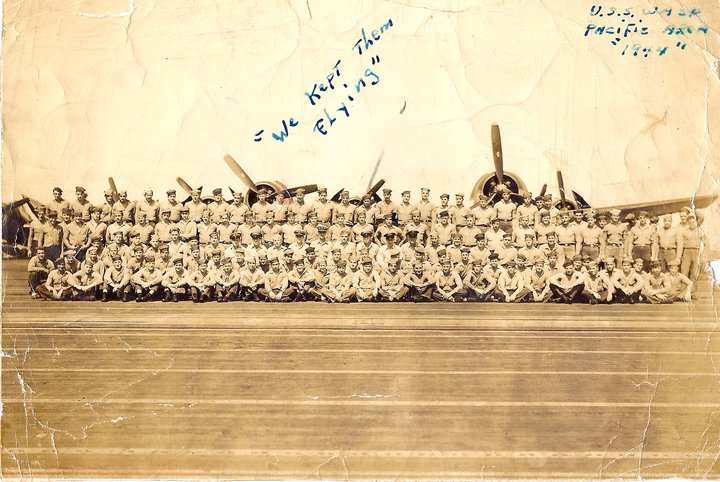
My dad is somewhere in the first row of this photo taken aboard the USS Wasp in 1944.  The handwritten notes are my dad's (Garcia family photo)
My dad is somewhere in the first row of this photo taken aboard the USS Wasp in 1944. The handwritten notes are my dad’s (Garcia family photo)

I’ve been a history junkie ever since I was a kid.  I would ride my bike to the county library and go straight to the stacks that told heroic tales of Americans revolting against King George III, struggling on the battlefields of Gettysburg and Vicksburg, and defending the world against tyranny.  I loved  the American History course taught by the legendary Mr. Duus and Mr. Hefelfinger at James Lick High School, and I went on to earn a bachelor’s degree in History from San Jose State University.

As a kid, I was most interested in World War II probably because my dad served on the aircraft carrier U.S.S. Wasp in the Pacific Ocean.  Like most in his generation, he didn’t talk about the war unless he had a few whiskey and waters under his belt, and even then he wouldn’t say much.  With the tidbits of information he shared, I would scour the books from the library trying to piece together my dad’s experience on the Wasp.

To this day, I could spend hours watching the History Channel and Military Channel gathering more data about our collective past.  Many episodes include stories about the courageous Black Buffalo Soldiers fighting for freedom during the Civil War and the valiant Japanese-American 442nd Regiment defending our flag in WWII.  American-born Latinos have also fought with courage and valor to defend our country, yet they’re nowhere to be found in mainstream accounts.  Why is this?

Several years ago, the award-winning PBS documentarian Ken Burns completed a 14 ½ hour series about WWII.  I had watched with admiration his comprehensive masterpieces on topics like the Civil War, baseball, the Statue of Liberty and more.  I looked forward to the series with anxious anticipation, especially how Burns’ genius might portray the half million Latinos who fought in WWII and the 13 Latino Medal of Honor recipients.  It turns out that Burns didn’t include one story about them.

Prior to the airing of the series, national Latino leaders requested that Burns find a way to tell the important stories of these forgotten Americans.  Burns initially refused to bend to “political correctness” citing artistic freedom, but he ultimately compromised by adding a few interviews with Latino veterans.  I didn’t watch.  When Burns came to SJSU for a lecture with public radio last week, I didn’t go.

In some ways, I understand why Ken Burns couldn’t comprehend what the fuss was all about.  The land that is now California, Texas, Arizona, and New Mexico formed the northern border of Mexico until they became the spoils of war when the Unites States won the War with Mexico of 1846-1848. Mexicans living in those territories didn’t cross the border, the border crossed them.  Since then, American-born citizens of Latino descent have been treated like foreigners in their own land.

Less than a century later, nearly 1.2 million American-born Latinos were evicted from the U.S. to Mexico during the Mexican Repatriation Program of 1929 to 1939 to open up agricultural and factory jobs for Okies fleeing the Depression Era Dust Bowl.  More recently, Arizona’s notorious Senate Bill 1070 allows law enforcement to detain anyone when there’s “a reasonable suspicion of being an illegal immigrant.”  So in our country, the rule is you must’ve been born somewhere else if you have a Latino surname.

Although those of us born in the United States represent the majority of Latinos in our country, most Americans don’t even know who we are.   I didn’t have to look far to find the answer.  My dad was born in Las Cruces, New Mexico in 1926.  His parents were born near the same place during the 1880s when New Mexico was an American territory.  I’m not sure how far back the family tree goes, but I’m willing to guess that the Garcías were living near Las Cruces when the Pilgrims hit Plymouth Rock in 1620.

When he was 11 years old, my dad, his siblings, and my widowed grandmother moved to Phoenix, Arizona where my dad went to grammar school and high school.  In 1942, at the age of 16, he enlisted in the Navy by forging my grandmother’s signature so he could fight for his country.  One of my most prized possessions is a log he kept during the last days of the war and the victorious trip home on the U.S.S. Wasp.

Back at home, he was refused entrance into a Phoenix dancehall despite wearing his navy uniform because he was “Mexican.”  He took a few classes on the G.I. Bill, married my mom, moved to San Jose looking for the American Dream, and got a job at the Post Office.  Together my mom and dad had six kids (I’m number 5), bought a house in east San Jose, and struggled to give us a better life.  We have become businessmen, school administrators, bank executives, university librarians, and public servants.

That’s my dad’s story.  He’s an All-American hero to me.  I know there are millions of others just like him.  That’s why Latinos can’t wait for Kens Burns or anyone else to understand who we are so our stories can be told.  Until we tell our own stories, our fellow Americans will continue to be confused.  One just needs to look at the recent Twitter-sphere condemnation of the American Music Awards for showcasing American-born Latinos citing that Mark Antony, Jennifer Lopez, et al, weren’t American.

A few fellow Latino SJSU alums and I traded barbs about Ken Burns on Facebook when we learned he was scheduled to appear at our alma mater.  One college friend, Xavier Soriano, reminded us that we should tell our own stories.  He’s right.  We’re proud Americans who honor and cherish our ancestry.  Our generation is educated and has access to resources.  So let’s get on with it.  Let’s tell our story.

Immigration Reform Will Strengthen American Values: The Fausto Peralta Story

Fausto Peralta with his daughters L to R: Shelley, Valerie, Sandra, Kimberley

For the past couple of weeks, cable television news coverage has been fixated on the latest in the Republicans’ irrational quest to dismantle the Affordable Care Act, better known as Obamacare.  Their arguments are baseless and filled with the hyperbolic language of fear that only comes from voices on the right.  These ideological zealots have tried to repeal Obamacare over 40 times, filibuster it (kind of), held the federal government hostage with a shutdown, and now are holding congressional hearings about its webpage launch.  It’s almost too silly to take seriously.

On the periphery of this circus, President Obama has announced his renewed effort to pass comprehensive immigration reform.  Second only to universal healthcare, immigration reform is perhaps the issue that will define the Obama legacy.  The GOP’s ridiculous preoccupation with destroying Obamacare may actually be a good thing for comprehensive immigration reform.  Keeping their focus away from immigration may give our nation a chance to discuss the issue without the typical exaggerated scaremongering from the Tea Party types.

The folks who vow to rid our country of affordable healthcare come from the same crowd that predicts the demise of American values and culture if immigration reform provides a path to citizenship for undocumented immigrants.  You may remember when their 2012 presidential candidate suggested that government policy should make immigrants’ lives so difficult that they will “self-deport.”  Nice try Mr. Romney.  The reason his argument fell flat is because immigrants embody the very values and culture that make this country great.

Our nation’s values were born during the American Revolution and memorialized in the Declaration of Independence.   From Jefferson’s assertion that all people have a right to pursue happiness to the civil liberties outlined in the Bill of Rights, American values are based on concepts of human dignity and freedom.  Nowhere in those seminal documents do the Founding Fathers proclaim that proficiency in English, a hearty appetite for apple pie, or being descended from western European stock are requirements for American values.

The basis for the American value system is simple – the belief in freedom, hard work, and the opportunity to succeed without regard to one’s station in society.  At best, those who believe otherwise don’t truly understand this concept of American values or may be stuck in the romantic notion that Norman Rockwell’s America defines who we are as a people.  At worst, they are racist xenophobes who won’t accept anyone who doesn’t look or sound like their definition of an American.

To illustrate how they have it wrong, the life of my father-in-law, a man I greatly admire, comes to mind.  Fausto Peralta was born and raised in a small town tucked in the mountains of Sonora, Mexico.  He came to the United States nearly 60 years ago as a teenager.  He settled in California’s central valley where he worked in the fields picking cotton and irrigating crops.  He met my mother-in-law during the late 1950s, married her a year later, and moved to San Jose for a construction job and a piece of the American Dream.

A cement mason who raised four daughters in east San Jose, he worked in construction during Silicon Valley’s biggest building boom.  He beamed with pride when my wife Sandra told him that she took most of her classes at San Jose State University in Sweeney Hall, the education department building he helped build during the 1960s.  His daughters’ lives symbolize the power of the American Dream.  All four are SJSU graduates: Sandra is an elementary school principal, one sister is an engineer, and the other two are a tireless community volunteer and SJSU human resources administrator.

My father-in-law is more comfortable speaking in Spanish than in English.  He would rather have rice and beans instead of a hamburger and fries for dinner.  When watching television, he is more likely to click the remote to Univision instead of CNN or CBS.  Those who fear immigrants and hold the false belief that our nation’s culture is rooted in language, food, and television habits would argue that my father-in-law doesn’t represent America or our national heritage.

Oh, how they’re wrong.  For over 50 years, he has worked hard, paid taxes, financed the education of four children, voted in elections from LBJ to President Obama, and gratefully struggled in his pursuit of happiness.  About eight years ago, on a family vacation in Washington, D.C., I watched this proud American walk into the White House for a tour.  Based on the concepts outlined by the Founding Fathers, my father-in-law exemplifies what it means to be American.

The face of America may be changing, but the soul remains the same.  Some newcomers may choose mariachi over jazz, tortillas over wheat bread, and the Pledge of Allegiance in Spanish over English.  Nevertheless, it’s clear that they believe in the values of liberty and justice that the pledge so eloquently brings to life.  They believe in the American Dream that my father-in-law embarked on over a half century ago.

To be sure, there needs to be a healthy debate about immigration.  I hope it happens before the peddler’s of fear divert their attention from trying to destroy Obamacare to alarming those Americans who unrealistically worry about the downfall of American values and culture caused by immigration reform.  The millions of people who, like my father-in-law, left everything behind to come to the United States already understand American values.  Passing Comprehensive Immigration Reform won’t lead to the decline of America; meaningful reform will make our values and culture even stronger.

You Can’t Score If You Don’t Shoot

Taking my dad's advice in 1980
Taking my dad’s advice in 1980

The best advice I ever got came from my dad when I was about 12 years old.  We were shooting baskets on our driveway at 48 Viewmont Avenue in east San Jose.  He was teaching me how to make bank shots off the homemade plywood backboard he had hung over the one-car garage door.  My dad grew up during the Depression and was a WWII veteran, so he was practical, no-nonsense, and to the point.  After barking a few pointers about shooting a basketball, he said, “don’t forget that you can’t score if you don’t shoot.”

I’m pretty sure that my high school basketball teammates weren’t too happy with me when I took that advice literally because I know that I missed way more shots than I made.  But my dad’s lesson was clear; success would come by taking calculated risks every now and then, hard work, and perseverance.   I’ve had lots of failures and picked up a few successes along the way in my journey through life, and my dad’s advice on the driveway that day has guided me through the toughest of times.

First of all, I know how to lose a political campaign.  I ran for school board in 1996, 1998, and 2008, and I was a candidate for city council in 2000.  Even though I demonstrated a true passion for public office, I lost all four races.  Undeterred, I got an opportunity to serve when the East Side high school board appointed me in 2006 and 2009.  During my time on the school board, we saved after school sports from the budget ax and passed a historic policy that ensures every student has a chance to go to college.

In 2005, Comcast invited me to its exclusive Comcast Executive Leadership Forum, a year-long executive training program.  I arrived at the company’s Philadelphia headquarters on a cold and snowy January morning wearing my best dark suit and a new overcoat.  Passing a mirror, I suddenly froze, and the fears and doubts of an east side boy in way over his head consumed me.  I debated on whether I should just go back home, but decided to stay.  A little less than two years later, I was promoted to vice president of government affairs for northern and central California.

During the summer of 2010, I faced the biggest challenge of my life.  I had a massive heart attack, and subsequent complications in my lungs left me in a coma for a month and in the hospital for over 100 days.  When I awoke from the coma, I couldn’t talk, walk, or move any of my limbs.  After intensive therapy and a few of years of a disciplined exercise program to strengthen my heart and lungs, I thought about my dad as I crossed the finish line of the annual East Side Save Our Sports 5K walk with my wife Sandra and daughters Marisa and Erica.

You can’t score if you don’t shoot!

Through many defeats and a few victories, I’ve learned that my dad had it right.  Taking a chance, working your behind off, and keeping at it is the path to achievement.  The past several years, I’ve had the great privilege to work with emerging community leaders through the Latino Leadership Alliance Leadership Academy.   We discuss a variety of concepts and strategies needed for leadership.  The conversations usually come to the conclusion that effective leadership results from some version of my dad’s advice.

We live in an age of non-stop media and talking heads with no leadership experience preaching quick fixes to complex problems.  President Theodore Roosevelt famously said that these self-proclaimed leaders “neither know victory nor defeat” because they stay on the sidelines.  To be sure, leadership concepts can be learned in seminars and conferences, but the practice of true leadership can only be achieved by getting into the fray.  When advising aspiring leaders, I tell them that there is no substitute for taking a leadership role when the opportunity presents itself, especially if it’s risky, challenging, and seemingly without success in sight.

So, if you want to serve on the PTA, be a scout leader, run for Congress, or apply for that promotion at work, go ahead and go for it.  Just know that you’ll have to step out of your comfort zone, work extra hard, and hang on for a long and bumpy ride.  It’ll be worth it.  And, never, ever forget that you can’t score if you don’t shoot.