College Can Change Your Life

Tower Hall, San Jose State University (SJSU file photo)

“College isn’t for everybody.” The first time I heard this was from my high school counselor who discouraged me from applying to San Jose State University. I heard it over and over again from teachers and other school leaders when, as president of the school board, I proposed making high school graduation requirements the same as college eligibility requirements.

That statement has some truth to it, but you have to make that determination on your own. Teachers, counselors, the school system, parents, family, friends, and society don’t have any business telling you if college is the right path for you. Unless your heart is set on a career that requires no education, I highly recommend that you give college a try.

Let’s get a couple of things straight first. College isn’t easy. It’s an exercise in determination, discipline, and hard work. It doesn’t guarantee a job and a high-paying career after graduation. That’s up to you.  What college does is open your mind and opens the door to limitless opportunities. During the past few months, I’ve had the privilege to speak to high school and college students about the value of my college education in a talk I call, “How College Changed My Life.”

I failed at my first try at college, so I went out into the world and tried to make a living without an education. I drove a forklift at a sheet metal company and worked in construction to quickly learn that I was miserable. I tried selling shoes, toys, and sporting goods to find out that the fastest path to management was a college degree. I coached middle and high school kids, but that didn’t provide a living.

So, in my mid-20s, I went back to college. This time I put my heart and soul into it. My goal was to be a high school history teacher and basketball coach. A funny thing happened on the way to that goal: I never got there. Studying history at San Jose State University blew my mind wide open. I became fascinated about how business, politics, education, and ideas changed the course of history. This fascination led to a career that has been a wild, but fulfilling, ride.

When I walked into Spartan Stadium on graduation day, I wasn’t sure what I wanted to do anymore. I loved kids and coaching basketball, but the college experience taught me that there was so much more out there than I could even imagine. I took a position as legislative assistant to a city councilwoman, not knowing what that meant. The research, writing, and public-speaking skills I learned in college were a perfect fit for the job.

My fondest memory of that first job as a college graduate was when the councilwoman led the effort to rename the central city park in honor of Latino icon César Chávez. I suggested that the organizing committee, which included Chávez family members, honor César by engraving his name on the face of the park’s marble stage. They agreed. I got goose bumps the day that city leaders and the Chávez family unveiled the engraving. I still get goose bumps every time I see it.

Since that experience, I’ve worked in business, served on the school board, and returned to local government. Instead of teaching history, I’ve been a witness to history. I was in Denver’s Mile High Stadium as a corporate executive when President Obama accepted the Democratic nomination for president in2008. As a school board member, I saw parents and students save high school sports and win the fight for graduation requirements to mirror college eligibility standards.

There’s an old saying that goes something like this: “No one can ever take away your education.” A few years ago, I had a massive heart attack that nearly took my life. With a damaged heart, my ability to work 18 hours a day, play basketball, and ride roller coasters has been taken away. But, I can still read, write, research, speak, and share stories with anyone who’s willing to listen. I couldn’t do any of that without my San Jose State University education.

I understand that college might not be for everyone. Our world depends on people who work in the trades, drive goods to market, and provide services. These are honorable professions that deserve our appreciation. My parents worked hard without a college education, raised a family, and encouraged their children to reach for the stars. Even though they didn’t have a university degree, they knew we needed one to achieve our dreams.

Cultural and socio-economic conditions seven decades ago made it difficult for my parents to get a higher education. We live in a different age today. There are so many more opportunities than a generation ago, especially for Latinos. Society may be telling you that you’re destined to be a truck driver, receptionist, construction worker, or landscaper. That may be true. That may be your destiny.  But you ought to give college a try first. You never know what could happen.

********************

Eddie is available to speak at your next event or conference.  To learn more about speaking services click on the “Speaking Engagement” tab under the banner on this page.

To schedule Eddie for your next breakfast, luncheon, or dinner event, e-mail eddie.m.garcia@comcast.net, or call 408-426-7698.

Summer in the Waiting Room: Chapter 2 (excerpt #13)

Image courtesy of junbelen.com
Chocolate cake just like the cakes my mom would bring home for my birthday from Peter’s Bakery in east San Jose. (Image courtesy of junbelen.com)

Blogger’s note: The following passage is the from my manuscript of Summer in the Waiting Room: How Faith, Family, and Friends Saved My Life. This is the 3nd excerpt from Chapter 2: “Sandra Peralta.” I will post weekly excerpts every Wednesday morning.  To read previous installments, go to the Categories link and click on “Summer in the Waiting Room.”

********************

Although I called Sandra a few times each month, we didn’t go out on another date for over a year.  After dropping her off at home on that first date, I went right back to the carousing lifestyle I had been living for a couple of years, and later that summer I started dating someone else on a regular basis.  The cycle was back in full swing: working at a dead end job, drinking and playing softball with the boys, hanging out with the girl I was dating, and feeling sorry for myself for the seemingly useless life I was leading.  I was miserable.

I would call Sandra and we would talk on the phone for hours, I would ask her out, and she would politely, but assuredly, decline, telling me that she would never date someone who was dating someone else.  During these calls, I learned so much about Sandra; she was smart, focused, honest, ambitious, and she came from a good family. And, she got to know that beneath the surface, I wasn’t a hard-partying, thoughtless bad boy who had no dreams and aspirations.

I told her about my passions for reading history, biography, and coaching basketball, and my dreams of becoming a teacher.  Sandra was studying to be a nurse at San Jose State University, a vocation that seemed to fit her perfectly because she had both strength and compassion as the foundations of her character; then changed her mind and decided on education as a career.  The more I got to know her, the more I began to fall in love with her, and the more I wanted to distance myself to keep from hurting her due to my wayward ways.  But, I couldn’t stay away.

Finally, after about a year, at a party we both attended, we agreed to meet the next day for a milkshake at the Dairy Belle, another east side institution.  Sipping a milkshake at a table outside of the Dairy Belle, I told her that I cared about her, I thought about her all the time, and I would get out of my relationship in an instant if she wanted me to.  Her answer was encouraging, but ultimately the same: she too had strong feelings for me, but it wasn’t her place to tell me how to live my life and manage my relationships, and she would never consider dating someone who was in one.  So it was back to the cycle for me.

That summer, Rudy, Will, some friends, and I assembled a softball team, aptly named the “Brew Crew,” that played one night a week at a city park.  Sometimes Sandra would go to the games with Juanita to watch Will play while the woman I was seeing sat just a few feet away on the bleachers.  The unspoken nervous romantic tension between Sandra and me was obvious to anyone who paid attention, but I couldn’t get myself to walk away from a safe relationship for the uncertainty of a new relationship with a smart, talented, beautiful, and centered woman, even though that’s what my heart was telling me to do.

Then later that fall, on my 23rd birthday, Sandra called me and asked if I could pay her a visit because she had bought a birthday card and wanted to give it to me in person.  When I got to her house across the street from home plate at Welch Park and walked up the front door for the first time in almost a year and a half, I was excited, anxious, and hesitant all at the same time.  She invited me into the living room where her mom walked by, smiled, said hello, and walked off into the kitchen as Sandra followed behind.

Sandra returned alone holding a greeting card sized envelope in one hand and carrying a cake in the other.  She had baked a birthday cake for me.  It was a small round cake with white bread and chocolate frosting, my favorite. During our many phone conversations, I told Sandra how I used to get so excited when  my mom would bring home a chocolate cake from Peter’s Bakery on my birthday.

I was stunned, my heart jumped, and I stood in the living room speechless for what seemed like hours when finally Sandra broke the silence by asking, “what’s wrong, don’t you like the cake?”  Her big brown eyes and confident smile brought me back to earth.  We sat on the sofa and talked for about an hour without mentioning our feelings for each other, my current relationship, or my standard appeal to have dinner with me.  That weekend, I took a leap of faith and told my girlfriend that I didn’t want to see her anymore.  Two weeks later, after a year and a half, Sandra and I went out on our second date.

********************

Next Wednesday: The Peralta family

Leadership Lessons from a Hall of Fame Coach

carrphoto
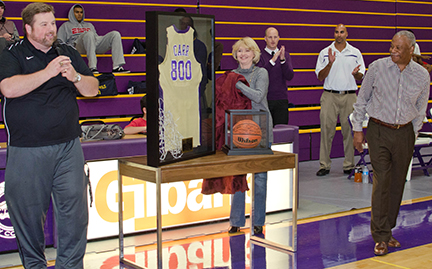
Coach Percy Carr (right) on the night of his 800th victory at San Jose City College.
(photo courtesy of City College Times)

When walking into the basketball gym at San Jose City College, the first impression is that the place is literally spotless. If you show up around 3:00 PM, you’ll likely see Coach Percy Carr sweeping the floor, as he has for the past 38 years. It doesn’t matter that custodians probably just swept it; Coach Carr wants to make sure that the floor is in perfect condition for practice.

In 38 years at SJCC, Coach Carr has won over 800 games, the most in California history, and led his Jaguars to 34 playoff appearances, 12 conference championships, and 8 state championship games. Despite this success, there are no banners hanging in the gym trumpeting his accomplishments.  That’s just Coach’s style.

In addition to his success on the floor, Coach Carr founded the Creative Athlete Retention Response (CARR) program at San Jose City College. The CARR Program offers athletic and academic advice to all SJCC athletes. Ninety-seven percent of SJCC basketball players go on to a four-year university. In 1998, Coach Carr was inducted into the California Community College Basketball Hall of Fame. I was fortunate to sweep the floor right next to him as one of his assistant coaches from 1989-1991

Throughout my career, I’ve been around some amazing leaders, and Coach Carr tops that list.  Working for Coach was one of the most inspiring experiences of my life. The lessons I learned from him have helped form the core of my own leadership journey. This season, Coach welcomed me back to the Jaguar family as the public address announcer for home games. Watching him working up close again has reminded me of those lessons.  I call them the “Four Be’s of Leadership.”

  1. Be Excellent

Many of the players that come to play for Coach Carr are from inner-city neighborhoods with few positive role models. Coach provides these young men with the highest quality of equipment and facilities. The locker room resembles a facility usually seen only at top-notch Division I universities. He’s a stickler about personal grooming, good manners, and study habits. He gives and expects excellence from his players outside and inside the gym, 24/7.

  1. Be Prepared

Early one Sunday morning, Coach called me from the airport after visiting legendary UNLV Coach Jerry Tarkanian and watching his team play. Coach Carr learned a new technique to help players on defense stay a step ahead against speedy opponents. He asked me to meet him at the gym when he arrived in San Jose to demonstrate the move and prepare for the next day’s practice. Monday’s practice was seamless, and the Jags defense led the team to 28 victories that year.

  1. Be a Teacher

When young men first arrive on campus at SJCC, they have little experience managing life on their own. During my two years there, I watched Coach teach them how to navigate the financial aid bureaucracy, shop for groceries, and conduct themselves in public as respectable young men. He taught them how work effectively in a team environment.  And for a couple of hours a day, he taught them how to play basketball.

  1. Be a Winner

This year’s team is a classic SJCC Jaguar squad. They’re big, fast, and very talented. The team is also young, which resulted in a rocky start to the season. The team would take early leads in many games only to succumb at the end. They couldn’t find a way to win. Coach didn’t give up. He made adjustments, tried different line-ups, and convinced the young players that they could win. The Jags started to play like a well-oiled machine and sent Coach to the playoffs for the 34th time in his career.

Although it hasn’t helped my March Madness brackets, I learned a whole lot about coaching basketball from Coach Carr. Like his players, I spent only two years at SJCC, but left with a lifetime of leadership lessons. Working to be excellent, preparing for each assignment and project, being a teacher to those under my care, and striving to be a winner have guided me as a father, husband, community leader, and executive.

At the end of the day, Coach Carr’s leadership isn’t about basketball; it’s about inspiring young men and giving them the tools to be successful. His former players are now lawyers, doctors, teachers, coaches, and businessmen.  I’m sure this year has been an incredible experience for the players and the young coaching staff. They went to the playoffs, Coach is a step closer to 900 wins, and most important, the young men he leads are headed for a successful life.

Summer in the Waiting Room: Chapter 2 (excerpt #12)

The original Mark's Hot Dogs stand on Alum Rock Avenue in east San Jose (photo by www.roadfood.com)
The original Mark’s Hot Dogs stand on Alum Rock Avenue in east San Jose
(photo by http://www.roadfood.com)

Blogger’s note: The following passage is the from my manuscript of Summer in the Waiting Room: How Faith, Family, and Friends Saved My Life. This is the 2nd excerpt from Chapter 2: “Sandra Peralta.” I will post weekly excerpts every Wednesday morning.  To read previous installments, go to the Categories link and click on “Summer in the Waiting Room.”

********************

A couple of months after the garage encounter, I was hitting the town with a couple of old high school friends barhopping when I suggested we stop at the wedding of my friend Will Medina’s sister.  Will and I knew each other from the Kinney Shoe store where he worked in the stock room.  Like me, he grew up in east San Jose, but in a different neighborhood.  He was, and still is, always well-dressed with neatly pressed clothes and perfectly combed hair, and he’s honest and hardworking.  If dictionaries had the phrase “a good man” in their pages, there is no doubt in my mind that Will Medina’s photo would sit right next to the definition.

Will and I got to know each other better after I left my job at Kinney Shoes, and became fast friends playing recreational league basketball and softball together, and carousing around town.  On that summer night in 1985, his girlfriend and future wife, Juanita Navarro, was with him at his sister’s wedding.  Juanita is an intelligent, caring, and faithful woman who has shared her life with Will and their two children.  She also happened to be, and still is, Sandra’s best friend.

When I walked into the reception hall wearing a dark suit and tie, looking for Will and acting like I owned the place, I instantly saw Sandra sitting with Juanita and her family.  She was radiant wearing a navy blue pencil skirt and starched white blouse, and she smiled demurely when our eyes made contact.  Up to this point, Sandra and I agree on how the events unfolded, it’s the next few minutes where we have vastly different perspectives.

I remember walking to Sandra and respectfully asking her to dance; she insists that I waved from across the room and pointed to the dance floor as to say, “Meet me there.”  We are the only witnesses to the disputed incident so I’m sure the whole episode will go with us to our respective graves.  Nevertheless, we danced.   As I escorted her back to her chair, I reminded her that I was the guy who ran from Welch Park across the street to her house mistaking her for someone else.

When told her how I wanted to ask her for her telephone number, but I couldn’t say anything because her beauty left me speechless, she looked at me skeptically, with a slight roll of her eyes, but asked me to sit down anyway.   We danced a few more times and spent the evening chatting.  When my friends began pestering me to leave the wedding for another party, Sandra gave me her telephone number and I vanished into the night.

A week later, we were out on our first date.  I was nervous and excited as I was getting ready for the evening.  I had planned to take her to the movies and then for a quick bite at Mark’s Hot Dogs, the best place on the east side to go for a food nightcap.  When I arrived at her house, I walked into the living room so Sandra could introduce me to her parents.  Sandra looked so beautiful in pink and white striped pants and a pink blouse that I couldn’t stop looking at her; consequently I don’t remember any interaction with her parents or anyone else that may have been in the living room.

As we drove to the Century Theaters on the west side of town to see the hit movie “St. Elmo’s Fire,” Sandra and I talked and laughed, and I quickly became enchanted by this smart, funny, and attractive woman.  Other than being uncomfortable with a couple of racy scenes in the movie, our first date was going well as we arrived at Mark’s Hot Dogs.  Mark’s is an art deco hot-dog stand built in 1936 in the shape of an orange that remains an east side institution and official city landmark to this day.

When I was a kid, my parents would usually stop at Mark’s for a midnight snack after a night out and bring a few dogs home for us, boiled to crunchy perfection in a steamed bun and garnished with mustard, relish, onions, and tomatoes.  My little sister Sisi and I would tear open the plain brown paper bag that held the gastronomic wonders and crunch away with delight.  Sandra had never been to Mark’s, so I was feeling pretty good about introducing her to something new.

As we talked and laughed some more, she suddenly became quiet, then confided in me that she had dated a friend of mine in the past.  She had seen us talking and joking with each other at the wedding.  I admired her honesty, but I was in no mood to start a new relationship fraught with potential challenges.  I quickly finished my dog, drove Sandra home, and told her that I would probably not call her again.  She looked me in the eye and said a matter-of-factly, “Don’t call me then,” and casually walked into her house.  I called her the next day.

********************

Next Wednesday: The chase is on!

California Can Have World-Class Schools Again

480657_10201656783314932_1180923346_n

The other night I was relaxing and listening to The Beatles Magical Mystery Tour album when I heard the familiar sound of a recorder, a flute-like woodwind instrument, on the song A Fool on the Hill (hear Paul McCartney on the recorder at 1:25 – http://www.youtube.com/watch?v=D-8gd1jD0oM). The high-pitched melodic sound of the recorder brought back memories of elementary school. Readers from my generation will remember the recorder as the public school system’s introduction to music education.

Every student was issued a basic plastic recorder that taught us how to read music by belting out old standards like Twinkle Twinkle Little Star and Mary Had a Little Lamb. Some students were inspired to take their musical interests to the next level by joining the school band. I tried the saxophone and quickly learned that there was no way I could ever earn a living as a musician.

I was lucky to grow up during a time when California had the best public school system in the nation. With voter approval of Proposition 13 in 1978, everything changed. The anti-tax law slashed school budgets to provide only the basics. The result has been three and a half decades of limited resources and opportunities for working-class kids. With courageous local leadership, the state’s new Local Control Funding Formula (LCFF) could change that.

From the 1950s to the late 70s, California’s stellar public school system was a symbol of the state’s role as an economic juggernaut during our country’s longest period of prosperity. In 1968, the year The Beatles released A Fool on the Hill, 58% of the state’s funding went to education. According to the California Department of Education website, public school funding is only “40% of the state’s General Fund for 2013-14.”

So what did working-class families get for that extra 18%? In addition to the plastic recorders, there were regular field trips, art, music, and physical education. Today, music, art, and P.E. are considered “enrichment,” not basic education, and parents have to dig deeper into their pockets for fields trips and other “extras” like pencils, paper, and crayons. With the heavy emphasis on science, technology, engineering, and math (STEM), we’re no longer educating our kids; we’re putting them through basic job training.

That’s not necessarily a bad thing, especially in Silicon Valley. Our tech industry badly needs a trained pool of workers, and students need job skills that help them compete in today’s economy. But let’s call it what it is, and not call it a well-rounded education. Putting all our public school resources in the STEM basket leaves few options for students from working-class families with leadership qualities and an aptitude for written and verbal communication or the humanities and arts.

State education policy analysts estimate that the LCFF will add $2,700 per student to local school district budgets for the next five years and even more in the future. At the East Side Union High School District, that means an additional $5.5 million next year. School boards should resist the temptation to use all of the new dollars on technology and STEM-related applications.

I’ve written in previous posts that education leaders need to allocate some of those extra dollars on developing systematic and comprehensive educational equity. Resources also need to be earmarked for student readiness projects and a gradual return of arts and humanities education. Unlike affluent families that are able to fund their children’s “enrichment,” the public school system is the only place that kids from working-class families can get a shot at a well-rounded education.

California schools have been in a perpetual state of budget-cutting for over 35 years. With the annual economizing, school leaders have been on an obsessive quest to run schools like a business. Treating kids like widgets in a factory has resulted in a system that prepares students to merely take standardized tests; rather than educating them.  That’s a shame.

I’m not saying that STEM and standardized tests aren’t important elements of the school system.  I’m saying that they shouldn’t be the ONLY elements of public education. As the Information Age continues to expand, we’ll need people who can read, write, and think critically; as well as people who can program a computer and write code.

During the 1950s and 1960s, California Governor Pat Brown created and funded a well-rounded, word-class public school system.  A half-century later, his son Governor Jerry Brown has developed an education funding mechanism to provide more funding than local school districts have seen in decades.  Let’s hope our local leaders use that extra funding to inspire another era of word-class education in the Golden State.

Summer in the Waiting Room: Chapter 2 – “Sandra Peralta” (excerpt #11)

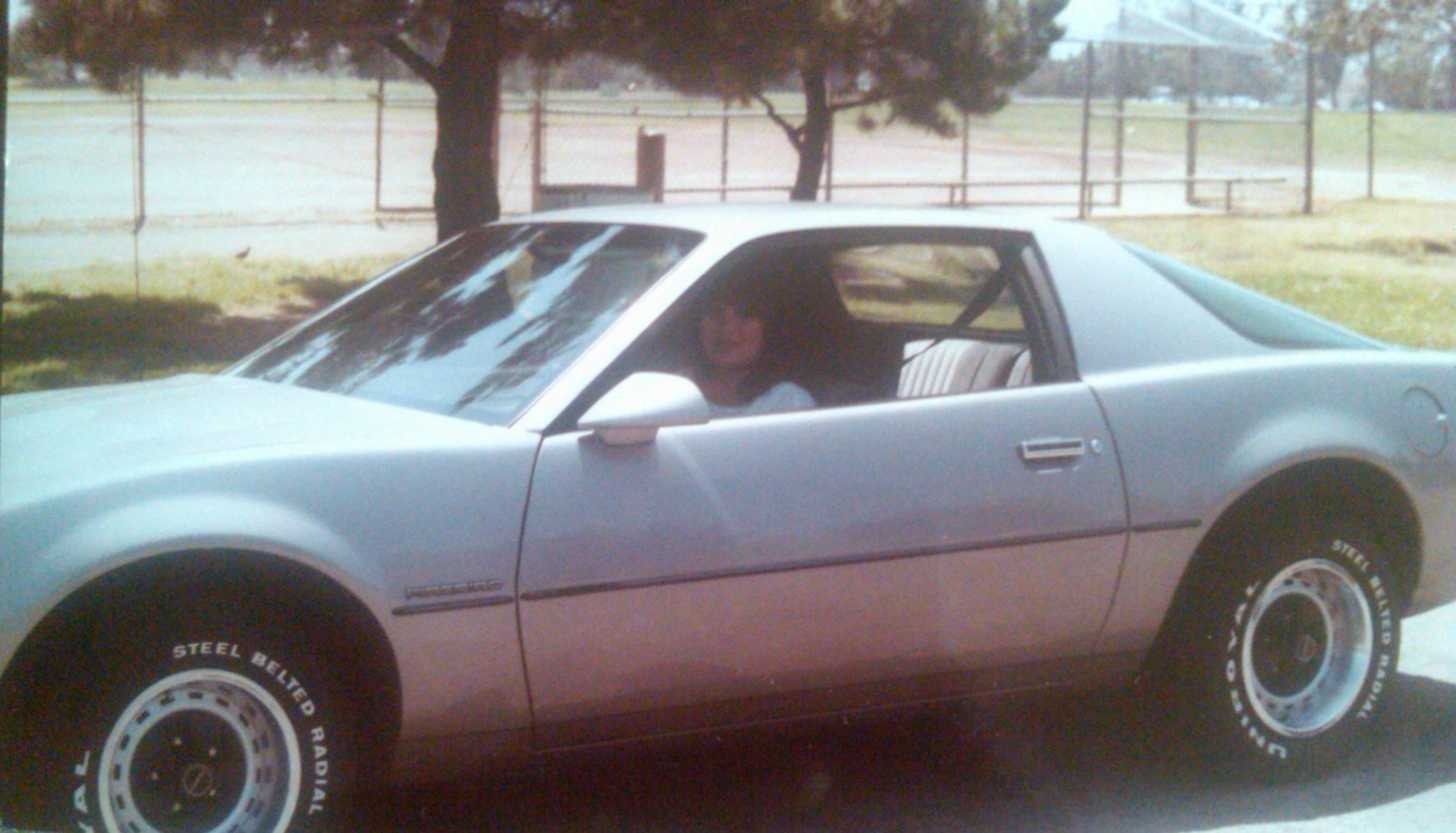
Sandra sitting in her 1984 Firebird across the street from Welch Park (Peralta Family Photo)
Sandra sitting in her 1984 Firebird across the street from Welch Park
(Peralta Family Photo)

Blogger’s note: The following passage is the from my manuscript of Summer in the Waiting Room: How Faith, Family, and Friends Saved My Life. This is the 1st excerpt from Chapter 2: “Sandra Peralta.” I will post weekly excerpts every Wednesday morning.  To read previous installments, go to the Categories link and click on “Summer in the Waiting Room.”

********************

Chapter 2

Sandra Peralta

When I started working at Kinney’s again, a friend named Sammy Ybarra, who I met through a high school friend years before, asked me be his assistant coach for the eighth grade boys basketball team at his elementary school alma mater, a Catholic school in his neighborhood.  He and I became good friends, and I later served as a chaperone at his wedding.  I excitedly accepted his invitation to help coach the team.

We had a blast, and the next year, the school asked me to be the head coach for the boys’ sixth grade basketball team.  I poured all of my energy into coaching that team, and we won all of our games except the championship game at the end of the season.  The kids, parents, and school community loved me, and working with the boys gave me a glimmer of hope that I could succeed at something.

Although the carousing, drinking, and chasing women continued, I began to think that there was a way out of the mess I had created for myself, and getting back into college was the key.  Later that spring, school officials asked me to coach the eighth grade baseball team, and I took on that job with the same gusto.  During the day and on weekends, I was peddling shoes; and in the afternoon during the week I was coaching a Catholic school baseball team at Welch Park in east San Jose.

At night, I was hitting the town causing mischief and feeling a little less inadequate, but not by much. One day, while hitting ground balls at practice, I noticed a shiny car slowly rolling down Santiago Avenue, the roadway that ran between Welch Park and the row of houses across the street.  The driver of that silver 1984 Firebird turning left onto the driveway at the house right across the street from home plate would forever change my life.

Right across the street from home plate on the baseball diamond at Welch Park lived a beautiful young woman.  Every day, I would stop practice to the merriment of the thirteen and fourteen year old boys as she drove up to her house.  I would watch her gather her belongings from the car, sling her backpack over one shoulder, and sip a soda as she walked into the garage that led to the house.  Day in and day out every afternoon, like clockwork, she would turn onto the driveway in her silver Firebird and I would stop practice to watch her routine to the chuckles and giddiness of the team.

After a week or so, the mischievous boys dared me to walk across the street and ask her out on a date, so I took on their challenge the next day as she drove up in a brown Mazda similar to one owned by another young woman I knew.  This was my chance, so I casually jogged across the street pretending that she was the other girl and shouted, “hi Clarabelle.”  As I approached her in the garage of the house, I finally had the chance to see her close up.  She took my breath away.

She had smooth fair skin, high cheekbones, long flowing brown hair combed in the 1980s style of the day, big brown doe eyes, and cute lips that curled just slightly at the top.  With confident reserve, she said, “I’m not Clarabelle, my name is Sandra.”  I apologized for mistaking her for someone else and nervously introduced myself.  I shuffled my feet without taking my eyes off of her eyes, mumbled several things I don’t remember, apologized again, and started jogging back to the park.  She left me speechless, and I didn’t have the courage to ask her out, even though that’s not what I told my players.

During the next several weeks, the kids on the team kept asking if I had gone out on a date with Sandra and I told them with authority that a gentleman doesn’t kiss and tell.  Of course, there were no kisses and nothing to tell.  Every afternoon when she slipped out of her car, I would wave my hand to say hello in an effort to catch her attention, but I don’t remember if she ever waved back.  When the baseball season ended I had no reason to go back to Welch Park, so I kicked myself for not getting Sandra’s number and  letting an opportunity to slip through my fingers.

********************

Next Wednesday: Fate gives me another chance to meet Sandra.

The Soundtrack for One East Side Kid’s Life

The cover from Ramon Ayala's first album, "Ya No Llores" with Los Relampagos de Norte  (Fred. O. García  Collection)
The cover from Ramon Ayala’s first album in 1963, “Ya No Llores,” with Los Relampagos de Norte
(Fred O. García Collection)

Looking back, growing up Mexican American on the east side was pretty cool.  My family was more American than Mexican.  My parents were born in the United States as were my dad’s parents and grandparents.  We spoke English at home with a sprinkling of Spanglish to add flavor, just like the tablespoons of my mom’s homemade salsa we would sprinkle on every meal whether it was tacos or fried chicken.

Like language and food, music in our house crossed borders.  My dad’s collection included the standards (Sinatra, Martin, Nat King Cole), rock and roll 45’s, and a wide variety of Mexican music.  His component stereo system which sat on the “black dresser” in our little dining room was sacred.  He meticulously catalogued his collection: Mexican albums stood side by side in the cupboards of the dresser, 45’s sat on the speakers, and cassettes he recorded filled the top dresser drawer.

I loved it all, especially Mexican music.  I can still smell the cardboard of album covers that wafted out of the cupboards as soon as the door was opened.  Mariachi, tejano, cumbia, banda, a sampling of every type of Mexican music could be found in that cupboard.  My favorite genre was, and is, the norteño style from northern Mexico that features a twelve string guitar, bass, drums, and accordion.  Ramon Ayala y Sus Bravos del Norte, the “King of the Accordion,” is the soundtrack for this east side boy’s life.

Ramon Ayala, a Grammy Award winning artist, was 18 years old when he formed Los Relampagos del Norte in 1963.  He formed the legendary Bravos de Norte eight years later.  His songs are about romantic love, heartbreak, and the struggles of everyday life.  The lyrics strike a chord across generational lines and international borders.  He’s hugely popular with third and fourth generation Mexican Americans, and it’s fascinating to see the adoration he attracts from non-Spanish speakers.

I think this popularity comes from a half-century of being ever-present in many Mexican American households.  In my family, Ramon’s music was standard fare at backyard barbecues, weddings, and family celebrations.  Hanging out with my friends as a teenager, a few Ramon Ayala tunes would always find their way onto a song list of mostly popular disco and funk music.

When Sandra and I were married, we selected Ramon’s iconic Rinconcito en el Cielo (A Little Corner of Heaven) as our first dance rather than a standard American ballad.  The upbeat ranchera style song, played by a classic four-piece band, had us whirling around the dance floor.  On my 47th birthday, just months out of the hospital after my health crisis of 2010, Sandra and my family surprised me with a norteño band playing in our backyard.  We capped the night gingerly dancing to Rinconcito.

This weekend, I crossed off an item from my bucket-list by going on a pilgrimage to Reno with about 25 friends and family to see “The King of the Accordion” in concert.  As people were filing into the grand ballroom of the Silver Legacy Hotel, it seemed like I knew everyone that walked by.  Even though I didn’t know them, the faces in the crowd brought back childhood memories as generations of families came together for the show.

When Ramon Ayala casually walked onto the stage, the sold-out crowd erupted in a roaring cheer that didn’t stop until the concert was over.  From the first note of the first song, the audience danced in the aisles and swayed arm-in-arm as they sang every word of every song releasing passionate gritos during the musical interludes. Before long, I was no longer in a Reno ballroom; I was transported into a backyard, a wedding, and a family party.  The highlight of the night was jumping into the aisles to dance with Sandra as Ramon Ayala himself played Rinconcito en el Cielo.

On the 5-hour drive home, I thought about growing up as a Mexican American on the east side and my career as a high school basketball coach, corporate executive, political chief of staff, and school board member.  I’ve had some amazing experiences in my professional life that I never dreamed could be possible.  But when it comes right down to it, the Wizard of Oz’s Dorothy had it right, “there’s no place like home.”

The Mexican American community, and the Latino community in general, is highly misunderstood in mainstream American life.  Our zest for life and our passion for culture are often mistaken for a lack of desire to achieve academically or professionally.  That’s not true.  We work hard to make a better life for our children.  By the same token, from the vibe of near nirvana at the concert, it seems to me that Latinos can teach a lesson or two about living a balanced life.

Mexican Americans place a high priority on family, relationships, love, heartbreak, and surviving life’s day-to-day challenges.  We also place a high priority on working hard to earn our keep.  It’s these seemingly contradictory notions that make us a special, yet misunderstood, people.  For a half century, Ramon Ayala, a Mexican-born musical artist, has brought the shared experiences of Mexican Americans to life.  On Saturday night, he took me on a wonderful two-hour journey back home.

10,000 Views and Counting!!

San Jose-20140219-00279

Dear Readers,

After more than 10,000 clicks on this blog, look what readers are saying about East Side Eddie Report.com and Summer in the Waiting Room: How Faith, Family, and Friends Saved My Life!!

“I invited a ton of friends [to follow East Side Eddie Report.com] and I think it’s wonderful what you’re doing. What I really like best is your candor. Thank you, thank you my friend.” – Debra Stephens

“I highly recommend reading the East Side Eddie Report. I encourage you to “like” the East Side Eddie Report Facebook page and to enjoy his posts and his incredible story.” – David Neighbors

“I just caught up on reading all your excerpts…WOW…what a great story…now I can’t wait for the next segment”. – David Duarte

“Wow! I am in suspense and now I can’t wait to read the rest of your story.” – Michele Melnyk

“A darn good read.” – Jim Cunneen

“Eddie, I keep enjoying your weekly reports!!” – Alice Rodriguez

I hope you enjoy reading the posts as much as I enjoy writing them.  Encourage your friends to try East Side Eddie Report.com, and “Follow” the blog by clicking on the button on the upper right and “Like” East Side Eddie Report.com Facebook page by clicking on the icon on the lower left of this page.

Thanks!

Eddie

Summer in the Waiting Room: Chapter 1 (excerpt #10)

(stock image)
(stock image)

Blogger’s note: The following passage is the from my manuscript of Summer in the Waiting Room: How Faith, Family, and Friends Saved My Life. It’s the 10th excerpt from Chapter 1: “48 Viewmont Avenue.” I will post weekly excerpts every Wednesday morning.  To read previous installments, go to the Categories link and click on “Summer in the Waiting Room.”

********************

Before long, I was failing tests, or worse, just not showing up to class. I was losing confidence in myself as the cycle of going through the motions at school, not showing up for exams, and partying intensified. Every morning I awoke with doom and disaster lurking around every corner questioning myself for accommodating my dad’s wishes that I go to a four-year university.

Was Mr. Bailey right after all? Were college and a life of middle-class comfort not part of my future? What was I really trying to accomplish? One night while drinking at a friend’s house, a former high schoolmate, who I’m sure, was envious of me, told everyone there that I was wasting my time going to college because I was meant to be a working stiff like everyone else from the neighborhood. Drunk and depressed, I believed every word of what he had said.

When my third semester of college came to an end, my academic career at San Jose State collapsed. The bright future that my parents, teachers, and many others had predicted for me had vanished.  San Jose State University sent a certified letter to 48 Viewmont Avenue informing me that I had been academically disqualified from the university.  I had flunked out.  There was no cocoon to protect me; in fact, I had to find a way to protect myself from the cocoon.

With my self-worth completely eroded, I drove deeper into the abyss of self-destruction.  I quit working at Kinney’s for a higher-paying job selling shoes at the mall.  Drinking and carousing around town with Rudy and the guys intensified.  I looked for a job with potential opportunities for quick advancement and found work at the J.C. Penny department store at the same mall.

I worked hard and soon caught the eye of management as someone who could succeed in the retail industry.  All the while, I still hadn’t told my parents about the college failure, I was drinking and partying several nights a week, and my relationships with women were superficial and unstable.  As my self-worth further declined, I would soon be dating someone else, usually some co-worker at the department store, to cover up the emotional sting.

I quit working at J.C. Penney despite the apparent success and a promising future there.  For a short time, I worked on side jobs with Rudy at his father’s concrete construction company as a laborer during the day, and spent nights sitting at the local bar drinking with the hardened and grizzled construction workers.  I was depressed and seeking validation through alcohol and emotionless pursuit of women.  Sisi remembered that I was never home when she told me how I was “absent from [Sisi], and mom and dad’s life.”

She recalled many nights when my dad sat at his stereo listening to music through headphones and drinking as my mom watched movies on late night television while they worriedly waited for me to come home.  I never knew about this until Sisi shared the story years later, because my parents were always safely tucked into bed by the time I staggered into the house to throw myself onto my bed for the night.  My older brothers and sisters knew nothing of this as they had their own lives, their own families, and, with the exception of Steve, lived somewhere other than San Jose.

The Spanish proverb, “the night is always darkest before the dawn,” perfectly portrays that time for me as I had reached the lowest and darkest point of my life.  I had failed in college, foolishly entered into and walked out on several relationships, threw away what J.C. Penny managers thought was a promising career, and couldn’t cut it as a construction worker.  I begged the manager at Kinney Shoes to take me back so I could earn a little money to sort out my life.

With my parents, I confirmed what they probably already knew about my college failure; it was 100 times more difficult than when I told them about the Mr. Bailey meeting.  My dad stood and listened without saying a word, then shook his head in disappointment and walked away.  My mom looked at me with sad eyes and told me that I would find my way and they would be there for me when I needed them.

I had broken almost all of the values and standards that I learned at 48 Viewmont Avenue about how to conduct an honorable and successful life.  I had lost respect for myself and for others, especially the women I used to console my broken spirit, and displayed no desire to learn and improve myself, or to be compassionate, or to love unconditionally.  I was a defeated young man, barely into my 21st year, with no idea how my future would unfold.

********************

Next Wednesday: Fate steps in as I try to rebound from the darkest period of my life.