Category Archives: Miscellaneous Posts

Be More Active

If you can’t fly then run, if you can’t run then walk, if you can’t walk then crawl, but whatever you do you have to keep moving. ~ Dr. Martin Luther King, Jr.

***

After returning home from the hospital in 2010, I went to a class to learn how to live a full life with a compromised heart. The topics included information about how the heart works, suggestions for healthy living, exercises that strengthen the heart muscle without adding stress to it, and facts about the different medications necessary to keep the heart functioning.

The material for the six-week program was delivered by nurses, nutritionists, pharmacists, physical therapists, and other content experts in a classroom setting. At 46, I was clearly the youngest of the 30 or so participants in a class of mostly ornery and impatient 70 and 80 year-olds set in their ways and grumbling about aches and pains.

A 75 year old woman named Ruth had been my seat neighbor for the entire program. She was a nice grandmotherly type who loved cooking, hated exercise, and planned little changes to her life. She half-jokingly told me that she never exercised a day in her life and saw no reason to start. Then she said, “Look at you. You were a healthy young man and still had a heart attack like the rest of us.” She had a point . . . kinda.

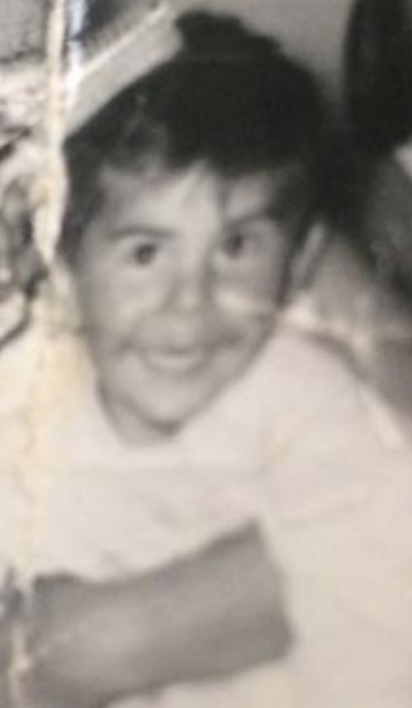
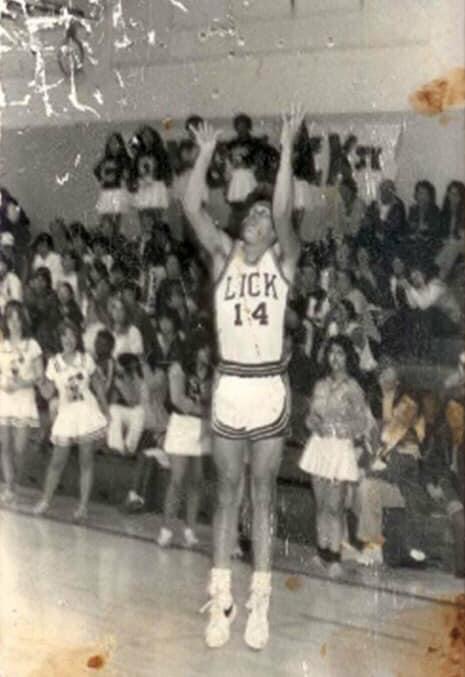
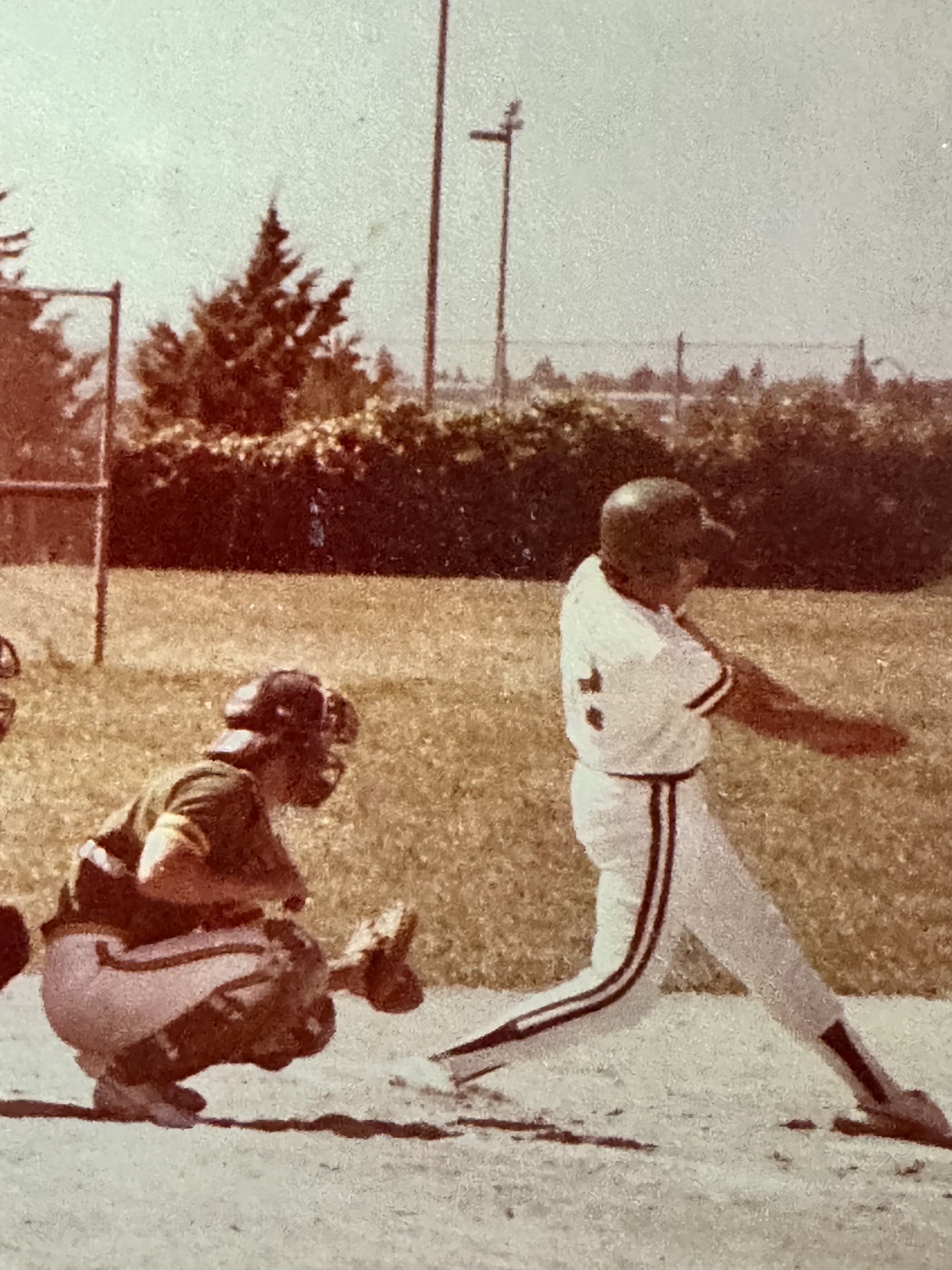
When I was a kid, I loved to jump fences, climb trees, and ride bikes with neighborhood kids. We played basketball on my driveway, two-hand touch football in the street, and sandlot baseball at the elementary school at the end of the block. Of course, there was Little League baseball until I was 12 years old, and middle school flag football and basketball. In high school, I earned four varsity letters in basketball and baseball.

Yeah, I was that kid.

After high school, I played recreation league basketball and softball. Obligatory beer busts after each game were standard. That didn’t help much, but I stayed active. Marriage, career, and kids left little time for these activities. I played the last rec league basketball game in my late 30s. I came home dejected because the younger men were just too fast and strong for me. 

My nine year old daughter laughed when I “announced” my rec league “retirement” to Sandra and the girls. “It’s not like you’re Michael Jordan retiring from the Bulls daddy,” Marisa quipped. Over the next several years, I occasionally found time to exercise by walking, working out in the gym, and playing golf. I was in the gym on June 7, 2010, when the opening salvo of heart attack symptoms began.

Despite Ruth’s confidence that exercise didn’t prevent my heart attack, staying active certainly saved my life. My cardiologist assured me that I wouldn’t have survived the June 7th heart attack and surgery if I wasn’t in shape. Later that summer, after a medically induced coma caused my muscles to waste away, I completed an 8-week physical rehabilitation program in three weeks. The physical rehab doctor mentioned that my athletic experience helped me learn and execute the exercises faster than usual.

So what’s the point of all this?

According to the American Heart Association, the second of Life’s Essential 8 for lifelong good heart health is Be More Active. This doesn’t mean that you have to be a formally trained athlete or a gym rat to stay healthy. Life’s Essential 8 recommends that adults should get 2 ½ hours of moderate or 75 minutes of vigorous physical activity per week. 

Walking for 30 minutes a day, five days per week qualifies as moderate activity. The vigorous exercise recommendation can be done by running 15 minutes a day, five days per week. If you don’t like to or can’t walk or run, the American Heart Association Life’s Essential 8 website has lots of ideas on how to be more active throughout the day.

As I mentioned in my  last post, exercise alone isn’t the formula for a healthy lifestyle. As my old friend Ruth so sarcastically reminded me, it sure didn’t prevent me from having a massive heart attack. In conjunction with eating better and the other six of Life’s Essential 8 (I plan to share them on this blog in coming weeks), being more active will lead to a healthier and more fulfilling life.

Be creative and set goals. Get out there and do your thing, even when you don’t feel like it. I know the kids, job, extended family obligations, and a million other things make it hard to keep going, but you just have to do it. As MLK said, “whatever you do you have to keep moving.” Walk 30 minutes a day. Put it in your calendar. Take the stairs instead of the elevator and escalator. Go whack some weeds. Dance with your partner everyday. You never know if a little smooching might happen next!

Since my heart transplant, I walk four or five days per week, four miles per day. I use light weights two or three days per week. And, I mean light weights. Ten pound dumbbells, body resistance exercises like modified push ups, jumping jacks, squats, and crunches do the trick to get the heart rate up. The days of trying to get chiseled chest, arms, and legs are laughable and long gone. 

My goals now are to walk around the mall with Sandra and the girls, run around with our new puppy, play a round of golf from time to time with old friends, and dance to a few of our favorite songs with Sandra. Oh yeah, and stay alive!

I still often think about Ruth and my geriatric classmates from 2010. I sometimes wonder if any of them ate hot dogs. My guess is that many have passed away during the past decade and a half. It would be a blessing if God allows me to live that long. But that’s His call.

In the meantime, I’m going to be more active and keep moving until I can’t. If you have a little time, come join me.

Eat Better!

April 16, 2023 – Celebrating the 3rd anniversary of my transplant

If you don’t like something, change it. If you can’t change it, change your attitude. ~ Maya Angelou

***

There was a time when my concuños and I played food games. First of all, concuño is a loose Spanish translation to describe my sister-in-laws’ husbands. Since Sandra has three sisters, we are four concuños. In our 20s and well into our 30s, we had friendly eating competitions. Two such contests stand out in my mind: eating donuts and consuming outsized hamburgers.

On any given Sunday, we would be hanging out at our in-laws’ house doing nothing but hanging out. Someone would say, “let’s get donuts,” and the race was on. Knocking out three or four of the tasty mouthfuls of deep fried flour and sugar wouldn’t be unusual for me. Guzzling a tall glass of whole milk was the finishing touch. I forgot to mention that it was usually after an afternoon of eating barbecue pork ribs and drinking beer.

Then there was the time we challenged each other to eat a Monster Burger at Red Robin. This 1,220 calorie behemoth includes a ½ pound of ground beef and exceeds the daily recommendation of fat and sodium. Of course, we washed down the burger with a side of bottomless steak fries and a 24 oz. beer. My stomach was on the verge of bursting as I breathlessly waddled out of the restaurant. 

Yeah, it all sounds pretty gross to me now.

Both of my parents had heart attacks in their 50s and I had been dealing with high cholesterol  since my late 20s. In addition to bad genetics, my childhood diet was high in fat, fried foods, and salt. Fresh veggies were in short supply. So the obvious question about those silly eating contests is: “What the hell was I thinking?” Sadly, the short answer is arrogance and very little understanding of heart disease. 

I thought that exercising regularly would protect me from the fate that fell upon my parents. There were a couple of problems with that thinking. First of all, my exercise regimen wasn’t consistent. I would go through short periods of regular workouts and much longer periods of no exercise at all. More importantly, I completely dismissed the importance of diet. The irony of my 2010 heart attack symptoms starting at the gym is not lost on me. 

Since 2010, I set out to learn as much as possible about heart disease to take care of my damaged organ and encourage others to do the same. On the heels of my 2020 transplant, taking care of my new heart and inspiring people to learn about the disease have become a passion. As a volunteer for the American Heart Association (AHA) last year, I became acquainted with its Life’s Essential 8 checklist. 

According to the AHA, “Life’s Essential 8 are the key measures for improving and maintaining cardiovascular health. Better cardiovascular health helps lower the risk for heart disease, stroke and other major health problems.” As the old saying goes, “if I knew then what I know now . . .” I’m sure you know where I’m going with this. Unfortunately, I didn’t know then what I know now.

Life’s Essential 8 focuses on two major areas: health behaviors and health factors. Health behaviors are things you do that impact health. They include diet, substance use, sleep, and physical activity. Health factors include genetic conditions, education and income levels, and personal medical history. Improving health behaviors can minimize life-threatening health factors.

It turns out that my strategy to exercise my way out of an inevitable heart attack fell way short of what I needed to do to protect myself. In fact, number one on the Life’s Essential 8 checklist is to eat better. The formula is pretty simple. Fresh fruit and vegetables, whole grains, lean meat, legumes and beans, and nuts are good. Alcohol, sugar, salt, trans-fat, processed food, and fried foods aren’t so good. Learning to read nutrition leaves can help manage this.

Sounds easy enough. Hmmmpf! Yeah right. As Dad used to say, “it’s easier said than done.” I’m sure most of us have heard doctors tell us what we need to do to stay healthy. Eat right, exercise, drink plenty of water, limit alcohol, blah, blah, blah. I’ve been there and done that. But, here’s the thing. YOU GOTTA DO THAT TO STAY HEALTHY. Period. End of story. 

Of course, there are rare exceptions like everything else. We all know that one thin person who eats bad food, drinks like a fish, smokes like a train, avoids exercise like the plague, and lives a long time. For some reason, the rest of us think we can do the same and stay away from the hospital and the morgue.

Well . . . think again. I ate bad food, drank a fair amount of alcohol, never smoked, and kinda exercised. The hospital knocked on my door when I was 46 years old and the morgue kept hanging around the entire summer just in case I didn’t make it.

On April 16, 2020, God gave me another shot to do the smart thing. Thanks to the American Heart Association and Life’s Essential 8, I now have a road map to protect the gift of life that came with my new heart. It hasn’t been easy. Watching what I eat and reading nutrition labels are second nature now. I try to think through the consequences of what I put into my mouth before every meal.

Do I do it perfectly every time? Nope. I still have a burger and a few ribs from time to time. I just don’t overdo it and get right back to staying the course. Family gatherings are still hardest for me. I tend to pick at chips and dip and other unhealthy snacks during those times. And I still have an almost insatiable sweet tooth. I can get like the Cookie Monster really fast if I don’t pay attention. I’ll write more about the evils of sugar in a later post.

I’ve learned that the trick to staying on track with a healthy diet is the same as any other effort needed for success and accomplishment. It requires passion, hard work, and discipline. In other words, you really have to want to be alive and healthy. For me, it’s simple. I want to be alive and healthy to spend an active retirement with Sandra once she hangs it up and to run around with grandkids if and when that happens.

Friends tell me that they’re not sure if they could give up so many things. I get it. I like to party. I like greasy Mexican food. I like jelly donuts from legendary Peter’s Bakery on the east side. As the Zach Brown Band tells it, “I like chicken fried and a cold beer on a Friday night.” But, I love Sandra and the girls more. 

It’s natural for parents to say that they would die for their kids. I’ve turned that saying on its head and decided to live for my kids. Following the diet recommendations in Life’s Essential 8 is a daily struggle for most of us. I don’t necessarily like it. As the great poet Maya Angelou said, “If you don’t like something, change it. If you can’t change it, change your attitude.” I can’t change what happened to me almost 14 years ago, so I’ve changed my views about what I choose to eat.

I encourage everyone to think about giving Life’s Essential 8 diet recommendations a try.  You can do it. Start slowly, little by little. Take care of your heart and give it the best shot at taking care of you. You deserve a long and healthy life and your family deserves that too. I’m living proof that anyone can enjoy life and eat a healthy diet. Don’t wait. Start today!

There’s Always Hope

This is the third installment of ESEReport.com’s Second Chances blog series.

***

Rejoice in our sufferings, because suffering develops endurance, and endurance produces character, and character produces hope. ~ Romans 5:3-4

***

On a sunny and crisp Thursday morning earlier this month, I sat outside sipping a cup of hot coffee at the Evergreen Coffee Company, a cool mom and pop coffee place near my house in San Jose’s Village Square neighborhood. A recent heart attack survivor and I were sharing war stories about open heart surgery, hospital life, and the emotional challenges of recovering from a major life disruption.

As the conversation turned to the heavy toll a chronic illness takes on mental health, he cut to the chase. “This thing is messing with my mind,” he blurted out. I wasn’t surprised by his frustration. It turns out that managing emotions has been the hardest part of my journey. Suffering a heart attack is life-changing. The more severe the attack and damage to the heart, the more your life changes. Confusion, fear, and anxiety set in before your mind can make any sense of what happened.

After sharing his frustration, he promptly asked, “How did you get through it?” I didn’t reply immediately. The short answer is that I haven’t gotten through it. It’s an ongoing process. I just take it day by day and follow the advice Winston Churchill offered to his country during the darkest days of World War II, “If you’re going through hell, keep going.”

When I finally responded, I thought of one word . . . hope

Of course, after a life-altering medical crisis, many ingredients are needed to develop stable mental health. A supportive family and an exceptional healthcare team are essential. Plenty of faith and a hearty helping of hope tie it all together. St. Paul the Apostle’s encouraging wisdom in Romans 5:3-4 keeps me going when the burden of living with chronic heart disease for nearly 15 years inevitably tries to exploit my anxious mind.

In his Letter to the Romans, St. Paul encouraged us to “rejoice in our sufferings.” I can understand how the thought of “rejoicing in suffering” sounds like a dumb strategy when facing impossible odds. That didn’t make sense to me when I first read it. But as I reflected on my battle with heart failure and subsequent faith journey, I realized that the 10-year road to a successful heart transplant was mapped out by Romans 5:3-4.

When I emerged from a medically induced coma caused by lung failure during the summer of 2010, my body degenerated and became weak. I had to re-learn how to sit, stand, walk, and swallow. Doctors told me that my muscles had “fallen asleep,” so I could regain strength with an intensive 8-week physical rehab program. When I was stable enough, they sent me to the Kaiser Foundation Rehabilitation Center in Vallejo, California (KFRC). 

The KFRC is a state-of-the-art facility. According to the 2023 U.S. News’ Best Hospitals study, the KFRC was selected as a Top 50 rehab program in the nation for the third consecutive year. Like great coaches, the physical and occupational therapists were relentlessly determined, yet empathetic. My competitive nature kicked in. My goal was to finish the program in less than eight weeks. I was pumped! I rejoiced in my suffering. I walked out of the KFRC with the aid of a walker three weeks later.

Even though I was walking again, congestive heart failure hadn’t taken a break. My heart was badly damaged, but I wasn’t a good candidate for a transplant for two major reasons:  (1) my heart was still functioning and (2) my lungs weren’t strong enough to withstand major surgery. I learned as much as possible about my condition to understand what needed to be done to give myself the best shot to get a transplant sometime in the future.

My cardiologist recommended that I eat a heart healthy diet, take meds, and exercise to keep my body healthy. It was going to be a long process with no guarantees. To be successful, I had to weather the storm of heart failure for an unknown amount of time. It could have been months. It could have been years. As my heart grew weaker, my lungs grew stronger. My suffering developed endurance. I lived with congestive heart failure for the next 10 years.

Getting through those 10 years was hard. It required lots of discipline. I had to take five pills, three times a day. Maintaining a low-fat, low-salt diet tested my will power on a daily basis, especially during summer barbecues and the holidays. Walking for just 30 minutes per day got harder as each year passed by. I’d always been able to stay disciplined when it was on my terms. When I made the rules. This time was different. My cardiologist made the rules.

Although this regimen was forced upon me, I gave up control and focused on it like a laser day after day, month after month, and year after year.  I stayed with it even as my heart became sicker. There were many days when the allure of unhealthy food, frustration about staying on a medication schedule, and extreme fatigue dared me to quit. I withstood the temptation. My endurance produced a strong character. My body was strong and ready for heart transplant surgery when I got “the call.”

Life comes at us fast. It could be a job loss, the end of a long relationship, or a sudden life-changing medical crisis. St. Paul the Apostle taught us that there’s always hope. Rejoice in our sufferings, because suffering develops endurance, and endurance produces character, and character produces hope.

As we sipped our coffee, I recommended to my new friend that he seek counseling. It was indispensable to my recovery. He mentioned earlier that he’s a man of faith, so I also shared my story of hope based on the wise words in Romans 5:3-4. I’m not sure if it was helpful to him, but reflecting on my journey and the blessings that have come from it energized me. 

I walked home from the Evergreen Coffee Company with a spring in my step, a grateful grin upon my face, and hope in my heart. 

Never Enough?

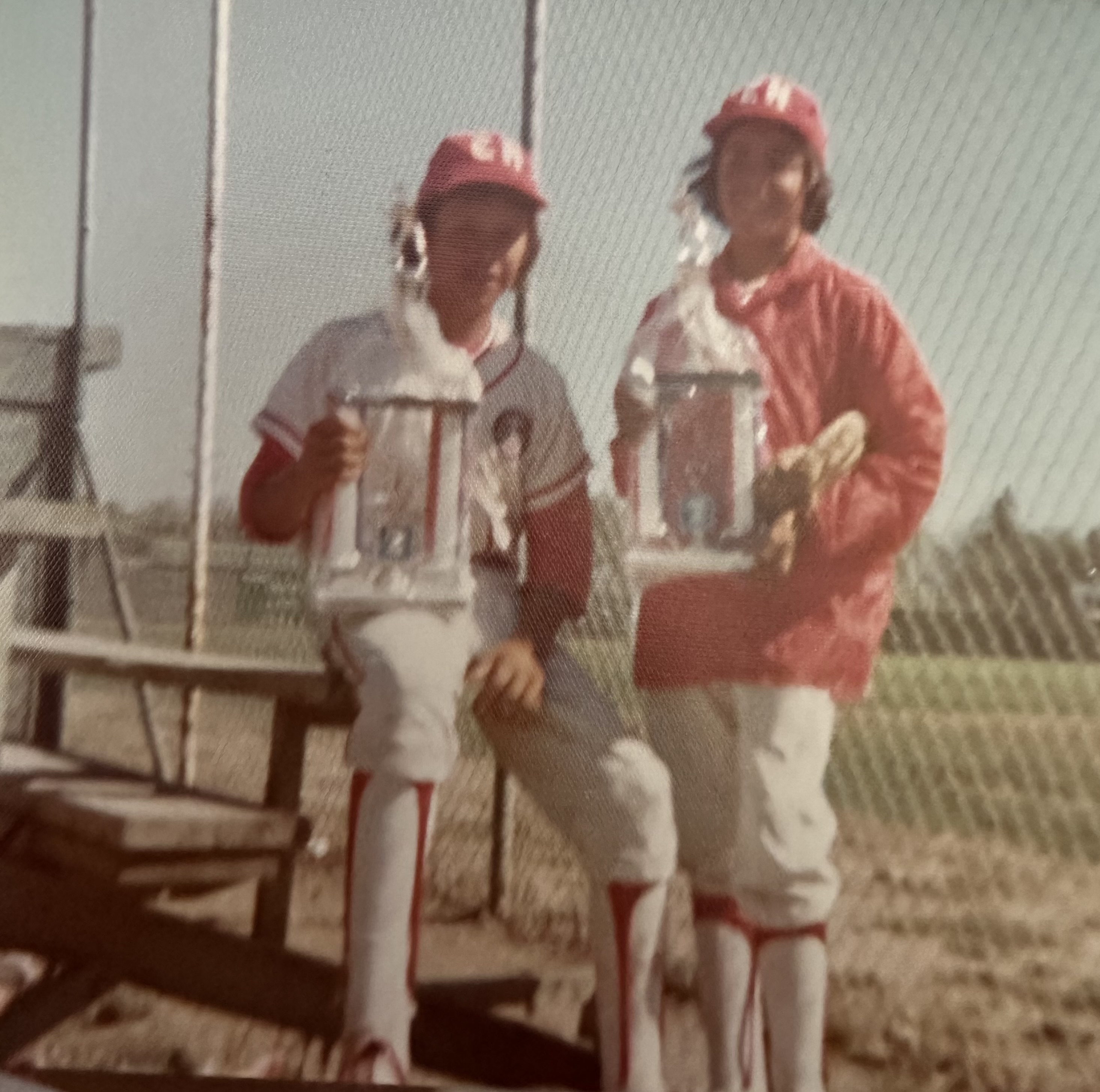
Co-Captains of the East Hills Little League Major Division Champions ~ 1976

This is the second installment of ESEReport.com’s Second Chances blog series.

***

 My grace is sufficient for you, for my power is made perfect in weakness. ~ 2 Corinthians 12:9

***

It was the summer of 1976, my last season playing on the East Hills Little League baseball fields. Those were the days when team names were those of sponsors that paid for uniforms. Instead of displaying Giants, Athletics, or Mets logos, our uniforms showcased Mervyn’s Department Store, Fontanetti’s Sporting Goods, Anello Trucking, and other local businesses and organizations. I played for the East Valley Lions Club, the major division “Red” team. We wore red caps with white “EH” ironed onto the front. 

The major division diamond was on the campus of August Boeger Middle school on the east side. The field was a miniature version of professional stadiums with a large backstop, pitcher’s mound, grass and dirt infield, press box with PA system, electronic scoreboard, and home run fence. It was like playing in the big leagues. Kids playing in the younger farm and minor divisions couldn’t wait to play on that prestigious field. 

I had a great season in 1976. I was named co-captain of the East Valley Lions and selected to be on the All-Star team. Coach called on me to be the starting pitcher for the league championship game against Anello Trucking, the “Blue” team. It was a warm June evening and the old wooden bleachers were filled with cheering family and friends. Dad sat at his regular spot at the top of the stands calling pitches from his perch. Mom sat faithfully by his side.

I don’t remember anything about the game. Not one pitch. Not one play. Not one at bat. I do vividly remember what happened after the last out that sealed our victory. Coach ran onto the field toward the pitcher’s mound and lifted me into the air with a big bear hug. My teammates were excitedly jumping up and down around us. 

I instinctively looked toward the top of the bleachers behind the dugout. Dad was standing and looking back at me with a smile of pure pride and joy. Mom had her usual expression of modest delight regardless of the game’s outcome. Dad’s smile was out of this world. He was a charismatic man. His outward display of confidence and his infectious grin could fill up any space he was in. 

Dad also had a menacing scowl when he was unhappy or disappointed. His furrowed brow, pursed lips, and nod of disapproval was like kryptonite to me. It sapped energy from my being. Dad had a hard life. His father died when he was just a boy. His bitter mother raised six kids in a wooden shanty with a dirt floor. He experienced the horrors of WWII as a teenage sailor in the U.S. Navy. He saw the world in stark practical terms. Success requires doing things “right.”

Mom was an only child raised by her single mother and grandmother in a small, but loving home. Despite living in relative poverty, her upbringing relied on faith and hope for a better tomorrow. She was yang to Dad’s yin. She always found good in everything. If something unfortunate happened, well . . . that was just God’s will.

Those deeply held views that my parents had about themselves, others, and the world are what psychologist Aaron T. Beck referred to as “core beliefs” in his groundbreaking development of cognitive therapy. Core beliefs are basic lifelong “truths” that a person develops about himself or herself, people, and the world. They usually develop from childhood or through traumatic life experiences. 

In other words, our understanding of how the world is supposed to work comes from hearing and watching what our parents and other influential people (i.e. older siblings, friends, teachers, coaches, bosses) around us say and do. Positive core beliefs can lead to a happy, productive, and balanced life. Anxiety and depression caused by negative core beliefs can lead to a downcast, deprived, and disorderly existence. 

My parents sought to create an environment for their children to thrive as adults. Dad’s core belief that the world is a harsh place that can be conquered by adhering to his formula for success made it plain that no matter how hard we worked, we could always do better. Mom’s core belief that all is well that ends well with God’s grace inspired a sense of confidence that we would thrive with the gifts provided by God. 

Together they instilled into their kids the combination of having to constantly do better and believing they have the talents to succeed at anything they try. This seemed like Mom and Dad had the ideal formula for developing strong, confident, and productive members of society. On the surface, it appears as though they accomplished their mission. But it came at a heavy emotional and mental cost to me. 

I can’t speak for my siblings, but the drumbeat of “you can do better” and “mijo you’re the best” set the expectation bar so high for me that it was unreachable. In my mind, no matter what I did in life, it would never be enough. That led to an almost insatiable drive to succeed. I would do anything to exceed my parents’ hopes and dreams for me, whatever those may have been. 

It’s no surprise that I grew up to be a pleaser. Psychologists refer to extreme cases of this condition as Sociotropy or Dependent Personality Disorder. People with pleaser tendencies put too much emphasis on social acceptance. Their behavior is a way to boost self-esteem and avoid the perception of failure. Ultimately, those who suffer from the need to be accepted and validated live with the sense of never being or doing enough to meet their own unrealistic standards based on untrue core beliefs.

This can be damaging to mental and emotional health. Although I’ve never been diagnosed with Sociotropy or Dependent Personality Disorder, my thirst for acceptance and approval has caused me much pain and suffering. Over time, I transferred the desire to please my parents to wanting  validation from Sandra, our daughters, extended family, the community I served in public office, and professional colleagues. That’s why I might have almost worked myself to death.

The self-imposed core belief that I’ll never be enough has haunted me throughout my life. I’m not suggesting that Mom and Dad are guilty of setting off a domino effect of generational trauma. They were loving parents who did an amazing job setting their children up for a successful and happy life. The core beliefs my parents passed on to me have led to, by most accounts, a pretty good life for their youngest son, with the glaring exception of feeling inadequate. 

When I was in my Little League coach’s arms on the mound at the East Hills League field in 1976, little did I know that the seemingly insignificant act of glancing toward the bleachers and wondering whether my pitching performance was good enough to earn an “atta boy” from Dad would follow me for decades. Yet here I am trying to learn how to make sense of it all 48 years later.

That’s where faith, hope, and love come in. St. Paul wrote that God tells us, “my grace is sufficient for you.” As I navigate ever further into understanding faith and making mindfulness practice a priority, what really matters is slowly becoming more clear. On the surface of my psyche, I know that what I’ve done with my life so far is sufficient. However, I’ll most likely spend the rest of my life challenging my core belief that I need to do more and be more.

As Mom used to say, un día a la vez – one day at a time.

Second Chances

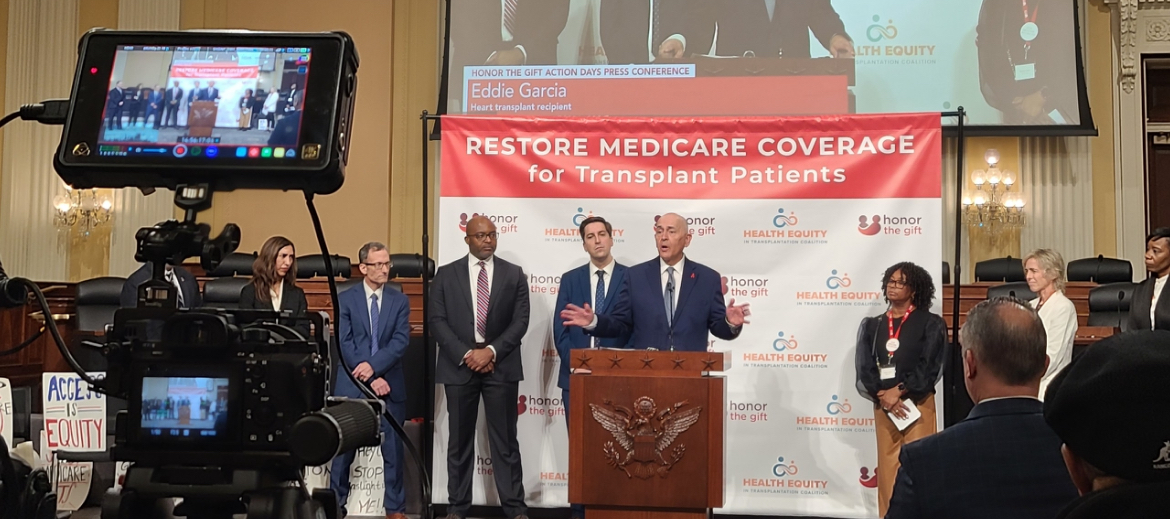
Honor the Gift Press Conference – Washington, D.C. – December 5, 2023

This is the first post of ESEReport.com’s Second Chances blog series.

***

The Lord is not being slow in carrying out his promises, as some people think he is; rather he is being patient with you. ~ 2 Peter 3:9

***

It was sometime in late May 1977. I sat in a classroom at Joseph George Middle School in east San Jose fidgeting in my seat nervously waiting for my turn. I was in the eighth grade, a few weeks away from middle school graduation day. In addition to the traditional valedictorian and salutatorian addresses, a student would be selected to give a speech about campus life. I was one of about six students who tried out for that role.

With Dad’s help, I worked hard on drafting my comments. I wasn’t the smartest kid in school, which explains why I wouldn’t make either of the customary academic achievement graduation remarks. Neither was I one of the most popular students. The other five or so at the tryouts fit into that category. But even as an immature 13 year old boy, I was ambitious and took on challenges that stretched my natural abilities.

Since I loved to read, I worked meticulously on every word looking for an advantage over the popular kids. Dad, who was also a prolific reader, suggested some pretty fancy words that would surely make me sound more sophisticated. Once the final draft was finished, I still felt unsure about being able to stand out. Dad had a brilliant idea. Rather than reading the speech, he suggested that I should memorize it! I practiced and practiced.

When one of the teachers serving as a judge called my name, the nervous tension made me nauseated. As I walked up to the front of the room, a wave of anxious warmth wrapped around my head. My trembling hands placed the written speech on the lectern, just in case I needed a reminder of the words I memorized. When I looked up, there were three teachers and about six students staring at me. My head and flushed face were now in full-fledged nervous fever.

I forgot everything I had practiced. Not one word was coming to me. I looked down at the piece of paper to jog my memory. Nothing! My heart was beating so fast that I thought it would jump out of my chest. I decided on the spot to read my remarks. That didn’t turn out much better. My mouth was so dry that I’m sure no one could understand the stuttering sounds that came out of it. The performance was a complete disaster. I was so embarrassed that I cried when Dad came home from work excitedly asking me how it went.

I was convinced that speaking in front of people would never be in my future. Nevertheless, life went on. In high school, I wasn’t so bad at what we called oral reports in those days. After I flunked out of my first try at college, I coached middle school and high school baseball and basketball. I did just fine with the pre and post game speeches in front of the kids. Speaking to parents at booster club meetings and end of season banquets was part of the job. I did just fine with those too.

In 1989, James Lick High School named me Coach-of-the-Year at an end of year ceremony. The disaster that was 1977 didn’t even cross my mind when I walked up to the podium to deliver an acceptance speech in front of about 200 people. When I returned to college in 1991, I enrolled in a public speaking course primarily because it was a required class, not that I was interested. The professor noted that I was a natural public speaker. His confidence in me was inspiring. In class, I developed the skills that would make speaking in public the foundation of my career.

So what happened between 1977 and 1991? If the professor was right that I was a natural, why was my first attempt at public speaking so awful? How did I improve without any formal training during those 14 years? The likely answer is that life just has a way of working itself out. Life experiences gave me a bunch of opportunities after 1977 to use this natural ability. College gave me the tools to make the most of it in my career and community service. 

I believe that God is the architect of life working itself out. In correspondence with people who lost hope, St. Peter’s Second Letter emphasizes, “The Lord is not being slow in carrying out his promises, as some people think he is; rather he is being patient with you, wanting nobody to be lost and everybody to be brought to repentance.” God was surely by my side in that Joseph George Middle School classroom. Although I badly wanted to speak at graduation, God let me know that I wasn’t ready.

St. Peter’s Second Letter reminds us that God is in charge. God gives all of us natural gifts. Most times, we never recognize or accept that we have them. Sometimes we use them for good and sometimes we use them for wrongdoing. Sometimes we don’t use them at all. “Wanting nobody to be lost,” St. Peter’s letter also provides hope that God gives us second chances when we don’t get it right the first time.

I believe in second chances. It’s taken me four decades and many second chances to understand. It started with the opportunity to return to college after the initial failure. After two failed bids to serve in public office, I earned a seat on the school board with a third attempt. When a massive heart attack threatened to end my life and a heart transplant saved it, God’s grace allowed my journey to continue. I’ve been blessed with a lot of second chances. 

These experiences have taught me three things: (1) We all have natural gifts. We just need to be patient and give God a chance to reveal them to us in his time. (2) We’ve all had second chances in life. We just need to slow down a bit to recognize and reflect on them. (3) We all could use as many second chances as God provides. This world is unforgiving. The sun rises every morning no matter how the previous day treated us. Everyday is a second chance.

I shared my health crisis and the beginning of a spiritual and mental health journey in my 2022 book, Summer in the Waiting Room: Faith • Hope • Love.  On this blog, I plan to spend a good portion of 2024 digging deeper into how strengthening faith and focusing on mental health has had as much a dramatic impact on my life as the heart attack and transplant.

I’ve been doing my best (mostly unsuccessfully) to live with faith, hope, and love. I’ve also been trying to practice meditation and mindfulness (mostly unsuccessfully) on a daily basis. Although I have a long way to go to fully embrace these ancient and proven ideas, I’ve found that my life is becoming more meaningful as I continue to explore the mystery of faith and the inner sanctum of my psyche.

I’ve come a long way from that classroom at Joseph George Middle School 47 years ago. Recently, I had a chance to use for good what the professor said 33 years ago was a natural ability. At a national press conference in Washington D.C. last month, I had the honor to represent heart transplant recipients. I just hope my remarks did my fellow transplant warriors justice. You can see a short clip of that speech here

Thank God for second chances.

Love is the Answer

With Sandra in the ICU after LVAD surgery – November 7, 2018

The following excerpt is from pages 258-260 of Summer in the Waiting Room: Faith • Hope • Love

_________

But the greatest of these is love. ~ Saint Paul’s First Letter to the Corinthians 13:13

* * *

My spiritual journey has been amazing! Every day, I travel to intellectual and mystical places that help me understand the power of God, the Creator, or whatever one believes to be a higher power. I understand a little more about the ways of the universe and better appreciate life in this world. With each step on the path, I uncover new revelations that become more profound as I meander along.

Saint Paul the Apostle has been a major influence on that spiritual journey. Faith and hope entered my consciousness in the first two parts of this book. The experience in the ICU strengthened my belief that accepting what we can’t control and managing what we can are the first steps toward finding inner peace. The third part explores where love fits in. Saint Paul wrote in the language of his era. The ancient Greek word he used for love is agape. The word is generally characterized as meaning the giving of oneself for the sake of others regardless of the circumstance. Throughout my spiritual journey, I’ve contemplated deeply on the existence of agape. Is it even possible? Can human beings truly give of themselves without conditions? I believe so, and I believe that Sandra is a perfect example of that kind of love.

Love means different things to different people. Some people believe that love is necessary for life. Others associate it with giving to others and practicing unselfish acts. The word is often used when describing someone’s fondness for a sports team, food, a book, a movie, music, etc. British author and Christian philosopher C.S. Lewis tried to make sense of it all in a groundbreaking book he published in 1960. In The Four Loves, Lewis sheds light on these concepts and describes four categories of love: storge (affection), philia (friendship), eros (romance), and agape (God’s love).

Affection is the kind of love between parents and their children, siblings, and other blood relations. This is one of the strongest forms of love that most of us are blessed to experience. Since it’s bound together by bloodlines and relatives, Lewis believes that 90 percent of a person’s happiness is related to affection. For that same reason, suffering and pain caused by family friction is disproportionately intense. Friendship is driven by choice. Sharing things in common brings people together as friends. These commonalities and circumstances of meeting seem to happen by coincidence. But with God in control, nothing happens by chance. According to Lewis, “Friendship is the instrument by which God reveals to each of us the beauties in others.” Eros is tricky. Anyone who has been “in love” knows that to be true. When we think of romantic love, warm and fuzzy feelings of happiness, butterflies in the stomach, and hugs and smooches come to mind.

Agape is the most powerful form of love. This is the kind of love God has for humanity. There are no strings attached. For Christians, the Passion Story illustrates how love can change the world. God allowed Jesus to be tortured and humiliated on the road to his crucifixion. The Passion Story shines a light on God’s message about giving of oneself for the sake of others. Throughout the summer of 2010, Sandra demonstrated agape in all its glory. She slept on a cot by my bedside for over one hundred days to make sure she was available to make decisions to help the doctors care for me. Her unwavering commitment to my health continued for another ten years as my damaged heart grew weaker and eventually left us with more life-and-death decisions to make. It’s such a cliche to say that I live for Sandra and the girls. But it’s true. I give of myself and sacrifice much to continue the fight to stay healthy for them. The statement “For richer or poorer, in sickness and in health, till death do us part” is embedded deeply in our souls.

My health problems didn’t disappear when I walked through the front door of our house on September 21, 2010. The heart attack that led to the summer in the waiting room left me with a severe case of congestive heart failure, also known as CHF or heart failure. For eight years, I managed the disease with a strict diet, disciplined medication regimen, and regular exercise. My heart eventually reached the end of its usefulness. On November 6, 2018, doctors implanted a mechanical pump called a left ventricular assist device into my heart. On April 16, 2020, a heart transplant gave me a new life. Transplants aren’t a cure. Other complications take the place of heart failure. In five short essays, Part 3 of this book tells the story of the decade after coming home on September 21, 2010.

I don’t know what obstacles lurk in the shadows of my new heart. Making difficult decisions about how to keep it healthy is my new reality. When clouds of uncertainty start gathering and force me to make hard choices, I turn to the lessons of my spiritual journey. No matter what happens, I know that love is the answer.

***

On Thursday, November 9, 2023 from 6:00 to 7:00 pm, I will share more stories from my book at the Stanford Bookstore. Join me and my heart transplant surgeon for an evening of faith, hope, love, and signing books!

RSVP at this link:

God’s Birthday Gift

Walking it off after surgery – November 12, 2018

The following excerpt is from pages 271-275 of Summer in the Waiting Room: Faith • Hope • Love

_________

November 6, 2018, my fifty-fifth birthday, was a day filled with hope and excitement. The night before, Monsignor Francisco Rios joined me, my family, and a few friends in a hospital room at Kaiser Santa Clara Medical Center. He led prayers for a successful open-heart surgery the next morning. The thirty or so people who crowded the room sang “Las Mañanitas,” the traditional Mexican birthday song.

In the morning, the surgical and cardiovascular ICU teams sang “Happy Birthday” before wheeling my gurney into the operating room to implant a mechanical pump called a left ventricular assist device (LVAD). The procedure is straightforward. A surgeon cuts an incision in the chest, saws through the chest bone, opens the rib cage, inserts the titanium device into the lower heart, wires the chest bone together, and closes the incision. The operation typically takes four to six hours, barring any complications.

Kaiser Santa Clara Medical Center established the LVAD program in 2017. The hospital hired Dr. Richard Ha, the surgeon who participated in creating the program at Stanford. While there, he successfully implanted 250 LVADs. After more than a year of planning and assembling a team, Dr. Ha performed the first LVAD operation at Kaiser about a month before my surgery. I was the second patient at Santa Clara to undergo the procedure.

Doctors were concerned about the condition of my heart. For eight years, the right side had been compensating for the damaged left side. The transplant evaluation confirmed that the right ventricle, which pumps blood into the lungs, was getting weaker. This causes elevated pressure in the arteries that carry blood to the lungs. The condition, called pulmonary hypertension, could be fatal during and after surgery.

In the months prior to the operation, doctors prescribed medication to relieve the pressure caused by pulmonary hypertension. This strategy worked until the weeks before surgery. During this time, I increased my activity level in a sort of “nesting” way. I wanted to make sure that my personal and professional affairs were in order before undergoing a major procedure.

When I checked into the hospital on November 2 to prepare for surgery, the lead LVAD doctor approved the use of intravenous milrinone, a short-term drug that helps the heart beat stronger and decreases pressure in the arteries that pump blood into the lungs. With that stress relieved, Sandra and I spent the next three days learning about the LVAD and postoperative care. The plan included up to two weeks in the ICU and another couple of weeks in the cardiac unit of the hospital.

After the festive singing of “Happy Birthday” on the morning of the procedure, the surgeon led an entourage of doctors, physician assistants, nurses, and support staff into the operating room at 8:00 a.m. sharp. Sandra, the girls, and a waiting room filled with family and friends anxiously settled into what was sure to be a long morning and early afternoon.

Just before noon, a physician assistant came out to inform Sandra that everything was going well. The surgeon had successfully implanted the LVAD and was preparing to begin the chest cavity closure process. The waiting room erupted in cheers and a round of hugs. With the nightmare of 2010 still lurking beneath the surface of everyone’s memory, relief and gratitude filled the space.

For the next couple of hours, there was a relaxed mood in the waiting room. After getting a quick bite to eat, family and friends settled down in anticipation of the surgeon confirming that the procedure was complete. The room grew tense and concerned as the hours began to tick by. Finally, the physician assistant emerged from the waiting room with additional news. This time the news wasn’t so good.

The physician assistant reported that complications had delayed completing the procedure. The surgeon and his team were diligently working on resolving the issues that prevented them from finishing. Once an update was available, a report from the operating room would be forthcoming. Everyone sat in stunned silence with the ghosts of 2010 swirling around the room. Prayers and whispered voices replaced the animated chatter and joking of three hours earlier.

Later in the evening, Dr. Ha provided a briefing to Sandra and the girls. Although he looked concerned, he still showed the same confidence we had become accustomed to. As feared, the right side of my heart reacted negatively to the procedure. This may have caused inflammation of the lungs. My lungs were too swollen to close the rib cage and complete the procedure. Also, the heart had grown so weak that any contact with the heart tissue caused it to bleed into the chest cavity.

The good news was that the LVAD was working. With that in mind, Dr. Ha’s strategy was to leave my chest cavity open until the right side of the heart pumped efficiently enough to decrease the swelling in the lungs. He also inserted three tubes into the chest cavity to drain the blood that was pooling around the heart and lungs from the internal bleeding. After answering a blizzard of questions from Sandra, the surgeon returned to the operating room.

When Sandra and the girls were allowed to see me in the ICU, they found me in a deep sleep from the sedative medication. I had a breathing tube inserted in my throat and three tubes draining blood into three canisters sitting on the floor next to the bed. The gap in my chest was held open by a clamp-like device. A skin-colored mesh dressing covered the eight-inch-by-five-inch opening. Sandra and the girls could see blood flowing and my heart pumping through the sterile mesh.

For the next four days, I remained in this condition as the surgical team ushered me from the ICU into and out of the operating room. On the second day, my heartbeat raced to unsafe levels as it struggled to find a rhythm. Doctors administered many electrical shocks to pace my heart. During one of those incidents, I was in the hallway being transported to the operating room when family and friends heard a doctor shout, “Clear!” My body convulsed from yet another shock.

Finally, on November 11, Dr. Ha emerged from the operating room with a wide grin to announce to Sandra that the internal bleeding had stopped, and my lungs were no longer swollen. The procedure to close the opening in my chest had been successful. As Sandra listened to the surgeon, she could see and hear his team in the background near the operating room doors joyously clapping, hugging, and high-fiving each other.

The dedicated surgical team had remained in the hospital throughout the five-day ordeal. The surgeon who came to Kaiser Santa Clara Medical Center from Stanford to start a state-of-the-art LVAD program kept vigil outside my ICU room the entire time. There was little doubt of his commitment and dedication. His determination literally saved my life.

Some people mentioned to Sandra that I must have some sort of strong and amazing will to live. It had to come from deep in my soul, they reasoned. Nothing else could explain the vigorous fight I put up while heavily sedated and unconscious. At first glance, that reasoning makes sense. It’s one thing to be conscious with the ability to make the decisions to do what it takes to survive. It’s another when no conscious control exists.

That’s where faith comes in. Sandra and I relied on our unconditional faith in God to provide answers to my unconscious will to live. We went into the week with hope and the comfort of knowing that the outcome would be in God’s hands. As it turned out, another hopeless medical crisis ended in a miracle. I’m comforted that God will determine when it’s my time to leave this world. That week, my faith journey reached new heights.

With God’s grace, a talented surgical team, and a supportive community of family and friends, my life was extended yet again. At that moment, I was still in critical condition. The following days would surely be difficult but hopeful. November 11 ended the same way the previous five days had. The waiting room gathered in a prayer circle to thank God.

***

On November 9, 2023 from 6:00 to 7:00 pm, I will share more stories from my book at the Stanford Bookstore. Join me and my heart transplant surgeon for an evening of faith, hope, love, and signing books!

RSVP at this link:

https://www.eventbrite.com/…/an-evening-wauthor-eddie…

Oh Shit!

Code Blue

The following excerpt is from pages 124-126 of Summer in the Waiting Room: Faith • Hope • Love

_________

By the early morning of June 18, the clot closed off the blood flow to the heart’s lower-left chamber, causing my heart to pump furiously in its efforts to deliver oxygenated blood to the body. Within seconds of the artery closing, my heart raced to 280 beats per minute. It was alarmingly above the average heart rate of 65 beats. In less than a minute, I went into cardiac arrest.

Cardiac arrest is a medical way of saying that the heart stops beating. Without blood circulation and delivery of oxygen to the body and brain, the patient loses consciousness. If cardiac arrest goes untreated for more than five minutes, lack of oxygen could cause death or, if the patient survives, severe brain damage. The best chance of survival requires immediate cardiopulmonary resuscitation (CPR) and the use of an automated external defibrillator (AED). The AED uses electronic paddles to shock the heart so it can start beating and return to a normal heart rate. Unless someone nearby is trained in CPR and an AED is readily available, the chances of survival for someone who suffers cardiac arrest are remote.

I was fortunate to be in the hospital ICU when my heart suddenly stopped beating. My memory of that episode is brief but harrowing. The entire scene was hazy and chaotic as doctors and nurses appeared to be moving in fast motion, then slow motion, as they worked to save my life. It seemed like one minute, I was watching the NBA finals with my boss and the next minute, I was sitting up in bed violently screaming for help because I couldn’t catch my breath. According to the medical record, I repeatedly shouted, “I can’t get enough air.”

A short and slender pulmonary doctor in his late sixties with thinning gray hair and a trimmed white beard was trying to calm me down. He instructed me to relax so he could help me. Fear of dying entered my mind for the first time as doctors and nurses hovered over me. They looked concerned and even scared themselves. As the doctor urged me to relax, I noticed a nurse standing calmly at the foot of the bed with a soothing smile, talking to me in a soft but audible voice that could be heard above the bedlam. She calmly said that everything was going to be OK, and I would be fine. The nurse looked exactly like my late sister Patty. Warmth and comfort came over me as the madness around me disappeared, and I peacefully fell asleep.

God entered the fray and intervened to calm me as my life hung in the balance. On the morning of June 18, my sister Patty was in the ICU as His messenger of hope. My medical condition was dire. I was in the right place at the right time. If I was anywhere else other than a hospital, I wouldn’t have survived.

At the moment I thought I had fallen asleep, my heart had actually come to a complete stop after racing to that stratospheric 280 beats per minute. The medical team immediately went into action to get my heart beating again. Nurses started CPR as technicians quickly prepared the AED paddles needed to shock my heart back to life. Seconds were rapidly ticking away as the heart monitor standing behind the bed stopped beeping with the familiar peaks and valleys of LED lines bouncing across the screen. In an instant, the monitor emitted a steady, high-pitched sound with a solid flat line, indicating that the heart was no longer beating.

With AED paddles securely in place on my chest, the doctor prepared to activate the shock waves that would send electronic signals to reactivate my heart. In most cases, doctors need to send several signals to the heart to restore a normal heartbeat. When the doctor administered the first shock, my back arched, my chest heaved forward, I sat up, and the heart monitor began beeping again. The procedure worked. God wasn’t ready to take me.

Two months later, a nurse walked into my hospital room with a wide grin and joy in her eyes. She’d heard that I was still in the hospital, so she came to see me to share an anecdote about the hectic morning of June 18. She recounted how she was on duty in the ICU and rushed to my room after hearing the public address system announce a “code blue,” indicating that an emergency life-or-death situation was unfolding. With a broad smile, she remembered how the doctor shocked me with the AED paddles, and I instantly sat up with a grimace on my face. With eyes wide open, I shouted, “Oh shit!”

She said that everyone stopped what they were doing, and for a few seconds, the room became quiet and still. With the deadpan delivery of a stand-up comedian, the doctor said, “I think we have a heartbeat.” The room erupted in relieved laughter.

***

On November 9, 2023 from 6:00 to 7:00 pm, I will share more stories from my book at the Stanford Bookstore. Join me and my heart transplant surgeon for an evening of faith, hope, love, and signing books!

RSVP at this link:

https://www.facebook.com/events/656597839920085?acontext=%7B%22event_action_history%22%3A%5B%7B%22mechanism%22%3A%22your_upcoming_events_unit%22%2C%22surface%22%3A%22bookmark%22%7D%5D%2C%22ref_notif_type%22%3Anull%7D

Con El Favor De Dios (God Willing)

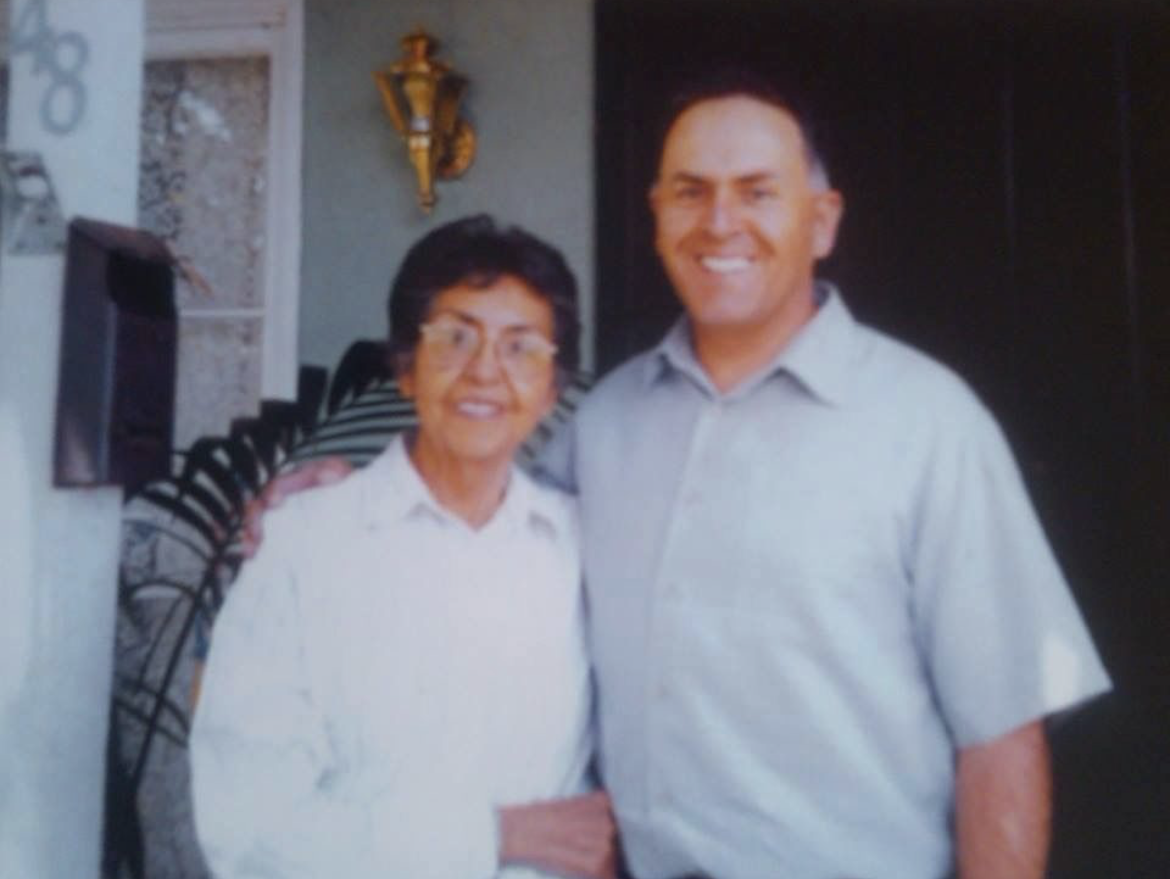
With Mom on the porch of 48 Viewmont Avenue – 1996

The following excerpt is from pages 1-4 of Summer in the Waiting Room: Faith • Hope • Love

_________

Now faith is confidence in what we hope for and assurance about what we do not see. ~ Saint Paul’s Letter to the Hebrews 11:1

* * *

My story is about youthful promise, unfulfilled potential, bad decisions, and crippling failure. What comes next is a frenetic quest to vanquish failure demons and short-lived vindication. A life-changing heart attack and heart failure trigger an exploration of faith. In the end, my spiritual journey, shaped by faith, hope, and love, leads to a remarkable recovery and long-lasting redemption.

There’s a supernatural higher power that mysteriously controls the world around us. Life does its own thing despite futile efforts to manage it to our benefit. No matter how hard we try to unravel mysterious phenomena with science, there are some things that can’t be explained. That’s when we turn to religion, spirituality, and mysticism to find answers. Mahatma Gandhi’s grandson once told a friend that his grandfather said, “Religion is like a mother. However good your friend’s mother may be, you cannot forsake your own.” In honor of the profound influence my mother had on me, I refer to God throughout this book as that higher power.

Wholehearted confidence in God is at the core of faith, inner peace, and happiness. Unfortunately, like most worthwhile endeavors, devotion to unconditional belief is easier said than done. I’ve spent more than a decade reading, learning, and thinking about how to apply the concepts of acceptance, gratitude, and reliance on the divine in my day-to-day life. While the literature opened my eyes, I could’ve looked no further than my mom’s life to find answers. She was a model of faith, even though I didn’t fully understand the impact of her words and actions.

When I was a kid, she taught us to say, “Thank you, God, and thank you, Mom” after breakfast, lunch, and dinner. Of course, I understood why I was thanking Mom. She cooked the meals. The reason for thanking God never really dawned on me. I thought it was a ritual like everything else about church: sitting and standing at the appropriate times, praying “Our Father,” taking Communion, and reciting responses after the priest gave a blessing. For Mom, the words had deep meaning. Through the course of any given day, you could hear her say, “Si Dios quiere” (God willing), “gracias a Dios” (thank God), and “Dios te bendiga” (God bless you). These expressions of devotion were part of every discussion she had with someone. They weren’t mere clichés to her. She was patient, understanding, and thoughtful no matter the situation, good or bad. Mom was a woman who put herself in God’s hands.

As I grew older and more financially secure, I started to notice the beautiful simplicity of her life. I found time to visit her in the morning on the way to work almost every Friday. I loved to see her eyes brighten and her smile broaden when she opened the door. A warm hug greeted me before she escorted me to the kitchen to fix a plate of papas (fried potatoes), two over-easy eggs, a cup of coffee, and warm tortillas. Mom loved to hear about my week and shared news about my brothers and sisters. Her children and grandchildren were her prized “possessions.” When my siblings and I bought “nice” homes and filled them with “nice things” (her words), she beamed with pride. When she passed away, she had the same round kitchen table, simple living room furniture, basic dinette, and plain bedroom set that I remember as a boy. She appreciated every bit of it. I never heard her yearn for more or complain about what she didn’t have.

Mom genuinely believed that to live a happy and fulfilling life, one has to be truly thankful for all that God has provided. My guess is that she had a happy and fulfilling life. The struggles of living and the heartbreak of losing loved ones didn’t deter her from being grateful. She didn’t know her father. She grieved when she lost my grandma, dad, and an older sister. She wasn’t surrounded with “nice things.” She never visited the places she dreamed about. Nevertheless, she was truly thankful for what she had and appreciated every day of life God gave to her.

Faith is a powerful ride-or-die partner to have by your side, especially while riding the roller coaster we call life. I’ve been on quite a ride myself, most of it without the guardrails of faith and gratitude. The highs and lows and twists and turns of my story resemble a wild ride on the Giant Dipper, a whitewashed wooden 1920s-era roller coaster with bright red tracks that dominates the Santa Cruz Beach Boardwalk. When I was a kid, we used to simply call it “The Roller Coaster.” Getting on The Roller Coaster was my all-time favorite thing to do every time my family went to Santa Cruz, which is about a forty-five-minute drive from where I grew up.

The Giant Dipper is a thrilling experience. Without warning, the coaster swooshes away from the starting point and quickly vanishes into a tunnel. Adrenalin shoots through your body while riders hoot, holler, and scream with nervous excitement. The train speeds through a pitch-black curvy tunnel to a low point before emerging from the darkness and begins slowly climbing to the first peak with the classic clicking sound of a roller coaster laboring upward. Once at the top, the train slowly scales the peak and screams down the other side of the tracks in a free fall as it rushes toward the ground. After scaling a couple of smaller hills and valleys, the train rapidly rises up into the sky to reach the top before it violently curves downward to its left, speeding through a deep, scary drop.

For forty-six years, my life followed the path of The Roller Coaster. I grew up in a working-class east San Jose neighborhood in the protective cocoon of my parents. After high school, I ventured away from the neighborhood to attend San Jose State University. Being outside the bubble was exciting and a little intimidating. I eventually flunked out of college and chose a lifestyle fueled by alcohol, dead-end jobs, and the next party. The ensuing undisciplined mayhem was like the Giant Dipper’s wild downward ride through the dark tunnel. Slowly, I put my life back together. I married a wonderful woman, returned to and graduated from college, worked my way up the corporate ladder, and served in public office. My wife, Sandra, and I built a family and a stable life.

On June 7, 2010, we were approaching our twentieth wedding anniversary, our two daughters were healthy and happy, and I had achieved success in my career. It felt like being on top of the world. But like the Giant Dipper’s next move after reaching its climactic bend, my life would soon make an abrupt and furious downward turn and plummet toward its lowest depths. That summer, I embarked on a quest to understand faith the way my mom understood it.

***

On November 9, 2023 from 6:00 to 7:00 pm, I will share more stories from my book at the Stanford Bookstore. Join me and my heart transplant surgeon for an evening of faith, hope, love, and signing books!

RSVP at this link:

https://www.facebook.com/events/656597839920085?acontext=%7B%22event_action_history%22%3A%5B%7B%22mechanism%22%3A%22your_upcoming_events_unit%22%2C%22surface%22%3A%22bookmark%22%7D%5D%2C%22ref_notif_type%22%3Anull%7D

There is ALWAYS Hope

Rejoicing in suffering and celebrating my 55th birthday a day before open heart LVAD surgery – November 5, 2018

The following excerpt is from pages 93-95 of Summer in the Waiting Room: Faith • Hope • Love

__________

We rejoice in our sufferings, knowing that suffering produces endurance, and endurance produces character, and character produces hope. ~ Saint Paul’s Letter to the Romans 5:3–4

***

In his Letter to the Romans, Saint Paul the Apostle wrote, “We rejoice in our sufferings.” Rejoice in our sufferings? Was Saint Paul kidding when he wrote that? Who in their right mind wants to rejoice in suffering? We all experience suffering. That’s just the way it is. Faith is acceptance of what is. It’s also the first step of understanding hope. 

Hope is a tricky word. We use hope as a synonym for want or wish. In fact, Webster’s dictionary defines hope as “a desire of some good.” I’ve always used it in that way. I hope my daughters are healthy, happy, and successful. I hope the Giants win the World Series this year. What I’m really saying is, “I want, I desire, I wish.” If those things don’t happen, disappointment is soon to follow.

Saint Paul has an entirely different definition. He gives a comforting perspective on hope. He tells us that having hope is understanding that whatever barrier life presents is going to work out according to God’s plan, not necessarily what we want. In his Second Letter to the Corinthians, Paul wrote that there’s a “sure hope of a glorious future” for those who have faith. Does that mean everything will always go our way? No, it doesn’t. It means that everything will go God’s way. That’s where hope comes in.

I’ve struggled to wrap my mind around that concept of hope. Early in our relationship, Sandra showed her deep understanding of faith and hope with a strip of paper she lovingly put into the palm of my hand. Just in her early twenties, she was already endowed with precocious good judgment. I was a few years older with a swagger in my step, a chip on my shoulder, and determination in my eyes. I was confident that ambition and hard work would secure a successful future.

On that slip of paper were fifteen words of wisdom: “Life is 10% what happens to you and 90% of how you react to it.” Sandra offered this wise advice as a tool to relieve the obsessive resolve that consumed me when someone or something posed a threat to my progress. She folded the ticket-size strip, placed it in my wallet, and encouraged me to reflect on it when anxiety reared its ugly head. I cherished that piece of paper because Sandra gave it to me. For years it stayed in my wallet while my reaction to challenges didn’t change. When Eddie, Miguel, and Pancho playfully tossed me into a swimming pool fully clothed one summer, the fragile document disintegrated in the water. Sandra’s gift was ever present in my mind, but the lessons never entered my consciousness. Until June 7, 2010.

Beginning that day, I embarked on a medical and spiritual journey of epic proportions. Inspired to research where the quote came from, I stumbled upon the writings of an American Christian evangelist named Charles Swindoll. He said those wise words on that slip of paper during a sermon on hope. It was his action-oriented response to Saint Paul’s assertion that “suffering produces endurance.” In other words, we shouldn’t surrender to suffering by giving up. We should carry on by building character and giving ourselves hope.

Saint Paul’s definition of hope and Swindoll’s guidance to persist positively in the face of hopelessness bring to mind the Four Noble Truths of Buddhism.

First Noble Truth ~ Suffering is a fact of life.

Second Noble Truth ~ Not getting what we want causes suffering.

Third Noble Truth ~ Removing the desire to get what we want can end suffering.

Fourth Noble Truth ~ Living a meaningful life will help us avoid desire.

I descended into hopelessness and uncertainty in the days and months after June 7. Beginning that day, the roller coaster that represented my life went screaming down into a deep ditch of despair. The suffering that followed made my character stronger and gave me the spirit to soldier on. I ultimately endured and rejoiced in my suffering. I discovered the importance of hope.

***

On November 9, 2023 from 6:00 to 7:00 pm, I will share more stories from my book at the Stanford Bookstore. Join me and my heart transplant surgeon for an evening of faith, hope, love, and signing books!

RSVP at this link:

https://www.facebook.com/events/656597839920085?acontext=%7B%22event_action_history%22%3A%5B%7B%22mechanism%22%3A%22your_upcoming_events_unit%22%2C%22surface%22%3A%22bookmark%22%7D%5D%2C%22ref_notif_type%22%3Anull%7D