Category Archives: Miscellaneous Posts

Idaho is 4

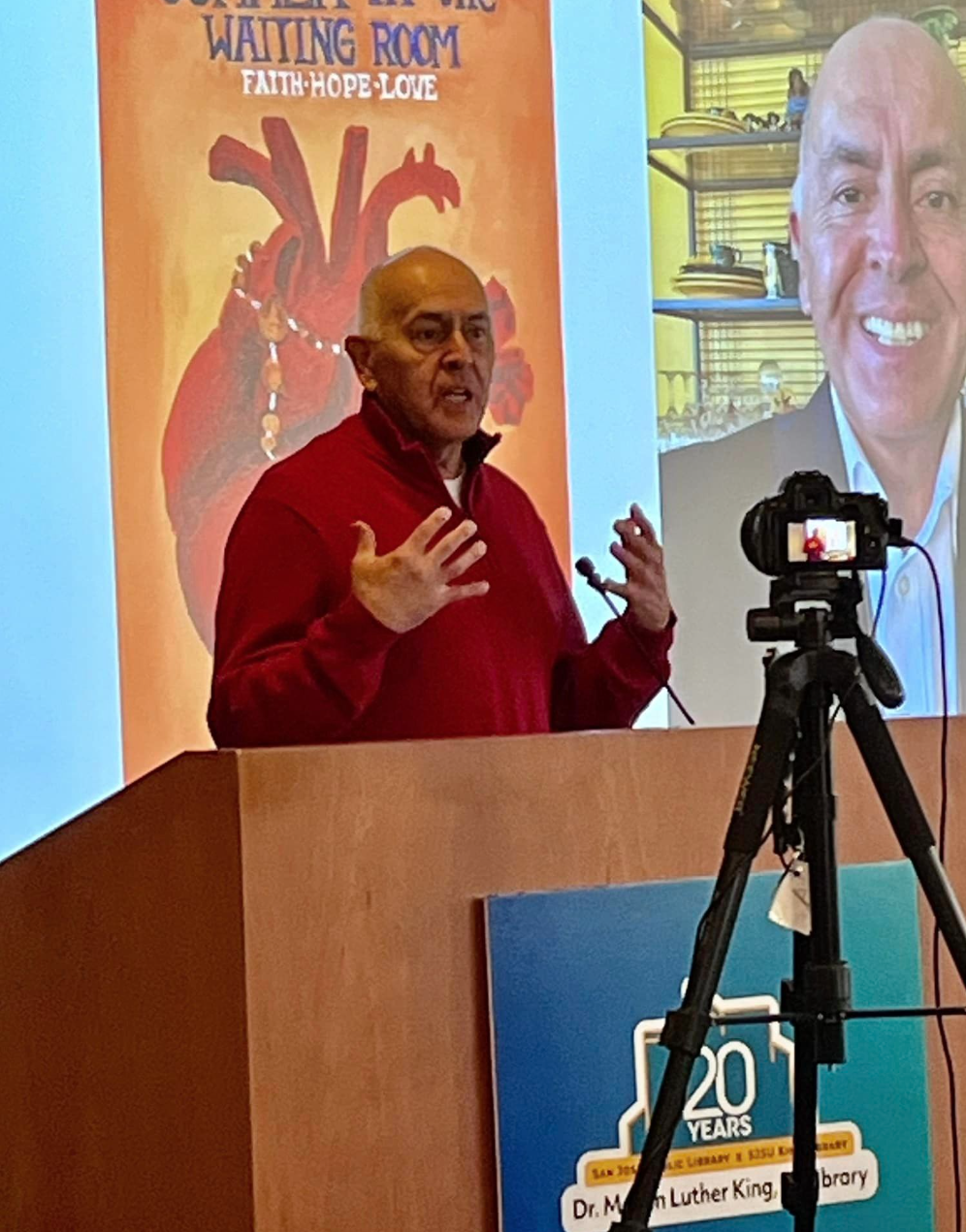
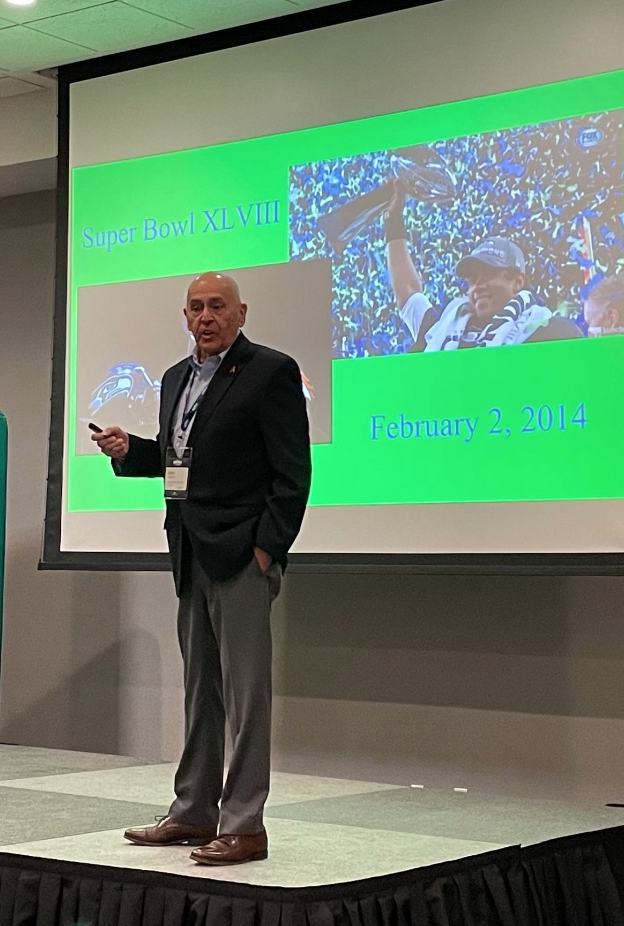
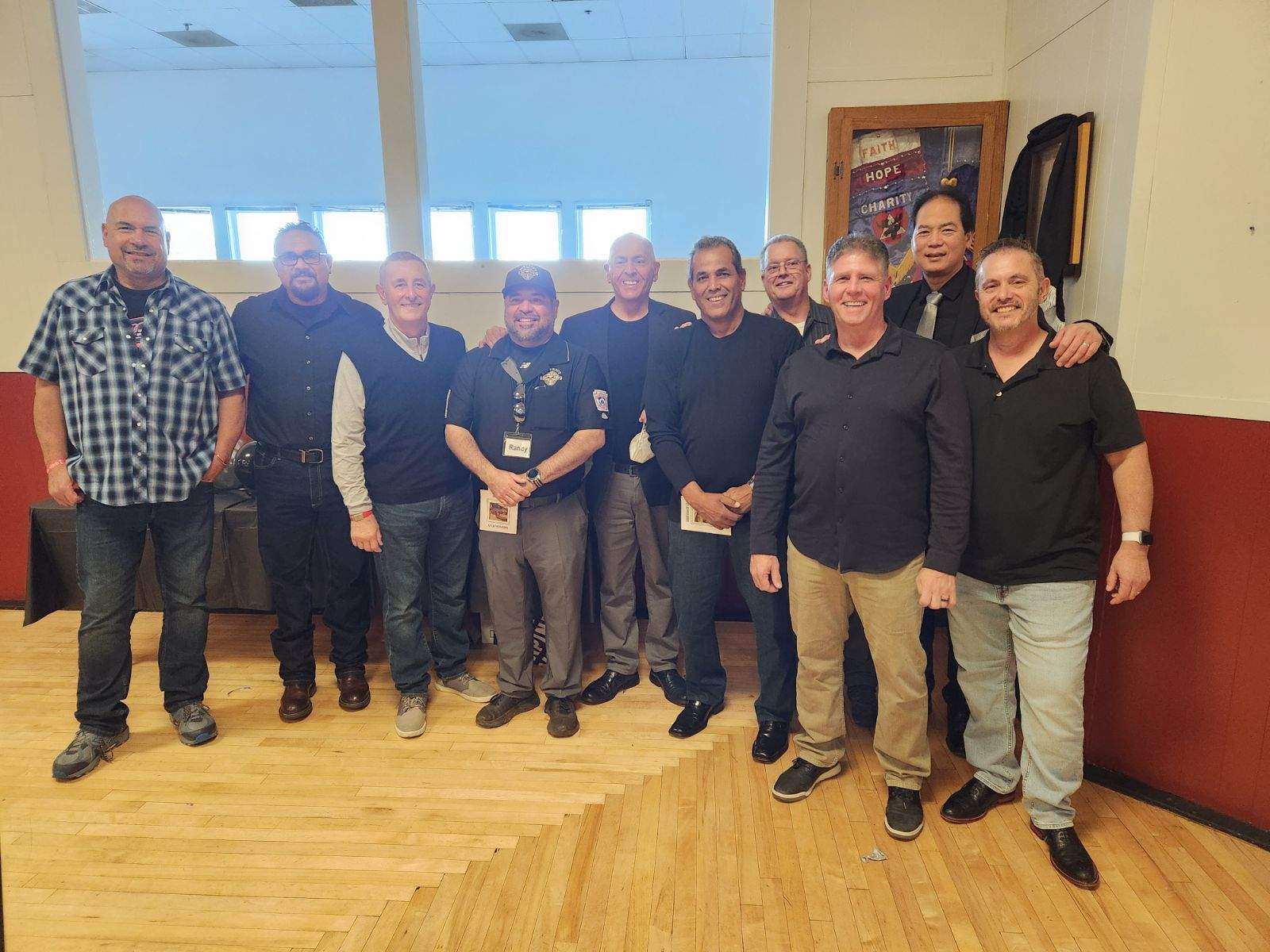
Getting ready to speak at the SJSU Latino Alumni Network Legacy Dinner – April 4, 2024

Good morning, Mr. García, Your new heart just arrived in the hospital. It looks great. We’ll get started soon. ~ Dr. John MacArthur, April 16, 2020

* * *

Sandra, Erica, and I were watching The Voice and spending a nice shelter-in-place evening together. We had just started to enjoy a small scoop of vanilla ice cream when my cell phone began to buzz. It was around 9:30 p.m. The number was that of my cardiologist’s office. The three of us looked at each other, intuitively knowing why the doctor was calling so late.

Our instincts were confirmed. She had called to tell me that Stanford had identified a donor heart that was a “great” match for me. She advised me that I should expect a call within the hour. After forty-five minutes of nervous anticipation, Stanford called with instructions on when and how to report to the hospital.

Once at the hospital, a cardiac nurse started preoperative preparations and gave me some light sedatives to help me relax. Soon, a surgeon walked in and said, “Good morning, Mr. García, Your new heart just arrived in the hospital. It looks great. We’ll get started soon.” The next thing I remember is the same doctor telling me, “Congratulations, Mr. García. You have a new heart! It’s working great. You have a Ferrari in your chest.” I named my new heart “Idaho.”

Just like that, I had a second chance at life. The past 1,460 days have been quite a ride. On my first day at home, I started feeling like the biggest failure in the world. That’s not unusual. About 63% of heart transplant recipients suffer from depression and/or anxiety within the first five years after surgery. I had both. In a big way. I was physically weak and mentally I wasn’t much better. I thought that someone more deserving could make better use of this fresh start.

Sandra and the girls showed their love by encouraging me to soldier on. I responded by reaching out to a physical therapist and a psychologist. One worked on my mind while the other worked on my body. Months of intense therapy gave me a fighting chance to find my way. By my first heartiversary – April 16, 2021 – I was hiking up hills, hitting golf balls, shooting baskets, and didn’t think I was that much of a loser. I’m still working on that last piece. It’s an ongoing process.

I started the second year post-transplant on a high note walking three to four miles every day and meeting with a therapist to work on my psyche once a month. Things looked promising until a special blood test found that my body was rejecting Idaho. Organ rejection is the leading cause of death for transplant recipients. The news was no bueno. The good news is that the blood test detected the rejection before Idaho suffered any major damage. I was back in the game!

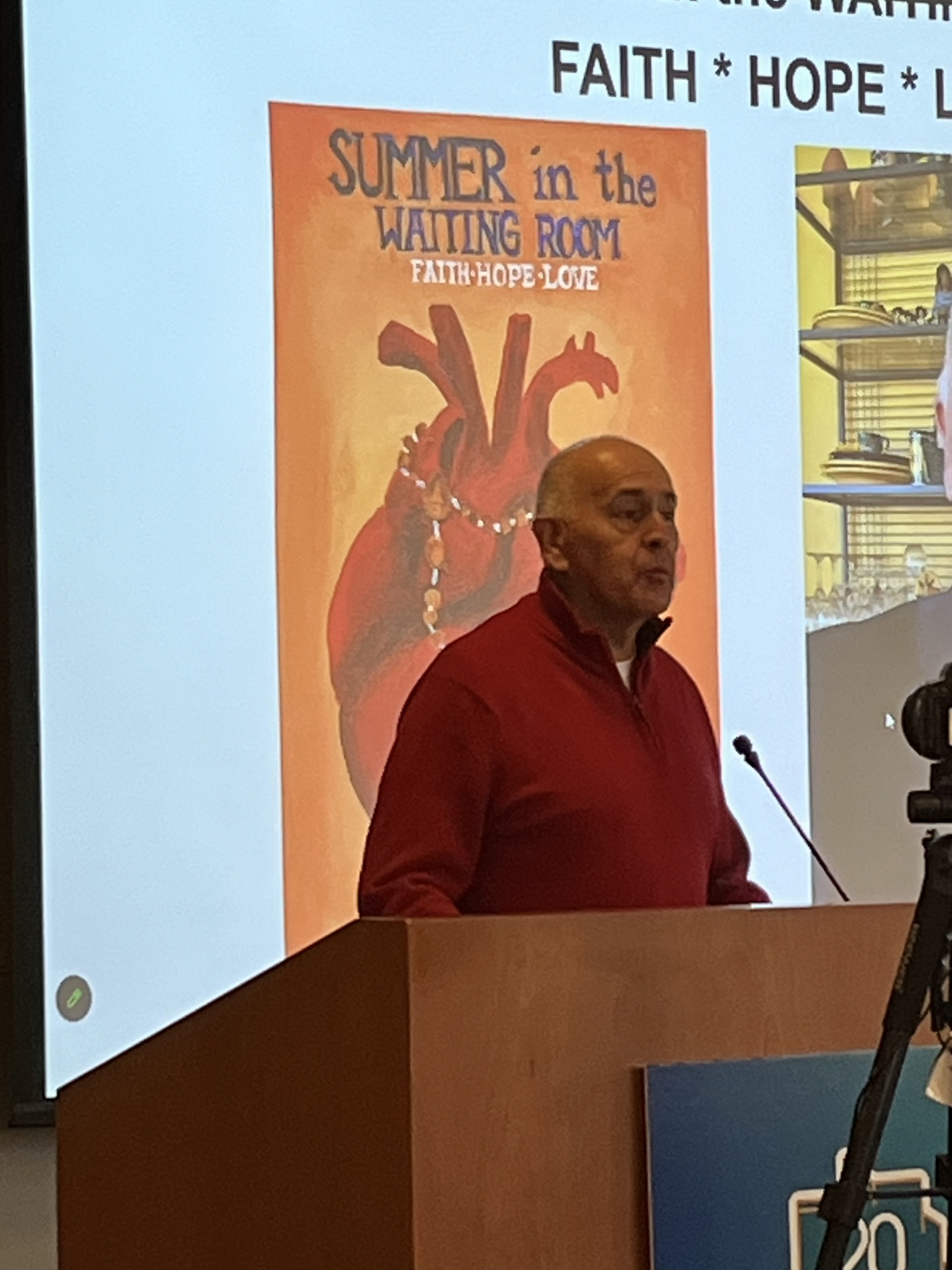
Two months after my second heartiversary, I published Summer in the Waiting Room: Faith • Hope • Love. That was a big day! It was also symbolic. The publication date – June 7, 2022 – was exactly twelve years after the massive heart attack that started this health mess I got myself into. I had my first book signing on World Heart Day – September 29, 2022 – at a health center in East San Jose, not far from where I grew up. Even though mostly family and friends were there, I was nervous about speaking in front of people again. It had been more than three years.

I wore traditional gray flannel pants, navy blue blazer, and light blue dress shirt with polished brown dress shoes just like I would have during my career as an executive and school board president. It turned out to be a great evening. For the first time in more than a decade, it felt like I was “back.” Long gone were the days and nights right after the transplant where I found myself in bed in a fetal position with a sore body and broken soul.

It was around this time that Sandra and other loved ones encouraged me to “enjoy life” and do “what makes you happy.” After everything I had been through, I deserved that, they said. To borrow a phrase from my party days, I thought to myself, “don’t threaten me with a good time.” In those days, enjoying life and doing what makes me happy always included unhealthy but great tasting food, plenty of alcohol, and laughing until my cheeks hurt. 

Since two of those three components are no longer at my disposal, I needed to find another way. The successful book signing event reminded me that I have a passion for telling stories and speaking in public. Could I do speaking engagements more often now that I kinda got my speaking mojo back? Or was that a one-time deal with the safety net of mostly family and friends? One thing was clear. I definitely enjoyed myself that evening and had fun. 

Shortly after that, God’s plan revealed itself. Opportunities started coming my way. By my third heartiversay, I was back to doing leadership training with the Latino Leadership Alliance and high school students. I was in front of small groups of professionals and teenagers telling stories and helping people. What followed were speaking opportunities in Washington, D.C., Seattle, and Fresno, four national podcasts, and several webinars. I was enjoying life and having fun! 

So what did Idaho and I do for our fourth birthday together? 

In the morning, we went to my high school alma mater to talk with students on Career Day. Later that afternoon, we met with the ASB student council at Luis Valdez Leadership Academy to brainstorm about a civic engagement project. We spent the evening with my family, the best part of the day. We had a decadent dinner at Olive Garden, and capped the evening binge watching Law and Order: SUV, drinking coffee and eating a strawberry cream pie from McDonald’s. Okay, I slipped a little. Forgive me Father, for I have sinned. 

Idaho and I were enjoying life to the fullest and we were doing what made us happy!

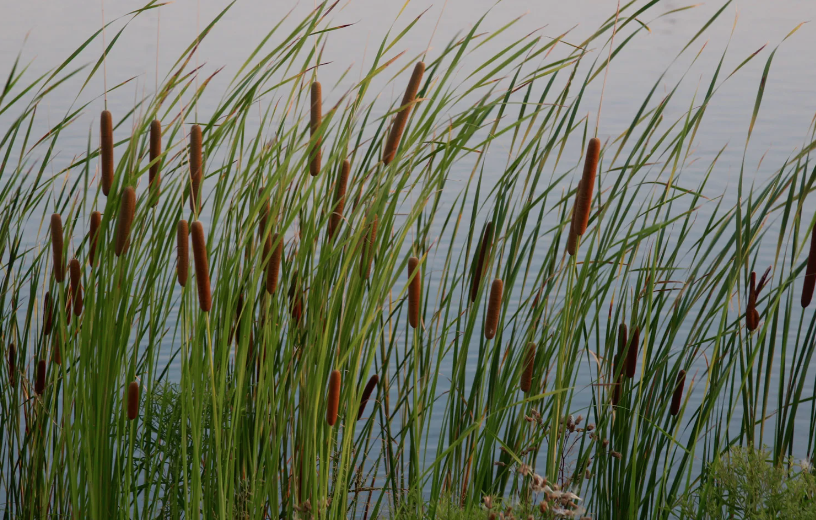
We started a new year together the next day with a five-mile hike along Coyote Creek. At the halfway point at Hellyer Lake, I sat on a bench watching the cattails sway in the breeze. I could feel the gentle wind on my face as if God’s hands were caressing my cheeks. He was surely telling me, “that’s how you enjoy life and do what makes you happy.”  At that moment, it all made sense.

Hellyer Lake – April 17, 2024

I thought about another one of my party day mantras from back in the day, courtesy of George Strait. “I ain’t here for a long time, I’m here for a good time.” Now I have a new formula to enjoy life and do what makes me happy. Hanging out with my family, telling stories to whomever will listen, and public speaking. Sounds like a plan. Hopefully, I can also get in a few laughs until my cheeks hurt.

The Arena

Walking the Uch! – 2024

This is the fifth installment of ESEReport.com’s Second Chances blog series.

***

It is not the critic who counts; not the man who points out how the strong man stumbles, or where the doer of deeds could have done them better. The credit belongs to the man who is actually in the arena, whose face is marred by dust and sweat and blood; who strives valiantly; who errs, who comes short again and again, because there is no effort without error and shortcoming; but who does actually strive to do the deeds; who knows great enthusiasms, the great devotions; who spends himself in a worthy cause; who at the best knows in the end the triumph of high achievement, and who at the worst, if he fails, at least fails while daring greatly, so that his place shall never be with those cold and timid souls who neither know victory nor defeat. ~ Theodore Roosevelt, 26th President of the United States

***

It was a beautiful spring evening in San Jose, California on March 30, 2010. The temperature was in the low 60s on that cloudless day. A Republican multi-millionaire tech executive running for governor named Steve Poizner scheduled a campaign event at Mt. Pleasant High School to announce the publication of his book about his experience teaching one class for one semester at the school. It was a vehicle to launch his education reform campaign.

As president of the East Side Union High School District board, I sent a letter to Poizner prohibiting him from visiting Mt. Pleasant for campaign purposes, citing California law. The book was filled with negative stereotypes about Latino kids and students in general from the east side. The community was in an uproar and planned to protest the candidate’s scheduled book signing later in the evening.

There was a mix of tension and anticipation outside of Barnes & Noble bookstore in Eastridge Mall. About 100 students, staff, and community members gathered there to take a stand against the book and its author. As Poizner approached the side entrance to the store, I asked him to justify his critical portrayal of our students. Unimpressed by his meaningless campaign talking points, I listened intently anyway, unaware of  news reporters that crowded around us. 

Eye to eye with Steve Poizner – March 30, 2010

The media covered our brief exchange. Every local newspaper and television news crew covered the story. The episode made statewide and national news including stories in the Los Angeles Times and on National Public Radio. Poizner never recovered from that day. His campaign was dead on arrival. It was scary to take on a tech multi-millionaire, but it was exhilarating too! If a heart attack hadn’t stopped my career in its tracks, I would have had a powerful political enemy for life.  

I miss being in the arena.

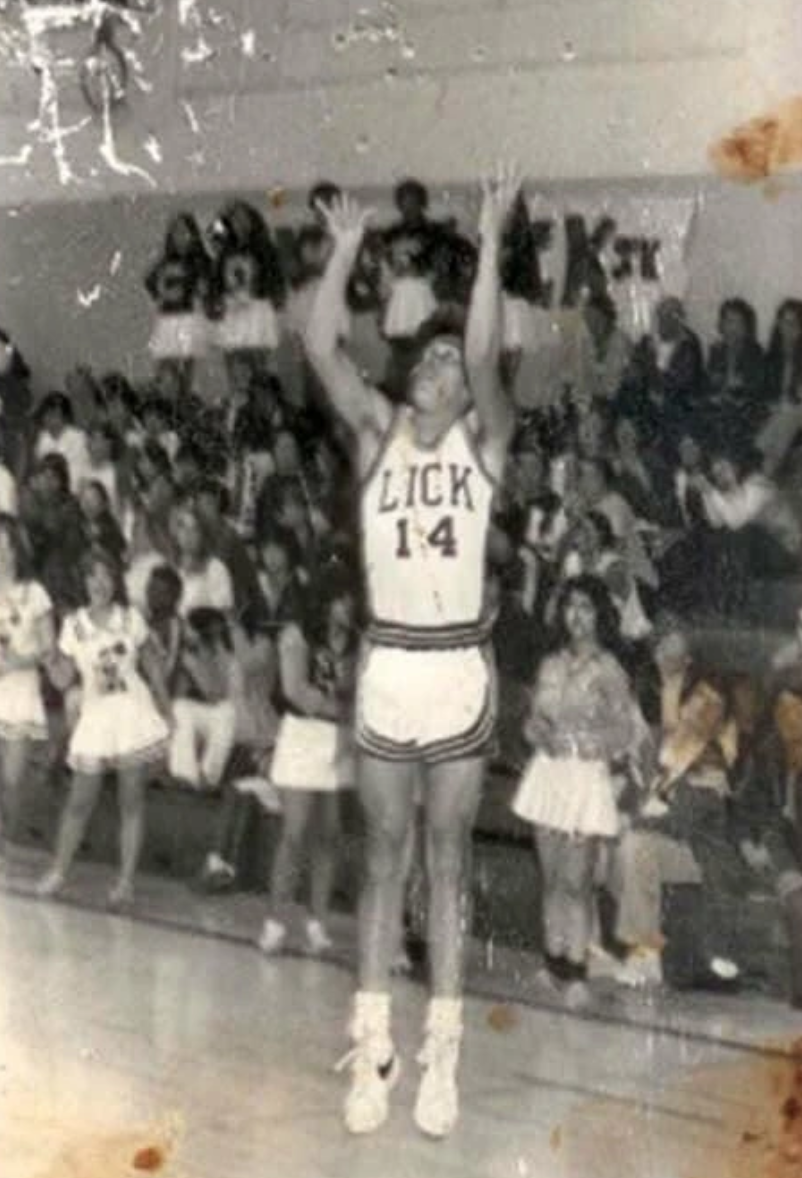
I’ve loved being in the arena since I was a kid. There was the time I was the winning pitcher in a Little League championship game. The coach ran onto the field toward the pitcher’s mound and lifted me into the air with a big bear hug. My teammates were excitedly jumping up and down around us. A few years later, I stood on the free throw line in a packed gym at James Lick High School. If I made the shot, we would have won the game and been tied for first place. I missed it. It hurt so badly that it felt like my dog died as I walked off the floor.

Some 20-plus years later, I was standing tall in the middle of my campaign office with two-year old Erica in my arms. I had just beat two opponents and won a spot in the 2000 general election for San Jose City Council. The crowd around us cheered as I rallied supporters to get ready for a spirited campaign in the fall. Five months later, a smaller group of just family was gloomy as we sat watching the election returns on TV at a local restaurant. I lost the race in a big way. The crushing defeat took a toll on me.

Win, lose, or draw, I miss being in the arena.

Over the past two months, I’ve been writing on this blog about second chances. I’ve written about how my spiritual and mental health journeys have given me a new perspective on life. Trusting God and living right here, right now have been the guiding lights on this journey. I hope I’ve inspired readers to give faith and living in the moment a try.

Of course everything isn’t hunky dory now that my relationship with God is stronger and mindfulness meditation is part of my daily routine. Far from it. I often wonder if these concepts are really helping me or I’m just trying to convince myself that they do. Some readers are probably wondering about that as well. I know this much to be true. I believe that faith and living in the present moment are the paths to inner peace and happiness. 

Staying with it everyday is the hard part. For every time I put myself fully in God’s hands or experience a Zen moment, there are just as many moments of  uncertainty and doubt. The journey reminds me of that old country song, One Step Forward (Two Steps Back) by the Desert Rose Band. Determination and perseverance are in my DNA. I’ll keep working through it  no matter how many times I take two steps back.

The world is wonderful and life is beautiful. But let’s face it, they’re also harsh. The world that occupies our minds is even harsher. I’ve been through a lot. There’s no sensible reason for me not to be grateful at all times. I get that. But . . . there’s a little corner of my mind that still aspires to be in the thick of things. On a recent trip to the Seattle area, I spoke to a large group of business executives. The feedback and standing ovation stirred my aspirations to get back into the arena. Adrenaline sparked the small section of my brain to scream, “You belong here!”

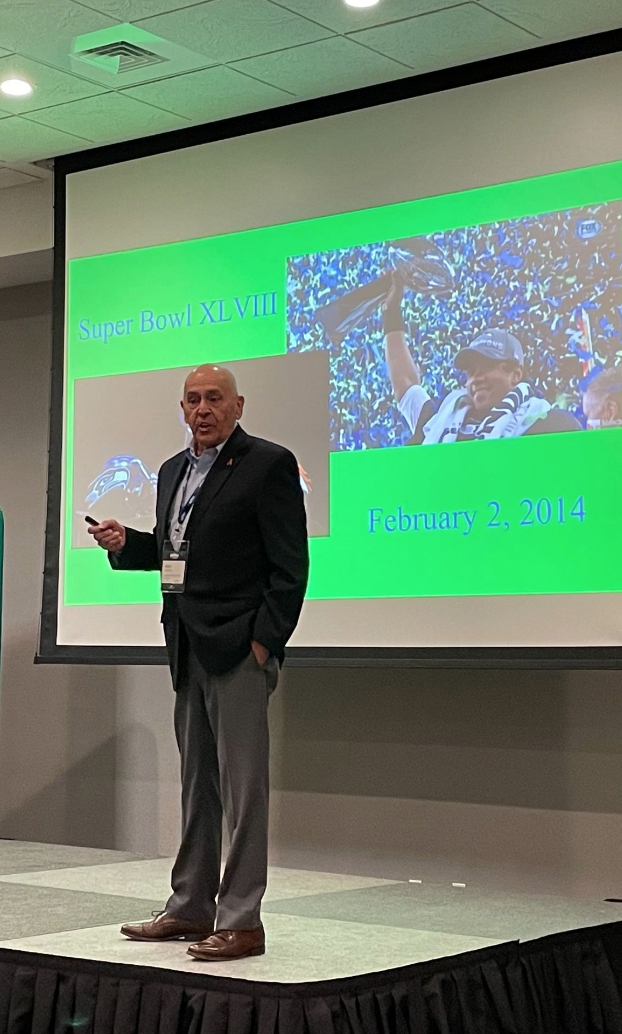
Speaking in Olympia, Washington – 2024

But then again, there’s something special and serene about leisurely folding towels, laying back on the couch reading, and walking Erica’s puppy. If I sound confused about what to do with this amazing gift of a second chance, you got that right. My situation isn’t unique. We’re all searching for meaning. Since we can’t soften the harshness of the outside world, finding that sweet spot where we can calm the harshness of our inner world is like finding gold.

There is no right answer. Despite stumbling through my faith and mental health journeys, I’m going to keep going. Maybe, just maybe, God has chosen this part of my journey to be the new arena I’m looking for. To be sure, I’ve missed God’s signs for most of my life. Maybe I ought to give doubling down on faith and mindfulness a chance. To paraphrase President Teddy Roosevelt, if I fail, at least I’ll “fail while daring greatly.” 

Purpose & Passion

This is the fourth installment of ESEReport.com’s Second Chances blog series.

***

For the most part, I minded not how the hours went. It was morning, and lo, now it is evening, and nothing memorable is accomplished. ~ Henry David Thoreau, 19th Century American Transcendental Philosopher

The Lord is not being slow in carrying out his promises, as some people think he is; rather he is being patient with you. ~ 2 Peter 3:9

***

February 28, 2024 (San Jose, CA) ~ I started the morning like I always do. Sporting blue pajamas with white pinstripes and my trusty brown slippers, I made my way to the kitchen to brew a pot of coffee. After preparing a couple of cups, I spent the rest of the early morning watching MSNBC, sipping the cup of joe, and talking with Sandra as she got ready for work. 

The morning continued as usual. I read the daily mass, said morning prayers, did 10 minutes of mindfulness practice, and went to the kitchen for breakfast. That too was like any other day. I took morning meds with a 16 ounce glass of water, ate oatmeal with berries and walnuts, and finished off the meal with a hard-boiled egg and another glass of water.

After breakfast, I got ready for a morning walk. The day was unusually springlike. Instead of wearing the usual black Adidas track pants and black NorthFace windbreaker, I put on a pair of khaki shorts and a blue long sleeve dry-fit shirt. After slathering my face with sun block, putting on a wide-brimmed hiking hat, lacing up my black Adidas crossfit shoes, and filling up a Hydro Flask water bottle, I headed out the door.

Since I had been nursing a little cold for a few days, I decided to go on a leisurely mile and a half stroll, rather than the usual fast-paced four mile walk. My podcast selection for the day was The Armchair Expert with Dax Sheppard. It’s a cool podcast with interesting guests. This time the guest was Bradley Cooper. I ended up getting bored pretty fast. For some reason, listening to the exploits of two handsome actors wasn’t moving me. I spent the rest of the walk with the Doobie Brothers.

My daily routine usually comes to an end once I’m out of the shower, dressed for the day, and finished eating lunch. This is the time of day when I work on a few little projects. I teach a high school student leadership class, facilitate the Latino Leadership Alliance (LLA) Academy, and volunteer on the San Jose State University Latino Alumni Network board. I also do occasional speaking engagements for my book and volunteer with a national transplant advocacy organization. When I feel creative, I write for this blog.

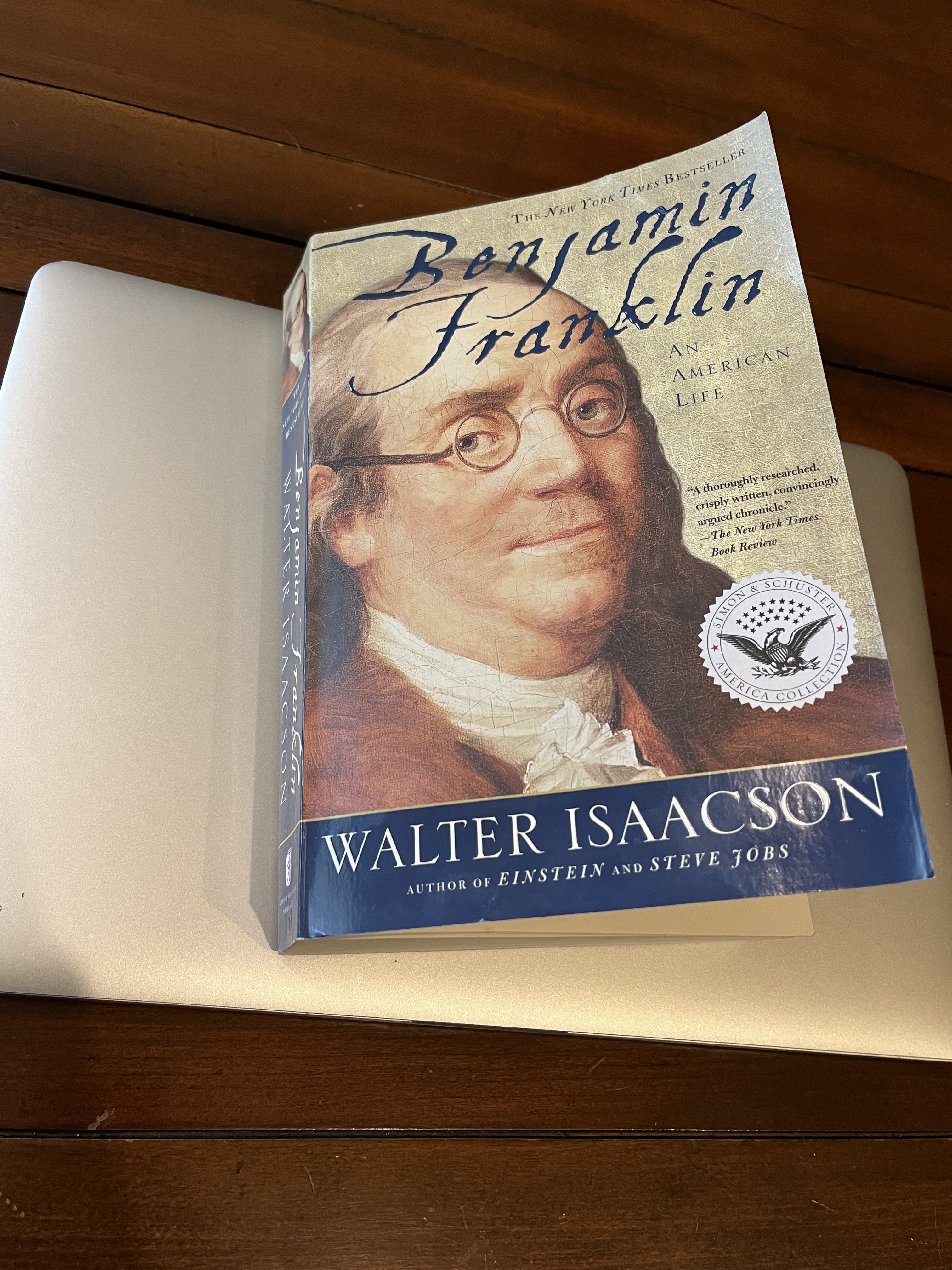
I use the word “dressed” loosely because my daily uniform is a pair of sweats, sweatshirt, and the trusty brown slippers. Most of the busy work I do is on my laptop. After the morning routine on February 28th, I settled in to read for a couple of hours. Benjamin Franklin: An American Life, by Walter Isaacson currently occupies my reading time. I spent the rest of the afternoon playing with Erica’s puppy Uchis, watching the news, and scrolling through social media. “My name is Eddie and I am a social media junky.” Step 1 is admitting the problem.

I emerged from my Tik Tok stupor just in time to make dinner, a cool little dish that Sandra taught me to prepare. I began by cutting potatoes, carrots, zucchini, onions, and a couple of chicken breasts. After placing everything into a glass baking dish, I spread Campbell’s cream of chicken soup over the top, sprinkled sweet peas into the pan, and stuck it all into the oven. An hour and a half later, “voila!”. Sandra, Erica, and I shared stories about our day over a nice meal. We rounded out the evening binge watching Griselda on Netflix.

That sounds like a pretty good day for a retired heart transplant recipient. Some might say that I deserve a day like February 28, 2024, and many more.

I started working part time after school when I was 15 years old. There were untold hours burning the midnight oil to make up for my initial college failure. What followed was a relentless climb up the corporate and political ladders. Then there was the horrific daily, sometimes hourly, fight for life during the summer of 2010. The hardest climb was my ten-year battle with heart failure that led to transplant while doing consulting work. 

Despite the thinking that I may have earned a relaxing retirement, I felt uneasy throughout the day. There was a slight churn in my stomach. It was like something was missing or just not right. I ignored the sensation and went on with the day, but the feeling never quite faded away. Even though I still felt a little anxious, I went to bed with an overall feeling that February 28th was a pretty good day and fell into a deep sleep.

The next morning, my routine started all over again. The worried sensation had disappeared. After the morning ritual and lunch, I opened up the laptop to put finishing touches on the day’s lesson plan for high school students. I meet with them once a week. On the drive to the school, I thought about how to present the concepts in an upbeat and interactive way. The students and I engaged in a great discussion about the importance of emotional intelligence for leaders.

I feel alive, useful, and productive when I’m working with students and LLA leaders, sharing my story with Summer in the Waiting Room readers, advocating for equitable healthcare, writing, and speaking with groups large and small. We live in a society where work, productivity, and industriousness are valued almost above everything else. I grew up in a home where hard work was the answer to nearly any problem. 

That’s why I feel uneasy and anxious when I have a day like February 28th. My subconscious (the Boo Voice) starts asking why I’m not working and making a substantial contribution to the household income. I have a new heart for crying out loud. Why am I wasting time playing fetch with Uchis, sitting back on the couch reading about some old guy who lived 200+ years ago, and scrolling through LinkedIn while everyone else is achieving?

Upon reflecting on that day, I remember that God has given me a great gift – a second chance at this thing we call life. I’m pretty sure He didn’t give me a second chance to toil my life away for material things, recognition, and self-aggrandizement. I say “pretty sure” because the Boo Voice and society are tugging at my ears telling me otherwise. We all struggle with that balance of working our passion for good and seeking worldly success.

It’s wonderful to see a student’s eyes light up when they get a concept or when a LLA cohort shares stories of true servant leadership. Listening to people share stories of their own families’ overcoming heart disease fills my soul with faith, hope, and love. Deep down inside, I know that the things I love to do make a positive impact on people. I need to stay focused on doing them for that reason.

I try to make the best of this second chance by trying to focus on what really matters. I’m starting to accept and understand the value of mindfulness and the Transcendentalist principle of being aware and awake for every moment. Sometimes it works like a charm. On the few days when “nothing memorable is accomplished” and feelings of something is missing haven’t crashed the party, my purpose and passion are crystal clear.

The Boo Voice and societal expectations to be “successful” make that hard to sustain. But, I’ll stay with it. St. Peter reminds me that ‘the Lord is being patient.” Good thing for me. I’ll get there . . . someday. As Mom would say, si Dios quiere (God willing).

Life’s Essential 8™

The Boys of ’81 – James Lick High School

This post is dedicated to

Rudy Lopez

October 14, 1962 ~ January 20, 2024

James Lick High School, Class of 1981

***

I was at a memorial service on Sunday. Another friend had passed away. Heart attack. He was 61 years old. Moose Lodge #401 in San Jose was packed with family and friends. The Moose is an old building with hardwood floors, no frills, no decorations on the walls, and a bingo board hanging from the rafters. It’s an institution on the east side. I’ve been there for wedding receptions, family gatherings, birthday parties, community meetings, and after school events. It’s a great place to get together and laugh, dance, and have a few beers and well drinks.

I’ve been to the Moose for other funeral receptions too. My Nino (godfather) for confirmation and another friend who succumbed to heart disease a few years back were the last two I attended there. The hall was set up as it always is. Rectangular folding tables were lined up in rows from front to back. A screen to show a video and easels with old pictures lined the foot of the stage. A small group of James Lick High School friends stood in the back of the room to pay respects.

As we waited for the program to start, we shared hugs and old stories that never seem to get old. In high school, our late friend seemed quiet and unassuming to those who didn’t know him. On the football field he was a force of nature. He was built low to the ground like a bulldog keeping tacklers away from the ball. When he played defense, not a soul dared run up the middle without fear of running into a brick wall.

Off the field, he was a straight-talking, honest, and no nonsense kid. As a friend, you knew he always had your back. He wasn’t a bad guy to have around when trouble was brewing. From the testimonials at his memorial, it was clear little had changed. He went to work everyday despite health challenges and did everything with pride. We heard stories about his love of classic cars, football, and his commitment to the Raider Nation. He was a man of integrity to the end. 

It was a nice service. 

The most inspirational part of the day was when his nephew referred to the high school football star as his real dad after the young man’s biological father had left the family. What struck me most about the afternoon was the emphasis on family. While the families in attendance ate a traditional Mexican lunch at the rows of tables, the old James Lick guys in the back of the room shared stories with each other about kids and grandkids. 

This is what is so sad about chronic heart failure. Friends and families are left in the wake of this nasty disease. It’s the #1 killer in the world. According to the Centers for Disease Control and Prevention, “one person dies every 33 seconds in the United States from cardiovascular disease.”  In 2021 alone, about 695,000 Americans passed away from a heart related illness. I learned on Sunday that yet another classmate lost his life to cardiovascular disease that very year.

I’m one of the lucky ones. With God’s grace, an amazing family, and an outstanding Kaiser Santa Clara Medical Center healthcare team, I’ve survived a heart attack, a decade of heart failure, and a heart transplant. That’s why I’m so passionate about doing my little part in sharing with others that slowing down the rate of heart disease is possible. There is hope.

As a volunteer for the American Heart Association, I learned about Life’s Essential 8™. Following these eight guidelines helps lower the risk for heart disease, stroke and other major health problems:

  1. Eat Better
  2. Be More Active
  3. Quit Tobacco
  4. Get Healthy Sleep
  5. Manage Weight
  6. Control Cholesterol
  7. Manage Blood Sugar
  8. Manage Blood Pressure

To borrow a phrase from my dad (he died of a cardiovascular disease), doing these things consistently is easier said than done. Before my 2010 heart attack, I only did #2 and #3 on a steady basis. I was active, including somewhat regular exercise, and never smoked. Doctors told me that doing these two things probably saved my life, although it certainly didn’t prevent a heart attack in the first place.

As American Heart Month comes to a close, I encourage . . . I urge . . . everyone to go to the American Heart Association website and follow Life’s Essential 8™. It could save your life and, just as important, it can give your family more time with you.

RIP Rudy.

Be More Active

If you can’t fly then run, if you can’t run then walk, if you can’t walk then crawl, but whatever you do you have to keep moving. ~ Dr. Martin Luther King, Jr.

***

After returning home from the hospital in 2010, I went to a class to learn how to live a full life with a compromised heart. The topics included information about how the heart works, suggestions for healthy living, exercises that strengthen the heart muscle without adding stress to it, and facts about the different medications necessary to keep the heart functioning.

The material for the six-week program was delivered by nurses, nutritionists, pharmacists, physical therapists, and other content experts in a classroom setting. At 46, I was clearly the youngest of the 30 or so participants in a class of mostly ornery and impatient 70 and 80 year-olds set in their ways and grumbling about aches and pains.

A 75 year old woman named Ruth had been my seat neighbor for the entire program. She was a nice grandmotherly type who loved cooking, hated exercise, and planned little changes to her life. She half-jokingly told me that she never exercised a day in her life and saw no reason to start. Then she said, “Look at you. You were a healthy young man and still had a heart attack like the rest of us.” She had a point . . . kinda.

When I was a kid, I loved to jump fences, climb trees, and ride bikes with neighborhood kids. We played basketball on my driveway, two-hand touch football in the street, and sandlot baseball at the elementary school at the end of the block. Of course, there was Little League baseball until I was 12 years old, and middle school flag football and basketball. In high school, I earned four varsity letters in basketball and baseball.

Yeah, I was that kid.

After high school, I played recreation league basketball and softball. Obligatory beer busts after each game were standard. That didn’t help much, but I stayed active. Marriage, career, and kids left little time for these activities. I played the last rec league basketball game in my late 30s. I came home dejected because the younger men were just too fast and strong for me. 

My nine year old daughter laughed when I “announced” my rec league “retirement” to Sandra and the girls. “It’s not like you’re Michael Jordan retiring from the Bulls daddy,” Marisa quipped. Over the next several years, I occasionally found time to exercise by walking, working out in the gym, and playing golf. I was in the gym on June 7, 2010, when the opening salvo of heart attack symptoms began.

Despite Ruth’s confidence that exercise didn’t prevent my heart attack, staying active certainly saved my life. My cardiologist assured me that I wouldn’t have survived the June 7th heart attack and surgery if I wasn’t in shape. Later that summer, after a medically induced coma caused my muscles to waste away, I completed an 8-week physical rehabilitation program in three weeks. The physical rehab doctor mentioned that my athletic experience helped me learn and execute the exercises faster than usual.

So what’s the point of all this?

According to the American Heart Association, the second of Life’s Essential 8 for lifelong good heart health is Be More Active. This doesn’t mean that you have to be a formally trained athlete or a gym rat to stay healthy. Life’s Essential 8 recommends that adults should get 2 ½ hours of moderate or 75 minutes of vigorous physical activity per week. 

Walking for 30 minutes a day, five days per week qualifies as moderate activity. The vigorous exercise recommendation can be done by running 15 minutes a day, five days per week. If you don’t like to or can’t walk or run, the American Heart Association Life’s Essential 8 website has lots of ideas on how to be more active throughout the day.

As I mentioned in my  last post, exercise alone isn’t the formula for a healthy lifestyle. As my old friend Ruth so sarcastically reminded me, it sure didn’t prevent me from having a massive heart attack. In conjunction with eating better and the other six of Life’s Essential 8 (I plan to share them on this blog in coming weeks), being more active will lead to a healthier and more fulfilling life.

Be creative and set goals. Get out there and do your thing, even when you don’t feel like it. I know the kids, job, extended family obligations, and a million other things make it hard to keep going, but you just have to do it. As MLK said, “whatever you do you have to keep moving.” Walk 30 minutes a day. Put it in your calendar. Take the stairs instead of the elevator and escalator. Go whack some weeds. Dance with your partner everyday. You never know if a little smooching might happen next!

Since my heart transplant, I walk four or five days per week, four miles per day. I use light weights two or three days per week. And, I mean light weights. Ten pound dumbbells, body resistance exercises like modified push ups, jumping jacks, squats, and crunches do the trick to get the heart rate up. The days of trying to get chiseled chest, arms, and legs are laughable and long gone. 

My goals now are to walk around the mall with Sandra and the girls, run around with our new puppy, play a round of golf from time to time with old friends, and dance to a few of our favorite songs with Sandra. Oh yeah, and stay alive!

I still often think about Ruth and my geriatric classmates from 2010. I sometimes wonder if any of them ate hot dogs. My guess is that many have passed away during the past decade and a half. It would be a blessing if God allows me to live that long. But that’s His call.

In the meantime, I’m going to be more active and keep moving until I can’t. If you have a little time, come join me.

Eat Better!

April 16, 2023 – Celebrating the 3rd anniversary of my transplant

If you don’t like something, change it. If you can’t change it, change your attitude. ~ Maya Angelou

***

There was a time when my concuños and I played food games. First of all, concuño is a loose Spanish translation to describe my sister-in-laws’ husbands. Since Sandra has three sisters, we are four concuños. In our 20s and well into our 30s, we had friendly eating competitions. Two such contests stand out in my mind: eating donuts and consuming outsized hamburgers.

On any given Sunday, we would be hanging out at our in-laws’ house doing nothing but hanging out. Someone would say, “let’s get donuts,” and the race was on. Knocking out three or four of the tasty mouthfuls of deep fried flour and sugar wouldn’t be unusual for me. Guzzling a tall glass of whole milk was the finishing touch. I forgot to mention that it was usually after an afternoon of eating barbecue pork ribs and drinking beer.

Then there was the time we challenged each other to eat a Monster Burger at Red Robin. This 1,220 calorie behemoth includes a ½ pound of ground beef and exceeds the daily recommendation of fat and sodium. Of course, we washed down the burger with a side of bottomless steak fries and a 24 oz. beer. My stomach was on the verge of bursting as I breathlessly waddled out of the restaurant. 

Yeah, it all sounds pretty gross to me now.

Both of my parents had heart attacks in their 50s and I had been dealing with high cholesterol  since my late 20s. In addition to bad genetics, my childhood diet was high in fat, fried foods, and salt. Fresh veggies were in short supply. So the obvious question about those silly eating contests is: “What the hell was I thinking?” Sadly, the short answer is arrogance and very little understanding of heart disease. 

I thought that exercising regularly would protect me from the fate that fell upon my parents. There were a couple of problems with that thinking. First of all, my exercise regimen wasn’t consistent. I would go through short periods of regular workouts and much longer periods of no exercise at all. More importantly, I completely dismissed the importance of diet. The irony of my 2010 heart attack symptoms starting at the gym is not lost on me. 

Since 2010, I set out to learn as much as possible about heart disease to take care of my damaged organ and encourage others to do the same. On the heels of my 2020 transplant, taking care of my new heart and inspiring people to learn about the disease have become a passion. As a volunteer for the American Heart Association (AHA) last year, I became acquainted with its Life’s Essential 8 checklist. 

According to the AHA, “Life’s Essential 8 are the key measures for improving and maintaining cardiovascular health. Better cardiovascular health helps lower the risk for heart disease, stroke and other major health problems.” As the old saying goes, “if I knew then what I know now . . .” I’m sure you know where I’m going with this. Unfortunately, I didn’t know then what I know now.

Life’s Essential 8 focuses on two major areas: health behaviors and health factors. Health behaviors are things you do that impact health. They include diet, substance use, sleep, and physical activity. Health factors include genetic conditions, education and income levels, and personal medical history. Improving health behaviors can minimize life-threatening health factors.

It turns out that my strategy to exercise my way out of an inevitable heart attack fell way short of what I needed to do to protect myself. In fact, number one on the Life’s Essential 8 checklist is to eat better. The formula is pretty simple. Fresh fruit and vegetables, whole grains, lean meat, legumes and beans, and nuts are good. Alcohol, sugar, salt, trans-fat, processed food, and fried foods aren’t so good. Learning to read nutrition leaves can help manage this.

Sounds easy enough. Hmmmpf! Yeah right. As Dad used to say, “it’s easier said than done.” I’m sure most of us have heard doctors tell us what we need to do to stay healthy. Eat right, exercise, drink plenty of water, limit alcohol, blah, blah, blah. I’ve been there and done that. But, here’s the thing. YOU GOTTA DO THAT TO STAY HEALTHY. Period. End of story. 

Of course, there are rare exceptions like everything else. We all know that one thin person who eats bad food, drinks like a fish, smokes like a train, avoids exercise like the plague, and lives a long time. For some reason, the rest of us think we can do the same and stay away from the hospital and the morgue.

Well . . . think again. I ate bad food, drank a fair amount of alcohol, never smoked, and kinda exercised. The hospital knocked on my door when I was 46 years old and the morgue kept hanging around the entire summer just in case I didn’t make it.

On April 16, 2020, God gave me another shot to do the smart thing. Thanks to the American Heart Association and Life’s Essential 8, I now have a road map to protect the gift of life that came with my new heart. It hasn’t been easy. Watching what I eat and reading nutrition labels are second nature now. I try to think through the consequences of what I put into my mouth before every meal.

Do I do it perfectly every time? Nope. I still have a burger and a few ribs from time to time. I just don’t overdo it and get right back to staying the course. Family gatherings are still hardest for me. I tend to pick at chips and dip and other unhealthy snacks during those times. And I still have an almost insatiable sweet tooth. I can get like the Cookie Monster really fast if I don’t pay attention. I’ll write more about the evils of sugar in a later post.

I’ve learned that the trick to staying on track with a healthy diet is the same as any other effort needed for success and accomplishment. It requires passion, hard work, and discipline. In other words, you really have to want to be alive and healthy. For me, it’s simple. I want to be alive and healthy to spend an active retirement with Sandra once she hangs it up and to run around with grandkids if and when that happens.

Friends tell me that they’re not sure if they could give up so many things. I get it. I like to party. I like greasy Mexican food. I like jelly donuts from legendary Peter’s Bakery on the east side. As the Zach Brown Band tells it, “I like chicken fried and a cold beer on a Friday night.” But, I love Sandra and the girls more. 

It’s natural for parents to say that they would die for their kids. I’ve turned that saying on its head and decided to live for my kids. Following the diet recommendations in Life’s Essential 8 is a daily struggle for most of us. I don’t necessarily like it. As the great poet Maya Angelou said, “If you don’t like something, change it. If you can’t change it, change your attitude.” I can’t change what happened to me almost 14 years ago, so I’ve changed my views about what I choose to eat.

I encourage everyone to think about giving Life’s Essential 8 diet recommendations a try.  You can do it. Start slowly, little by little. Take care of your heart and give it the best shot at taking care of you. You deserve a long and healthy life and your family deserves that too. I’m living proof that anyone can enjoy life and eat a healthy diet. Don’t wait. Start today!

There’s Always Hope

This is the third installment of ESEReport.com’s Second Chances blog series.

***

Rejoice in our sufferings, because suffering develops endurance, and endurance produces character, and character produces hope. ~ Romans 5:3-4

***

On a sunny and crisp Thursday morning earlier this month, I sat outside sipping a cup of hot coffee at the Evergreen Coffee Company, a cool mom and pop coffee place near my house in San Jose’s Village Square neighborhood. A recent heart attack survivor and I were sharing war stories about open heart surgery, hospital life, and the emotional challenges of recovering from a major life disruption.

As the conversation turned to the heavy toll a chronic illness takes on mental health, he cut to the chase. “This thing is messing with my mind,” he blurted out. I wasn’t surprised by his frustration. It turns out that managing emotions has been the hardest part of my journey. Suffering a heart attack is life-changing. The more severe the attack and damage to the heart, the more your life changes. Confusion, fear, and anxiety set in before your mind can make any sense of what happened.

After sharing his frustration, he promptly asked, “How did you get through it?” I didn’t reply immediately. The short answer is that I haven’t gotten through it. It’s an ongoing process. I just take it day by day and follow the advice Winston Churchill offered to his country during the darkest days of World War II, “If you’re going through hell, keep going.”

When I finally responded, I thought of one word . . . hope

Of course, after a life-altering medical crisis, many ingredients are needed to develop stable mental health. A supportive family and an exceptional healthcare team are essential. Plenty of faith and a hearty helping of hope tie it all together. St. Paul the Apostle’s encouraging wisdom in Romans 5:3-4 keeps me going when the burden of living with chronic heart disease for nearly 15 years inevitably tries to exploit my anxious mind.

In his Letter to the Romans, St. Paul encouraged us to “rejoice in our sufferings.” I can understand how the thought of “rejoicing in suffering” sounds like a dumb strategy when facing impossible odds. That didn’t make sense to me when I first read it. But as I reflected on my battle with heart failure and subsequent faith journey, I realized that the 10-year road to a successful heart transplant was mapped out by Romans 5:3-4.

When I emerged from a medically induced coma caused by lung failure during the summer of 2010, my body degenerated and became weak. I had to re-learn how to sit, stand, walk, and swallow. Doctors told me that my muscles had “fallen asleep,” so I could regain strength with an intensive 8-week physical rehab program. When I was stable enough, they sent me to the Kaiser Foundation Rehabilitation Center in Vallejo, California (KFRC). 

The KFRC is a state-of-the-art facility. According to the 2023 U.S. News’ Best Hospitals study, the KFRC was selected as a Top 50 rehab program in the nation for the third consecutive year. Like great coaches, the physical and occupational therapists were relentlessly determined, yet empathetic. My competitive nature kicked in. My goal was to finish the program in less than eight weeks. I was pumped! I rejoiced in my suffering. I walked out of the KFRC with the aid of a walker three weeks later.

Even though I was walking again, congestive heart failure hadn’t taken a break. My heart was badly damaged, but I wasn’t a good candidate for a transplant for two major reasons:  (1) my heart was still functioning and (2) my lungs weren’t strong enough to withstand major surgery. I learned as much as possible about my condition to understand what needed to be done to give myself the best shot to get a transplant sometime in the future.

My cardiologist recommended that I eat a heart healthy diet, take meds, and exercise to keep my body healthy. It was going to be a long process with no guarantees. To be successful, I had to weather the storm of heart failure for an unknown amount of time. It could have been months. It could have been years. As my heart grew weaker, my lungs grew stronger. My suffering developed endurance. I lived with congestive heart failure for the next 10 years.

Getting through those 10 years was hard. It required lots of discipline. I had to take five pills, three times a day. Maintaining a low-fat, low-salt diet tested my will power on a daily basis, especially during summer barbecues and the holidays. Walking for just 30 minutes per day got harder as each year passed by. I’d always been able to stay disciplined when it was on my terms. When I made the rules. This time was different. My cardiologist made the rules.

Although this regimen was forced upon me, I gave up control and focused on it like a laser day after day, month after month, and year after year.  I stayed with it even as my heart became sicker. There were many days when the allure of unhealthy food, frustration about staying on a medication schedule, and extreme fatigue dared me to quit. I withstood the temptation. My endurance produced a strong character. My body was strong and ready for heart transplant surgery when I got “the call.”

Life comes at us fast. It could be a job loss, the end of a long relationship, or a sudden life-changing medical crisis. St. Paul the Apostle taught us that there’s always hope. Rejoice in our sufferings, because suffering develops endurance, and endurance produces character, and character produces hope.

As we sipped our coffee, I recommended to my new friend that he seek counseling. It was indispensable to my recovery. He mentioned earlier that he’s a man of faith, so I also shared my story of hope based on the wise words in Romans 5:3-4. I’m not sure if it was helpful to him, but reflecting on my journey and the blessings that have come from it energized me. 

I walked home from the Evergreen Coffee Company with a spring in my step, a grateful grin upon my face, and hope in my heart. 

Never Enough?

Co-Captains of the East Hills Little League Major Division Champions ~ 1976

This is the second installment of ESEReport.com’s Second Chances blog series.

***

 My grace is sufficient for you, for my power is made perfect in weakness. ~ 2 Corinthians 12:9

***

It was the summer of 1976, my last season playing on the East Hills Little League baseball fields. Those were the days when team names were those of sponsors that paid for uniforms. Instead of displaying Giants, Athletics, or Mets logos, our uniforms showcased Mervyn’s Department Store, Fontanetti’s Sporting Goods, Anello Trucking, and other local businesses and organizations. I played for the East Valley Lions Club, the major division “Red” team. We wore red caps with white “EH” ironed onto the front. 

The major division diamond was on the campus of August Boeger Middle school on the east side. The field was a miniature version of professional stadiums with a large backstop, pitcher’s mound, grass and dirt infield, press box with PA system, electronic scoreboard, and home run fence. It was like playing in the big leagues. Kids playing in the younger farm and minor divisions couldn’t wait to play on that prestigious field. 

I had a great season in 1976. I was named co-captain of the East Valley Lions and selected to be on the All-Star team. Coach called on me to be the starting pitcher for the league championship game against Anello Trucking, the “Blue” team. It was a warm June evening and the old wooden bleachers were filled with cheering family and friends. Dad sat at his regular spot at the top of the stands calling pitches from his perch. Mom sat faithfully by his side.

I don’t remember anything about the game. Not one pitch. Not one play. Not one at bat. I do vividly remember what happened after the last out that sealed our victory. Coach ran onto the field toward the pitcher’s mound and lifted me into the air with a big bear hug. My teammates were excitedly jumping up and down around us. 

I instinctively looked toward the top of the bleachers behind the dugout. Dad was standing and looking back at me with a smile of pure pride and joy. Mom had her usual expression of modest delight regardless of the game’s outcome. Dad’s smile was out of this world. He was a charismatic man. His outward display of confidence and his infectious grin could fill up any space he was in. 

Dad also had a menacing scowl when he was unhappy or disappointed. His furrowed brow, pursed lips, and nod of disapproval was like kryptonite to me. It sapped energy from my being. Dad had a hard life. His father died when he was just a boy. His bitter mother raised six kids in a wooden shanty with a dirt floor. He experienced the horrors of WWII as a teenage sailor in the U.S. Navy. He saw the world in stark practical terms. Success requires doing things “right.”

Mom was an only child raised by her single mother and grandmother in a small, but loving home. Despite living in relative poverty, her upbringing relied on faith and hope for a better tomorrow. She was yang to Dad’s yin. She always found good in everything. If something unfortunate happened, well . . . that was just God’s will.

Those deeply held views that my parents had about themselves, others, and the world are what psychologist Aaron T. Beck referred to as “core beliefs” in his groundbreaking development of cognitive therapy. Core beliefs are basic lifelong “truths” that a person develops about himself or herself, people, and the world. They usually develop from childhood or through traumatic life experiences. 

In other words, our understanding of how the world is supposed to work comes from hearing and watching what our parents and other influential people (i.e. older siblings, friends, teachers, coaches, bosses) around us say and do. Positive core beliefs can lead to a happy, productive, and balanced life. Anxiety and depression caused by negative core beliefs can lead to a downcast, deprived, and disorderly existence. 

My parents sought to create an environment for their children to thrive as adults. Dad’s core belief that the world is a harsh place that can be conquered by adhering to his formula for success made it plain that no matter how hard we worked, we could always do better. Mom’s core belief that all is well that ends well with God’s grace inspired a sense of confidence that we would thrive with the gifts provided by God. 

Together they instilled into their kids the combination of having to constantly do better and believing they have the talents to succeed at anything they try. This seemed like Mom and Dad had the ideal formula for developing strong, confident, and productive members of society. On the surface, it appears as though they accomplished their mission. But it came at a heavy emotional and mental cost to me. 

I can’t speak for my siblings, but the drumbeat of “you can do better” and “mijo you’re the best” set the expectation bar so high for me that it was unreachable. In my mind, no matter what I did in life, it would never be enough. That led to an almost insatiable drive to succeed. I would do anything to exceed my parents’ hopes and dreams for me, whatever those may have been. 

It’s no surprise that I grew up to be a pleaser. Psychologists refer to extreme cases of this condition as Sociotropy or Dependent Personality Disorder. People with pleaser tendencies put too much emphasis on social acceptance. Their behavior is a way to boost self-esteem and avoid the perception of failure. Ultimately, those who suffer from the need to be accepted and validated live with the sense of never being or doing enough to meet their own unrealistic standards based on untrue core beliefs.

This can be damaging to mental and emotional health. Although I’ve never been diagnosed with Sociotropy or Dependent Personality Disorder, my thirst for acceptance and approval has caused me much pain and suffering. Over time, I transferred the desire to please my parents to wanting  validation from Sandra, our daughters, extended family, the community I served in public office, and professional colleagues. That’s why I might have almost worked myself to death.

The self-imposed core belief that I’ll never be enough has haunted me throughout my life. I’m not suggesting that Mom and Dad are guilty of setting off a domino effect of generational trauma. They were loving parents who did an amazing job setting their children up for a successful and happy life. The core beliefs my parents passed on to me have led to, by most accounts, a pretty good life for their youngest son, with the glaring exception of feeling inadequate. 

When I was in my Little League coach’s arms on the mound at the East Hills League field in 1976, little did I know that the seemingly insignificant act of glancing toward the bleachers and wondering whether my pitching performance was good enough to earn an “atta boy” from Dad would follow me for decades. Yet here I am trying to learn how to make sense of it all 48 years later.

That’s where faith, hope, and love come in. St. Paul wrote that God tells us, “my grace is sufficient for you.” As I navigate ever further into understanding faith and making mindfulness practice a priority, what really matters is slowly becoming more clear. On the surface of my psyche, I know that what I’ve done with my life so far is sufficient. However, I’ll most likely spend the rest of my life challenging my core belief that I need to do more and be more.

As Mom used to say, un día a la vez – one day at a time.

Second Chances

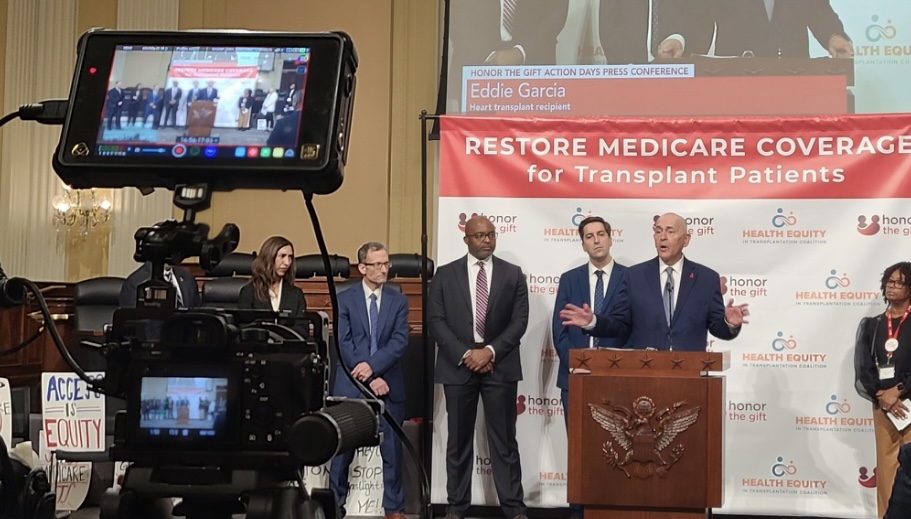
Honor the Gift Press Conference – Washington, D.C. – December 5, 2023

This is the first post of ESEReport.com’s Second Chances blog series.

***

The Lord is not being slow in carrying out his promises, as some people think he is; rather he is being patient with you. ~ 2 Peter 3:9

***

It was sometime in late May 1977. I sat in a classroom at Joseph George Middle School in east San Jose fidgeting in my seat nervously waiting for my turn. I was in the eighth grade, a few weeks away from middle school graduation day. In addition to the traditional valedictorian and salutatorian addresses, a student would be selected to give a speech about campus life. I was one of about six students who tried out for that role.

With Dad’s help, I worked hard on drafting my comments. I wasn’t the smartest kid in school, which explains why I wouldn’t make either of the customary academic achievement graduation remarks. Neither was I one of the most popular students. The other five or so at the tryouts fit into that category. But even as an immature 13 year old boy, I was ambitious and took on challenges that stretched my natural abilities.

Since I loved to read, I worked meticulously on every word looking for an advantage over the popular kids. Dad, who was also a prolific reader, suggested some pretty fancy words that would surely make me sound more sophisticated. Once the final draft was finished, I still felt unsure about being able to stand out. Dad had a brilliant idea. Rather than reading the speech, he suggested that I should memorize it! I practiced and practiced.

When one of the teachers serving as a judge called my name, the nervous tension made me nauseated. As I walked up to the front of the room, a wave of anxious warmth wrapped around my head. My trembling hands placed the written speech on the lectern, just in case I needed a reminder of the words I memorized. When I looked up, there were three teachers and about six students staring at me. My head and flushed face were now in full-fledged nervous fever.

I forgot everything I had practiced. Not one word was coming to me. I looked down at the piece of paper to jog my memory. Nothing! My heart was beating so fast that I thought it would jump out of my chest. I decided on the spot to read my remarks. That didn’t turn out much better. My mouth was so dry that I’m sure no one could understand the stuttering sounds that came out of it. The performance was a complete disaster. I was so embarrassed that I cried when Dad came home from work excitedly asking me how it went.

I was convinced that speaking in front of people would never be in my future. Nevertheless, life went on. In high school, I wasn’t so bad at what we called oral reports in those days. After I flunked out of my first try at college, I coached middle school and high school baseball and basketball. I did just fine with the pre and post game speeches in front of the kids. Speaking to parents at booster club meetings and end of season banquets was part of the job. I did just fine with those too.

In 1989, James Lick High School named me Coach-of-the-Year at an end of year ceremony. The disaster that was 1977 didn’t even cross my mind when I walked up to the podium to deliver an acceptance speech in front of about 200 people. When I returned to college in 1991, I enrolled in a public speaking course primarily because it was a required class, not that I was interested. The professor noted that I was a natural public speaker. His confidence in me was inspiring. In class, I developed the skills that would make speaking in public the foundation of my career.

So what happened between 1977 and 1991? If the professor was right that I was a natural, why was my first attempt at public speaking so awful? How did I improve without any formal training during those 14 years? The likely answer is that life just has a way of working itself out. Life experiences gave me a bunch of opportunities after 1977 to use this natural ability. College gave me the tools to make the most of it in my career and community service. 

I believe that God is the architect of life working itself out. In correspondence with people who lost hope, St. Peter’s Second Letter emphasizes, “The Lord is not being slow in carrying out his promises, as some people think he is; rather he is being patient with you, wanting nobody to be lost and everybody to be brought to repentance.” God was surely by my side in that Joseph George Middle School classroom. Although I badly wanted to speak at graduation, God let me know that I wasn’t ready.

St. Peter’s Second Letter reminds us that God is in charge. God gives all of us natural gifts. Most times, we never recognize or accept that we have them. Sometimes we use them for good and sometimes we use them for wrongdoing. Sometimes we don’t use them at all. “Wanting nobody to be lost,” St. Peter’s letter also provides hope that God gives us second chances when we don’t get it right the first time.

I believe in second chances. It’s taken me four decades and many second chances to understand. It started with the opportunity to return to college after the initial failure. After two failed bids to serve in public office, I earned a seat on the school board with a third attempt. When a massive heart attack threatened to end my life and a heart transplant saved it, God’s grace allowed my journey to continue. I’ve been blessed with a lot of second chances. 

These experiences have taught me three things: (1) We all have natural gifts. We just need to be patient and give God a chance to reveal them to us in his time. (2) We’ve all had second chances in life. We just need to slow down a bit to recognize and reflect on them. (3) We all could use as many second chances as God provides. This world is unforgiving. The sun rises every morning no matter how the previous day treated us. Everyday is a second chance.

I shared my health crisis and the beginning of a spiritual and mental health journey in my 2022 book, Summer in the Waiting Room: Faith • Hope • Love.  On this blog, I plan to spend a good portion of 2024 digging deeper into how strengthening faith and focusing on mental health has had as much a dramatic impact on my life as the heart attack and transplant.

I’ve been doing my best (mostly unsuccessfully) to live with faith, hope, and love. I’ve also been trying to practice meditation and mindfulness (mostly unsuccessfully) on a daily basis. Although I have a long way to go to fully embrace these ancient and proven ideas, I’ve found that my life is becoming more meaningful as I continue to explore the mystery of faith and the inner sanctum of my psyche.

I’ve come a long way from that classroom at Joseph George Middle School 47 years ago. Recently, I had a chance to use for good what the professor said 33 years ago was a natural ability. At a national press conference in Washington D.C. last month, I had the honor to represent heart transplant recipients. I just hope my remarks did my fellow transplant warriors justice. You can see a short clip of that speech here

Thank God for second chances.

Love is the Answer

With Sandra in the ICU after LVAD surgery – November 7, 2018

The following excerpt is from pages 258-260 of Summer in the Waiting Room: Faith • Hope • Love

_________

But the greatest of these is love. ~ Saint Paul’s First Letter to the Corinthians 13:13

* * *

My spiritual journey has been amazing! Every day, I travel to intellectual and mystical places that help me understand the power of God, the Creator, or whatever one believes to be a higher power. I understand a little more about the ways of the universe and better appreciate life in this world. With each step on the path, I uncover new revelations that become more profound as I meander along.

Saint Paul the Apostle has been a major influence on that spiritual journey. Faith and hope entered my consciousness in the first two parts of this book. The experience in the ICU strengthened my belief that accepting what we can’t control and managing what we can are the first steps toward finding inner peace. The third part explores where love fits in. Saint Paul wrote in the language of his era. The ancient Greek word he used for love is agape. The word is generally characterized as meaning the giving of oneself for the sake of others regardless of the circumstance. Throughout my spiritual journey, I’ve contemplated deeply on the existence of agape. Is it even possible? Can human beings truly give of themselves without conditions? I believe so, and I believe that Sandra is a perfect example of that kind of love.

Love means different things to different people. Some people believe that love is necessary for life. Others associate it with giving to others and practicing unselfish acts. The word is often used when describing someone’s fondness for a sports team, food, a book, a movie, music, etc. British author and Christian philosopher C.S. Lewis tried to make sense of it all in a groundbreaking book he published in 1960. In The Four Loves, Lewis sheds light on these concepts and describes four categories of love: storge (affection), philia (friendship), eros (romance), and agape (God’s love).

Affection is the kind of love between parents and their children, siblings, and other blood relations. This is one of the strongest forms of love that most of us are blessed to experience. Since it’s bound together by bloodlines and relatives, Lewis believes that 90 percent of a person’s happiness is related to affection. For that same reason, suffering and pain caused by family friction is disproportionately intense. Friendship is driven by choice. Sharing things in common brings people together as friends. These commonalities and circumstances of meeting seem to happen by coincidence. But with God in control, nothing happens by chance. According to Lewis, “Friendship is the instrument by which God reveals to each of us the beauties in others.” Eros is tricky. Anyone who has been “in love” knows that to be true. When we think of romantic love, warm and fuzzy feelings of happiness, butterflies in the stomach, and hugs and smooches come to mind.

Agape is the most powerful form of love. This is the kind of love God has for humanity. There are no strings attached. For Christians, the Passion Story illustrates how love can change the world. God allowed Jesus to be tortured and humiliated on the road to his crucifixion. The Passion Story shines a light on God’s message about giving of oneself for the sake of others. Throughout the summer of 2010, Sandra demonstrated agape in all its glory. She slept on a cot by my bedside for over one hundred days to make sure she was available to make decisions to help the doctors care for me. Her unwavering commitment to my health continued for another ten years as my damaged heart grew weaker and eventually left us with more life-and-death decisions to make. It’s such a cliche to say that I live for Sandra and the girls. But it’s true. I give of myself and sacrifice much to continue the fight to stay healthy for them. The statement “For richer or poorer, in sickness and in health, till death do us part” is embedded deeply in our souls.

My health problems didn’t disappear when I walked through the front door of our house on September 21, 2010. The heart attack that led to the summer in the waiting room left me with a severe case of congestive heart failure, also known as CHF or heart failure. For eight years, I managed the disease with a strict diet, disciplined medication regimen, and regular exercise. My heart eventually reached the end of its usefulness. On November 6, 2018, doctors implanted a mechanical pump called a left ventricular assist device into my heart. On April 16, 2020, a heart transplant gave me a new life. Transplants aren’t a cure. Other complications take the place of heart failure. In five short essays, Part 3 of this book tells the story of the decade after coming home on September 21, 2010.

I don’t know what obstacles lurk in the shadows of my new heart. Making difficult decisions about how to keep it healthy is my new reality. When clouds of uncertainty start gathering and force me to make hard choices, I turn to the lessons of my spiritual journey. No matter what happens, I know that love is the answer.

***

On Thursday, November 9, 2023 from 6:00 to 7:00 pm, I will share more stories from my book at the Stanford Bookstore. Join me and my heart transplant surgeon for an evening of faith, hope, love, and signing books!

RSVP at this link: