All posts by eddiemgarcia

Summer in the Waiting: Chapter 3 (excerpt #23)

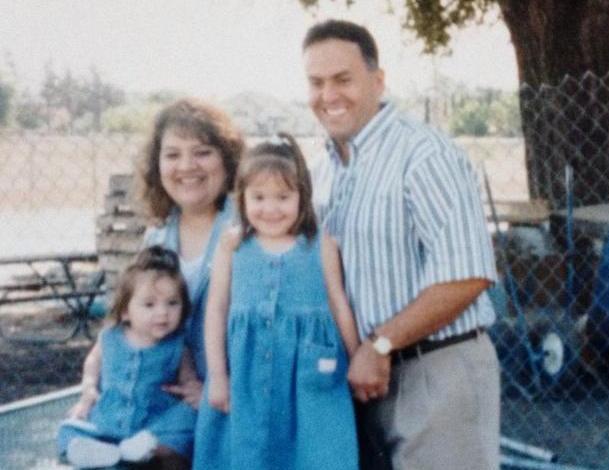
My sister Patty (1953-2003) & (1930-2003) in early 2003. Sandra and Eddie García family photo)
My sister Patty with my mom in early 2003.
Sandra and Eddie García family photo)

Blogger’s note: This is the 23rd installment from my manuscript of Summer in the Waiting Room: How Faith, Family, and Friends Saved My Life. I post weekly excerpts every Wednesday morning. Check out the “About Summer in the Waiting Room” link at the top of this page to learn more about the story. To read previous installments, go to the “Tags” link and click on “Summer in the Waiting Room.”

********************************

By mid-year, the senior VP in California informed me that I had been selected, at his recommendation, to participate in the exclusive Comcast Executive Leadership Forum class of 2004.  The Executive Leadership Forum was by invitation only, and the corporate chitchat was that those who completed the program were soon sitting in executive chairs. Just as my professional prospects were looking up, my personal life took a downturn.

In March 2003, my sister Patty, just forty-nine years old, suddenly died from myocarditis, an inflammation of the heart muscle caused by an infection from a virus.  She started the year with what seemed like a bad cold that appeared to lead to bronchitis and pneumonia, but doctors couldn’t clearly identify the problem and decided to do exploratory surgery.  The morning of her surgery I called Patty to wish her luck and told her that Sandra and I would make the four hour drive to her home in Bakersfield to see her when she emerged from the operating room.  That was the last conversation I had with my sister.

During surgery, the doctors confirmed that she had myocarditis and that her heart was so weak that she would need a heart transplant immediately.  A suitable heart was found at the UCLA Medical Center, just a short one hour helicopter flight to Los Angeles.  The doctors first needed to make sure that her heart was strong enough for the flight, so my sisters Barbara and Sisi, and my brother-in-law’s family prayed for a positive outcome and anxiously waited for the doctor.

Finally, in the early morning hours before dawn, the doctor walked into the waiting room and asked my brother-in-law to step into the ICU unit. My brother-in-law asked me and the priest who presided over his and Patty’s wedding many years earlier to join him and the doctor.  Once in the wide and antiseptic hallway of the ICU unit, the doctor, in a straightforward and unemotional manner, told my brother-in-law that Patty’s heart had weakened to the point of failure and that she would die within the hour.

As my brother-in-law sobbed and pounded his fists against the wall in grief, I stood by dazed and numb, and my mind started to spin trying to find answers in the confusion. Patty had been in great shape, she ate well, rarely stressed about anything, and she died of a bad heart. A few days later, I was given the honor to speak at her memorial service where I described her fighting spirit and her total devotion to her husband and her only son Matt, while my mind swirled about my own mortality.

At just thirty-nine years of age, I intensified the urgency I had placed on myself to achieve redemption by accepting the invitation to participate in the Comcast Executive Leadership Forum and working longer hours. I was excited about starting the program and moving forward after the stunning death of my sister, but 2003 ended on the same tragic note when my mom died of a blood infection after battling kidney failure for several years.

Once again, I found myself at the podium delivering a eulogy for a woman I loved while my mind raced about the ticking clock that foretold the end of my time. While my sister’s sudden death was startling and forced me to think about my health, my mom’s passing was devastating. She had been the glue that kept everything together. Her unconditional love kept me afloat during the darkest of times. I was sad, scared, and not sure how I would get through the tough times that were sure to come.

In addition to the emotional pain, my mom had named me the trustee of her living trust and I felt a deep sense of obligation to get it right.  Hearing my dad’s voice advising that working hard was the best my way to get through sorrow, I developed a laser focus on my career and on settling my parents’ estate. On top of meeting daily responsibilities as director of government affairs for Comcast in the South Bay Area, for the next ten months I traveled frequently to Philadelphia for the Executive Leadership Forum.

My work schedule was grueling with regular trips to Sacramento and Washington, D.C, in addition to stops around the country as Comcast’s representative at national Latino political gatherings. The grinding schedule kept my mind off of the huge void left by my mom.  What few hours I had left in the day would be spent with Sandra and the girls.  If I was in town, I would have dinner at home before heading out to an evening event, and when on the road, I would call Sandra and the girls just before bedtime to say good night.

Sandra began expressing concerns about how hard I was driving myself. If I wasn’t careful, she warned, my family history of heart disease would catch up to me. Rather than taking that warning as a sign to slow down, I drove myself harder rationalizing that the clock was ticking and my window for redemption and success was closing fast. In September of 2004, after a long week of business in southern California, I found myself short of breath while trotting up a flight of stairs at the Long Beach convention center.  At the top of the steps I was able to compose myself, and a few minutes later, the sensation disappeared.
Quotes & Quips: Dorothy’s Magic Words

6177653800_06f9903f53

“There’s no place like home.”

~Dorothy from the Wizard of Oz

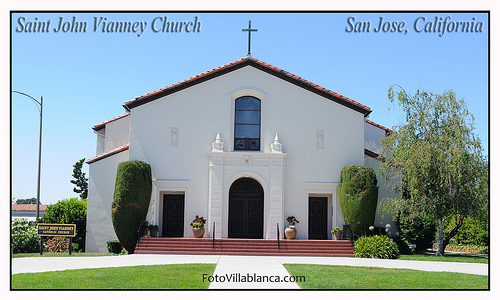
For over five decades, St. John Vianney Catholic Church has been the anchor to my boyhood neighborhood in east San Jose. During three days in May, the annual SJV Fiesta is the gathering place for those who live in the neighborhood and those who grew up there. As my friend Jason Rodriguez puts it, “Fiesta is an east side reunion.” Yesterday, I made my annual pilgrimage.

I’ve always known that people have notions about the east side, and I’m guessing they’re not so positive. I recently heard from a few people who lived in a “better part of town” clearly miffed that East Side Eddie Report.com was posted on Facebook. I could almost hear the disdain in one writer’s voice as he typed, “Why am I getting your east side report? You might as well be from Oakland.” In one sentence, he managed to look down on two communities he probably knows nothing about.

One quick walk around Fiesta demonstrates that writer’s foolish notion. For many of us, this neighborhood is home. Passing the carnival, food booths, and local entertainment stages, Fiesta visitors see generations of families enjoying each other on a beautiful spring day or evening.  Teens and pre-teens at the rides, little kids and their parents dancing to the music, and grandparents sitting at tables under the canopies sampling Portuguese linguisa, Philly cheese steaks, and strawberry shortcake.

I always run into old friends and their families. Three friends I saw this year reminded me of the talent the east side has to offer.  Two of them, Larry Gonzales and David Rosas, played basketball for me when I coached at James Lick High School. Those talented boys are now men serving as an officer in the United States Navy and a teacher/basketball coach at our alma mater. The third, Jason Rodriguez, grew up one block over from me. Today, he jets around the globe as an executive representing Hewlett Packard.

Like our parents, we east side kids grow up to be resilient men and women who work hard and raise good families. It’s fun to gather once a year at Fiesta to see old friends, share stories, and introduce new family additions. Over the years, I’ve been blessed to share stories about my own growing family and travelling across the country for work. Nevertheless, Dorothy had it right. My pilgrimage to Fiesta every year reminds me that, “there’s no place like home.”

Summer in the Waiting Room: Chapter 3 (excerpt #22)

Campaigning for city council from the back of a pick-up truck in 2000. (Photo Courtesy of Patricia Rocha Malone)
Campaigning for city council from the back of a pick-up truck in 2000.
(Photo Courtesy of Patricia Rocha Malone)

Blogger’s note: This is the 22nd installment from my manuscript of Summer in the Waiting Room: How Faith, Family, and Friends Saved My Life. I post weekly excerpts every Wednesday morning. Check out the “About Summer in the Waiting Room” link at the top of this page to learn more about the story. To read previous installments, go to the “Tags” link and click on “Summer in the Waiting Room.”

********************************

Losing that second campaign for school board didn’t diminish my ambition or my hopes of winning election.  Two years later, I decided to run for the city council.  I had earned some name recognition with voters during the school board campaigns and my professional profile improved with my position in the business world.  The only person who stood in the way was a high school board member who was the scion of a political family whose father had served in the California state legislature for two decades.

In the spring primary election, each of us defeated two other opponents to earn spots on the general election ballot in November.  Primary election night would be the highlight of my electoral political career as I gave a victory speech, with three-year-old Erica in my arms, in a packed campaign office, to the cheers of my family, friends and supporters.

I started the fall campaign trailing badly in the polls, so with the support of a small cohort of extended family and friends, the campaign team was essentially a family affair.  The Peralta girls and Miguel walked precincts every weekend and called voters every night asking them to vote for me. My mom and Mrs. Peralta shared phone bank duties as well.  Pancho, Eddie, Will, and Rudy fanned out throughout the district posting campaign signs on supporters’ yards and along major roadways.

Even Marisa, just five years old, walked door-to-door campaigning with me, her infectious smile confidently persuading people on their front porches to vote for her daddy. After a long and vigorous campaign, I couldn’t overcome my opponent’s well-known name and well-financed campaign machine.  The returns on election night proved to seal my third electoral loss in six years. I was devastated as I addressed supporters in a crowded room at a local restaurant to thank them on my family’s behalf.

As people gathered around me with tears and hugs, I felt something tugging at the bottom of my sweater and looked down to see Marisa looking up at me with teary eyes saying, “Daddy, I’m sorry you lost, but I’m kind of happy because we could have you back now.”  The next morning, I woke up after just a few hours of sleep with my political dreams smoldering in the ashes of failure.  Despite the fact that my political career was over, the ambition to succeed and erase the demons of the past with a focused urgency hadn’t gone away.

I was committed to putting all of that energy into spending time with my family and building a career as a corporate executive.  As it turned out, I spent more time chasing the elusive concept of success than I did enjoying my family.  I wanted to be a good husband and father, and I loved being with Sandra and the girls, so I made sure that I was home for dinner every night I was in town and available for as many school events and family events as possible.

For several years I coached Erica’s little league teams, but it wasn’t unusual to hear the kids shout, “Coach García is wearing a suit again,” because I would have to run out right after practice to be on time to my first meeting for the evening.  Despite my efforts to be a fully engaged father, my professional ambitions took the lion’s share of my time.

When Comcast acquired the local cable company as part of a nationwide eighty billion dollar transaction, I was now working for a major American corporation with countless opportunities for those who wanted to get ahead.  During a tour of Comcast facilities in San Jose, the new senior vice president for the California region stepped into my sparse office, asked about my background, my family, and my plans for the future.  I filled him in with the basics about Sandra and the girls, my career up to that point, and boldly proclaimed that I wanted to be a vice president someday soon.

Over the next several months, the senior VP called on me to lead selected projects in the regional government affairs department, which I accepted without hesitation.  Although these special projects required me to be away from the office often, my direct supervisor was supportive of my ambitions and allowed me the time needed to be away. I was making much progress in my climb up the corporate ladder when I became close friends with a colleague at the corporate office in Philadelphia.

He was a bright executive forging his own way up the organizational chart.  We had much in common: we were both in our 30s, we both had our eyes on higher executive positions, we both had the same philosophy on government relations, and we both were persons of color.  He asked me to help at the national level when a local elected official from California with whom I had a strong working relationship was appointed to the telecommunications public policy committee of the most influential municipal advocacy group in the nation.

With me and my colleague representing Comcast, we co-hosted a dinner with the California official in Charlotte, North Carolina, for the telecom committee members. Just like that, I became familiar to executives at corporate headquarters as a valued representative of the company, especially with Latino political organizations.  Before long, I was in Los Angeles, Washington, D.C., Dallas, Santa Fe, and San Juan, Puerto Rico representing Comcast at national meetings of Latino public policymakers.

Quotes & Quips: Summer in the Waiting Room

10277359_10152401423848669_1100969279421148380_n

Last week, a Facebook friend posted the following quote:

“Maybe the journey isn’t so much about becoming anything.  Maybe it’s about un-becoming everything that isn’t really you so you can be who you were meant to be in the first place.”

These two sentences hit me like a ton of bricks.  I scoured the Internet and quotation books to find the source. It showed up on a couple of meditation blogs and Pinterest posts without author attribution. I don’t know who said or penned it, but the more I read the passage the more I reflect on my own life journey.

For the past several years, I’ve been thinking about my journey and writing about it in Summer in the Waiting Room: How Faith, Family, and Friends Saved My Life. I’ve posted 21 excerpts on East Side Eddie Report.com, and plan to complete and publish the manuscript as a book early next year. The powerful two-sentence quote elegantly captures my personal journey and forms the cornerstone of the book.

For readers who have been logging on to the weekly excerpts, thank you!! If you haven’t been reading the story, take a few minutes and check it out by clicking on the Summer in the Waiting Room tag on the right of this page.

Be sure to log on tomorrow for excerpt #22!


About Summer in the Waiting Room

Summer in the Waiting Room: How Faith, Family, and Friends Saved My Life is the unique and inspiring story of a boy who grew up in a working-class neighborhood, failed at college and lost hope, met and married the love of his life, returned and finished college, raised a family, and found some success in business and public office.  It’s also the story of a man who vowed never to fail again and toiled tirelessly trying to redeem himself, only to find true redemption, while in a state of complete helplessness in the ICU.

Summer in the Waiting Room: Chapter 3 (excerpt#21)

With Sandra, Marisa, & Erica taking photos for my 1998 school board campaign (Sandra and Eddie García Family photo)
With Sandra, Marisa, & Erica taking photos for my 1998 school board campaign
(Sandra and Eddie García Family photo)

Blogger’s note: This is the 21st installment from my manuscript of Summer in the Waiting Room: How Faith, Family, and Friends Saved My Life. I post weekly excerpts every Wednesday morning. Check out the “About Summer in the Waiting Room” link at the top of this page to learn more about the story. To read previous installments, go to the “Tags” link and click on “Summer in the Waiting Room.”  

********************************

I also began to face challenges in my professional life.  In 1996, I worked around the clock managing the supervisor’s campaign.  It was so consuming that when we celebrated Marisa’s second birthday at a pizza parlor, I stayed for just thirty minutes only to return to the campaign office because Election Day was just six days away.  It also became clear that my decision to pursue a career in elective politics severely compromised my day job.  Later that spring, I left the supervisor’s office for a failing non-profit organization that dissolved seven months later.

At home the night Erica was born provides a snapshot of that trying time.  While Sandra and the baby slept at the hospital in preparation to come home the next day, three-year-old Marisa and I sat alone in the virtually empty family room of our newly purchased house watching television.  While she was enjoying the quality time with her daddy, my mind wandered thinking about of being unemployed soon with a mortgage we could barely afford, worried about how I was going to provide for my family, and how I was going to pursue my professional dreams under such challenging circumstances.

With the impending collapse of the non-profit corporation nearing its endgame, I would scour the newspaper for job opportunities every day.  Once again, fate stepped in.  One Sunday morning while Sandra and the girls were still asleep, I stumbled upon a rare job announcement for a government affairs manager at the local cable company.  Government affairs departments are unique to industries that are regulated by federal, state, and local governments.

The role of a government affairs department is to develop and maintain relationships with elected and government officials to educate them to provide an opportunity for that company or industry to influence public policy that is beneficial to its business interests.  Usually, these types of job opportunities are shared by word of mouth with those who work in the political sector, so it’s unusual for a company to place an ad in the newspaper.  I applied for the job and called on all of the politicians and community leaders with whom I had developed strong working relationships to send letters and make phone calls to the cable company.

The work ethic I learned from my parents, the urgency that drove me since my dad’s passing and my mom’s heart attack, and the opportunity to right the wrongs of my past motivated me to prepare obsessively for the job interview.  Well prepared, I drove to the interview early so I would be relaxed and confident for the meeting, only to get lost in an unfamiliar part of the valley.  Those were the days before auto navigators and GPS devices, so I found myself driving up to gas stations and other drivers stopped at traffic lights to ask for directions as the clocked ticked ever so close to the scheduled interview time.

My heart pounded at the thought of missing this opportunity and watching failure rear its ugly head again.  Speeding through the maze of streets lined with the same looking, low lying concrete Silicon Valley research and development “tilt-up” buildings, I finally made it to my destination with just a few minutes to spare. I walked into the lobby nervous and anxious, wiping sweat off my brow and composing myself to look presentable.  Wearing my best suit, I walked confidently into the office to start the meeting.

I dazzled them at the interview and I was invited to meet executives at the division office in Walnut Creek, more than an hour away, a few days later.  I was nervous and excited to meet corporate executives, something I never would have thought was possible just a few years earlier. This time I wasn’t taking any chances. I arrived in Walnut Creek more than an hour early. The meetings went well and I got the job. My life would never be the same.

Working at the cable company was a great experience.  I strengthened my relationships in the political community, learned about working in a corporate environment, had an office all my own, and shared an assistant with my boss.  I also visited Washington, D.C. for the first time.  Managers at my level rarely had the opportunity to represent the company in Washington, but my solid relationships with a few members of Congress led to the invitation by our department’s vice president.

When I arrived early that January evening, a light snow was falling and the lighted monuments and U.S. Capitol made the city glow majestically.  That night, I went out into the freezing rain to see the Lincoln Memorial. I shivered while walking up the steps to the enormous statue of Abraham Lincoln sitting in a chair looking across the Mall toward the Capitol Building.  The statue took my breath away.

I turned and looked to see what Lincoln was seeing and stood motionless as I gazed at the iconic Washington Monument and Korean War Memorial shimmering in white as the rain gave them a shiny finish.  I couldn’t believe that I was there, a boy from the east side who failed in college and found his way back, standing in center of the free world. I returned to Washington several times a year over the next 10 years and never lost the excitement and inspiration our nation’s capital gave me that first night.

My career in the corporate world was progressing nicely as I was promoted to director within two years. Still, my hunger for political success grew even stronger. In 1998, for a second time, I ran for a seat on the elementary school board against three longtime incumbents. Sandra, her parents and sisters, and my brothers-in-law formed the heart of the campaign. We learned a lot from the last election and had a well-organized operation. When I walked door-to-door asking people to vote for me, many had remembered me from the 1996 campaign. On Election Day, hopes were high.  By the end of the night, I lost again by a slim margin.

Quotes & Quips: National Teacher Week, May 5-9

teacher-thanks 

“The mediocre teacher tells. The good teacher explains. The superior teacher demonstrates. The great teacher inspires.”
~William Arthur Ward

Have a great week and thank a teacher!

*Thanks to reader Sisi Garcia for the this week’s thought!

Summer in the Waiting Room: Chapter 3 – Redemption (excerpt #20)

Ready for work in a suit and tie – 1993 (Sandra & Eddie García Family photo)

I called Mr. Shirakawa as he suggested and found myself in his office a couple of days later.  He quickly secured a job interview for me as a legislative assistant to legendary Latina councilwoman Blanca Alvarado.  I had met her at the convention center just the week before.  As the longtime city council representative who represented east San Jose, she was a household name at my parents’ kitchen table, so it was a surreal experience sitting in her office a few weeks later for the interview.  The interview went well, so I was hopeful as I left the meeting.

By mid-summer, more than two months after graduation day, I hadn’t heard back from the her office so I applied for jobs at the City of Santa Clara, the high school district, and an assemblyman’s office.  No job offers resulted, and the familiar feelings of doubt and uncertainty about my abilities began to creep in.  That fall, after two more months of anxious job hunting, the councilwoman, who had recently been named vice mayor of San Jose, offered, and I accepted, a three-quarter time position.

The next three and a half years were an exciting time for me.  After several months, I earned a full-time position as a legislative aide working on community development and controversial public art projects.  In this capacity, I had the opportunity to learn about the public policymaking process, and the rough and tumble world of local politics.  I worked tirelessly, never turning down an assignment or a night out at a political event.

I had quickly become one of the vice mayor’s most reliable lieutenants.  When her tenure ended due to term limits, she asked me to manage her campaign for the county board of supervisors.  I was flattered, excited, and apprehensive as I had never even worked on a campaign, much less managed one.  It was a hard fought campaign, complete with mudslinging from both sides and eighteen hour days, that wasn’t decided until the early hours of the morning after Election Day.

I had taken myself to the limits physically, emotionally, and mentally juggling the responsibilities of managing the candidate, the press, campaign donors, advisers, and volunteers.  After the early morning victory had been secured, I spent the next thirteen months in her office as a senior policy aide on the county board of supervisors.  Within months of assuming my new position, I was itching to do more as the failure demons began sneaking back into my consciousness.

I was thirty-two years old working as an aide to a local politician.  In my impatient mind, it wasn’t good enough to erase all of the years I lost in my personal wilderness.  The summer after Election Day, the supervisor sent me to Los Angeles to represent her at the National Association of Latino Elected and Appointed Officials (NALEO) annual conference where I attended workshops on campaign management, and media relations, and heard the mayor of Los Angeles, the governor of California, and United States senators speak on a national stage at luncheons and dinners attended by thousands of politicians, community leaders, and education leaders.

I was fascinated and intoxicated by the power and influence that permeated throughout the convention hall so much so, that on the flight home, I had decided that I would pursue a career in politics.  I was certain that the prestige of being a successful public servant would cast away my demons for good.  That fall, I ran for a seat on the neighborhood school board, and despite running a solid campaign, I lost to a couple of longtime incumbents by a few percentage points.

When I returned to my full-time duties working for the supervisor, I continued doing my job as my impatience to become successful began to rise and my confidence sank.  As I contemplated my future, I faced struggles in my personal life.  Early in 1995, my mom suffered a major heart attack that required bypass surgery and my dad died of stroke at the age of sixty-nine later that fall after a series of heart attacks and strokes that began in his fifties.  Those two events had a profound effect on me.

My mom was the glue that kept everything together, so to see her in a vulnerable state heightened my sense of uncertainty. My dad provided the philosophical and practical foundation of my life, so a deep emptiness and an uneasiness of what the future would hold became part of my being.  During this time, I began to pay attention to my own health and mortality, and developed an intense urgency to erase the disappointments of the past and achieve success before the fate of genetics cut my life short as well.  I started to eat better and exercise on a regular basis, but I also began a pattern of working to near exhaustion.

East Side Eddie Report.com Special

NBA Commissioner Adam Silver announcing lifetime ban on Los Angeles Clippers owner (photo by espn.go.com)
NBA Commissioner Adam Silver
(photo by espn.go.com)

Kudos to NBA Players and Commissioner!!

NBA players’ stand against Los Angeles Clippers owner Donald Stierling and NBA Commissioner Adam Silver’s lifetime ban on Stierling courageously puts racial bias in the United States on trial.  I hope America keeps up this courageous conversation!

http://www.cnn.com/2014/04/29/us/clippers-sterling-scandal/index.html

Quotes & Quips: “Play Like a Champ”

628x471
San Francisco Giants celebrate 2012 World Series championship (photo by http://www.uniontimes.com)

Here’s an inspiring thought to start the week sent by reader Mariano Peralta…

“Play like a champ!”

Have a great week everyone!

***********************

Don’t miss this Wednesday’s installment of “Summer in the Waiting Room” – Chapter 3 “Redemption.”

About Summer in the Waiting Room

Summer in the Waiting Room: How Faith, Family, and Friends Saved My Life is the inspiring story of a boy who grew up in a working-class neighborhood, failed at college and lost hope, met and married the love of his life, returned and finished college, raised a family, and found some success in business and public office.  It’s also the story of a man who vowed never to fail again and worked tirelessly trying to redeem himself, only to find true redemption while in a state of complete helplessness in the ICU.

To read past excerpts from Summer in the Waiting Room, click on“Summer in the Waiting Room” tag to the right.

Summer in the Waiting Room – Chapter 3: Redemption (excerpt#19)

0000_cesar-chavez

Chapter 3

Redemption


Before completing college and before Sandra and I decided to have a family, I threw the original plan of earning a teaching credential to the wayside, which would have taken another three semesters.  With my dream of becoming a teacher subservient to my need to begin a career, I felt that I had lost too much time during the years I had stumbled through life trying to soothe the pain of my failures. Not sure what a twenty-nine year old college graduate with a history degree could do other than teach high school history, I wondered what direction to pursue and where the opportunities may be.

Then fate stepped in.  During the spring before graduation, Sandra and I were visiting her parents on a Saturday afternoon when a friend from college, Damian Trujillo, called to invite me to the 25th anniversary celebration for a local job training program.  Damian was determined, hard-working, and ambitious; he worked part-time at KSJS, the San Jose State radio station, and dreamed of becoming a television reporter.

I had taken some Mexican American Studies classes with Damian and we became friends when we worked together on the planning committee of a national academic conference the Mexican American Studies Department hosted at San Jose State.  It was the first time I was part of a team that developed and produced a large conference that attracted people from throughout the country.  Today, Damian is recognized as one of the most respected and well-known newsman in the valley.

The featured speaker at the job training center anniversary event would be Cesar Chavez, the great labor leader and civil rights icon who found the United Farm Workers of America. Sandra encouraged me to go because her advisor in high school, George Shirakawa, Sr., was a city councilman who probably would be at the event and might be willing to advise me about getting a job at the city if I told him that I was married her.

With nothing to wear, my old suits didn’t fit anymore and we didn’t have money or time to get a new one, I called Rudy and borrowed his only suit.  Years later, at an event I had invited him to attend where he wore a perfectly tailored blue business suit, he would recount that I taught him that every man must always have at least one suit, just in case one was needed.  Looking very much the politician in Rudy’s black suit with white shirt and red tie, I headed to downtown San Jose with Damian to attend the first political event of my life.

The celebration, held in San Jose’s cavernous convention center’s main hall, was attended by the valley’s political glitterati.  Feeling absolutely natural in that environment, I moved about the hall effortlessly introducing myself to everyone who looked familiar from television news and newspaper stories: the valley’s congressional representative, state legislators, a future San Jose mayor, and a city councilwoman who was the grand dame of Latino politics in Silicon Valley.

I even approached Cesar Chavez himself and extended my hand in introduction.  During the few seconds I spent shaking Chavez’s hand and exchanging cordial salutations, I saw the powerful yet humble determination in his eyes that made him a national civil rights hero.  Even though it was clear to see that these politicians would forget our interaction the second I walked away, I was instantly mesmerized by politics that night.

Toward the end of the evening, I finally saw the prize, the reason I decided to accept Damian’s last-minute invitation, Councilman George Shirakawa, Sr.  He was walking quickly through the crowd with a small entourage that included his son George, a local school board trustee. Mr. Shirakawa was an admired teacher and counselor before entering politics, and George, Jr. was a popular high school athlete before his election to the school board.  Together there were revered in their part of town in south central San Jose.

I stepped in Mr. Shirakawa’s path, jutted out my hand, and introduced myself.  He was a husky, gregarious man with a beaming smile, a booming voice, and a personality that filled the spacious hall.  He was a wearing a black tuxedo with a colorful matching vest and bow tie.  With the same distant look in his eyes as the other politicians I met, he shook my hand, said hello, and began to continue his march through the hall.

When I told him that I was married to Sandra Peralta, he stopped in his tracks, smiled even bigger, and in that commanding voice told me that if I was married to “Sandy Peralta,” I must be a good man.  He then handed me his business card, directed me to call his office on Monday, and disappeared into the crowd.