Monthly Archives: February 2026

Mexican Heritage Plaza: A Symbol of Resilience and Perseverance – Part 2

Part 2: The Dream

***

Some in the community insisted that it be called the Latino Heritage Center. And we were very adamant about emphasizing Mexican heritage and culture.

~Blanca Alvarado, Vice Mayor, City of San José

***

In the September 5, 1952, issue of El Excéntrico, the president of the Comisión Honorífica Mexicana announced that its general assembly voted on July 20th of the same year to approve a project to establish the La Casa del Mexicano, a community and cultural center that included a large meeting hall and offices for the Comisión. He proposed convening a committee of honest, selfless community leaders, independent of the Comisión, to plan and design the center.

Money raised during the Comisión’s annual Cinco de Mayo and September 16th celebrations would fund the project. The article also called for broad support from the ethnic Mexican community to ensure it had its own space for social events and festivals. Opposition began to develop before the July 20th general assembly vote.

José Alvarado, a popular Spanish-language radio disc jockey and former president of the Comisión Honorífica Mexicana, argued that funds for the Casa del Mexicano project would siphon money away from a college scholarship program for Mexican American students already approved by the Comisión.

According to a July 19, 1952, San José Mercury News article, “Alvarado charged that while the scholarship program promoted better American citizenship, activities centered around the proposed clubhouse would tend to increase loyalties to México, rather than the United States.”

Although Alvarado was a native of México and served on the Comisión board, he believed that the future of the ethnic Mexican community in San José depended on building capacity in the United States. In an April 5, 1953, El Excéntrico opinion piece, Alvarado wrote in Spanish, “Although we love our traditions, we refuse to live in the past. This country is our home, and without a doubt, we want to be considered part of the local community.”

The Comisión Honorífica Mexicana general assembly unanimously voted to fund the scholarship program and the Casa del Mexicano project. A year later, the Comisión purchased property in La Colonia near the Del Monte cannery. The house became the Comisión’s headquarters, used for meetings and small gatherings.

The organization could not raise the necessary funds to build a large meeting hall and community center for public events as envisioned. By the mid-1960s, the Comisión sold the property to make way for a segment of Interstate 280 that expanded the demolition of La Colonia started by San José’s Redevelopment Agency earlier in the decade.

The Comisión’s dream of building a gathering space for the ethnic Mexican community remained of interest, even as cars zipped along I-280 on the land that once housed the Casa del Mexicano. In his annual message to the community, published in the December 5, 1967, issue of El Excéntrico, Comisión Honorífica Mexicana President Daniel Saldaña presented the Centro Cultural Mexicano (Mexican Cultural Center) project, “probably the boldest plan” ever announced by the Comisión.

The proposed 49-acre development would be an “authentically Mexican village” that included a large central kiosk, a church built in the original mission style, offices, art studios, and classroom space for teaching Mexican art, dance, and music. It is unlikely that the project progressed beyond the proposal stage, as described in El Excéntrico. There is no historical record of subsequent discussions.

Six years later, a group of business leaders founded the Mexican American Chamber of Commerce (MACC), “to improve the social, cultural, economic, and political position of ethnic Mexicans in San José.” The organization grew quickly and soon earned the trust of the community, city leaders, and established downtown business groups. The MACC was determined to develop a “Mexican Village” in downtown San José that replicated the thriving Market Street business corridor of two decades earlier, but with Mexican architecture and themes.

A Mexican entrepreneur first proposed a Los Angeles-style “Olvera Street” in San José in the mid-1950s, but city officials dismissed the idea. The MACC’s proposal would include space for arts and entertainment. By the mid-1970s, some city leaders were open to the concept. The proposal could potentially revitalize a dying downtown. Despite early momentum for the MACC project, the city council pressed ahead with its plan to revitalize downtown San José by displacing the ethnic Mexican community and investing heavily in redevelopment.

Unlike San Antonio, Texas, which recognizes, celebrates, and embraces its Mexican American roots and culture, San José’s leaders refused to acknowledge the city’s rich Mexican history and traditions. San Diego and Los Angeles preserved their original Pueblo sites and now celebrate them as tourist attractions. In their quixotic quest to revive downtown by throwing Redevelopment funds toward creating a modern version of a downtown lifestyle that never existed, city leaders failed to capitalize on a cultural heritage that had survived and thrived in the valley for more than two centuries.

For the better part of four decades, institutional roadblocks, financial challenges, and community divisions hampered the dream of creating a space where the city’s Mexican cultural heritage is acknowledged and celebrated. The dawn of the 1980s would bring renewed hope and previously unattainable opportunities toward achieving that dream.

***

Note: Mexican Heritage Plaza: A Symbol of Resilience and Perseverance will be available in mid-March 2026. Stay tuned for more details.
Mexican Heritage Plaza: Part 1

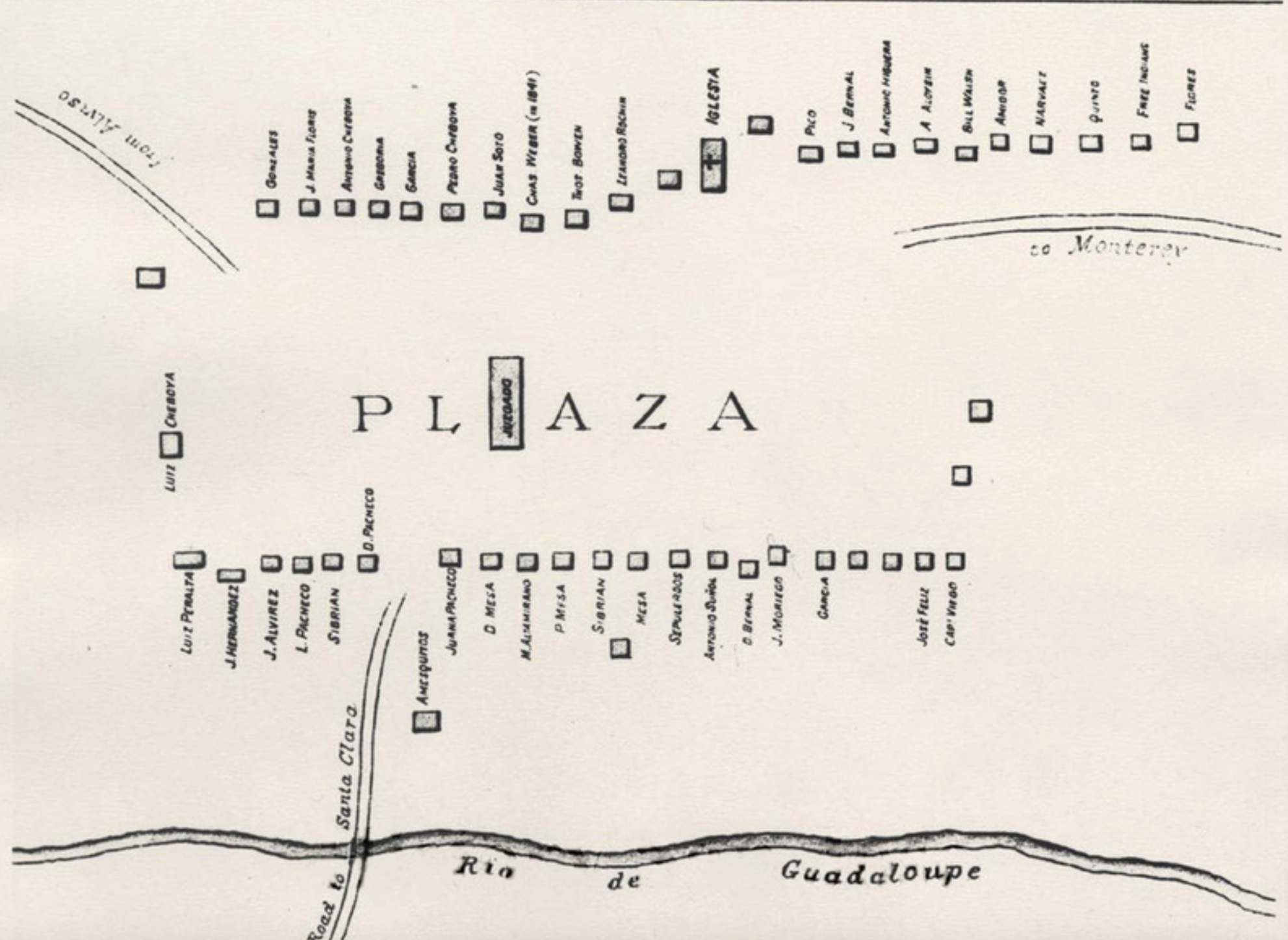
Map of the original El Pueblo de San José site (Courtesy of SJSU King Library)

Part 1

The Mexicans

November 29, 1777 ~ November 3, 1980

When Neve (Governor of Alta California, New Spain) reported to the viceroy that the Guadalupe area would make an excellent town site, he requested 40 to 60 colonists, all experienced Mexican farmers with families, be recruited.

~Edwin A. Beilharz, Santa Clara University Professor and Author, San José, California’s First City, 1980

* * *

San José, California, has existed as an organized governmental pueblo, town, or city for 248 years. Despite being the first civil settlement in California, San José has few published historical works. Fredric Hall, an obscure attorney and amateur historian, conducted extensive documentary research and kept a diary of his youth in San José to write The History of San José and Surroundings, published in 1871.

A century later, Santa Clara University history professor Edwin A. Beilharz and Donald O. Demers published a coffee-table book titled San José, California’s First City as part of a series on local history from Continental Heritage Press. Beilharz and Demers acknowledge the presence of Mexicans in San José’s history but offer no in-depth analysis of its implications for the city’s development.

During that same period, an amateur historian named Clyde Arbuckle was encouraged by a fellow history buff to write the “definitive” History of San José. When Arbuckle published the book in 1985, the foreword stated, “In these pages we will relive the founding and emergence of our city as recounted by one who knows it better than any other.”

 It’s important to note that Arbuckle was not an academically educated or trained historian. In fact, he dropped out of high school at 15 to work as a laborer in a printing shop and ultimately spent 25 years as a delivery driver for the firm. He took a few history classes at night school and became quite the history buff. In 1945, the City of San José named him the official City Historian, most likely because he had a passion for the community’s past.

Nevertheless, Arbuckle’s book is detailed and well-researched. While the statement in the book’s foreword that Arbuckle knew the city’s history “better than any other” may have been accurate, the History of San José author only tells part of the story. Arbuckle makes no mention of the Mexican presence or contributions to San José’s development. His retelling of the Pueblo’s founding in 1777 occupies only four paragraphs in a book spanning 535 pages.

Aside from an odd statement asserting that the settlers “were not the best material in the world for their task,” Arbuckle provides no historical analysis at all, especially with respect to the people who settled on the banks of the Guadalupe River. How Arbuckle concluded that the settlers “were not the best material” is anyone’s guess.

In an April 15, 1778, letter to superiors, Felipe de Neve, Governor of Alta California, New Spain, wrote that he assigned “nine soldiers with farming experience” to settle El Pueblo de San José de Guadalupe. Fredric Hall’s 1871 book describes the settlers as “skilled in agriculture.” Those accounts confirm that the settlers were the best material for developing an agricultural community.

Whatever the reason for Arbuckle’s omission of the Mexican experience in San José, his manuscript does not provide a comprehensive or definitive history of the city and perpetuates the false narrative that Spaniards founded the pueblo.

It wasn’t until 2003, when Yale historian Stephen J. Pitti published The Devil in Silicon Valley, that historical works about San José correctly identified the Pueblo’s founders as “ethnic Mexicans.” In 2025, San José State University historian Gregorio Mora-Torres wrote a comprehensive account of what he calls the ethnic Mexican experience in San José.

The facts, as chronicled by Beilharz, Pitti, and Mora-Torres, are that each person in the small band of 66 pobladores (settlers) who pitched camp along the Guadalupe River was born in México, including the “Spanish” army captain José Joaquín Moraga, who led the expedition. He was born at the Mission Los Santos Ángeles de Guevavi in Sonora, México (now in modern-day Arizona).

Within a few years, San José’s settlers were producing enough food to feed the military presidios in Monterey and San Francisco. By the mid-1780s, the pueblo’s leaders established a thriving community. Although still under the King of Spain’s royal authority, the Mexican settlers produced abundant crops. They established a “town council” in San José, launching a form of self-government for the faraway outpost settled by people from Sonora and Sinaloa, México.

In 1846, U.S. troops invaded México in a war of conquest. On the eve of the war, four out of every five people living in the Pueblo were Mexican. Through intermarriage and legal sleight of hand after the 1846-48 American War with México, Mexicans began to lose their land and influence in San José gradually.

By the 1880 U.S. census, Mexicans made up only 6% of the town’s population. This number is likely inaccurate as American officials probably undercounted Mexicans. Nonetheless, the Mexican population decreased significantly in the three decades following American statehood.

While ethnic Mexicans seemed to disappear from the written annals and minds of the white business and ruling class in San José, they continued to thrive and contribute to the city’s development. Over 1,000 miners from Sonora, México, lived and worked in the quicksilver mines in the southern hillsides known as the misnamed Spanishtown. Immigrants from México and native-born descendants of the founders led cattle drives, cultivated crops, picked fruit, and worked in the growing canning industry, which was the valley’s economic engine.

By the mid-20th century, a burgeoning ethnic Mexican middle class had emerged. The Mexican neighborhoods west of downtown thrived, with businesses lining Market Street. Dance halls hosted local talent and major musical acts from México. Radio programs featured personalities that read the news in Spanish and played the latest popular Latin music.

During the late 1960s, Mexican and Mexican American business and community leaders were poised to take civic leadership roles in a town that their ancestors had founded almost 200 years earlier.

***

Note: Stay tuned for more information about the release of Mexican Heritage Plaza: A Symbol of Resilience and Perseverance

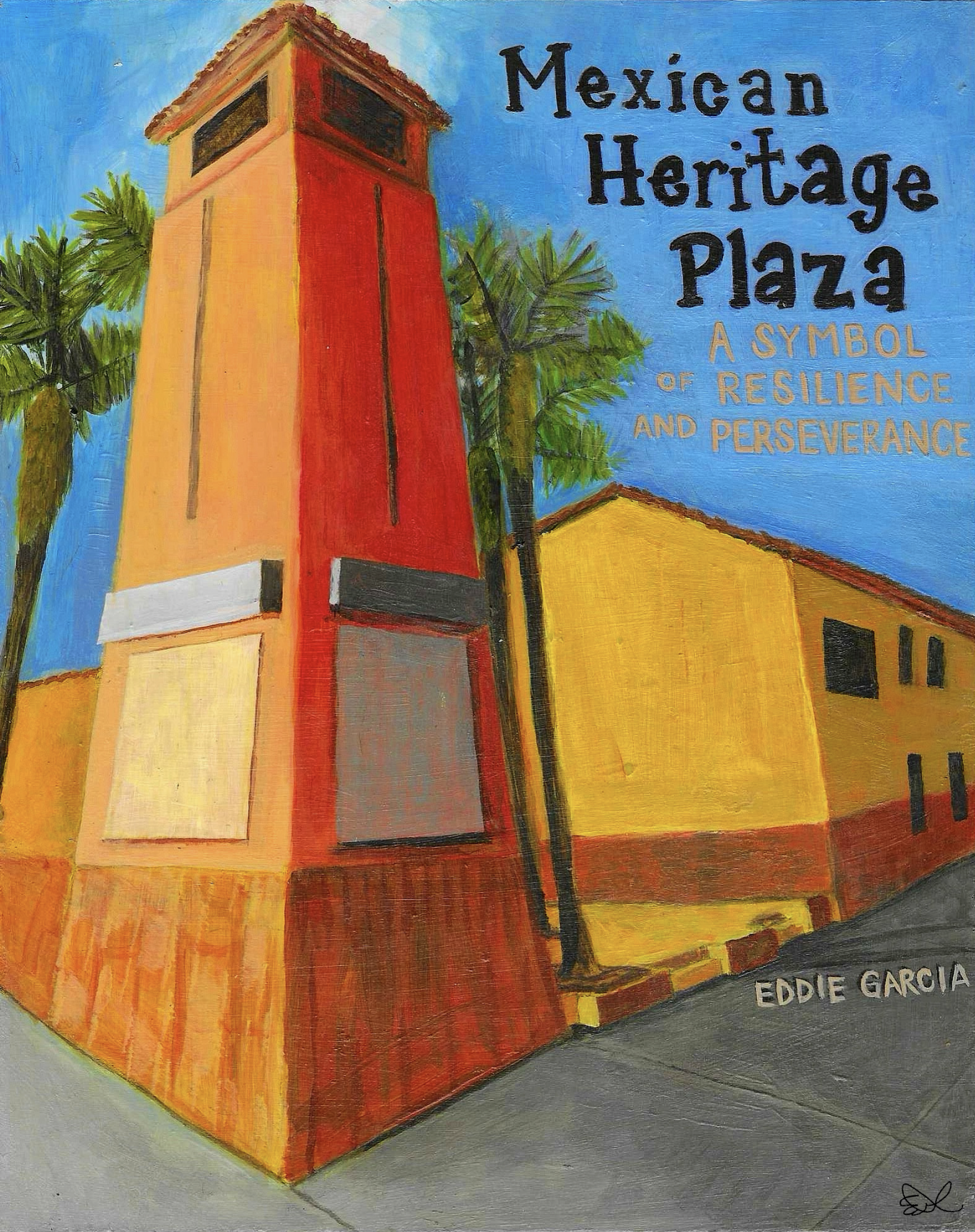
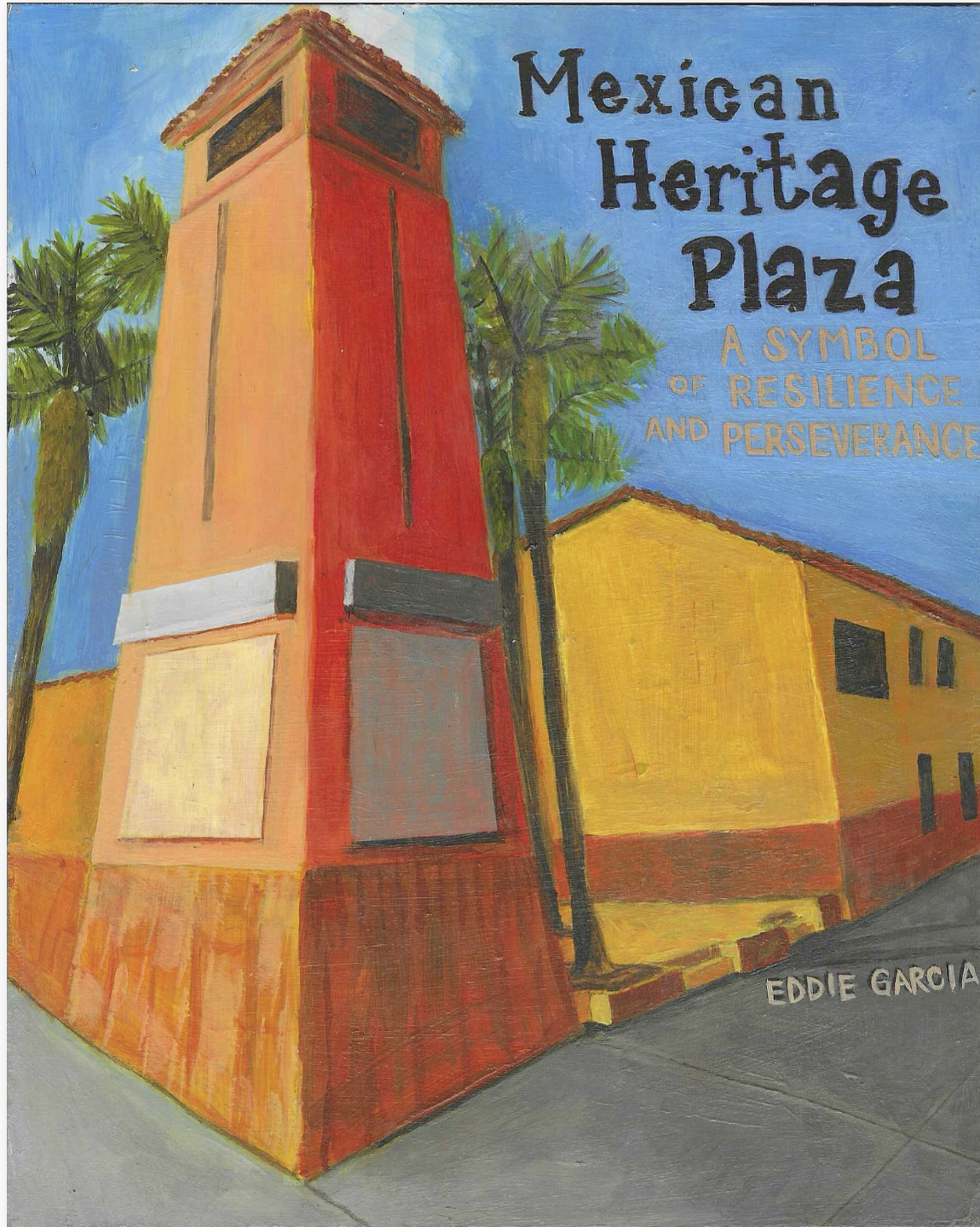
Mexican Heritage Plaza: A Symbol of Resilience and Perseverance

Cover design and artwork by Erica García — https://proyectoxtra.com/

My new book is titled Mexican Heritage Plaza: A Symbol of Resilience and Perseverance. La Raza Historical Society Publications is scheduled to release the book in Spring 2026. The prologue is reprinted below.

***

Prologue

September 9, 1999, was a beautiful day in San José, California. A large crowd gathered for the dedication of the Mexican Heritage Plaza, the city’s most ambitious neighborhood cultural arts project. Although the first day of autumn was less than two weeks away, clear skies, a light breeze, and a comfortably warm 74 degrees blanketed the plaza. There was a sense of excitement, accomplishment, and relief that this day had finally come. It was as if the gods conspired to make a perfect day for the much-anticipated consecration of a living and breathing monument to the city’s Mexican origins. 

When the 1,000 or so people settled into their seats, Santa Clara County Supervisor Blanca Alvarado stood and walked up the few steps onto the stage to address the gathering. The audience included San José’s political class, community activists, neighborhood leaders, and other guests. When she approached the podium, Alvarado opened her comments with equal parts passion and eloquence:

“To be here with you at this official dedication is to stand in awe and wonder at what we have accomplished in the spirit of community. To stand here is to feel free at last from the stinging rejection that so many of us have felt for being Mexican-American. To be able to speak our language and to experience our cultura in its many forms is to acclaim our right to be.”

With that opening flourish, Alvarado brought to life recognition of the city’s Mexican roots, which white Americans had dismissed since their arrival in the late 1840s.

***

The first human beings to occupy the land that is now San José, California, were the Ohlone people. They descended from nomads who migrated across a land bridge that connected modern-day Asia to North America in search of food and game about 15,000 to 30,000 years ago. Archeologists believe that descendants of those wanderers settled in what is now the Santa Clara Valley 4,000 to 10,000 years ago. 

In January 1777, Franciscan friars established the first European settlement in the valley by founding Mission Santa Clara de Asis. Eleven months later, a group of settlers representing the Spanish king founded El Pueblo de San José de Guadalupe just east of the river that dissected the two communities. Although they settled on the eastern bank of the Guadalupe River as subjects of Spain and under the orders of the Spanish government, all 66 people who established the camp were born in modern-day Mexico. Contrary to assertions by 20th-century San José historians and those who claim to be descendants of the settlers, members of the 1777 group were most likely not culturally Spanish. They were ethnically Mexican.

Since its birth as a European-style civil settlement, San José has been a community with a rich Mexican history. From its founding in 1777 to 1822, the town was a colony of the Spanish Crown. The Mexican Empire and its successive governments ruled the people of San José from 1822 until the United States acquired the pueblo as spoils of war in 1848. With the influx of Americans traveling to California in search of fame and fortune during the Gold Rush of 1849, San José began its slow ascent as an industrial city. First, with quicksilver mining in the Almaden Hills, and later, with the robust canning business tied to the agricultural boom that created the Valley of Heart’s Delight. 

During that time, Mexicans worked the mines, cultivated grain and vegetables in the fields, and harvested the fruit trees that blanketed the valley floor and hillsides. Civic leaders and 20th-century San José chroniclers have spent nearly two centuries trying to erase that history. Through the 20th century, the handful of scribes who wrote about San José’s history ignored the ethnic Mexican experience. While historians, professional and otherwise, erased ethnic Mexicans from published historical works, the Mexican community of San José continued to thrive.

Beginning in the early 1950s, ethnic Mexicans unsuccessfully attempted to establish a cultural center to celebrate the city’s Mexican birthright. Proposals from the 1950s, 1960s, and 1970s faced institutional roadblocks, financial challenges, and community divisions. Ultimately, none of these projects progressed beyond the idea phase. Despite efforts by generations of San José’s ruling class to marginalize the contributions of ethnic Mexicans to the city’s development, a group of Mexican American civic leaders overcame seemingly impossible odds in the 1990s to build a state-of-the-art Mexican cultural center that would become a symbol of Mexican American resilience and perseverance.