Monthly Archives: January 2024

There’s Always Hope

This is the third installment of ESEReport.com’s Second Chances blog series.

***

Rejoice in our sufferings, because suffering develops endurance, and endurance produces character, and character produces hope. ~ Romans 5:3-4

***

On a sunny and crisp Thursday morning earlier this month, I sat outside sipping a cup of hot coffee at the Evergreen Coffee Company, a cool mom and pop coffee place near my house in San Jose’s Village Square neighborhood. A recent heart attack survivor and I were sharing war stories about open heart surgery, hospital life, and the emotional challenges of recovering from a major life disruption.

As the conversation turned to the heavy toll a chronic illness takes on mental health, he cut to the chase. “This thing is messing with my mind,” he blurted out. I wasn’t surprised by his frustration. It turns out that managing emotions has been the hardest part of my journey. Suffering a heart attack is life-changing. The more severe the attack and damage to the heart, the more your life changes. Confusion, fear, and anxiety set in before your mind can make any sense of what happened.

After sharing his frustration, he promptly asked, “How did you get through it?” I didn’t reply immediately. The short answer is that I haven’t gotten through it. It’s an ongoing process. I just take it day by day and follow the advice Winston Churchill offered to his country during the darkest days of World War II, “If you’re going through hell, keep going.”

When I finally responded, I thought of one word . . . hope

Of course, after a life-altering medical crisis, many ingredients are needed to develop stable mental health. A supportive family and an exceptional healthcare team are essential. Plenty of faith and a hearty helping of hope tie it all together. St. Paul the Apostle’s encouraging wisdom in Romans 5:3-4 keeps me going when the burden of living with chronic heart disease for nearly 15 years inevitably tries to exploit my anxious mind.

In his Letter to the Romans, St. Paul encouraged us to “rejoice in our sufferings.” I can understand how the thought of “rejoicing in suffering” sounds like a dumb strategy when facing impossible odds. That didn’t make sense to me when I first read it. But as I reflected on my battle with heart failure and subsequent faith journey, I realized that the 10-year road to a successful heart transplant was mapped out by Romans 5:3-4.

When I emerged from a medically induced coma caused by lung failure during the summer of 2010, my body degenerated and became weak. I had to re-learn how to sit, stand, walk, and swallow. Doctors told me that my muscles had “fallen asleep,” so I could regain strength with an intensive 8-week physical rehab program. When I was stable enough, they sent me to the Kaiser Foundation Rehabilitation Center in Vallejo, California (KFRC). 

The KFRC is a state-of-the-art facility. According to the 2023 U.S. News’ Best Hospitals study, the KFRC was selected as a Top 50 rehab program in the nation for the third consecutive year. Like great coaches, the physical and occupational therapists were relentlessly determined, yet empathetic. My competitive nature kicked in. My goal was to finish the program in less than eight weeks. I was pumped! I rejoiced in my suffering. I walked out of the KFRC with the aid of a walker three weeks later.

Even though I was walking again, congestive heart failure hadn’t taken a break. My heart was badly damaged, but I wasn’t a good candidate for a transplant for two major reasons:  (1) my heart was still functioning and (2) my lungs weren’t strong enough to withstand major surgery. I learned as much as possible about my condition to understand what needed to be done to give myself the best shot to get a transplant sometime in the future.

My cardiologist recommended that I eat a heart healthy diet, take meds, and exercise to keep my body healthy. It was going to be a long process with no guarantees. To be successful, I had to weather the storm of heart failure for an unknown amount of time. It could have been months. It could have been years. As my heart grew weaker, my lungs grew stronger. My suffering developed endurance. I lived with congestive heart failure for the next 10 years.

Getting through those 10 years was hard. It required lots of discipline. I had to take five pills, three times a day. Maintaining a low-fat, low-salt diet tested my will power on a daily basis, especially during summer barbecues and the holidays. Walking for just 30 minutes per day got harder as each year passed by. I’d always been able to stay disciplined when it was on my terms. When I made the rules. This time was different. My cardiologist made the rules.

Although this regimen was forced upon me, I gave up control and focused on it like a laser day after day, month after month, and year after year.  I stayed with it even as my heart became sicker. There were many days when the allure of unhealthy food, frustration about staying on a medication schedule, and extreme fatigue dared me to quit. I withstood the temptation. My endurance produced a strong character. My body was strong and ready for heart transplant surgery when I got “the call.”

Life comes at us fast. It could be a job loss, the end of a long relationship, or a sudden life-changing medical crisis. St. Paul the Apostle taught us that there’s always hope. Rejoice in our sufferings, because suffering develops endurance, and endurance produces character, and character produces hope.

As we sipped our coffee, I recommended to my new friend that he seek counseling. It was indispensable to my recovery. He mentioned earlier that he’s a man of faith, so I also shared my story of hope based on the wise words in Romans 5:3-4. I’m not sure if it was helpful to him, but reflecting on my journey and the blessings that have come from it energized me. 

I walked home from the Evergreen Coffee Company with a spring in my step, a grateful grin upon my face, and hope in my heart. 
Never Enough?

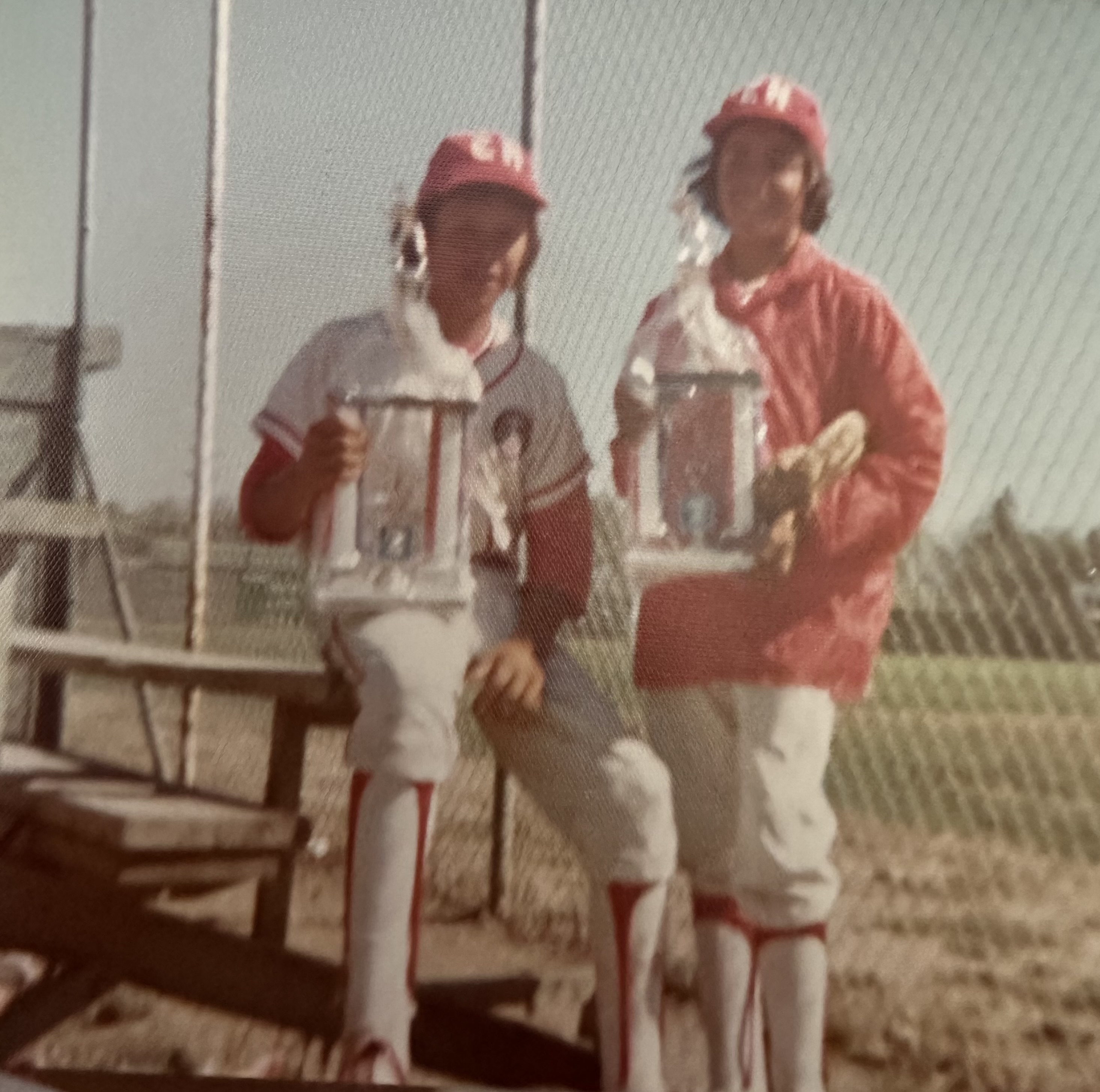
Co-Captains of the East Hills Little League Major Division Champions ~ 1976

This is the second installment of ESEReport.com’s Second Chances blog series.

***

 My grace is sufficient for you, for my power is made perfect in weakness. ~ 2 Corinthians 12:9

***

It was the summer of 1976, my last season playing on the East Hills Little League baseball fields. Those were the days when team names were those of sponsors that paid for uniforms. Instead of displaying Giants, Athletics, or Mets logos, our uniforms showcased Mervyn’s Department Store, Fontanetti’s Sporting Goods, Anello Trucking, and other local businesses and organizations. I played for the East Valley Lions Club, the major division “Red” team. We wore red caps with white “EH” ironed onto the front. 

The major division diamond was on the campus of August Boeger Middle school on the east side. The field was a miniature version of professional stadiums with a large backstop, pitcher’s mound, grass and dirt infield, press box with PA system, electronic scoreboard, and home run fence. It was like playing in the big leagues. Kids playing in the younger farm and minor divisions couldn’t wait to play on that prestigious field. 

I had a great season in 1976. I was named co-captain of the East Valley Lions and selected to be on the All-Star team. Coach called on me to be the starting pitcher for the league championship game against Anello Trucking, the “Blue” team. It was a warm June evening and the old wooden bleachers were filled with cheering family and friends. Dad sat at his regular spot at the top of the stands calling pitches from his perch. Mom sat faithfully by his side.

I don’t remember anything about the game. Not one pitch. Not one play. Not one at bat. I do vividly remember what happened after the last out that sealed our victory. Coach ran onto the field toward the pitcher’s mound and lifted me into the air with a big bear hug. My teammates were excitedly jumping up and down around us. 

I instinctively looked toward the top of the bleachers behind the dugout. Dad was standing and looking back at me with a smile of pure pride and joy. Mom had her usual expression of modest delight regardless of the game’s outcome. Dad’s smile was out of this world. He was a charismatic man. His outward display of confidence and his infectious grin could fill up any space he was in. 

Dad also had a menacing scowl when he was unhappy or disappointed. His furrowed brow, pursed lips, and nod of disapproval was like kryptonite to me. It sapped energy from my being. Dad had a hard life. His father died when he was just a boy. His bitter mother raised six kids in a wooden shanty with a dirt floor. He experienced the horrors of WWII as a teenage sailor in the U.S. Navy. He saw the world in stark practical terms. Success requires doing things “right.”

Mom was an only child raised by her single mother and grandmother in a small, but loving home. Despite living in relative poverty, her upbringing relied on faith and hope for a better tomorrow. She was yang to Dad’s yin. She always found good in everything. If something unfortunate happened, well . . . that was just God’s will.

Those deeply held views that my parents had about themselves, others, and the world are what psychologist Aaron T. Beck referred to as “core beliefs” in his groundbreaking development of cognitive therapy. Core beliefs are basic lifelong “truths” that a person develops about himself or herself, people, and the world. They usually develop from childhood or through traumatic life experiences. 

In other words, our understanding of how the world is supposed to work comes from hearing and watching what our parents and other influential people (i.e. older siblings, friends, teachers, coaches, bosses) around us say and do. Positive core beliefs can lead to a happy, productive, and balanced life. Anxiety and depression caused by negative core beliefs can lead to a downcast, deprived, and disorderly existence. 

My parents sought to create an environment for their children to thrive as adults. Dad’s core belief that the world is a harsh place that can be conquered by adhering to his formula for success made it plain that no matter how hard we worked, we could always do better. Mom’s core belief that all is well that ends well with God’s grace inspired a sense of confidence that we would thrive with the gifts provided by God. 

Together they instilled into their kids the combination of having to constantly do better and believing they have the talents to succeed at anything they try. This seemed like Mom and Dad had the ideal formula for developing strong, confident, and productive members of society. On the surface, it appears as though they accomplished their mission. But it came at a heavy emotional and mental cost to me. 

I can’t speak for my siblings, but the drumbeat of “you can do better” and “mijo you’re the best” set the expectation bar so high for me that it was unreachable. In my mind, no matter what I did in life, it would never be enough. That led to an almost insatiable drive to succeed. I would do anything to exceed my parents’ hopes and dreams for me, whatever those may have been. 

It’s no surprise that I grew up to be a pleaser. Psychologists refer to extreme cases of this condition as Sociotropy or Dependent Personality Disorder. People with pleaser tendencies put too much emphasis on social acceptance. Their behavior is a way to boost self-esteem and avoid the perception of failure. Ultimately, those who suffer from the need to be accepted and validated live with the sense of never being or doing enough to meet their own unrealistic standards based on untrue core beliefs.

This can be damaging to mental and emotional health. Although I’ve never been diagnosed with Sociotropy or Dependent Personality Disorder, my thirst for acceptance and approval has caused me much pain and suffering. Over time, I transferred the desire to please my parents to wanting  validation from Sandra, our daughters, extended family, the community I served in public office, and professional colleagues. That’s why I might have almost worked myself to death.

The self-imposed core belief that I’ll never be enough has haunted me throughout my life. I’m not suggesting that Mom and Dad are guilty of setting off a domino effect of generational trauma. They were loving parents who did an amazing job setting their children up for a successful and happy life. The core beliefs my parents passed on to me have led to, by most accounts, a pretty good life for their youngest son, with the glaring exception of feeling inadequate. 

When I was in my Little League coach’s arms on the mound at the East Hills League field in 1976, little did I know that the seemingly insignificant act of glancing toward the bleachers and wondering whether my pitching performance was good enough to earn an “atta boy” from Dad would follow me for decades. Yet here I am trying to learn how to make sense of it all 48 years later.

That’s where faith, hope, and love come in. St. Paul wrote that God tells us, “my grace is sufficient for you.” As I navigate ever further into understanding faith and making mindfulness practice a priority, what really matters is slowly becoming more clear. On the surface of my psyche, I know that what I’ve done with my life so far is sufficient. However, I’ll most likely spend the rest of my life challenging my core belief that I need to do more and be more.

As Mom used to say, un día a la vez – one day at a time.

Second Chances

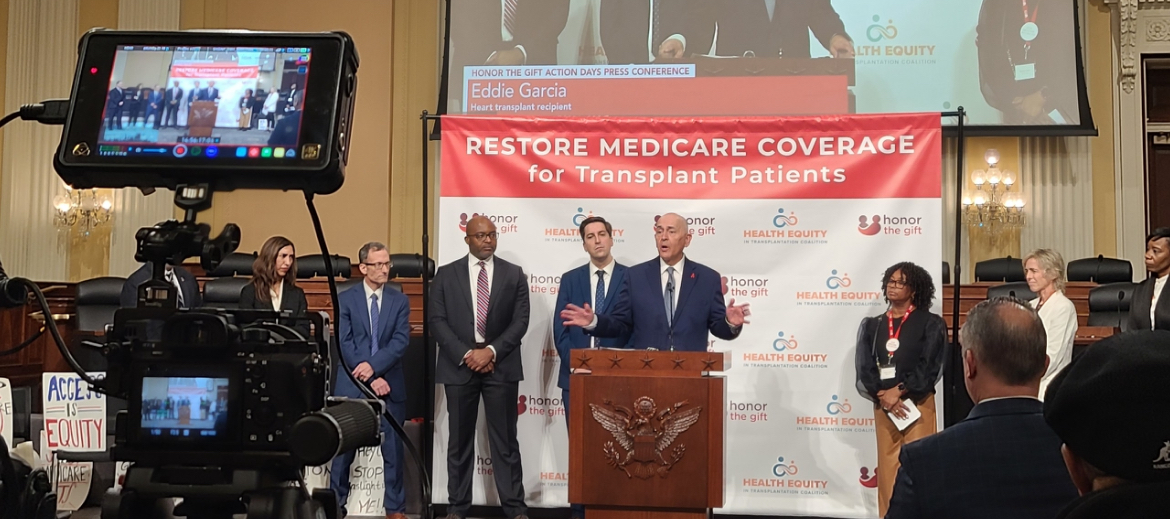
Honor the Gift Press Conference – Washington, D.C. – December 5, 2023

This is the first post of ESEReport.com’s Second Chances blog series.

***

The Lord is not being slow in carrying out his promises, as some people think he is; rather he is being patient with you. ~ 2 Peter 3:9

***

It was sometime in late May 1977. I sat in a classroom at Joseph George Middle School in east San Jose fidgeting in my seat nervously waiting for my turn. I was in the eighth grade, a few weeks away from middle school graduation day. In addition to the traditional valedictorian and salutatorian addresses, a student would be selected to give a speech about campus life. I was one of about six students who tried out for that role.

With Dad’s help, I worked hard on drafting my comments. I wasn’t the smartest kid in school, which explains why I wouldn’t make either of the customary academic achievement graduation remarks. Neither was I one of the most popular students. The other five or so at the tryouts fit into that category. But even as an immature 13 year old boy, I was ambitious and took on challenges that stretched my natural abilities.

Since I loved to read, I worked meticulously on every word looking for an advantage over the popular kids. Dad, who was also a prolific reader, suggested some pretty fancy words that would surely make me sound more sophisticated. Once the final draft was finished, I still felt unsure about being able to stand out. Dad had a brilliant idea. Rather than reading the speech, he suggested that I should memorize it! I practiced and practiced.

When one of the teachers serving as a judge called my name, the nervous tension made me nauseated. As I walked up to the front of the room, a wave of anxious warmth wrapped around my head. My trembling hands placed the written speech on the lectern, just in case I needed a reminder of the words I memorized. When I looked up, there were three teachers and about six students staring at me. My head and flushed face were now in full-fledged nervous fever.

I forgot everything I had practiced. Not one word was coming to me. I looked down at the piece of paper to jog my memory. Nothing! My heart was beating so fast that I thought it would jump out of my chest. I decided on the spot to read my remarks. That didn’t turn out much better. My mouth was so dry that I’m sure no one could understand the stuttering sounds that came out of it. The performance was a complete disaster. I was so embarrassed that I cried when Dad came home from work excitedly asking me how it went.

I was convinced that speaking in front of people would never be in my future. Nevertheless, life went on. In high school, I wasn’t so bad at what we called oral reports in those days. After I flunked out of my first try at college, I coached middle school and high school baseball and basketball. I did just fine with the pre and post game speeches in front of the kids. Speaking to parents at booster club meetings and end of season banquets was part of the job. I did just fine with those too.

In 1989, James Lick High School named me Coach-of-the-Year at an end of year ceremony. The disaster that was 1977 didn’t even cross my mind when I walked up to the podium to deliver an acceptance speech in front of about 200 people. When I returned to college in 1991, I enrolled in a public speaking course primarily because it was a required class, not that I was interested. The professor noted that I was a natural public speaker. His confidence in me was inspiring. In class, I developed the skills that would make speaking in public the foundation of my career.

So what happened between 1977 and 1991? If the professor was right that I was a natural, why was my first attempt at public speaking so awful? How did I improve without any formal training during those 14 years? The likely answer is that life just has a way of working itself out. Life experiences gave me a bunch of opportunities after 1977 to use this natural ability. College gave me the tools to make the most of it in my career and community service. 

I believe that God is the architect of life working itself out. In correspondence with people who lost hope, St. Peter’s Second Letter emphasizes, “The Lord is not being slow in carrying out his promises, as some people think he is; rather he is being patient with you, wanting nobody to be lost and everybody to be brought to repentance.” God was surely by my side in that Joseph George Middle School classroom. Although I badly wanted to speak at graduation, God let me know that I wasn’t ready.

St. Peter’s Second Letter reminds us that God is in charge. God gives all of us natural gifts. Most times, we never recognize or accept that we have them. Sometimes we use them for good and sometimes we use them for wrongdoing. Sometimes we don’t use them at all. “Wanting nobody to be lost,” St. Peter’s letter also provides hope that God gives us second chances when we don’t get it right the first time.

I believe in second chances. It’s taken me four decades and many second chances to understand. It started with the opportunity to return to college after the initial failure. After two failed bids to serve in public office, I earned a seat on the school board with a third attempt. When a massive heart attack threatened to end my life and a heart transplant saved it, God’s grace allowed my journey to continue. I’ve been blessed with a lot of second chances. 

These experiences have taught me three things: (1) We all have natural gifts. We just need to be patient and give God a chance to reveal them to us in his time. (2) We’ve all had second chances in life. We just need to slow down a bit to recognize and reflect on them. (3) We all could use as many second chances as God provides. This world is unforgiving. The sun rises every morning no matter how the previous day treated us. Everyday is a second chance.

I shared my health crisis and the beginning of a spiritual and mental health journey in my 2022 book, Summer in the Waiting Room: Faith • Hope • Love.  On this blog, I plan to spend a good portion of 2024 digging deeper into how strengthening faith and focusing on mental health has had as much a dramatic impact on my life as the heart attack and transplant.

I’ve been doing my best (mostly unsuccessfully) to live with faith, hope, and love. I’ve also been trying to practice meditation and mindfulness (mostly unsuccessfully) on a daily basis. Although I have a long way to go to fully embrace these ancient and proven ideas, I’ve found that my life is becoming more meaningful as I continue to explore the mystery of faith and the inner sanctum of my psyche.

I’ve come a long way from that classroom at Joseph George Middle School 47 years ago. Recently, I had a chance to use for good what the professor said 33 years ago was a natural ability. At a national press conference in Washington D.C. last month, I had the honor to represent heart transplant recipients. I just hope my remarks did my fellow transplant warriors justice. You can see a short clip of that speech here

Thank God for second chances.