

***
I wouldn’t give you two cents for all your fancy rules if, behind them, they didn’t have a little bit of plain, ordinary, everyday kindness and a little looking out for the other fella, too. ~Jefferson Smith, played by actor James Stewart in Mr. Smith Goes to Washington
Each of you should use whatever gift you have received to serve others, as faithful stewards of God’s grace in its various forms. ~1 Peter 4:10
***
The Delta Airbus 319 slowly taxied toward the runway at San Jose Mineta International Airport. It was my first time on an airplane in 4 1/2 years. Destination, Washington, D.C. I last made a trip to the nation’s capital about 15 years ago. It was Idaho’s first trip to the east coast. Idaho is the name I gave my transplanted heart. You can meet him by clicking here.
As the County Administration building came into view in the distance, I began reflecting on my life. Carefree childhood. Flunking out of college. Triumphant return and graduation. Tireless career climbing. Political battles. Massive heart attack. Decade with heart failure. Left Ventricular Assist Device. Heart transplant. Covid isolation.
It was all a blur as I settled into the familiarity of sitting in a plane. As a Comcast executive, air travel was a regular thing. Albuquerque. Charlotte. Chicago. Dallas. Denver. Houston. Los Angeles. Philadelphia. Phoenix. San Diego. San Antonio. Santa Fe. Seattle. Portland. San Juan, Puerto Rico. Washington, D.C. was a regular stop. After everything that’s happened during the past 13 years, it felt surreal to be on a plane again headed for the Capitol.
As an executive, my days and nights in Washington were filled with countless meetings, luncheons, cocktail receptions, and dinners. Rubbing shoulders with politicians and corporate leaders while talking business and chit chatting was enchanting to a boy who grew up in the working-class neighborhood of east San Jose. The very idea of it all was seductive.
This time was different. I wasn’t excited like I had been many times in the past. There would be no lavish dinners, hours of networking, or representing the interests of a multi-billion dollar corporation. I had no plans for sightseeing and museums – my favorite things to do when in Washington. My itinerary included flying back east on Tuesday, meetings on Capitol Hill on Wednesday, and returning home on Thursday.
The flight was smooth and uneventful. I didn’t have the stress and anxiety that usually accompanied me on work trips. There were no notes to pore over, no emails to draft so I could send them as soon as a signal returned to my BlackBerry once we touched down. There was no worrying about leaving Sandra and our two young daughters for a week. I was relaxed while reading a biography about Queen Elizbeth II and staring out the window at the empty expanse below.
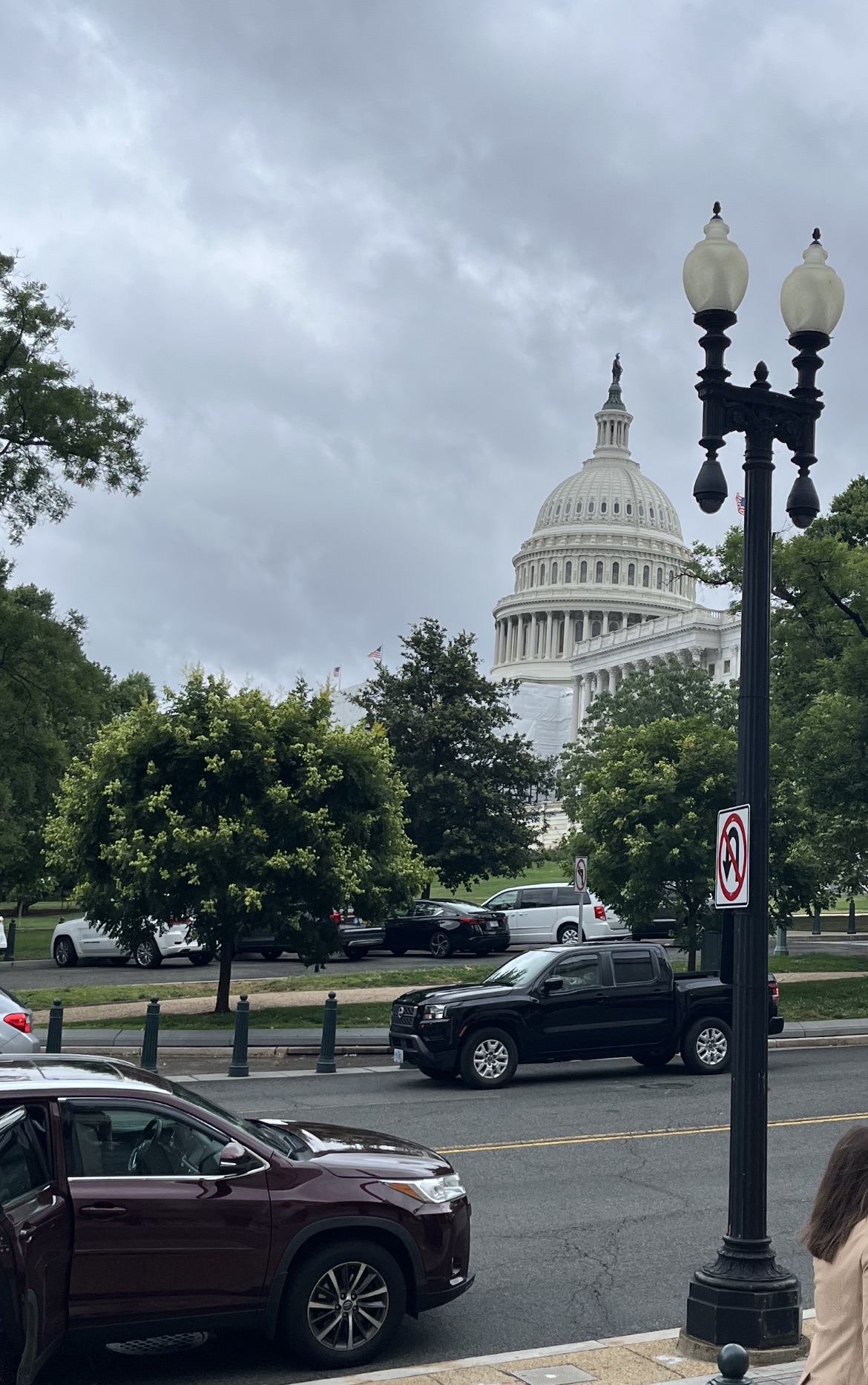
On the Uber ride from Ronald Reagan Washington National Airport, sitting in rush hour traffic didn’t faze me. We passed the Washington Monument and the Jefferson Memorial. I remembered how exciting it was to see them for the first time almost 30 years before. When the car crossed Pennsylvania Avenue, I turned to my right to see the Capitol sitting majestically on the hill. It also reminded me why I was there.
The Honor the Gift Coalition, a national non-profit transplant patient advocacy organization, invited me to Capitol Hill to advocate on behalf of Medicare organ transplant patients who lost a potentially life saving benefit earlier this year. Organ rejection is the leading cause of death for heart transplant patients. In the past, transplant recipients had to undergo a biopsy after experiencing organ failure symptoms. This was the only way to detect rejection.
Many times, detection was too late to save a patient’s life. An innovative technology changed everything and gave patients hope. In 2017, Medicare agreed to cover the use of a diagnostic test that detected organ rejection before symptoms and damage set in. This spring, Medicare decided to stop covering the cost of the test. The decision is going to negatively, perhaps fatally, impact Medicare patients who can’t afford the $3,000 price tag.
I have first-hand experience with the new technology. During my first two years post-transplant, a phlebotomist would come to my house to draw blood for the diagnostic test every three months. On the morning of June 24, 2021, the transplant care team called to inform me that the diagnostic test had detected rejection. Within a few hours, I checked into the hospital for eleven days of treatments. It worked. Six months later, Idaho was free of rejection and still healthy. The diagnostic test caught it early and probably saved my life.
I spent the day on Capitol Hill last Wednesday with transplant advocacy group executives to share my diagnostic test success story with members of Congress. The goal was to highlight my experience to persuade Congress to pressure Medicare into restoring the benefit. I’m no longer in the high-risk timeframe for rejection, so the Medicare decision doesn’t affect me personally. Like Jefferson Smith in Mr. Smith Goes to Washington, I hope members of Congress “look out for the other fella” on this one.
Moving from office to office in two large buildings, we spent seven hours in back to back meetings and I logged over two miles on my Apple Watch. As I stepped out of the Rayburn House Office Building, I saw the Capitol Dome standing tall above the treeline. Despite the current political dysfunction in our country, the image reminded me that the power of democracy lies in the freedom to share stories with leaders who make decisions about our lives. Hopefully, my story made a difference and not too many people will have to die prematurely because they can’t afford the test.
Although Idaho performed like a champ, walking through the halls of Congress and being “on” for every meeting can be exhausting. When I returned to the hotel room, I plopped onto the bed for a two hour nap. I ended the evening by taking a shower, having a quick dinner alone, and packing my bags before calling it a night for the early morning trip home.
My professional experience has taught me that these things take time and persistence. Honor the Gift Coalition leaders will diligently stay on top of the issues and continue educating members of Congress on the importance of diagnostic testing for transplant patients. We’ll have to see what happens. In the meantime, I’ll keep family, friends, and readers posted. I may call on you to send letters and emails to your congressional representatives. Stay tuned.
The flight home was also smooth and uneventful. I thought about my mom and her own battle with kidney disease. I thought about her strong faith and belief that everything happens according to God’s plan. “Si Dios quiere,” she would say. “If that’s what God wants.” Will I help again if called upon? The short answer is, yes. God has given me many gifts, Idaho being one of the most important. I plan to continue using His gifts to serve others . . . si Dios quiere.
 ESEReport.com
Si Dios quiere❤️🙏🏼